

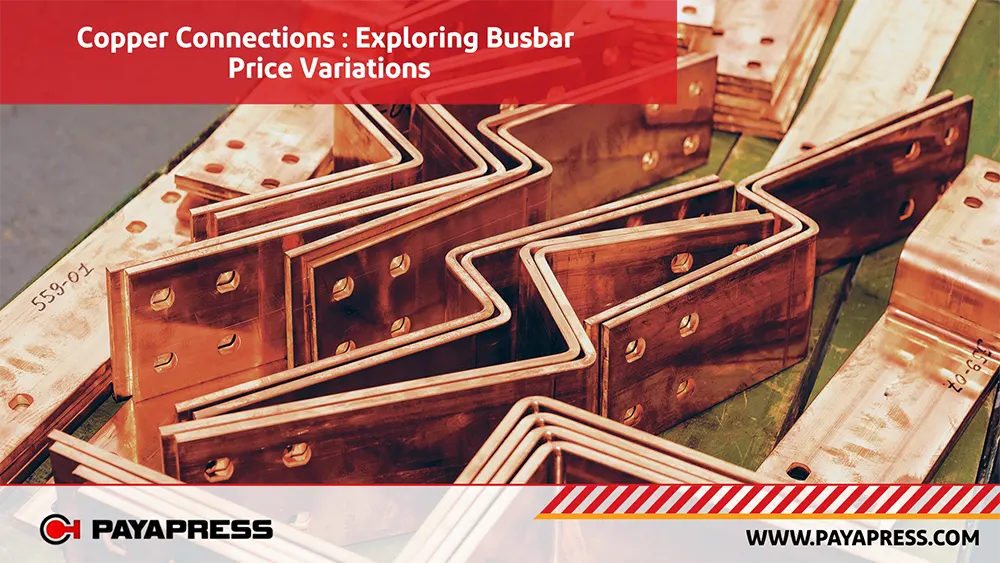

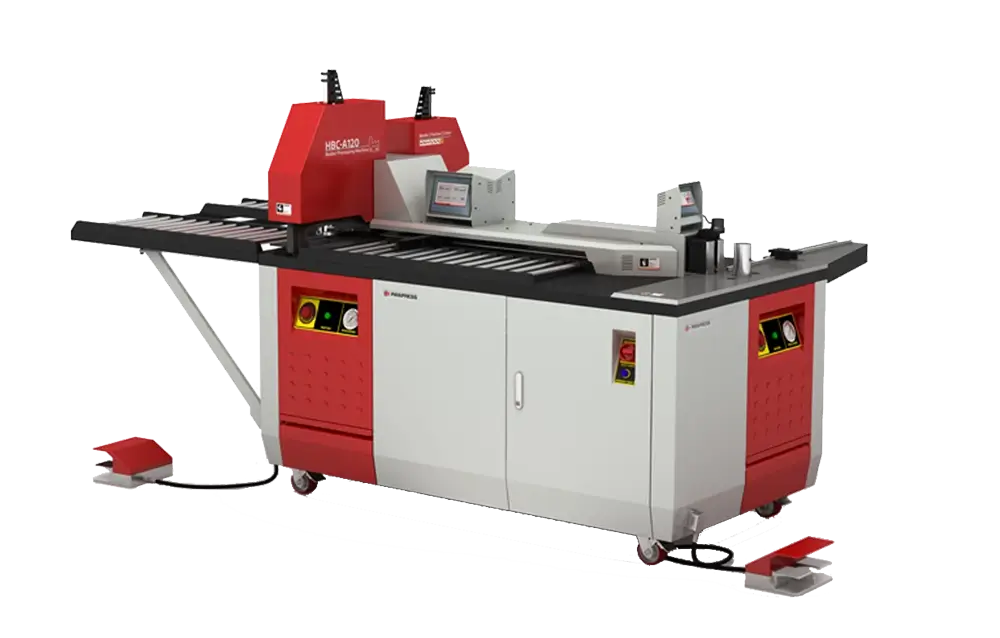
In this article, I will explain the main reasons behind busbar cost variations, especially when comparing copper busbar, aluminum busbar, and different processing requirements. We will also look at how equipment such as busbar bending machines, punching machines, cutting machines, and CNC busbar processing machines can directly affect production efficiency, material waste, labor cost, and final product quality.
By the end of this guide, you will have a clearer understanding of what influences copper busbar price, why bus bar price can vary from one project to another, and how choosing the right processing machine can help manufacturers, electrical panel builders, and industrial buyers make better purchasing decisions.
This article serves as a valuable resource for those seeking detailed information on busbar fabrication machine.
Factors That Influence Busbar Price
The busbar machine price is not determined by material cost alone. In real industrial projects, the final cost depends on a combination of electrical requirements, raw material selection, busbar dimensions, current-carrying capacity, surface treatment, production accuracy, and the type of machinery used during processing. For this reason, two busbars with similar length may have completely different prices if their thickness, hole pattern, bending angle, material grade, or application requirements are different.
For buyers, panel builders, and switchgear manufacturers, understanding these cost factors is essential before comparing quotations. A lower bus bar price may look attractive at first, but if the busbar does not meet the required conductivity, mechanical strength, or installation accuracy, it can increase long-term project risks. The goal is not simply to find the cheapest busbar, but to choose the right balance between cost, performance, safety, and production efficiency.
Material Type: Copper Busbar vs. Aluminum Busbar
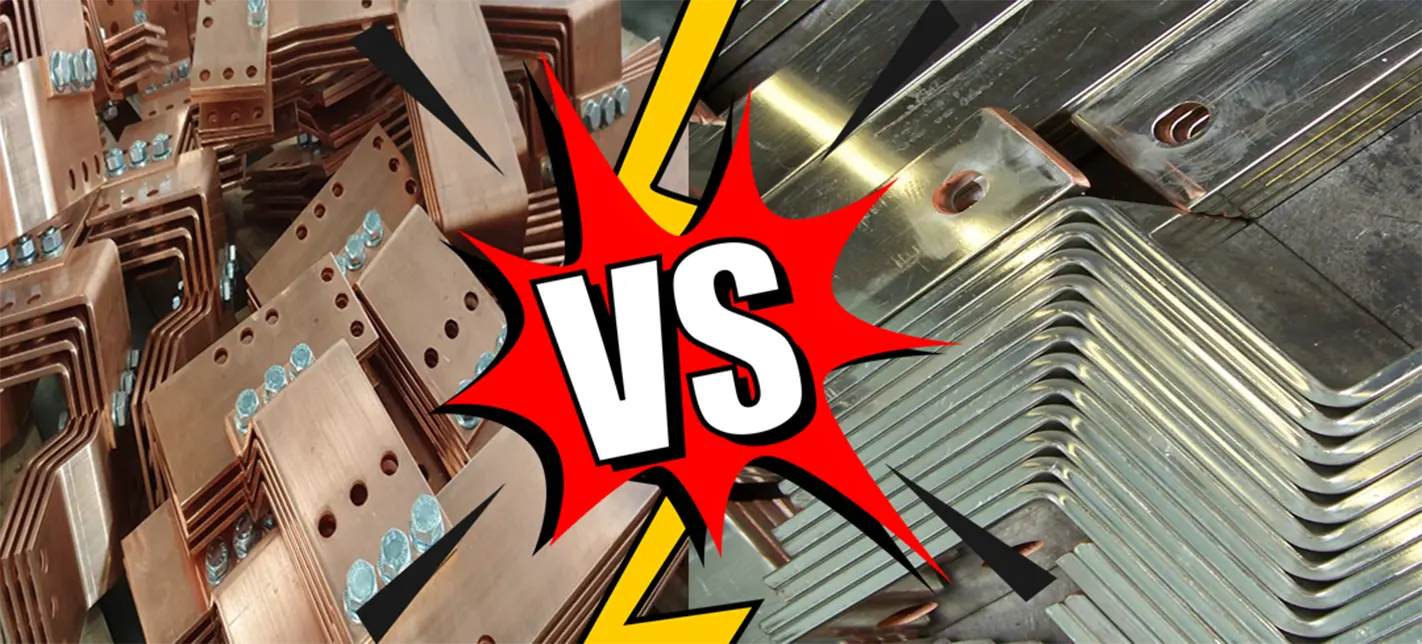
Material selection is one of the most important factors affecting busbar cost. The two most common materials are copper and aluminum. A copper busbar is usually more expensive than an aluminum busbar because copper offers higher electrical conductivity, better thermal performance, stronger mechanical properties, and excellent durability in demanding electrical systems. This is why copper is widely used in switchgear, distribution panels, substations, data centers, and industrial power systems where stable current flow and long service life are critical.
The copper busbar price is closely linked to global copper market prices, material purity, bar dimensions, and processing requirements. Larger or thicker copper bus bars require more raw material and stronger processing equipment, which directly increases the final cost. In high-capacity applications, copper may have a higher initial price, but it can provide better long-term value by reducing energy loss, improving heat dissipation, and supporting reliable electrical performance.
Aluminum busbars, on the other hand, are lighter and generally more cost-effective. They are often selected when weight reduction and budget control are important. However, engineers must carefully evaluate aluminium busbar current carrying capacity, because aluminum usually requires a larger cross-section than copper to carry the same current. This means that although aluminum may reduce material cost, the design may need more space, different connection methods, and proper oxidation protection.
Busbar Size, Thickness, and Current-Carrying Capacity
The physical dimensions of a busbar have a direct impact on the final busbar price. Width, thickness, length, and cross-sectional area all affect how much material is required and how much current the busbar can safely carry. A small busbar used in a compact electrical panel will naturally cost less than a large industrial busbar designed for heavy-duty power distribution.
Current-carrying capacity is especially important when comparing copper and aluminum busbars. A copper busbar can typically carry more current in a smaller cross-section compared with aluminum. However, in applications where aluminum is used, engineers must calculate the required size based on load current, temperature rise, installation environment, and safety standards. This is why aluminium busbar current carrying capacity is a key technical factor in both design and pricing.
Complex busbar designs also increase cost. A simple straight busbar requires less processing, while a busbar with multiple bends, punched holes, slots, notches, or special connection points needs more machine time and greater accuracy. The more complex the geometry, the more important it becomes to use reliable busbar processing machines to reduce waste and maintain repeatability.
Raw Material Market Price and Copper Busbar Cost
Raw material pricing is one of the most unstable elements in busbar costing. Since copper and aluminum are globally traded metals, their prices can fluctuate based on supply, demand, energy costs, mining output, logistics, and international market conditions. As a result, copper busbar price may change frequently, especially for large-volume orders or projects that require heavy copper sections.
For manufacturers, the cost of raw copper is only one part of the total busbar cost. Processing, cutting, punching, bending, finishing, quality inspection, packaging, and shipping also influence the final quotation. This is why two suppliers may offer different prices for the same nominal busbar size. One supplier may use more accurate machinery, better tooling, tighter tolerances, or more consistent quality control, while another may focus only on low-cost production.
For companies planning a copper busbars manufacturing plant cost evaluation, raw material storage, machine capacity, tooling investment, labor requirements, automation level, and production workflow should all be considered. A busbar production line is not only about buying copper; it is about controlling waste, improving accuracy, shortening lead time, and creating repeatable quality at scale.
Busbar Processing Machine Type and Production Technology
The machinery used to process busbars has a major effect on both production cost and final product quality. Cutting, punching, and bending are the three main operations in busbar manufacturing. If these processes are performed manually or with low-precision tools, the initial equipment cost may be lower, but the risk of dimensional error, material waste, rework, and slow production increases.
Modern busbar processing equipment can significantly improve productivity by combining accuracy, speed, and repeatability. Cutting systems prepare each bar to the required length with clean edges, punching units create precise holes for bolted electrical connections, and bending stations form the material according to the panel layout without damaging its structure. When selected properly, these machines reduce labor dependency, minimize errors, and improve consistency across repeated production batches.
The type of machine also affects the overall busbar price. Manual machines are usually suitable for low-volume work or simple workshop operations. Hydraulic machines provide more force and better repeatability for thicker copper and aluminum busbars. CNC busbar processing machines offer programmable control, higher accuracy, faster setup, and better repeatability for complex or high-volume projects. Although CNC machines require a higher initial investment, they can reduce long-term busbar cost through lower waste, faster processing, and improved production efficiency.
Cutting, Punching, and Bending Requirements
Every additional processing step adds value to the busbar, but it also affects the final price. A straight, unprocessed copper bar will cost less than a finished busbar that has been cut to length, punched with multiple holes, bent at specific angles, and prepared for installation inside an electrical panel. This is why buyers should compare quotations based on the complete technical requirements, not only on material size.
Cutting accuracy is essential because incorrect length can create installation problems inside switchgear or distribution panels. Punching accuracy is equally important because poor hole alignment can lead to weak connections, assembly delays, or electrical contact issues. Bending accuracy matters because an incorrect angle can cause fitting problems, stress on the busbar, or inefficient panel layout.
For high-quality busbar production, the processing machine must match the material and dimensions. A thick copper bus bar requires stronger cutting and bending force than a smaller aluminum busbar. Similarly, complex hole patterns or repeated production batches may require CNC-controlled punching to maintain accuracy. These technical details directly influence production time, machine selection, and final bus bar price.
Automation Level and Labor Cost
Automation is another major factor behind busbar price variation. In a manual production process, operators must measure, mark, position, cut, punch, and bend the busbar with more hands-on involvement. This can be acceptable for small workshops or low-volume projects, but it increases the chance of human error and slows down production when order volume grows.
Semi-automatic and hydraulic machines improve speed and consistency by reducing manual effort. Fully automatic and CNC busbar processing machines go further by allowing operators to program dimensions, hole positions, bending angles, and production sequences. This level of automation is especially valuable for switchgear manufacturers, panel builders, and companies producing busbars in repeated batches.
Although automated machines increase initial investment, they can reduce long-term busbar cost by lowering labor hours, minimizing scrap, improving repeatability, and shortening delivery times. For manufacturers handling large volumes of copper busbar or aluminum busbar production, automation is often not just a luxury; it becomes a practical requirement for stable quality and competitive pricing.
Production Volume and Manufacturing Plant Cost
Production volume has a direct effect on unit price. A single custom-made busbar usually costs more per piece because the setup time, measurement, tooling adjustment, and operator involvement are spread over only one item. In contrast, larger production batches allow manufacturers to distribute setup costs across multiple busbars, reducing the average cost per unit.
For companies evaluating copper busbars manufacturing plant cost, production volume is one of the first questions to consider. A small workshop may only need basic cutting, punching, and bending tools, while a larger manufacturing plant may require hydraulic machines, CNC busbar processing systems, tooling storage, material handling equipment, quality control stations, and trained operators. The higher the production target, the more important it becomes to invest in efficient machinery and workflow design.
A well-planned busbar manufacturing setup can reduce waste, improve production speed, and create more accurate pricing. Instead of treating machine cost as a separate expense, manufacturers should view it as part of the total cost structure that determines profitability, lead time, and product quality.
Surface Treatment, Finishing, and Quality Requirements
Surface treatment and finishing can also affect the final busbar price. Some busbars are supplied as bare copper or bare aluminum, while others may require tin plating, insulation coating, heat-shrink covering, polishing, deburring, or special protection against oxidation. These additional processes improve performance, safety, and durability, but they also increase production cost.
For copper busbars, tin plating is often used to improve contact quality and reduce oxidation in electrical connections. For aluminum busbars, surface preparation is especially important because aluminum naturally forms an oxide layer that can affect electrical contact if not handled correctly. Depending on the application, finishing requirements may be essential rather than optional.
Quality control also contributes to cost. Busbars used in critical electrical systems may require dimensional inspection, conductivity checks, visual inspection, and verification of hole positions or bending angles. These steps help ensure reliability, but they also require time, equipment, and skilled personnel.
How These Factors Affect the Final Busbar Price
The final busbar price is the result of several connected technical and commercial factors. Material type, raw metal price, busbar dimensions, current-carrying capacity, processing complexity, machine type, automation level, finishing requirements, and production volume all play a role. This is why buyers should avoid comparing prices based only on length or weight.
A low bus bar price may not always mean better value if the product lacks dimensional accuracy, proper finishing, or reliable electrical performance. On the other hand, a higher-quality copper busbar produced with accurate cutting, punching, and bending equipment can reduce installation problems, improve safety, and deliver better long-term performance.
For the best purchasing decision, buyers should define their technical requirements clearly before requesting a quote. Material, size, thickness, current rating, hole pattern, bending angles, surface treatment, quantity, and delivery expectations should all be specified. This allows suppliers to calculate the real busbar cost accurately and recommend the most suitable production method.

The Role of Busbar Processing Machines in Busbar Pricing
Busbar processing machines directly affect the final busbar price because they control the accuracy, speed, waste level, and labor cost involved in production. A finished busbar is not priced only by raw material weight. The final busbar cost also includes cutting, punching, bending, tooling setup, machine time, operator skill, inspection, and material loss during processing.
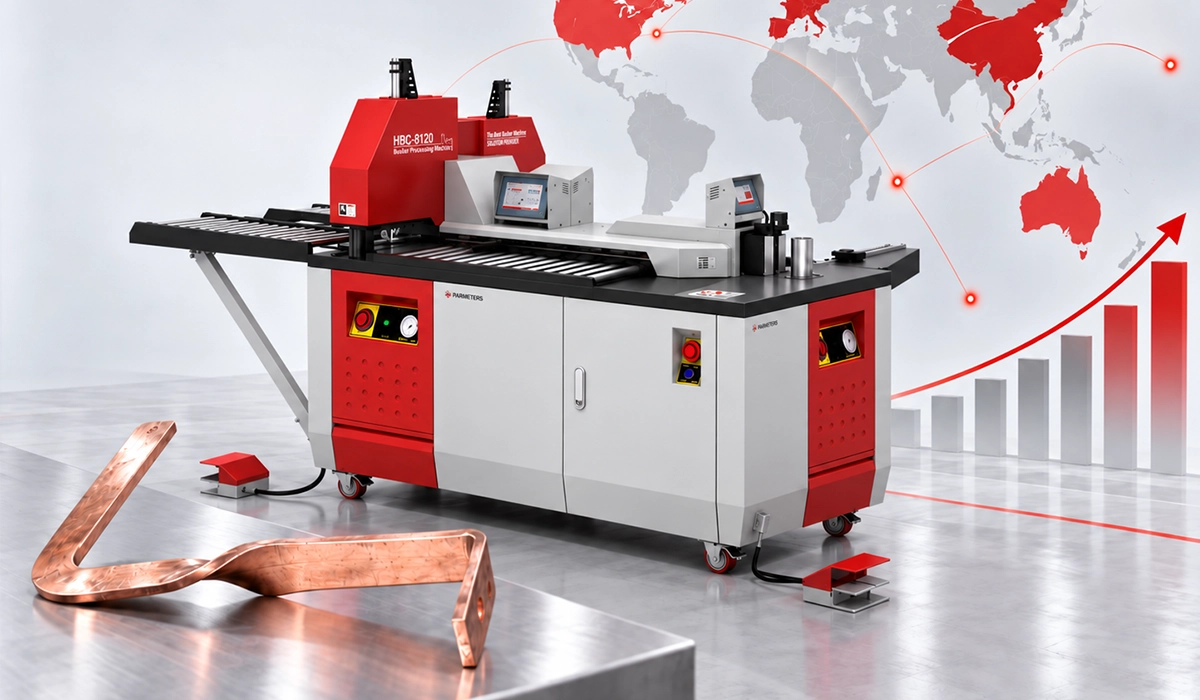
For example, a raw copper bus bar will have a lower base price than a fully processed copper busbar that has been cut to length, punched with accurate connection holes, bent to fit inside a switchgear cabinet, and finished for installation. This is why machine capability is a major factor when comparing bus bar price between suppliers. Better machinery may increase production investment, but it usually improves repeatability, reduces scrap, and lowers long-term cost per part.
Busbar Bending and Punching Machines
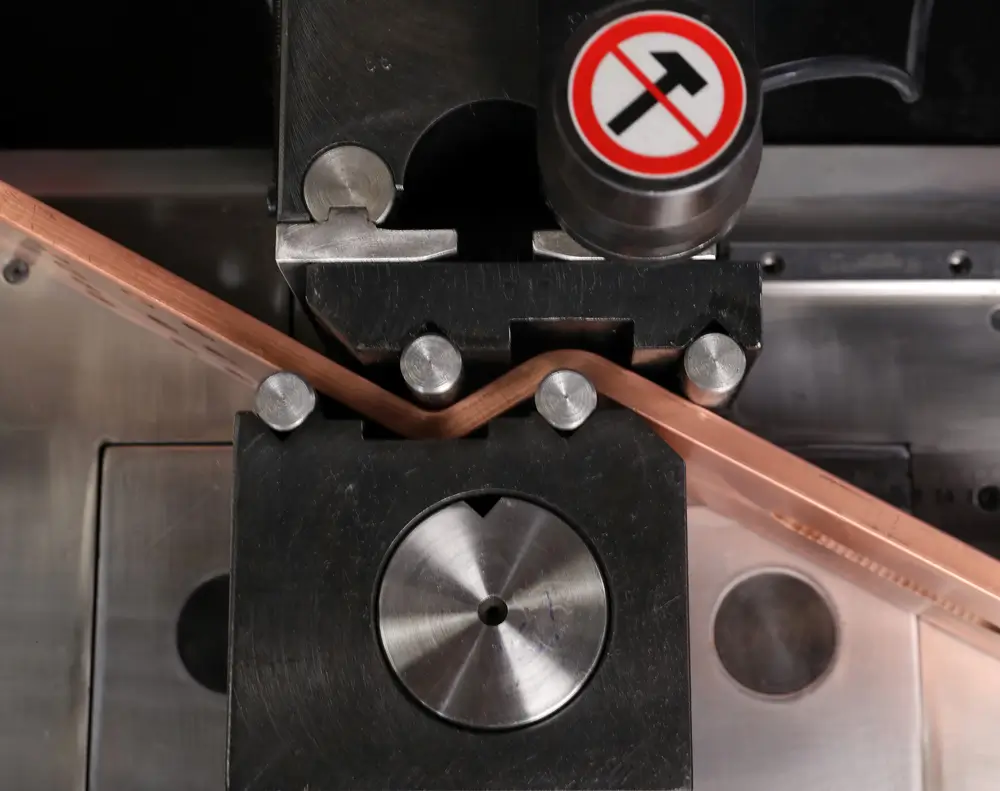
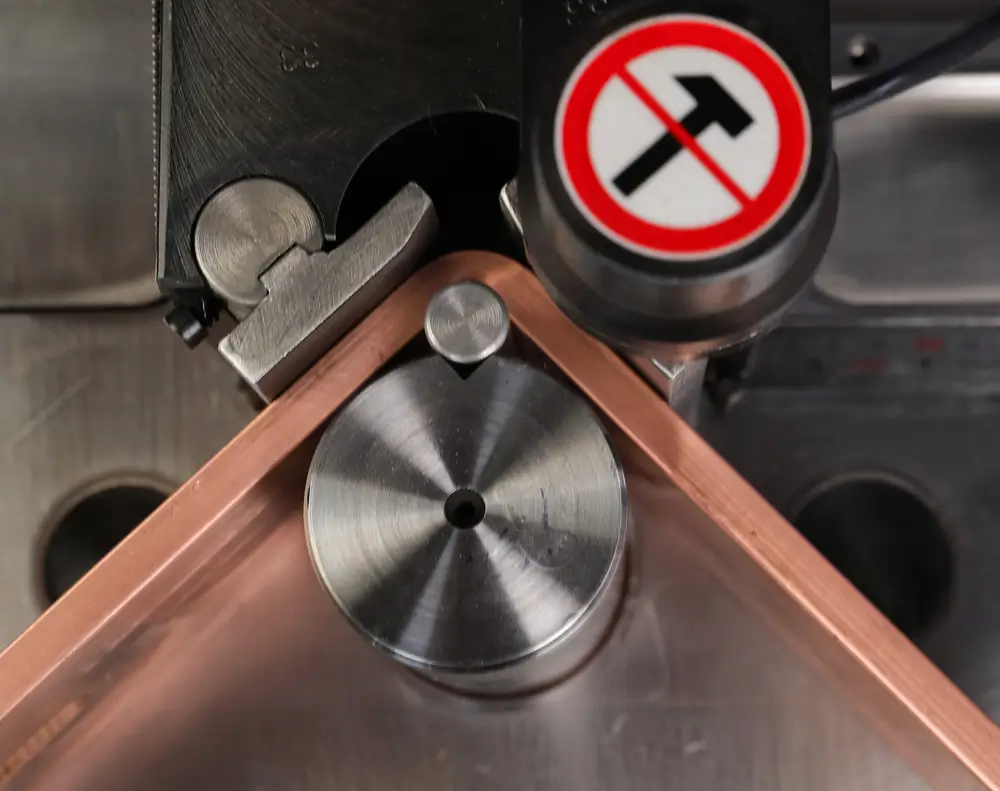
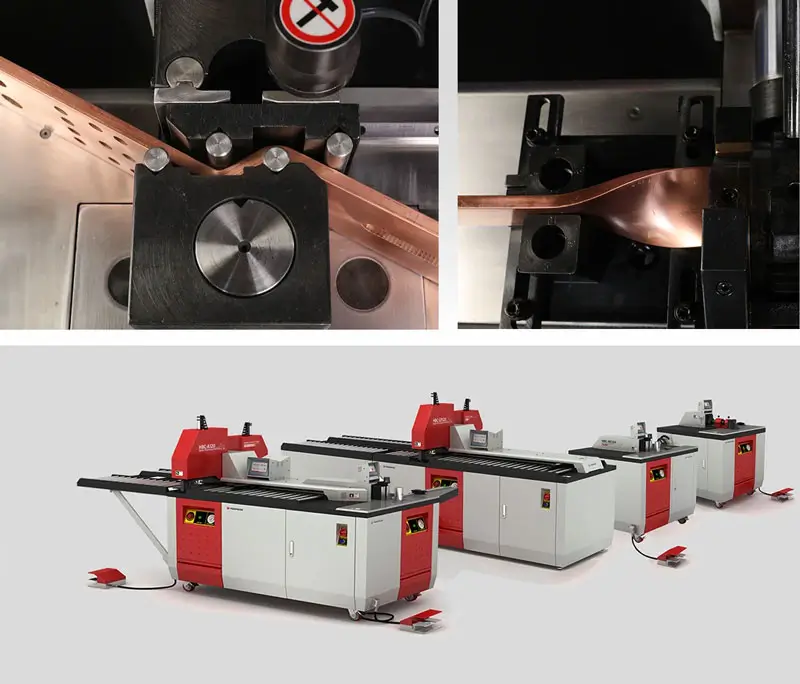
Busbar bending and punching are two of the most important operations in busbar production. A busbar bending machine forms copper or aluminum busbars into the required angles for electrical panels, distribution boards, and switchgear systems. The cost impact depends on the busbar material, thickness, width, bend radius, and required angle accuracy. Thick copper busbars require stronger hydraulic force and more precise tooling than lighter aluminum busbars.
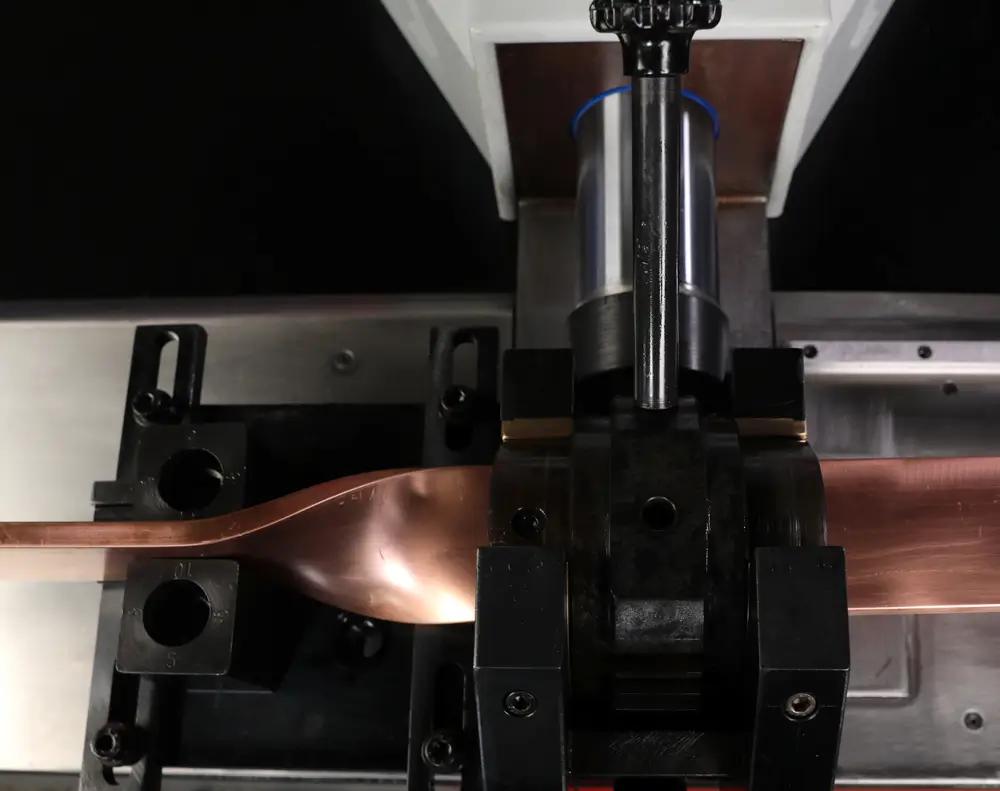
A busbar punching machine creates the holes, slots, and connection points needed for assembly and electrical contact. Poor punching accuracy can cause misalignment, weak connections, material waste, and rework. CNC or automatic punching machines improve repeatability, especially when producing complex hole patterns or large batches. Although these machines increase the initial production setup cost, they help control busbar cost by reducing labor time and rejected parts.
Busbar Cutting and CNC Processing Machines
A busbar cutting machine ensures that each busbar is cut to the exact required length. Clean and accurate cutting is especially important when working with expensive materials such as copper busbar, because incorrect cuts directly increase scrap and raise the final copper busbar price. A precise cutting process also improves the quality of later operations such as punching, bending, and installation.
CNC busbar processing machines combine programmable control with cutting, punching, and bending functions. They are especially useful for switchgear manufacturers, panel builders, and companies producing repeated or customized busbar designs. While CNC equipment may increase the initial copper busbars manufacturing plant cost, it can reduce the long-term unit price by improving speed, accuracy, material usage, and production consistency.
How Busbar Prices Impact Your Projects
Understanding busbar price variations is essential for making informed decisions about the machinery and materials you’ll need for your electrical projects. While copper busbar tends to be more expensive due to its high conductivity and durability, it offers long-term value by reducing energy loss and maintenance requirements. On the other hand, aluminum busbars are a more cost-effective alternative for projects where weight and cost are more critical considerations.
When choosing the right busbar processing equipment, the level of automation and machine capability directly impacts the overall cost. While investing in advanced CNC busbar processing machines or automatic punching machines might seem like a large upfront expense, the savings in time, labor, and material waste make them a wise investment for large-scale and high-precision applications.
Conclusion busbar price
From my technical point of view, understanding busbar price requires looking beyond the raw material cost. A reliable pricing decision must consider the type of busbar material, the required current-carrying capacity, the dimensions, the complexity of cutting, punching, and bending, and the level of machinery used in production. Whether you are comparing copper busbar price, aluminum busbar options, or the total cost of a busbar processing setup, the real value comes from choosing the right balance between electrical performance, manufacturing accuracy, and long-term production efficiency. Selecting the right busbar machine is central to that balance — giving manufacturers the cutting, punching, and bending precision that separates profitable production from costly rework. My goal in this guide was to help buyers, engineers, and manufacturers evaluate busbar cost more clearly, avoid misleading price comparisons, and make better technical decisions for safe, efficient, and cost-effective electrical projects.
FAQs about busbar price

Rate this article
Choose a rating from 1 to 5 stars.
No ratings yet