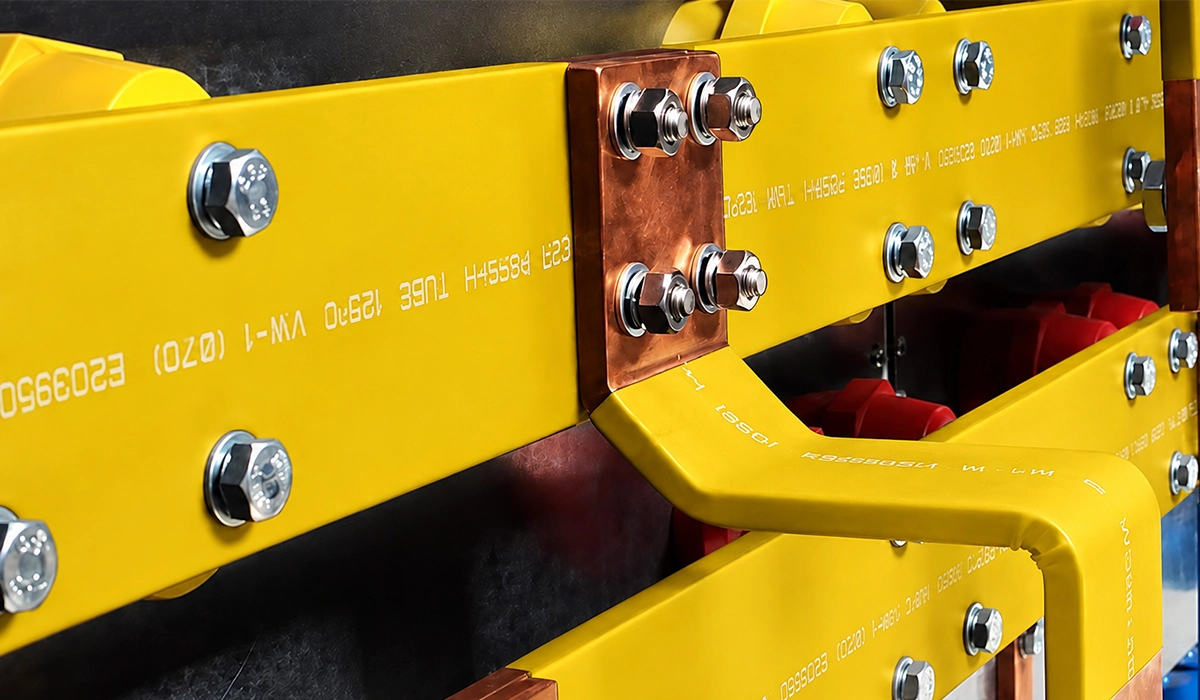
Traditional cable-based power distribution was engineered for a world where a full server rack drew 5 to 15 kilowatts. That world no longer exists in AI infrastructure. A single rack running NVIDIA GB200 NVL72 GPUs can demand over 100 kW of continuous power, and emerging configurations are pushing toward 200 kW and beyond. At those densities, cable bundles become thermally unmanageable: resistance increases, joint temperatures spike, and the physical volume of cable trays begins to consume floor space that should be occupied by compute. Facilities designed for cable-era AI data center power distribution are running out of ceiling height, riser shaft space, and cooling headroom simultaneously. The gap between what the electrical infrastructure can deliver and what the compute infrastructure demands is no longer a design constraint — it is the primary design constraint.
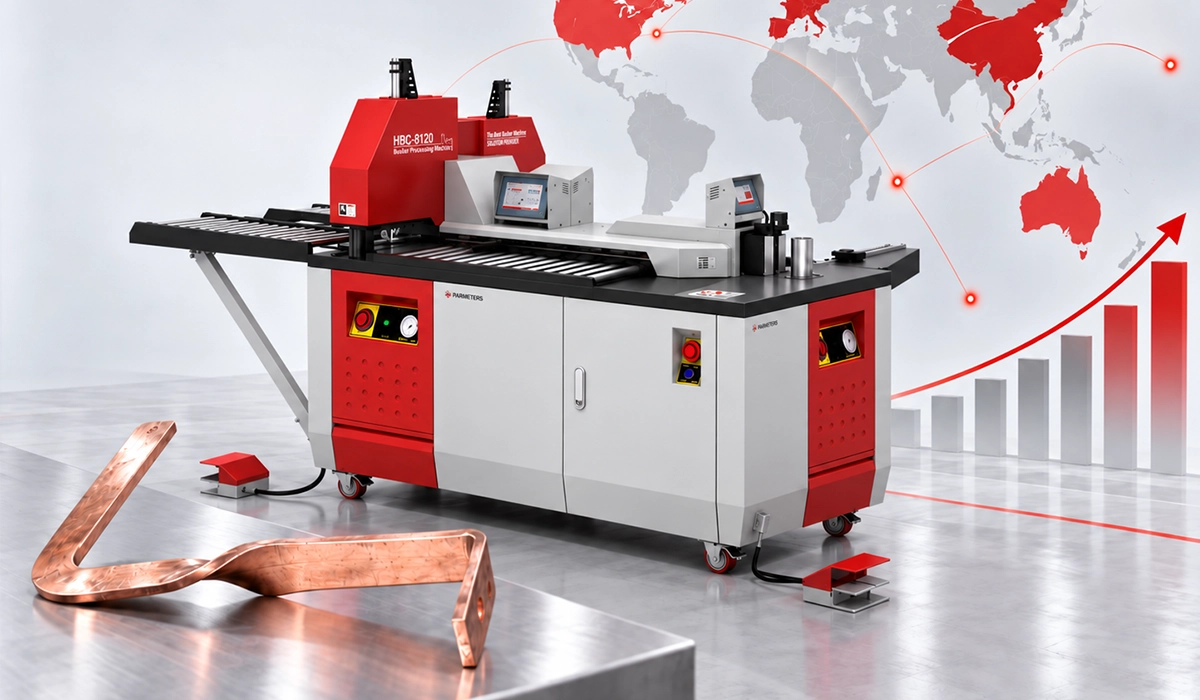
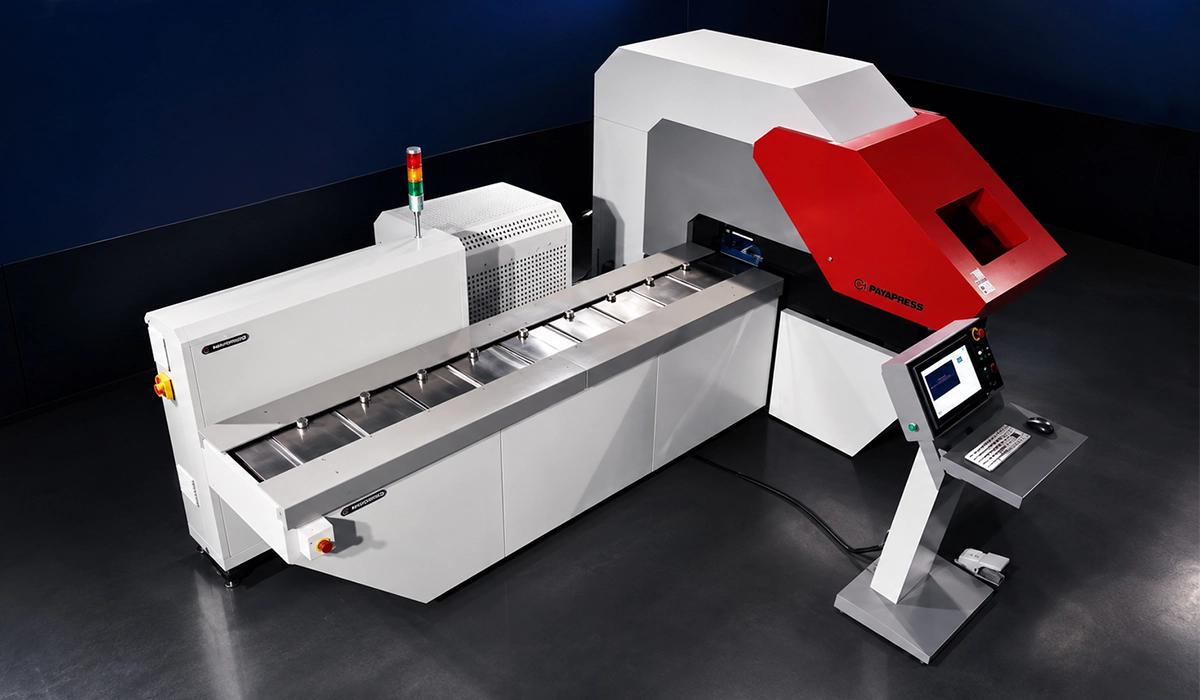
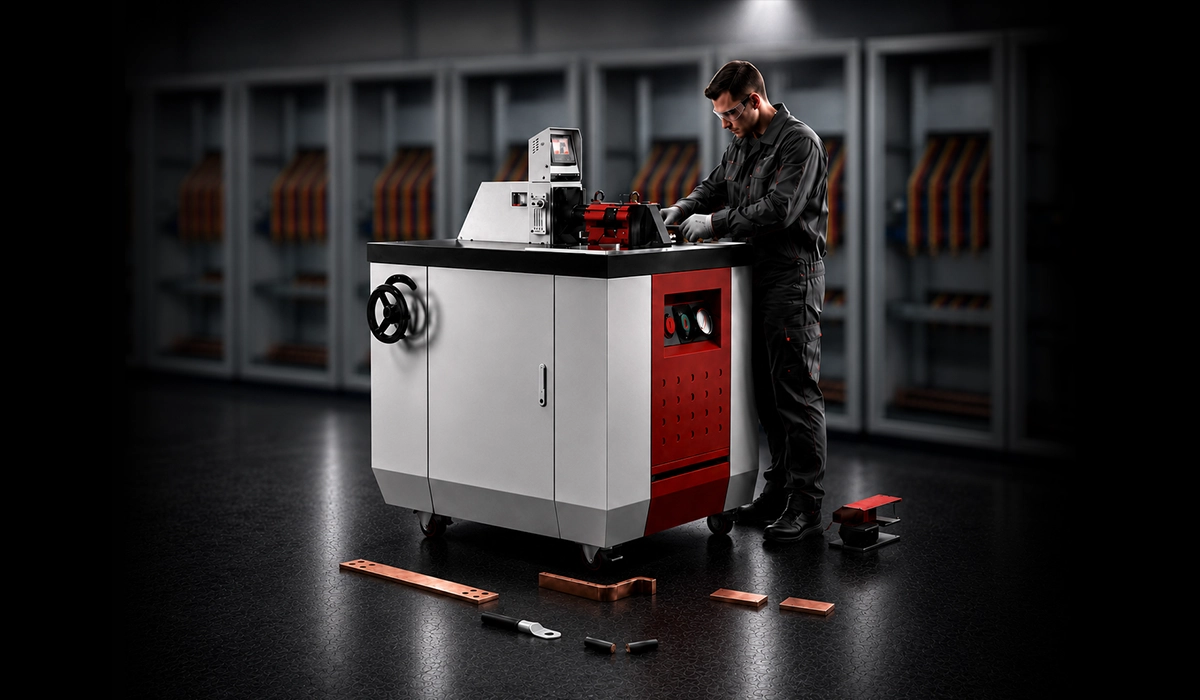
The upstream fix is at the fabrication level. Busbar fabrication machines — CNC-controlled systems that cut, punch, and bend copper or aluminium conductor bars to precise dimensional tolerances — are the industrial equipment producing the power infrastructure that makes AI-scale data centres work. According to reporting from Data Centre World London 2026, approximately 70% of new data centre projects now deploy busbars in the grey space instead of traditional cables. The global plug-in busbar systems market is projected to reach an index of 195 by 2035 (base 2025 = 100), representing a 7.2% compound annual growth rate driven almost entirely by AI facility buildout (IndexBox, 2026).
This guide covers what AI data centres actually demand from their power infrastructure, how busbar fabrication machines produce the conductors that meet those demands, the specifications that separate industrial-grade equipment from entry-level systems, a real-world case study from a hyperscale retrofit, and a practical framework for procurement teams and electrical contractors evaluating fabrication equipment.