Get a Free Technical Quote

"*" indicates required fields

This field is for validation purposes and should be left unchanged.

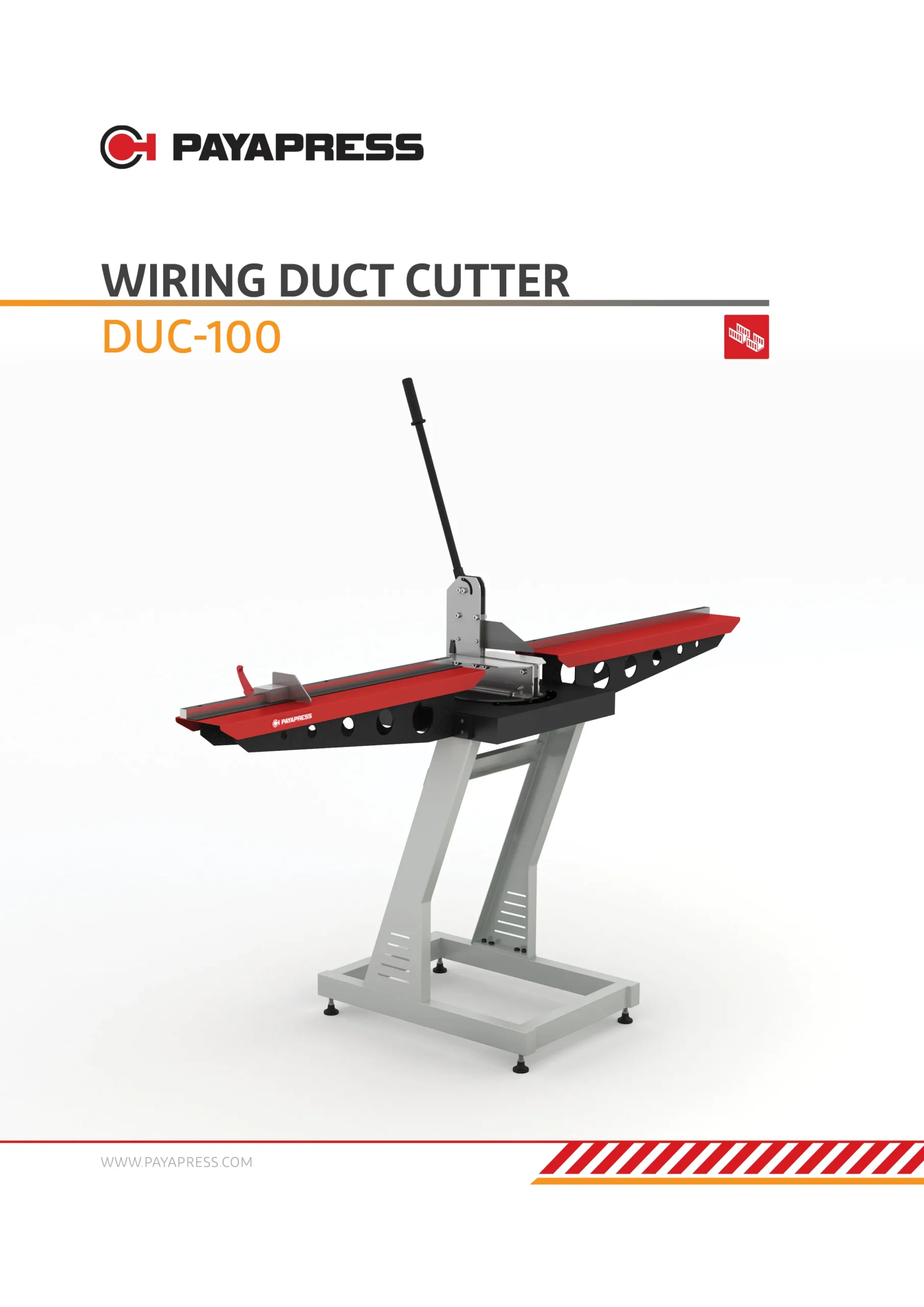
Model: DUC-100

Wiring Duct Cutter

What Is a Wire Duct Cutter?

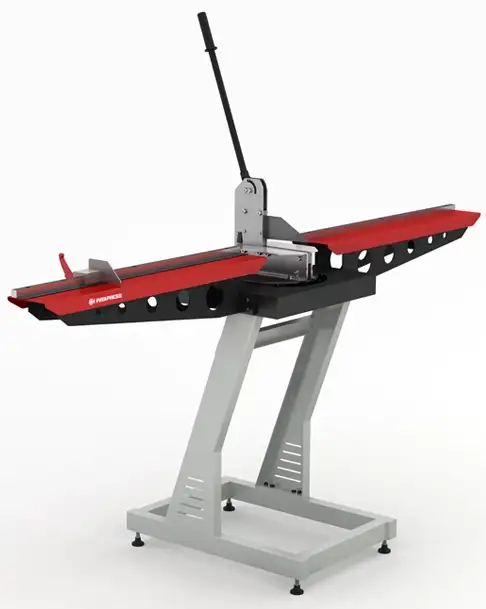
A wire duct cutter is a bench-mounted tool made for trimming the slotted PVC ducting — and its snap-on covers — used to keep cabling organized inside panels and enclosures. Instead of forcing a hand saw or side cutters through the plastic, the DUC-100 shears it cleanly in one motion. It covers duct widths up to 100 mm, which is enough for most panel-building work.

The DUC-100 as a Daily Duct Cutter Tool

A panel shop doesn’t need something fancy — it needs a PAYAPRESS duct cutter tool that holds up to daily use without drifting out of tolerance. The DUC-100’s HSS blade keeps its edge through repeated cutting, and the longitudinal stopper means an operator sets the length once and repeats it across dozens of pieces. Less rework, more uniform edges, and noticeably less effort than sawing by hand.

Where the DUC-100 Duct Cutter Is Used

This duct cutter is a regular fixture on electrical panel assembly lines and in cable-routing centers, where duct gets cut to length by the hundreds. Installation and maintenance teams in factories, hospitals, and commercial buildings rely on it as well, alongside general industrial electrical workshops. Wherever wiring duct is trimmed in volume, the DUC-100 swaps guesswork for a fast, repeatable result.

INTRODUCTION

TECHNICAL INFORMATION

Advantages of Using the PAYAPRESS DUC-100 Duct Cutter

  • Uniform cutting quality and cleaner edges for a better cable routing finish
  • Reduced rework and faster installation thanks to precise length setting and angle cutting
  • Higher safety compared to manual cutting tools
  • Low maintenance cost due to the simple structure and durable HSS blade

The DUC-100 Duct Cutter: Every Cut, Every Angle, Covered

The DUC-100 is purpose-built for cutting wiring ducts and duct covers, handling widths up to 100 mm in a single pass. Its HSS tool-steel blade holds an edge through heavy daily use, and when it does wear down, it can be replaced or re-sharpened instead of thrown out. A rotating head opens up straight, angled, and miter cuts on the same bench, while the longitudinal stopper locks in the length so every repeat cut lands exactly where the last one did.

Built to Handle Daily Workshop Pressure

Underneath those practical numbers is a bench built to survive a real workshop: the electrostatic coating resists scratches and daily wear, so the machine keeps its finish long after it’s been bolted to the floor. Running at 200 bar of working pressure, the DUC-100 delivers the force needed for clean cuts without asking the operator to lean into it. For panel builders and electrical workshops cutting duct all day, that adds up to fewer blade changes, less fatigue, and the same clean result on cut number one and cut number one thousand.

Duct Cutter Maintenance and Safety Tips

  • Keep the blade surface clean, and sharpen or replace it when it becomes dull.
  • During cutting, secure the workpiece with the clamps and use protective gloves.
  • Lock the angle guide before performing each miter cut.
DUC-100
Max duct width
100 mm
Blade material
HSS
Specifications
FunctionCutting various types of duct and duct cover
Maximum duct widthUp to 100 mm
Blade materialHSS tool steel blade
FeaturesLongitudinal stop for repetitive cutting; rotating angle guide for angled and miter cuts
Surface treatmentElectrostatic coating

Our Partners

Where are our active representatives?

FIND YOUR SOLUTION

FAQ's

Frequently asked questions

Can this duct cutter also cut duct covers?

Yes. The DUC-100 is designed for cutting both ducts and duct covers.

It can cut up to 100 mm in width, depending on the duct type.

The blade is made of HSS tool steel and can be replaced or resharpened.

Yes. With the help of the rotating angle guide or graduated angle setting, the machine can perform angled and miter cuts.

The machine’s working pressure is 200 bar.

GET FREE QUOTE

NEED

CONSULTATION?

Feel free to contact us and

ask your question, its absolutely free.

"*" indicates required fields

This field is for validation purposes and should be left unchanged.