Home ⪢ Busbar Processing Machine ⪢ HBC-B160
Email is all we need — an engineer replies with pricing & the right configuration, as soon as possible.
HBC-B160 Machine
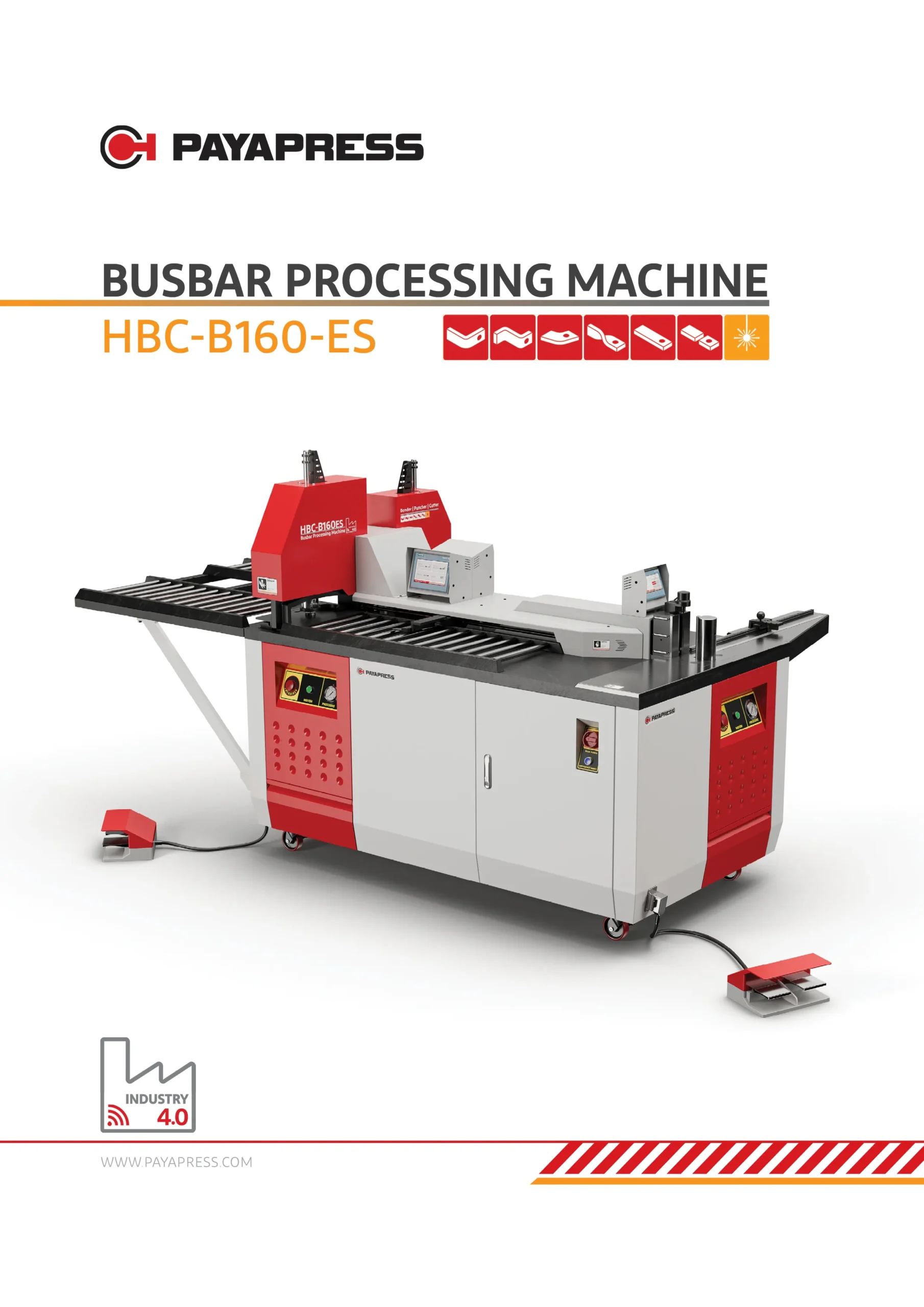
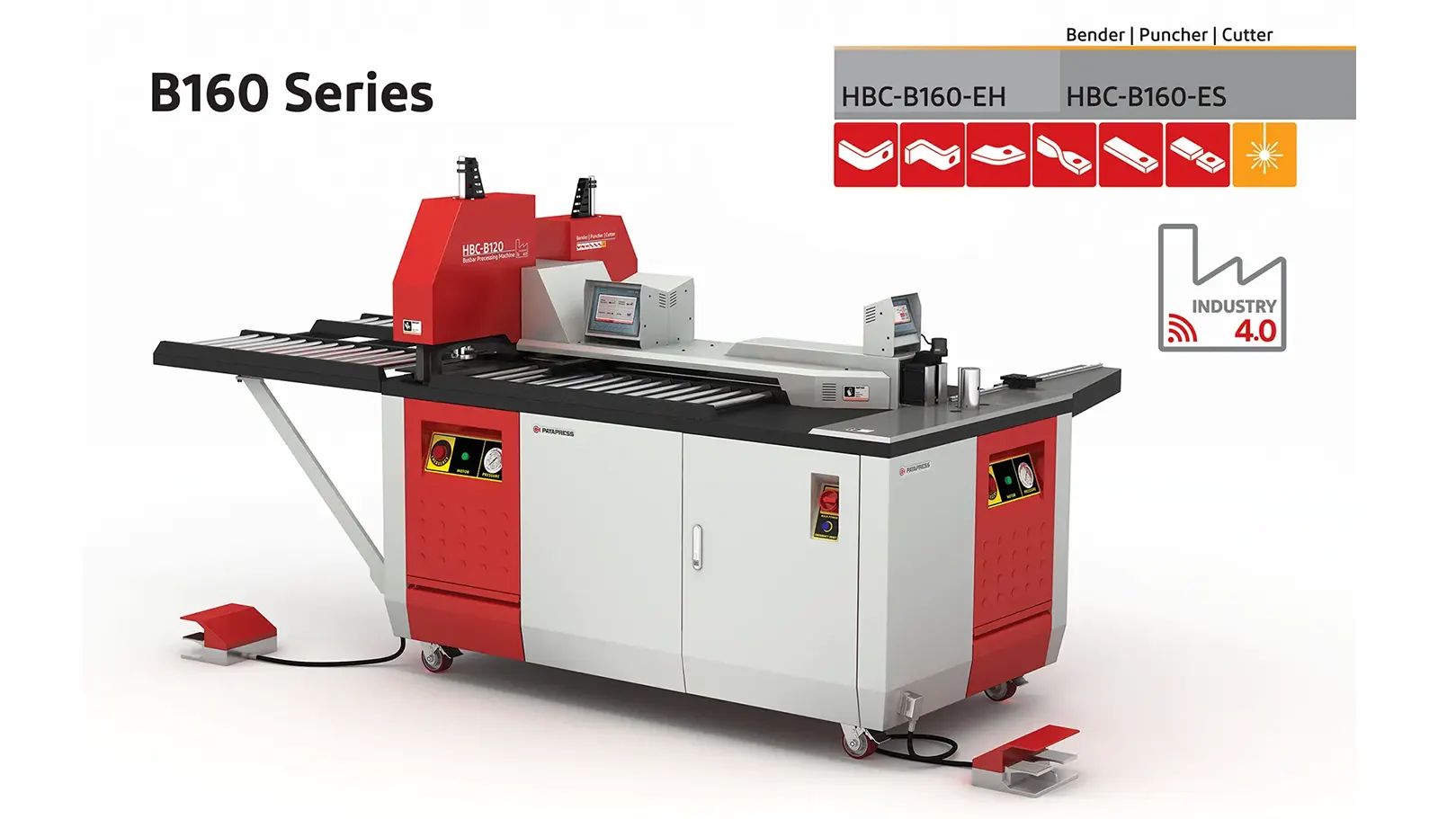
Plenty of workshops cut, punch and bend wide, thick busbars every single day, but not every one needs three operators working at once. The HBC-B160 busbar machine is built for exactly that: bars up to 160 mm across and 15 mm in section, with cutting, punching and bending on one wheel-mounted frame. Each job gets its own station, and a single hydraulic power pack runs them one at a time, so one operator takes each bar from raw length to finished part.
160 × 15 mm
Max. Busbar Size
±0.1 mm
Hole Spacing Accuracy
ES / EH Model
Programmable or Manual Length Stopper
3 Stations
Three Jobs Running At Once
One machine, three stations, one power pack. Curious how the HBC-B160 handles busbars up to 160 × 15 mm? Download the free catalog or ask a PAYAPRESS engineer directly. Just fill in one form.
Video
HBC-B160 Machin in Action
Precision Over Volume
HBC-B160 Machine: Three Stations, One Power Pack
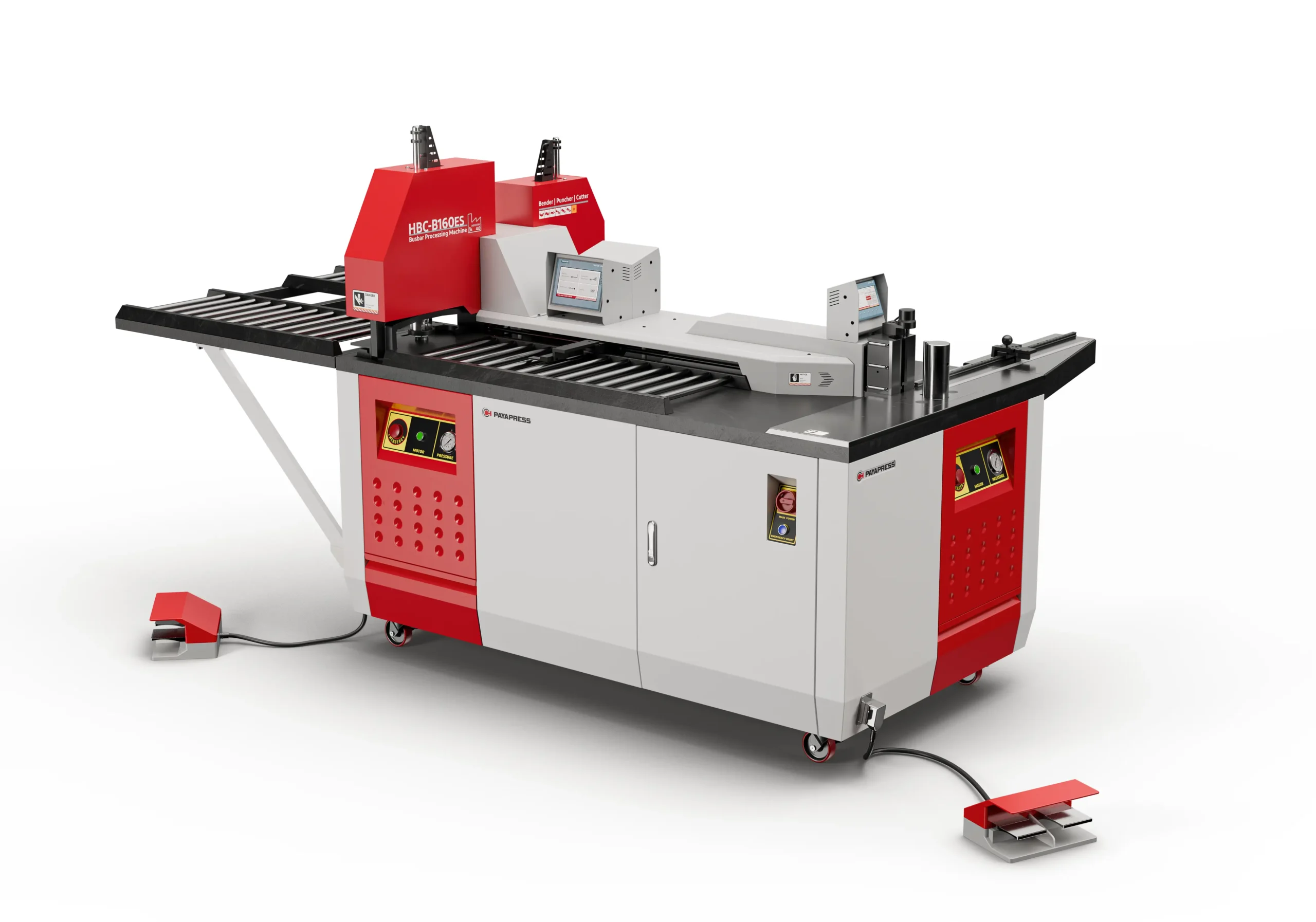
Not every workshop runs a mountain of orders. Some handle a steady flow of wide, thick busbars and want every cut, punch and bend done right. For them, the usual route (the saw, then the punch, then the bender, with a queue at every stop) costs more than it is worth. The HBC-B160 busbar processing machine folds that route into one machine. Cutting, punching and bending stations share a single wheel-mounted frame, so one operator takes each bar from raw length to finished part, with holes placed to within ±0.1 mm.
What Is the HBC-B160 Machine?
The HBC-B160 machine is a three-station busbar processor for copper and aluminum bars, built to cut, punch and bend on one wheel-mounted frame. It takes bars 15 to 160 mm wide and 3 to 15 mm thick, up to 4 m long. The bender delivers 250 kN, while the cutter and the puncher deliver 180 kN each. Two versions are available: the HBC-B160-ES, with a programmable length stopper, and the HBC-B160-EH, with a manual one.
Why Choose the HBC-B160 Machine?
Low volume does not mean low standards. The HBC-B160 is made for shops that care more about getting each part right than about turning out thousands of them, and these are the reasons that matter most:
- Wide, thick bars on one machine. Bars up to 160 × 15 mm are cut, punched and bent without a trip to a heavier line.
- Precision you can count on. Hole spacing is controlled to ±0.1 mm, and round holes run from Ø4.5 to 20 mm.
- Real force in every station. The bender delivers 250 kN, and the cutter and puncher deliver 180 kN each.
- A modest power draw. Total motor power is 2.5 kW, with hydraulic pressure up to 230 bar.
- Familiar brands inside. Siemens PLC and HMI, Duplomatic valves from Italy, Schneider contactors and Autonics sensors.
- Ready for a connected shop floor. The machine is Industry 4.0 compatible.
HBC-B160 Machine Versions: ES or EH
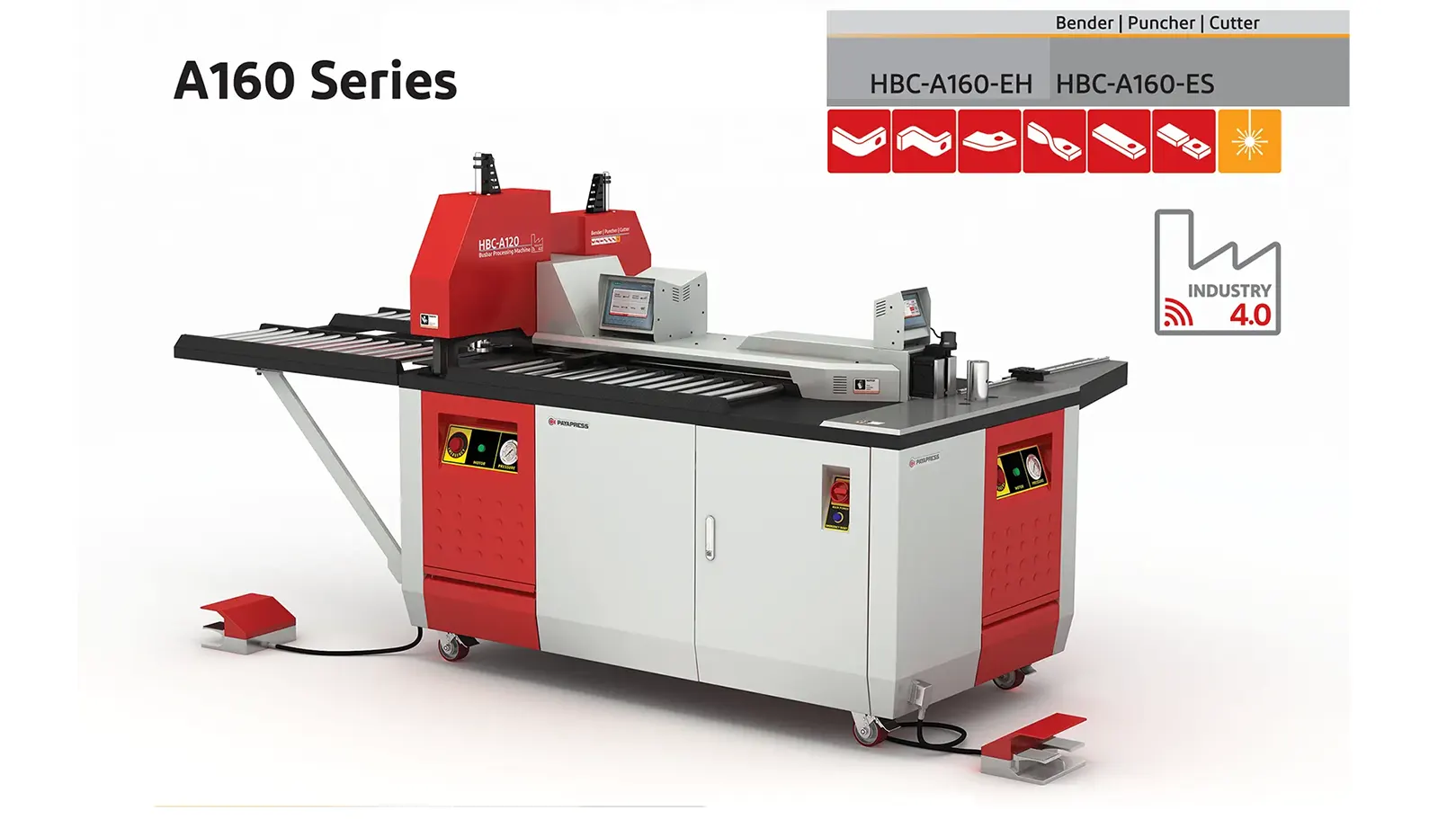
Both versions share the same three stations and the same 160 × 15 mm capacity. The one thing that changes is how the bar is positioned for punching and cutting.
- HBC-B160-ES: a programmable length stopper. Key the positions into the 7-inch screen and the stopper moves to each one by itself. Made for repeat parts and small batches.
- HBC-B160-EH: a manual length stopper that the operator sets by hand. Made for mixed, one-off jobs.
Bends You Can Make on the HBC-B160 Machine
Few busbars travel from A to B in a straight line. They hop over a neighbor, turn a corner or twist to meet a terminal. The bending station on the HBC-B160 machine covers all of these shapes:
- Flat bends: the standard L-shape, with the angle entered on the bender’s screen.
- Step (Z-shape) bends: two close bends in one stroke, so one bar can clear another.
- Edge bends: the bar turns on its narrow side and changes direction while staying in its plane.
- Twist bends: the bar rotates along its length to meet a terminal facing the other way.
- End bends: a short leg formed right at the end of the bar.
Flat bending comes as standard. The other shapes need optional molds, made to order, and the catalog lists each one.
Where the HBC-B160 Machine Is Used
Every job starts as a plain straight bar and leaves the HBC-B160 machine as a part that is ready to bolt in:
- Main and distribution bars for low-voltage and medium-voltage switchgear
- Connection bars between circuit breakers, contactors and terminals
- Connection bars for transformers and generators
- Earthing and neutral bars
- Busbar sets for busway and power distribution units
Round holes range from Ø4.5 to 20 mm. Oval and rectangular holes are possible with optional dies.
Industries Served by the HBC-B160 Machine
Wherever power travels through copper or aluminum bars, someone has to cut, punch and bend them. The HBC-B160 machine is at work in switchgear and electrical panel shops, transformer and busway plants, power stations and substations, renewable energy and battery storage projects, and data center and industrial power installations.
Is the HBC-B160 Machine Right for Your Workshop?
This machine earns its place in workshops that do not carry a huge order book but still want every cut, punch and bend done with precision. If one operator handles each job from start to finish, the HBC-B160 is likely a fit: it puts all three operations on one frame, holds hole spacing to ±0.1 mm, and on the ES version the stopper moves to every hole and cut position from a stored program. The frame sits on wheels, so it can go where the job is. Plan for a footprint of 3,110 × 1,100 mm and a height of 1,740 mm.
Want to see the HBC-B160 handle your own parts? Grab the free catalog, or put a PAYAPRESS engineer on the case. Either one starts with the form on this page.

Punching Station
Punches holes from Ø4.5 to 20 mm with 180 kN of force. 7 punching dies, and a laser pointer to find the hole center.
Cutting Station
Cuts bars up to 160 × 15 mm with 180 kN of force, on its own power pack.
Cutter & Puncher Controller
7-inch Siemens HMI. On the ES version, it drives the programmable length stopper for every hole and cut position.
Bending Station
250 kN of bending force for bars up to 160 × 15 mm, running while the other two stations work.
Bender Controller
4.3-inch Siemens HMI. Set the angle on the screen and bend.
Foot Pedal
Start each stroke with your foot and keep both hands on the bar. No reaching for buttons mid-job.
Clean Cuts
Clean edges, zero waste
Exact Holes
Laser center finder
Perfect Bending
Spring-back compensated
CE Certified
Built to EU safety standards
INDUSTRY 4.0
Monitor every process, live
Why PAYAPRESS
We don't sell machines. We remove risks.

Warranty, service, delivery, customization — every HBC-B160 arrives with all of it handled.
01
12 Months Warranty
One year, no questions asked
Every B160 leaves the factory with a 12-month manufacturer's warranty covering parts and workmanship.

02
10 YEARS
After-sales service with MATE
A decade of spare parts, remote diagnostics and engineering support — with tooling supplied worldwide through MATE Precision Technologies.

03
INDUSTRY 4.0
The machine keeps score
The machine keeps its own record. Output, cycle counts and job history, reported without anyone writing anything down.

04
CE
European conformity
Designed and tested to European safety standards, with full CE documentation for import, insurance and audits.

05
SAFE & FAST DELIVERY
It arrives like it left
protected shipping to wherever your workshop is.

06
Local Representation
Buy in your own language
Our representatives handle the quote, the order and the paperwork locally — you deal with someone in your market, in your language, not with a form on a website.
HBC-B160
HBC-B160 Machine Specifications
Process & Capacity
Tooling & Precision
Power & Machine
Frequently Asked Question
Straight answers on the HBC-B160
How is the PAYAPRESS HBC-B160 different from the HBC-B120?
The layout is the same, but the capacity is bigger. The HBC-B160 takes bars up to 160 × 15 mm instead of 120 × 12 mm, with 250 kN of bending force and 180 kN for cutting and punching, against 220 kN and 160 kN. Hydraulic pressure rises from 200 to 230 bar, and total motor power from 1.7 to 2.5 kW. The footprint stays the same: 3,110 × 1,100 × 1,740 mm.
Â
What is the largest busbar the PAYAPRESS HBC-B160 can process?
Bars up to 160 mm wide and 15 mm thick, and up to 4 m long. The full range is 15 to 160 mm in width and 3 to 15 mm in thickness.
What is the largest hole the PAYAPRESS HBC-B160 can punch?
Round holes up to Ø20 mm, from a minimum of Ø4.5 mm. Hole spacing is controlled to ±0.1 mm.
What power supply and floor space does it need?
It runs on 380 V AC at 50 Hz, with 2.5 kW of total motor power and hydraulic pressure up to 230 bar. It stands on wheels and measures 3,110 × 1,100 mm on the floor, with a height of 1,740 mm.
Â
Should I choose the ES or the EH version of the PAYAPRESS HBC-B160?
Both have the same three stations and the same 160 × 15 mm capacity. The ES has a programmable length stopper: you key the positions into the 7-inch screen and the stopper moves to each one, which suits repeat parts and small batches. The EH has a manual stopper that the operator sets by hand, which suits mixed, one-off jobs.
Â
Global representative network
Wherever you are, support is nearby
Local representatives around the world handle sales, installation and service — so your CNC busbar machine is never far from expert hands.
Europe
- Andorra
- Portugal
- Spain
- Turkey
- Ukraine
- Russia
Asia
- Japan
- Emirates
- China
- South Korea
- Bangladesh
North America
- Canada
- United States
South America
- Colombia
Africa
- Egypt
Oceania
- Australia
- New Zealand
Our Partners
Related Products
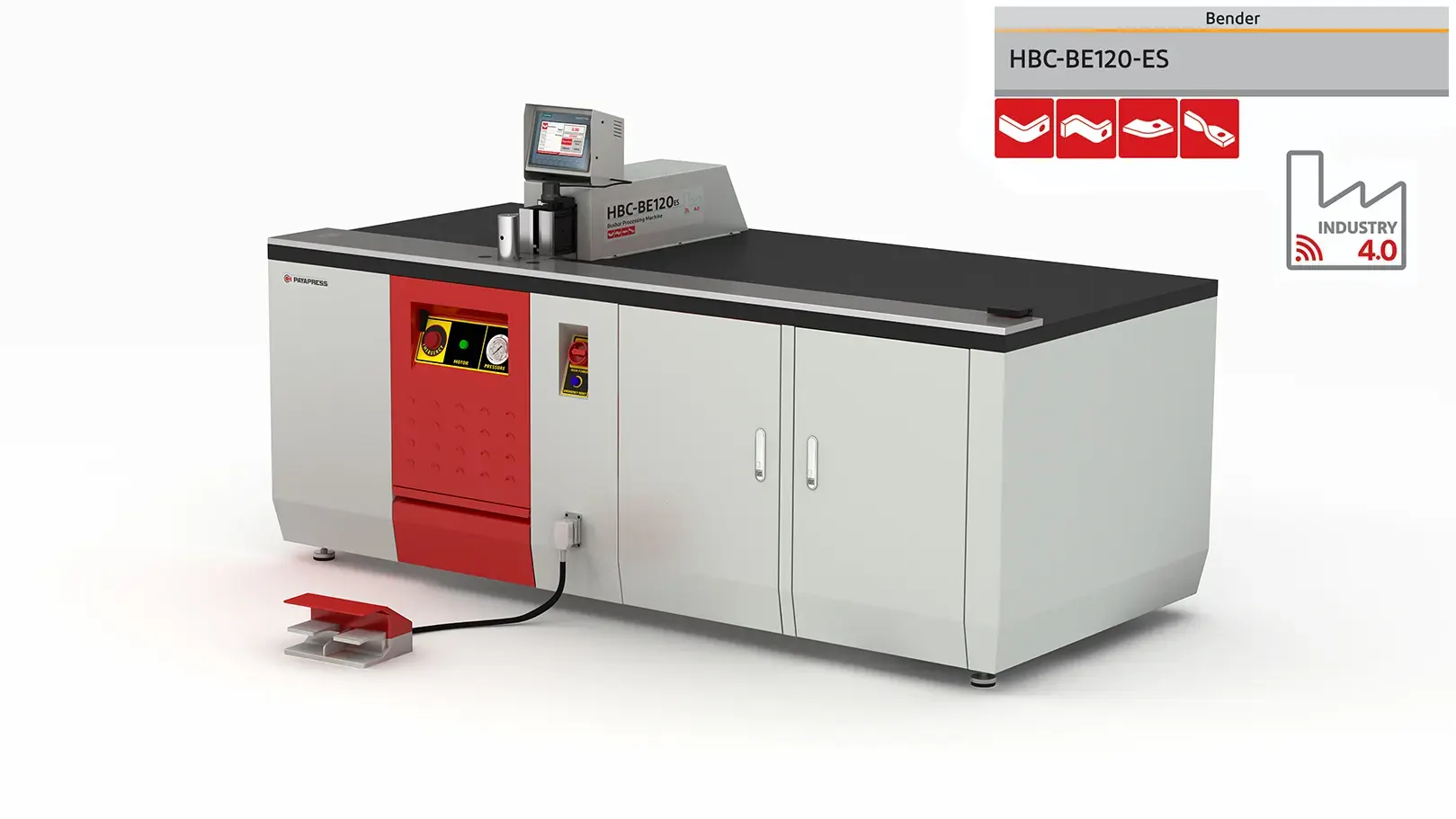
Related Products
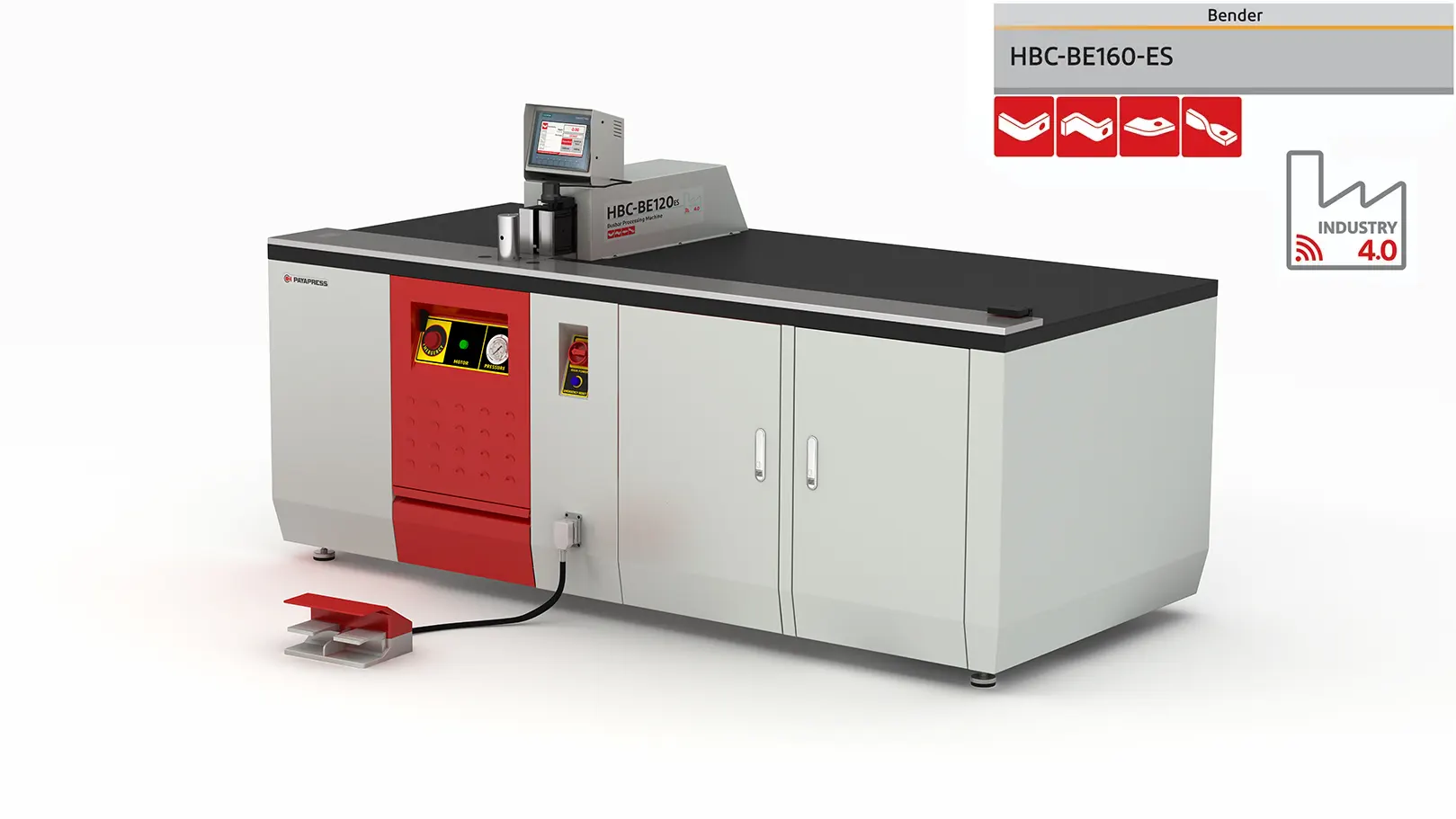
Need consultation?
Get a free HBC-B160 busbar machine quote
Capacity, price, delivery, installation — whatever your question about the HBC-B160, leave your email and an engineer will answer it directly
- Send your question today, get your answer today
- Every reply comes back the same day it arrives
- Quick form, quick answer — usually the same day
- We read and reply the same day, every day
Free technical quote
Tell us about your line — email is all we need
"*" indicates required fields