



What Separates Industrial-Grade Busbar Machine Brands from Entry-Level Equipment
Identifying the best busbar machine brand for an industrial buyer starts with knowing what industrial grade actually means. The choice of busbar machine brand for industrial use comes down to verifiable specifications and behaviours, not a marketing label. Busbar machine reliability industrial buyers can count on is grounded in measurable spec, durability under load, and after-sales depth — and a genuine heavy-duty busbar machine demonstrates all three. Mechanical durability separates the categories first: industrial machines are designed for continuous production cycles, with frame construction, hydraulic systems, and tooling holder precision engineered to hold tolerance for 10–15+ years under load. Entry-level frames flex, hydraulics drift, and tooling holders wear at production duty.
Dimensional accuracy under load is the next dividing line. Entry-level machines hold tolerance on a cold, unloaded demonstration; industrial-grade machines hold tolerance across a full production shift under thermal load. Bend angle repeatability of ±0.5° or better across 500+ cycles is the industrial standard; entry machines drift after 50–100 cycles. Tooling systems on industrial machines use standardised, replaceable components with documented wear intervals — proprietary single-source tooling is a production risk. Software and integration maturity (DXF import, offline CAM, batch logging, remote diagnostics) and after-sales infrastructure (regional parts, SLA-backed service) complete the definition.
| Criterion | Entry-Level Machine | Industrial-Grade Machine |
|---|---|---|
| Bend angle repeatability | ±1.5–2° (drifts) | ±0.3–0.5° (sustained) |
| Duty cycle | Intermittent | Continuous production |
| Tooling system | Often proprietary | Standardised, replaceable |
| Software | Basic angle input | DXF, offline CAM, diagnostics |
| Spare parts availability | Variable lead time | Regional stock, SLA-backed |
| Frame / hydraulic life | 3–5 years at load | 10–15+ years at load |
For the latest available details about Industry association reference defining performance characteristics for industrial-grade fabrication equipment, check the official page directly.
The Industrial Busbar Machine Evaluation Framework — What to Specify Before Comparing Brands
A disciplined specification framework precedes any brand comparison. Top busbar machine manufacturers compete on documented performance, not headline numbers, and any serious CNC busbar machine industrial buyer should treat the criteria below as a structured RFQ checklist. Get the criteria right and the busbar machine comparison becomes a calculation rather than an opinion.
Production volume and duty cycle. Define monthly busbar sets and average cross-section before contacting any brand — that figure determines whether a candidate machine runs at 20%, 60%, or 100% of rated duty cycle. A machine rated at 600 kN peak punching force may only be rated for continuous duty at 400 kN. Always request continuous duty spec at the actual production cross-section.
Accuracy specifications — demand in writing. Bend angle repeatability as a production-run average across minimum 200 cycles, not a single-sample demo (target ±0.5° or better). Hole position accuracy ±0.1–0.2 mm for switchgear-grade work. Cut length repeatability ±0.3–0.5 mm. Cut surface burr height ≤0.1 mm for insulation-grade finish.
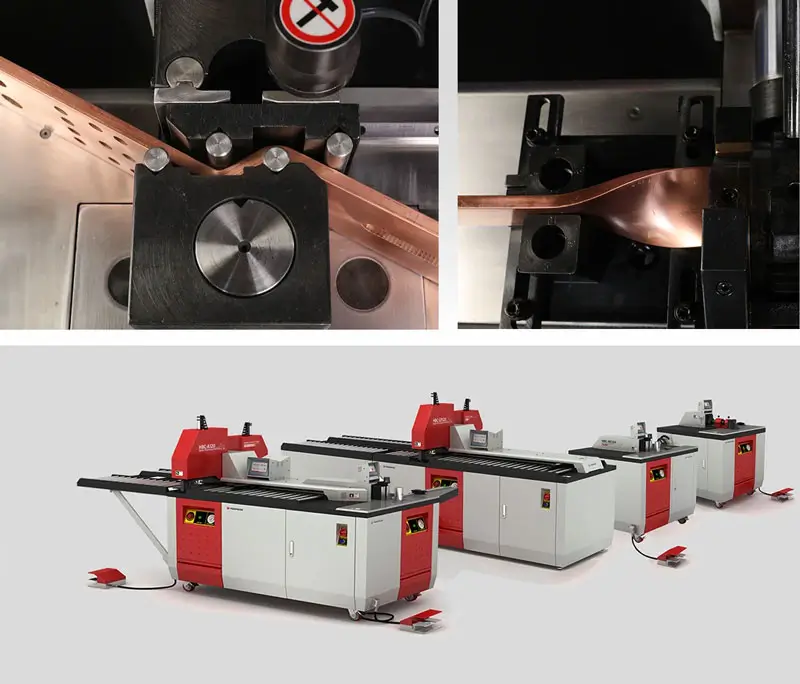
Three-function integration. For industrial switchgear production, a combined punch/cut/bend platform sharing a single CNC coordinate system eliminates repositioning error between operations. This is a quality control mechanism, not a convenience feature. Confirm all three functions share one reference frame, not separate manual setups.
For example, if you are looking for a 3-in-1 busbar machine, we recommend you don’t miss the review of this machine
Material range. Confirm continuous-duty rated capacity for both copper (Cu-ETP, EN 13601) and aluminium (EN AW-1350) at the maximum cross-section in scope — not peak figures.
Software for industrial use. DXF import mandatory. Offline CAM programming mandatory for multi-SKU production. Production batch logging required for IEC/UL traceability. Remote diagnostics a strong advantage for response-time reduction.
Tooling and consumables. Request the full tooling catalogue with list prices and lead times before purchase. Tooling cost is a significant element of 10-year TCO. Confirm whether replacement tooling is multi-source or single-source.
Common industrial buyer mistakes. Treating country of manufacture as a quality proxy — documentation matters more than origin. Skipping continuous-duty FAT — most issues only surface under sustained load. Accepting software demos on pre-programmed parts rather than testing DXF import on a real production drawing. Treating after-sales terms as secondary — downtime cost at industrial scale frequently exceeds purchase price within the first equipment life cycle.
Visit this page to learn more about the Sets the tolerance and clearance baselines that any industrial busbar fabrication machine must meet, and related details.
Top Busbar Machine Brands for Industrial Use — A Factual Comparison
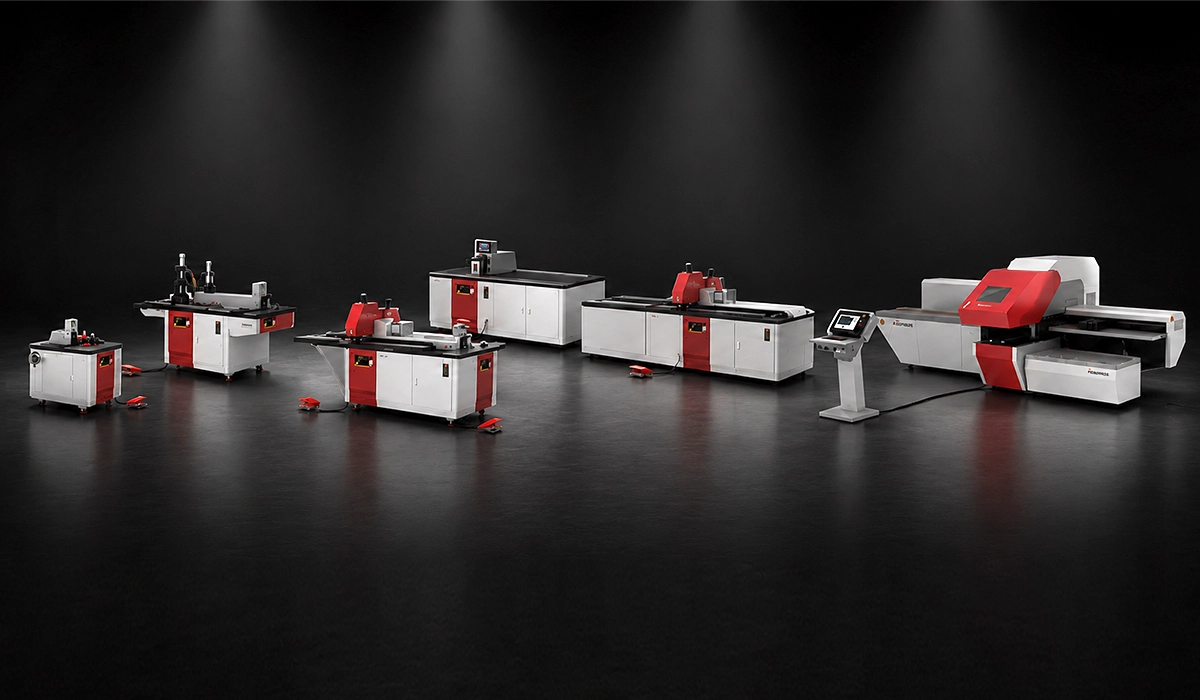
Any busbar machine for switchgear production at industrial scale needs to pass the same baseline tests. A busbar machine quality comparison driven by published specs alone misleads — verification matters. The summaries below are equal-depth profiles intended for shortlisting only. Listed alphabetically to avoid implying ranking. Verify current model availability, specifications, and regional service directly with each manufacturer before purchase — these change.
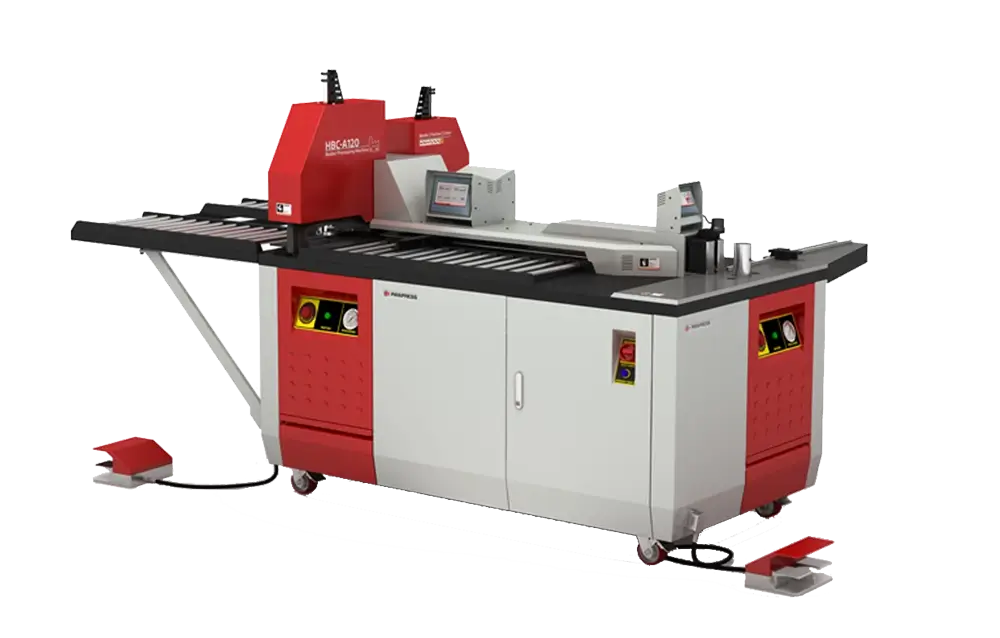
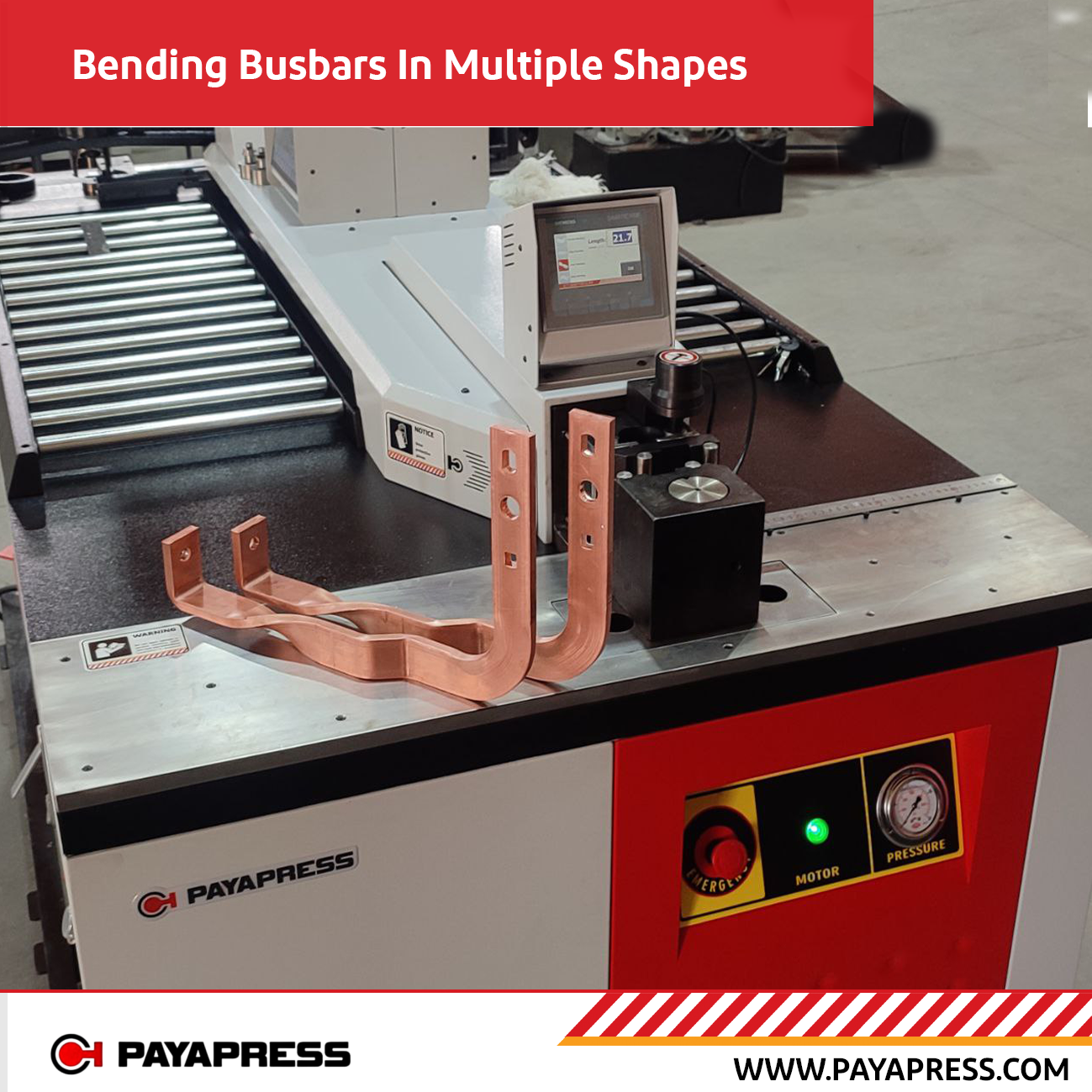
PAYAPRESS (International). PAYAPRESS manufactures CNC busbar fabrication machines for switchgear and industrial panel production, including combined punch/cut/bend platforms. Positioned in the industrial mid-range segment. Specification details — bend angle tolerance, punching force, cross-section capacity, and regional distribution and after-sales support — should be confirmed directly with PAYAPRESS before purchase.
Another point is that you can even obtain a dealership from the PAYAPRESS brand. To do so, simply visit the Become a PAYAPRESS Representative page.
Ehrt (Germany). Ehrt manufactures CNC busbar processing systems used in switchgear and MV panel production globally, with a reputation built on European engineering standards, software maturity, and punching precision. Positioned at upper mid-range to premium tier. Confirm regional distribution and spare parts availability outside Europe directly with the local distributor before purchase.
Geka (Spain). Geka manufactures busbar and structural fabrication equipment with semi-automatic and CNC options spanning entry to industrial tier. The busbar-specific range applies to mid-scale industrial panel fabrication. CNC software maturity and regional service infrastructure vary by model and should be evaluated directly before shortlisting.
MBI (Italy). MBI produces a range of CNC busbar fabrication machines from mid-range to industrial, including three-function punch/cut/bend platforms. Widely distributed internationally across LV and MV switchgear production markets. Considered a strong mid-range industrial option. Confirm regional after-sales coverage and tooling availability before shortlisting.
SOCO (Taiwan). SOCO produces CNC busbar processing machines with broad international distribution at competitive price points. Combined punch/cut/bend platforms are used in switchgear and panel fabrication. Price-to-specification ratio is a noted characteristic. Verify dimensional accuracy documentation and regional spare parts availability independently before purchase at industrial scale.
You can find more background information and related technical notes about Independent directory useful for verifying current distribution and regional service coverage of industrial equipment manufacturers through this reference link.
Brand Performance at a Glance — Industrial Busbar Machine Comparison Table
The table is a shortlisting reference, not a buying decision. Every entry should be re-confirmed against current supplier datasheets and a direct conversation with a regional distributor before requesting quotation. Specifications and distribution arrangements change.
| Brand | Origin | Tier | Machine Type | Punch Force | Bend Accuracy | Regional Service | Price |
|---|---|---|---|---|---|---|---|
| Ehrt | Germany | Upper mid-premium | 3-function CNC | Mid-High | Verify by model | Verify by region | Premium |
| Geka | Spain | Entry-mid | Semi-auto / CNC | Mid | Verify by model | Distributor-dependent | Mid |
| MBI | Italy | Mid-industrial | 3-function CNC | Mid | Verify by model | Distributor-dependent | Mid |
| PAYAPRESS | International | Mid-industrial | 3-function CNC | Verify with maker | Verify with maker | Verify by region | Mid–Premium |
| Peddinghaus | USA | Premium | Heavy industrial | High | Verify by model | Established US network | Premium |
| SOCO | Taiwan | Mid | 3-function CNC | Mid | Verify by model | Distributor-dependent | Mid |
Treat any “verify” entry as a direct question for the supplier’s regional contact, not as published fact. Published service claims and field reality are not always aligned at industrial scale.
For readers who want more technical depth about Industry association reference on structured comparison of industrial fabrication equipment suppliers, this reference page is a useful starting point.
Proof — Production Performance Impact of Brand and Machine Quality in Industrial Busbar Fabrication
The figures below are a clearly labelled hypothetical illustration — replace with verified production data before publishing. Scenario: a mid-size switchgear manufacturer running 300 busbar sets per month in Cu-ETP at 60×6 mm to 120×10 mm, on MV switchgear panels to IEC 62271. Labour rate assumed at $45/hr.
| Metric (hypothetical) | Entry-Level Brand | Mid-Industrial Brand | Premium Brand |
|---|---|---|---|
| Bend angle error (prod. avg.) | ±1.8° | ±0.5° | ±0.3° |
| Rework rate at FAT | 24% | 5% | 1.5% |
| Machine downtime (hrs/month) | 18 | 6 | 2 |
| Avg. rework cost/month (USD) | $7,200 | $1,500 | $450 |
| Tooling replacement (USD/year) | $4,800 | $2,400 | $1,800 |
| Total annual production cost | $144,000+ | $47,880 | $27,000 |
Any busbar fabrication equipment comparison 2025 buyers run lands on numbers like these. The chosen busbar punch cut bend machine brand drives the cost stack more than headline price. The financial pattern matters more than the specific numbers. The annual production cost gap between entry-level and mid-industrial brands typically dwarfs the purchase price difference within the first 24 months at industrial volumes. From mid-industrial to premium the gap narrows but stays material above 300 sets per month.
You can visit the official website for more detailed and updated information about Peer-reviewed research library on capital equipment performance and cost-of-ownership in industrial fabrication..
How to Run a Structured Brand Evaluation for an Industrial Busbar Machine Purchase
How to choose an industrial busbar machine brand starts with sequence. A disciplined industrial procurement sequence runs as follows. First, define production requirements in writing before contacting any brand: maximum cross-section, material type, monthly volume, voltage range of panels produced, and applicable standards (IEC 62271, UL 891, or other). Second, establish minimum acceptable specifications as non-negotiable filters: ±0.5° production-run bend accuracy, continuous-duty punching force at the production cross-section, ≤0.1 mm burr height, and software requirements including DXF import and offline CAM. Third, send a written RFQ to a minimum of four shortlisted brands and require documented specification responses, not marketing collateral. Fourth, visit at least two reference customers per shortlisted brand running similar production volumes and ask about behaviour under sustained load and actual after-sales experience, not features. Fifth, request factory acceptance testing (FAT) terms in the purchase agreement and define pass/fail criteria against documented specifications before signing. Sixth, negotiate busbar machine after-sales support terms explicitly: spare parts SLA, service response time, software update commitment, and training package — in writing. Seventh, compare shortlisted brands on total five-year cost of ownership, not purchase price, with tooling, service, and estimated downtime cost included in the calculation.
For a detailed breakdown of how to evaluate copper and aluminium equipment before purchase, see our full buyer’s guide.
Conclusion about best Busbar Machine Brand
No single brand is universally best. The right busbar machine brand for industrial use is the one whose documented specifications match the production requirement and whose after-sales infrastructure operates in the buyer’s region. A professional busbar machine for industrial production earns the label through documentation, not marketing. Evaluate on FAT-verified accuracy, total cost of ownership, and confirmed service SLA — not brochure claims or country of origin. Request technical specification sheets, reference customer contacts, and FAT terms from a balanced shortlist — Ehrt, Geka, MBI, PAYAPRESS, and SOCO — and compare on documented production performance before deciding.

Rate this article
Choose a rating from 1 to 5 stars.
No ratings yet