author

Mahdi Hojati

I am a content writer at Payapress, specializing in industrial machinery, CNC equipment, and busbar processing solutions. With an academic background in Computer Engineering, alongside studies related to Mechanical Engineering and manufacturing systems, I focus on producing technical content that is accurate, practical, and accessible for industry professionals.

As a graduate of the American University in Dubai, I have spent the past three years working closely with technical and industrial content, particularly in the fields of machine design, production technologies, and industrial automation. At Payapress, my goal is to present complex engineering concepts in a clear and professional way for engineers, manufacturers, and decision-makers in the industrial sector.

bblogs

safety management system

safety management system in industrial workshops

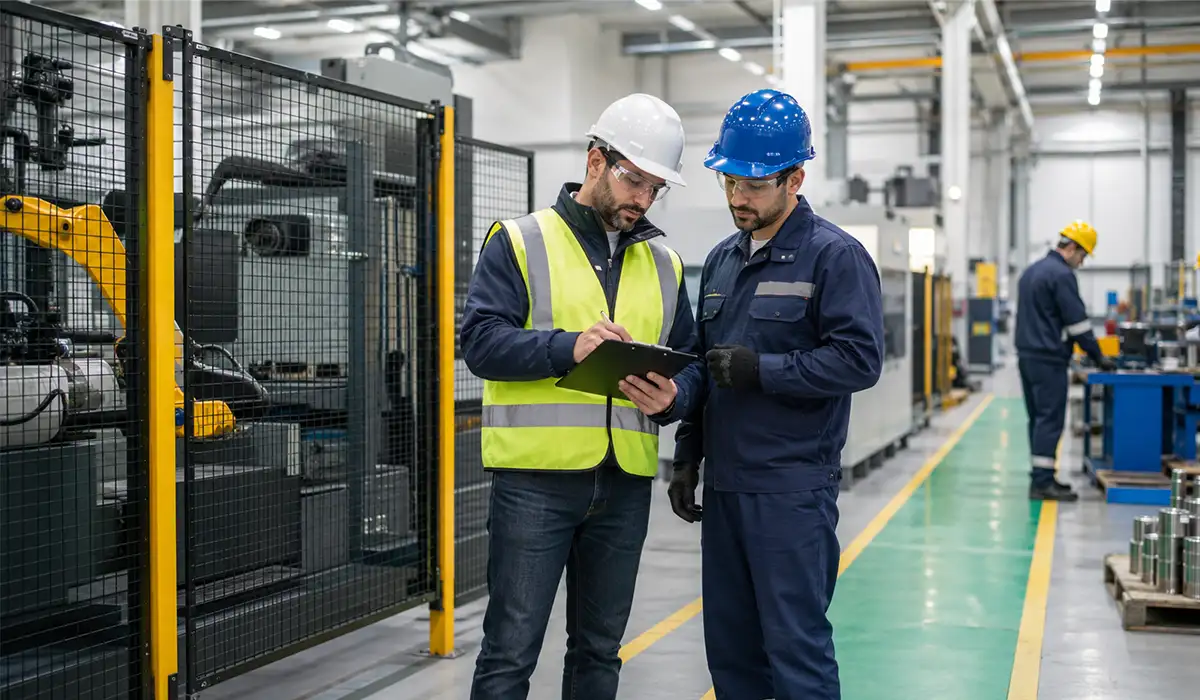
A safety management system in industrial workshops helps companies identify hazards, control workplace risks, protect employees, and improve operational safety. In manufacturing, machinery, maintenance, and construction-related environments, a well-structured health and safety management system is essential for reducing accidents, improving compliance, and creating safer daily workflows. This guide explains what is safety management, how safety management systems work, and why process safety management matters when industrial operations involve equipment, energy sources, materials, and human activity.

Read More ยป
Busbar in electrical panel

what is a busbar in an electrical panel

A busbar in an electrical panel is a solid conductive bar, usually made of copper or aluminum, that receives incoming power and distributes it to multiple outgoing circuits inside the panel. Instead of using many separate cable connections, the busbar creates a cleaner, lower-resistance, and more organized path for current flow. In practical panel design, it supports better power distribution, easier maintenance, improved space efficiency, and more predictable performance under normal load and fault conditions.

Read More ยป
Capacitor Banks

Why Industrial Units Need Capacitor Banks

In industrial environments, optimizing energy consumption and ensuring optimal equipment performance are of paramount importance. One of the key solutions for achieving these goals is the use of capacitor banks. A capacitor bank, by compensating for reactive power, helps improve power factor, reduce energy losses, and extend the lifespan of equipment. This not only reduces electricity costs but also ensures the reliable and stable operation of electrical systems. In this article, we will discuss the necessity of capacitor banks and the reasons why every industrial unit should use them.

Read More ยป
measuring device

10 Essential Electrical Measuring Devices for Engineers

Powermeter, ammeter, frequency meter, current transformer, cosine phi meter, etc. In electrical systems and main electrical switchboards, and in most industrial environments, electrical measuring devices are needed to inspect and manage electrical equipment and to analyze parameters such as current, voltage, power, frequency, power factor, etc. For a comprehensive understanding of the standards governing these systems, we highly recommend reviewing this article on standards for switchgear and busbar systems. Further exploration of applicable electrical regulations can be found in the following recommended reading on the electrical standards guide.

Read More ยป
Three-Phase Cable

Three-Phase Power Cable Selection Guide: Sizing, Voltage Drop, and Safety

Selecting the right three-phase power cable is one of the most critical decisions in electrical system design. A poor choice can lead to excessive voltage drop, cable overheating, equipment failure, and even fire hazards. This guide walks you through every key factor engineers must evaluate to make a safe, reliable, and code-compliant cable selection. For a broader context on how cables integrate into distribution systems, see our overview of standards for switchgear and busbar systems.

Read More ยป
Resistance Test

The Most Important Methods for Testing Electrical Switchboards

All low-voltage switchboards must be tested after manufacturing in the factory, and also after installation at site and before commissioning, in terms of dielectric properties, temperature rise, short-circuit withstand, continuity of protective circuits, clearances and creepage distances, the operation of mechanical components, and the degree of protection. Switchboard testing must be carried out based on the provisions of Clause 8 of Publication No. 1928 of the Institute of Standards and Industrial Research of Iran, as the test specifications. For example, a typical 400A main distribution board installed in a commercial building must undergo comprehensive testing before energization to ensure safe operation for critical loads like HVAC systems, lighting circuits, and emergency power distribution.

Read More ยป