



What Is IEC 60529? The Standard Behind Every IP Rating
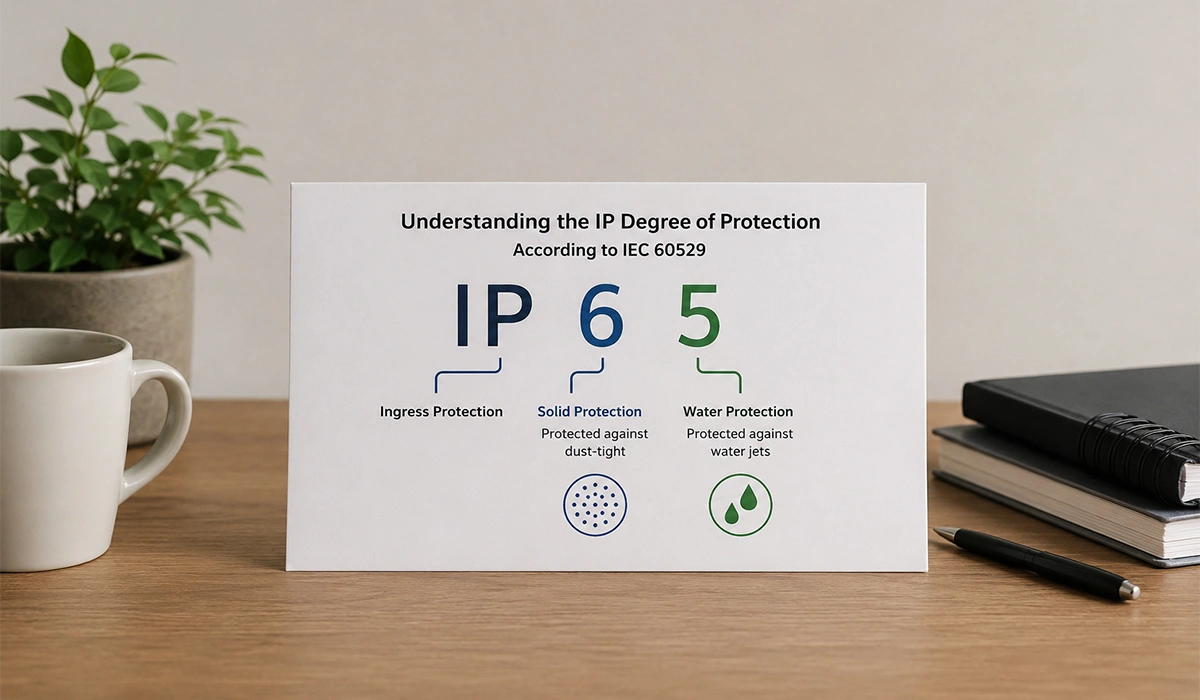
IEC 60529, Degrees of protection provided by enclosures (IP Code), is the international standard that defines the IP rating system. The IP code is a classification for how well an enclosure protects against three things at once: people reaching hazardous parts, solid foreign objects getting in, and water getting in.
The scope is broad: it applies to enclosures for electrical equipment rated up to 72.5 kV, which covers everything from a sensor housing to an MV switchgear cubicle. IEC holds it as a basic safety publication under IEC Guide 104, which is why product standards such as IEC 61439 reference it instead of defining their own ingress tests.
The current text is the consolidated Edition 2.2, published in August 2013 and cited as IEC 60529:1989+AMD1:1999+AMD2:2013. Two corrigenda follow it, issued in October 2013 and May 2015. Amendment 2 is the one that matters most in practice: it added the second characteristic numeral 9 for high-pressure, high-temperature water jets, and the additional letters A, B, C and D. Datasheets and internal specs still citing the 1989 or 1999 text predate both.
Three elements are always present in an IP code:
- the letters IP
- the first characteristic numeral, 0 to 6, or the letter X
- the second characteristic numeral, 0 to 9, or the letter X
Two more are optional, and are covered in the letters section below.
IP ratings sit inside a wider compliance picture for assemblies. For how they fit alongside the other requirements, see our guide to switchgear and busbar standards.
What the X Really Means in IPX7 or IP6X
The X is not a failure and it is not shorthand for “untested in our lab.” IEC 60529 uses it where a characteristic numeral is not required to be specified. A product marked IPX7 has a declared water rating and no declared solids rating; a product marked IP6X is the reverse.
This matters when you compare datasheets:
- IPX4 is not IP54. IP54 requires the IP5X dust test and the IPX4 splash test. A supplier who has only run the water test cannot claim IP54.
- A missing digit is a question for the supplier, not an assumption you get to make in your favour.
- X never appears in a fully specified marking. If both characteristics are declared, both numerals are printed.
The IEC 60529 IP Code Table: Every Digit at a Glance
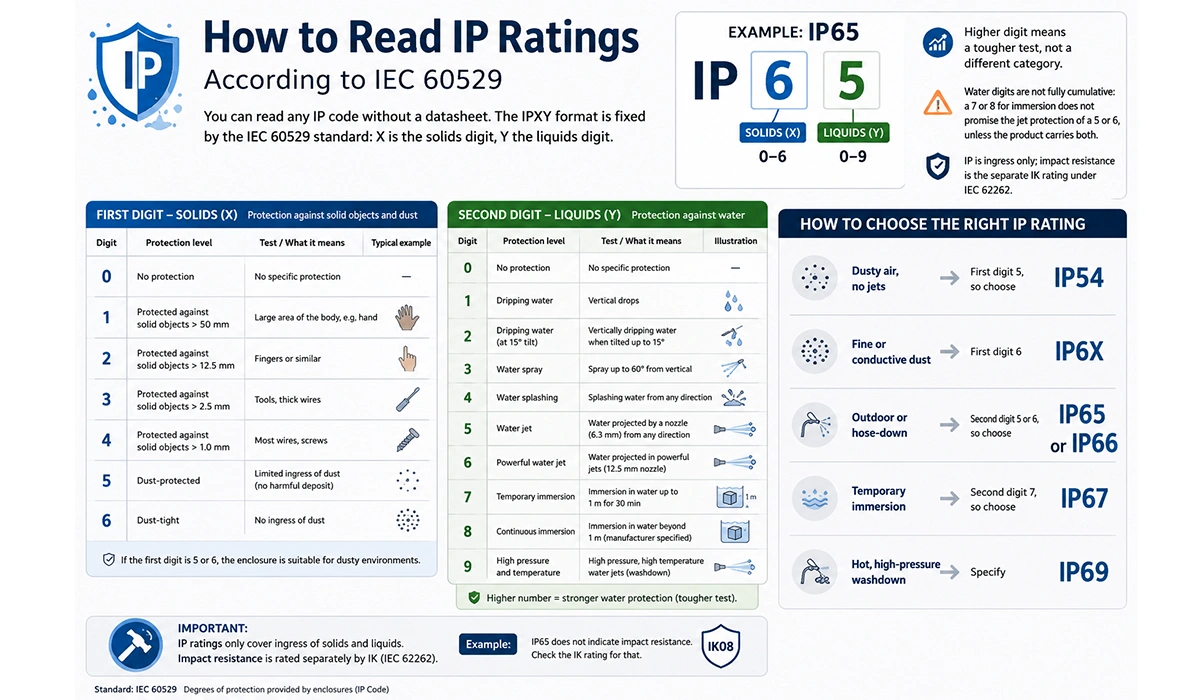
Each numeral is a separate test, not a point on one scale. The first numeral covers solids and access; the second covers water.
First characteristic numeral — solid objects and access to hazardous parts
| Digit | Protection against solid objects | Protection against access with |
|---|---|---|
| 0 | Not protected | Not protected |
| 1 | ≥ 50 mm diameter | Back of hand |
| 2 | ≥ 12.5 mm diameter | Finger |
| 3 | ≥ 2.5 mm diameter | Tool |
| 4 | ≥ 1.0 mm diameter | Wire |
| 5 | Dust-protected — limited ingress, not enough to interfere with operation | Wire |
| 6 | Dust-tight — no ingress of dust | Wire |
Second characteristic numeral — water
| Digit | Protection against |
|---|---|
| 0 | Not protected |
| 1 | Vertically falling drips |
| 2 | Drips, enclosure tilted up to 15° |
| 3 | Spraying water up to 60° from vertical |
| 4 | Splashing water from any direction |
| 5 | Water jets (6.3 mm nozzle) |
| 6 | Powerful water jets (12.5 mm nozzle) |
| 7 | Temporary immersion |
| 8 | Continuous immersion, under conditions agreed between manufacturer and user |
| 9 | High-pressure, high-temperature water jets |
The single most consequential line in that first table is the 5/6 boundary. Dust-protected is not dust-tight. Specifications that say “dust-tight” and then call for IP5X are internally contradictory, and it is a mistake that survives into published exam questions and AI-generated answers alike.
Dust-Tight and Splashing Water: Is It IP54 or IP64?
Read strictly against IEC 60529, an enclosure that is dust-tight and protected against splashing water is IP64:
- first numeral 6 = dust-tight (no ingress of dust)
- second numeral 4 = splashing water from any direction
IP54 is not the same thing. Its first numeral 5 is dust-protected: a limited amount of dust may enter, provided it does not interfere with operation or safety. Both codes share the same IPX4 splash test; only the dust test differs.
Two practical notes:
- Some course material and several AI answer engines give IP54 for this question, because they treat “dust-tight” and “dust-protected” as synonyms. They are not synonyms in the standard. If you are answering to an exam key rather than to the standard, check which definition the course uses.
- On a real project, the distinction is money. Dust-tight means a properly compressed continuous gasket, tested glands and no unsealed knockouts. Dust-protected tolerates a great deal less. Specify 6 where you have conductive dust, fine powder or anything that will bridge a terminal; specify 5 where dust is merely a nuisance.
Why the Right IEC 60529 Rating Beats the Highest One
The correct IP degree of protection is not the highest number; it is the one that matches the environment.
Over-specify and you pay for it three ways: a higher enclosure price, a narrower choice of gland and accessory, and a sealed box that traps heat, which pushes you toward a cooling unit you did not budget for. Under-specify and dust or moisture reaches live parts, and you pay in corrosion, nuisance tripping and downtime.
Two things about IP ratings are easy to forget once the order is placed:
The rating is a type test on a new, correctly assembled enclosure. It describes a sample that passed in a laboratory, under defined conditions, with everything fitted as designed. It does not describe the panel on your floor after three years. A cable gland tightened by hand, a spare knockout left open, a door gasket compressed flat, a modification drilled on site — any one of these can take a nameplate IP66 panel down to something closer to IP54 in service. The rating survives on paper; the protection does not.
An IP rating is not a NEMA type. NEMA enclosure types also test corrosion resistance, icing and gasket ageing, which IEC 60529 does not cover at all. Cross-reference tables run one way only, from a NEMA type to a minimum IP code, and never reliably back.
The rule that prevents most failures is unglamorous: read the environment first, then specify the enclosure, the glands and the accessories together. An IP66 enclosure fitted with IP54 glands is an IP54 assembly.
For how the different panel types are categorised, see our guide to types of electrical panels.
The Optional Letters in an IEC 60529 Code
Most IP guides stop at two digits. IEC 60529 defines two further, optional positions, and both appear on real nameplates.
Additional letters — A, B, C, D. These describe protection of persons against access to hazardous parts, and they are used only when that protection is higher than the first characteristic numeral alone would indicate:
- A — back of hand
- B — finger
- C — tool
- D — wire
An enclosure marked IP2XD admits solid objects down to 12.5 mm, yet its internal barriers still keep a wire away from live parts. That is exactly the case an engineer needs to know about and the two-digit code alone cannot express. This is also why the letters were added in Amendment 2.
Supplementary letters — H, M, S, W. These carry information specific to the equipment or the test:
- H — high-voltage apparatus
- M — water test performed with the movable parts of the equipment in motion
- S — water test performed with the movable parts stationary
- W — suitable for specified weather conditions, with additional protective features
M and S matter for anything with a fan, a shaft or a moving door. A motor tested to IPX5 stationary is not the same product as one tested running.
The Four IEC 60529 Ratings That Cover Most Industrial Duty
Four codes handle the large majority of industrial specifications: IP54, IP65, IP66 and IP67. Each step is a different test, not a higher score on the same one.
| IP code | Solids | Water | Typical duty | Specify when |
|---|---|---|---|---|
| IP54 | Dust-protected | Splashing | Indoor control panels, junction boxes, sensors | Dust present, no directed water |
| IP65 | Dust-tight | Water jets | Outdoor enclosures, light washdown | Rain or routine hose-down |
| IP66 | Dust-tight | Powerful jets | Heavy washdown, marine, food plant | High-pressure cleaning |
| IP67 | Dust-tight | Temporary immersion | Floor-level boxes, trackside, mobile plant | Brief flooding is credible |
Two cross-market notes worth settling before you order: the IP vs NEMA and IK comparison, and the direct IP55 vs NEMA 12 comparison.
IP54: Dust-Protected, Splash-Resistant, Indoors
IP54 combines the IP5X dust-protected test with the IPX4 splashing-water test. The 5 allows a limited amount of dust to enter, provided the quantity is not enough to interfere with operation or impair safety — it is not dust-tight. The 4 covers water splashed from any direction, not directed jets.
That makes IP54 the workhorse for indoor control panels, junction boxes and sensors mounted away from cleaning routines. It is the wrong choice anywhere a hose is used, and the wrong choice where dust is conductive or abrasive.
An IP54 panel sold into regulated markets has conformity obligations well beyond ingress; see our guide to CE marking for industrial control panels.
IP65: Dust-Tight and Rated for Water Jets
IP65 is dust-tight, and it holds against water jets projected from a 6.3 mm nozzle from any direction. That combination makes it the working default for outdoor enclosures and light washdown.
Two limits to hold in mind:
- IP65 is not an immersion rating. Jet resistance and immersion resistance are different tests with different failure modes.
- For genuine high-pressure cleaning, step to IP66, which uses a larger 12.5 mm nozzle at higher flow.
Panels specified IP65 for outdoor or washdown duty often need listing or field evaluation before installation, depending on the market; see UL listing vs field evaluation.
IP66: Dust-Tight Against Powerful Jets
IP66 keeps the dust-tight 6 and raises the water test to powerful jets from a 12.5 mm nozzle, a materially higher flow and impact than IP65’s. It is the rating for heavy washdown areas, food and beverage plant, marine deck equipment and anywhere cleaning is done with a pressure washer rather than a hose.
Like IP65, it says nothing about immersion. Enclosures that must survive both are dual-coded, for example IP66/IP67.
IP67: Dust-Tight and Rated for Temporary Immersion
IP67 is dust-tight and passes the IPX7 temporary immersion test. The familiar summary is one metre for thirty minutes, and the standard sets it more precisely: the lowest point of the enclosure sits 1,000 mm below the surface, or the highest point 150 mm below, whichever is deeper. Thirty minutes is the duration.
Use it where brief submersion is credible: floor-level boxes, trackside equipment, mobile plant and anything below a flood line.
The catch worth writing into your spec: IP67 does not imply jet resistance. A seal designed to hold against static pressure can be lifted by a directed jet. If the equipment faces both, insist on dual coding such as IP66/IP67.
Immersion-rated and harsh-environment equipment often ends up in hazardous areas too, where an entirely separate marking system applies; see ATEX vs IECEx.
IP68 Under IEC 60529: The Rating You Have to Ask About
IP68 is dust-tight with second numeral 8: protection against continuous immersion under conditions agreed between the manufacturer and the user.
That clause is the whole story. Unlike numerals 1 through 7, IEC 60529 does not fix a single depth and duration for 8. It requires only that the conditions be more severe than numeral 7 and that they be agreed and declared. Two products both marked IP68 can therefore be tested very differently: one at 1.5 m for 30 minutes, another at 3 m for 24 hours.
So IP68 on its own is not a specification. Ask the supplier for three things in writing:
- the tested depth
- the tested duration
- any additional conditions applied, such as temperature cycling before immersion
And, as with IP67, IP68 says nothing about jets. Immersion and high-pressure spray are separate tests.
IP69 vs IP69K: Two Standards, One Confusion
This is the most commonly misapplied marking in the IP system, and the distinction is genuinely simple:
- IP69 is IEC 60529. Second characteristic numeral 9, added by Amendment 2 in 2013, tested per clause 14.2.9 with a high-pressure, high-temperature water jet.
- IP69K is not IEC 60529. There is no letter K anywhere in the standard. The K originates in the German road-vehicle standard DIN 40050-9, which was withdrawn in 2012, and now lives in ISO 20653 for road vehicles, where the full marking is written IP6K9K.
The physical tests are closely harmonised: water at roughly 80 °C, 80 to 100 bar, delivered from 10 to 15 cm through nozzles at four angles while the specimen rotates. The difference is the governing document and, in the dust test, the method behind the 6 versus the 6K.
In practice:
- Food, beverage and pharma specifications still ask for IP69K, because the EHEDG and NSF guidance that shaped those industries was written before IEC added numeral 9 in 2013.
- General industrial equipment is increasingly marked IP69 against IEC 60529.
- When you write a spec, name the standard, not just the code. “IP69 to IEC 60529” and “IP69K to ISO 20653” are unambiguous. “IP69K” alone invites a supplier to supply whichever they happen to have tested.
How to Read and Select an IP Code in Sixty Seconds
Read left to right after the letters IP: solids digit, then water digit, then any optional letters.
Three cautions save most of the arguments:
- The water scale is not cumulative. A 7 or an 8 for immersion does not promise the jet protection of a 5 or a 6. Only a dual code such as IP66/IP67 promises both.
- IP covers ingress only. Mechanical impact is the separate IK rating under IEC 62262, and corrosion is covered by neither.
- The rating belongs to the assembly as installed. Every cable entry, window, vent and hinge is part of it.
Selection rule:
| Environment | Specify |
|---|---|
| Dust present indoors, no directed water | IP54 |
| Fine, conductive or abrasive dust | First digit 6 |
| Outdoor exposure or routine hose-down | IP65 |
| Pressure-washer cleaning | IP66 |
| Brief flooding or submersion credible | IP67 |
| Continuous immersion | IP68, with depth and duration agreed in writing |
| Hot, high-pressure washdown | IP69 to IEC 60529, or IP69K to ISO 20653 |
| Both jets and immersion | Dual code, e.g. IP66/IP67 |
Ingress performance also depends on how cleanly the enclosure and its internals are fabricated: burr-free cut-outs, accurate hole positions and flat mating surfaces are what let a gasket do its job. For related environmental design parameters that govern clearance and creepage rather than ingress, see pollution degree and overvoltage category.
IEC 60529, EN 60529 and the Official IP Code Document
Searches for the official IEC 60529 text usually end at a reseller. Here is the map.
The source document. IEC publishes and sells it through the IEC Webstore as the consolidated IEC 60529:1989+AMD1:1999+AMD2:2013 (Edition 2.2). Buying the consolidated version means you do not need to order the amendments separately. Check for the two corrigenda, from October 2013 and May 2015.
National and regional adoptions. The technical content is the same; the designation changes with the market:
| Designation | Region | Notes |
|---|---|---|
| IEC 60529 Ed. 2.2 | International | The source text |
| EN 60529 | Europe (CENELEC) | Amendment A2:2013 added IPX9 |
| BS EN 60529:1992+A2:2013 | United Kingdom | British adoption of the EN |
| ANSI/IEC 60529-2020 | United States | American National Standard adoption |
| GB/T 4208 | China | Equivalent to IEC 60529 |
Practical guidance:
- Cite the edition, not just the number. “IP66 to IEC 60529:1989+AMD1:1999+AMD2:2013” leaves a supplier nowhere to go. “IP66” alone does not.
- For a European CE file, cite EN 60529, since that is the harmonised designation your conformity documentation will reference.
- Free full-text PDFs circulating online are not official, and you cannot confirm which amendments they include. For a spec or a compliance file, buy the copy.
Ingress protection is one input to the wider verification a low-voltage assembly needs before it goes to market; see our walkthrough of IEC 61439 design verification.
Conclusion: Specify the Test, Not the Number
IEC 60529 is useful precisely because it is unglamorous. Every digit is a defined test, so a code is a claim you can hold a supplier to rather than a word on a brochure.
Four habits turn that into reliability:
- Read the environment before the catalogue. Dust type, cleaning method and flood risk decide the code.
- Read both digits, and know the 5/6 boundary. Dust-protected and dust-tight are different products at different prices.
- Cite the edition and the standard. IEC 60529 Ed. 2.2 for the IP code; ISO 20653 if you mean IP69K. Ask for depth and duration on any IP68 claim.
- Protect the rating after delivery. Matching glands, sealed spare entries and a gasket inspection at each service interval are what keep a type test true in service.
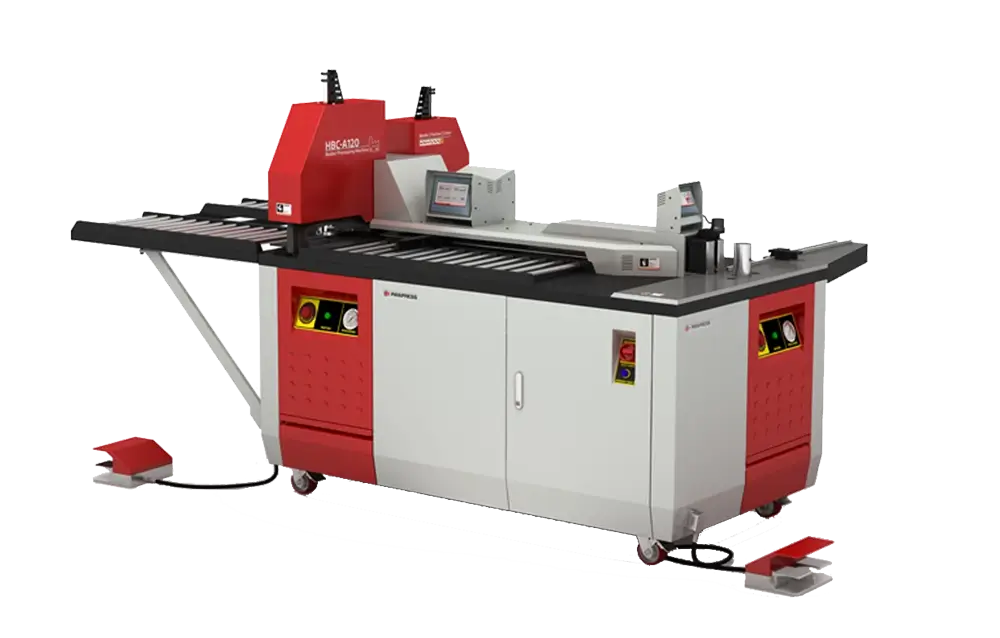
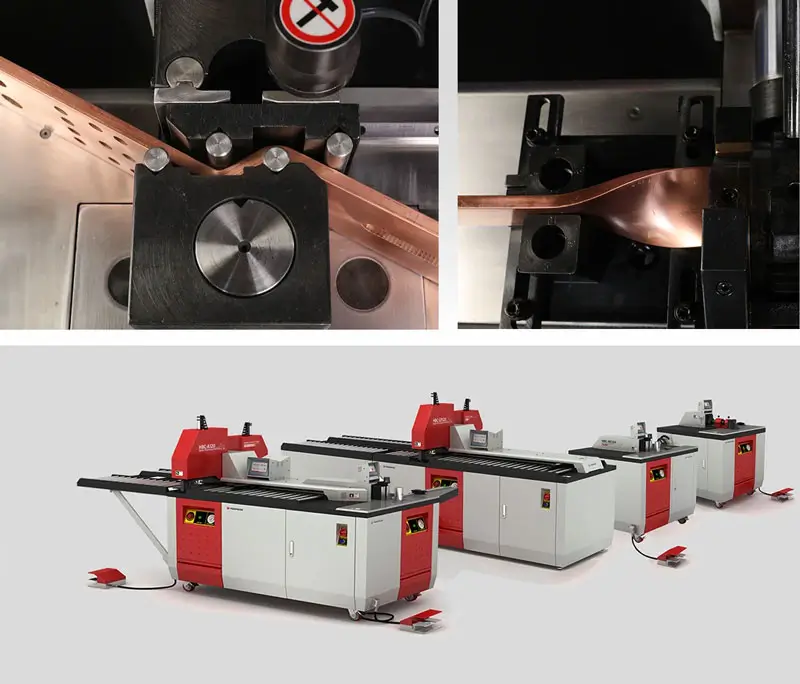
The enclosure is only half of it. The busbars, panels and cut-outs inside it have to be fabricated cleanly for a gasket to seal and a joint to hold. PAYAPRESS builds the cutting, punching and bending machines that switchgear and panel manufacturers use to do exactly that. See our busbar processing machines.


Rate this article
Choose a rating from 1 to 5 stars.
No ratings yet