Search Icon

Category: Electrical Safety Engineering and Standards

Single Busbar and Double Busbar

Single Busbar and Double Busbar: A Complete Technical Comparison

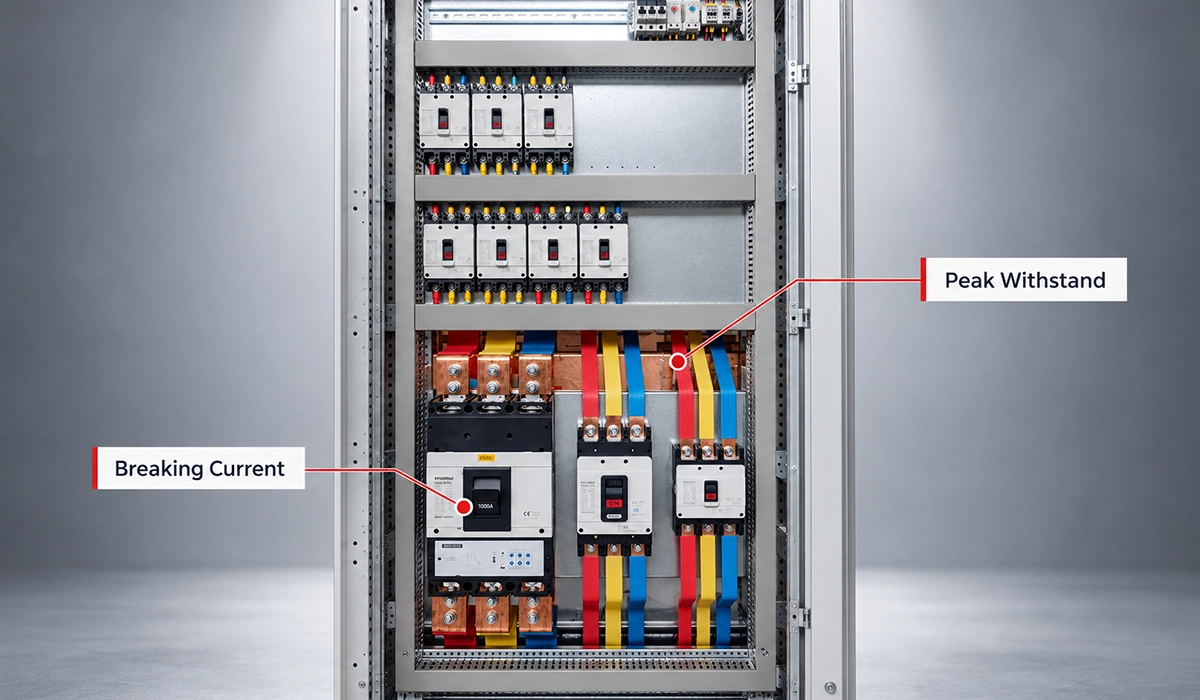
Single busbar and double busbar schemes are the core substation bus topology choices behind reliability, maintainability, and switching flexibility. Engineers use them to decide how feeders, transformers, and circuit breakers (CBs) connect to the main current-carrying node in medium-voltage (MV) and high-voltage (HV) installations.

The practical choice is never only about one-line diagrams. It affects outage management, fault isolation in busbar systems, short-circuit duty, operating complexity, and lifecycle cost. Standards and manufacturer design literature consistently frame bus arrangement as a system-level decision, not a drafting detail.

Read More »
High Voltage Testing

High Voltage Testing: Types, Standards, Procedures & Safety

High voltage testing isn’t just a geeky term thrown around by engineers to sound important. It’s the set of checks that proves electrical equipment like cables, switchgear, transformers, and drives can safely live in a world where overvoltage and electrical stress are real threats. At its core, high voltage testing verifies insulation integrity by pushing equipment beyond its normal operating voltage to see how it behaves under stress. These tests simulate situations such as lightning surges, switching transients, or long-term aging in a controlled environment so you don’t experience failures in the field.

Read More »
Double Throw Switch

Double Throw Switch: Definition, Wiring, and Industrial Use Cases

A double throw switch might sound like jargon reserved for electrical engineers, but it’s really a fundamental idea with real-world applications anyone specifying panels or backup power systems needs to understand. At its core, this type of switch lets you pick between two different circuits or sources with one actuator, which is why it’s indispensable in changeover jobs such as switching from utility power to generator power.

Read More »
UL 891 vs UL 1558 vs UL 67

UL 891 vs UL 1558 vs UL 67: Key Differences

Choosing the right equipment for electrical distribution in an industrial or commercial setting is crucial. Panelboards (UL 67) provide compact, cost-effective protection for branch circuits with a capacity of up to 1200A, ideal for non-residential buildings. For higher capacity needs, switchboards (UL 891) are the preferred choice, capable of handling up to 6000A in commercial and light industrial applications. However, in mission-critical environments like data centers, switchgear (UL 1558) takes precedence. Designed with features like draw-out circuit breakers and compartmentalization, switchgear ensures reliability and maintenance flexibility in demanding settings. This article will explore the key differences between these three systems, helping you choose the right one for your specific needs.

Read More »
UL listing

UL Listing vs Field Evaluation for Control Panels

When an industrial control panel arrives on site without an acceptable certification mark, the project can stall fast — not necessarily because the panel is unsafe, but because the approval path is unclear. In the U.S., that usually leads to one practical question: UL Listing vs Field Evaluation — which route gets the equipment accepted with the least delay and rework?

The answer depends on what you are building and how often you build it. A repeat production panel for multiple customers is a very different compliance case than a one-off machine retrofit, a prototype, or a site-built assembly. AHJs, owners, and specifiers may accept more than one path, but they expect the documentation, markings, and evidence to match the route you choose.

Read More »
UL 508A

UL 508A: Practical Compliance Guide

UL 508A is the cornerstone safety standard for industrial control panels in North America. Whether you’re designing, manufacturing, or inspecting control panels for general industrial applications, UL 508A compliance is essential. This standard ensures that panels are safe, reliable, and capable of enduring electrical and environmental stresses while meeting the National Electrical Code (NEC) and other crucial safety regulations. With a blend of technical specifications, design rules, and testing protocols, UL 508A provides a robust framework for achieving compliance, and it is indispensable for panel builders, OEMs, and engineers aiming to streamline their operations and minimize rework. In this article, we will delve into the critical components of UL 508A, covering SCCR calculations, motor protection, wiring practices, labeling requirements, and more, offering you the knowledge to ensure your control panels meet industry standards and perform as expected.

Read More »
RCM in Australia

RCM compliance checklist (Australia/New Zealand)

The Regulatory Compliance Mark (RCM) in Australia represents compliance with both the Electrical Equipment Safety System (EESS) and Australian Communications and Media Authority (ACMA) regulations, streamlining electrical safety and electromagnetic compatibility requirements. It simplifies the process for manufacturers and importers by consolidating dual compliance under AS/NZS 4417 sizing rules, and CISPR 11/32 Class A, along with IEC 61000-6-2/-6-4 standards. This reduces administrative complexity and costs while providing clear compliance for consumers and regulators.

Read More »
Solar Power

Solar Power System Wiring

Harnessing the sun’s vast energy through photovoltaic technology is a sustainable solution for modern power needs, ranging from small off-grid setups to large-scale grid-connected arrays. Understanding the synergy between solar panels, charge controllers, batteries, and inverters is vital for building a system that is both efficient and reliable. By mastering the principles of series and parallel wiring, selecting appropriate cable gauges to minimize voltage drop, and implementing rigorous safety measures—such as DC isolators and grounding—users can ensure a high-performance installation. This guide explores the technical framework of solar structures, providing the essential knowledge required to design, protect, and maintain a functional solar power system.

Read More »
measuring device

10 Essential Electrical Measuring Devices for Engineers

Powermeter, ammeter, frequency meter, current transformer, cosine phi meter, etc. In electrical systems and main electrical switchboards, and in most industrial environments, electrical measuring devices are needed to inspect and manage electrical equipment and to analyze parameters such as current, voltage, power, frequency, power factor, etc. For a comprehensive understanding of the standards governing these systems, we highly recommend reviewing this article on standards for switchgear and busbar systems. Further exploration of applicable electrical regulations can be found in the following recommended reading on the electrical standards guide.

Read More »