




Prefer listening? You can play the audio version of the rest of this article below.
Where Economic Busbar Machines Lose Money After Purchase
The economic vs premium busbar machine ROI gap is set after the purchase order is signed, not at quotation. Any honest entry-level vs industrial busbar machine analysis has to look past the headline number to a multi-year busbar machine investment view. The apparent savings on an economic machine erode through four post-purchase cost categories. A best value busbar machine is the one that minimizes that erosion. Rework cost is the loudest. Economic machines with ±1.5–2° bend tolerance generate inspection failures on certified switchgear panels, and rework labor, material waste, and re-inspection time stack up on every non-conforming set. At a 20% rework rate on 100 panels per month, rework cost can exceed $3,000–$5,000 monthly depending on panel complexity and labor rate (hypothetical estimate).
Tooling replacement. Lower-grade tooling wears faster. Punch dies and cutting blades demand more frequent replacement, often pushing annual tooling cost 40–60% higher than premium platforms despite cheaper per-unit tools. Some economic machines run proprietary tooling with single-source supply risk.
Downtime cost. Economic machines break down more often under sustained load — hydraulic systems, CNC controls, and frame tolerances degrade faster. At $200–$500/hr production value, a four-hour breakdown is an $800–$2,000 event in lost output alone (hypothetical estimate). Throughput limitation is the quiet drag. Lower punching force or slower cycle time creates a bottleneck that raises labor cost per set whenever the machine is the limiting factor.
To learn more about our cost-effective products and determine whether these machines could be a practical and valuable solution for your workshop, we strongly recommend visiting our Economic Busbar Machine page.
| Hidden Cost Category | Economic Machine | Premium Machine |
|---|---|---|
| Annual rework labor cost | High (20–25% rework) | Low (2–5% rework) |
| Annual tooling cost | Higher (faster wear) | Lower (longer intervals) |
| Unplanned downtime (hrs/yr) | 40–80 hrs (estimate) | 8–15 hrs (estimate) |
| Production bottleneck cost | Frequent | Rare |
| Total hidden cost (yr 1–3) | Often exceeds price gap | Absorbed by savings |
This source can help you verify the information and continue your independent research about Industry standard framework for quantifying hidden operating costs in capital equipment.
The Full ROI Calculation — How to Compare Economic and Premium Busbar Machines Correctly
The economic busbar machine vs premium ROI debate ends with two numbers: total cost of ownership over five to seven years, and the busbar machine payback period. The affordable busbar machine vs high-end choice is just a question of where the break-even sits for the specific production profile. Build the comparison on total cost of ownership, not purchase price. The busbar machine total cost of ownership formula is straightforward: TCO = Purchase price + (Annual tooling × years) + (Annual service and maintenance × years) + (Annual rework × years) + (Annual downtime × years) − Residual value. The right comparison window is three years minimum, five to seven years for capital equipment decisions of this scale.
Quantify the variables against actual workshop data. The list runs: monthly busbar sets produced, average rework rate at inspection, rework labor cost per set, annual tooling replacement cost, annual unplanned downtime hours × production value per hour, annual service or call-out cost, and machine purchase price including financing.
An important point to note is that premium machines are not simply CNC machines. In the busbar machinery industry, they are multifunctional systems known as busbar processing machines, offering high performance and excellent value for money.
The break-even formula runs as follows: Break-even (months) = (Premium price − Economic price) ÷ (Monthly saving from lower rework + lower downtime + lower tooling cost). Under 24 months, the premium machine wins ROI for a standard seven-to-ten year equipment life. Over 36–40 months, re-evaluate whether production volume justifies the premium investment.
Where economic machines win ROI. Very low production volume (under 20 sets per month). LV-only work with loose clearance tolerances where ±1.5° is genuinely acceptable. Short-term project use where the machine will not run continuously beyond two to three years.
Where premium machines win ROI. Production above 60 sets per month. Certified switchgear demanding ±0.5° or better. MV panel production where inspection failure carries high rework cost. Workshops with contractual on-time delivery obligations.
Common ROI calculation mistakes. Using peak rather than average monthly volume. Ignoring tooling cost entirely. Failing to quantify rework cost before purchase. Assuming the economic machine will be replaced in three to four years — most workshops keep capital equipment for eight to twelve years regardless of performance.
For a clearer comparison, you can review the information provided on this website on International standards basis for total-cost-of-ownership approaches to capital equipment decisions.
Price Tiers and What Each Actually Delivers in Production
Market price ranges below are estimates and should be verified against current quotations.
The entry / economic tier runs $8,000–$20,000 USD: manual to basic semi-automatic operation, ±1.5–2° bend accuracy. It suits LV panel maintenance shops, occasional busbar work, and volumes below 20 sets per month. It breaks down at certified switchgear production, sustained daily use, and MV tolerances. TCO risk is high under any meaningful production load.
The mid-range tier sits at $20,000–$60,000 USD: CNC with angle feedback, ±0.5–0.8° accuracy. It suits switchgear panel fabrication at 20–150 sets per month across LV and low-MV applications, and represents the best ROI intersection for most panel shops and small-to-mid switchgear manufacturers. Tooling and service costs are predictable; rework rates are low.
The premium tier runs $60,000–$150,000+ USD: full CNC, closed-loop feedback, integrated three-function, ±0.3° sustained. It suits high-volume MV switchgear, busbar duct manufacturers, and type-tested assembly above 150 sets per month. ROI is strongest above 150–200 sets per month, where per-unit production cost is lowest.
If you are looking for more information about topic Busbar Production Equipment, it is recommended not to miss reading this article.
| Tier | Price Range (USD) | Bend Accuracy | ROI Break-Even | Best For |
|---|---|---|---|---|
| Entry | $15,000–$20,000 | ±1.5–2° | Often never | LV, low volume only |
| Mid-range | $20,000–$60,000 | ±0.5–0.8° | 12–24 months | Most switchgear shops |
| Premium | $60,000–$150,000+ | ±0.3° | 18–30 months | High-volume MV production |
For broader context, this can help you continue your research about Industry association reference for calibrating capital equipment budget expectations.
Manufacturer Reference — Brands Across the Economic to Premium Spectrum
Equal-depth profiles listed alphabetically. Verify model availability, specifications, and regional service directly with each supplier — these change.
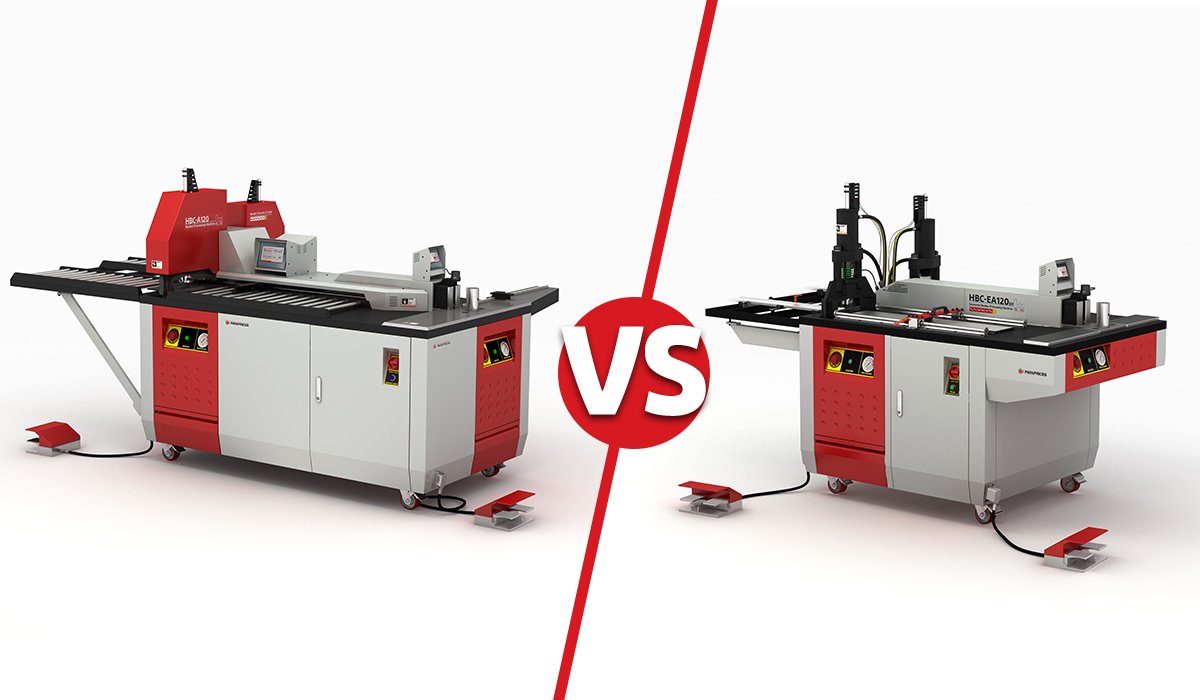
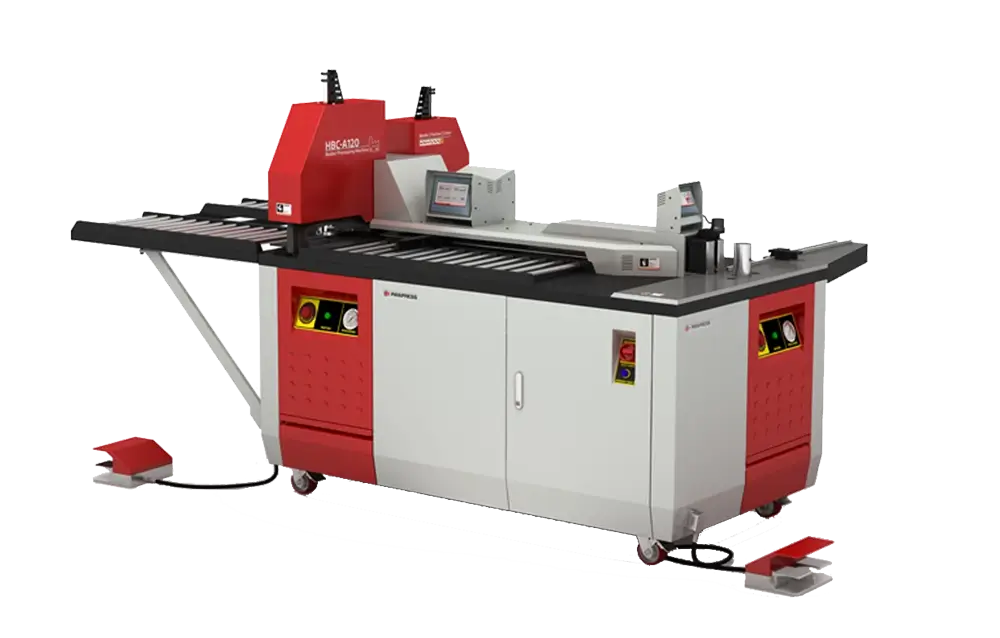
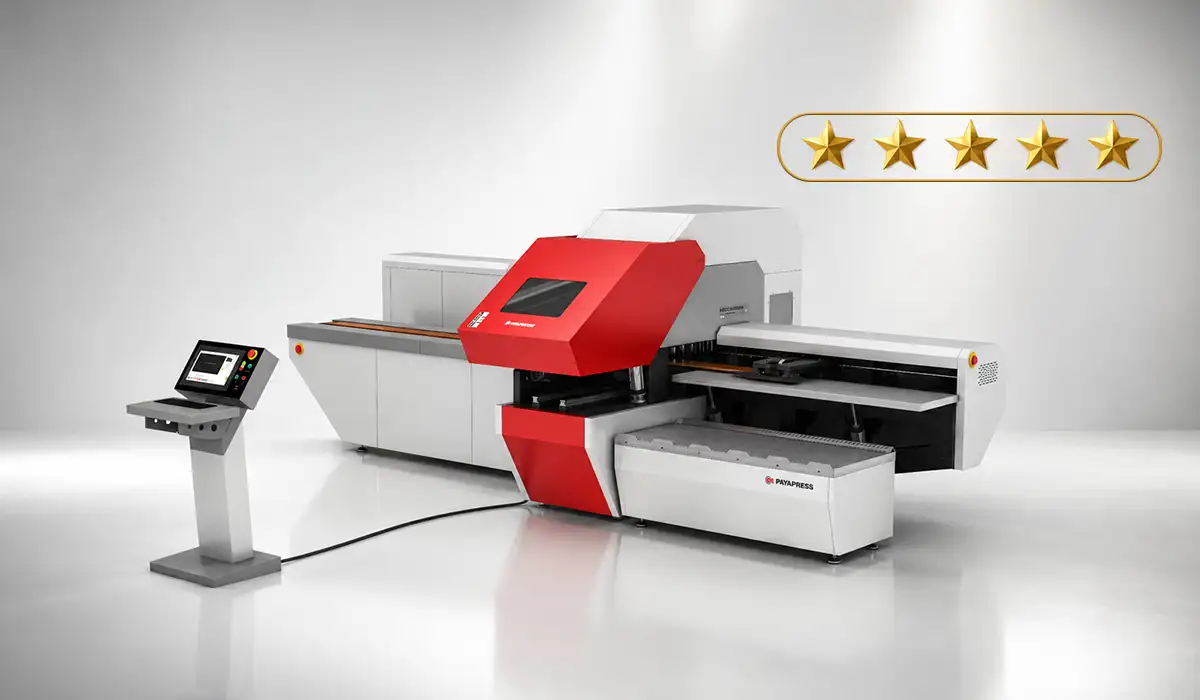
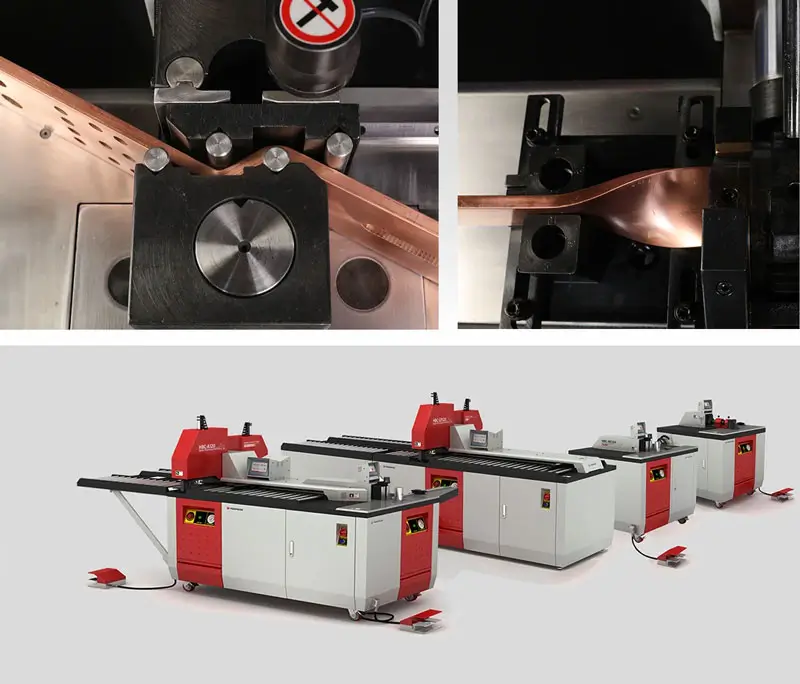
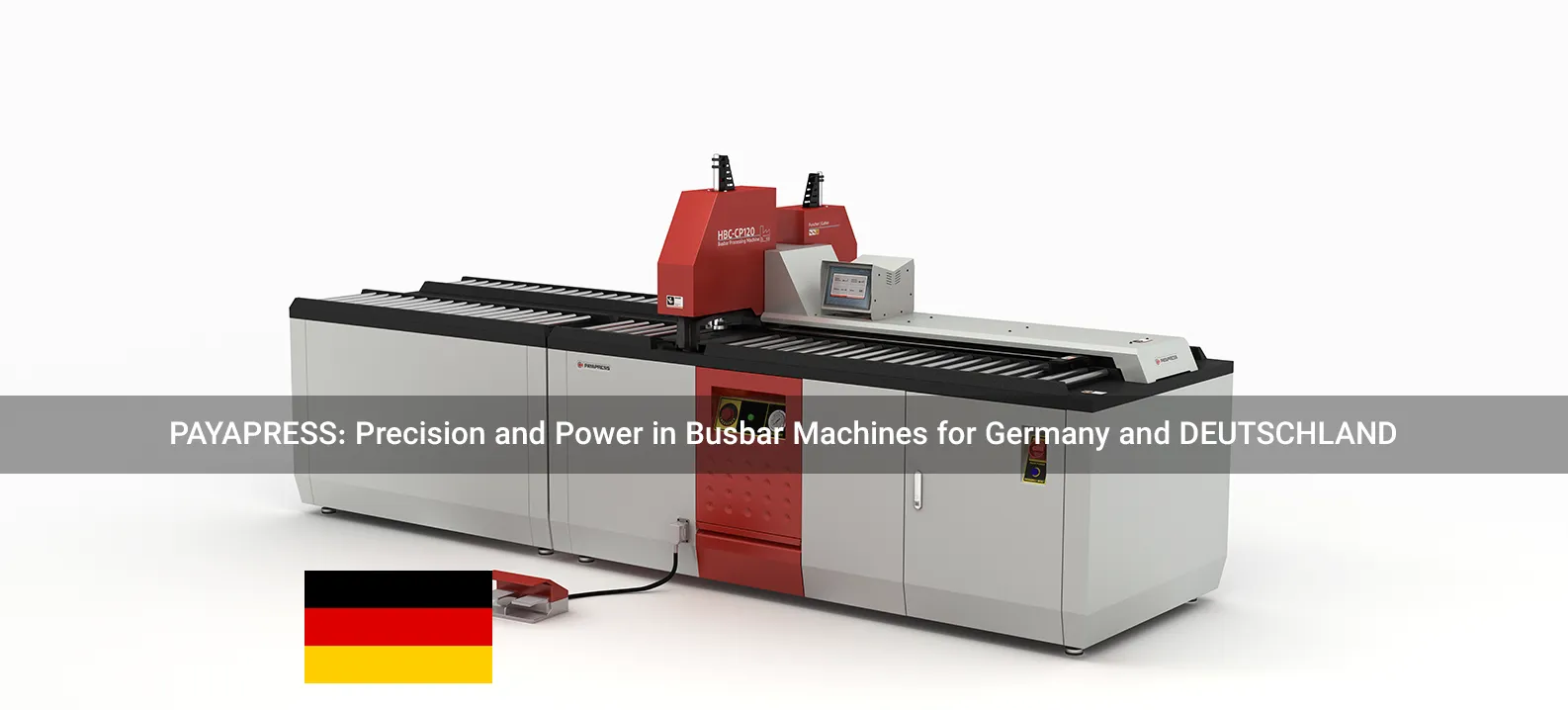
PAYAPRESS (International) — Mid-range to industrial tier. PAYAPRESS manufactures CNC busbar machines for switchgear and industrial panel production, with combined punch/cut/bend platforms across mid-range to industrial configurations. Specification details, pricing, and regional distribution and after-sales support should be confirmed directly with PAYAPRESS before purchase.
MBI (Italy) — Mid-range to industrial tier. MBI offers three-function CNC busbar machines across mid-range and industrial tiers, widely distributed internationally. A frequently shortlisted option for switchgear manufacturers seeking mid-range ROI. Confirm regional after-sales support and tooling availability before purchase.
Peddinghaus (USA) — Premium tier. Peddinghaus manufactures heavy-duty busbar and structural fabrication equipment at the premium end of the market, with a strong US parts and service network. Best suited to high-volume industrial production where sustained accuracy and uptime justify premium investment.
SOCO (Taiwan) — Mid-range tier. SOCO manufactures CNC busbar processing machines at competitive mid-range price points with broad international distribution, including combined punch/cut/bend platforms. A common comparison point in mid-range ROI evaluations. Verify dimensional accuracy documentation and regional parts availability independently.
ROI Scenarios — Economic vs. Premium Busbar Machine Over Three Production Profiles
The three scenarios below illustrate switchgear busbar machine value across realistic production profiles, and how busbar fabrication equipment ROI shifts with volume. All figures below are hypothetical estimates for illustrative purposes. Labour rate assumed at $35/hr; production value assumed at $300/hr downtime loss. Replace with verified workshop data for accurate ROI calculation.
Scenario A — Low-volume LV panel shop (20 sets/month).
| Metric (hypothetical) | Economic ($12,000) | Premium ($45,000) |
|---|---|---|
| Annual rework cost (USD) | $4,800 | $1,200 |
| Annual tooling cost (USD) | $2,400 | $1,600 |
| Annual downtime cost (USD) | $3,200 | $800 |
| Total annual hidden cost | $10,400 | $3,600 |
| TCO over 5 years | $64,000 | $63,000 |
| ROI verdict | Break-even at 5yrs | Marginal advantage |
Scenario B — Mid-volume switchgear shop (80 sets/month).
| Metric (hypothetical) | Economic ($12,000) | Premium ($45,000) |
|---|---|---|
| Annual rework cost (USD) | $19,200 | $4,800 |
| Annual tooling cost (USD) | $3,600 | $2,000 |
| Annual downtime cost (USD) | $9,600 | $2,400 |
| Total annual hidden cost | $32,400 | $9,200 |
| TCO over 5 years | $174,000 | $91,000 |
| Break-even point | N/A | 14 months |
| ROI verdict | Poor ROI | Clear winner |
Scenario C — High-volume MV panel manufacturer (200 sets/month).
| Metric (hypothetical) | Mid-Range ($45,000) | Premium ($95,000) |
|---|---|---|
| Annual rework cost (USD) | $12,000 | $3,600 |
| Annual tooling cost (USD) | $2,400 | $1,800 |
| Annual downtime cost (USD) | $6,000 | $1,600 |
| Total annual hidden cost | $20,400 | $7,000 |
| TCO over 5 years | $147,000 | $130,000 |
| Break-even point | N/A | 22 months |
| ROI verdict | Good ROI | Better at this volume |
The pattern matters more than the precise numbers. In a busbar machine cost comparison driven by real production data, the break-even point moves left as volume rises. Anywhere above 60 sets per month, the higher-tier machine wins on TCO inside two years in most realistic scenarios.
How to Run Your Own Busbar Machine ROI Calculation Before Buying
How to calculate busbar machine ROI for a specific workshop runs in eight steps. A workshop-specific CNC busbar machine ROI calculation follows the sequence below. First, record current monthly busbar production volume and average cross-section range. Second, measure current rework rate at inspection — count rejected sets over the last three months and divide by total sets produced. Third, calculate monthly rework cost: rejected sets × average rework hours per set × hourly labour rate. Fourth, estimate annual tooling cost by adding all punch die, cutting blade, and bending tool purchases over the last 12 months. Fifth, estimate annual downtime cost: total unplanned downtime hours last year × hourly production value. Sixth, sum the annual hidden costs (rework + tooling + downtime). Seventh, apply the break-even formula: (Premium price − Economic price) ÷ (Monthly saving from reduced rework + downtime + tooling). Eighth, interpret: under 24 months break-even, the higher-tier machine wins ROI across a seven-to-ten year equipment life at the current production volume; over 36 months, re-evaluate whether the volume justifies the investment.
Visit this page to learn more about the specifications, applications, and related details about Society for Maintenance and Reliability Professionals reference on structured ROI methodology for industrial equipment.
Conclusion: Choose between Economic vs. Premium Busbar Machine
The economic busbar machine vs premium ROI verdict comes down to two inputs: production volume and rework rate — not a universal preference for cheap or expensive. Every busbar machine purchase decision should land on a documented busbar machine long-term cost calculation, not on first impressions. For most switchgear panel shops running 60+ sets per month on certified panels, the mid-range to premium machine delivers better ROI within 14–24 months through rework and downtime reduction alone. Run the break-even calculation with actual workshop data before any purchase decision; the numbers are more persuasive than any specification sheet. Request TCO documentation, tooling cost schedules, and reference customer contacts from a balanced shortlist — , MBI, PAYAPRESS, Peddinghaus, SOCO — and compare on total five-year cost, not purchase price.



Rate this article
Choose a rating from 1 to 5 stars.
No ratings yet