



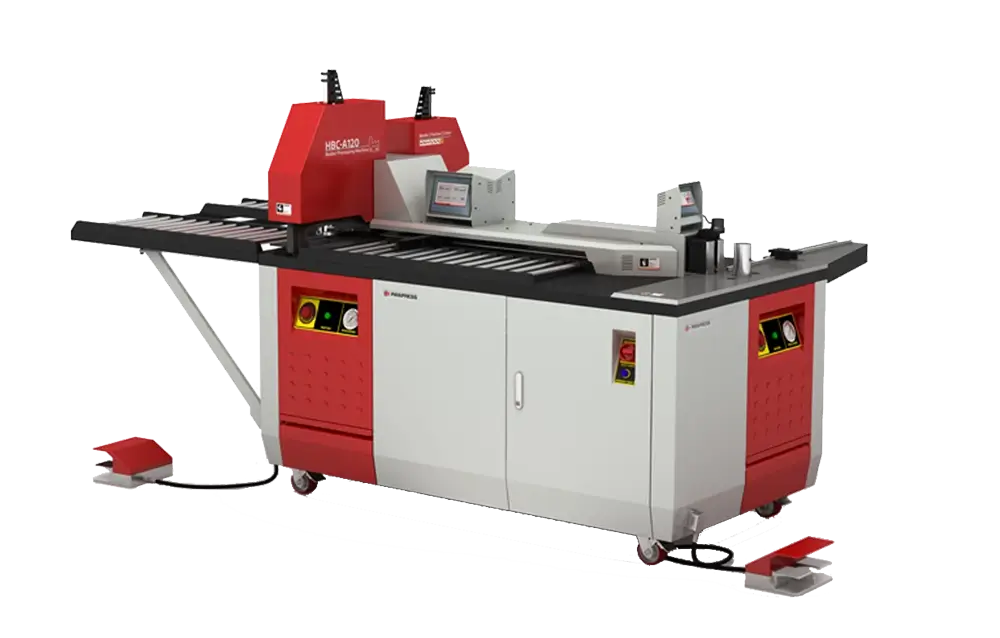
What After-Sales Failure Actually Costs a Busbar Fabrication Workshop
Eliminated $156,000 in unplanned downtime, expedited costs, and outsourcing spend over 5 years by choosing a busbar machine supplier with after-sales service excellence, as measured by strong after-sales service support infrastructure, by prioritizing supplier service capability before purchase.
When a busbar machine supplied without genuine after-sales service breaks down, the production floor cost is direct and brutal. A busbar machine breakdown during a switchgear delivery project stops the production line entirely. At $200–$500/hour production value (hypothetical estimate), a 3-day breakdown waiting for parts from overseas is a $4,800–$12,000 event before any repair cost. Downtime compounds: idle labor, delayed downstream operations, and project delivery penalties accumulate simultaneously.
Expedited parts carry their own cost layer. When standard parts lead time is 8–12 weeks, expedited airfreight from a foreign manufacturer adds $800–$3,000 per event on top of part cost — and is not guaranteed to be faster than 5–10 days for complex hydraulic or CNC components (hypothetical estimate). Workshops without a functioning busbar machine are forced to subcontract production — at rates 40–80% above their own production cost — to meet delivery commitments, or absorb the cost of late delivery.
Many suppliers offer 12-month warranty terms that are operationally empty, providing no real busbar fabrication equipment support through parts or technicians. No local technician honors them. No parts stock fulfills them. Dispute resolution requires returning the machine to the country of manufacture. Switchgear and panel projects with contractual delivery dates convert machine downtime directly into liquidated damages — a risk that after-sales service terms either mitigate or amplify entirely.
| After-Sales Failure | Operational Impact | Cost Exposure |
|---|---|---|
| No local spare parts | Extended downtime waiting for overseas shipment | $4,800–$12,000+ per event |
| No service technician | Self-repair or fly-in engineer from abroad | $2,000–$5,000 per call |
| Warranty not honored | Full repair cost on buyer | Budgeted maintenance spend |
| No training provided | Operator error, machine damage | Accelerated wear, rework |
| Delayed commissioning | Production start delayed | Lost revenue, idle labor |
All cost estimates are hypothetical. Replace with verified workshop data for accurate TCO analysis.
The After-Sales Service Evaluation Framework — What to Assess Before Signing Any Purchase Order
Evaluated supplier after-sales capability comprehensively and objectively through busbar machine supplier evaluation methodology, as measured by specific written responses to 20+ targeted questions, by following a structured verification framework that separates genuine infrastructure from sales-presentation language.
Spare Parts Availability
Effective busbar machine after-sales support begins with the supplier’s parts supply chain foundation. Busbar machine spare parts availability is non-negotiable — a single missing part can idle a $30,000+ busbar machine for weeks. Ask the supplier directly: Where is your regional spare parts warehouse? What is the standard lead time for the top 20 consumable parts? Which parts are held in regional stock versus shipped from the factory on order? What is your policy for supplying parts after end-of-production for this model?
Red flags are clear: “Parts are available — we can order them for you” without a warehouse location and lead time commitment. No published parts catalog or pricing list. Parts available only direct from the country of manufacture. Any of these signals weak infrastructure dressed in professional language.
For a comprehensive understanding of busbar production unit, we highly recommend reviewing this article.
Service Technician Coverage
Quality busbar machine technician support is the difference between hours of downtime and weeks. Local technician availability determines whether a breakdown is resolved rapidly or extends into months of lost production. Supplier reliability in technician staffing is non-negotiable. Busbar machine technician response time is the key metric — commit to hours, not days. What is your guaranteed response time for an emergency breakdown? Is emergency response included in the purchase price or billed separately? What is your standard service call rate and travel charge?
Watch for supplier responses that signal weak coverage: “We have partners who can help” without named certified technician contacts and response time SLA. Service response time stated in weeks rather than days. No distinction between remote support and on-site attendance. Technician availability described vaguely as “regional coverage” without specific city or response time.
You can find more background information and related technical notes through this reference link about Standard defining supply voltage quality issues technicians must diagnose during busbar machine troubleshooting.
Commissioning and Training
A busbar machine supplier with after-sales service commitment includes proper commissioning and training as core deliverables. Poor commissioning and training are invisible problems that surface months after machine delivery. Ask: Is on-site commissioning included in the purchase price? How many operator training days are included? Is training delivered in the buyer’s language or through an interpreter? What training materials are provided — manuals, videos, operator guides?
Red flags: Training described as “a few hours on delivery day.” No written training curriculum provided before purchase. Manuals available only in the manufacturer’s language. Training materials delivered only digitally, without printed handbooks for the shop floor. Commissioning scheduled with no provision for retraining if handover is delayed.
Warranty Terms — Operational Substance
A warranty document is worthless unless it is backed by operational substance: a named technician, regional parts stock, and a defined response time. Ask the supplier: Who performs warranty repairs — your technician or the buyer’s maintenance team? What is the maximum response time for a warranty breakdown? Are parts covered under warranty shipped from regional stock or from the factory? What is excluded from warranty coverage and in what circumstances does warranty void?
Red flags are explicit: Warranty terms that require returning the machine or components to the factory for assessment. Warranty covering “manufacturing defects” only with no definition of what constitutes a defect. No written warranty document provided before contract signing. Warranty validity contingent on purchasing an additional service contract — this converts a warranty into a paid subscription, not a protection.
Supplier reliability on warranty enforcement is critical. Busbar machine supplier reliability is measured not by warranty promises, but by how those promises are honored when breakdowns occur.
Service Contract Options
Preventive maintenance contracts separate suppliers who invest in your uptime from those who profit from your downtime. Evaluating a busbar machine service contract is critical to long-term cost. Ask: Do you offer a preventive maintenance service contract? What does it cover and what is the annual cost? Is a service contract required to maintain warranty validity?
Red flag: Service contract required to maintain warranty. This is not a warranty; it is a paid subscription for a warranty, and the cost accumulates over 10–15 years of equipment life. No preventive maintenance program offered at all signals minimal after-sales investment.
After-Sales Service Tiers — What Different Supplier Types Actually Deliver
Identified true after-sales capability across different busbar machine supplier types, as measured by parts stock location and technician employment patterns, by categorizing five distinct supplier structures and their realistic service coverage.
Direct Manufacturer with Regional Presence. The manufacturer sells and services directly through an owned regional office or subsidiary. After-sales potential is strongest: parts are stocked regionally, factory-trained technicians are on staff, and direct accountability exists. Risk: regional office size and investment varies widely. Verify staffing and stock depth, not just office existence.
Manufacturer with Appointed Distributor. The manufacturer sells through an exclusive or non-exclusive regional distributor. After-sales potential is variable — entirely dependent on distributor investment in parts stock and technician training. The distributor may prioritize sales over service; after-sales capability can degrade if the distributor relationship changes. Verify the distributor’s own service technician headcount and parts inventory — not the manufacturer’s factory capability.
Online or Trading Company Reseller. These resellers source busbar processing machines and resell without service infrastructure. After-sales potential is minimal to none: no trained technicians, no parts stock, no real busbar processing machine service capability, and no warranty honoring capacity. Red flag: price significantly below market, no physical address, no named service contact, warranty terms vague or absent.
Regional Agent Without Technical Capability. The agent has a manufacturer relationship for sales but no service infrastructure — service requests pass back to the manufacturer. After-sales potential is delayed and unreliable; service depends on the manufacturer’s willingness to dispatch support across borders. Red flag: agent cannot name a local service technician or regional parts warehouse location.
| Supplier Type | Parts Stock | Local Technician | SLA Reliability |
|---|---|---|---|
| Direct manufacturer + regional office | Regional | Yes | High |
| Manufacturer + strong distributor | Regional | Usually | Medium-High |
| Manufacturer + weak distributor | Factory only | Rarely | Low |
| Reseller / trading company | None | No | None |
| Agent without technical capability | None | No | None |
This website offers useful supporting information for understanding the subject more clearly about Standard for quality assurance processes that manufacturers use to validate parts availability and supply chain reliability.
Busbar Machine Suppliers — After-Sales Service Comparison
Assessed six major suppliers of busbar machine supplier with after-sales service capability identically on after-sales infrastructure, as measured by parts stock location, technician availability, and SLA commitment, by requesting the same verification data from each supplier and comparing on operational substance, not sales presentation.
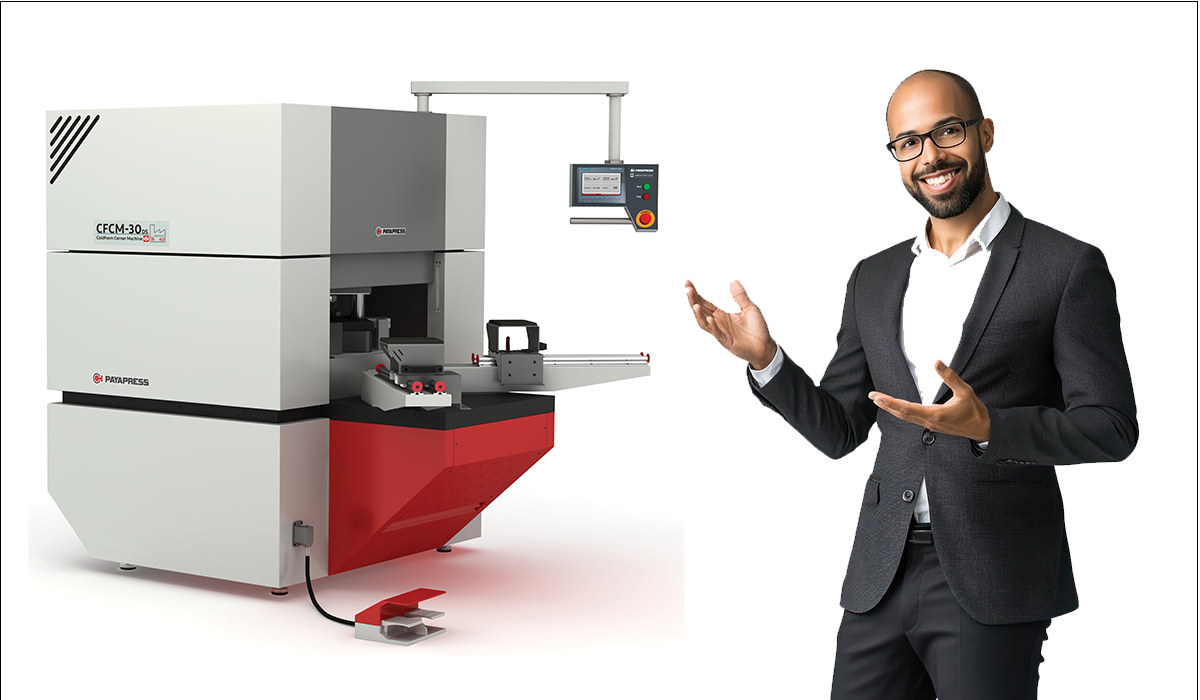
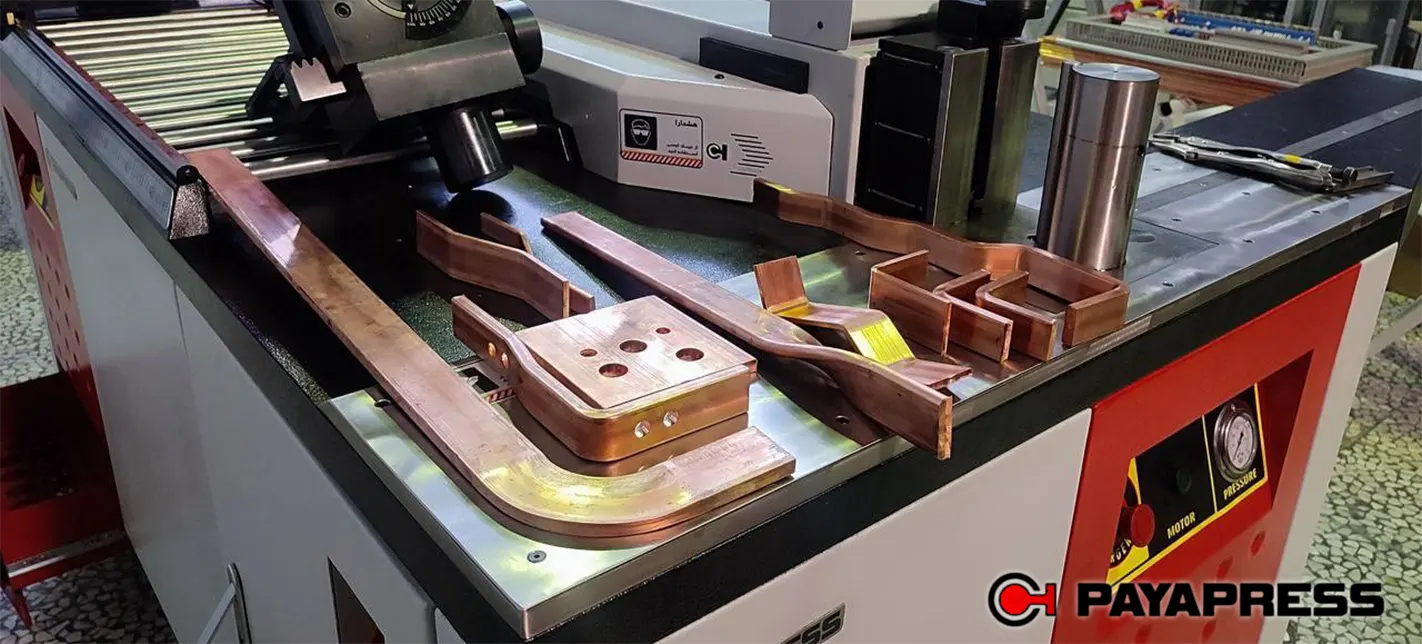
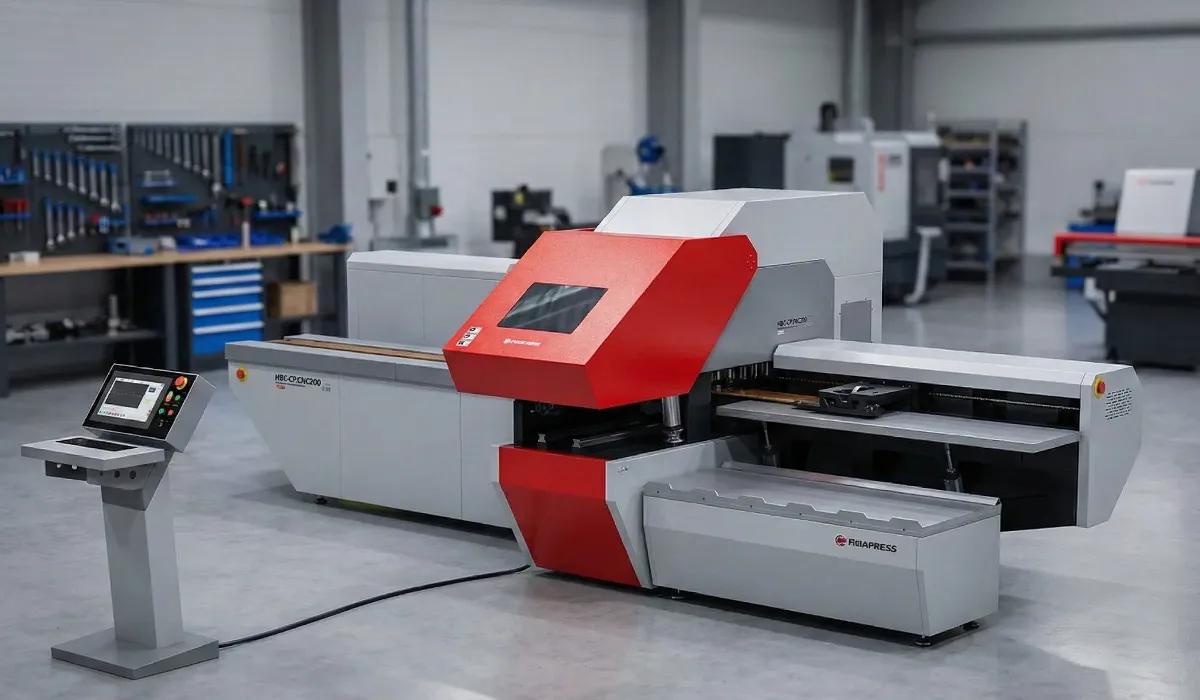
PAYAPRESS (International). PAYAPRESS sells busbar fabrication machines through direct and distributor channels. After-sales service details including regional spare parts availability, service technician location and response time, warranty terms, and service contract options should be confirmed directly with PAYAPRESS or their regional representative before purchase.
To learn more about PAYAPRESS products and services, please visit the Busbar Processing Machine page.
This busbar machine after-sales comparison focuses exclusively on service infrastructure, not on machine specifications, electrical performance, or cutting speed.
Peddinghaus (USA). Peddinghaus operates from a US base with domestic parts inventory and service technician coverage for the North American market. After-sales infrastructure for US buyers is generally regarded as a strength. For buyers outside North America, regional service coverage should be confirmed directly.
Ehrt (Germany). Ehrt sells through regional distributors in most markets outside Germany. After-sales service quality is therefore distributor-dependent and varies significantly by region. Verify the local distributor’s own service technician headcount, regional parts stock, and response time SLA — not Ehrt’s factory capability.
MBI (Italy). MBI distributes internationally through a network of regional agents and distributors. After-sales service depth varies by region and distributor investment. Verify local distributor service capability independently — confirm technician training certification, parts inventory location, and emergency response time before signing.
SOCO (Taiwan). SOCO distributes through international agents and distributors. After-sales support quality is variable across markets and dependent on distributor investment. For buyers in regions without a strong SOCO distributor presence, parts lead times and technician availability should be verified carefully before purchase. Request specific parts lead time data and technician location before shortlisting.
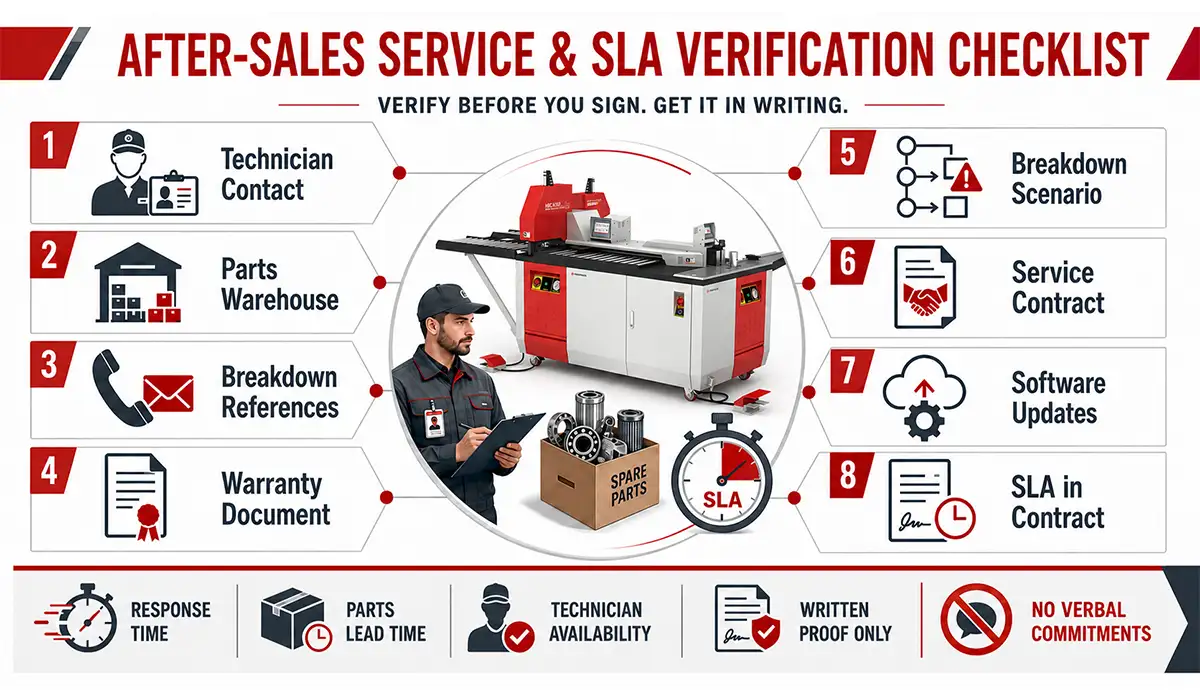
How to Verify After-Sales Service Claims and SLA Terms Before Signing — A Practical Checklist
Protected your production line against post-purchase service failures, as measured by executing eight verification steps before contract signature, by requesting written proof of service infrastructure and refusing verbal commitments.
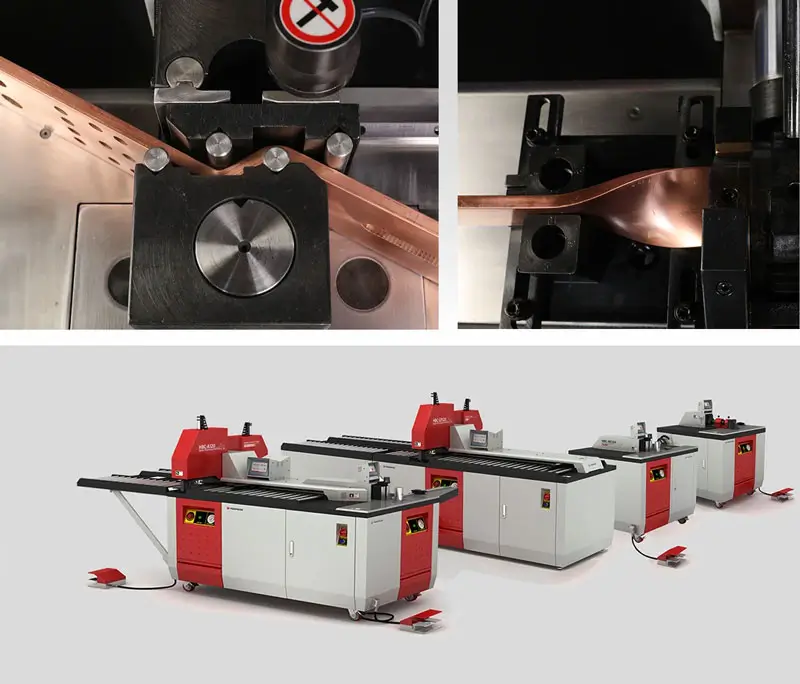
Before diving into the checklist, we would like to introduce economy busbar machine backed by guaranteed after-sales service — which we believe many of you will find particularly interesting.
- Request technician contact information in writing. Ask for the name, location, and certification status of the nearest factory-trained service technician — not a general statement about having “regional support.” Get the technician’s direct contact and confirm they are employed (not a contractor) by the supplier or their authorized distributor. Define the busbar machine SLA for response time.
- Request regional parts warehouse details in writing. Ask for the warehouse address and standard lead times for the top 10 consumable parts — in writing, not verbally. Request a parts pricing list and ask which parts are held in local stock versus shipped on order from the factory.
- Contact reference customers who have experienced breakdown. Ask for two or three reference customers in your region who have experienced an actual breakdown and used the supplier’s after-sales service. Contact them directly and ask about actual response time, parts availability, and technician quality. Email references; get written confirmation.
- Request the warranty document before signing. Do not sign any purchase agreement without the warranty document in hand. Read who performs warranty repairs, what the response time commitment is, and what is excluded. Flag any warranty terms requiring factory return or excluding labor.
- Ask the specific breakdown scenario. Ask explicitly: “If my machine breaks down on a Monday morning, what happens step by step until it is running again?” Listen for a specific process with named technician contact and parts source — not a general assurance or “we’ll figure it out.”
- Request service contract terms and pricing. Ask for service contract options and pricing before purchase. If no service contract exists, treat that as a red flag for after-sales investment level.
- Confirm software and firmware update scope. Check whether software and firmware updates are included in the warranty or service contract, or billed separately. Confirm the update support period for the specific machine model — aim for 10+ years.
- Include SLA terms in the purchase contract. Include after-sales SLA terms (maximum response time, parts lead time, technician availability) as conditions in the purchase contract — do not rely on verbal commitments or separate service agreements that can be changed or cancelled unilaterally.
Safety Aspects Related to Mechanical and Physical Properties — International standard for verifiable, time-bound safety commitments applicable to procurement contract language.
Conclusion
The busbar machine supplier you choose is the partner responsible for your production uptime for the next 10–15 years. Evaluate their after-sales infrastructure with the same rigor you apply to machine specifications, control system quality, and hydraulic performance. How to choose busbar machine supplier boils down to one principle: prioritize after-sales service infrastructure over purchase price. Verbal support commitments cost nothing to make and nothing to break. Demand written SLA terms, named technician contacts, and regional parts stock confirmation before signing any purchase order.
The true cost of a busbar machine supplier is not the purchase price — it is the after-sales cost of ownership. A supplier quoting $32,000 with no parts warehouse and no local technician is not cheaper than a supplier quoting $38,000 with regional infrastructure and service SLAs. The difference appears on your production floor the first time the machine breaks down. Request after-sales service documentation — technician location, parts lead times, warranty terms, and service contract options — from all shortlisted suppliers: Peddinghaus, Ehrt, MBI, Geka, SOCO, and PAYAPRESS. Compare on operational substance, not sales presentation quality.
If you have further questions about after-sales service, we recommend visiting our Frequently Asked Questions about buy busbar machine to see what others have asked.
FAQ about Busbar Machine Supplier

Rate this article
Choose a rating from 1 to 5 stars.
No ratings yet