



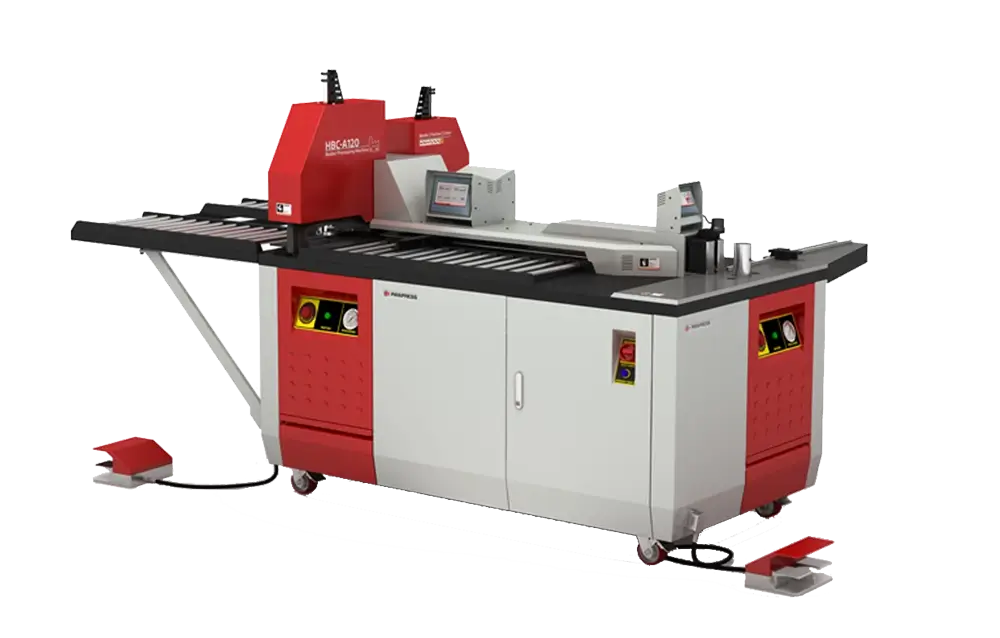
The Real Cost of Low-Precision Busbar Bending in Panel Fabrication
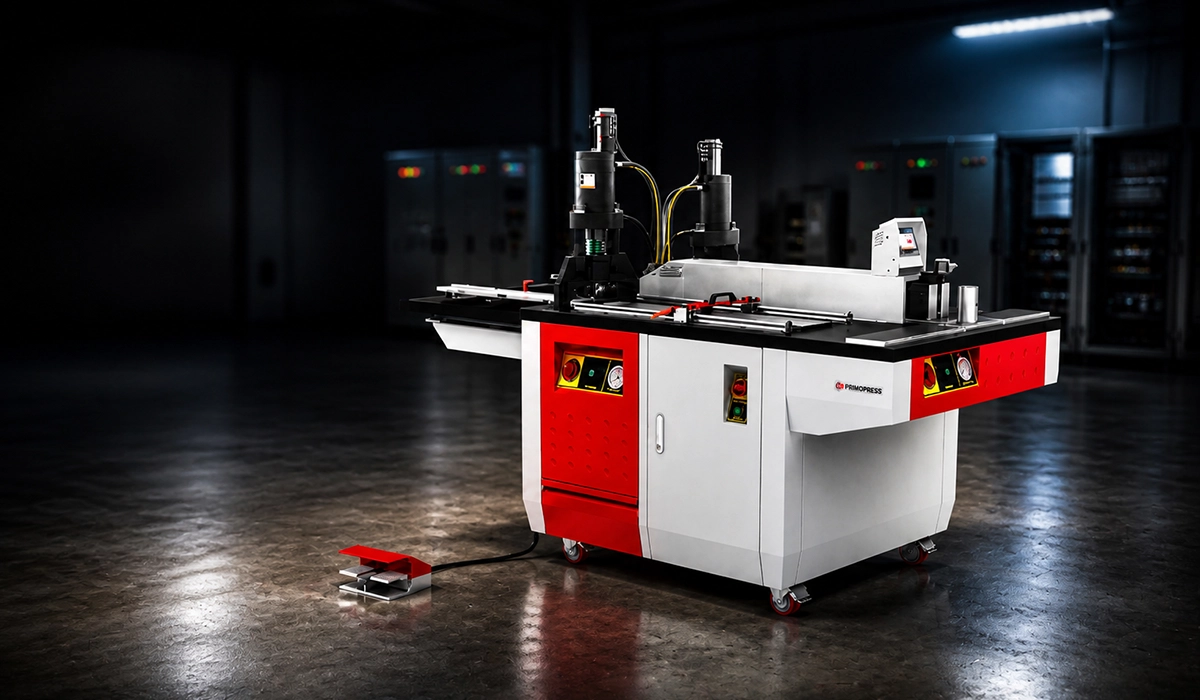
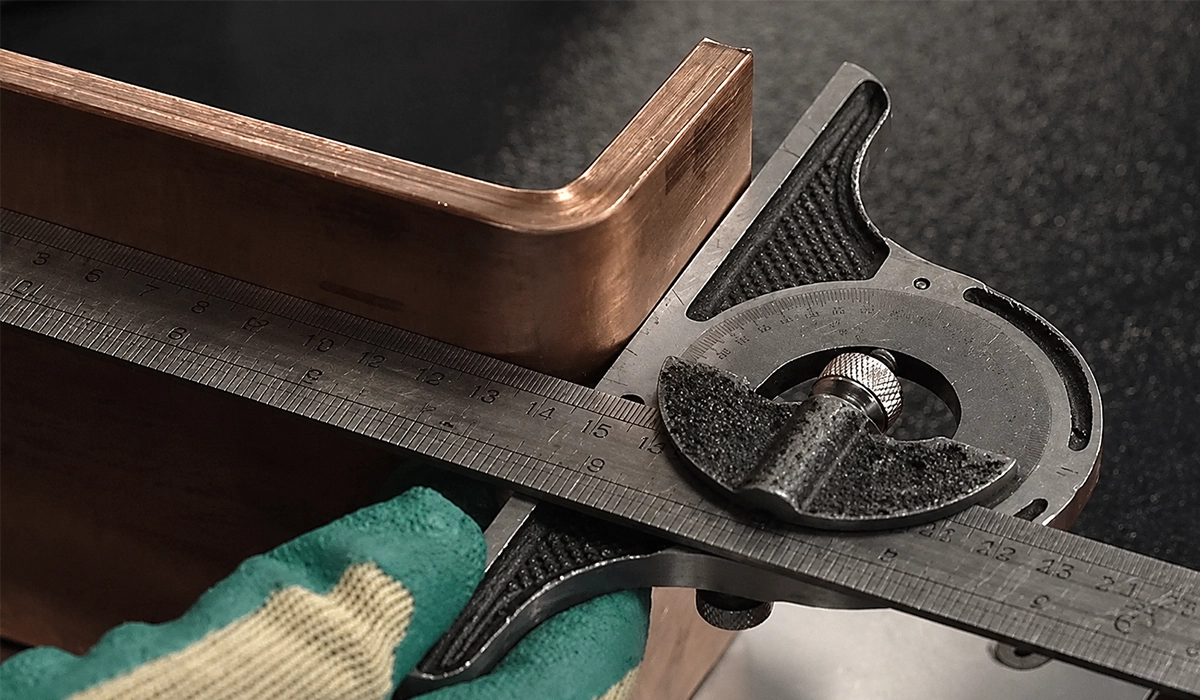
When a busbar bending machine cannot hold angular or dimensional tolerance, the cost lands downstream. This is the core reason affordable busbar bending machines with high precision are worth the procurement effort to find. The cheapest busbar bender for panel shop use often turns out to be the most expensive over its first year on the floor. Angular error accumulates: a ±2° bend tolerance error across a multi-bend busbar assembly compounds into significant positional offset, dropping phase-to-phase clearance below the IEC minimum and triggering inspection failure. Insulation sleeve fit suffers when heat-shrink or resin insulation is applied over a poorly bent busbar with surface gouges or work-hardening cracks — voids form and become dielectric failure points under MV stress.
To learn more about the different types of busbar bending machine, you can visit the linked page, where various types of these machines and their advantages are introduced
Joint misalignment is the next casualty. Holes drilled or punched before bending must align precisely after bending; angular error shifts bolt-hole position and forces joint rework or re-punching. One failed inspection on a switchgear panel often costs more in rework labor than the entire price gap between a low-precision and a high-precision machine. Projects with on-time delivery clauses turn that rework into direct financial liability.
| Precision Gap | Production Consequence | Cost Impact |
|---|---|---|
| ±2° bend angle error | Phase clearance violation | Panel rework, re-inspection |
| Surface gouging at bend | Insulation adhesion failure | Sleeve replacement, downtime |
| Hole misalignment post-bend | Joint rework or re-punching | Labor cost, material waste |
| Inconsistent bend radius | Busbar does not fit enclosure | Fitment rework, delay |
You can check this page for more examples, explanations, and related technical resources.
What Specifications Actually Determine Bending Machine Precision
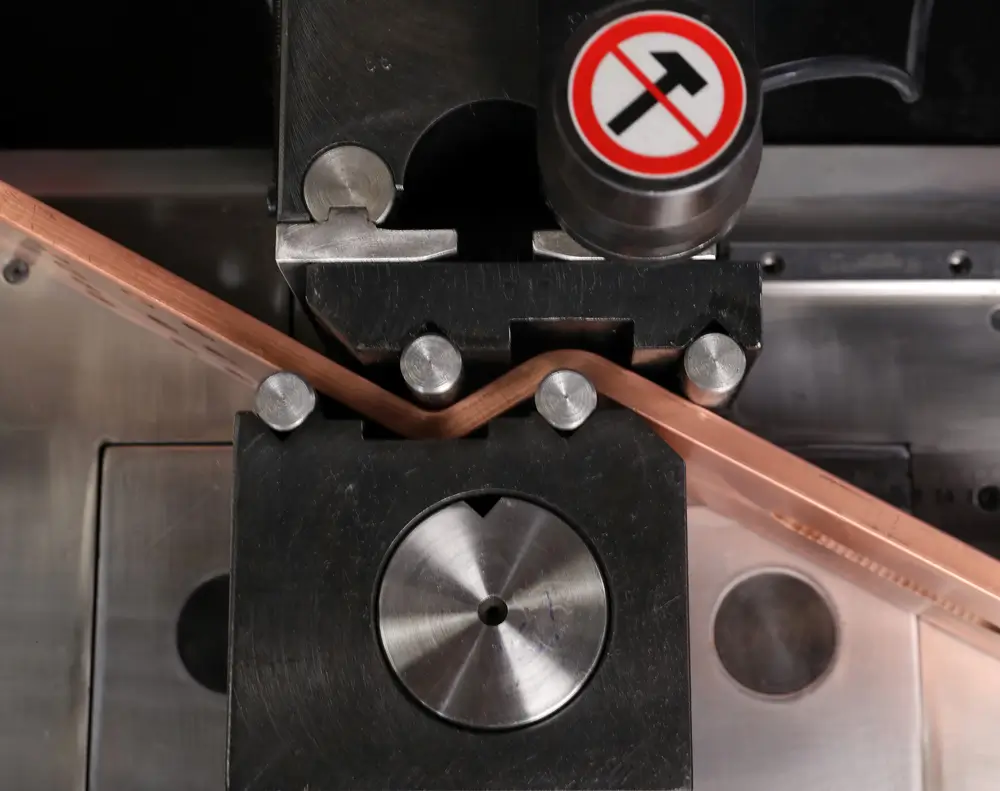
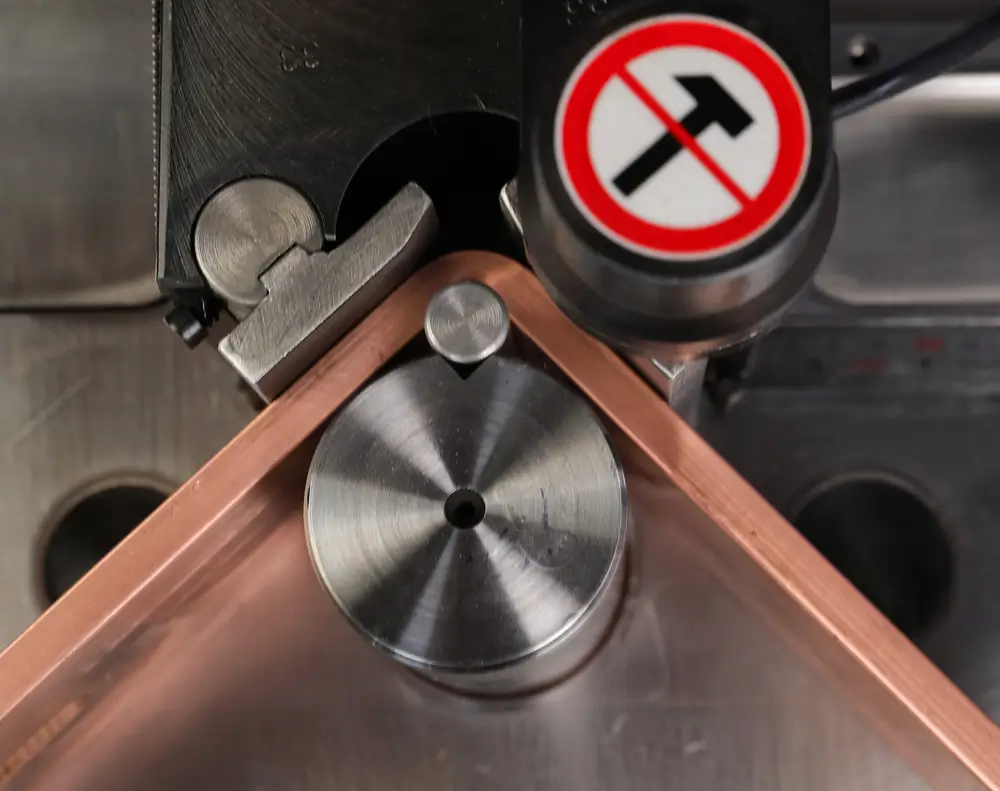
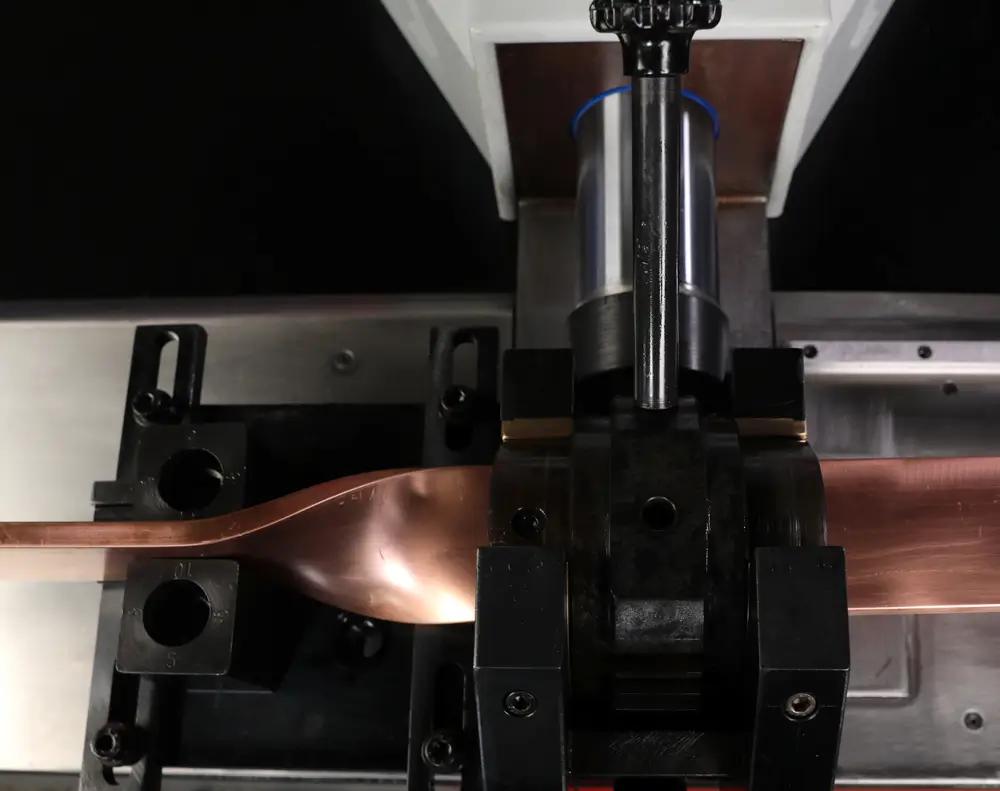
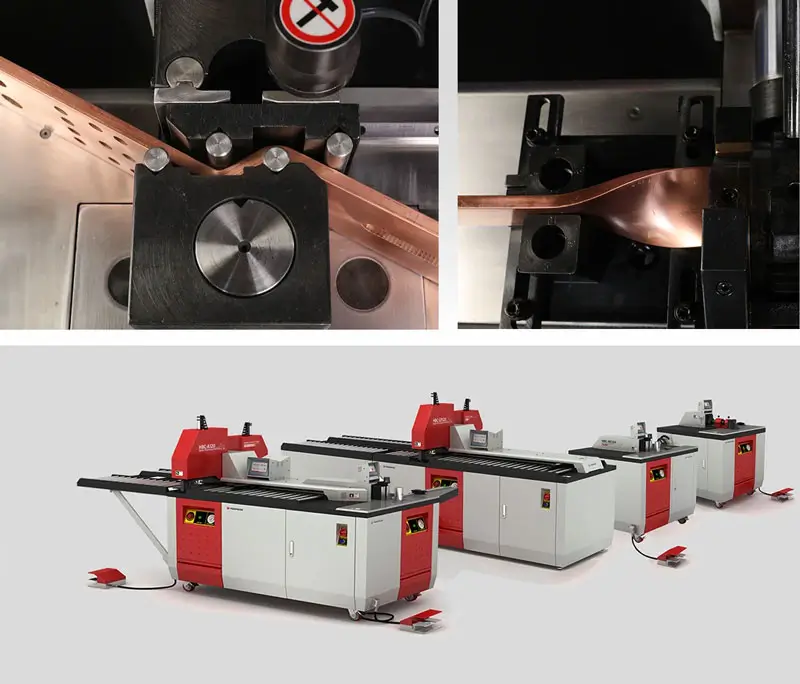
Bend angle repeatability is the single most important precision spec. Industry minimum for switchgear-grade work is ±0.5° or better; entry-level machines commonly rated at ±1–2° are acceptable for LV cable tray or structural work but not for IEC-compliant switchgear busbars. Any genuine precision busbar bender should document repeatability across a production run of 50 or more bends — not a one-shot demonstration. The same discipline applies whether the candidate is a CNC platform or a semi-automatic busbar bender configured for medium-volume work. Bend radius control matters next. Minimum bend radius without cracking on copper busbar typically runs 1.5–2× material thickness depending on grade and temper. A copper busbar bending machine must hold consistent radius across the full width of the bar; edge-to-edge variation introduces twist in the finished part. Confirm the tooling set covers the bend radii required for the project material range.
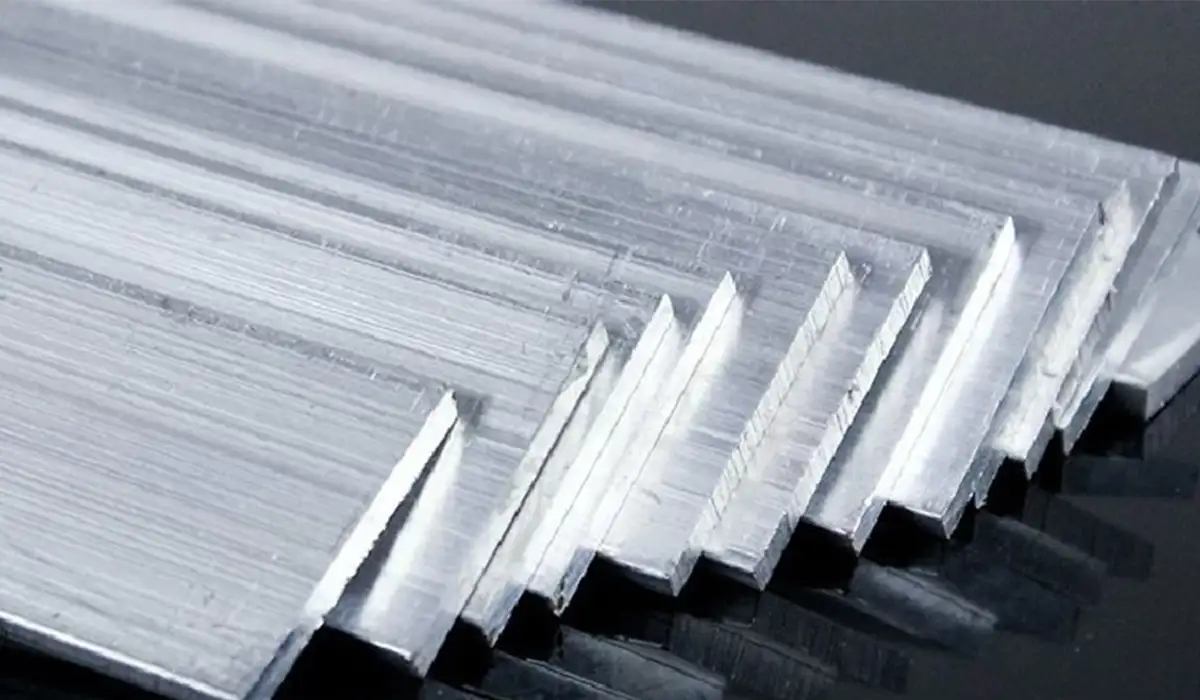
Material capacity follows the same discipline. Confirm rated capacity for both copper (Cu-ETP) and aluminium at maximum cross-section, and never accept an “up to” rating without a confirmed continuous duty-cycle figure. A machine rated for 80×6 mm copper is not adequate for 100×10 mm. Tooling quality and wear rate enter the total cost equation: die surface finish directly affects bend quality, and worn dies introduce surface gouging. Ask for tooling replacement interval and cost.
Software and feedback architecture separate mid-range from entry-level. A CNC busbar machine with closed-loop angle feedback — angle measured at the bend point, not just at the ram — delivers materially better repeatability than open-loop systems. Offline programming and DXF import eliminate manual angle entry error. The common buyer mistakes track a consistent pattern. They include accepting an angular tolerance as a single-bend figure rather than a production-run average, skipping a test on the buyer’s own material, comparing purchase price without tooling cost, and deploying a light commercial machine in switchgear duty.
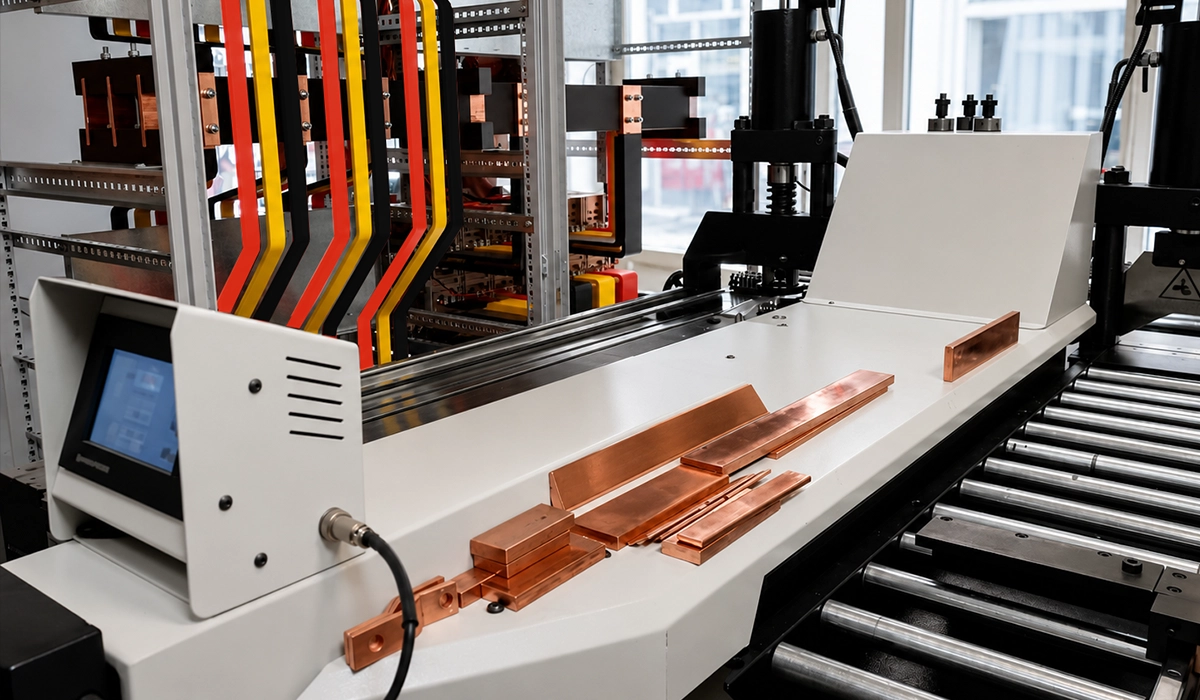
Price Tiers — What Busbar Machine Budgets Actually Buy
The market splits cleanly into three tiers; current busbar bending machine price ranges should be verified against current quotations as pricing shifts with currency, tariffs, and supply chain. Total busbar processing machine cost over a three-year window matters more than headline price — affordable busbar bending machines with high precision usually live in the mid tier, not the bottom one.
The entry tier runs roughly $8,000–$20,000 USD: manual or semi-automatic operation, bend angle accuracy of ±1.5–2°, suited to LV panel shops, low-volume work, and maintenance shops. Accuracy is operator-dependent and there is no CNC feedback to fall back on. Budget busbar bending equipment in this range is honest about what it does, but switchgear duty is not what it does. The mid tier spans approximately $20,000–$60,000 USD: semi-automatic through CNC with basic angle control, ±0.5–1° accuracy under good setup, and capability across switchgear panel fabrication and medium-volume copper and aluminium busbar production to MV dimensions. This is the practical intersection for most panel shops looking for the budget-and-precision balance. The premium tier sits at $60,000–$150,000+ USD: full CNC, closed-loop angle feedback, offline CAM, and multi-function (punch/cut/bend in one platform) with ±0.3–0.5° accuracy in production. It belongs in high-volume MV switchgear, busbar duct manufacturing, and type-tested assembly production.
| Tier | Price Range (USD) | Angle Accuracy | Best For |
|---|---|---|---|
| Entry | $8,000–$20,000 | ±1.5–2° | LV panels, low volume |
| Mid-range | $20,000–$60,000 | ±0.5–1° | Switchgear, MV busbars |
| Premium | $60,000–$150,000+ | ±0.3–0.5° | High-volume, MV, busbar duct |
This website offers useful supporting information for understanding the subject more clearly.
Leading Busbar Bending Machine Manufacturers — A Factual Comparison
The summaries below are equal-depth profiles intended for shortlisting only. Verify product lines, specifications, and US service coverage directly with each supplier — these change. The list is alphabetical to avoid implying any ranking.
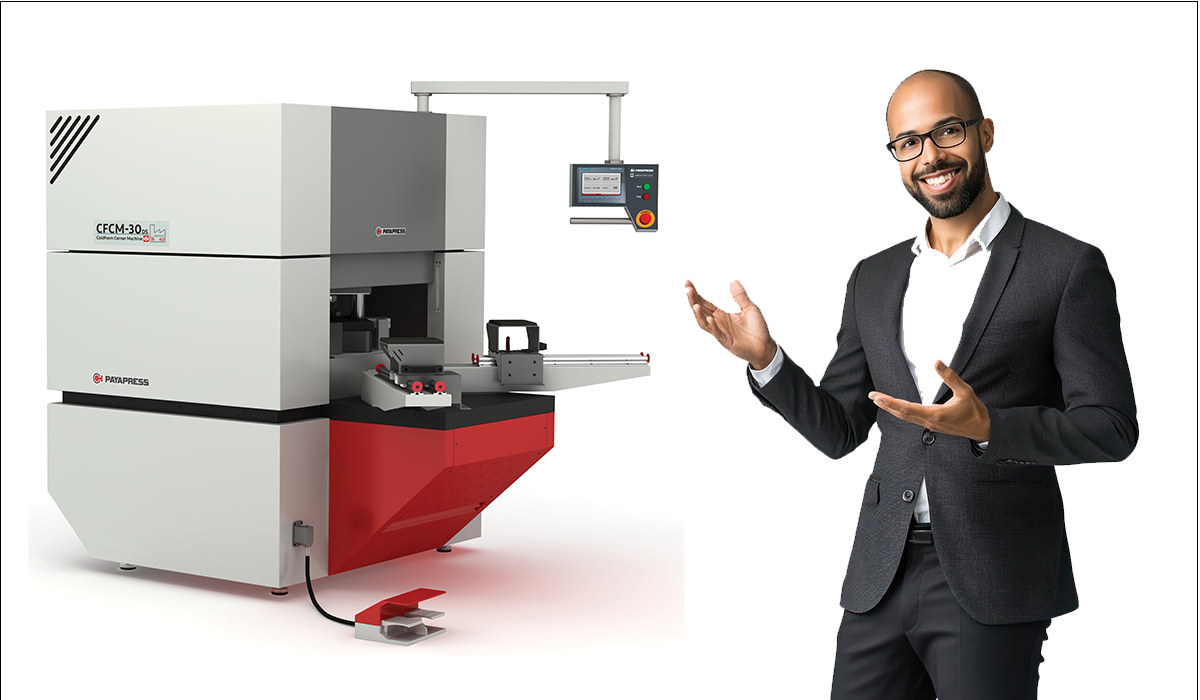
PAYAPRESS (International). PAYAPRESS manufactures CNC busbar fabrication machines including bending modules for copper and aluminium busbar processing. Their machines are positioned for switchgear and industrial panel fabrication. Specification details — bend angle tolerance, maximum cross-section capacity, and regional distribution arrangements — should be confirmed directly with PAYAPRESS before purchase.
For more information about PAYAPRESS products and services, you can visit the Economic Busbar Machine page.
Ehrt (Germany). Ehrt produces CNC busbar processing machines that include a bending module as part of integrated three-function platforms. Their machines are used in switchgear and MV panel production. Known for European build quality and software maturity. US distribution and spare parts availability should be confirmed directly with the local distributor.
Geka (Spain). Geka manufactures busbar and ironworker fabrication equipment with bending capability. Their busbar-specific range includes semi-automatic and CNC options suited to general switchgear and panel fabrication. CNC software capability and angular feedback architecture should be evaluated directly, and US technical support coverage confirmed before purchase.
MBI (Italy). MBI offers a range of busbar fabrication machines from entry-level to industrial CNC, including standalone bending units and combined punch/cut/bend platforms. Widely distributed internationally and configured for copper and aluminium busbars across LV and MV cross-sections. Confirm US service coverage and tooling lead times before purchase.
Peddinghaus (USA). Peddinghaus is a US-based manufacturer known primarily for structural steel fabrication, with busbar processing capability in their heavier equipment lines. Strong domestic parts and service network. Typically positioned at the premium end of the market and better suited to high-volume heavy industrial production than entry or mid-tier panel shop applications.
SOCO (Taiwan). SOCO produces CNC busbar processing machines at competitive price points with international distribution, covering combined punch/cut/bend functions. Price-to-specification ratio is a noted strength of the range. Dimensional accuracy documentation and US spare parts availability should be verified independently before purchase.
Proof — Precision Impact in Busbar Bending for Switchgear Production
The numbers below are a clearly labelled hypothetical illustration — replace with verified production data before publishing. Scenario: a switchgear panel builder running 400 busbar sets per month in Cu-ETP, cross-section range 60×6 mm to 100×10 mm. The pattern of impact across tiers is consistent with what production engineers report in the field: tighter angle control collapses rework rate and shifts labor cost per set noticeably.
| Metric (hypothetical) | Entry Machine | Mid-Range CNC | Premium CNC |
|---|---|---|---|
| Avg. bend angle error (°) | ±1.8 | ±0.6 | ±0.3 |
| Rework rate at inspection | 23% | 6% | 2% |
| Avg. labor cost per set (USD) | $42 | $28 | $24 |
| Monthly rework cost (USD) | $3,864 | $1,008 | $336 |
| Pre-FAT failure rate | 19% | 5% | 1.5% |
The financial pattern matters more than the specific figures. The gap between the entry and mid-range columns is what funds the upgrade case to finance; the gap between mid-range and premium narrows but remains material at higher volumes. Busbar bending accuracy is not a quality nice-to-have — it is a direct rework lever.
For broader context, this external resource can help you continue your research.
Implementation — How to Shortlist and Buy the Right Busbar Bending Machine for Your Budget
A clean procurement sequence saves rework on the procurement itself. How to choose a busbar bending machine starts with discipline before it starts with catalogs. First, define production requirements before opening any catalog: maximum cross-section (width × thickness), material, required bend angle range, and monthly volume. Second, set a minimum acceptable bend angle accuracy from the application — ±0.5° for switchgear, ±1° for LV panels — and treat it as a non-negotiable filter, not a preference. The best busbar bending machine for any shop is the one that holds that filter under production load. Third, request documented tolerance specifications in writing from every shortlisted supplier — no verbal or brochure claims. Fourth, ask for a live demonstration using the buyer’s own material spec, not a manufacturer’s chosen sample, and measure the output personally. Fifth, request a total cost of ownership breakdown: purchase price, tooling set cost, tooling replacement interval and cost, service call rate, and spare parts lead time. Sixth, confirm after-sales terms in writing — service technician location, response time SLA, and spare parts inventory location. Seventh, compare on total three-year cost, not purchase price alone; a $15,000 purchase delta is frequently recovered within 12–18 months through rework reduction.
To better understand how to find the best busbar machine for your workshop, don’t miss our comprehensive DIY How I Chose the Right Busbar Machine guide — it walks you through everything you need to know to choose the right busbar machine for your specific needs
You can check this page for more examples, explanations, and related technical resources.
Conclusion about Chose the Right Busbar Machine
Affordable busbar bending machines with high precision are a real category — but only if the buyer evaluates on documented production-run specifications, not on price or brand name alone. Bend angle repeatability under production duty is the single metric that separates a real precision machine from a budget machine sold as one at the same price point. For most switchgear panel shops, rework cost recovery makes mid-range CNC the correct choice within 12–24 months. Request technical specification sheets and live demonstrations from a balanced shortlist — Ehrt, Geka, MBI, PAYAPRESS, Peddinghaus, and SOCO — and compare on documented performance.


Rate this article
Choose a rating from 1 to 5 stars.
No ratings yet