





What a busbar machine distributor actually sells
You are selling one operator in place of three, and the capacity table proves it. Hydraulic units rated around 300 kN handle roughly 12 mm by 160 mm copper. At 500 kN that rises to 16 mm by 250 mm, and at 800 kN to 20 mm by 300 mm.
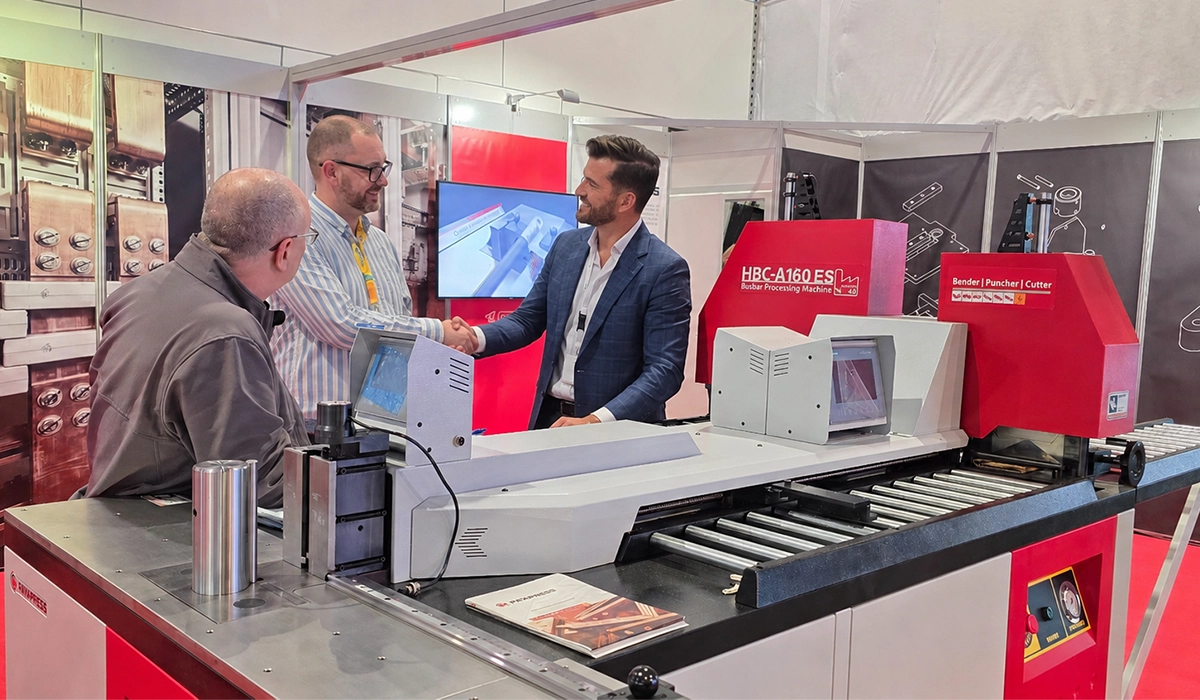
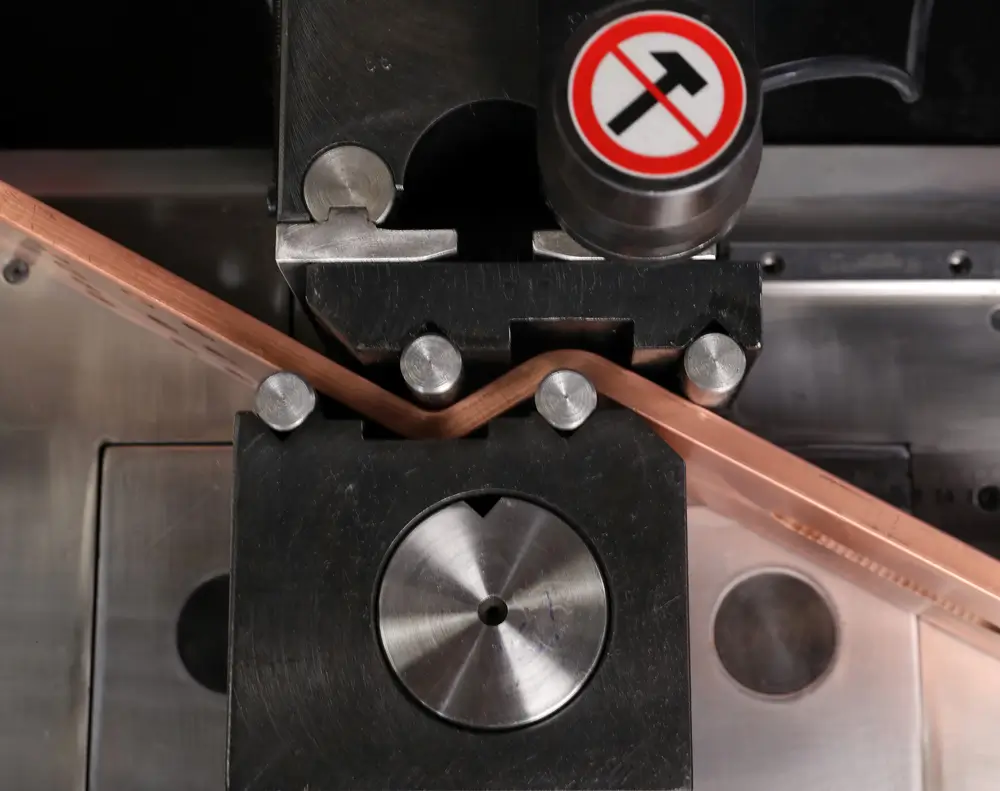
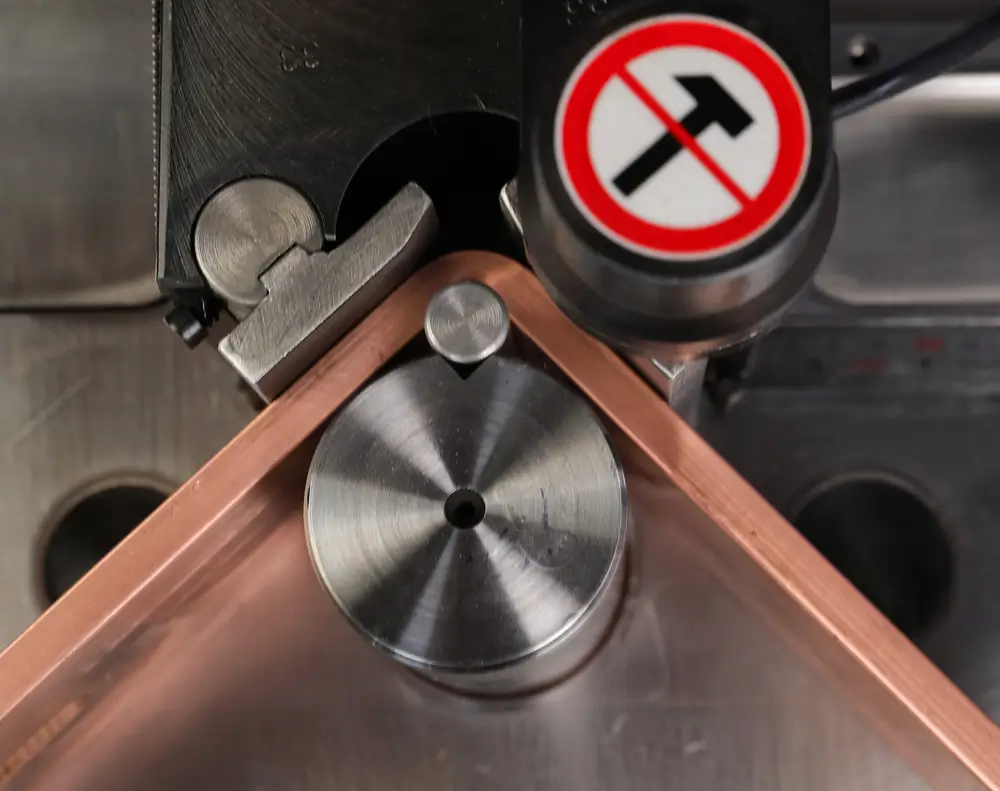
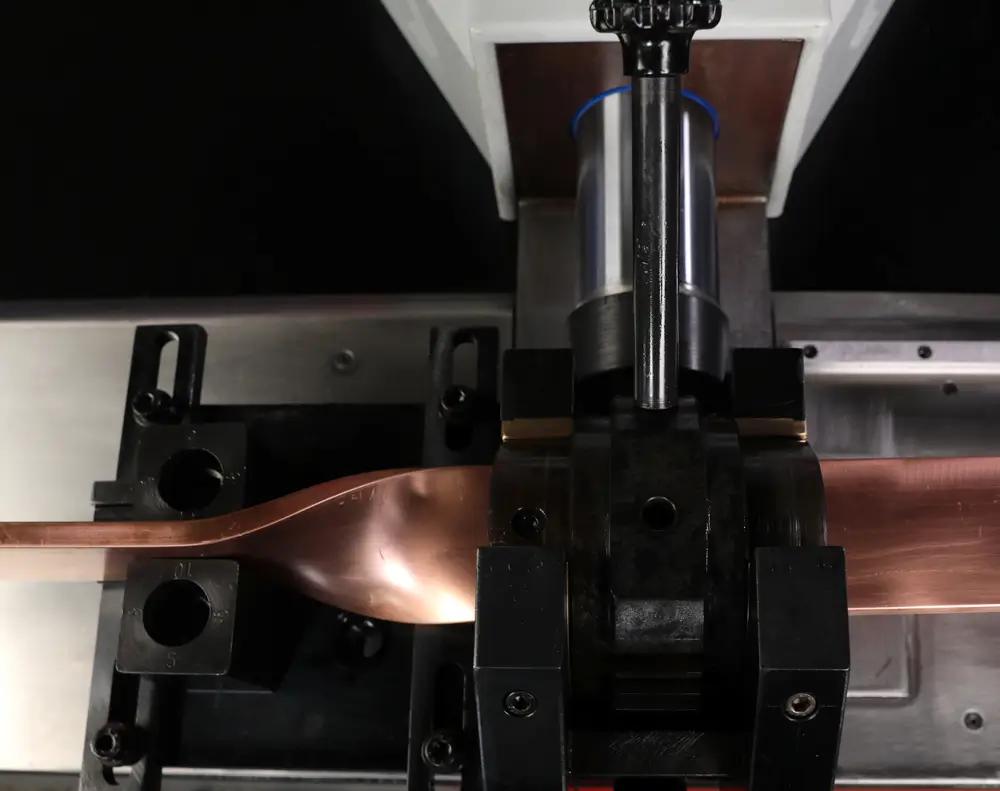
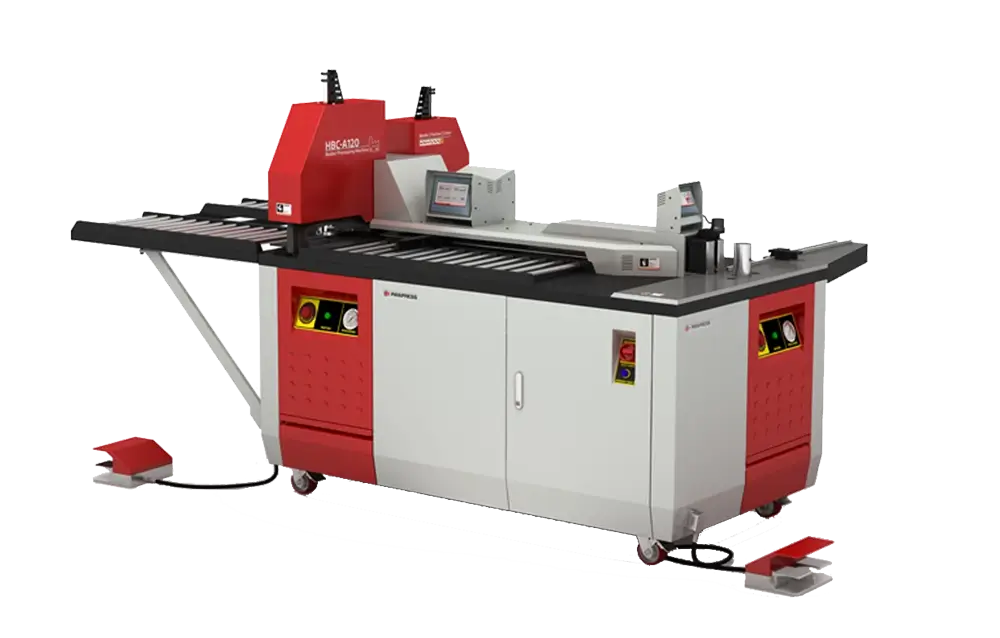
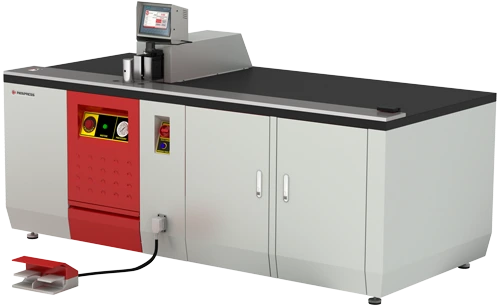
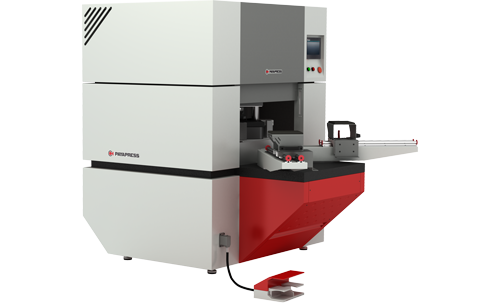
A busbar processing machine cuts, punches and bends copper and aluminium bar for electrical distribution equipment. The dominant format is the three in one busbar machine, which puts punching, shearing and bending on one platform. It is now standard in switchgear, transformer and cabinet assembly plants.
Know the tiers, because they set the customer you can serve. Entry-level equipment handles copper to about 10 mm by 120 mm, which suits small panel shops. Mid-range reaches roughly 12 mm by 200 mm. Heavy-duty models go to 16 mm by 250 mm.
One correction to the sales talk you will hear. A busbar bending machine head usually covers a wide angle range, often 45 to 120 degrees. Thicker bar is still harder to form, not easier. Minimum bend radius rises from one times thickness up to 10 mm, to 1.5 times at 11 to 25 mm, and 2 times at 26 to 50 mm. Springback grows with temper and section too.
Before continuing to read, we recommend visiting PAYAPRESS’s dealership page to learn more about becoming an authorized sales agent for our range of busbar processing machines. PAYAPRESS is one of the leading companies offering sales representation opportunities in this field. Visit our dealership page to learn more about PAYAPRESS and the process of becoming a representative.
Who buys these machines
You can list your entire addressable market on one page, because in most countries the buyer population runs to hundreds rather than thousands, and the names are largely published already.
Start with who buys busbar machines in your country, then count them. Switchgear manufacturers and electrical panel builders are the largest user group by a clear margin. After them come transformer plants, cabinet assemblers, industrial electrical equipment producers, metalworking firms and general machinery workshops.
That finite market shapes everything else. Trade association registers, exhibition catalogues and public tender records will give you most of the list in a week of desk work. Relationship selling and repeat service revenue are rewarded here. Advertising spend aimed at volume is punished.
Test the count before you trust it. Ask three panel builders how many busbar machines they run, and how old each one is. Two afternoons of calls will tell you more about replacement timing than any market report.
Add one more factor before you build a forecast. These machines last many years, so a distributor who only sells hardware eventually runs out of prospects. The businesses that survive sell tooling, service and upgrades alongside the iron, and they start doing so from the first installation.
You can also save a copy for later, which is helpful if you plan to return to this more than once.
Agent, distributor or importer — these are three different jobs
You avoid inheriting manufacturer-level liability once you know the trigger. Under EU product law, two acts make you the manufacturer: selling under your own name, or modifying the machine so compliance may be affected.
| Test | Agent | Distributor | Importer |
|---|---|---|---|
| Takes title | No | Yes | Yes |
| Capital at risk | None | Stock, credit | Stock, credit, duty |
| Core EU duty | Contract only | CE mark, instructions | Conformity, documents, languages |
| Name on product | No | No | Yes, with address |
| Paid by | Commission | Margin | Margin |
Most applicants for an industrial machinery distributor role have never made this distinction.
Instead of starting from zero, you can use the ready-made template and simply adjust it to your own situation.

The commercial difference
The agent trades upside for statutory protection, and the Directive sets the numbers. Minimum notice runs one month in year one, two in year two and three from year three. A termination indemnity is capped at one year’s average remuneration.
A distributor buys, holds title, resells, and carries the logistics, credit, compliance and data burden. An agent introduces the sale and never takes possession. A distributor ties up working capital in a machine that may sit for months. Neither model is better. They suit different balance sheets, and EU agency law gives the agent protections the distributor does not get.
If this topic is completely new to you, this beginner-friendly guide is a good place to start.
The legal difference in the EU
You can price compliance once you know the date, and the date is fixed. From 20 January 2027, machinery on the EU market must meet Regulation (EU) 2023/1230. There is no grace window.
Compliance under the old Machinery Directive is not automatically enough. Your duties as distributor are defined. Verify the CE marking and the instructions. Check that storage and transport have not degraded compliance. Act on any doubt about a machine.
Importer obligations under the EU machinery regulation go further. You must ensure the machine meets the requirements and that documentation is available. Instructions must come in the languages your market requires. You must also mark the product with your name and address.
The traceability marking above is simply an importer duty. Own-branding the machine is different, and so is modifying it. Either makes you the manufacturer. Machinery import CE marking duty does not move because a contract says so.
Bring machines in from outside the EU and you are the importer, not a reseller. Price that in. This is not legal advice, so confirm your position with a qualified adviser.
What the market data does and does not tell you
You avoid planning on the wrong number by reading the spread, not the headline. Three research firms put the 2025 busbar market between USD 15.72 billion and USD 22.5 billion. Their growth rates range from 4.2% to 5.8%.
Global Market Insights estimates USD 22.5 billion in 2025, growing at 4.7% to USD 35.9 billion by 2035. MarketsandMarkets starts far lower, at USD 15.72 billion in 2025, and reaches USD 27.71 billion by 2035 at 5.8%. Future Market Insights sits between them. Even the copper share is disputed, quoted from about 56% to over 67%.
The direction is reliable. The magnitude is not. Say so when a manufacturer sends you a deck built on one of these figures. Ask which base year and which segment definition it uses. Two reports can differ by a third because one counts trunking systems and the other does not.
The bigger error is a category error. That is the market for busbars, not for busbar machines. Machine demand follows fabricator capital investment cycles, which move with construction activity, grid spending and interest rates. It does not track conductor consumption smoothly. Watch renewable generation, data centre construction and electrification in developing economies instead.
Most of the common questions are already answered in this helpful resource.
How the money actually works
You build revenue that survives a slow machine year, and EU law does part of the work for you. Employers must inspect equipment after installation. They must also keep it maintained throughout its working life, using competent people.
There are four revenue lines, and you need all of them.
Machine sales. Lumpy, high value, long cycles, usually tied to the customer’s own capital approval calendar.
Tooling and consumables. Punches, dies and blades. Recurring, predictable, and where many distributors make their real living.
Installation and commissioning. Billable work that also puts your engineer inside the customer’s plant on a regular basis.
Service contracts and spares. The annuity. It also defends the account against the next distributor who calls.
Rank these lines by predictability, not by size. Tooling and service arrive every month. Machine orders arrive when your customer’s board approves capital, which is rarely when you need the revenue.
Now the cost side. You need working capital for demonstration stock, a technician you must train and keep, and a spare parts inventory. Add freight and customs handling. Add warranty exposure, which you carry commercially even when the manufacturer carries it contractually.
Apply one test to any proposal. If it describes machine margin only, and says nothing about tooling, spares and service, the model has not been thought through.
Because the situation can change over time, we suggest checking the latest published information before you make a decision.
What to ask a manufacturer before you sign
You get a territory clause you can rely on by testing the word “exclusive”. Under EU competition law, an exclusive territory may go to as many as five buyers.
This is what to ask a manufacturer before signing, and every answer belongs in writing.
| What to ask | Why it matters |
|---|---|
| What exactly is my territory, and is it exclusive? | “Exclusive” can still include other appointed buyers. |
| What if a customer here buys direct from the factory? | Decides who owns the accounts you build. |
| Do I buy and resell, or earn commission? | Different risk and protection on termination. |
| Who is importer of record, and who signs the conformity declaration? | Fixes who carries the EU compliance duty. |
| Are the instructions available in my market’s languages? | Missing translations block lawful supply. |
| Spare parts lead time, and can I hold consigned stock? | Decides how fast you restart a stopped line. |
| Who pays for warranty labour, and at what rate? | The most common unbudgeted cost in year one. |
| What training is provided, for how many, and paid by whom? | Your service capability is the whole business. |
| What is the minimum annual commitment, and what if I miss? | Sets volume you must fund before the market delivers. |
| Notice period on termination, and what happens to my stock? | Decides whether exit leaves you holding dead stock. |
A manufacturer who answers all ten specifically beats one who answers three enthusiastically.
Reasons not to do this
You avoid the most expensive failure in this trade, losing an account after a breakdown, by being honest about capability before you sign rather than after.
You cannot service what you sell. A stopped machine halts the bar preparation feeding panel assembly. If your engineer cannot reach site quickly, you lose the account and the reference.
You have no relationships in the sector. Cold-selling capital equipment into an unfamiliar industry is a multi-year project, not a quarter.
You need cash flow this quarter. Sales cycles here run in months, and payment often follows commissioning.
You expect exclusivity you have not secured in writing. Verbal territory promises are worth nothing at renewal.
You are not prepared to be the importer. In the EU that role carries enforceable duties that a contract cannot transfer away. A busbar machine distributor who ignores this inherits the liability anyway.
Conclusion about Become a Busbar Machine Distributor
This is a relationship and service business wearing a hardware business’s clothes. The distributors who last are the ones who built service capability before they needed it, and who settled their legal role before the first container shipped.

Rate this article
Choose a rating from 1 to 5 stars.
No ratings yet