



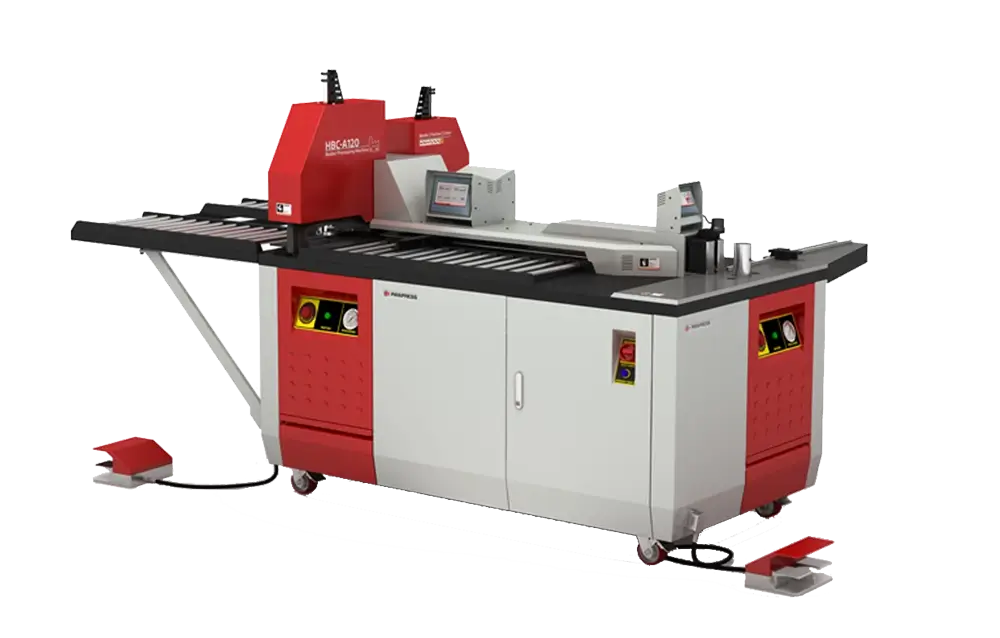
What Is a Press Brake for Bending Metal?
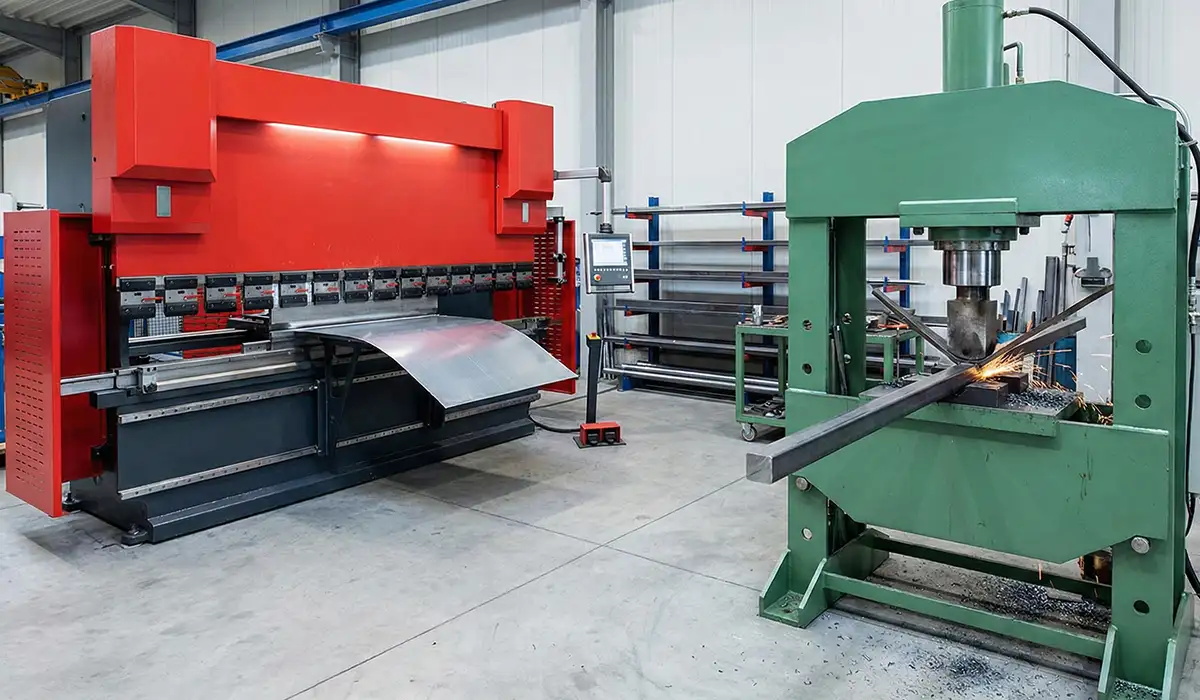
A press brake is a metal-forming machine used for bending metal sheet and plate into controlled angles, channels, boxes, brackets, panels, and structural profiles. It forms the bend by pressing the workpiece between a matching upper punch and lower die. This definition is consistent with standard industry explanations of a press brake as a machine that bends sheet and plate material by clamping it between top and bottom tooling.
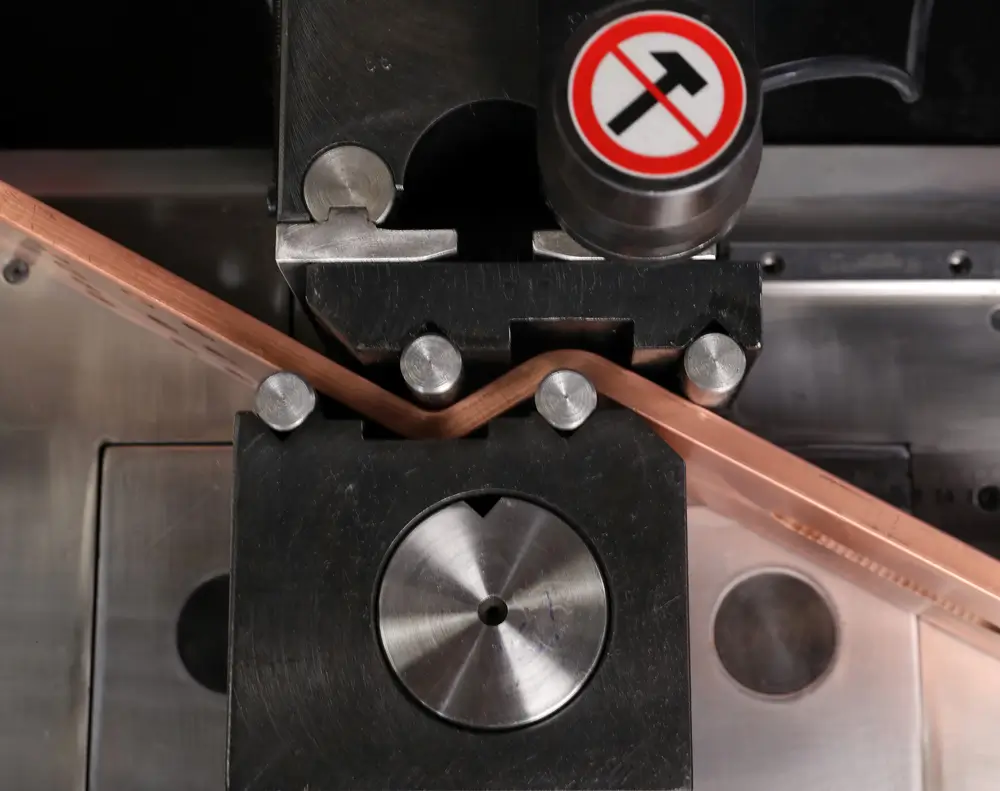
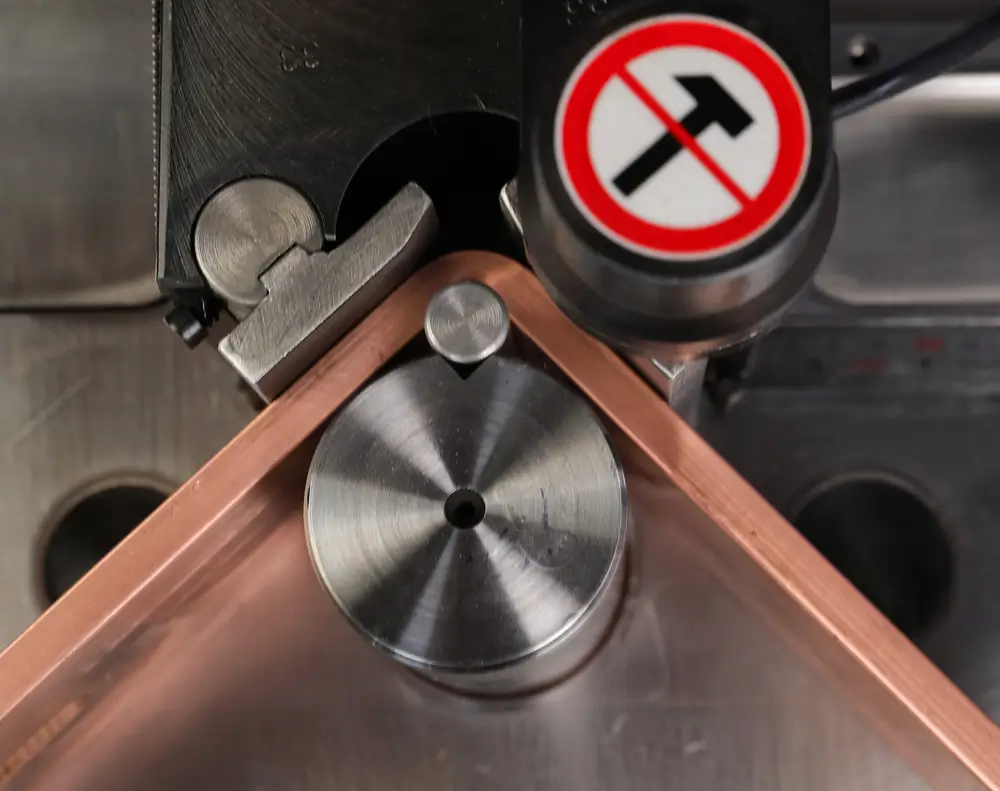
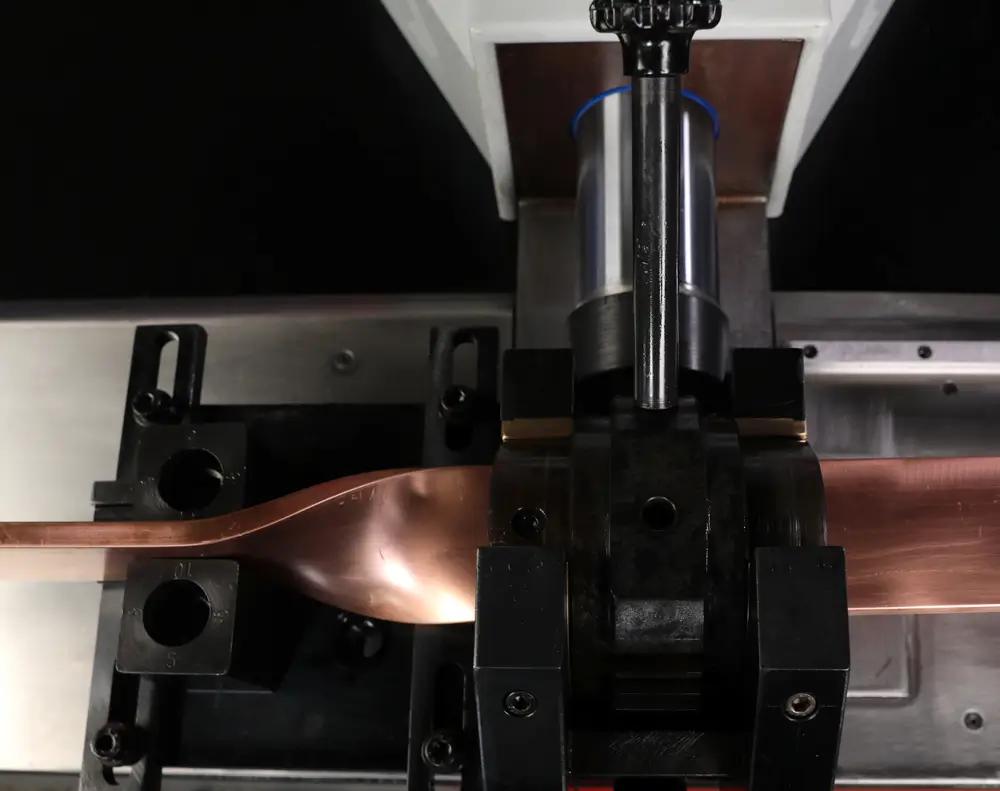
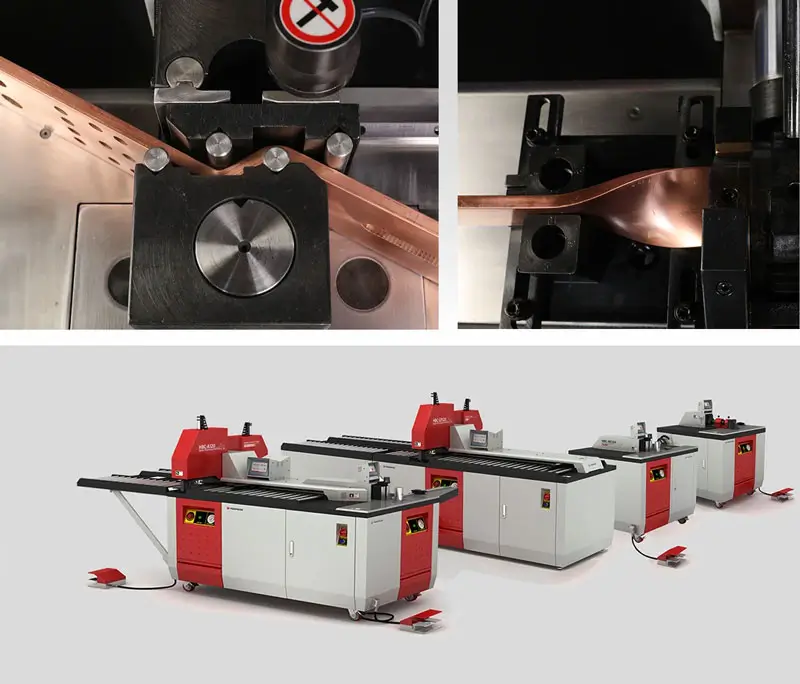
Further exploration of busbar processing machine can be found in the following recommended reading.
Press brakes are commonly used for:
- sheet metal panels;
- enclosures and cabinets;
- brackets and chassis;
- HVAC ductwork;
- automotive components;
- aerospace parts;
- electrical cabinets;
- appliance and equipment housings.
The key advantage is repeatable linear bending. A press brake can bend long workpieces across a wide bed, use backgauges for positioning, and run programmed bend sequences on CNC models.
This article serves as a valuable resource for those seeking detailed information on Bending Machine .
What Is a Bending Press or Bend Press?
A bending press, sometimes searched as bend press, is a broader term. It can describe a hydraulic press, horizontal bending machine, heavy-duty forming press, or custom press setup used to bend, straighten, or form metal. Unlike a press brake, it is not always defined by a long bed, punch-and-die brake tooling, or CNC backgauge control.
A bending press is usually selected when the job requires:
- high localized force;
- thick plate forming;
- bar or flat-stock bending;
- structural steel bending;
- straightening operations;
- custom die work;
- lower geometric complexity.
For a comprehensive understanding of hydraulic bending machines, we highly recommend reviewing article of Custom Busbar Bending Solution .
Bending Press vs Press Brake: Core Difference
The core difference between a bending press vs press brake is machine purpose. A press brake is designed for accurate, repeatable, straight-line bending across sheet metal or plate. A bending press is usually designed for concentrated force, heavy forming, or custom bending where high tonnage matters more than multi-bend accuracy.
| Factor | Press Brake | Bending Press |
|---|---|---|
| Main purpose | Precision sheet and plate bending | Heavy forming, bar bending, straightening |
| Typical workpiece | Sheet metal, plate, panels | Thick plate, bars, structural components |
| Tooling | Punch and V-die tooling | Custom dies, V-blocks, press tooling |
| Positioning | Manual or CNC backgauge | Manual or fixture-based |
| Accuracy | High repeatability | Depends heavily on setup |
| Best use | Multi-bend fabricated parts | High-force simple bends |
A press brake is the better choice when the finished part needs exact bend positions and repeatable angles. A bending press is more appropriate when the priority is raw force on a smaller bending zone.
Further exploration of bending technologies can be found in the following recommended reading: precision bending guide.
Bending Force & Tonnage Comparison
Tonnage—the amount of force a machine can apply—is a critical factor. While press brakes range from 40 tons to 3,000+ tons distributed across a long bed, a bending press often delivers its full tonnage to a central point. For bending thick brackets or straightening heavy bars, the concentrated force of a bending press is superior. However, for bending a 10-foot sheet of 16-gauge steel, the distributed tonnage of a press brake is required to prevent deflection.
| Feature | Press Brake | Bending Press |
|---|---|---|
| Tonnage Range | 40 – 3,000+ tons (distributed) | Full tonnage at central point |
| Best Material Thickness | 20 gauge – 1/4 inch sheet metal | Thick plate (>1 inch), structural steel |
| Bending Method | Air bending, hemming, coining | Bottom bending, custom dies |
| Back Gauge System | Multi-axis CNC back gauge | Limited / manual positioning |
| Precision | Micron-level accuracy | ±0.5° or less critical |
| Working Bed Shape | Long, narrow bed (up to 40 ft+) | Small, concentrated or horizontal |
| Typical Applications | Sheet metal panels, chassis, ductwork | I-beams, heavy brackets, straightening |
| Springback Compensation | Automatic (CNC) | Manual / not standard |
Press Brake Bending: How the Process Works
Press brake bending is a controlled process that combines material calculation, tooling selection, backgauge positioning, ram movement, and angle inspection. The operator or CNC controller first calculates the bend allowance and bend deduction so the flat blank produces the correct final size. Then the backgauge positions the workpiece at the correct bend line.
During air bending, the punch pushes the material into the V-die without forcing it fully into the die cavity. The bend angle is controlled mainly by punch penetration depth, not only by the die angle. Industry terminology references describe air bending as a process where the bend angle is determined by how deeply the punch descends into the die.
A practical workflow is:
- Confirm material type and thickness.
- Select punch and die.
- Calculate bend allowance and tonnage.
- Set the backgauge.
- Make a test bend.
- Measure the angle.
- Adjust for springback.
- Run production after first-article approval.
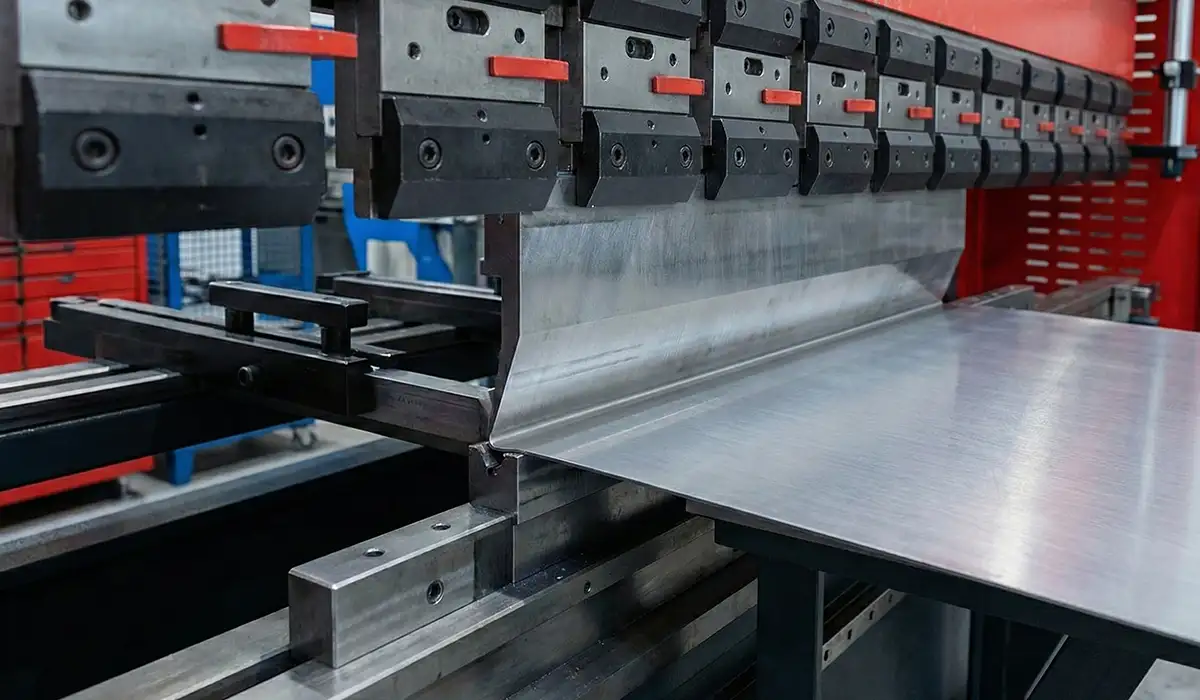
Press Bending vs Brake Bending: Are They the Same?
Press bending is a broad phrase that can describe any bending process performed by a press. Brake bending is more specific and usually refers to bending performed on a press brake or sheet metal brake.
This distinction matters for search intent:
- press bending = broad process term;
- press brake bending = specific machine/process term;
- bending press = broad machine term;
- press brake = specific precision sheet-metal bending machine;
- bending brake = often a lighter-duty sheet metal brake or bending machine term.
Brake for Bending Metal: Which Machine Do You Need?
When users search for a brake for bending metal, they may be looking for several different machines: a manual sheet metal brake, press brake, pan brake, box-and-pan brake, folding machine, or CNC press brake. The right choice depends on material thickness, bend length, production volume, and required accuracy.
| Term | Meaning |
|---|---|
| Bending machine | Broad category for machines that bend metal |
| Press brake | Specific machine for linear bending of sheet and plate |
| Bending press | Broad/general press used for bending or forming |
| Panel bender | Automated machine for panel-edge bending |
| Roll bender | Machine for curves, arcs, and cylinders |
| Pipe bender | Machine for tube and pipe forming |
A press brake is usually the most flexible option for general sheet metal fabrication, while more specialized bending machines are better for tubes, panels, profiles, or repeated automated part families.
Tonnage Comparison: Bending Press vs Press Brake
Tonnage is the bending force required to form the material. In a press brake, tonnage is usually calculated from material thickness, tensile strength, bend length, die opening, and bending method. Bystronic’s press brake tonnage guidance uses variables such as material thickness, die-opening width, bend length, material factor, method factor, and tooling factor in the forming-tonnage calculation.
A press brake distributes force along a bend line. A bending press may apply force to a smaller area. This makes a bending press useful for heavy localized forming but less efficient for long, accurate sheet-metal bends.
| Factor | Press Brake | Bending Press |
|---|---|---|
| Force distribution | Along the bend length | Concentrated at the ram/tooling area |
| Tonnage calculation | Based on material, length, die opening, method | Based on press capacity and custom setup |
| Best for long bends | Yes | Usually no |
| Best for thick localized bends | Sometimes | Yes |
| Best for repeatable sheet-metal work | Yes | Usually no |
Tooling and Bend Methods: Air Bending, Bottoming, and Coining
Press brakes use specialized tooling to produce different bend types. The main tooling components are the punch and die. The punch is mounted on the upper beam, while the die supports the material from below. Press brake terminology references define both punch and die as tools used to shape material during the bending process.
Common press brake bending methods include:
| Method | Use Case |
|---|---|
| Air bending | Flexible angle control with lower force |
| Bottom bending | More die contact and more consistent angle control |
| Coining | High force, precise bend, less springback |
| Hemming | Folding the edge back onto itself |
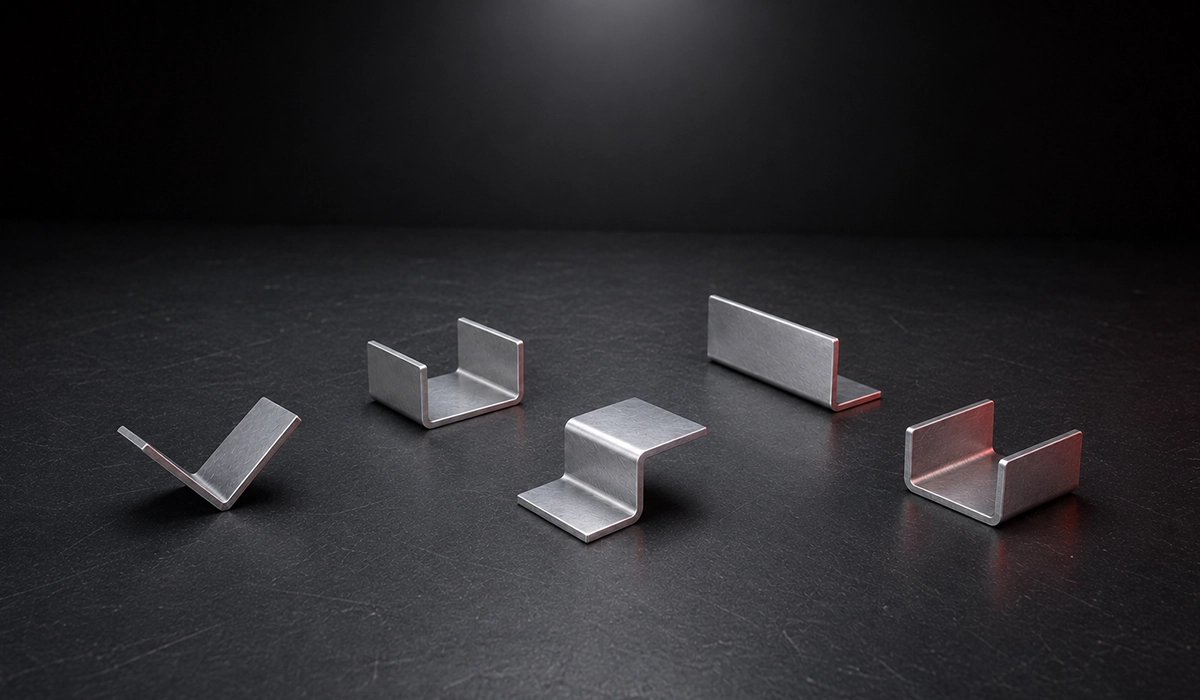
| Offset bending | Creating Z-shaped or stepped profiles |
A bending press can also use V-blocks or custom dies, but it usually does not match the tooling flexibility, segmented tooling options, or CNC bend sequencing of a modern press brake.
Springback and Accuracy in Press Brake Bending
Springback is the elastic recovery that occurs after the bending force is released. The final bend may open slightly, causing the part to miss the target angle. Research on press brake air bending identifies springback as one of the biggest problems in sheet metal bending, with variation caused by material thickness, mechanical properties, tool dimensions, bending force, and other factors.
Modern CNC press brakes reduce this problem through:
- programmed over-bend;
- angle measurement;
- dynamic crowning;
- CNC depth correction;
- material libraries;
- first-article correction;
- real-time angle feedback on advanced systems.
Advanced press brake controls can use sensors to measure the actual bend angle during forming and make real-time adjustments to compensate for springback.
Advanced Press Brakes for Complex Bending and Mid-Sized Fabricators
Mid-sized fabricators often reach a point where manual or basic hydraulic machines limit throughput. At that stage, advanced press brakes for complex bending become a practical investment. These machines help shops produce repeatable parts with less setup time, fewer operator-dependent errors, and better control over multi-bend sequences.
Important advanced features include:
- CNC control;
- multi-axis backgauge;
- Y1/Y2 ram control;
- X/R/Z backgauge positioning;
- offline programming;
- automatic crowning;
- angle correction;
- springback compensation;
- tooling libraries;
- bend simulation.
CNC press brakes can use multi-axis closed-loop servo systems and may control six or more axes such as Y1/Y2/X/R/Z1/Z2 for complex bend sequences and high repeatability.
Press Brake vs Brake Press: Which Term Is Correct?
The correct industry term is press brake. The phrase brake press is commonly used in informal speech, but it is technically reversed. Search data shows that users look for both brake press or press brake and press brake vs brake press, so the article should answer this directly instead of treating it as a minor note.
| Search Term | Recommended Treatment |
|---|---|
| Press brake | Primary technical term |
| Brake press | Mention as common but incorrect/reversed phrasing |
| Bending brake | Related term; may refer to sheet metal brake or bending machine |
| Bend press | Informal/variant phrase for bending press |
| Press bending | Broad process phrase |
When to Choose a Bending Press vs Press Brake
Choose a press brake when the job requires accurate bend angles, repeatable bend positions, long bend lengths, sheet metal components, or multi-bend part programs. Choose a bending press when the job requires concentrated force, heavy plate forming, thick bar bending, straightening, or custom tooling.
| Job Requirement | Better Choice |
|---|---|
| Long sheet metal bends | Press brake |
| Repeated production parts | CNC press brake |
| Boxes, channels, brackets, panels | Press brake |
| Thick plate forming | Bending press |
| Structural steel straightening | Bending press |
| Simple high-force bends | Bending press |
| Complex multi-bend geometry | CNC press brake |
| Lower-cost occasional bending | Depends on thickness and accuracy |
For most sheet metal fabrication shops, the press brake is the more versatile machine. For heavy stock and simple high-force operations, a bending press can be more cost-effective.
Best Practices for Press Brake Bending
Recommended best practices:
- Calculate tonnage before bending. Tonnage depends on material type, tensile strength, thickness, die opening, bend length, and bending method.
- Select the correct V-die opening. Too narrow a V-die increases force and can damage tooling or material.
- Run a test bend first. Validate the angle, radius, and flat-pattern calculation before production.
- Compensate for springback. Adjust depth, over-bend, or use CNC angle correction.
- Use the backgauge consistently. Accurate positioning reduces part-to-part variation.
- Inspect tooling condition. Worn punches or dies can cause inconsistent bends.
- Check first articles. Approve the first finished part before running a batch.
- Document machine settings. Record material, tooling, ram depth, backgauge position, and springback correction.
Press Brake and Bending Press Safety Considerations
Both press brakes and bending presses create pinch-point, crushing, and material-handling hazards. OSHA notes that press brake operators may need to hold stock while cycling the machine and that the stock can move up or down as the stroke begins, creating hazards. OSHA also lists safeguarding options such as presence-sensing devices, two-hand controls, pullback devices, and restraints.
Add these safety points:
- use machine guards and light curtains where applicable;
- keep hands away from the punch and die zone;
- secure large or heavy workpieces;
- inspect foot pedals and controls;
- train operators on tooling setup;
- use lifting aids for large sheets or plates;
- never bypass safety interlocks;
- follow lockout/tagout procedures during maintenance.
Applications of Press Brakes in Metal Fabrication
Press brakes are used across sheet metal fabrication because they can create accurate bends in a wide range of part sizes and materials. They are especially useful where parts need straight bend lines, repeated angles, and consistent geometry.
Common applications include:
- electrical enclosures;
- machine guards;
- brackets;
- chassis;
- cabinets;
- HVAC ductwork;
- appliance panels;
- architectural metalwork;
- automotive components;
- aerospace parts;
- commercial kitchen equipment.
Applications of Bending Presses
A bending press is best suited to heavier, simpler, or more localized forming jobs. It is often useful when a press brake is too specialized, too long-bed focused, or not suitable for the workpiece shape.
Common bending press applications include:
- thick plate bending;
- flat bar bending;
- heavy bracket forming;
- structural steel straightening;
- I-beam or channel correction;
- custom forming operations;
- repair and maintenance work;
- low-volume heavy-duty bending.
Technical Comparison: Bending Press vs Press Brake
| Feature | Press Brake | Bending Press |
|---|---|---|
| Main role | Precision sheet and plate bending | Heavy-duty forming or straightening |
| Machine design | Long bed with punch and die | Hydraulic/mechanical press with custom tooling |
| Workpiece type | Sheet metal, plate, panels | Thick plate, bars, structural steel |
| Bend type | Long, straight, repeatable bends | Localized or simple high-force bends |
| Positioning | Manual, NC, or CNC backgauge | Manual stops, fixtures, or custom setup |
| Bend methods | Air bending, bottoming, coining, hemming | Bottom forming, V-block bending, custom die forming |
| Springback control | Manual offset or CNC correction | Manual correction |
| Accuracy | High, especially on CNC models | Setup-dependent |
| Best for | Multi-bend fabricated parts | Thick stock and straightening |
| Limitation | Requires correct tooling and tonnage | Less efficient for complex sheet-metal parts |
Conclusion: Which Machine Is Better for Your Shop?
The better machine depends on the work. A press brake is the right choice for accurate, repeatable sheet metal and plate bending, especially when parts require backgauge positioning, multiple bends, CNC programs, and consistent production quality. A bending press is better for heavy localized forming, thick plate, bar bending, straightening, and custom high-force operations.
For most fabrication shops producing panels, brackets, enclosures, cabinets, ductwork, or chassis, the press brake is the more versatile investment. For shops focused on thick materials, structural parts, or simple high-tonnage forming, a bending press may be more practical. The best decision comes from matching the machine to material thickness, bend length, tolerance, production volume, tooling, safety requirements, and total operating cost.


Rate this article
Choose a rating from 1 to 5 stars.
No ratings yet