



If you’d rather listen than read, feel free to play the audio file below for the rest of this article.
What Counts as Equipment, and What Is Just the Machine
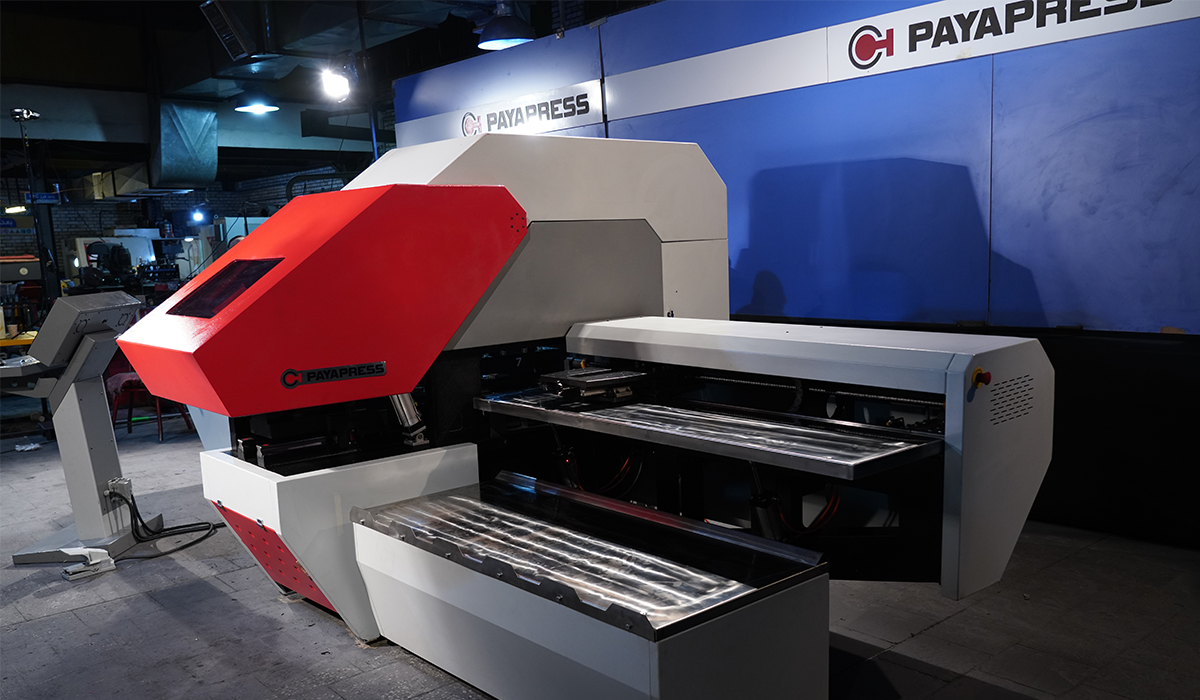
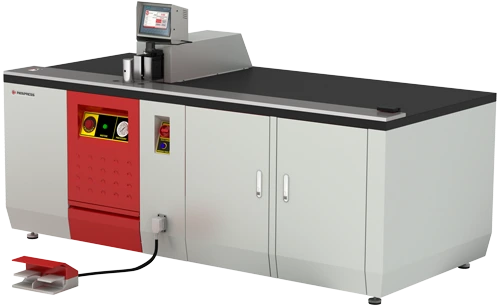
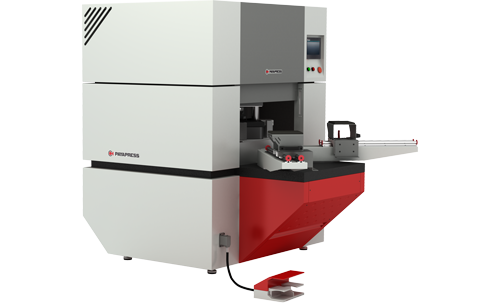
Draw the line clearly. The machine is the frame, the hydraulics, the drives and the control. Everything that has to be specified, bought, changed, calibrated or stocked separately is busbar processing equipment.
The distinction matters commercially more than technically. Two quotations for the same machine can differ enormously depending on what sits in that second category. Comparing headline specifications alone tells you very little.
Before learning more about the equipment of a CNC machine, you can visit the CNC busbar machine page to get more information.
Five groups cover CNC busbar machine equipment. Busbar machine tooling that touches the copper. Positioning that decides where it is touched. Handling that moves the bar, finishing that comes after processing, and the software and safety layers sitting across all of it.
| Group | Usually standard | Usually optional |
|---|---|---|
| Tooling | Basic round die set, shear blade | Oblong, rectangular and slot dies; step molds; custom molds |
| Positioning | Programmable stoppers, clamps | Servo backgauge, laser centre finder |
| Handling | Side rollers, basic supports | Roller conveyors, automatic loading, bar storage |
| Finishing | — | Deburring station, corner processing, laser marking |
| Software | Control and HMI | Nesting, offline programming, MES/ERP integration |
| Safety | E-stop, isolator, foot pedal, guarding | Light curtains |
One framing sentence worth keeping: a machine is bought once, and equipment is specified, consumed and replaced for as long as the machine runs.
Tooling: The Equipment That Touches the Copper
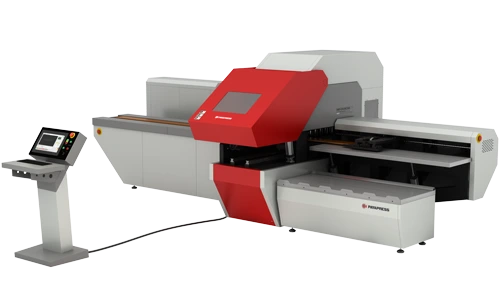
Tooling is the CNC busbar machine equipment most often underestimated at purchase, and most often the reason a machine cannot run a particular job.
Treat it as consumable from the start. It wears, and a wear allowance belongs in any equipment plan.
For a clearer and more complete explanation, this page goes into far more depth than we can cover in a short text.
Punching Dies and Punches
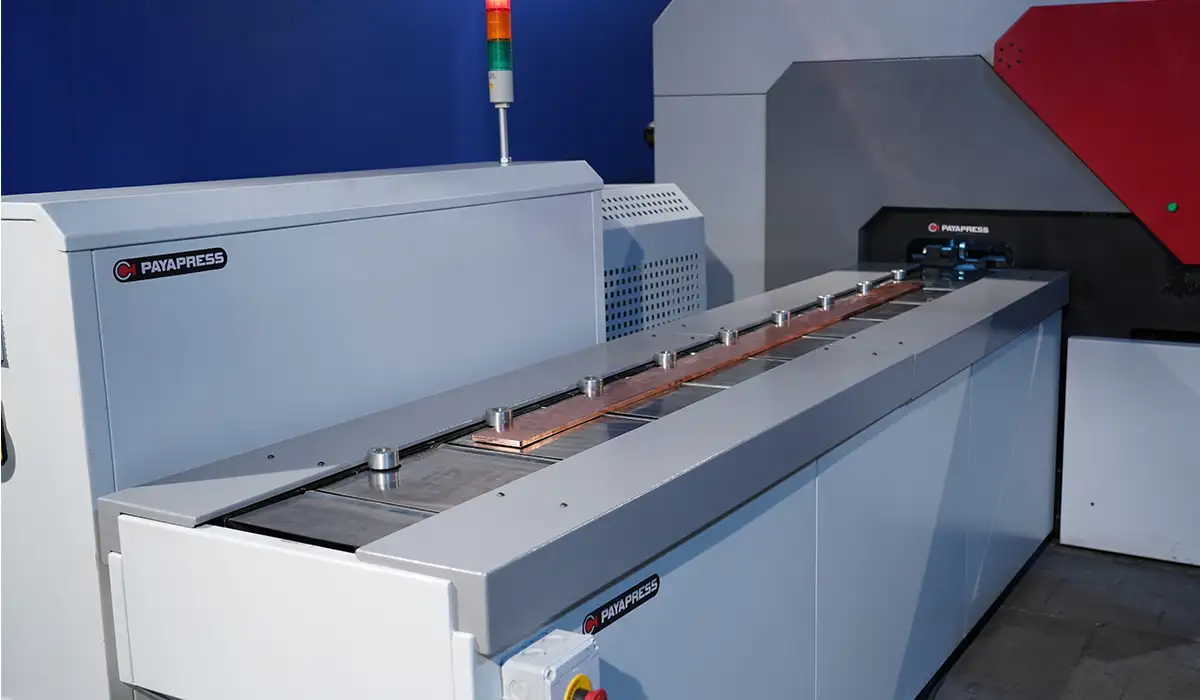
Round dies commonly cover M6 to M20 as a standard range. Oblong, rectangular and slot dies are usually optional extras, ordered against the hole patterns your drawings actually contain.
Dies are matched male and female sets, and the clearance between them controls burr formation. A worn or mismatched set announces itself as a poor edge long before it fails outright.
On CNC machines, multi-station tool carriers hold several dies at once and the program calls a station rather than requiring a manual change. Quick punch and die change systems shorten what remains.
Die material and hardness matter, and copper and aluminium do not wear tooling identically. The practical consequence: your die inventory determines which drawings you can accept without adding a lead time.
If you would like to explore this subject further, you can read more about it here.
Shear Blades and Cutting Tooling
The cutting station has its own consumables. Blades need periodic sharpening or replacement, and a center-oriented guide keeps the bar square to the cut.
A dull or misaligned blade produces deformed edges and burrs. That does not remove work — it pushes it downstream to the deburring bench.
Cutting equipment also includes somewhere for the offcut to go. On nesting-driven lines offcuts are tracked rather than binned, which turns scrap handling into a software question as much as a bin question.
Readers who want to understand the reasoning behind this will find this detailed article very useful.
Bending Molds and Dies
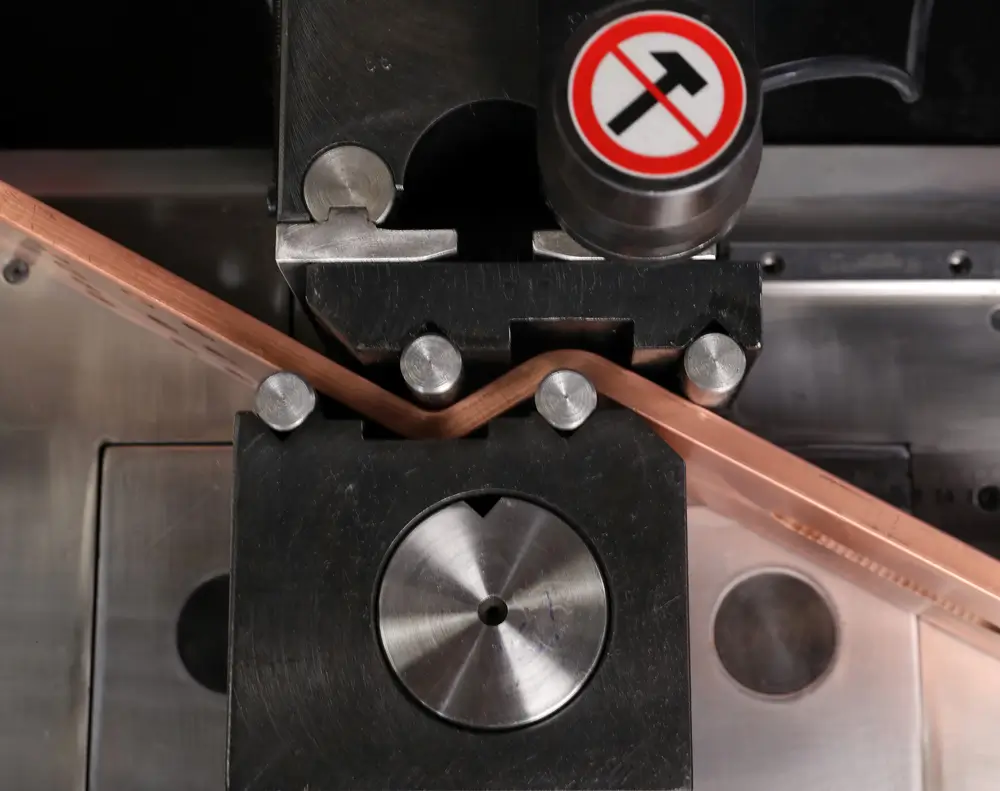
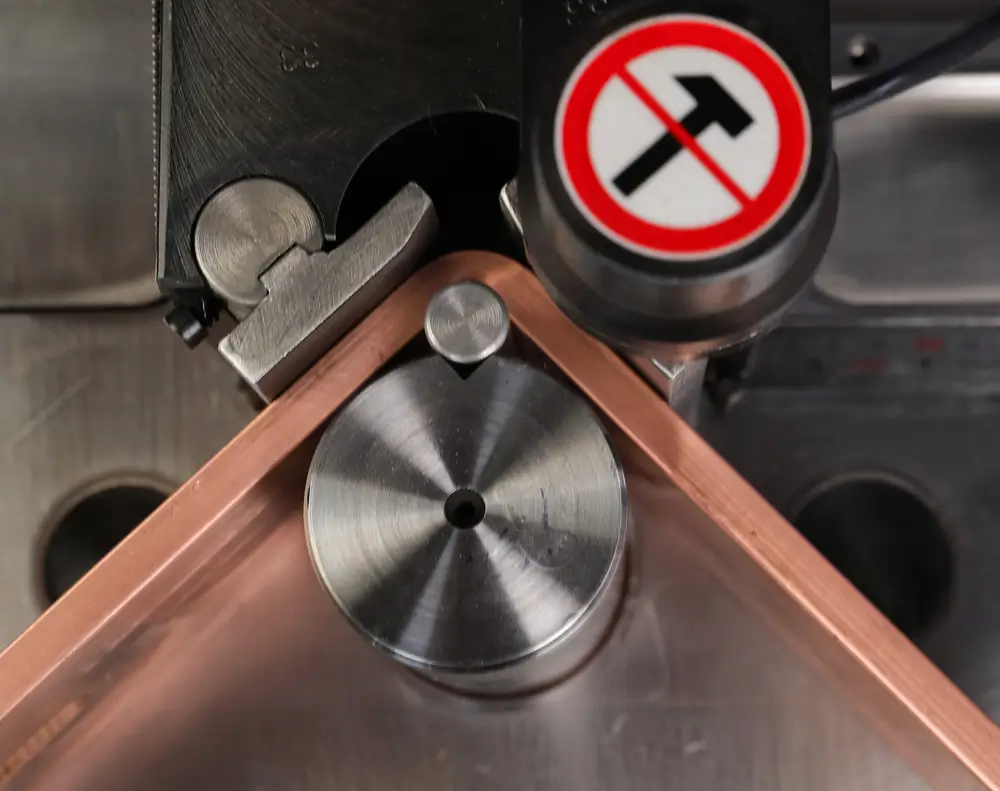
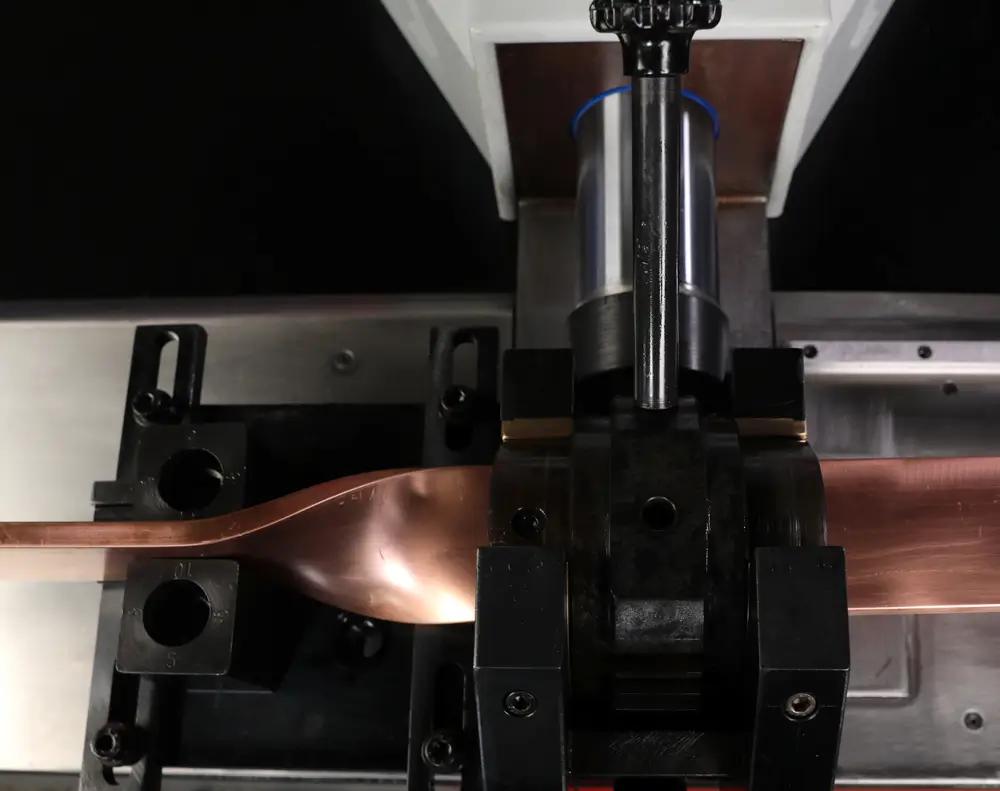
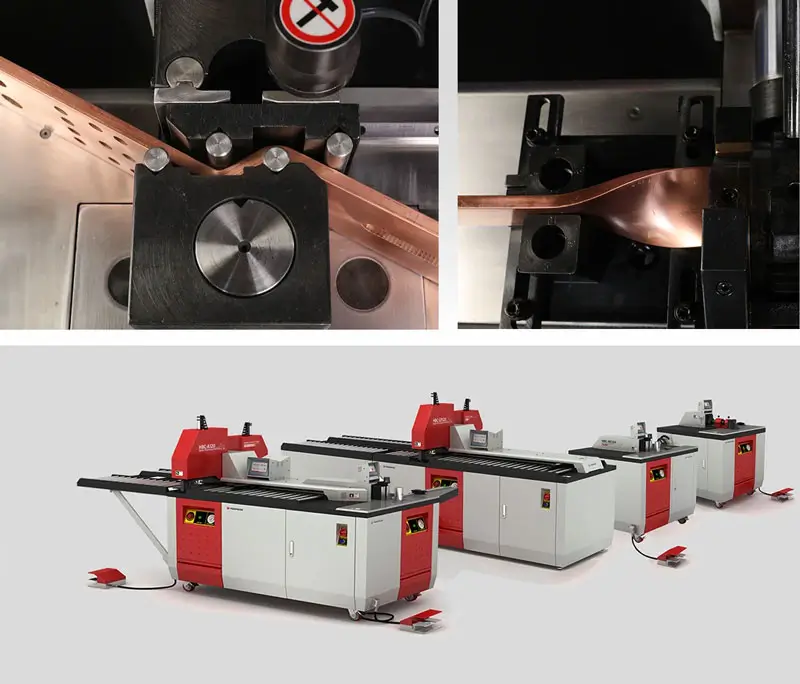
The standard mold set covers flat 90° bends, U bends, Z or step bends and twist bends. Step molds are usually an optional item.
Mold radius is not a free choice. It has to satisfy the minimum inside bend radius for the material and thickness: around one times thickness for thin annealed copper, approaching two times thickness at 10 mm and above.
Rotatable support plates prevent surface marking on the outer face during forming, which matters on any bar with a visible or contact-critical surface.
Custom busbar bending molds can be produced to a drawing where a project needs a shape outside the standard set. That carries lead time, and the lead time belongs in project planning rather than in a surprise.
If this topic is completely new to you, this beginner-friendly guide is a good place to start.
Positioning and Reference Equipment
Everything in this group decides where the tooling acts. It is where accuracy actually comes from.
Programmable length stoppers hold in the region of 20 positions, in absolute or incremental mode. CNC lines replace them with servo drives and ball-screw length measurement.
Clamps grip and index the bar, and they create a no-go zone at each end where no hole can be punched. That constraint has to be known before a drawing is quoted, not after.
A laser centre finder serves as a positioning aid on manual and semi-automatic stations. On bending stations, encoders and digital angle indicators do the equivalent job, with springback compensation handled as a control feature rather than a physical accessory.
One line that gets forgotten: positioning equipment drifts. It needs periodic checking against a known reference, and that check belongs in a maintenance schedule rather than in someone’s memory.
Handling and Support Equipment
Copper bars are heavy, long and easy to damage. Busbar production line equipment in this group is where a line either flows or turns into two people carrying bars.
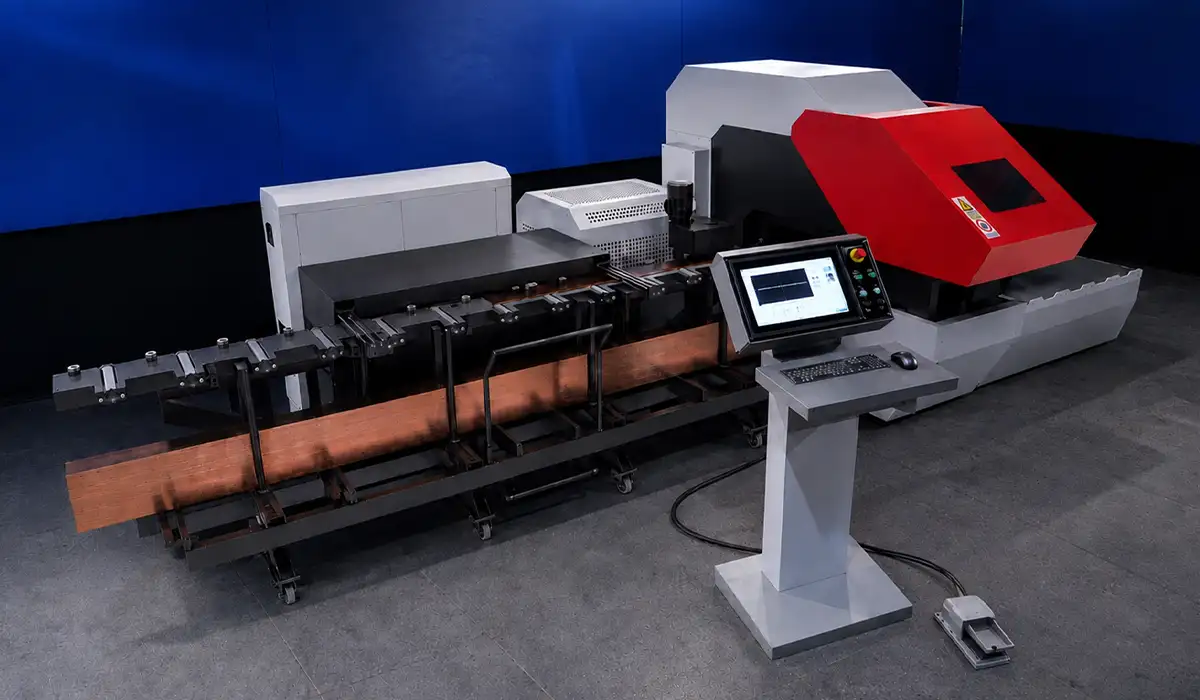
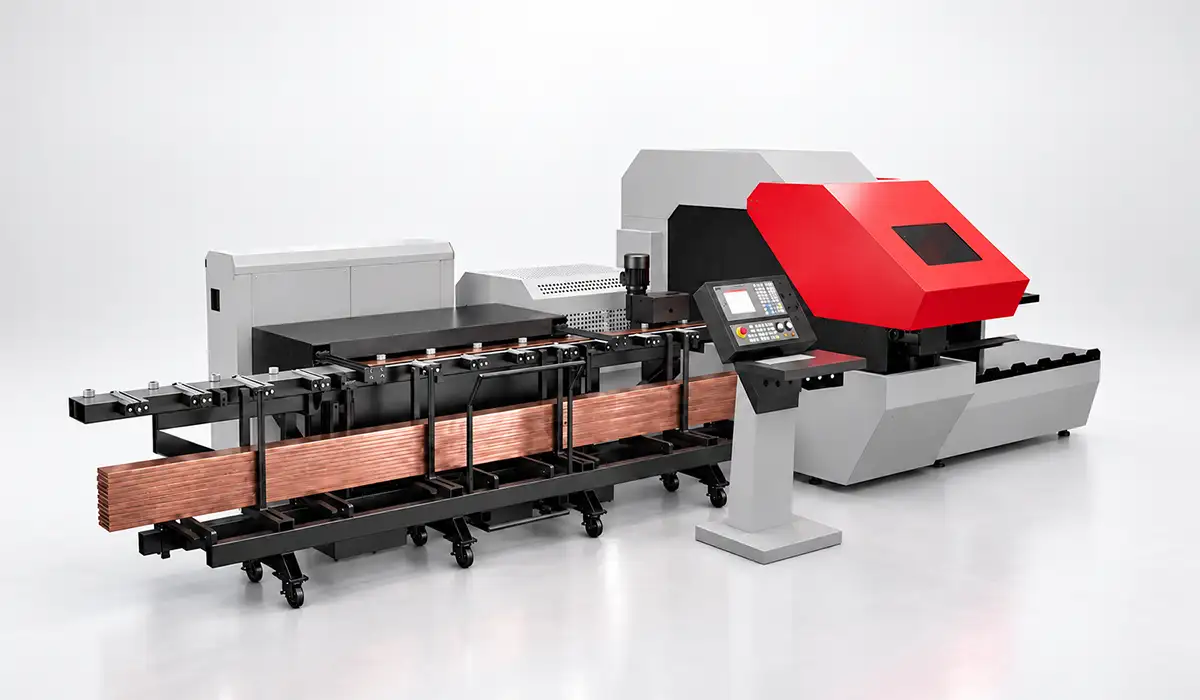
The basics come with or sit beside most machines: side rollers at the cutting and punching stations, support tables, and roller conveyors for long bars. Movable and guided supports keep several bars separated so they do not tangle or scratch each other in process.
The automation tier is real but belongs to a different scale of investment. Automatic loading and unloading systems exist for CNC punching and shearing centres, and integrated busbar storage systems feed them. These suit high-volume plants and should be evaluated as such rather than added optimistically.
Stock handling before the machine counts too. Standard copper stock is bought in 6 m bars, and where those bars live and how they reach the machine is equipment even when it is only a rack.
The practical point: floor space for infeed and outfeed is part of the equipment plan, and it is the item most often forgotten until installation day.
Finishing and Downstream Equipment
This is the work that exists after the machine has done its part and before the bar can go into a panel.
Deburring and chamfering. Punching and shearing leave edges that need attention, both for operator safety and because edge condition affects the quality of an electrical contact face. Correct die clearance reduces burrs; it does not eliminate the step.
Corner and arc processing equipment rounds bar ends on larger lines, where hand finishing would become the bottleneck.
Laser marking equipment handles part identification and traceability. That matters wherever panels are built to a project drawing and every bar has to be identifiable at assembly.
Insulation and downstream panel processes exist, but they sit outside the busbar machine line and outside this list.
The practical point: deciding who owns finishing — the machine operator or a separate bench — changes both the equipment list and the cycle time.
Software and Control Equipment
Software is equipment. It is quoted as a line item, and it is the part of the list buyers scrutinise least and regret most.
The control layer. PLC and CNC platforms in this class are commonly Siemens, Fanuc or Beckhoff, with an HMI touch panel as the operator interface.
The programming layer. Import of DXF and DWG for 2D, STEP and IGES for 3D, from AutoCAD, SolidWorks or EPLAN. Machine code is generated automatically, with simulation before running.
Nesting software arranges parts across stock and tracks offcuts. Good nesting pushes material utilisation above 98% of stock.
An offline programming station is worth pricing separately. It is a PC that lets programs be prepared without occupying the machine, which matters most on lines running mixed batches.
Integration with MES, ERP, warehouse control and PLM systems is available on connected lines, and needs someone in-house to own it.
Safety Equipment
This is a hydraulic press with an operator’s hands near the tooling. Treat the list factually.
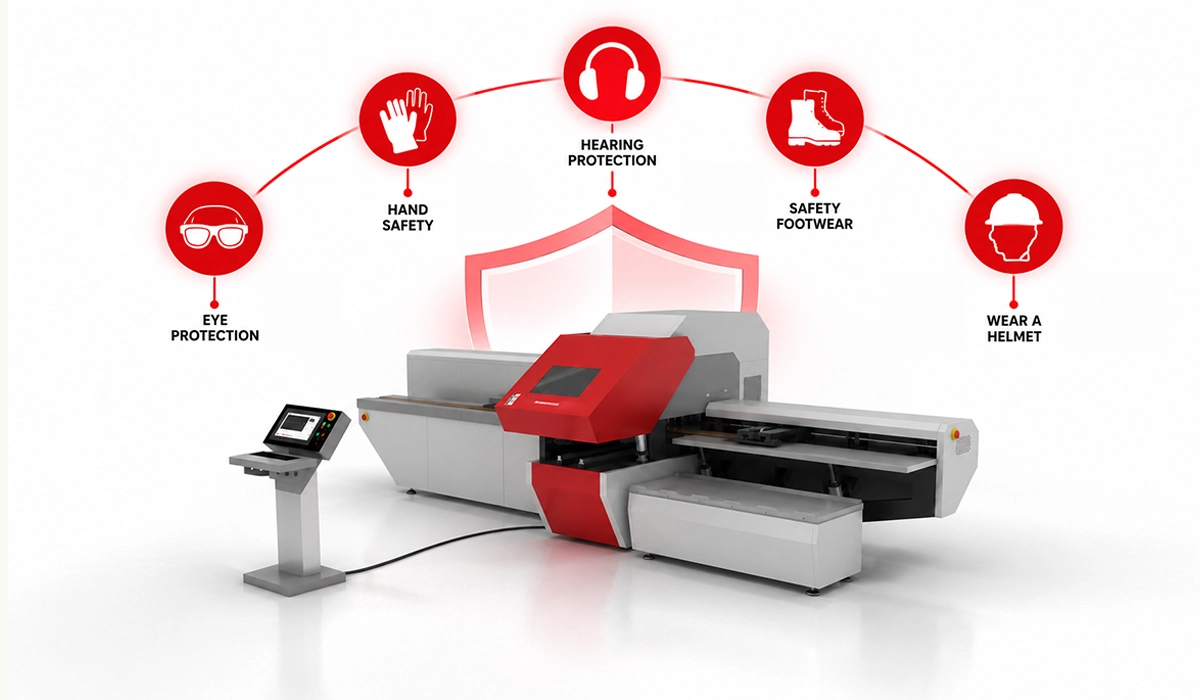
Standard on this machine class: emergency stop, a main isolator to cut power, foot pedal control that keeps hands clear during automatic operation, and guarding around moving stations.
Light curtains are common but sometimes optional rather than standard. That is a specification question worth asking at quotation rather than assuming.
Some safety equipment is not on the machine at all and still belongs on the list: gloves and eye protection for handling cut copper, and edge-safe storage for finished bars.
Installation-side items count too — clearances around the machine, and safe access for die changes.
Documentation and operator training belong in commissioning, not afterwards. Both are easier to agree before delivery than to request after it.
Building Your Equipment List
Work the list in this order and the quotation becomes comparable.
- Start from the drawings you actually run, not from a catalogue. The hole patterns determine the die list. The bend types determine the mold list. The largest cross-section determines the machine frame.
- Separate standard from optional on the quotation, and get it in writing. Two quotations are only comparable once this is resolved.
- Add a consumables and wear allowance for dies and blades. They are running costs, not one-time purchases.
- Plan the floor, not just the machine. Infeed, outfeed, stock storage and die storage all take space.
- Decide who owns software and programming before delivery, not after.
The items most often missed are handling and finishing. Neither appears anywhere on a machine specification sheet, which is precisely why both get discovered on installation day.
Conclusion about CNC Busbar Machine Equipment
The machine decides what is possible. The CNC busbar machine equipment around it decides what is practical, and the shops that commission quickly are the ones that specified the whole list before delivery.


Rate this article
Choose a rating from 1 to 5 stars.
No ratings yet