


If you’d rather listen than read, feel free to play the audio file below for the rest of this article.
What You Are Actually Selling
Your customer is not buying a machine. They are buying control of a bottleneck.
Bar work that currently leaves the building comes back inside. With it come lead time, scheduling freedom, and the ability to change a drawing on Tuesday without renegotiating with a supplier.
What follows from that is the whole positioning. The value case is built on time and control first, unit cost second. Reps who lead with price per bar lose to the incumbent subcontractor every time, because the subcontractor has no capital cost to amortise. Selling busbar machines on cost per unit is arguing on the only ground where you cannot win.
Who to Approach, and How to Score Them
Fit tells you whether they could buy. Intent tells you whether they are buying now. The two get confused constantly.
Fit Signals
Fit is measurable, and you should score it before the first call. What do they build, what bar cross-section do they handle, and roughly how many bars pass through the shop.
Knowing how to qualify a machine buyer starts with placing them on this scale.
| Signal | Entry-level fit | Mid-tier fit | Full CNC fit |
|---|---|---|---|
| Bars per day | Under 50 | 50–300, mixed batches | 500+, continuous |
| Panels per year | Under 1,000 | 2,000–5,000 | Above 10,000 |
| Bar processing today | Subcontracted | Mixed | In-house, at capacity |
| Buying signal to look for | None yet | Lead times slipping | Capacity expansion announced |
Intent Signals
Fit without intent is a two-year conversation. Intent shows up in observable behaviour rather than in stated interest.
Watch for subcontract lead times slipping, a published capacity expansion, hiring for production roles, a new contract announcement, ageing equipment approaching replacement, or a quality problem traced to bought-in bar.
Any one of those is worth a call. Two together is worth a visit.
For a clearer and more complete explanation, this page goes into far more depth than we can cover in a short text.
Where the Leads Come From
Ranked honestly by what works in this market: existing customers referring peers, then trade exhibitions where the machine can be seen running. After those, panel-builder associations and regional industry groups, public tender awards signalling a capacity increase, and direct outreach into a scored list.
The ranking matters because of when buyers appear. Published figures vary by year and source, but most put buyers between 60% and 80% of the way through their own process before they contact a seller.
Visibility before the enquiry is therefore worth more than responsiveness after it.
The most up-to-date information is always published on the official website, so it is worth checking there as well.
The First Conversation
Four questions qualify a prospect in ten minutes.
What is the largest bar cross-section you run? Sets the machine class before anything else, and prevents you quoting the wrong tier.
How is that bar processed today — in-house, subcontracted, or both? Identifies the actual competitor, which is rarely another machine.
What is your current lead time on bar, and has it moved in the last year? The single strongest pain indicator available to you.
Who else would be involved in a decision like this? This is how you find out who signs off on a capital equipment purchase, and it opens the buying committee early. That question alone is the difference between a nine-month deal and an eighteen-month one.
Do not quote in this conversation. Quoting before you know the cross-section and volume is how reps end up defending a number they picked blind.
Readers who want to understand the reasoning behind this will find this detailed article very useful.
The Sample Part Is the Demonstration
This is the most effective single tactic in the sale, and no generic sales content covers it because software has no equivalent.
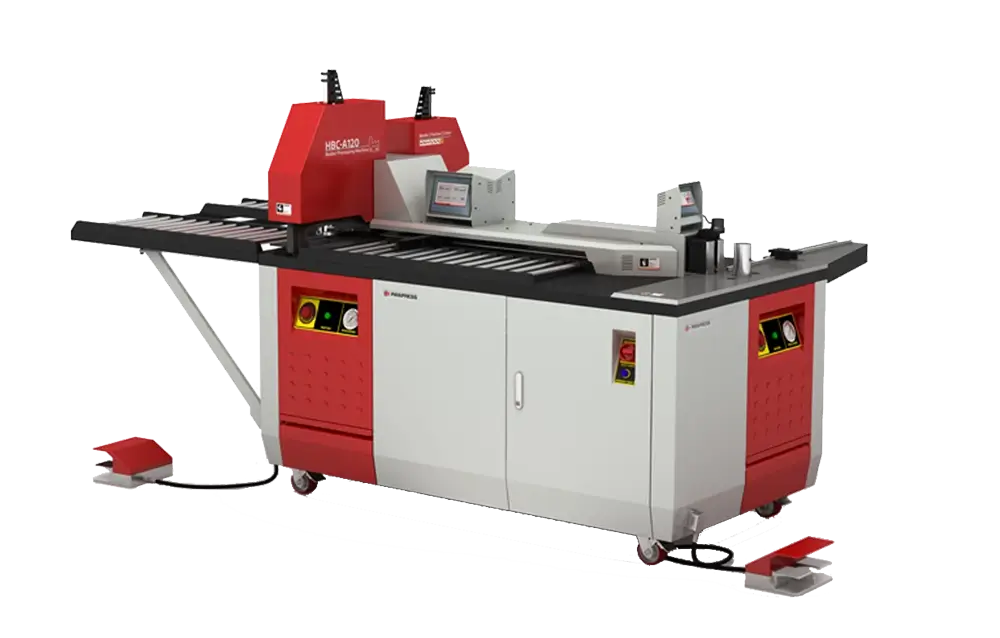
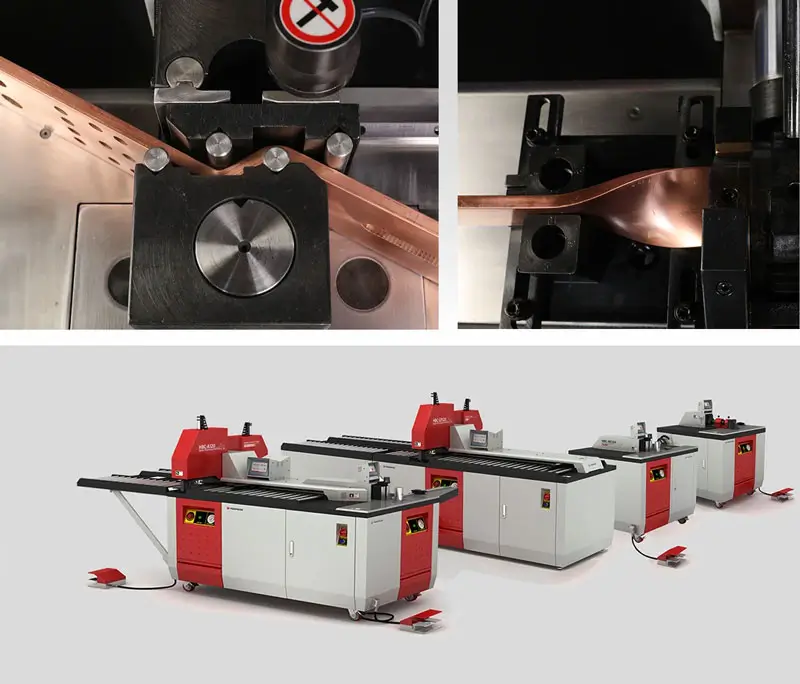
Ask the prospect for a real drawing from a live job. Have the bar produced on the machine. Film the process. Send both the video and the finished bar.
The buyer holds the evidence in their hand. They measure it against their own drawing, and compare it directly to what their subcontractor delivered last month. Nothing you say does that work.
Two details make it land. Use their drawing, not a showcase part — a showcase part proves the machine works, their part proves it works for them. And include the cycle time, because that is the number they will repeat internally.
If this topic is completely new to you, this beginner-friendly guide is a good place to start.
Building the Business Case
Finance will not read your brochure. Selling busbar machines at this stage means building the case in their language.
Cost the Status Quo First
Before presenting the machine’s cost, quantify what they already spend.
Subcontract price per bar, annual bar volume, freight, rework and rejects, plus the schedule cost of waiting. Most prospects have never added these up, and the act of totalling them is frequently what creates the project.
One delicate point. Never dispute the subcontractor’s price — you will be wrong, and you will look like you are guessing. Add the surrounding costs that price excludes instead.
Payback Is the Opener, Not the Case
Payback period is useful shorthand and insufficient on its own. Anyone asking how do you justify a machine purchase to finance needs more than a month count, because selling capital equipment means presenting a capital equipment ROI case rather than a price.
Capital committees compare this project against every other project competing for the same budget. A serious case therefore contains a three-to-five-year total cost of ownership model covering installation, training, tooling and maintenance. Add NPV and IRR so the project can be compared like-for-like.
That framing helps a well-built machine rather than hurting it, because total cost of ownership favours quality over sticker price.
Quantify the Cost of Inaction
This is the element most business cases omit.
What does another year of the current arrangement cost — in lead time, in orders declined for capacity reasons, in rework, in exposure to a single subcontractor?
Support it with demand context so the case is not purely internal. The data centre busbar segment is forecast at a 14.0% CAGR to 2032 and EV busbar at 11.3% to 2033. Capacity constraints in a growing market cost more each year they persist.
The Objections You Will Actually Hear
Machine sales objections are more predictable than most reps expect. Four cover the large majority of deals, and each has a specific answer rather than a rebuttal. Ask what objections do machinery buyers raise and you get the same four, in roughly the same order, in every market.
“It’s Cheaper to Subcontract”
Agree with the arithmetic, then change the frame.
On unit price alone it usually is cheaper, because there is no capital to recover. Move to lead time, scheduling control, and the cost of a subcontractor’s delay landing on a panel delivery date.
Then ask the question that does the work: what does a two-week bar delay cost you on a single project?
“We Don’t Have the Volume”
Sometimes true, and saying so builds more credibility than pushing.
Test it against the volume tiers rather than arguing. Below a few hundred bars a year, subcontracting genuinely wins and you should say so.
Where volume is borderline, raise the option they have not considered: selling bar work to other panel shops in their region and running the machine above their own requirement.
“What Happens When It Breaks?”
This is the objection that actually decides the deal, and the one reps answer worst.
Do not answer with reassurance. Answer with specifics: which parts are stocked and where, the stated response time, who commissions and trains locally.
Then give them the contact details of a customer in their region who has had a breakdown and can describe what happened. A customer who has never had a problem proves nothing.
“Not This Budget Year”
Usually a real constraint rather than a brush-off, so treat it as one.
Convert it into a dated plan: when does the next capital cycle open, what needs to be in the submission, and what can be prepared now.
For EU buyers there is a genuine date in the calendar. Machinery placed on the EU market from 20 January 2027 must conform to Regulation (EU) 2023/1230, with no transition period. That is a legitimate planning point, and it should be presented as one rather than as pressure.
Closing, and the Handover That Follows
The commercial mechanics first, because reps get caught out by them.
Payment terms and instrument. Incoterms and who carries which risk. Production lead time and how it is communicated when it slips. Customs and documentation for the destination market. And the commissioning date agreed in writing rather than assumed.
Then the part that determines whether there is a second sale. In capital equipment the handover is the marketing. The customer’s opinion of the machine forms during the first fortnight of production, not during the demonstration.
A well-run commissioning with trained operators produces the reference call that closes the next deal in that region. A rushed one produces a customer who answers the phone and says something else.
Anyone asking how long is the sales cycle for industrial machinery gets a wide answer: industrial deals typically run three to eighteen months, and capital equipment deals can exceed two years. The average industrial buying committee now exceeds ten stakeholders across engineering, procurement, operations and finance.
The Mistakes That Lose Deals
Seven, one line each.
Quoting before you know the bar cross-section and volume. Leading with price per bar against an incumbent subcontractor. Presenting to one contact and never meeting finance or maintenance. Treating a timing objection as a stall rather than a budget cycle. Promising a lead time the factory has not confirmed. Skipping the sample part because the prospect “already understands the process”. And disappearing between order and delivery.
The third is the most expensive. Around 74% of B2B buying teams experience unhealthy internal conflict before deciding. A deal presented to one person stalls the moment someone you never met raises a concern.
Conclusion about How to Sell Busbar Machines
The shape of the sale is consistent. The competitor is the status quo. The proof is a sample part made from the customer’s own drawing. The case is built in finance’s language, not yours. And the objection that decides it is about service rather than price.
Selling busbar machines well means accepting one more thing: in this market the handover, not the signature, is what produces the next deal.


Rate this article
Choose a rating from 1 to 5 stars.
No ratings yet