




Two Evaluations, Not One
Any busbar machine supplier evaluation runs on two tracks. An end buyer is asking one question: will this machine still be running and supported in ten years.
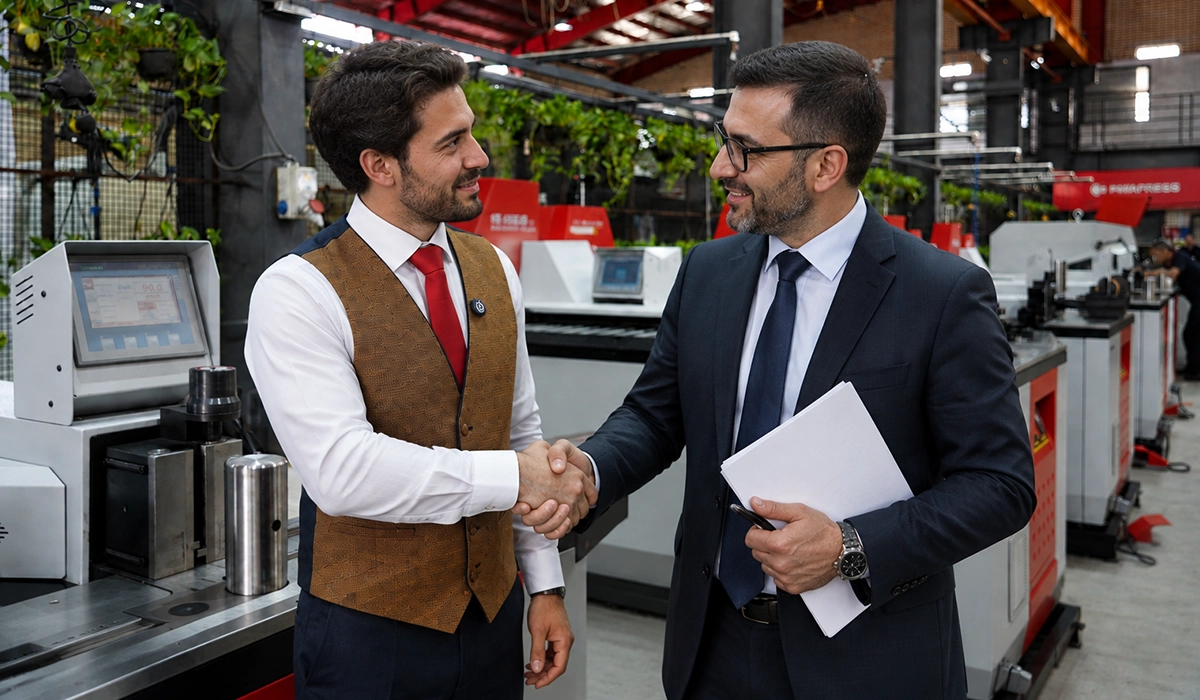
A prospective distributor is asking that plus five others: margin, territory, lead handling, stock obligation and exit terms. They are underwriting the manufacturer’s reputation in their own market. A customer complaint lands on the distributor first and on the manufacturer second.
Any busbar machine manufacturer evaluation therefore splits. The first four sections apply to both readers; the fifth is for distributors only. A buyer skipping the distributor section loses nothing. A distributor skipping the buyer sections is evaluating a partnership without evaluating the product it depends on.
Reference: Become a representative — PAYAPRESS — Partner application page setting out the representative categories and support offered.
What should a distributor ask a machine manufacturer that a buyer does not? For a distributor, evaluating a busbar machine supplier means seven extra questions.
Compliance and Documentation
The paperwork is not administrative overhead, and for any busbar machine supplier selling into the EU it changes in January 2027.
CE Marking and the January 2027 Change
There is no transition period. The two regimes never run side by side, and there is no grace period for new placements afterwards.
Three points get confused, so state them plainly. Machinery placed on the market before 20 January 2027 remains lawful, can continue to be made available, and does not need re-certification. EC type-examination certificates stay valid until they expire. And the trigger is placement on the market, not manufacture. A machine built in 2026 but first made available in the EU in February 2027 falls under the Regulation.
The Commission has confirmed manufacturers may declare conformity to the Regulation ahead of the mandatory date.
Ask which instrument the supplier’s current declaration references, and what their plan is for machines shipping after January 2027. A supplier who cannot answer that in late 2026 is not tracking their own obligations.
If you are looking for more information about Busbar Machine Market Size, it is recommended not to miss reading this article.
What the Documentation Must Actually Contain
Anyone asking how to verify a machine manufacturer’s CE marking needs more than “check the certification”, which is useless without knowing what to ask for.
You should receive a Declaration of Conformity naming the manufacturer, the machine, the legislation applied and the harmonised standards used, plus instructions in the language of the country of use.
On conformity routes, one clarification matters. The standard route remains internal production control without an external body. Under the Regulation the old Annex IV becomes Annex I, split into Part A and Part B. The six Part A categories lose the self-certification option, so notified body involvement is mandatory there even where harmonised standards are followed in full. So the answer to do busbar machines need a notified body depends on the category, not on the supplier’s preference.
New duties include protection of safety functions against corruption, assessment of self-evolving behaviour, digital documentation formats and ten-year document retention.
To see how others have approached the same situation, take a look at this practical example.
Quality System and Traceability
ISO 9001:2015 is a floor, not a differentiator. It confirms a documented quality system exists; it says nothing about whether the machine suits your bar sizes.
Ask what is actually traceable: serial numbers, hydraulic component sourcing, control system version, tooling batch. For the GB market, UKCA marking runs in parallel with CE and the requirements are not identical — which matters to any distributor covering the UK.
One question reveals more than the rest. Ask whether they can produce the technical file for a machine they built five years ago.
For anyone who wants to go deeper, this further reading provides a much wider view.
The Machine Itself
Anyone working out what to check before buying a busbar machine should start here: three things on a specification sheet mean less than they appear to.
Rated Capacity Versus Working Capacity
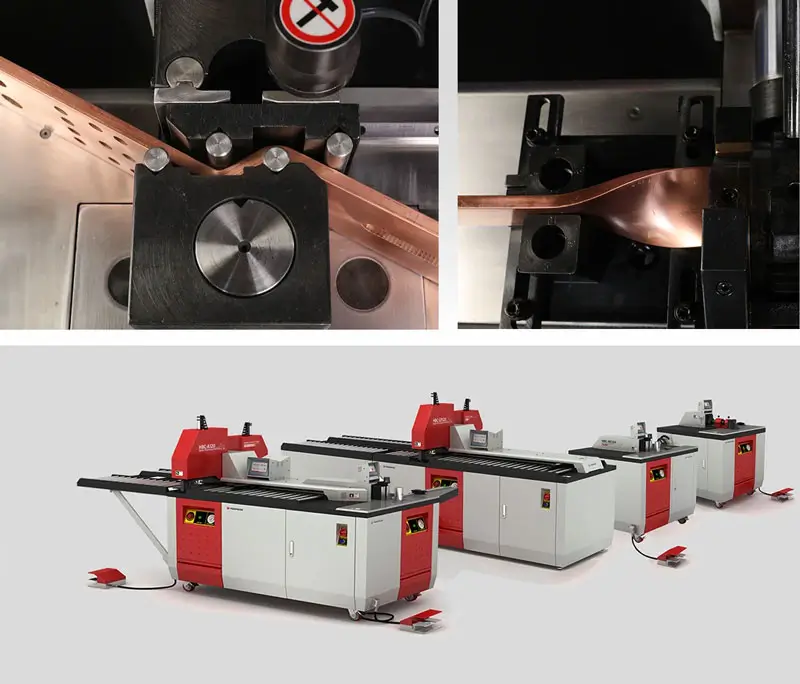
Rated maximums are usually quoted at the most favourable material and the thinnest practical bar. Ask for figures at the material and cross-section you actually run.
| Tier | Indicative copper capacity | Punching force |
|---|---|---|
| Entry-level | ~10 mm × 120 mm | ~25 tonnes |
| Mid-range | ~12 mm × 200 mm | 25–40 tonnes |
| Heavy-duty industrial | ~16 mm × 250 mm | up to ~60 tonnes |
Cutting force runs roughly 20 to 40 tonnes across the range. Published CNC accuracy sits around ±0.3° on bending and ±0.2 mm on punching. Treat all of these as vendor-published and indicative rather than standardised.
Tooling, Dies and Consumables
The cost line that does not appear in the quotation.
Ask three things: whether tooling is proprietary or standard, what a replacement punch and die set costs, and what the expected life is in cycles for the bar you run.
The trap is plain once stated. A lower machine price with proprietary tooling can cost more across five years than a higher price with standard tooling, and the difference is invisible at purchase.
If you are looking for more information about How to Find Busbar Machine Customers, it is recommended not to miss reading this article.
Control System and Its Lifespan
Ask which control platform the machine uses and who supports it.
A control built on a mainstream industrial platform can be repaired and replaced for a decade or more. A proprietary board with a single source becomes the machine’s expiry date.
Then the practical question: if the controller fails in year seven, is there a documented replacement path, and has the supplier actually done it for another customer? Typical published cycle times run 6–8 seconds punching, 4–5 cutting and 8–10 bending, varying with thickness — but only while the control still works.
After-Sales Is the Real Product
Over a machine’s life, busbar machine after-sales support is worth more than the discount in front of it. That support is what you are really buying.
Spare Parts: Stock, Lead Time, Support Window
Three separate questions get collapsed into one.
What wear parts are held in stock, where are they held, and what is the realistic delivery time to your country? Anyone asking what spare parts should a machine supplier stock should ask for the list, not the assurance.
Then the harder question: for how many years after production ends does the supplier commit to supplying parts? A verbal answer here is worth nothing. It belongs in the contract.
Commissioning and Operator Training
Ask precisely what is included and in what language: installation, calibration, first-article production, and how many operator-days of training.
A machine that arrives correct and is operated badly produces scrap that gets blamed on the machine.
For distributors there is an extra clause. Whoever performs commissioning locally needs to have been trained by the manufacturer. That training has a cost and a schedule, and both belong in the agreement before the first order.
Response Time and Remote Support
Ask for a stated response time and what triggers it.
Ask whether the control system supports remote diagnostics and, if so, what the security arrangement is. The Regulation’s duties on protecting safety functions against corruption make that more relevant than it was five years ago.
Close with the test question. Ask for the contact details of a customer in your region who has had a breakdown, not a customer who has not.
The Company Behind the Machine
Assess continuity rather than size. A machine outlives most suppliers’ business plans, and a busbar equipment supplier that folds takes its spare parts with it.
Ask how long the company has manufactured this specific product category, not how long it has existed. Ask how many countries it exports to, and whether it has service presence in any of them. Ask whether it manufactures or assembles, and which major components are bought in.
Trade show presence is a weak signal alone and a meaningful one alongside others. Reference customers matter, but only those who have owned a machine for more than three years — a customer twelve months in has not yet tested anything this article covers.
One report-seller estimate puts the busbar processing machine market at USD 1.5 billion in 2024, reaching USD 2.8 billion by 2033 at a 7.5% CAGR [VERIFY — see delivery note]. Whatever the exact figure, a growing market attracts new entrants, which is why continuity checks matter more now than a decade ago.
What Distributors Should Ask That Buyers Do Not
What is the margin structure, and is it volume-tiered? Reveals whether the manufacturer expects a stocking partner or a project-based one.
What territory arrangement is on offer — exclusive, sole or non-exclusive? Three different commitments with three different investment implications.
What happens to inbound leads from the territory? A manufacturer that keeps direct enquiries while expecting local promotion is not offering a partnership.
Is there a stock or minimum-purchase obligation? The single largest working capital question, and frequently left vague until after signature.
Who trains the partner’s service engineers, where, and at whose cost? Determines whether the partner can service what they sell.
What marketing and lead-generation support exists? Distinguishes a supply relationship from a channel programme.
What are the notice and termination terms? The clause nobody negotiates at signature and everybody regrets later.
A manufacturer who answers all seven clearly is a manufacturer who has done this before.
Red Flags
Eight signals worth taking seriously.
A Declaration of Conformity that cannot be produced on request, or one naming only the outgoing Directive with no plan for 2027. Specifications quoted without stating the material and cross-section they apply to. No named spare-parts support window. Reference customers who all bought within the last twelve months.
Proprietary tooling with no published replacement pricing. A control system whose manufacturer the supplier cannot name. A distribution agreement offered without written territory or termination terms. Pricing significantly below market with no explanation of where the cost was removed.
None of these is disqualifying alone. Three together usually are.
Conclusion about Look for in a Busbar Machine Manufacturer
The specification decides the first month. The support decides the next decade.
The January 2027 change makes the documentation questions more urgent for buyers and distributors alike. Not because existing machines become non-compliant, but because everything placed on the EU market after that date must reference a different instrument.
The practical test for any busbar machine supplier is one question: ask what happens in year seven, and judge the answer.



Rate this article
Choose a rating from 1 to 5 stars.
No ratings yet