


If you’d rather listen than read, feel free to play the audio file below for the rest of this article.
What “Custom” Actually Means
The industry uses one word for three things priced and scheduled completely differently. Anyone asking what makes switchgear custom needs that distinction first.
Configured to order. Standard modules in a non-standard arrangement. No new engineering, no new verification. Most work sold as custom is this, which is not a criticism — it is the profitable end of the business.
Engineered to order. New arrangement, new drawings, existing proven components. On engineered to order switchgear, engineering hours become a real cost line and approval becomes a schedule risk.
Genuine one-off. Non-standard enclosure, unusual rating, or an environment outside normal practice. Verification effort rises sharply and reuse value is near zero.
| Level | Engineering cost | Schedule risk | Reuse value |
|---|---|---|---|
| Configured to order | Minimal — layout only | Low | High: the arrangement repeats |
| Engineered to order | Significant, billable | Moderate to high | Partial, if modules are catalogued |
| Genuine one-off | Highest, often underestimated | Highest | Near zero |
The configured to order vs engineered to order switchgear distinction decides pricing. Know which you quoted before drawings start — custom switchgear manufacturing goes wrong when all three carry the same margin assumption.
Whatever level of customisation a job falls into, every change on the shop floor has to be controlled and made safely. Our guide to safety management explains how workshops keep that control in place.
Where the Lead Time Actually Goes
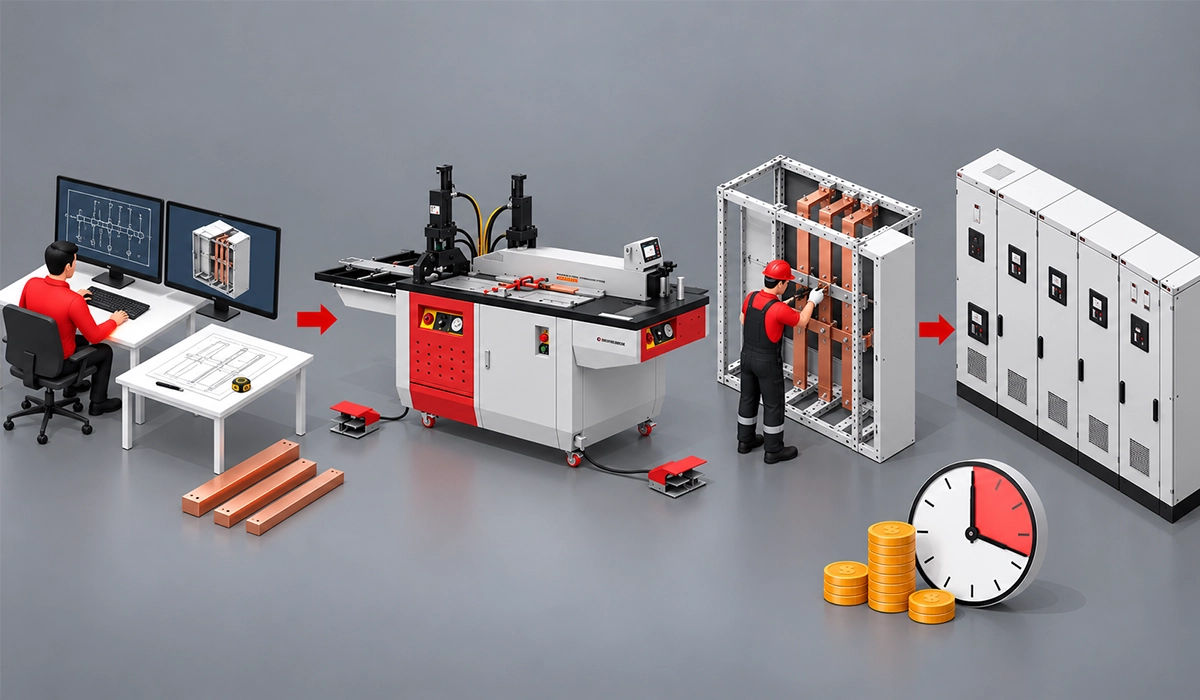
The switchgear manufacturing process runs in four stages, and assembly is rarely the longest. That answers why are switchgear lead times so long.
Engineering and Drawing Approval
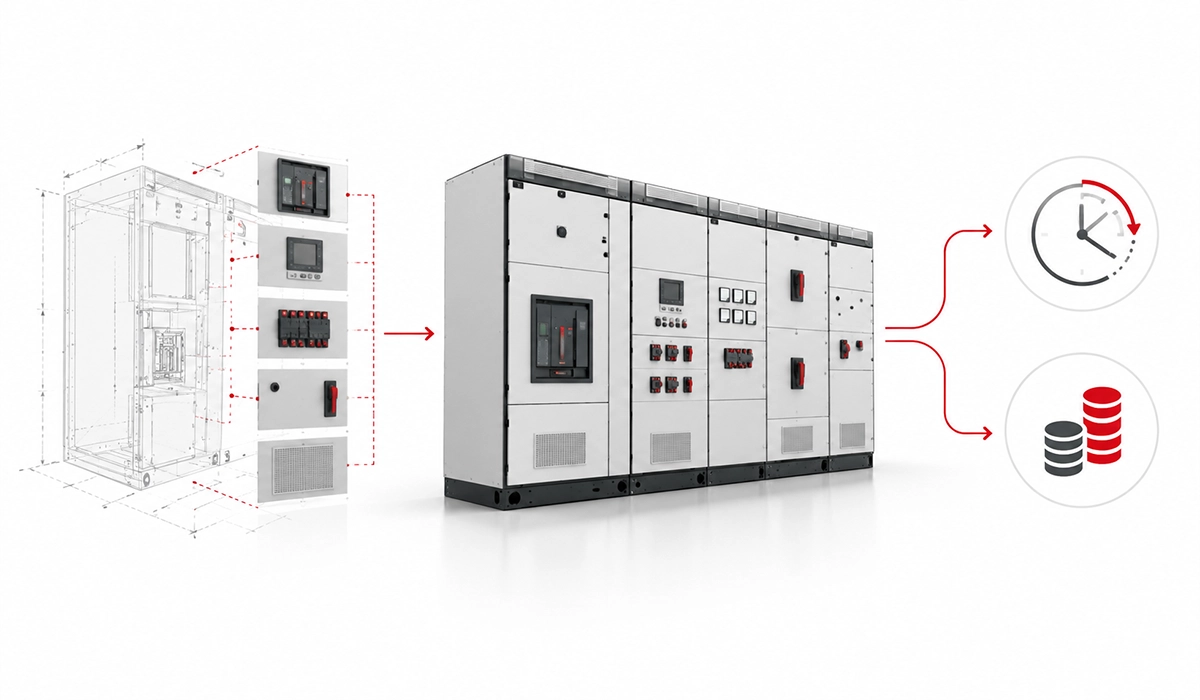
Ask how long does custom switchgear take to build and this stage answers it. Usually the largest single block, and outside the manufacturer’s control.
Drawings go to the consultant, come back marked up, and go round again. Each cycle costs weeks of calendar time and almost no shop hours, which is why it never appears in a capacity plan.
Some manufacturers advertise complete custom design and build in 12 to 14 weeks, positioning that explicitly against the time competitors take to produce drawings alone.
If you would like to explore this subject further, you can read more about it here.
Long-Lead Components
Breakers, protective relays and instrument transformers set the floor on any schedule, and they are ordered against a design that may still change.
The trap is symmetrical. Order early and risk obsolete stock if the design moves; order late and guarantee the delay.
Data centre demand is compressing timelines industry-wide. One manufacturer publicly turned a 30-week project into nine weeks for a data centre OEM, which tells you what buyers now consider possible.
For a clearer and more complete explanation, this page goes into far more depth than we can cover in a short text.
Enclosure Fabrication
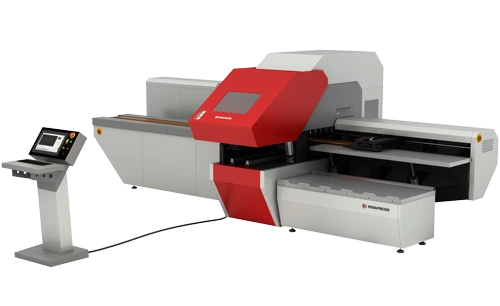
Predictable and rarely the bottleneck when the design is settled, which is exactly why it becomes the bottleneck when the design is not.
A late dimensional change to a cabinet cascades into mounting plates, doors, gaskets and finishing. Enclosure changes late in the programme are the most common source of overtime in custom work. Almost all of them originate upstream in engineering rather than in fabrication, which is why blaming the shop rarely fixes anything.
The most up-to-date information is always published on the official website, so it is worth checking there as well.
Busbar and Interconnection
The stage nobody schedules properly, and it gets its own section below.
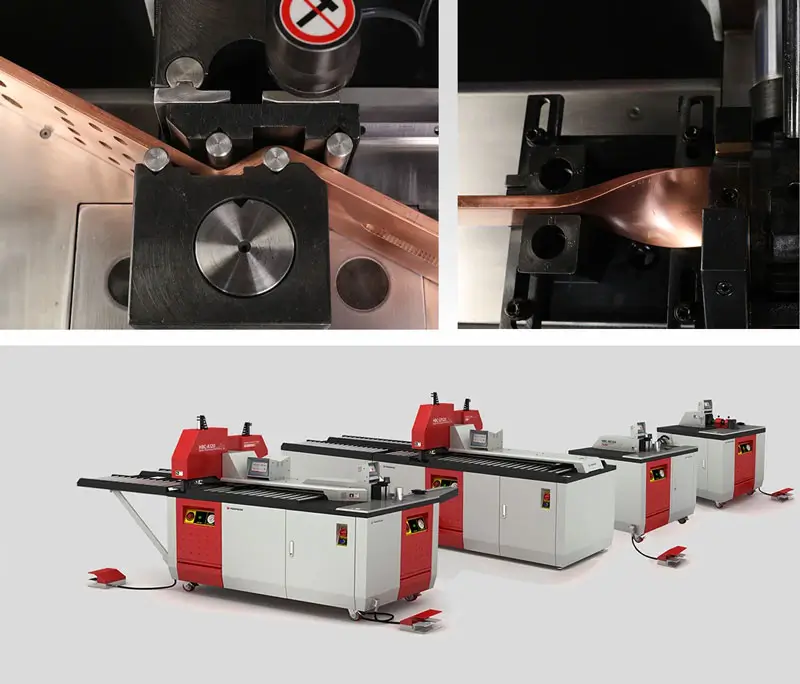
Flag it here in the sequence. Bar cannot be ordered from stock because the geometry is specific to the lineup, so it can only start once the arrangement is fixed. That places it at the end of the critical path, with the least float and the most pressure — and it is the stage most often compressed when earlier stages overrun.
Readers who want to understand the reasoning behind this will find this detailed article very useful.
Part of the delay comes from how the workshop itself is organised, not only from engineering. Our article on lean workshop layout shows how a better floor plan can shorten the build.
What the Standards Let You Change
Custom switchgear design has a ceiling, and it is set by the verification route rather than by the workshop.
IEC 61439 and Design Verification
The central constraint on low voltage assembly manufacturing internationally. IEC 61439-1 sets the general rules and IEC 61439-2 covers power switchgear and controlgear assemblies.
The framework separates the original manufacturer, who carries out design verification, from the assembly manufacturer who builds within it. Design verification comprises 21 individual verifications, archived for ten years.
Here is the sentence that matters most on custom work: any deviation from the original manufacturer’s instructions forces a new, full design verification. Not a note on the file — the whole process, transferred to whoever made the change.
If this topic is completely new to you, this beginner-friendly guide is a good place to start.
UL 891 and UL 1558 in North America
Different framework, same principle.
UL 891 covers dead-front low-voltage switchboards. UL 1558 covers metal-enclosed low-voltage power circuit breaker switchgear. Certification testing addresses short-circuit withstand, dielectric performance, thermal behaviour at rated load, and grounding and labelling.
The commercial reality is blunter than the technical one. A listing constrains what can be varied without re-evaluation, and buyers in this market treat the listing as non-negotiable regardless of how sensible the proposed variation is. Arguing the engineering rarely helps.
Medium Voltage and Arc-Resistant Designs
Customisation room narrows sharply as voltage rises. IEC 62271-200 covers AC metal-enclosed switchgear above 1 kV up to 52 kV, with internal arc classification defined within it.
Ranges seen across the market: switchboards from 208 V to 38 kV, and metal-clad or metal-enclosed offerings commonly 5 kV to 38 kV. UL-listed ANSI metal-clad designs reach 25 kV, with gas-insulated packages to 38 kV.
Arc-resistant construction constrains venting, door design and internal barriers, which limits what can be rearranged.
| Route | Covers | Sets the ceiling on |
|---|---|---|
| IEC 61439-1 / -2 | LV assemblies to 1000 V AC | Deviation from the verified design envelope |
| IEC 62271-200 | Metal-enclosed switchgear, 1–52 kV | Internal arc classification and separation |
| UL 891 | Dead-front LV switchboards | Variation without re-evaluation of the listing |
| UL 1558 | Metal-enclosed LV power circuit breaker switchgear | Drawout construction and withstand duration |
The Bar Is Where Custom Costs Most
Every other component in a custom lineup can be bought. Breakers, relays, terminals, enclosures — all of them exist on a shelf somewhere.
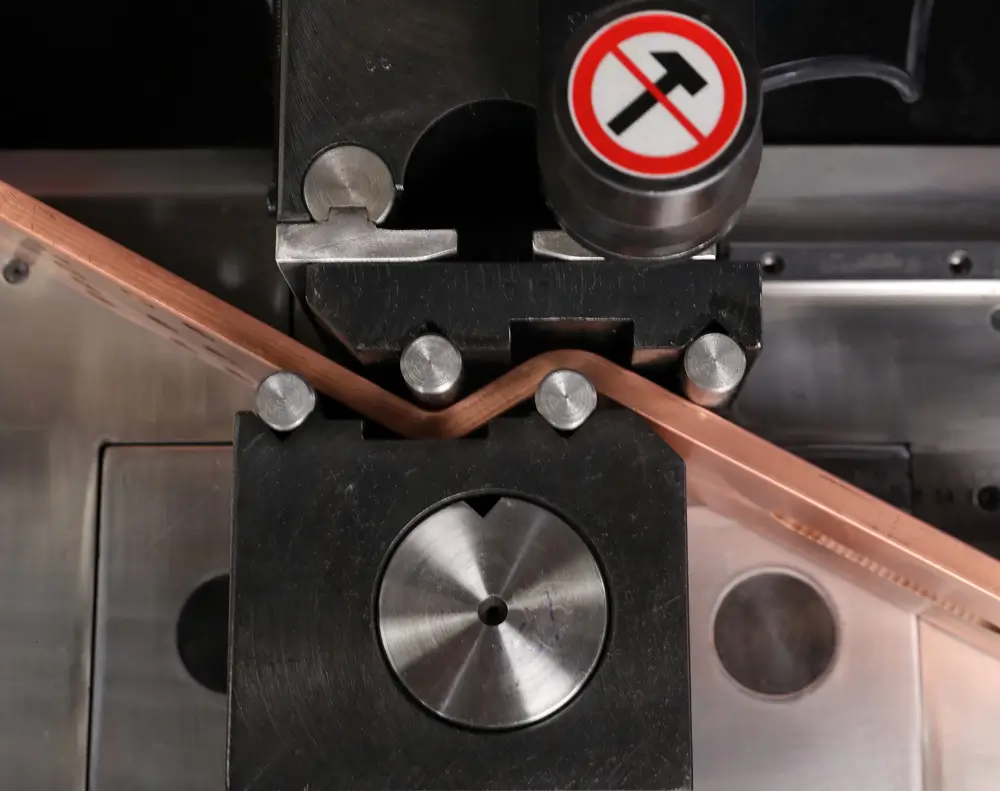
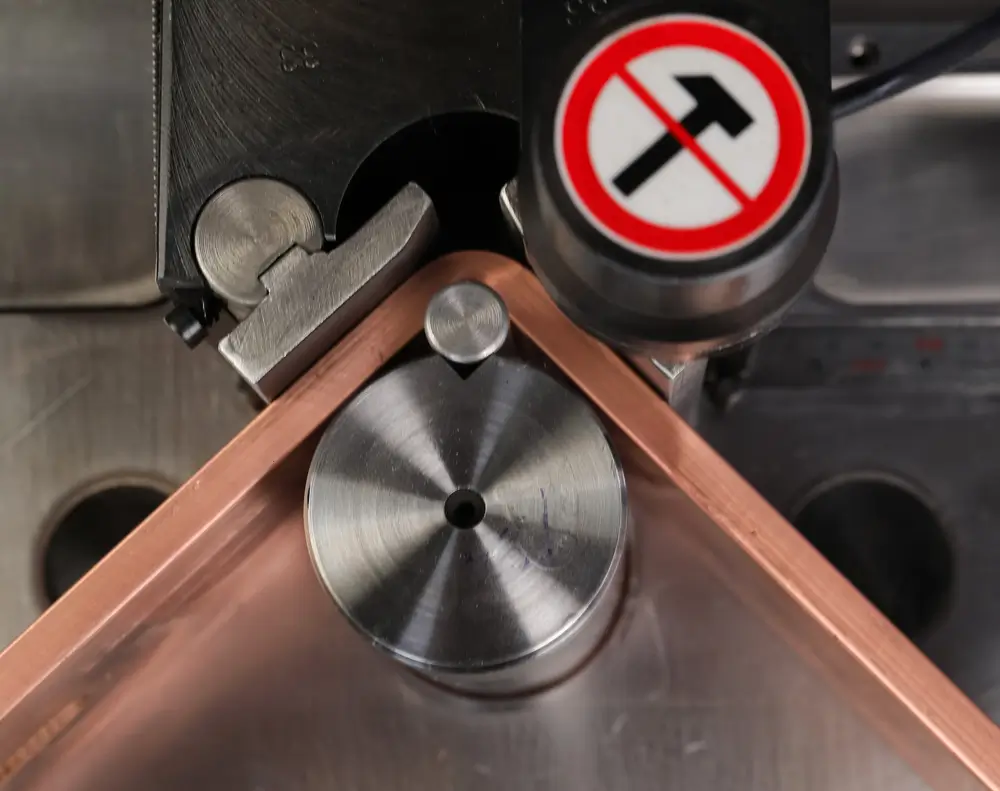
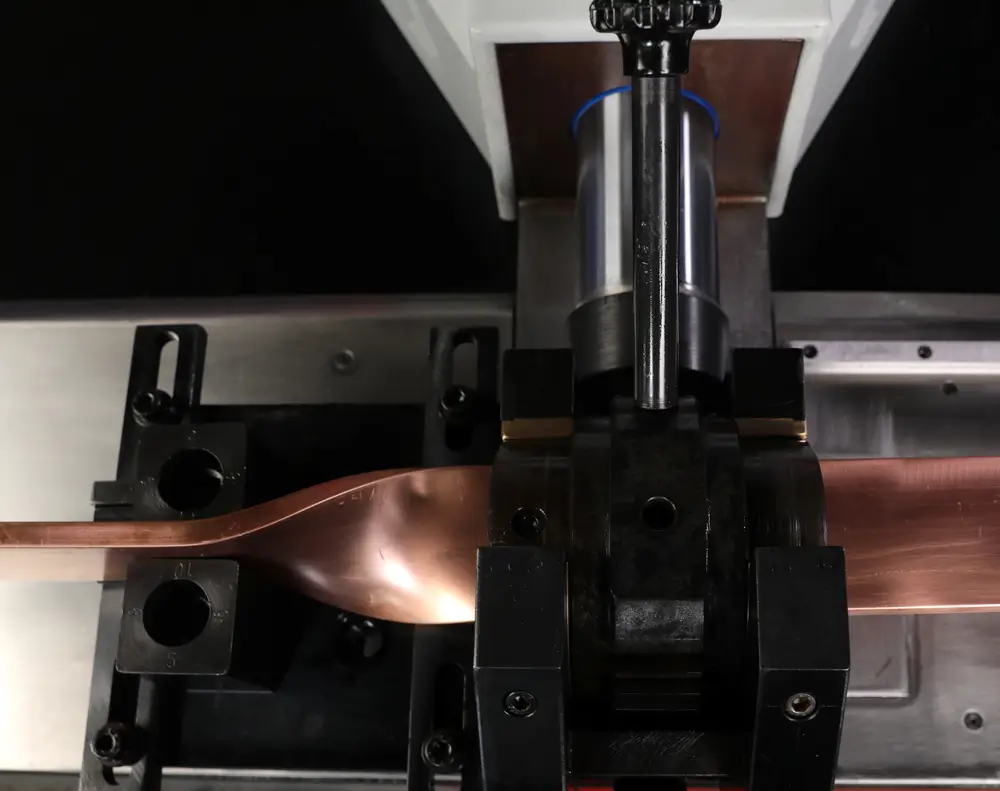
Busbar cannot, because the geometry exists only for that lineup. Each bend, hole position and length is drawing-specific, and that produces three consequences.
Bar fabrication cannot begin until the arrangement is frozen, so it inherits every upstream delay with no float left. A change to a single cubicle can invalidate a run of bar already cut and punched. And the work is either done in-house, competing with everything else, or subcontracted — putting an external lead time on the tightest part of the schedule.
For context, switchgear current ratings run from 125 A to above 6,000 A. Copper carries the majority of installations, at about 58 MS/m conductivity against 36 MS/m for aluminium.
On custom work, bar capacity is the constraint that most often decides whether the promised date holds.
A compressed schedule at the end of the critical path lands on the people doing the work. Read how the work environment and tools affect job burnout in the workshop.
Protecting Margin on Custom Work
Five rules, and the reasoning behind each matters more than the rule.
Quote engineering hours as a line item. Bundling them into the equipment price makes them invisible and therefore unrecoverable.
Define the approval cycle contractually. Number of revisions included, turnaround expected from the client, and what happens when it slips.
Price change orders from the first one. The second and third are where custom jobs lose money, and a precedent set on the first is what makes them chargeable.
Build a library of proven modules. Engineered to order work should reuse verified arrangements rather than starting blank.
Track actual against quoted hours by job type. Most shops discover only in hindsight which category is unprofitable.
One uncomfortable observation. Many manufacturers price custom switchgear manufacturing on materials plus a percentage. That systematically underprices engineering-heavy jobs and overprices configuration work, losing the profitable orders and winning the unprofitable ones. Anyone asking where does the cost go in custom switchgear should start with that.
Better margins often come from teams that are free to rethink how they work. Our piece on workplace innovation offers practical ideas for doing that.
What Buyers Are Actually Asking For
The recurring requirement set has narrowed.
Constrained footprint, particularly in retrofit and data centre projects where the room dimension is fixed before the equipment is chosen. Specified access arrangement, front or rear. Environmental rating — NEMA 3R and 4X in North America, or an IP rating to IEC 60529 elsewhere. Arc-resistant or arc-mitigating construction, increasingly specified as standard rather than as a priced option.
And above all, lead time. It has moved from a scheduling detail to a primary selection criterion, driven by data centre and electrification project timelines.
Manufacturers competing on capability alone are losing work to manufacturers competing on date. That is a change in how the market buys, not just in what it wants.
Conclusion
Most delay in custom switchgear manufacturing originates in engineering and approvals rather than assembly. The standards set a real ceiling on what can be varied, enforced by the verification route rather than by the shop.
Busbar sits at the end of the critical path with the least float.
The practical point is narrower than any of that. A shop that knows which of the three kinds of custom it has quoted will price and schedule better than one that calls all three custom.




Rate this article
Choose a rating from 1 to 5 stars.
No ratings yet