


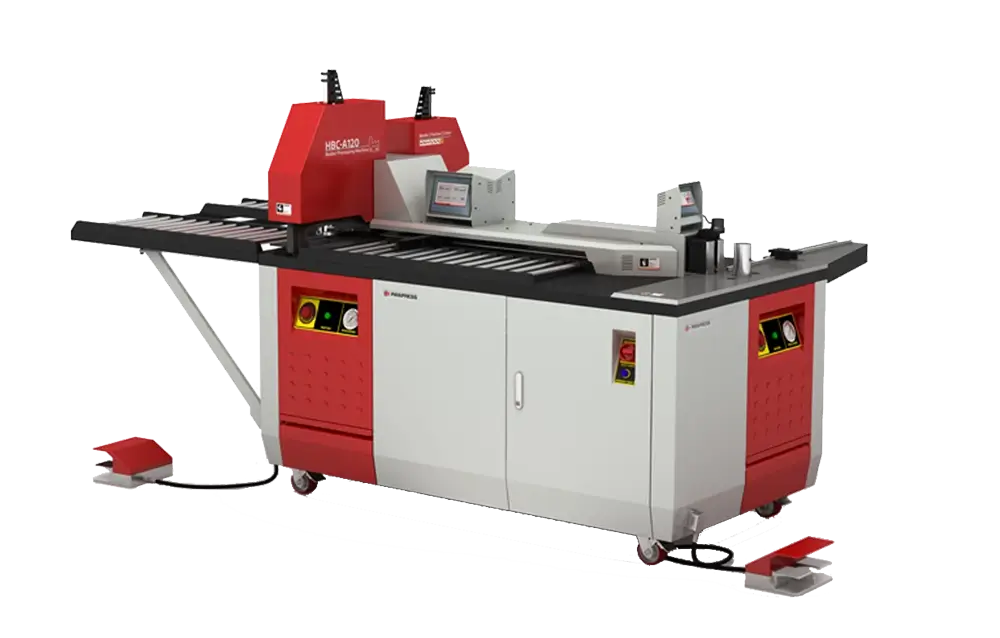
Understanding DIN Rail Profiles — What “Type” Actually Means
A DIN rail “type” describes the cross-sectional profile, not only the rail width. The shape of the flanges, center web, height, and rail lip controls how a device clip locks onto the rail.
Therefore, two rails with similar DIN rail sizes can still behave very differently in a control cabinet. IEC 60715 defines standardized DIN rail profiles for compatible mounting of switchgear, controlgear, and accessories.
Earlier European standards, including EN 50022, EN 50035, and EN 50045, also shaped common rail terminology. Today, manufacturers usually reference IEC or EN rail standard language in catalog data.
However, the installer must still check the device clip. If the profile does not match, the device may sit loose, tilt, or fail to snap on. That mistake can create rework, poor alignment, and unsafe panel mounting.
For a comprehensive understanding of DIN Rail Cutter, we highly recommend reviewing this article.
TS35 — The Universal Standard DIN Rail Profile
The TS35 DIN rail dominates modern panel building because it supports the widest range of modular electrical and automation components. Most new industrial panels use this 35mm rail as the default control panel mounting rail.
In practical terms, TS35 covers the answer to which DIN rail type is most common. It accepts most modern snap-on rail devices, including protection, control, interface, and power components.
The top hat rail profile gives a stable clip surface on both sides. As a result, installers can mount components quickly and keep the panel layout repeatable across enclosure series.
However, TS35 still has variants. Standard 35 x 7.5mm rail suits most panels, while 35 x 15mm deep rail gives more standoff from the backplate.
For the latest available details, check the official page directly.
Further exploration of Rail Trimming Tool for Panel-Mounted Equipment can be found in the following recommended reading.
TS35 Dimensions and Geometry
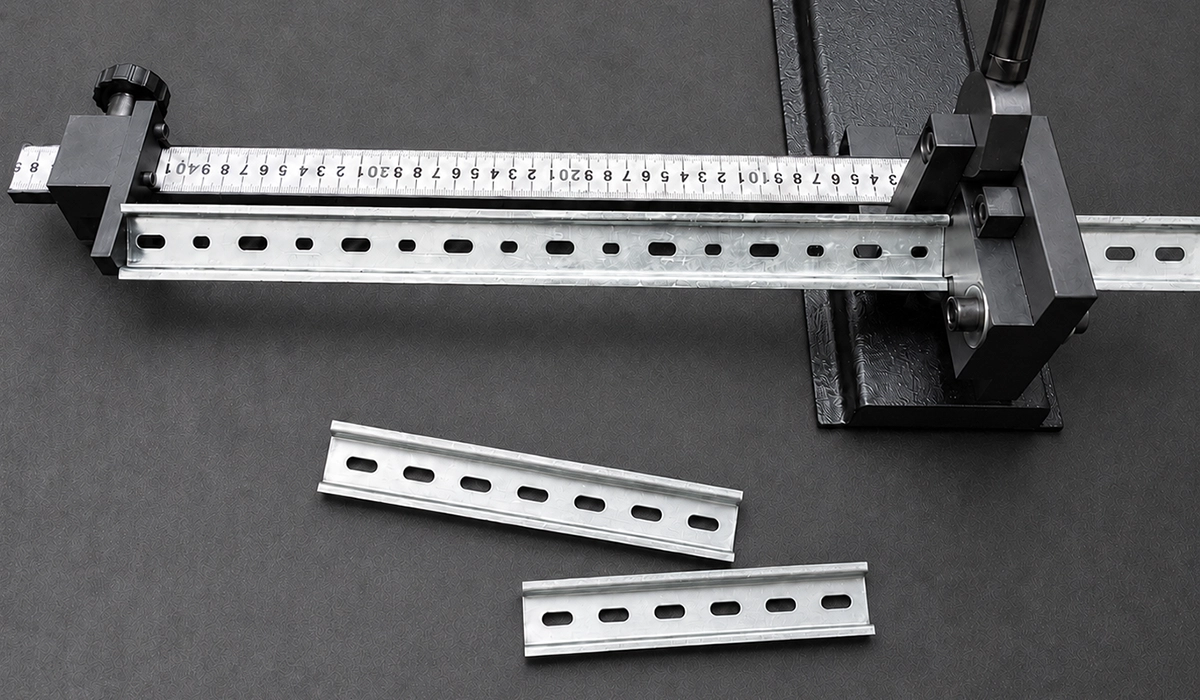
TS35 DIN rail dimensions and specifications usually start with 35mm width. The standard profile height is 7.5mm, while the deep version uses 15mm height.
Steel rails commonly use 1.0mm material thickness. Aluminum rails often use thicker sections, commonly around 1.5mm, to maintain rigidity. The symmetrical hat section means both rail flanges match, so compatible devices can clip from either side without orientation problems.
For broader context, this external resource can help you continue your research.
TS35 Standard and Compliance
IEC 60715 governs the international TS35 top-hat profile. Older European documentation often names EN 50022, but IEC 60715 now provides the main global reference.
Most catalogs describe standard DIN rail dimensions as “35 x 7.5” or “35 x 15.” Therefore, always read both numbers. The first number gives rail width, and the second gives DIN rail height.
What Components Use TS35?
TS35 supports the vast majority of modern DIN-mount devices. Common examples include:
- Miniature circuit breakers, RCDs, and RCBOs
- Terminal blocks and feed-through terminals
- PLCs, remote I/O modules, and interface relays
- Contactors, timers, and monitoring relays
- Power supplies, signal converters, and isolators
- Energy meters and power monitoring devices
Therefore, TS35 works as the safest default unless the device datasheet states another profile.
This source provides further explanation and can help you compare the details more accurately.
TS35 Deep Rail — When Is It Used?
The deep DIN rail vs standard DIN rail difference centers on clearance. A 35 x 15mm rail moves the device farther from the backplate.
Use deep rail when components have rear projections, when cable routing needs space behind the rail, or when heavy devices need better mechanical support. However, it does not change TS35 component compatibility.
| Specification | TS35 Standard | TS35 Deep |
|---|---|---|
| Width | 35mm | 35mm |
| Height | 7.5mm | 15mm |
| Material thickness | 1.0–1.5mm | 1.0–1.5mm |
| Component compatibility | Full | Full |
| Use case | Standard panels | Heavy/deep components |
| Standard | IEC 60715 | IEC 60715 |
For engineers and procurement teams, this page provides a useful reference for decision-making.
TS15 — The Miniature DIN Rail Profile
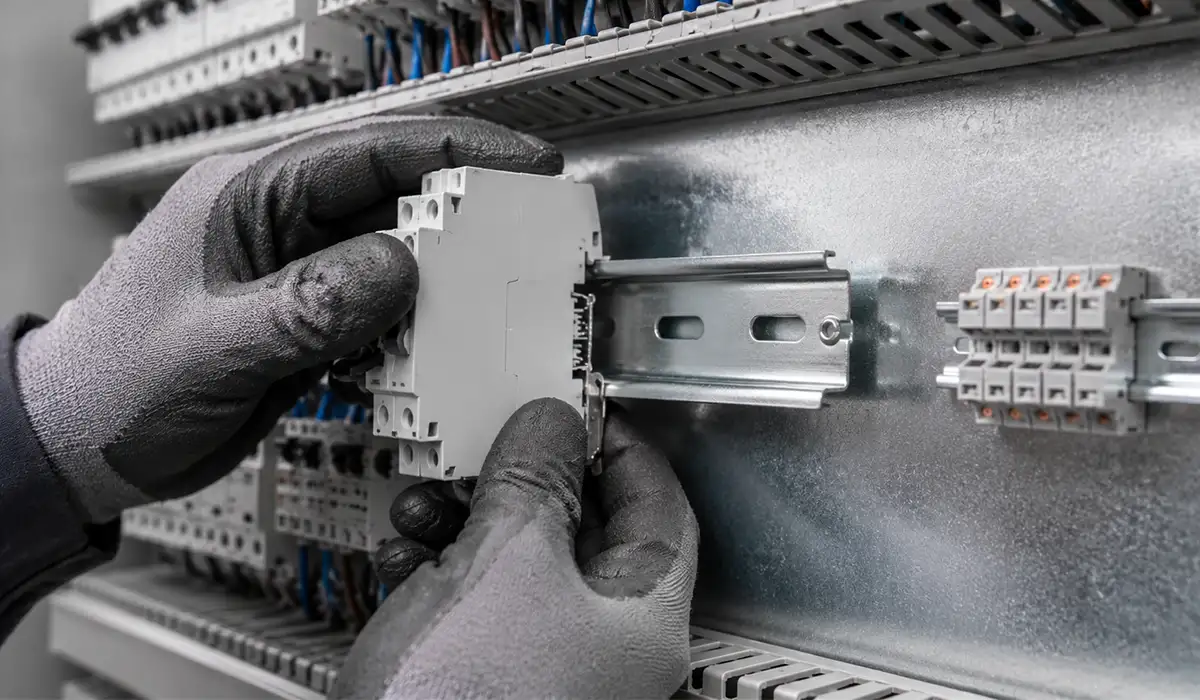
TS15 DIN rail serves compact assemblies where a full 35mm rail would waste panel space. It uses a smaller symmetrical DIN rail cross section for light-duty devices.
The phrase TS15 DIN rail where is it used usually points to auxiliary circuits, compact terminal boxes, small machine modules, and space-limited control enclosures.
However, TS15 does not replace TS35. The rail width and clip geometry differ, so a TS35 device will not mount correctly on TS15.
Therefore, panel builders should treat TS15 as a specialist miniature rail. It helps with density, but it reduces component choice and load capacity.
You can find more background information and related technical notes through this reference link.
TS15 Dimensions and Geometry
TS15 has a 15mm width and a 5.5mm profile height. Most steel versions use about 1.0mm thickness.
The profile shape remains a symmetrical miniature top-hat section. Therefore, it looks like a reduced TS35, but the DIN rail width and mounting clip interface differ.
For broader context, this external resource can help you continue your research.
Where TS15 Is Used and Why
TS15 works best in compact or space-constrained enclosures, light terminal block installations, and auxiliary rail runs.
It also suits panels where TS35 would look oversized for the component load. However, TS35 components will not clip onto TS15. This mismatch creates a common procurement and installation error.
TS15 vs TS35 — Key Differences
What is the difference between TS35 and TS15 DIN rail? TS35 uses a 35mm profile for broad compatibility, while TS15 uses a 15mm miniature profile for light installations.
Choose TS35 for main panel rows. Choose TS15 only when space or component design requires it.
| Specification | TS35 | TS15 |
|---|---|---|
| Width | 35mm | 15mm |
| Height | 7.5mm | 5.5mm |
| Component compatibility | Universal | Limited / lightweight only |
| Typical load | Heavy to medium | Light |
| Common application | Main panel rail | Auxiliary / compact rail |
| Interchangeable? | No | No |
G-Type DIN Rail — G32 / G-Section
Reference: DIN Official Website — Primary standards body behind original DIN rail standardization.
G-type rail, also called G32 or G-section, uses an asymmetrical DIN rail profile. Unlike TS35 and TS15, it does not have equal flanges.
This profile appears less often in new control panel builds. However, maintenance teams still find it in older European switchgear, meter assemblies, and legacy relay cabinets.
The long-tail comparison G-type DIN rail vs top hat rail compatibility matters because the device clips differ. TS35 snap-on components do not fit G32 rails correctly.
Therefore, technicians should identify the rail before ordering parts. A simple width check does not prove compatibility, because cross-section geometry controls the clip.
This reference page is useful for readers who want to study the topic beyond this article.
G32 Profile Dimensions and Shape
G32 uses a 32mm wide, 15mm high asymmetrical G-section. One flange has a larger retaining form than the other.
This asymmetry gives G-rail its distinctive snap direction and support behavior. Standards and catalogs commonly link G32 with DIN 46277-1 and EN 50035.
To explore the topic in greater depth, review the information available on this website.
Applications and Compatibility Considerations
G-type rails still appear in older European industrial installations, legacy switchgear, and specific meter or relay systems.
However, G-type accessories must match the rail. Ordering TS35 clips for a G32 installation causes non-fitting parts, wasted labor, and delayed panel repair.
Download this resource to compare the details more easily during your review process.
C-Section and Other Specialized DIN Rail Profiles
C-section rails use a channel-like profile rather than a hat-shaped omega rail profile. They suit specific heavy-duty or legacy assemblies.
These DIN rail profiles appear less often than TS35 in modern automation panels. However, they still matter when engineers refurbish old control cabinets or high-load assemblies.
C-section rails can provide more stiffness under demanding mechanical loads. Therefore, they may fit applications where a thin hat section would deflect too much.
However, component compatibility narrows sharply. Always match the device foot, rail clamp, and accessory system before choosing a C-rail.
C-Section Rail — C25 / C30
C-section rail uses a symmetrical C-shaped channel. Common references include C20, C25, C30, and similar profile families.
Panel builders use C-rail mainly for heavier-duty component mounting, clamped accessories, and high-vibration industrial environments. However, it does not accept ordinary TS35 snap-on components.
Zopf Rail and Other Legacy Profiles
Some older national standards produced rail forms that now appear only in aged installations. Zopf rail and other legacy profiles fall into this category.
During panel refurbishment, upgrade to TS35 where practical. This reduces spare-part risk and improves access to modern modular components.
Perforated vs. Solid DIN Rail — Which Should You Choose?
The search question perforated DIN rail vs solid DIN rail which to choose usually comes from panel layout and mechanical load concerns.
Perforated DIN rail has regular slots or holes along the base. These openings help installers pass mounting screws through the rail, anchor cable ties, and align rails visually.
Solid DIN rail has no slots in the base. As a result, it offers a cleaner appearance and usually gives higher mechanical rigidity under vibration or dense device loading.
However, neither version solves poor support spacing. For heavy rows, use suitable rail brackets, correct screw spacing, and a rigid backplate.
| Feature | Perforated | Solid |
|---|---|---|
| Cable tie anchoring | Yes | No |
| Screw-mount through rail | Yes | Requires drilling |
| Mechanical rigidity | Standard | Higher |
| Airflow | Better | Standard |
| Best for | General panels | High-vibration / heavy load |
| Cost | Slightly higher | Slightly lower |
DIN Rail Materials — Steel, Aluminum, and Stainless Steel
DIN rail steel remains the default material for most indoor industrial panels. Zinc-plated steel gives strong mechanical support, good availability, and low cost.
Aluminum DIN rail reduces weight and resists corrosion better than plain carbon steel. Therefore, aluminum suits outdoor enclosures, marine equipment, mobile machines, and weight-sensitive assemblies.
Stainless steel DIN rail costs more, but it handles harsh environments better. Use it in chemical plants, pharmaceutical areas, coastal sites, and high-humidity outdoor panels.
However, material choice must match the full installation. Fasteners, grounding method, enclosure coating, and environmental sealing all influence long-term reliability.
How to Choose the Right DIN Rail Type for Your Application
For DIN rail types, selection starts with the component datasheet. The mounting foot tells you which rail profile the device needs.
The question what size DIN rail do I need for my panel depends on component compatibility first, then space, load, and environment.
A quick DIN rail profile comparison chart helps, but it cannot replace checking the clip type. TS35 covers most new builds, while TS15, G32, and C-section rail solve narrower use cases.
Use this decision framework before procurement:
- Component compatibility: Always confirm the clip type of the components you are mounting. TS35 covers most modern components.
- Available space: Use TS15 only when enclosure depth or width genuinely prevents TS35.
- Component weight and density: Heavy or densely packed components benefit from solid rail and steel material.
- Environment: Humid, outdoor, or corrosive environments require aluminum or stainless steel.
- Legacy systems: If maintaining an older installation, identify the existing profile before ordering accessories.
Conclusion DIN Rail Type
DIN rail types and sizes control far more than panel appearance. They define whether devices clip securely, align correctly, and remain stable through installation, service, and vibration.
For most modern panels, TS35 DIN rail remains the practical default. It gives the widest component compatibility and the strongest supply-chain support.
However, TS15, G32, C-section, perforated, solid, steel, aluminum, and stainless rail variants each serve valid technical needs.
Therefore, choose the rail from the component clip outward. Confirm the profile, dimensions, material, perforation style, and environment before cutting or ordering. This method reduces rework and gives the panel a cleaner, safer, and more serviceable structure.

Rate this article
Choose a rating from 1 to 5 stars.
No ratings yet