
Prefer listening? You can play the audio version of the rest of this article below.
What Is a DIN Rail Cutter and How Does It Work?
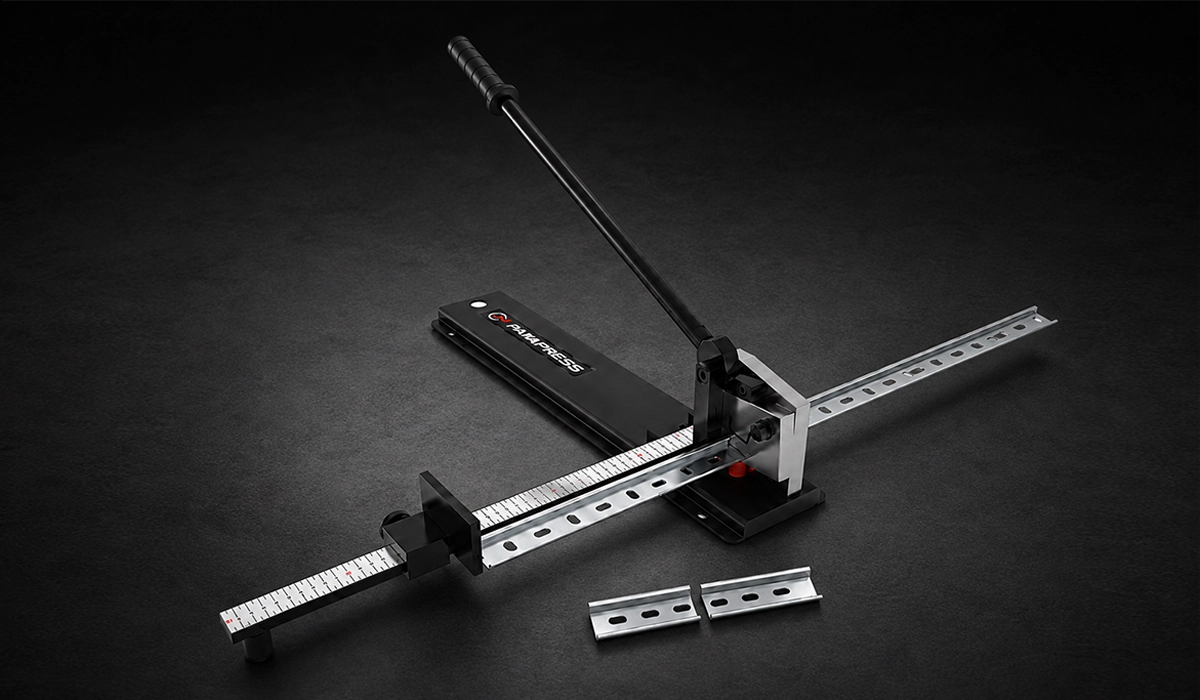
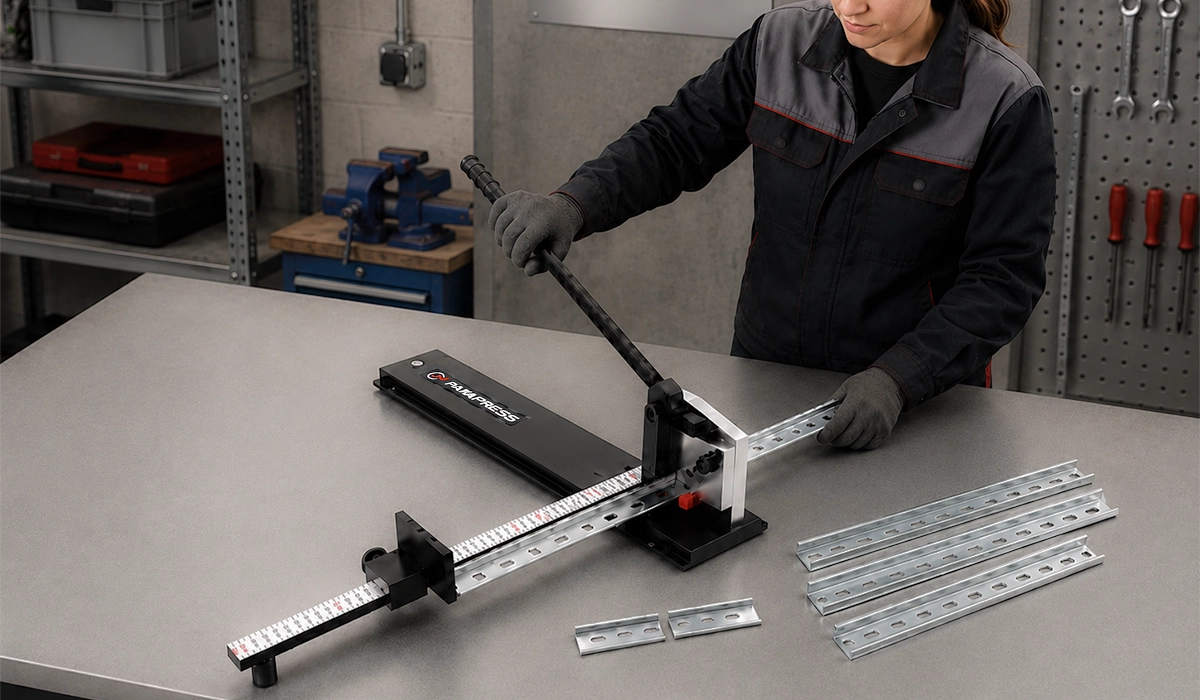
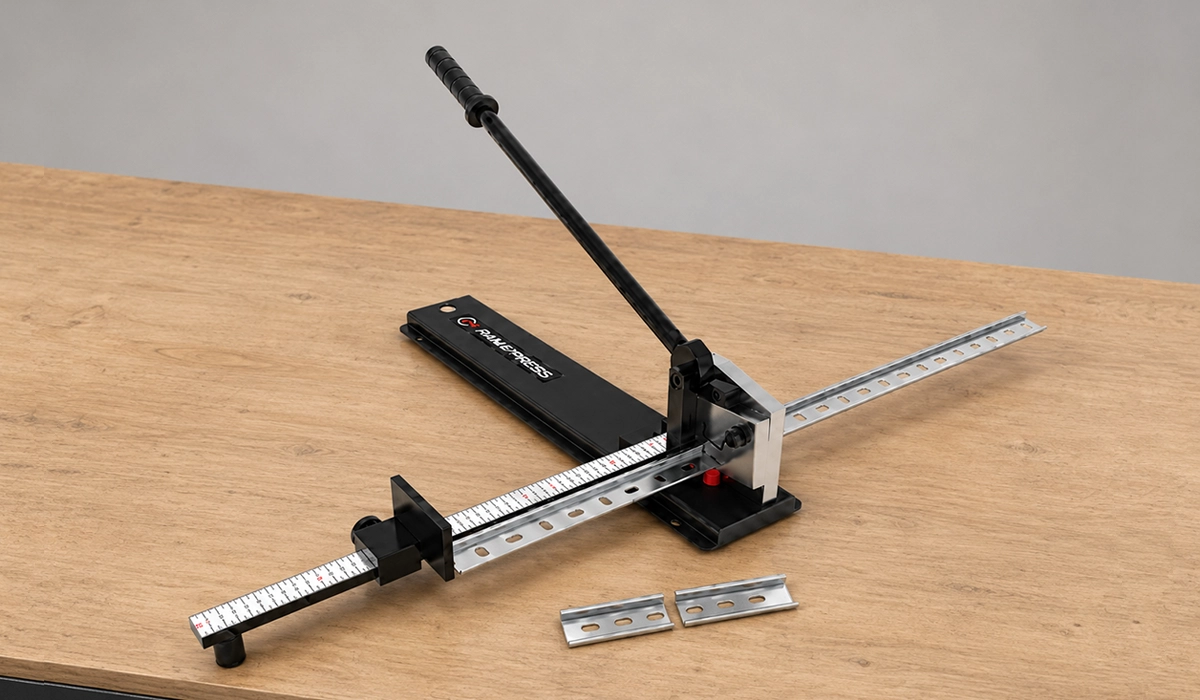
A DIN rail cutter is a dedicated shearing tool for cutting mounting rail to length. Instead of grinding or sawing through the rail, it presses a hardened blade through the profile in one controlled stroke. Therefore, it works by shear force, not abrasion.
This difference matters. A hacksaw removes material tooth by tooth, which can create angled cuts, rough edges, noise, chips, and burrs. A rail shear tool separates the profile along a fixed cutting line. As a result, the rail end stays squarer and needs less finishing.
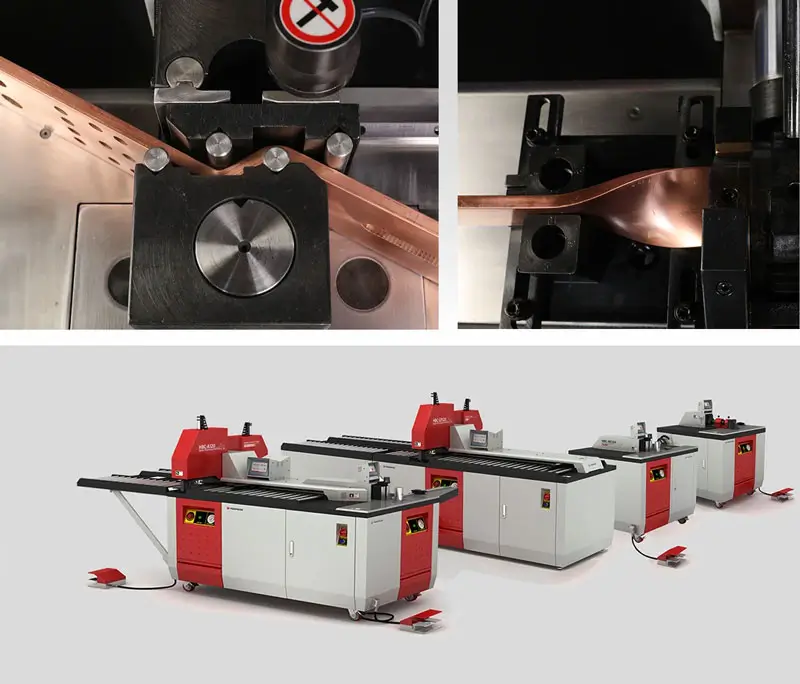
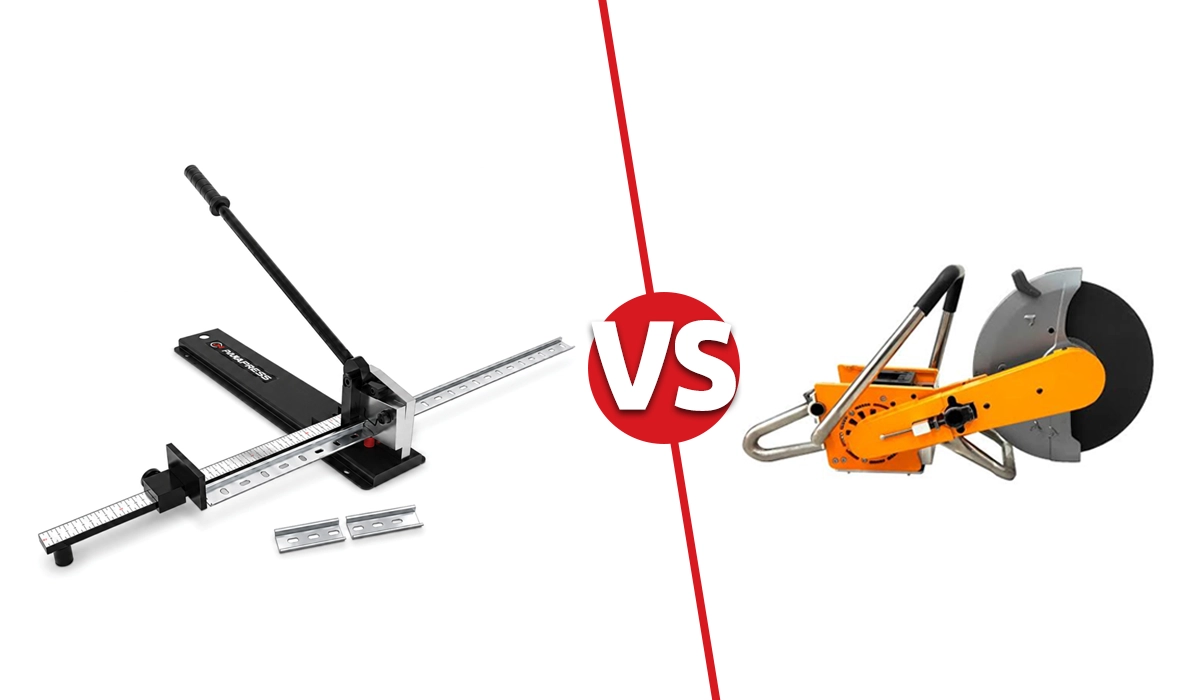
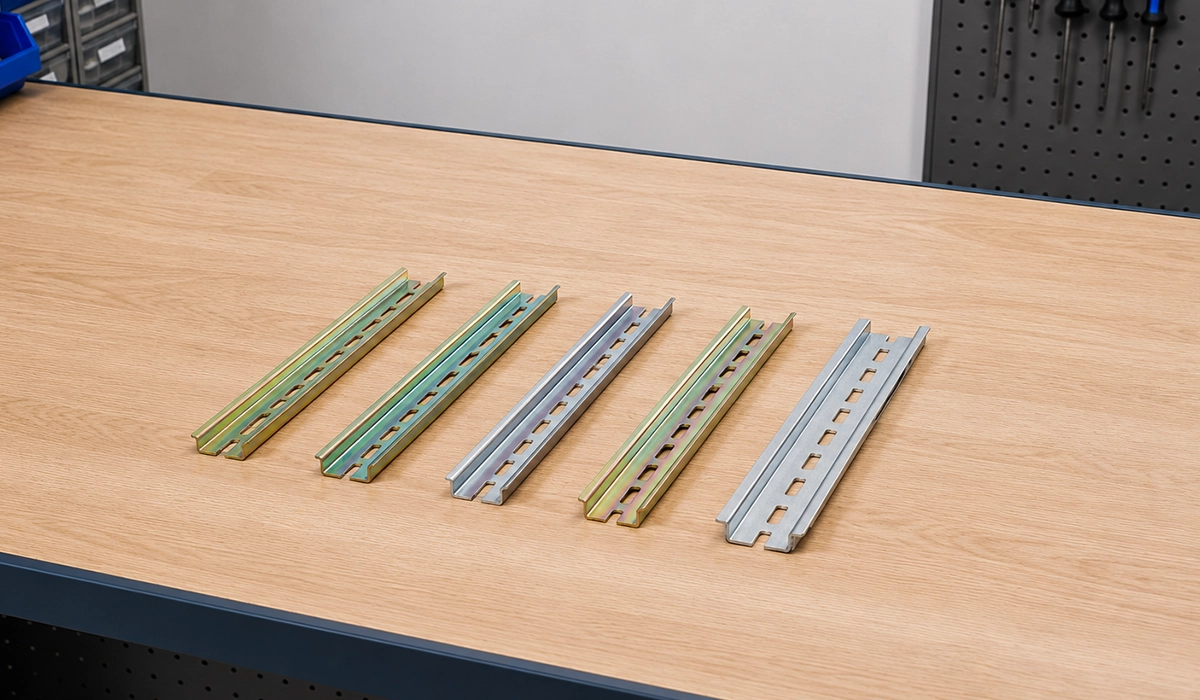
Most tools come in two main formats: bench-mounted cutters and handheld cutters. Bench-mounted units suit panel shops and repeated cuts. Meanwhile, handheld tools suit site work and low-volume jobs. General-purpose saws were never optimized for TS-35 top hat rail geometry, so this tool category exists to make rail preparation faster, cleaner, and more repeatable.
Key Benefits of Using a Dedicated DIN Rail Cutter
DIN rail cutter benefits become clear in production environments where technicians cut mounting rail many times per day. In that setting, small gains in speed, edge quality, and repeatability create large savings across full control panel fabrication.
- Cut quality: Shearing produces a square, near burr-free edge. It avoids the surface tearing that often appears with hacksaw blades.
- Speed: One lever stroke can replace minutes of manual sawing. Therefore, the time saving grows across a complete panel build.
- No heat or sparks: The tool suits work near pre-assembled components, wire looms, and painted enclosure surfaces.
- Low noise: It works well in workshop and office-adjacent spaces without the noise of powered saws.
- Consistent repeatability: The guide fixes the rail angle, so operator technique affects the result less.
- Reduced finishing work: Minimal deburring means fewer steps between cutting and installation.
See a full cutter versus saw comparison to understand why shearing consistently beats manual sawing in busy panel shops.
In high-volume panel shops, these benefits compound. Less rework means faster assembly, cleaner terminal block rail accessories, and fewer small errors before wiring starts.
For updated product, service, or technical information about Covers rail materials, profile types, and burr-free cutting tools review the source website directly.
Types of DIN Rail Cutters — Know Which Format Suits Your Work
Explore the different rail cutter formats available to find the right balance between portability and cutting power.
Not all rail cutters serve the same workflow. The first decision in DIN rail cutting tool selection is usually format: bench-mounted or handheld. The phrase DIN rail guillotine cutter vs handheld cutter captures the real trade-off. One favors force, accuracy, and production speed. The other favors portability and field convenience.
| Feature | Bench-Mounted Cutter | Handheld Cutter |
|---|---|---|
| Cut Quality | Excellent — very consistent | Good — slightly more operator-dependent |
| Cutting Force | High — handles steel and stainless steel | Moderate — best for aluminum and light steel |
| Speed | Very fast in production | Fast for occasional cuts |
| Portability | Low — fixed to a workbench | High — fits in a tool bag |
| Measurement Guide | Usually built-in | Rarely included |
| Best For | Panel shops, daily production | Field work, low-volume use |
| Typical Cost | Medium to high | Low to medium |
Match the tool to the real work context. A field electrician may value a compact top hat rail cutter more than a measuring stop. However, a panel shop owner should prioritize repeatability, low fatigue, and long blade life.
You can explore this trusted source for more complete and updated information.
Essential Features to Look for Before Buying
This is the core buying section: what to look for in a DIN rail cutter before money changes hands. In practice, how to choose a DIN rail cutting tool comes down to seven checks: profile fit, material rating, blade support, measurement control, frame strength, ergonomics, and safety.
A good tool comparison should not focus only on price. Instead, it should test how the cutter will hold up under daily work. Also, the buyer should verify specifications in the manufacturer sheet, not just in the catalog title.
For professional panel building tools, the most important failure modes are predictable. Poor compatibility causes misfit. Weak blades cause rough edges. Light frames cause angled cuts. Therefore, DIN rail guillotine cutter features should always connect to measurable shop outcomes.
The following checks help electricians, control panel assemblers, automation engineers, and enclosure fabricators compare tools with less guesswork.
Before comparing specs, review the common rail cutting methods and tools used across professional panel shops today.
Rail Profile Compatibility
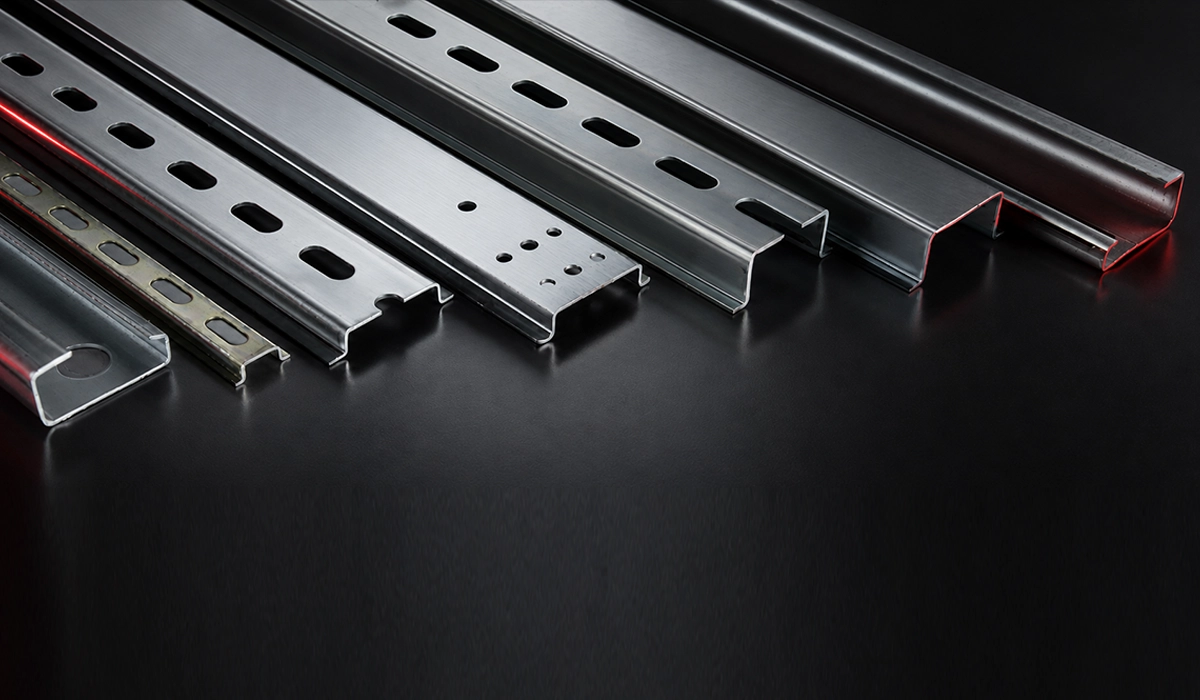
Not all cutters support every rail profile. Most tools focus on TS-35 top hat rail, which dominates electrical enclosure assembly. However, panel builders using G-rail, TS-32, TS-15, or shallow TS-35 profiles must confirm the rated profile list. Check the specification sheet, not only the headline.
Learn more about the various mounting rail types before confirming which profiles your cutter actually supports.
Material Rating — Steel, Aluminum, and Stainless Steel
Matching cutter strength to rail material prevents premature blade wear and inconsistent cutting results over time.
A DIN rail cutter for aluminum and steel rail will not always suit stainless steel. Mild steel and aluminum cut easily with standard guillotine tools. However, stainless steel needs higher force and better blade hardness. If you need a heavy-duty rail cutter for stainless steel, confirm that rating before use.
Blade Quality and Replacement Availability
Reliable blade sourcing keeps a rail cutter productive for years, avoiding costly downtime from unavailable replacement parts.
The blade drives DIN rail cutting tool durability and blade life. Look for hardened tool steel, clean alignment, and available replacement parts. A low-cost tool with an unavailable blade has a short service life. Also, check how quickly the blade can be replaced and realigned.
Built-In Measurement and Repeatability Features
Accurate built-in stops save valuable time when cutting identical rail lengths across large panel production runs.
Production panel shops often cut the same rail lengths repeatedly. Therefore, a built-in stop or engraved measuring rail saves time and reduces marking errors. This feature matters more on bench-mounted models than handheld tools. If repeatability matters, treat the measuring stop as a high-priority specification.
For broader context, this external resource can help you continue your research.
Frame Construction and Durability
A rigid frame keeps cuts square and consistent, even after thousands of repeated cutting cycles.
The cutter frame absorbs force on every stroke. Cast iron and heavy-gauge steel frames resist flex during daily use. By contrast, light alloy or plastic-bodied cutters may develop play at the pivot. Once that happens, cut squareness declines and the shop sees more rework.
Cutting Force and Ergonomics
Comfortable leverage reduces operator strain during long shifts, especially when cutting harder steel rail sections.
Cutting force affects operator fatigue. For handheld tools, look for leverage that creates high cutting force with low hand pressure. For bench-mounted cutters, a longer handle arm reduces effort per stroke. Also, consider handle height when several operators use the same rail shear.
Safety Features
Proper guarding and controlled mechanisms protect operators from pinching hazards during repeated daily cutting work.
A professional cutter should keep hands away from the cutting zone. Look for a workpiece guard, stable base, controlled return spring, and secure rail guide. These features are not luxury extras. They help prevent slips, pinching, and unsafe hand placement during repeated cutting work.
You can find more background information and related technical notes on Highlights safer cutting methods, grip, and blade-risk reduction through this reference link.
What Separates a Professional-Grade Cutter from a Budget Option
Budget cutters can work adequately at low volumes. If a small shop cuts aluminum rail a few times per month, an affordable shear may perform well enough. However, limitations appear quickly when a technician cuts steel rail every day. The common symptoms include angled cuts, blade chipping, rougher edges, and frame flex.
A professional-grade tool costs more upfront, but it usually controls total cost of ownership better. It reduces blade replacement frequency, prevents avoidable rework, and delays tool replacement. Also, a rigid bench-mounted rail shear supports more consistent panel layout when several technicians share the same workstation.
Reviewing the official rail sizing standards helps buyers judge whether a tool truly meets professional production requirements.
Rail Cutting Feature Checklist — A Buyer’s Quick Reference
Use this quick reference to compare specifications side by side before making a final purchasing decision.
Use this checklist when comparing guillotine cutters, handheld rail tools, and bench-mounted workshop models. It works best when the buyer already knows the main rail profile, expected material, and monthly cut volume.
| Feature to Check | Why It Matters | Priority Level |
|---|---|---|
| TS-35 profile compatibility | Confirms compatibility with standard DIN rail profiles | Essential |
| Material rating: steel / aluminum / stainless steel | Prevents blade damage and poor cut quality | Essential |
| Blade replacement availability | Determines long-term serviceability of the tool | Essential |
| Built-in measurement stop | Speeds up repeated cuts of the same length | High |
| Frame material: cast iron / steel | Affects durability during daily production use | High |
| Cutting force rating | Must match the hardness of the rail material | High |
| Return spring mechanism | Improves cutting speed and operator safety | Medium |
| Adjustable workpiece guide | Improves accuracy for angled and repetitive cuts | Medium |
| Handle ergonomics | Reduces operator fatigue during high-volume use | Medium |
| Manufacturer warranty and support | Protects the long-term investment | Medium |
For a small panel shop, the critical balance is price versus service life. For daily production, blade availability, frame stiffness, and repeatability should outweigh the lowest sticker price.
Conclusion about How Buying DIN Rail Cutter
These factors together determine whether a rail cutter delivers lasting value for your specific workshop and production needs.
A good buying decision starts with the actual work: rail profile, material, volume, and location. Choose handheld tools for field work and bench-mounted cutters for repeat production. However, prioritize blade availability almost above everything else. Without replacement blades and a rigid frame, even a clean first cut may become poor long-term value.
FAQs How Buying DIN Rail Cutter
Below are common questions buyers ask when comparing rail cutting tools for professional and field use.