

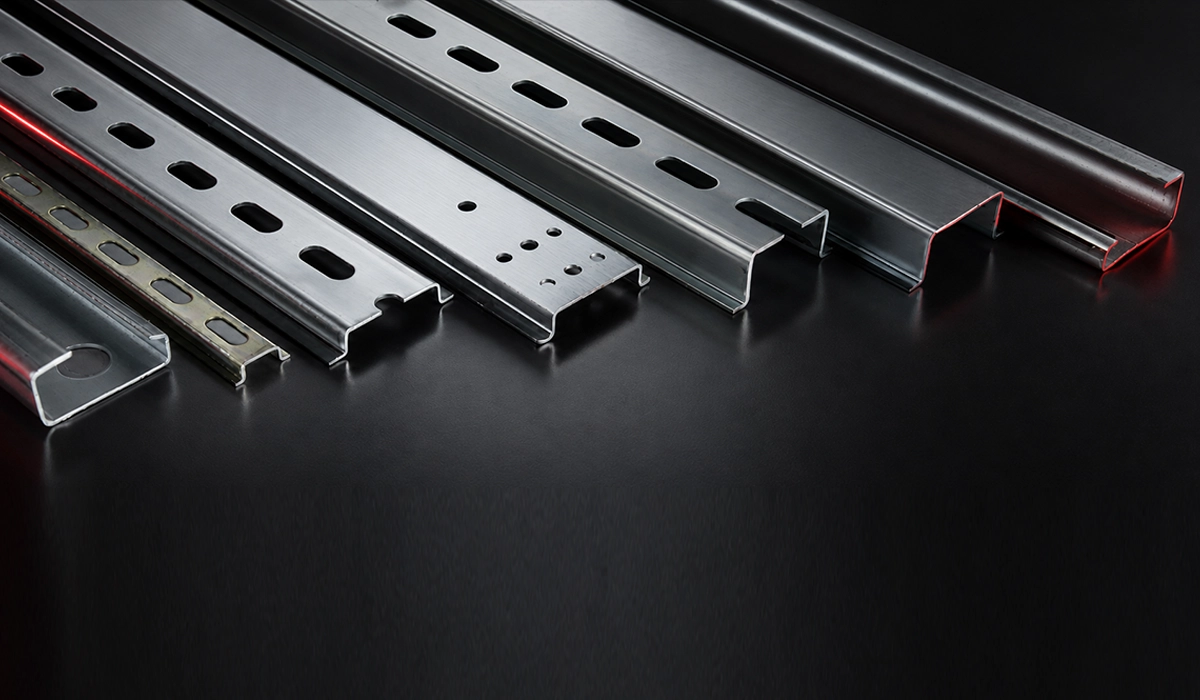

Why a DIN Rail Standard Exists — The Case for Interoperability
The main purpose of the DIN rail standard is interoperability. Without a governing rail profile, a circuit breaker from one manufacturer might not clip onto a rail from another supplier.
This compatibility does not happen by chance. Engineers rely on a fixed rail profile so a terminal block, relay socket, protection device, or PLC module can mount securely inside the same enclosure.
The standard also reduces procurement risk. Therefore, a panel builder can specify compliant rail rather than locking a project to one brand.
Over time, German, European, and international standards created a shared ecosystem. As a result, thousands of modular devices now follow the same mounting logic across factories, countries, and product generations.
For industrial buyers, that means fewer fit problems, faster maintenance, and better long-term spare-part access.
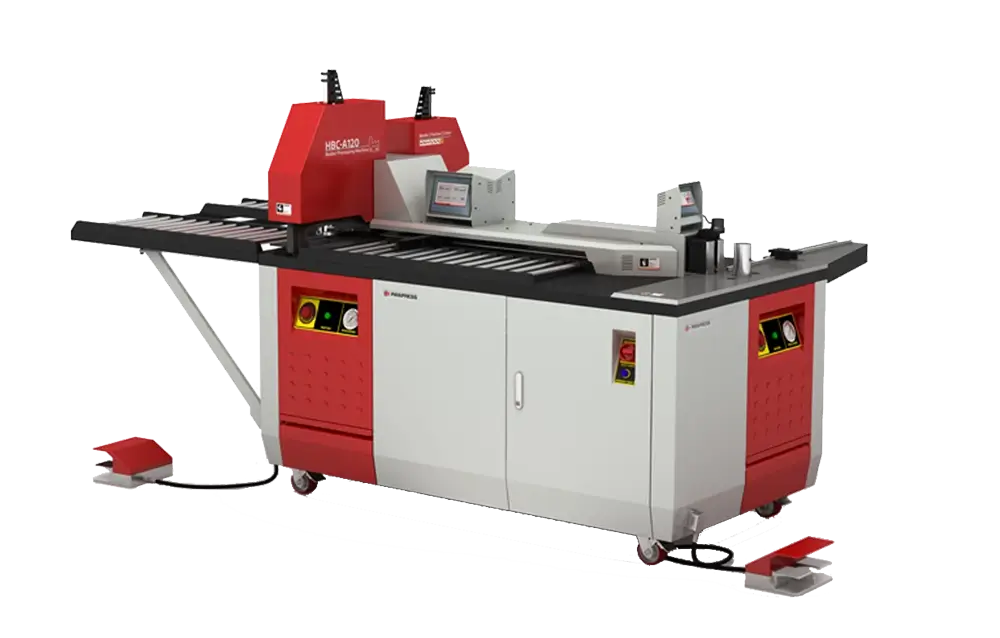
Further exploration of DIN Rail Cutter can be found in the following recommended reading.
The History of DIN Rail Standardization — From Germany to the World
Many engineers see several standard numbers in datasheets. DIN 46277, EN 50022, EN 50035, EN 50045, and IEC 60715 often appear beside the same product family.
This creates confusion, yet the sequence is logical. DIN created the national origin, CENELEC harmonized the profiles across Europe, and IEC later provided the international framework.
Because many old cabinets remain in service, legacy documents still matter. However, current specifications should normally cite IEC 60715 or DIN EN 60715.
This history also explains why older products may say EN 50022 DIN rail standard, while newer products simply state IEC 60715 or EN 60715 DIN rail.
This website offers useful supporting information for understanding the subject more clearly.
DIN 46277 — The German Origin
DIN 46277 was the early German reference for standardized mounting rails. It came from Deutsches Institut für Normung and shaped the first formal equipment rail specification.
It covered profiles that later became familiar in European panel building, including G-section and hat-section rail forms. Although superseded, technicians still find DIN 46277 standard references in legacy drawings, spare-part files, and older enclosure documentation.
Access the full file here to review all technical notes, examples, and recommendations.
EN 50022, EN 50035, and EN 50045 — European Harmonization
CENELEC harmonized the mounting rail standard across Europe through separate EN documents. EN 50022 covered TS35 and TS15 top-hat profiles, EN 50035 covered the G32 asymmetrical rail, and EN 50045 covered the miniature 15 mm rail.
These documents gave European panel builders a common EN rail standard. However, many are now withdrawn or superseded, so current designs should avoid using them as the only procurement reference.
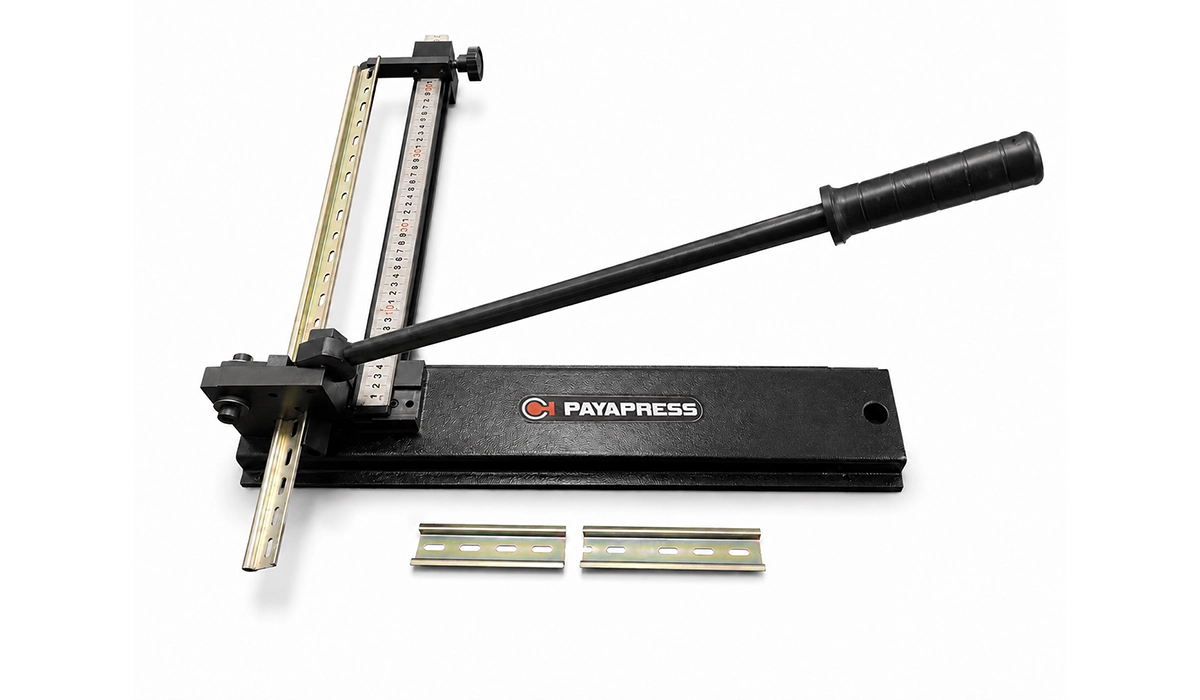
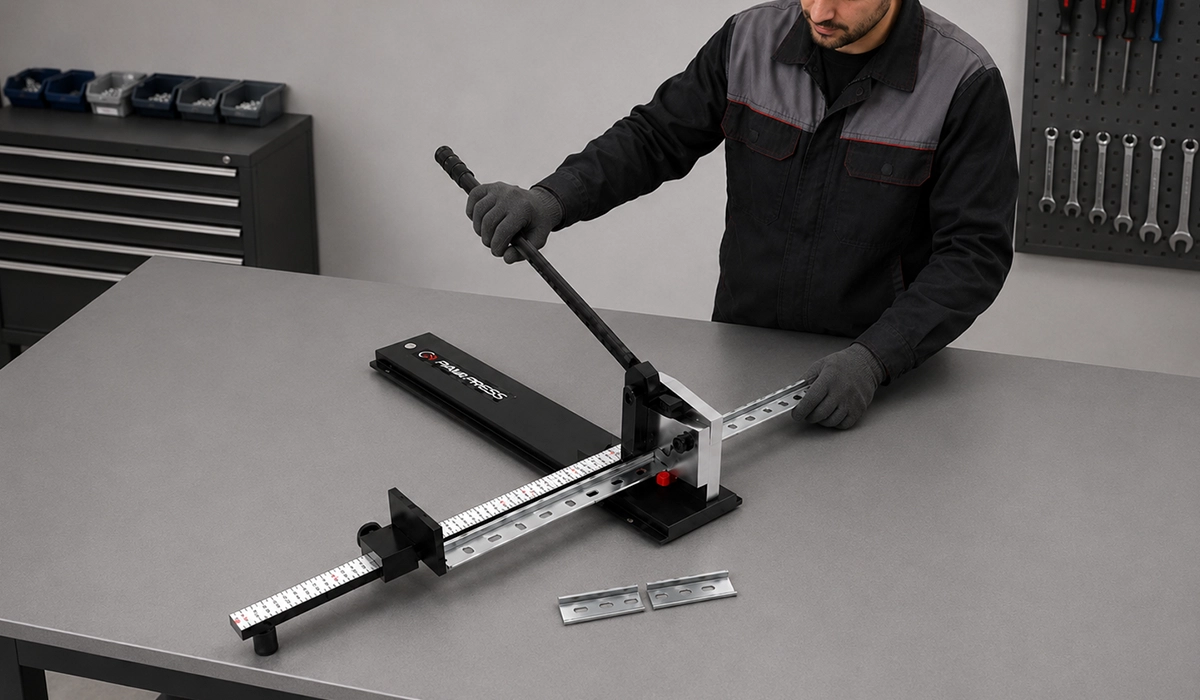
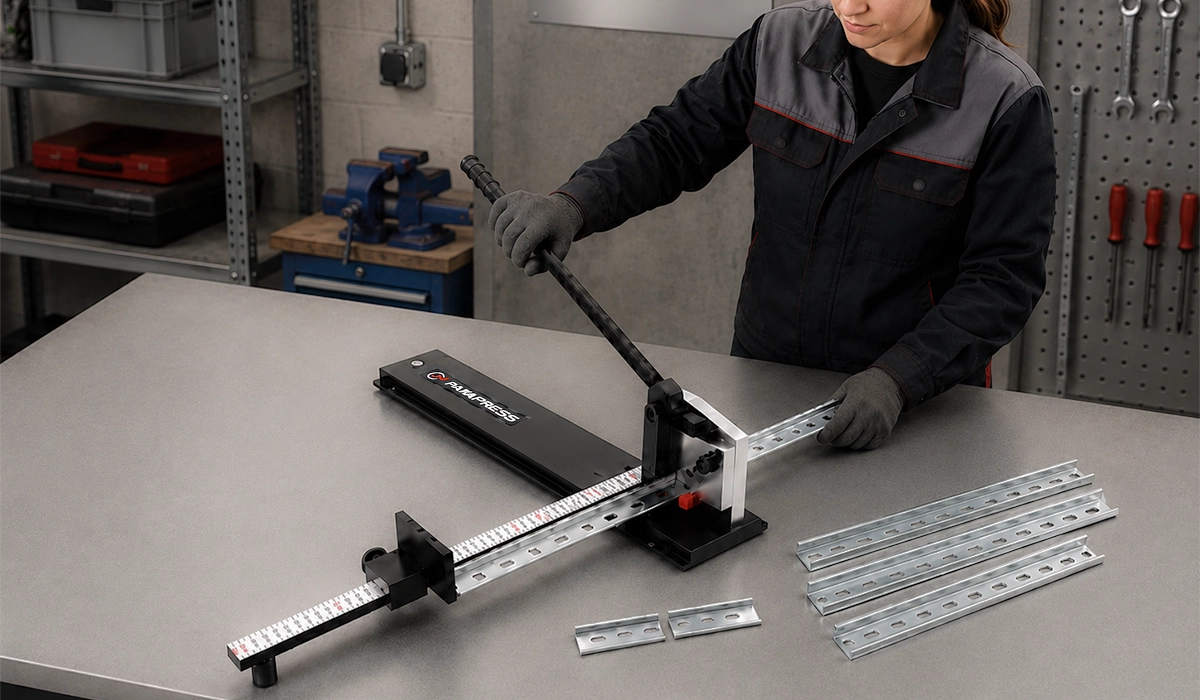
Further exploration of panel builders’ cutting tools can be found in the following recommended reading.
IEC 60715 — The Current International Standard
IEC 60715 Ed.2 is the current international rail profile standard. It specifies critical dimensions for compatible mounting of switchgear, controlgear, and accessories.
Unlike the older European family, IEC 60715 consolidates the reference into one global document. Major manufacturers now cite it in current component literature, especially for TS35 standard and TS15 standard mounting.
| Standard | Issuing Body | Rail Profiles Covered | Current Status |
|---|---|---|---|
| DIN 46277 | DIN — Germany | G-rail and early hat profiles | Superseded |
| EN 50022 | CENELEC — Europe | TS35 and TS15 top-hat rails | Superseded by IEC 60715 |
| EN 50035 | CENELEC — Europe | G32 asymmetrical rail | Superseded by IEC 60715 |
| EN 50045 | CENELEC — Europe | Miniature rail | Superseded by IEC 60715 |
| IEC 60715 Ed.2 | IEC — International | Standard rail profiles | Current and active |
Download the attached file to explore the complete data and supporting information.
What IEC 60715 Actually Defines — Scope and Boundaries
IEC 60715 defines the dimensional interface between rail and device. In simple terms, it tells manufacturers which shapes allow compatible mechanical mounting.
It does not design the whole cabinet. Therefore, panel builders still need enclosure layout rules, heat spacing, vibration checks, support intervals, and manufacturer installation data.
The document covers top-hat, C-section, and G-section rails. It also states that mounting compatibility does not automatically mean functional interchangeability.
For procurement, the key point is direct: cite IEC 60715 when buying standardized mounting track for industrial control panels.
IEC 60715 defines:
- Cross-sectional profile geometry for each standardized rail type
- Nominal dimensions — width, height, flange angle, and opening width
- Manufacturing tolerances permitted for critical dimensions
- Mounting hole and slot patterns where specified by rail design or product series
- Minimum material thickness where the profile detail requires it
- Surface and edge requirements, including burr-free fitting surfaces
IEC 60715 does not define:
- One mandatory material for every application; steel, aluminum, and stainless steel appear in commercial use
- One mandatory commercial length; 1 m and 2 m lengths are market conventions
- The complete assembly load rating for a real cabinet layout
- Finish color or brand-specific coating appearance
- Whether a selected rail suits vibration, corrosion, or thermal conditions without engineering review
TS35 Dimensions and Tolerances Under IEC 60715
TS35 is the most common industrial top-hat rail. It supports terminal blocks, miniature circuit breakers, relays, motor-control devices, power supplies, and PLC I/O modules.
In practice, TS35 dimensions according to IEC 60715 matter more than brand. A compliant 35 mm rail should accept a compliant component clip from another manufacturer.
The two common depths are 7.5 mm and 15 mm. Engineers often call them TS35 standard and TS35 deep.
However, always check the component datasheet. Some large devices need the deeper rail profile or a specific support spacing.
For the latest available details, check the official page directly.
TS35 Nominal Dimensional Specification
The TS35 nominal dimensional specification starts with 35 mm rail width. Standard rail height is 7.5 mm, while the deep version uses 15 mm.
Common perforated commercial rail includes 25 mm drill-hole spacing. Phoenix Contact lists 35 mm width, 7.5 mm depth, 6.2 mm hole height, 15 mm hole width, and 25 mm drill-hole spacing for one EN 60715 rail product.
For broader context, this external resource can help you continue your research.
TS35 Manufacturing Tolerances
Manufacturing tolerances define permitted deviation from nominal profile dimensions. They exist because exact nominal production is not practical at scale.
Schneider Electric gives a useful device-side requirement for IEC 60715 compliant top-hat rail: 35 mm width with ±0.3 mm tolerance, 1 mm thickness with ±0.04 mm tolerance, and 7.5 or 15 mm height with +0/−0.4 mm tolerance.
This external page provides additional insights that may help with your evaluation.
TS35 Deep Rail — Specification Differences
TS35 deep rail keeps the same 35 mm top-hat concept but increases the rail depth to 15 mm. This deeper profile creates more clearance behind the mounted device.
Therefore, panel builders use it when components have deeper rear projections, heavier mechanical loads, or routing needs behind the rail. It is not a different mounting family; it remains a 35 mm top-hat rail.
| Dimension | Standard TS35 | TS35 Deep | Tolerance | IEC Reference |
|---|---|---|---|---|
| Rail width | 35 mm | 35 mm | ±0.3 mm | IEC 60715 |
| Rail height | 7.5 mm | 15 mm | +0/−0.4 mm commonly cited by device makers | IEC 60715 |
| Flange opening | 27 mm class | 27 mm class | Confirm in current IEC drawing | IEC 60715 |
| Mounting pitch | 25 mm common perforated rail | 25 mm common perforated rail | Manufacturer dependent | Product datasheet |
| Slot width | 6.1–6.2 mm class in many perforated rails | Varies by product | Manufacturer dependent | Product datasheet |
| Min thickness steel | 1.0 mm | 1.0 mm | ±0.04 mm commonly cited by device makers | IEC 60715 / datasheet |
For readers who want more technical depth, this reference page is a useful starting point.
TS15 Dimensions and Tolerances Under IEC 60715
TS15 is the miniature top-hat rail profile. It supports smaller terminal blocks and compact accessories where full TS35 space is unnecessary.
The profile uses a 15 mm mounting rail width class and a shallow 5.5 mm depth. Therefore, it suits light-duty assemblies better than large control devices.
The long-tail query “TS15 dimensions IEC 60715 specification” matters because TS15 often appears in older terminal-block systems.
However, do not treat TS15 as a small TS35. The rail profile standard, clip geometry, and load expectations differ.
TS15 Nominal Dimensional Specification
A typical TS15 product uses a 15 mm rail width class and 5.5 mm depth. Weidmüller lists TS 15×5 rail as steel, galvanic zinc plated and passivated, with DIN EN 60715 cited.
It also lists 1 mm thickness and pre-punched mounting data for the selected part. Because hole patterns vary by product, buyers should verify the exact datasheet before ordering.
TS15 vs TS35 — Why They Are Not Interchangeable
TS15 and TS35 do not interchange. Although some punched rails may use similar backplate spacing, the rail width, height, flange geometry, and component clips differ.
A TS35 device will not seat correctly on TS15. Likewise, a TS15-specific terminal block will not grip TS35 correctly. Forcing either combination can damage the spring clip and create an unsecured installation.
| Dimension | TS35 | TS15 | Notes |
|---|---|---|---|
| Rail width | 35 mm | 15 mm | Not interchangeable |
| Rail height | 7.5 mm or 15 mm | 5.5 mm class | Not interchangeable |
| Mounting pitch | Often 25 mm on perforated products | Product dependent | Backplate only |
| Component clips | TS35-specific | TS15-specific | Incompatible |
| Typical load | Heavy to medium | Light | Different application |
| IEC 60715 covered | Yes | Yes | Same standard family |
G-Rail Dimensions — Legacy Standards DIN 46277 and EN 50035
G-rail, often called G32, has an asymmetrical G-section profile. One flange differs from the other, so the rail does not behave like a symmetrical top-hat rail.
Legacy documentation usually points to DIN 46277-1 or EN 50035. DIN Media lists DIN EN 50035 as a withdrawn standard for G-profile mounting rails for terminal blocks.
IEC 60715:2017 still includes a G 32 section in its scope, but new panel builds rarely choose G-rail today. TS35 now dominates global component availability.
For maintenance, treat G-rail as a legacy profile. Therefore, do not expect TS35 snap-on components to fit it.
During refurbishment, replace G-rail with TS35 when the connected components, enclosure layout, and approval constraints allow it.
Surface, Edge, and Finish Requirements in IEC 60715
Geometry alone does not make a compliant rail. Surface finish, edge condition, and dimensional consistency also affect component life and installation safety.
IEC 60715 drawings identify burr-free edges on fitting surfaces. Burrs can scrape spring clips, block full seating, or create sharp handling hazards.
Steel DIN rail commonly uses zinc plating or galvanized finish. Phoenix Contact, for example, lists EN 60715 steel rail with galvanized and passivated surface treatment.
However, the correct finish depends on the environment. A dry enclosure, washdown cabinet, marine panel, and outdoor enclosure may need different corrosion strategies.
Also, check straightness along the full rail length. A rail that measures correctly at one point but twists across the backplate can still cause poor component seating.
What IEC 60715 Compliance Means in Practice for Panel Builders
IEC 60715 compliance gives panel builders predictable component mounting. Therefore, the rail becomes a controlled mechanical interface rather than a generic metal strip.
The first benefit is brand interoperability. A compliant rail can accept compliant devices from different manufacturers when the device specifies the same rail type.
The second benefit is procurement control. A project specification that cites IEC 60715, rail type, material, finish, and length gives suppliers a clear minimum requirement.
The third benefit is international serviceability. A panel built around an international rail standard gives maintenance teams better access to replacement parts.
However, compliance does not remove engineering responsibility. Panel builders must still confirm mechanical support, vibration conditions, corrosion exposure, electrical bonding, spacing, and device installation instructions.
How to Verify DIN Rail Compliance on Site
Field verification prevents off-specification rail from entering a professional control panel. Use calibrated tools and compare findings with both IEC values and the manufacturer datasheet.
A simple gauge check helps, but it does not replace documentation. Therefore, procurement engineers should retain datasheets with the project file.
Also, test the rail with a known compliant component. A correct clip should seat firmly without excessive play or force.
For critical panels, reject anonymous rail. Unmarked products create traceability risk and complicate later compliance review.
- Check the manufacturer datasheet — compliant rail will explicitly cite IEC 60715, EN 60715, or DIN EN 60715 in the product documentation. If the datasheet only references EN 50022 or DIN 46277, request updated certification.
- Measure critical dimensions — verify rail width, height, thickness, and mounting pattern using calibrated measuring instruments. Compare against the nominal values and tolerance bands.
- Test with a known compliant component — snap a verified IEC 60715 compliant component onto the rail. It should seat firmly with a clear click and show no excessive play.
- Inspect edge quality — examine the flange lips closely. Visible burrs, sharp edges, or deformation indicate poor manufacturing control.
- Check surface finish — zinc-plated steel should show uniform coating with no bare steel exposed. Aluminum should show no pitting or surface defects.
- Confirm manufacturer identification — compliant rail should carry traceable manufacturer identification. Reject anonymous rail for professional panel builds.
IEC 60715 and North American Panels — UL 508A Compatibility
UL 508A governs industrial control panels in the North American market. It focuses on panel construction, component suitability, spacing, SCCR, wiring, marking, and safety.
It does not replace the DIN rail specification. Therefore, IEC 60715 compliant rail remains common in UL 508A panels.
The key compliance issue is usually the listed or recognized status of active components. Circuit breakers, motor starters, terminal blocks, power supplies, and protection devices need correct ratings and approvals.
The rail itself acts as a mechanical support. However, if the design uses the rail for protective bonding, the panel builder must follow the relevant grounding and product instructions.
For specifications, state “IEC 60715 compliant TS35 rail” and then define material, finish, thickness, length, and support spacing.
Visit the linked website to better understand the background, standards, and practical use cases.
Conclusion about DIN Rail Standard
The DIN rail standard exists to make rail-mounted devices mechanically compatible across manufacturers. For modern industrial panels, IEC 60715 is the correct international reference.
EN 50022, EN 50035, EN 50045, and DIN 46277 still matter when technicians read older drawings or maintain legacy cabinets. However, new specifications should normally cite IEC 60715 or DIN EN 60715.
TS35 remains the dominant rail profile for industrial control panels. TS15 serves compact terminal assemblies, while G-rail mostly appears in older installations.
For panel builders, compliance means more than buying a rail with the right name. Verify the datasheet, measure critical dimensions, inspect burr-free edges, confirm finish quality, and test component fit before release.

Rate this article
Choose a rating from 1 to 5 stars.
No ratings yet