
Prefer listening? You can play the audio version of the rest of this article below.
Why the Cutting Method You Choose Actually Matters
Cutting DIN rail is one of the most repeated physical jobs in panel building. You measure, mark, cut, deburr, mount, and repeat. Therefore, a small delay per rail becomes a real time loss across a full electrical enclosure panel build.
The DIN rail cutter vs saw choice affects more than speed. It also changes cut quality, safety, noise, tool wear, and panel wiring efficiency. A square cut helps rails sit flat, while a rough cut creates extra finishing work.
Many technicians still treat the best way to cut DIN rail as a matter of habit. However, habit can hide wasted minutes and inconsistent edges.
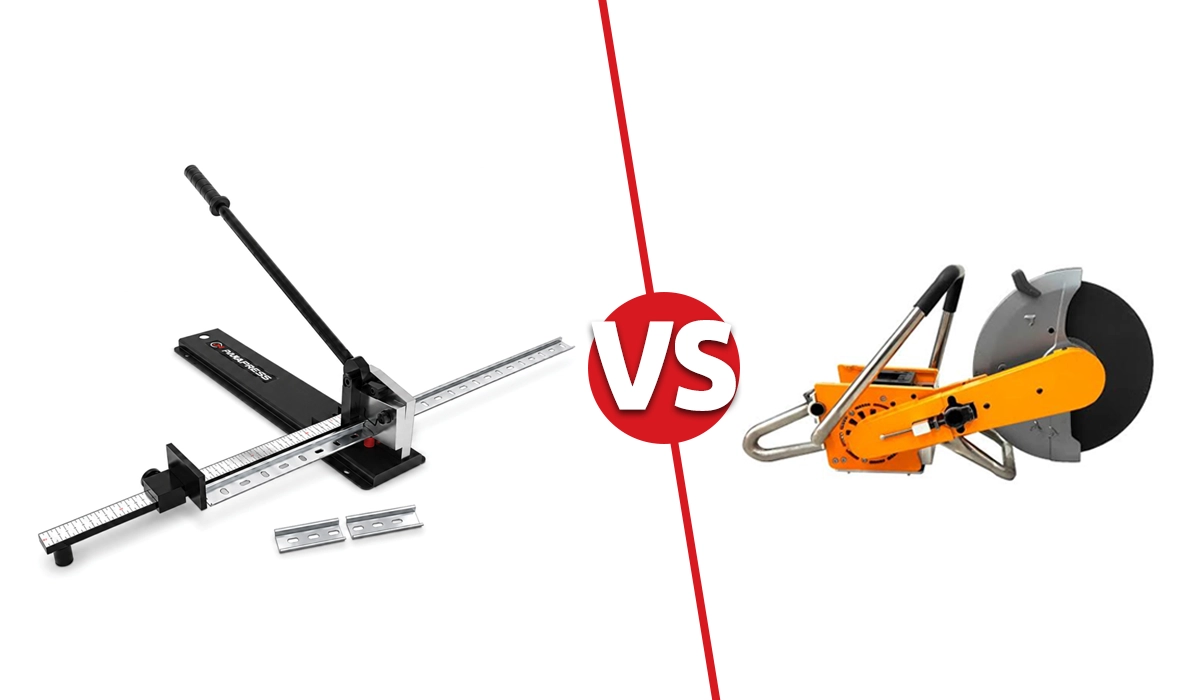
This article compares two dominant approaches: dedicated guillotine or shear cutters, and saw-based methods such as hacksaws, cold saws, and metal circular saws.
Before continuing with the rest of the article, we recommend visiting the DIN rail cutter.
Understanding the Two Methods — A Quick Overview
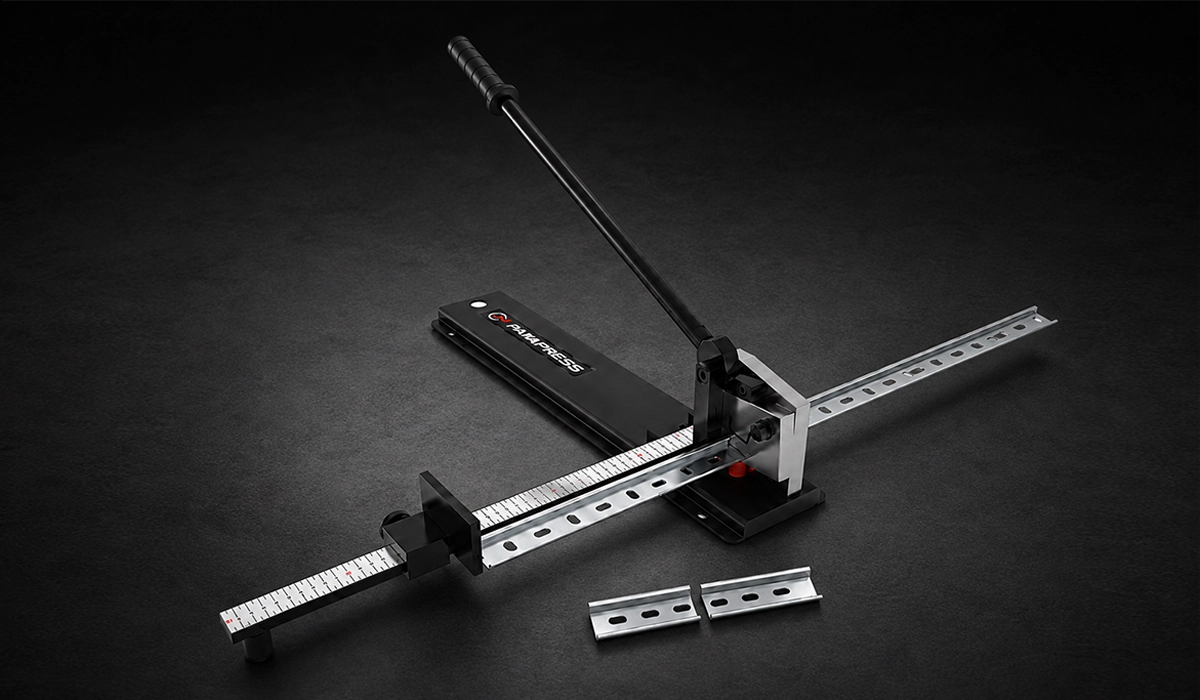
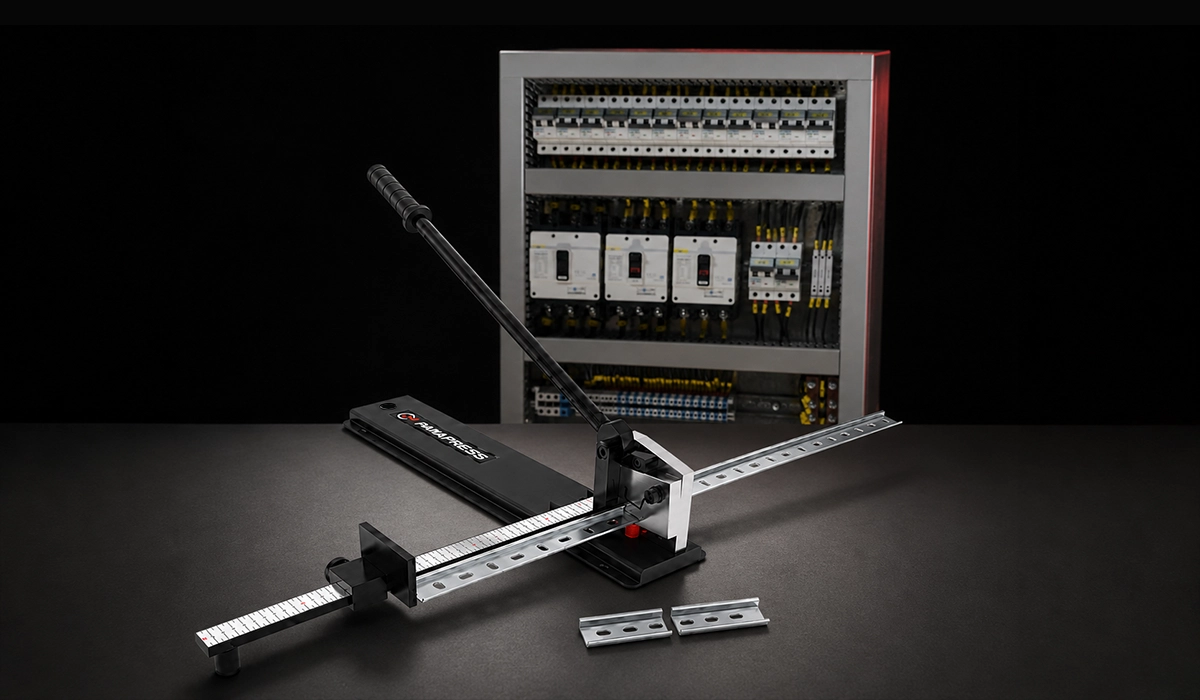
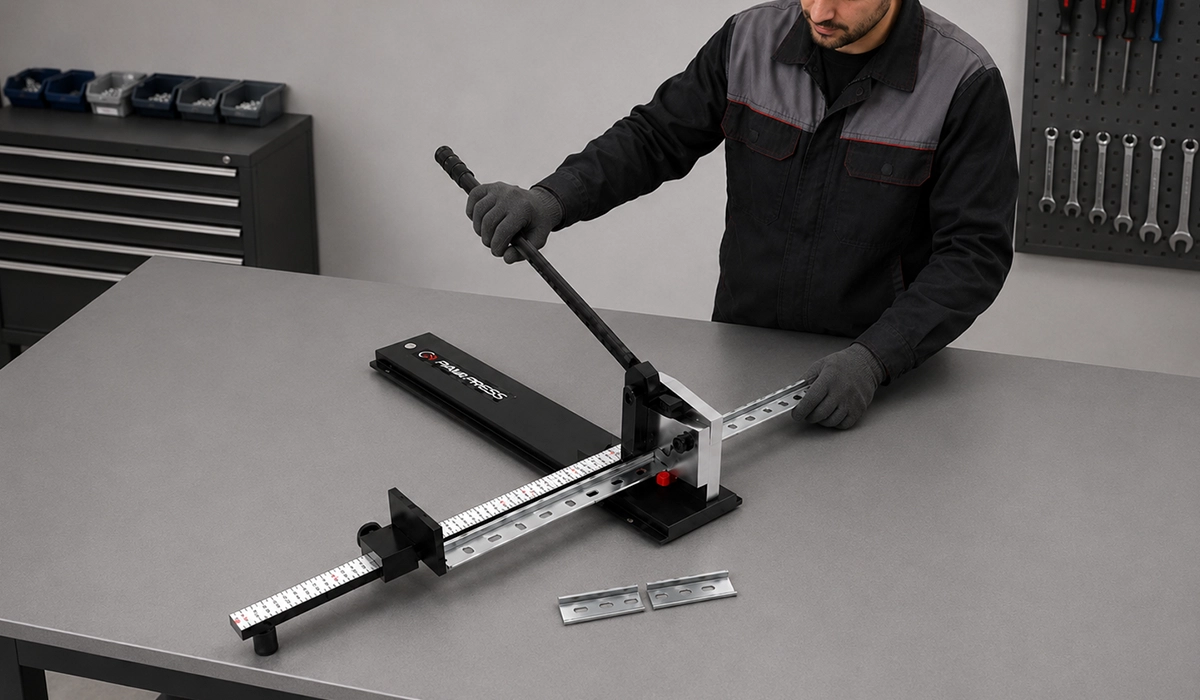
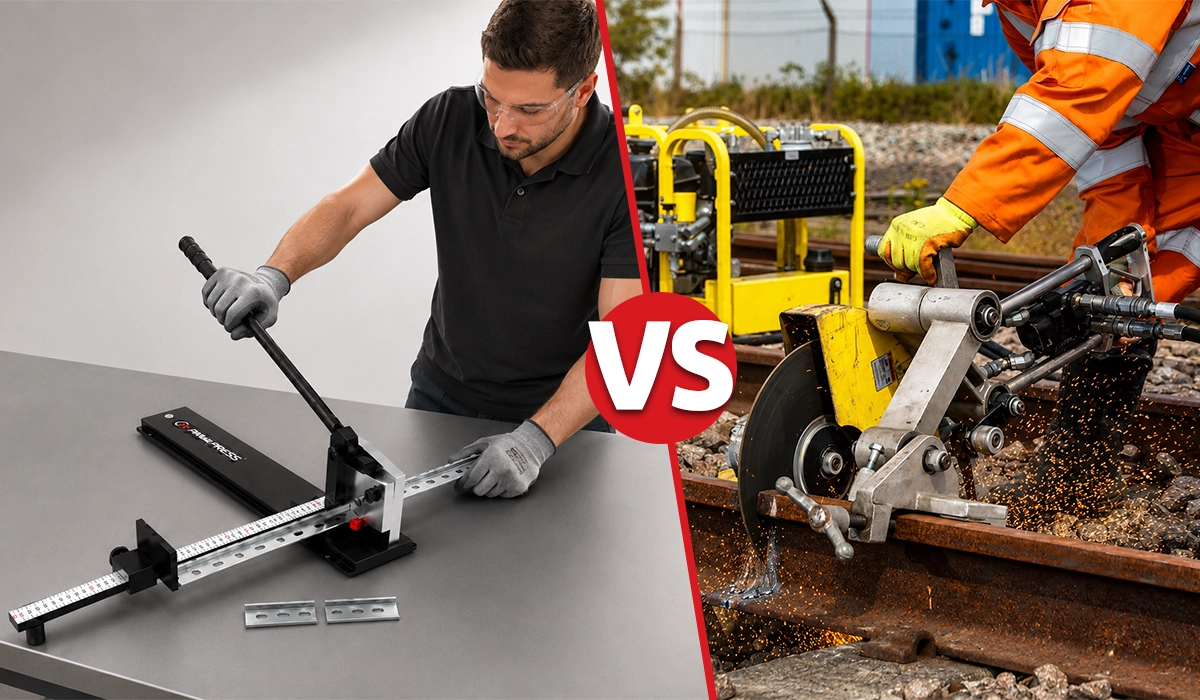
A DIN rail cutting tool comparison starts with the mechanism. A guillotine cutter shears the rail profile in one downward stroke. It uses no rotating blade, creates no sparks, and adds no heat to the rail.
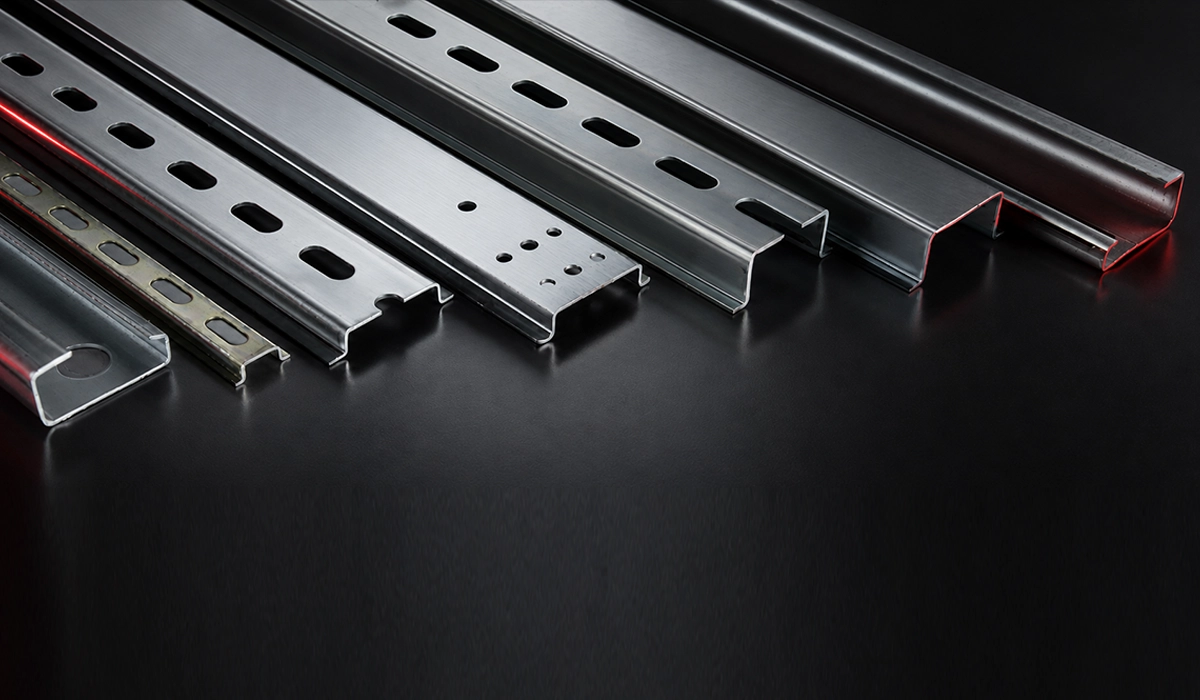
Bench-mounted cutters suit production shops. Hand-operated cutters suit mixed work. In both cases, the tool acts as a top hat rail cutting tool with a fixed profile slot.
The saw method uses a blade to remove material. Field technicians often use a hacksaw. Workshops may use a cold saw for DIN rail or a metal cutting circular saw.
Therefore, the difference is not “professional versus amateur.” It is manual shearing versus sawing, and each method fits a different workflow.
| Feature | DIN Rail Guillotine Cutter | Hacksaw | Cold Saw |
|---|---|---|---|
| Cut Quality | Excellent — square, near burr-free | Good with guide, needs deburring | Excellent — clean, minimal burr |
| Speed per Cut | Very fast, usually seconds | Slow, often 1–3 minutes | Fast |
| Sparks / Heat | None | None | Minimal |
| Noise Level | Low | Low | Moderate to high |
| Initial Cost | Medium–high | Very low | High |
| Portability | Moderate bench / high handheld | High | Low |
| Skill Required | Minimal | Moderate | Moderate |
| Best For | Production panel shops | Field work, occasional cuts | High-volume workshops |
This reference page is useful for readers who want to study the topic beyond this article about Explains dedicated DIN rail cutters and burr-free rail separation.
DIN Rail Guillotine Cutter — A Closer Look
A guillotine cutter works by forcing a hardened shear edge through the rail profile. The rail sits in a shaped die, so the tool supports the TS-35 rail cutter profile during the stroke.
This metal rail shearing action gives the tool its main advantage. It cuts the rail rather than grinding through it. As a result, the edge stays cleaner, and the operator avoids metal dust.
Professional panel shops prefer this method because it improves repeatability. The same operator can cut dozens of rails with the same square end and the same length stop setting.
Still, DIN rail guillotine cutter pros and cons must stay balanced. The tool costs more than a hacksaw, and some models only fit selected rail profiles.
This external page provides additional insights that may help with your evaluation.
Advantages of Using a Guillotine Cutter
A guillotine cutter gives a clean, square cut in one stroke. It avoids blade wear, sparks, heat, and flying abrasive dust. Therefore, operators can cut rails near partly assembled enclosures with less cleanup.
It also reduces deburring after cutting rail. Because the tool repeats the same cutting path, rail cutting accuracy improves, especially when the shop uses a fixed length stop.
For readers who want more technical depth which Describes smooth, straight cutting and mounting rail cutting tools, this reference page is a useful starting point.
Limitations of the Guillotine Cutter
A bench-mounted rail shear costs far more than a hacksaw. It also takes bench space, so a small field kit cannot carry it easily. Handheld cutters solve part of that problem, but heavy steel rail demands more force.
Compatibility also matters. A DIN rail cutter for TS-35 aluminum and steel may not handle every G-rail, C-profile, or thick stainless profile. Always check the manufacturer’s profile and material limits.
You can check this page for more examples, explanations, and related technical resources about Shows common DIN rail hardware used in panel assembly.
Saw Methods — Hacksaw, Cold Saw, and When They Make Sense
Saw-based cutting is not inferior by default. It works well when volume stays low, when the rail type varies, or when the job happens away from the main workshop.
A hacksaw gives the electrician maximum portability. It needs little space, costs little, and works without power. However, hacksaw vs guillotine for cutting DIN rail depends heavily on technique.
A cold saw gives the workshop a powered option. It can handle steel and aluminum rail cleanly, especially when the shop already cuts other profiles.
The real issue is control. A saw needs clamping, blade choice, operator care, and deburring. A rail shear builds much of that control into the tool.
For readers who want more technical depth, this reference page is a useful starting point.
Hacksaw — The Field Technician’s Tool
A hacksaw remains useful because it fits field work. For the best DIN rail cutting tool for electricians, portability often beats speed. Use a bi-metal blade, usually 24–32 TPI for thin steel profiles.
However, the rail must sit firmly in a vise or miter guide. Without support, the cut wanders. The downsides are clear: slower work, more effort, more filing, and quality that depends on the operator.
Cold Saw — The Workshop Power Option
A cold saw uses a low-RPM, high-torque blade with coolant or lubrication. It transfers heat away from the workpiece, so it can produce clean cuts on steel and aluminum rail.
Cold saw vs guillotine for DIN rail becomes relevant in high-volume shops. The saw handles more material types, but it needs setup, blade maintenance, noise control, and a fixed workshop location.
Angle Grinder — Use Only When Necessary
An angle grinder should be a last resort. It cuts stainless steel fast, but it creates heat, sparks, noise, and rough edges. It also demands serious deburring and PPE, so it does not suit routine control panel assembly tools.
Head-to-Head Comparison — Key Decision Factors
This DIN rail cutter vs saw comparison comes down to five factors: edge finish, speed, cost, safety, and portability.
For daily panel builder DIN rail cutting, repeatability usually matters more than the lowest tool price. A tool that saves two minutes per rail can change a shop’s weekly output.
However, field work changes the math. A compact hacksaw can solve problems where no bench tool can go.
So, the best choice depends on shop use versus field use, not on a single universal rule.
Cut Quality and Edge Finish
DIN rail saw vs shear which is cleaner? For everyday steel and aluminum TS-35 rail, the guillotine wins. A cold saw can match it with the right blade. A hacksaw trails, but careful clamping and deburring make it acceptable.
Speed and Workflow Efficiency
A guillotine cutter is usually fastest for repeated rail lengths. A cold saw also cuts quickly, but setup adds time. A hacksaw depends on blade condition and operator skill, so it loses speed in production mounting rail fabrication.
Cost — Upfront vs Long-Term
A hacksaw has the lowest upfront cost. A quality guillotine costs more, but it saves labor on repeated cuts. For regular panel work, upfront cost vs long-term savings often favors the shear cutter within a short production period.
Safety and Work Environment
The guillotine cutter creates the calmest work environment. It has no sparks, no rotating blade, and low noise. Hacksaws and cold saws need standard PPE. Angle grinders create the highest risk because they throw sparks and debris.
Portability and Field Use
Hacksaws win portability. They fit a tool bag and work anywhere. Handheld guillotine cutters offer a useful middle ground. Bench-mounted guillotines and cold saws belong in the shop, not inside a crowded service site.
Which Method Is Right for You? A Decision Framework
To decide how to cut DIN rail professionally, start with cut volume. If you cut rails every day, speed and repeatability matter more than the lowest purchase price.
Next, look at the work environment. A shop can support a bench tool or cold saw. A site technician needs compact tools, fast setup, and low tool weight.
Then, check rail material. Aluminum cuts easily. Galvanized steel needs more control. Stainless steel may push you toward a cold saw or, only, when necessary, a grinder.
Finally, ask: do I need a special tool to cut DIN rail? Not always. But if rail cutting affects output, quality, or fatigue, a special tool becomes a production asset.
| Your Situation | Recommended Method |
|---|---|
| Professional panel shop, daily rail cutting | Bench-mounted guillotine cutter |
| Field electrician, occasional cuts on-site | Hacksaw with miter guide |
| High-volume workshop, multiple rail types | Cold saw |
| DIY or hobbyist, budget-conscious | Hacksaw |
| Mixed use — shop and occasional field work | Handheld guillotine cutter |
| Cutting stainless steel rail regularly | Cold saw or angle grinder as last resort |
Conclusion about DIN Rail Cutter vs Saw
DIN rail cutter vs saw is not a simple winner-takes-all question. The right answer depends on volume, location, material, budget, and the finish standard your panel shop expects. For daily production, a guillotine cutter gives the best balance of speed, repeatability, and clean edges. It reduces filing and keeps the assembly area cleaner.For occasional field work, a hacksaw still makes sense. It costs little, travels well, and works when the technician controls the rail with a vise or guide.For high-volume mixed-material cutting, a cold saw can earn its place. Still, for routine TS-35 rail in panel shops, the shear cutter remains the most efficient default.