



What Is an Industrial Electrical Panel and Why Does It Matter?
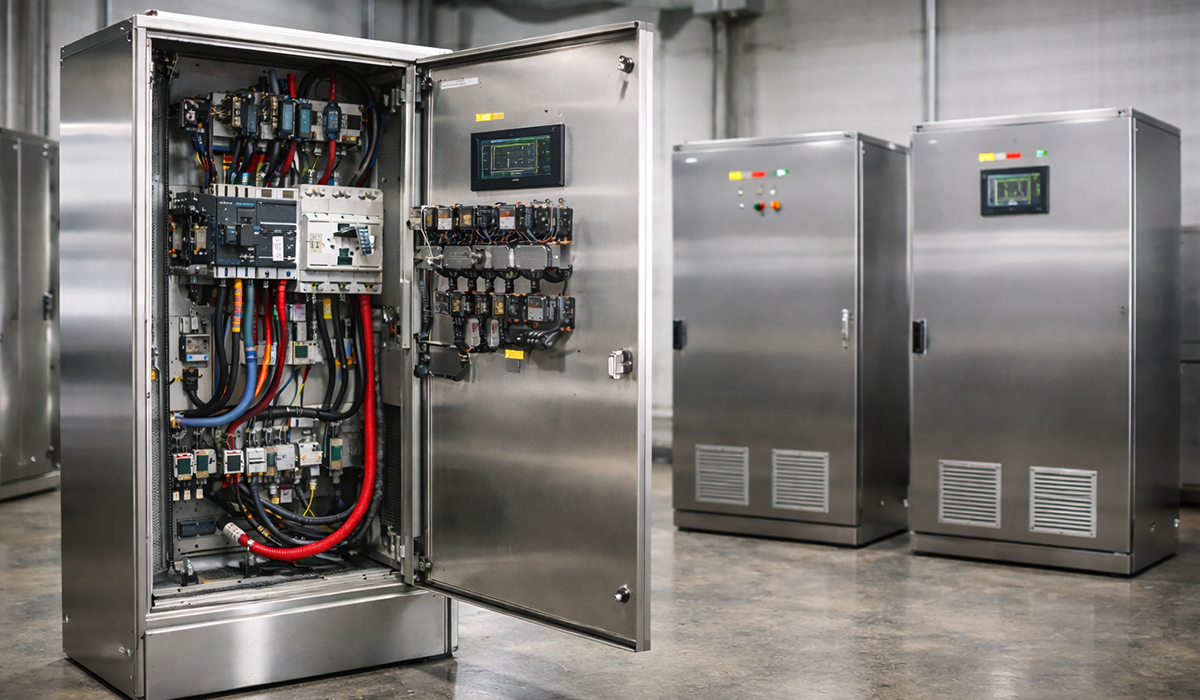
An industrial electrical panel — also referred to as an industrial control panel (ICP) or industrial electric panel — is a self-contained assembly of power and control circuit components designed to operate and protect factory equipment. These panel equipment assemblies operate at 600 volts or less and provide a single operational base for the process control engineer. Unlike standard building panels, industrial electrical panels for machinery must withstand harsh factory conditions such as high vibration, electromagnetic noise, and continuous duty cycles. Depending on use, ICPs are available in open or enclosed (electrical cabinet) form. Choosing the right industrial process electrical panel directly affects production uptime, worker safety, and regulatory compliance.
If you are looking for more information about All Types of Electrical Panels, it is recommended not to miss reading this article.
Key Industrial Electrical Panel Components: A Complete Overview
Electrical control panels are an essential part of any automatic production process. At a basic level, control panels house various electronic devices that provide signals to guide the operation of equipment and machines. The industrial electrical panel components that make up a well-designed industrial control panel include:
- Transformers
- Power Supply
- Circuit Breakers
- Switches
- Terminal Blocks
- Relays
- Contactors
- Overload Relays
- Fuses
- Motor Drives
- Motor Starter
- Programmable Logic Controller (PLC)
- Ethernet Switch
- Wire Duct & DIN Rail
- Enclosure & Backplate
While control systems are a fundamental aspect of electrical engineering, many people are not aware of the key control panel components required for safe and reliable operation. Below is a part-by-part breakdown of industrial electrical control panel equipment and how each component functions within the panel.
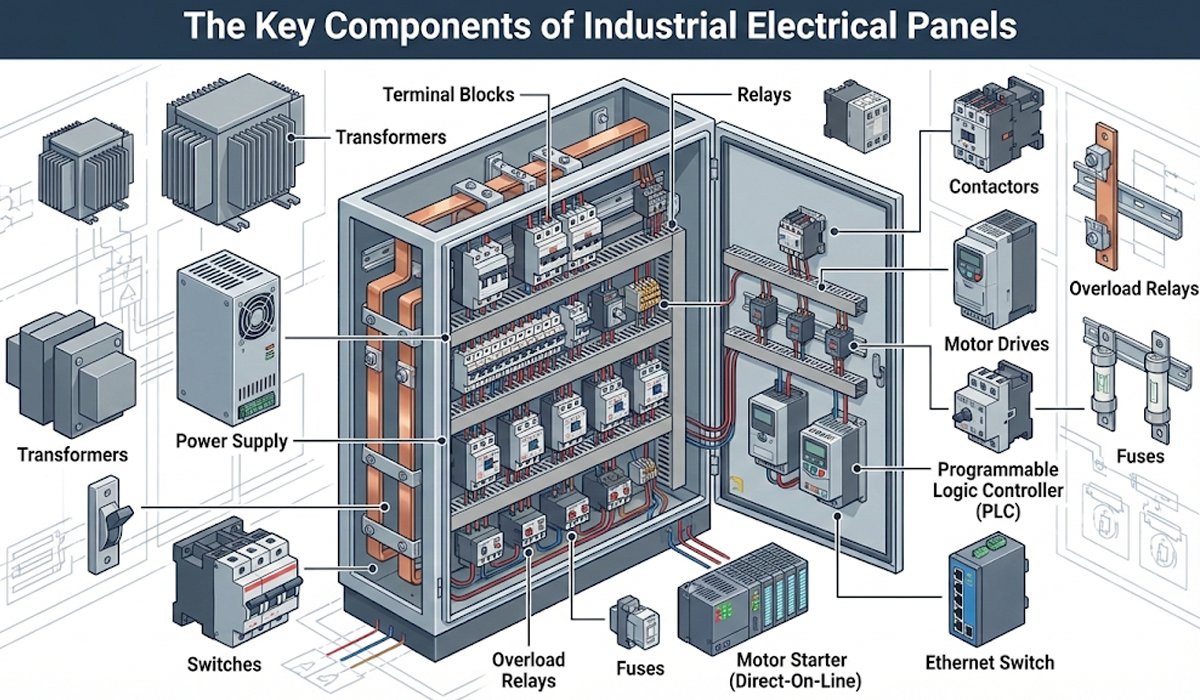
Transformers
Transformers increase or decrease AC voltage between circuits. A common application for a transformer in an industrial control panel is converting 480 V AC input to 120 V AC, so that other panel components and control devices can use it safely. Transformers are essential panel parts whenever the incoming supply voltage does not match the voltage requirements of the internal control equipment.
Power Supply
A power supply converts alternating current (AC) voltage to direct current (DC) voltage. In an industrial electrical control panel, the power supply typically converts 480 V AC or 120 V AC to 24 V DC — the most commonly shared voltage level among modern panel equipment such as PLCs, HMIs, and sensors.
Circuit Breakers, Fuses, and Surge Suppressors: Panel Protection Components
These electrical panel parts protect the system from excess current and voltage events. Circuit breakers protect the electrical circuit from damage by detecting excess electricity and opening or breaking the circuit to stop flow. In industrial electrical panels, main breakers typically handle 120V–480V, while branch breakers protect individual loads such as motors and heaters.
Fuses are a safety device that protects the electrical circuit from overload caused by very high current. When a fuse operates (blows), it becomes an open circuit and must be replaced — unlike a circuit breaker, which can be reset. Surge suppressors complement these components by protecting sensitive panel equipment against transient voltage spikes caused by lightning strikes or power switching events.
If the information related to Industrial Electrical Panel Components was interesting and informative, researching Circuit Breakers can be very engaging.
Switches and Disconnects
While a disconnect switch can be manufactured in various styles and shapes, the overall purpose is to fully disconnect the industrial control panel from its power source. A common use of a disconnect switch is to cut panel power for maintenance or repairs and for emergency stops. This panel component is one of the most critical safety elements in any industrial electric panel.
If the details you gathered about Industrial Control Panels were interesting and insightful, you may find diving deeper into Switchgear Secrets equally captivating.
Terminal Blocks
Terminal blocks are connection points that join two or more wires together. They serve as the main entry point where external field wiring connects into the industrial electrical panel. Terminal blocks can be placed side by side on a strip to direct power from one source to various devices in the control panel, keeping wiring organized and the electrical cabinet clean and maintainable.
If you are seeking more detailed information on terminal blocks, this article provides a comprehensive overview.
Relays and Contactors
A relay is an electromechanical or electronic switch that turns a device on or off by making or breaking contact. Relays typically allow low currents to activate higher currents, making them useful for controlling fans, lights, pumps, and other lower-current loads within industrial process electrical panels.
Similar to a relay, a contactor turns electrical current on or off. The main difference is that contactors are generally larger and used in higher-current applications. A common use of contactors in industrial electrical panels is controlling electric motors, which often have high current loads. Contactors are sometimes referred to as motor starters when combined with overload protection.
Further exploration of Industrial Electrical Switchboards can be found in the following recommended reading.
Overload Relays
An overload relay protects electric motors from overheating and prevents the motor from drawing more amperage than its rated load. This can occur when the motor circuit is protected by a circuit breaker rated higher than the full-load current of the motor. Overload relays are one of the most important electrical control panel components for protecting machinery in continuous industrial processes.
Motor Drives: VFDs, Soft Starters, and Servo Drives
There are various types of motor drives, each performing a specific purpose within industrial electrical panels for machinery. The general function of a motor drive is to start and control a connected motor. Common motor drives used in industrial control panels include:
- Variable Frequency Drives (VFDs) — control motor speed and reduce energy consumption by adjusting frequency to match load demands.
- Servo Drives — provide precise position, speed, and torque control in automation systems.
- Soft Starters — gradually ramp a motor up to full speed, reducing mechanical stress and prolonging service life.
Motor drives are among the most technically sophisticated industrial electrical components found in modern control panels.
Motor Starter
A motor starter is a device that combines a contactor and an overload relay to control the electrical output to a motor when starting and also protect against overload while the motor is running. It often includes a modular assembly and a manual on/off switch. The motor starter is a foundational panel component in any industrial electric panel that controls electromechanical machinery.
If you are looking for more information about Motor controllers, it is recommended not to miss reading this article.
Programmable Logic Controller (PLC): The Brain of the Industrial Control Panel
A PLC is an industrial computer specifically designed to control production processes, such as moving equipment and machines on an assembly line. PLCs are programmed using a specific computer language and are designed to operate in factory conditions that may include high noise and vibration levels. To control equipment and processes, PLCs monitor sensor input statuses to control outputs like motors, HMIs, valves, lights, and solenoids. The PLC is arguably the most important of all industrial electrical panel components in a modern automated industrial process electrical panel.
Ethernet Switch
An industrial Ethernet switch enables communication between devices inside the industrial control panel — like PLCs, VFDs, and HMIs — and devices outside the panel such as other control panels, SCADA systems, or information systems. Modern industrial electrical panels rely on Ethernet switches to integrate with Industry 4.0 and IIoT architectures.
Wire Duct, DIN Rail, and Enclosure: Structural Panel Components
Beyond the active electrical components, every industrial electrical panel depends on structural panel parts to ensure organization, safety, and longevity. Wire ducts act as cable raceways that protect wiring from damage and make electrical cabinet maintenance significantly easier. DIN rails are thin metal strips mounted inside the enclosure that mechanically support components such as PLCs, circuit breakers, terminal blocks, relays, and motor controllers without requiring direct wall mounting.
The enclosure itself — whether open or fully enclosed — forms the outer shell of the industrial electric panel and protects all internal components from dust, moisture, and physical damage. The backplate supports rails and ducts and allows panel fabrication to proceed independently from the enclosure assembly. A grounding panel embedded in the system protects both equipment and operators from electrical noise and shock hazards.
Industrial Electrical Panel vs. Building Electrical Panel: Key Differences
Understanding the difference between an industrial electrical control panel and a standard building electrical panel is essential for engineers and facility managers. While both distribute and protect electrical power, their components, complexity, and applications differ significantly.
For deeper insight into Electrical Panels, we suggest taking a look at this article.
Components of Building Electrical Panels
- Main Switch (Miniature)
- Fuses
- Miniature Circuit Breakers (MCB)
- Residual Current Circuit Breaker (RCCB)
- Relays
- Contactors
- Busbars
- Buses
- Indicators
- Measuring Equipment
Building electrical panels, as the beating heart of a building’s electrical system, play a vital role in the distribution, control, and protection of electrical current. These panels consist of a set of electrical equipment designed to safely distribute electricity to different parts of the building and protect circuits against overload, short circuit, and other hazards.
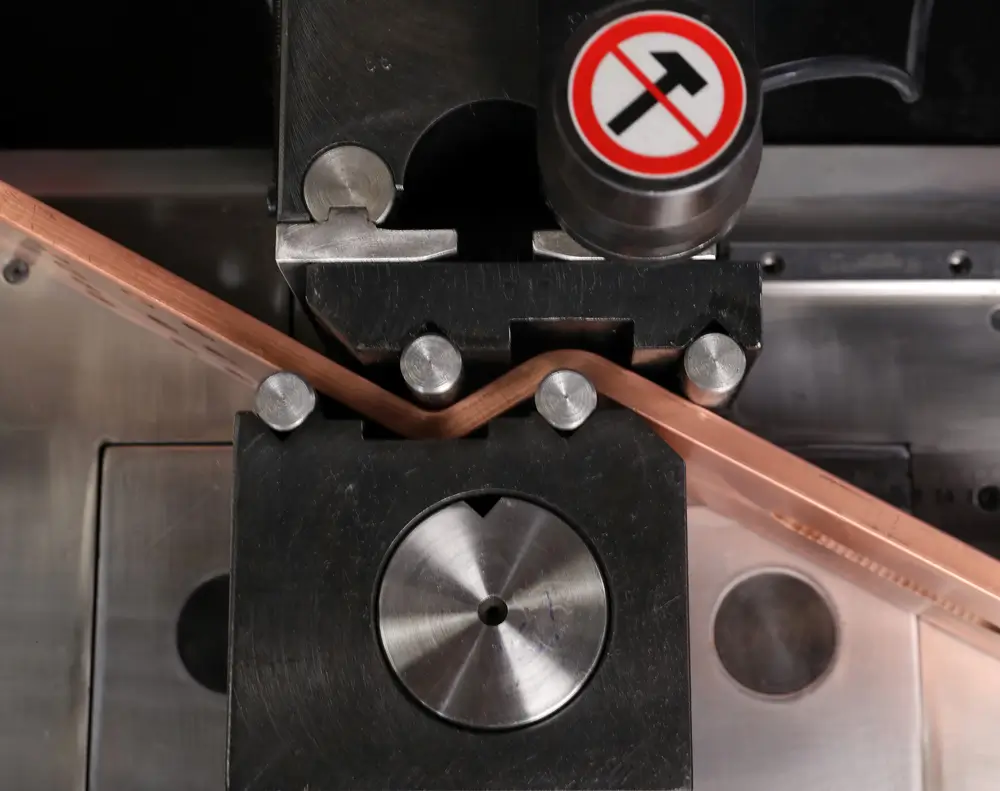
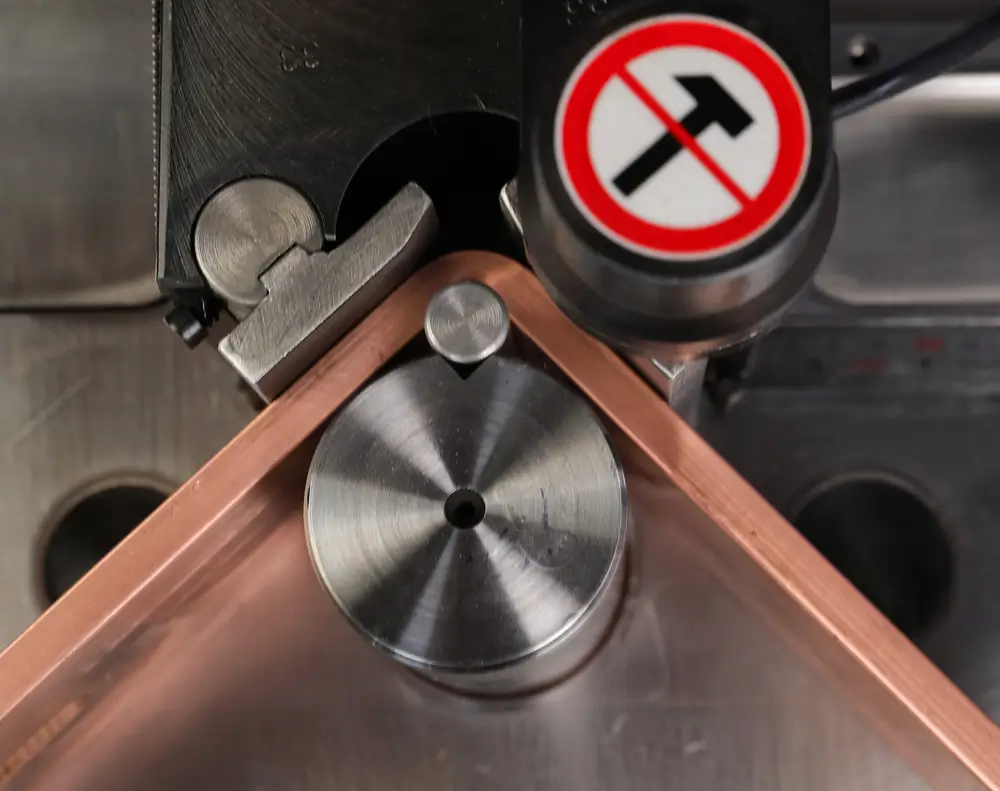
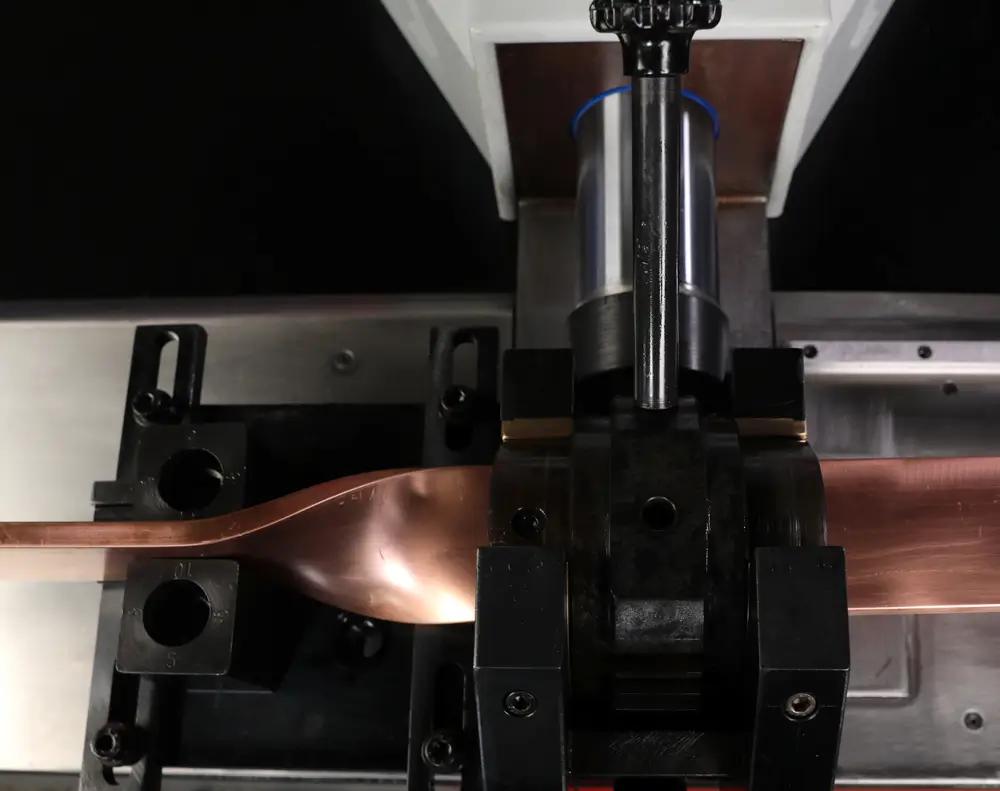
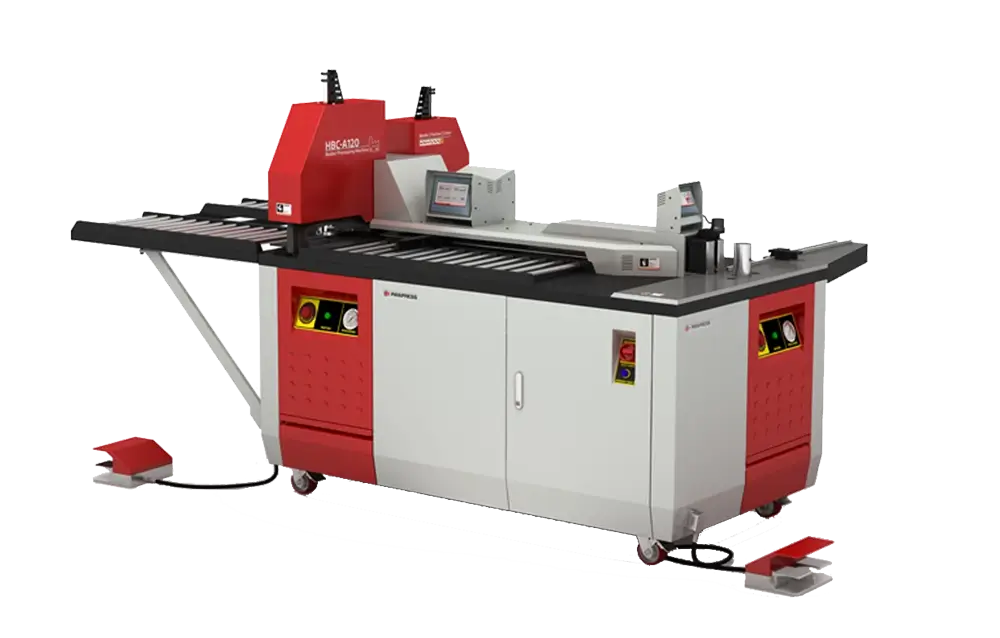
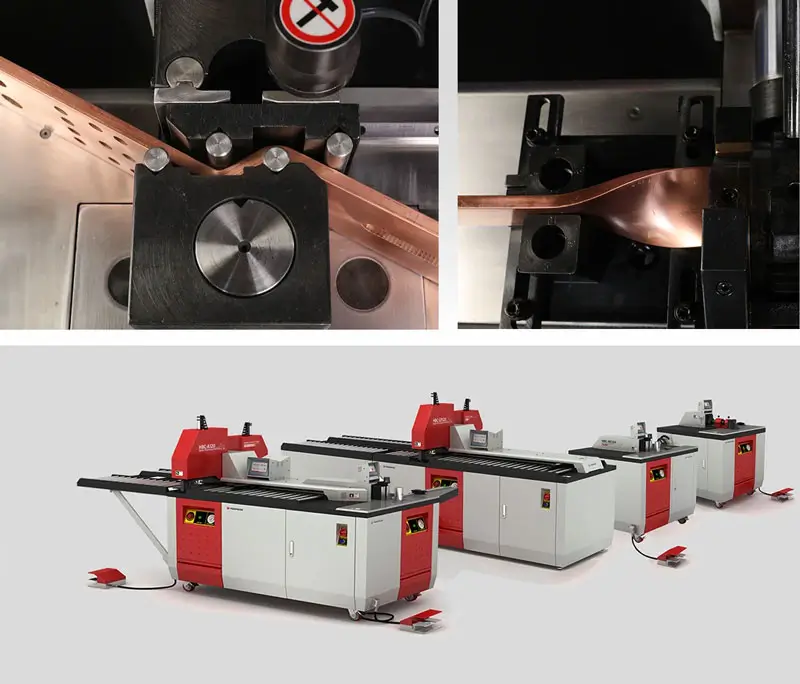
Achieving the precise dimensions required for panel busbars begins at the fabrication stage — a busbar fabrication machine handles the cutting, punching, and bending needed before installation.
Main Switch (Miniature)
Used to turn on and off all electrical circuits of the panel.
Fuses
Prevent excessive current increases and disconnect the circuit.
Miniature Circuit Breakers (MCB)
Function similar to fuses but allow adjustable trip current.
Residual Current Circuit Breaker (RCCB) — Differential Switch
Prevents electric shock to people by detecting current leakage to earth. Unlike circuit breakers, the RCCB does not protect against overloads or short circuits — it exclusively protects personnel from earth faults. This component is a compulsory safety device in building electrical panels under most national electrical standards.
Relays
Used for control and protection of more complex circuits.
Contactors
Used for switching high-power circuits.
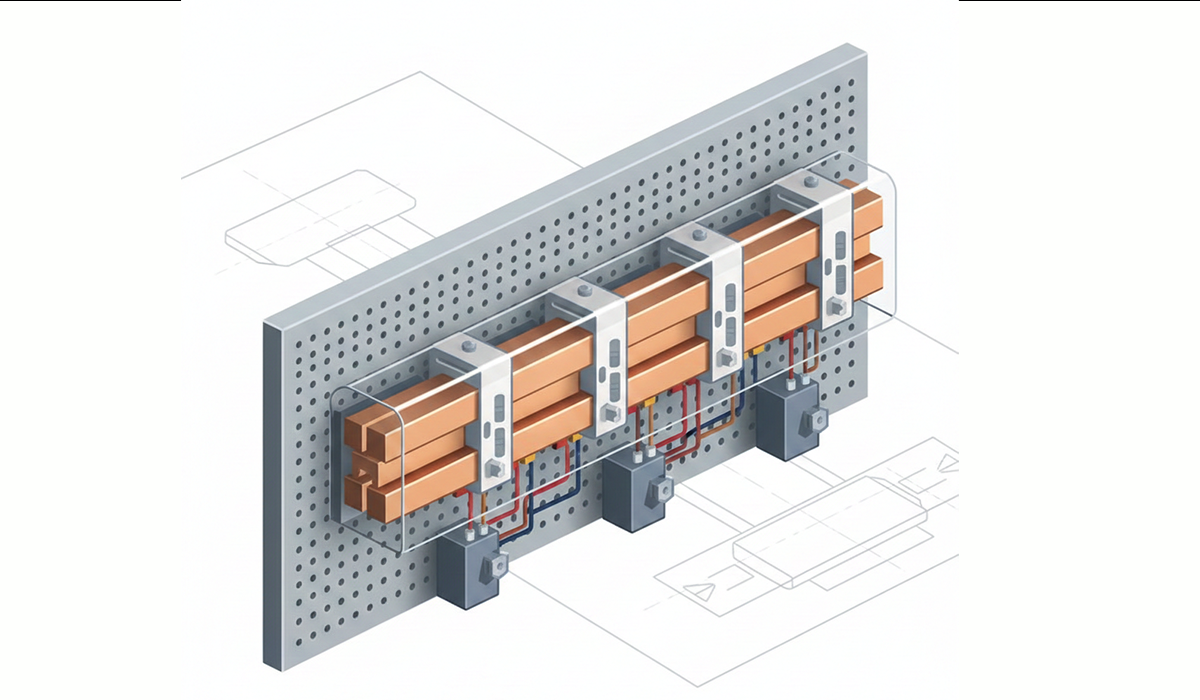
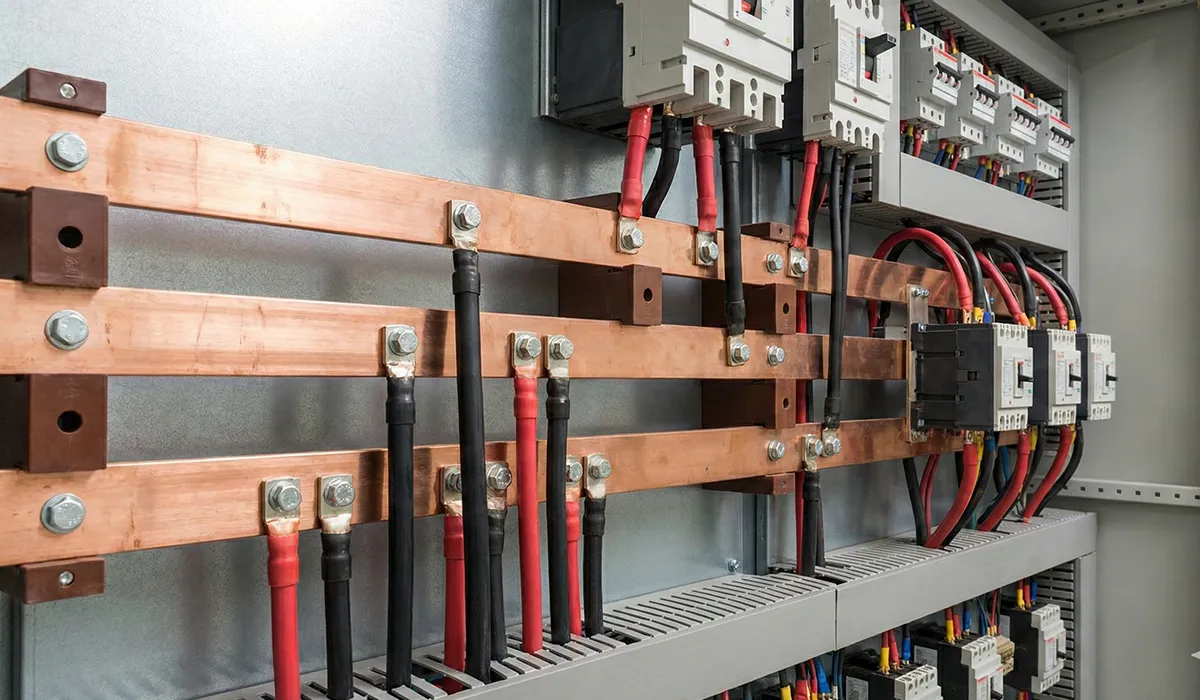
Busbars
Copper or aluminum conductors for distribution of electricity within the panel. Neutral and ground busbars are typically visible as rows of terminals on the sides of the panel, ensuring a safe and orderly connection of return and safety cables.
A Busbar Bending Machine is an important piece of equipment for producing the copper or aluminum busbars used inside industrial electrical panels, switchgear, and building distribution panels. Since busbars distribute electrical current between breakers, contactors, terminal blocks, and other panel components, they must be bent accurately to fit compact panel layouts without affecting conductivity or safety. Using a reliable busbar bending machine helps panel builders achieve clean, precise bends, reduce installation errors, and create more organized, durable, and service-friendly electrical panels.
Buses
Conductors that connect all panel components to the power source.
Indicators
Used to display the status of circuits and equipment.
Measuring Equipment
Used to measure current and voltage. In modern panels, digital voltage meters at the top of the panel display the voltage of each phase, providing real-time assurance that the system is operating within proper voltage ranges and minimizing the risk of power surges affecting downstream equipment.
Types of Building Electrical Panels
- Main Electrical Panel
- Common Area Panel
- Unit Panels
- Elevator Panel
- Low-Voltage Panel
Main Electrical Panel
The main electrical panel is the primary entry point for electricity into the building, acting as the central distribution hub. It receives power from the utility and distributes it to various parts of the building, with protective devices like fuses or circuit breakers to prevent overloads and potential hazards.
Explore our guide to supercapacitors and see how they support modern electrical power systems.
Common Area Panel
The common area panel provides power for lighting systems and outlets in shared spaces such as hallways, lobbies, and staircases. It ensures proper lighting and electrical supply in public and communal areas within the building.
Unit Panels
Unit panels supply electricity to individual residential or commercial units. Power is drawn from the main panel and distributed to specific circuits for each unit, offering separate control and enhanced safety through individual circuit breakers.
Elevator Panel
The elevator panel supplies power to the elevator system, ensuring proper operation of the motor, control systems, and emergency features. It keeps the elevator functioning smoothly and safely throughout its use.
If the content related to Industrial Electrical Panel was both interesting and helpful, further study of Elevator Control Panels could be just as fascinating.
Low-Voltage Panel
The low-voltage panel powers control systems operating at lower voltages, such as fire alarms, security systems, and telecommunications. It isolates these sensitive systems to prevent interference and protect them from power surges.
How to Select the Right Electrical Panel Components for Industrial Applications
Selecting the correct industrial electrical components for a panel build requires careful analysis of the application, environment, and applicable standards. The following points are essential for any engineer or facility owner specifying industrial electrical panels for machinery or process control:
- Panel Capacity: The panel must be matched to the building’s or machine’s full electrical load, including future expansion.
- Type of Equipment: All panel equipment must comply with the application requirements and relevant safety standards (UL 508A, NEC, IEC 61439, etc.).
- Enclosure Rating: The electrical cabinet enclosure must be rated for the environmental conditions — including dust, moisture, and explosion risk — present at the installation site.
- Correct Installation: Panel building must be carried out by qualified individuals according to applicable electrical standards and codes.
- Routine Maintenance and Service: Regular inspection and maintenance of all control panel components is essential to ensure correct, safe, and reliable operation over the panel’s service life.
Conclusion: Getting Industrial Electrical Panel Components Right
The building electrical panel is a vital component of the building’s electrical system. Knowing its various components and how they function helps you choose and install the most suitable electrical panel for your building.
Industrial control panels are defined as an assembly of two or more power circuit components, control circuit components, or any combination thereof. These parts typically include switches, terminal blocks, contactors, motor drives, transformers, overcurrent protective devices, PLCs, Ethernet switches, wire ducts, DIN rails, and protective enclosures. Whether you are designing industrial electrical panels for machinery, specifying industrial process electrical panels for a new facility, or maintaining existing industrial electrical control panel equipment, a thorough understanding of every panel component — from the fuse to the PLC — is the foundation of safe and productive operations.



Rate this article
Choose a rating from 1 to 5 stars.
No ratings yet