


If you’d rather listen than read, feel free to play the audio file below for the rest of this article.
Two Numbers, One Rating
The line holds two numbers that only work together. First, 31.5 kA is the fault current. Second, 3 s is the duration the switchgear can carry it under its rating.
Datasheets call it the rated short time withstand current. In other words, it belongs to the whole main circuit, not to one device.
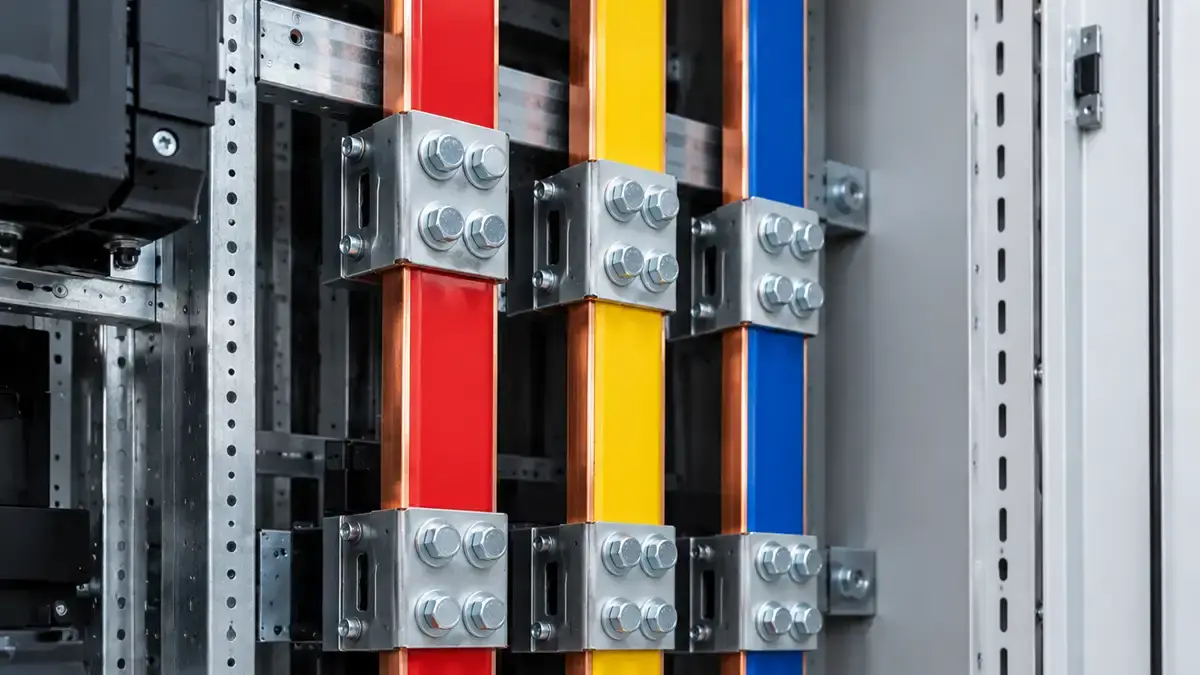
The time matters because fault current heats bars and joints for as long as it flows. ABB’s ZS1 manual shows the same pairing at other levels: 50 kA for 3 seconds at 12 kV, and 40 kA for 3 seconds at 17.5 kV.
Think of the two numbers as one pair of limits that apply together. The current says how hard the fault pushes, while the duration says how long the main circuit must hold out. A rating with only one of them would leave the specifier guessing.
For a specifier, this means reading the line as one statement, never as two separate facts. A panel offered at 31.5 kA with no duration tells you little, because the heating it can survive stays unknown. Likewise, protection has to clear a fault within the stated time, so the duration links the switchgear to the relay settings upstream.
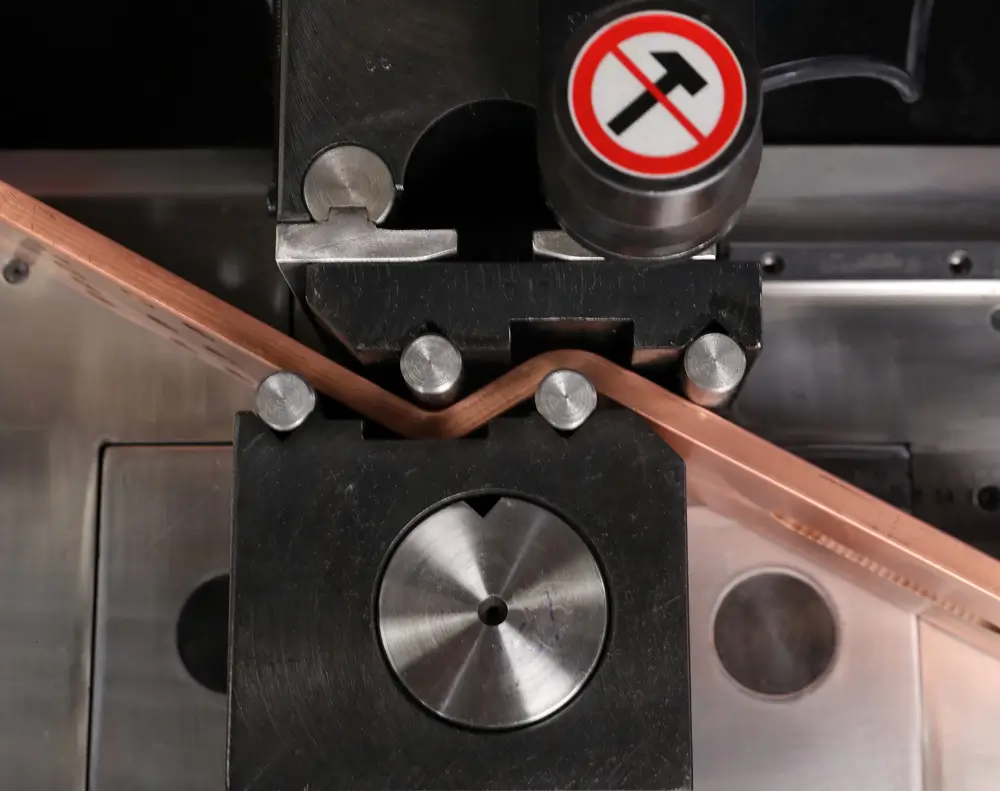
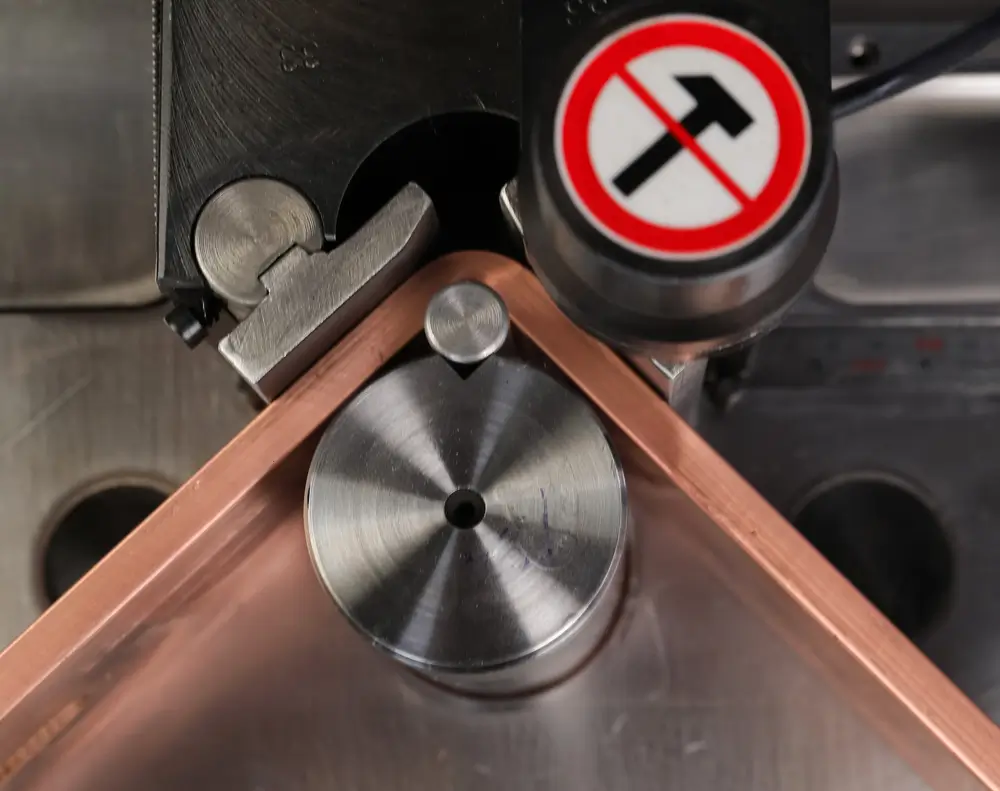
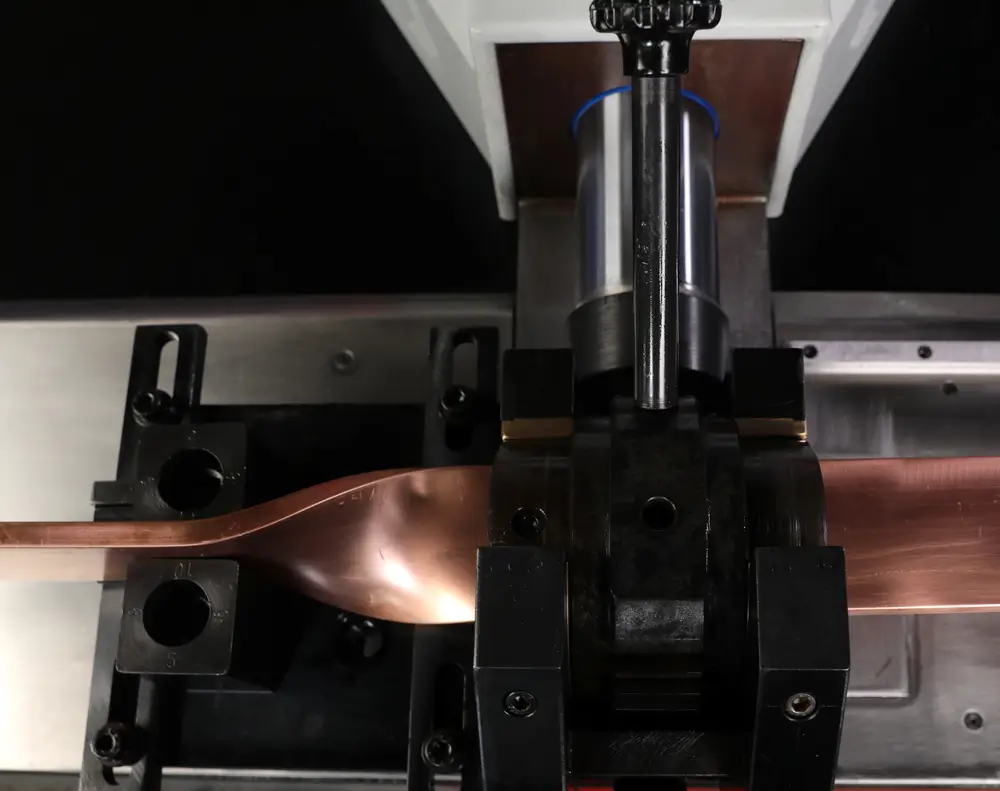
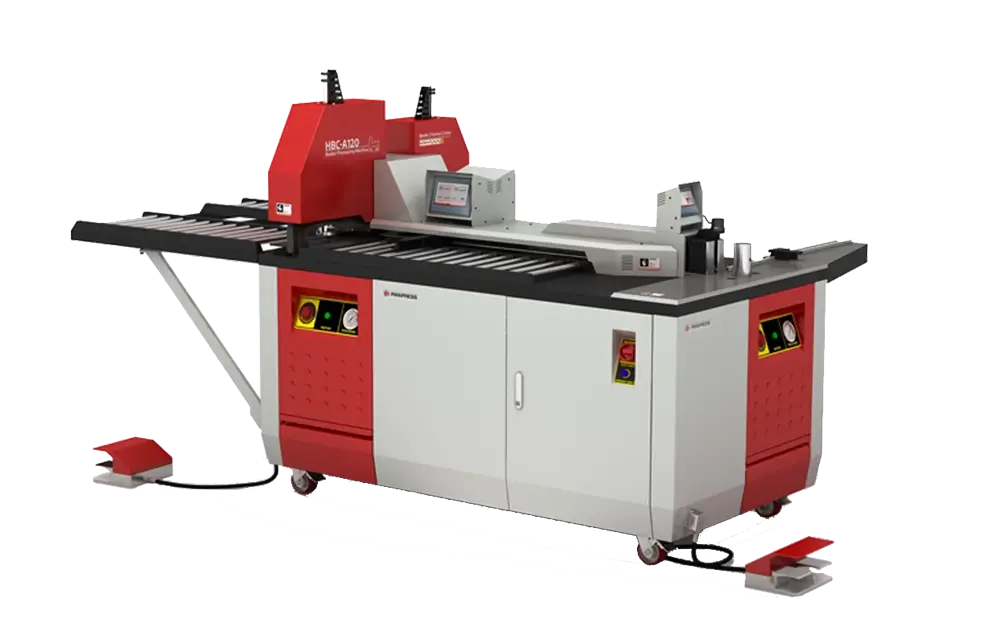
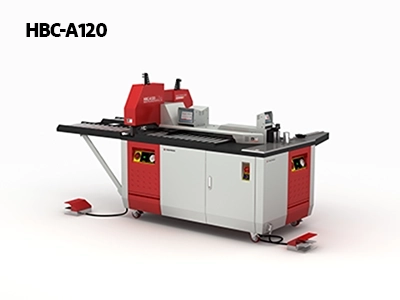
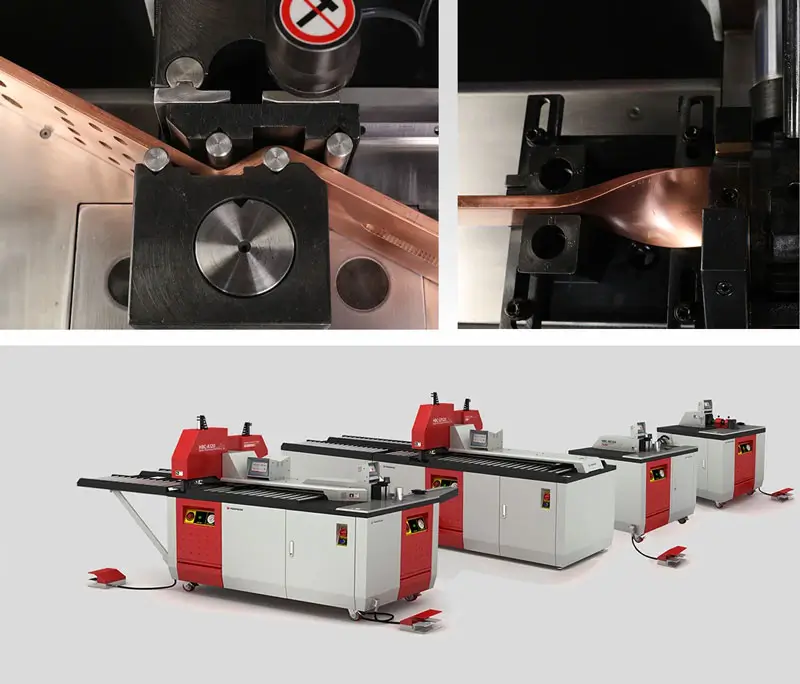
The HBC-EA120 machine combines cutting, punching, and bending operations for busbars up to 120 × 12 mm. Its three independent hydraulic power units support simultaneous processing at an economical investment level.
Not the Same as the Arc Fault Rating
The same ZS3.2 datasheet carries a second 31.5 kA figure. However, this one has 1 second attached, and it rates a different event.
ABB gives the internal arc fault withstand capability as 31.5 kA for 1 s. That figure concerns an arc inside the switchgear itself.
In contrast, the short time withstand current concerns fault current passing through the closed main circuit. So the current matches, but the test, the purpose and the duration do not.
The two events also stress the switchgear in different ways. With a through-fault, the current stays in its normal path, through busbars, joints and closed contacts, until protection clears it. During an internal arc, by contrast, the fault burns inside a compartment, and the concern shifts to how the enclosure behaves.
For that reason, a datasheet check needs two separate questions. Can the main circuit carry the fault current for the full 3 seconds? And can the enclosure withstand an arc for 1 second? A yes to one of them says nothing about the other, even when both lines show the same kA figure.
Ratings like this sit inside a wider framework of rules for how switchgear and busbars are specified, built and tested. Our guide to switchgear standards maps that framework in one place.

How It Sits Next to Peak and Breaking Ratings
Anyone checking a short circuit withstand rating on ZS3.2 finds the short-time line beside other kA figures.
| ZS3.2 line | Value |
|---|---|
| Rated short-time current | 31.5 kA, 3 s (40 kA on request) |
| Peak withstand current | Up to 80 kA |
| Breaking current | Up to 31.5 kA |
Peak and breaking are compared in our peak vs breaking current article (link: Brief 9 URL). Also, ABB notes that engineers must check each instrument transformer’s short-circuit capability separately.
Notice that the short-time and breaking lines both show 31.5 kA on ZS3.2. However, the matching figure does not make them the same rating. The breaking value belongs to the circuit-breaker, while the short-time value describes what the whole main circuit can carry. Mixing the two up is an easy slip when a tender lists only kA values.
The instrument transformer footnote deserves the same attention. A current transformer sits directly in the fault path, yet the switchgear line does not cover its own capability. Therefore, a complete short circuit withstand rating check also confirms each transformer’s data against the fault level of the installation.
For example, the table above comes from ABB’s own ratings section. The ZS3.2 manual lists all three values together in its UniGear ZS3.2 data.
Ratings on paper only help when the protective devices are chosen to match the fault level. Our overview of overcurrent protection compares the main methods used to limit the damage.
What a Higher Rating Changes in the Switchgear
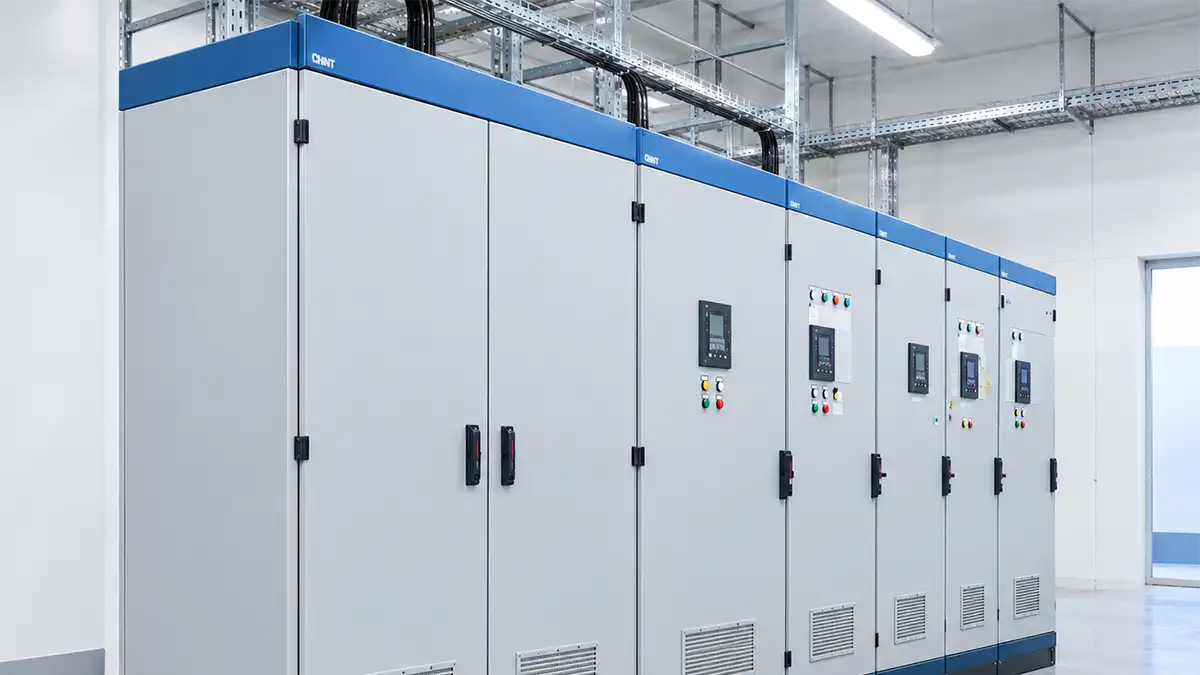
In ABB’s ZS1 manual, a higher rating reaches three parts of the design.
First, above 25 kA, the switchgear may also need busbar partitioning for stability reasons, not only to separate panels. The panel-to-panel partitioning guide (link: Brief 6 URL) explains how it works.
Second, panel width follows the rating. For tee-off currents up to 1250 A, ZS1 panels are 650 mm wide up to 31.5 kA and 800 mm wide above it.
Third, the panel may need a pressure relief duct. This depends on the rated short-time current and the ceiling height of the breaker compartment.
Each of these changes reaches beyond the panel itself. Wider panels lengthen the line-up and take more floor space in the switchroom. Similarly, a pressure relief duct needs room above the switchgear, so the building height can become part of the decision. Both points are easier to settle early, while the room layout is still on paper and changes cost little.
Partitioning adds parts too, because busbars must pass through the partitions between panels. For panel builders, that means more busbar pieces with accurate holes, bends and lengths. In practice, the rating chosen on the single-line diagram shapes the busbar work in the factory as well.
As a result, raising the short time withstand current late in a project can reshape the line-up. ABB’s ZS1 manual covers partitioning, panel widths and pressure relief in its ZS1 instruction manual.
A changed rating can also trigger a fresh look at how the assembly was proven to comply. Our EU guide to design verification explains how that proof is built under IEC 61439.
Conclusion
A short time withstand current rating is a promise about bars and joints under fault. Keeping it starts with accurate parts from our busbar processing machines.
Compliance on the drawing and compliance on the shop floor have to go together. Our article on busbar manufacturing compliance shows how the two connect.


Rate this article
Choose a rating from 1 to 5 stars.
No ratings yet
0 Comments
No comments yet. Be the first to comment.