




If you’d rather listen than read, feel free to play the audio file below for the rest of this article.
What Actually Sets the Price of a Busbar
Ask for a busbar price and you will get a number that is right for about a day. Most of that number is metal, metal is indexed to the London Metal Exchange, and the LME moves every trading session. The drawing stays the same; the quote does not.
That is why the useful question is not “what is the busbar price” but “what is this bar made of, how much does it weigh, and what has to happen to it before it reaches my panel.” Answer those three and you can calculate the price yourself, in any currency, on any day.
A cheap bar can still become an expensive system. Punching, bending, plating and site fitting are priced by operation and labor hour, not by kilogram, so a complex bar can cost more to process than the copper inside it. Higher short-circuit duty, tighter clearances and added insulation push the same way.
Energy loss belongs in the calculation too. A bar that looks cheaper on day one can cost more across twenty years through heat, voltage drop, inspection and joint rework.
How to Calculate Copper Busbar Price per kg and per Meter
Busbar pricing is simpler than it looks. Every quote is built from the same two parts:
Busbar price per meter = (weight in kg/m × metal price per kg) + fabrication cost per meter
The weight is fixed by geometry and you can calculate it exactly:
Weight (kg/m) = cross-section (mm²) × density ÷ 1000
Copper density is 8.96 g/cm³. Aluminum is 2.70 g/cm³. Nothing else is needed.
Worked example — 60 × 10 mm copper bar. Substitute today’s figures for the assumed ones; the method holds regardless.
| Step | Working | Result |
|---|---|---|
| Cross-section | 60 × 10 | 600 mm² |
| Weight | 600 × 8.96 ÷ 1000 | 5.38 kg/m |
| Metal cost — assume LME copper USD 9,500/t | 9,500 ÷ 1000 | USD 9.50/kg |
| Mill conversion premium (typical 15–30%) | say USD 2.50/kg | USD 12.00/kg |
| Material cost per meter | 5.38 × 12.00 | ≈ USD 64.50/m |
| Fabrication — cut, deburr, 4 holes, one 90° bend | USD 8–20/m | |
| Delivered price per meter | ≈ USD 72–85/m |
Two things fall out of this. First, on a plain straight bar, metal is usually 75–90% of the price — which is why haggling on fabrication saves less than specifying a smaller standard section. Second, the ratio flips on complex bars: a short piece with twelve holes, an offset and a U-bend can carry more labor cost than copper cost.
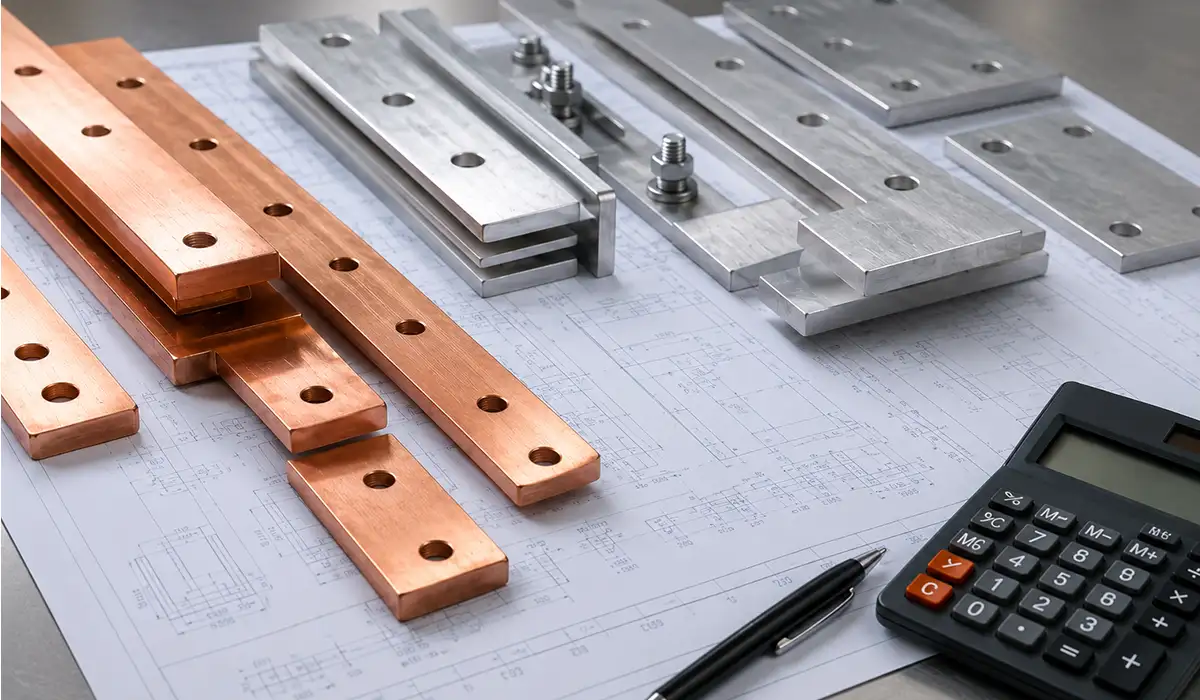
Reference weights for common sections. Multiply by your metal price per kg to get material cost per meter.
| Dimensions (mm) | Section (mm²) | Copper (kg/m) | Aluminum (kg/m) |
|---|---|---|---|
| 25 × 3 | 75 | 0.67 | 0.20 |
| 40 × 5 | 200 | 1.79 | 0.54 |
| 60 × 5 | 300 | 2.69 | 0.81 |
| 60 × 10 | 600 | 5.38 | 1.62 |
| 80 × 10 | 800 | 7.17 | 2.16 |
| 100 × 10 | 1000 | 8.96 | 2.70 |
Remember that an aluminum bar of the same dimensions does not do the same electrical job. Alloy 1350 runs about 61% IACS, so equal duty needs roughly 1.6× the section — compare a 600 mm² copper bar against a 960 mm² aluminum one, not against 600 mm² of aluminum.
Copper Busbar Manufacturing Plant Cost: What a Production Line Needs
A different question reaches this page regularly: not what a busbar costs to buy, but what it costs to start making them. Panel builders reach this point when outsourced bars become the bottleneck — long lead times, minimum order quantities, and a supplier margin on every piece.
A copper busbar production line is built from three operations, and the capex depends almost entirely on how you combine them.
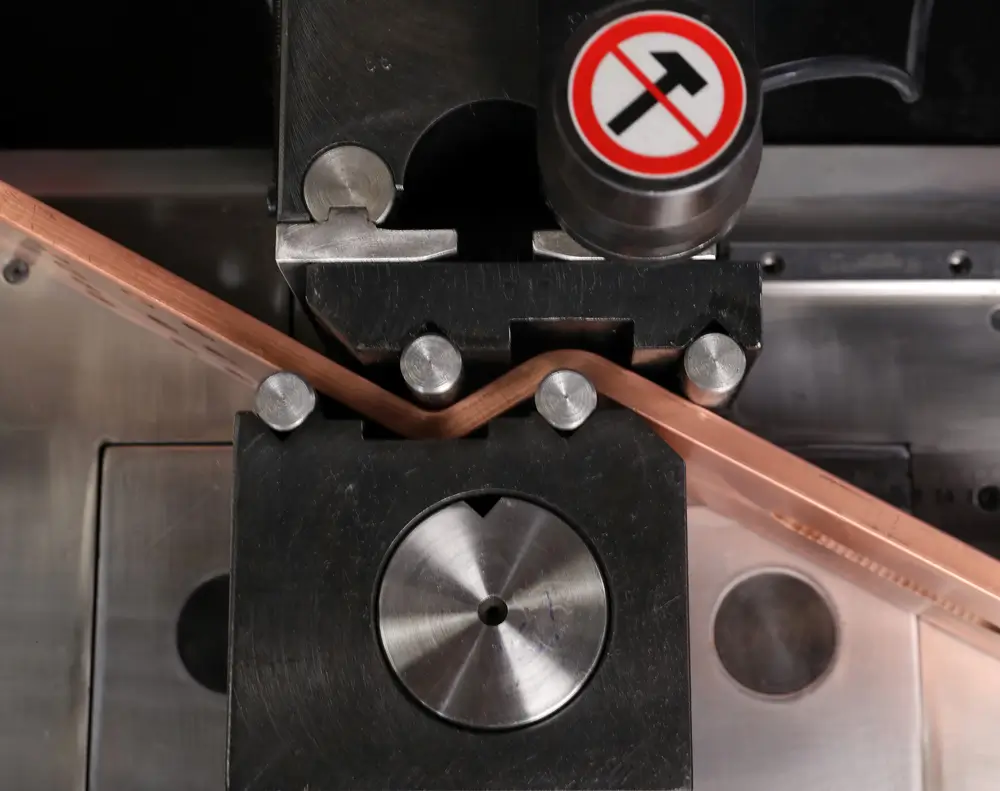
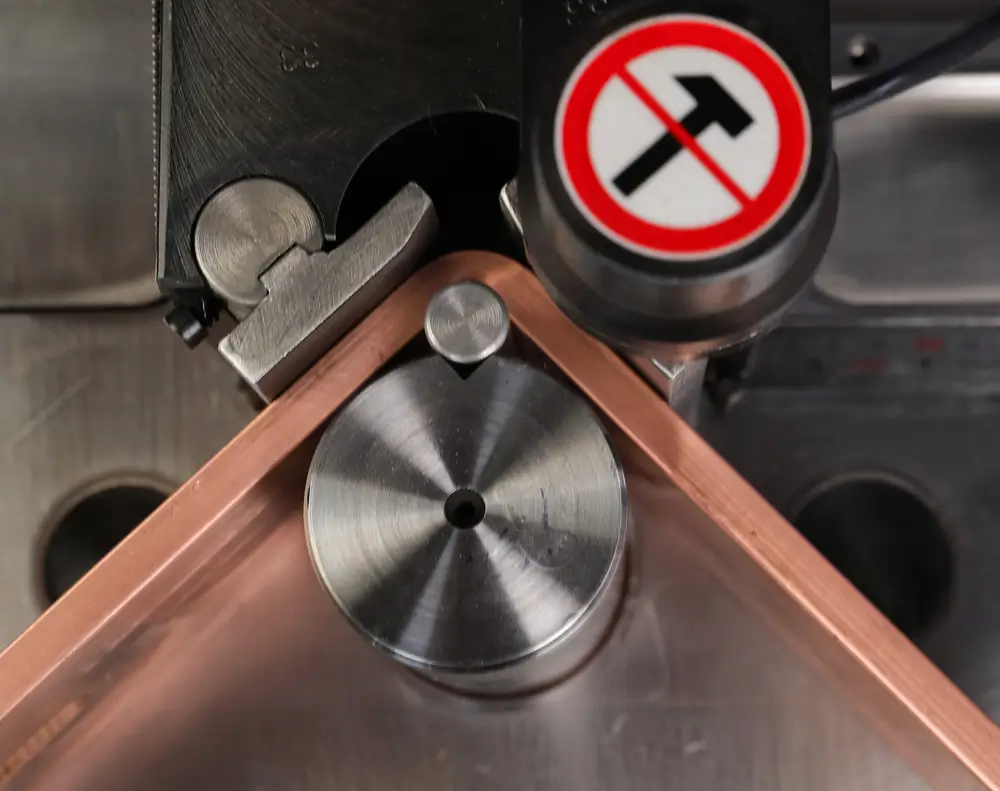
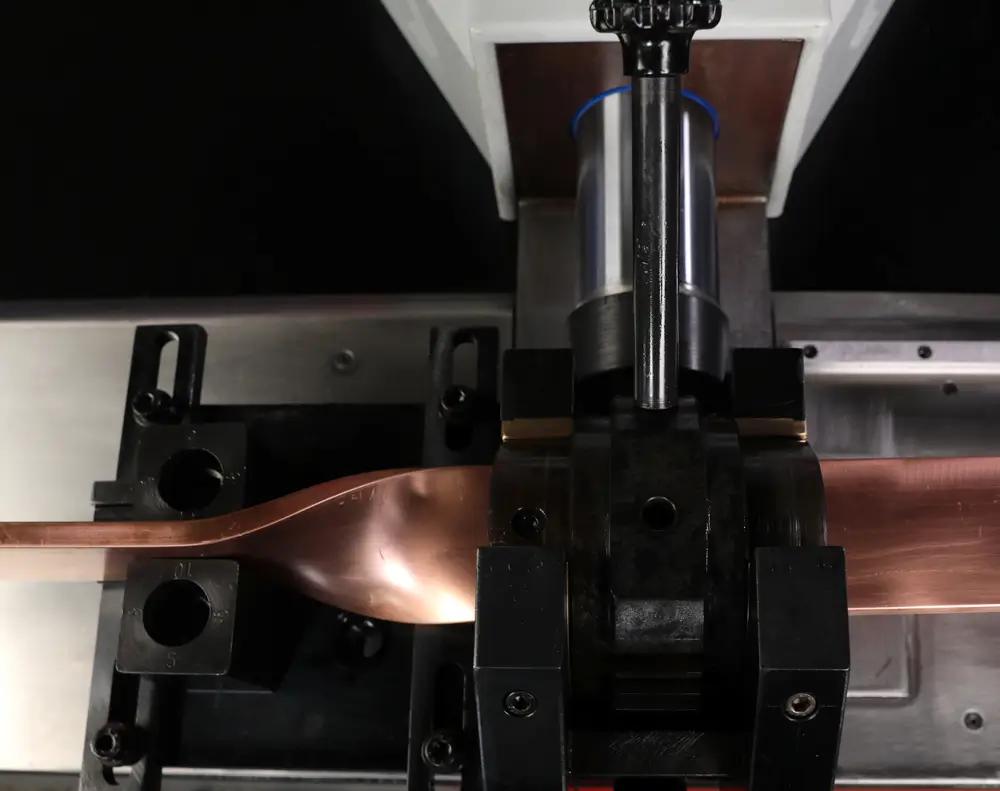
Cutting — shearing bar to length. Punching — holes for bolted joints and mounting. Bending — 90°, offset, Z and U shapes. Every finished bar passes through all three.
| Tier | Equipment | Suits | Typical output |
|---|---|---|---|
| Workshop | Single hydraulic combined machine, manual positioning | Service work, small panel shops, site fabrication | Low volume, simple bars |
| Panel shop | Hydraulic 3-in-1 with interchangeable die sets | Daily switchgear fabrication | Medium volume, standard geometry |
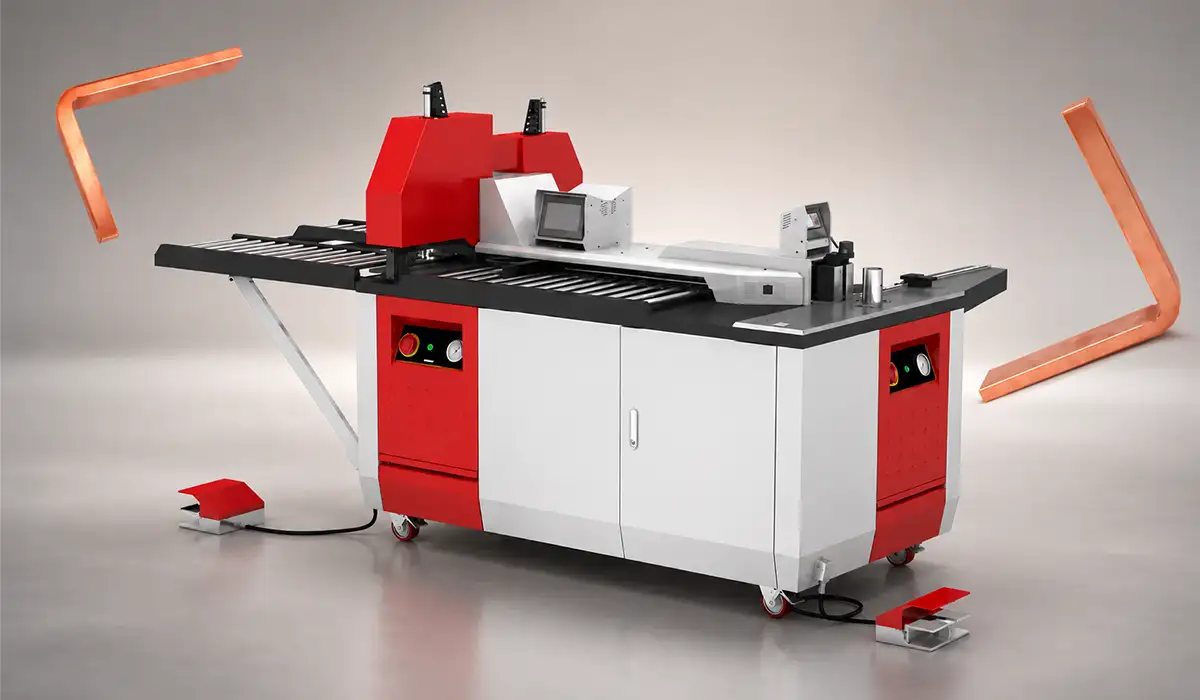
| Production | CNC punching and cutting plus programmable bending with angle memory | Batch manufacture, tight tolerances | High volume, complex sequences |
The machine is not the whole number. Budget also for die and tooling sets (these drive your available bend radii, so they constrain design), three-phase power and floor space, operator training, and — often the largest single line — raw copper stock inventory. At current metal prices, holding a working stock of bar can tie up more capital than the machine that processes it.
The honest test for whether a line pays back: take your annual outsourced busbar spend, subtract what the same bars would cost you in metal alone, and compare the difference against machine cost plus labour. Shops that fabricate repeat standard bars in volume usually reach payback quickly. Shops with irregular, low-volume, high-complexity work often do not — and are better served buying prefabricated.
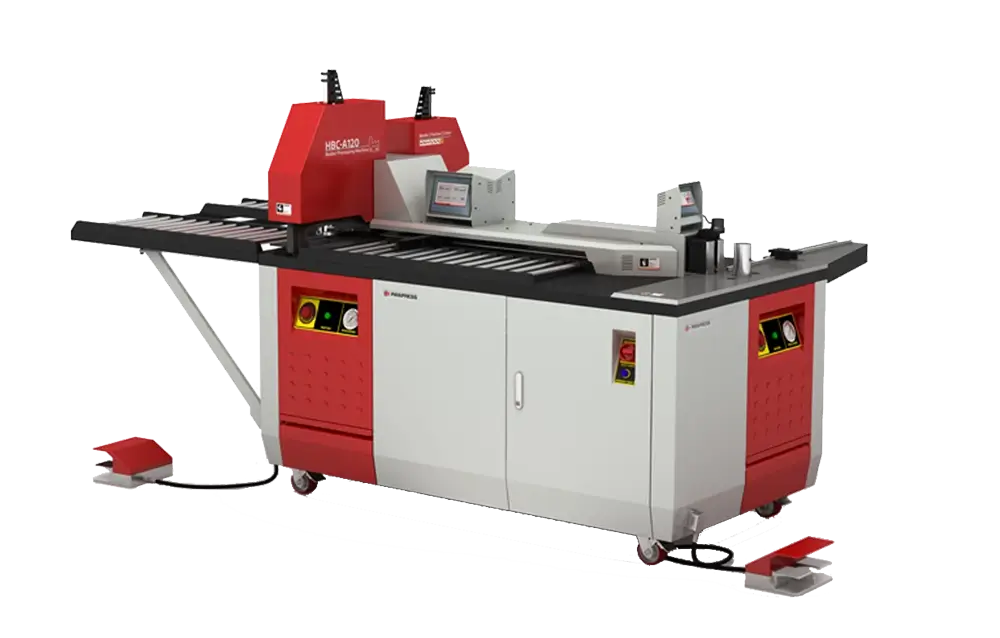
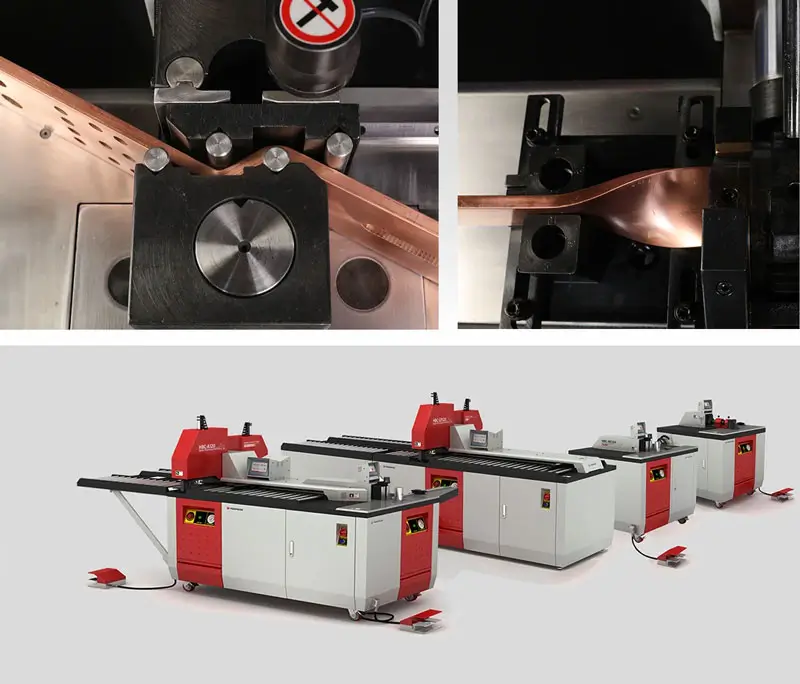
For specification and pricing on a line sized to your volume and maximum bar section, request a quote or see the busbar processing machine range.
Busbar Market Size and Growth Outlook
Two questions often arrive alongside pricing research: how big is the busbar market, and is it growing. The published estimates vary because analysts scope the category differently, so treat the range as the answer rather than any single figure.
Recent forecasts put the global busbar market at roughly USD 16–20 billion in 2024–25, growing at 4–6% CAGR to somewhere between USD 27 and 33 billion in the early 2030s. Fortune Business Insights values the market at USD 16.2 billion in 2025 and projects USD 27.1 billion by 2034 at 5.88% CAGR. IMARC puts 2024 at USD 19.5 billion, reaching USD 28.0 billion by 2033 at 4.1%.
The aluminium busbar segment is the faster-growing conductor share by volume, driven by cost pressure on long distribution runs, while copper continues to dominate by revenue because of its higher price per tonne. Asia-Pacific leads growth, with mature markets such as the United States, France and Germany showing steadier, replacement-led demand tied to grid modernisation and efficiency upgrades.
For anyone weighing a fabrication investment, the useful signal is not the headline number but the driver behind it: electrification, data centre build-out and grid upgrades all increase demand for fabricated bar, not just raw conductor.
Metal Prices: The Biggest Single Driver of Busbar Cost
Raw metal cost is the first major driver in any busbar material cost comparison. For copper and aluminum, most supply chains start from LME benchmark pricing, then add conversion, fabrication, coating, freight, and supplier margin.
If the information on busbar price was engaging and informative for you, gathering more knowledge about busbar processing machine price could be very exciting.
That is why quotes move even when your drawing does not. The LME publishes benchmark prices in US dollars per tonne, and many contracts treat those prices as the base for physical supply.
Copper usually carries the higher raw-material burden, while aluminum starts lower but often needs more section area for similar electrical duty. That means commodity savings do not translate one-for-one into finished busbar savings.
For procurement, separate the metal index from the fabrication premium. That makes price review easier and protects buyers from hidden margin shifts during volatile markets.
If the information related to Cost Copper was interesting and informative to you, researching what is busbar can be very engaging.
How LME Copper Price Drives Busbar Pricing
If you are asking how does LME copper price affect busbar pricing, the chain is simple: LME copper benchmark, then mill conversion, then fabrication and finishing. That is why copper busbar price per kg and how much does a copper busbar cost per meter can change even when geometry stays fixed.
For a comprehensive understanding of LV assembly specification standards, we highly recommend reviewing IEC TR 61439-0:2022 guidance.
Aluminum and Aluminium Bus Bar Prices: LME and Section Penalty
Aluminum starts from a lower metal benchmark, but alloy 1350 class conductors are only about 61% IACS, so designers usually need more cross-section for comparable electrical performance. That is why copper vs aluminum busbar which is more cost effective depends on section, joints, space, and maintenance, not metal price alone.
| Parameter | Copper Busbar | Aluminum Busbar |
|---|---|---|
| Raw material cost (relative) | 100% baseline | ~30–40% of copper |
| Required cross-section for same duty | Baseline | ~1.6× larger |
| Weight for same duty | Heavier | ~50% lighter |
| Net material cost for equivalent rating | Baseline | Typically 15–25% of copper |
| Joint hardware complexity | Lower | Higher |
| Maintenance burden | Lower | Higher |
How Cross-Section Changes Busbar Price
Cross-section is the fastest way to move cost. Weight rises with area and length, so a wider or thicker bar almost always raises material spend directly. That is the foundation of any sound busbar cost calculation.
Standard stock sizes are normally cheaper than custom sizes because mills and distributors carry them in volume. This is one of the easiest ways to control busbar procurement cost without weakening performance.
Double stacking can solve ampacity or fault duty problems, but two smaller bars also mean more hardware, more joints, and more assembly time. Standard vs custom busbar cost is rarely just a metal question.
What Plating and Insulation Add to Busbar Cost
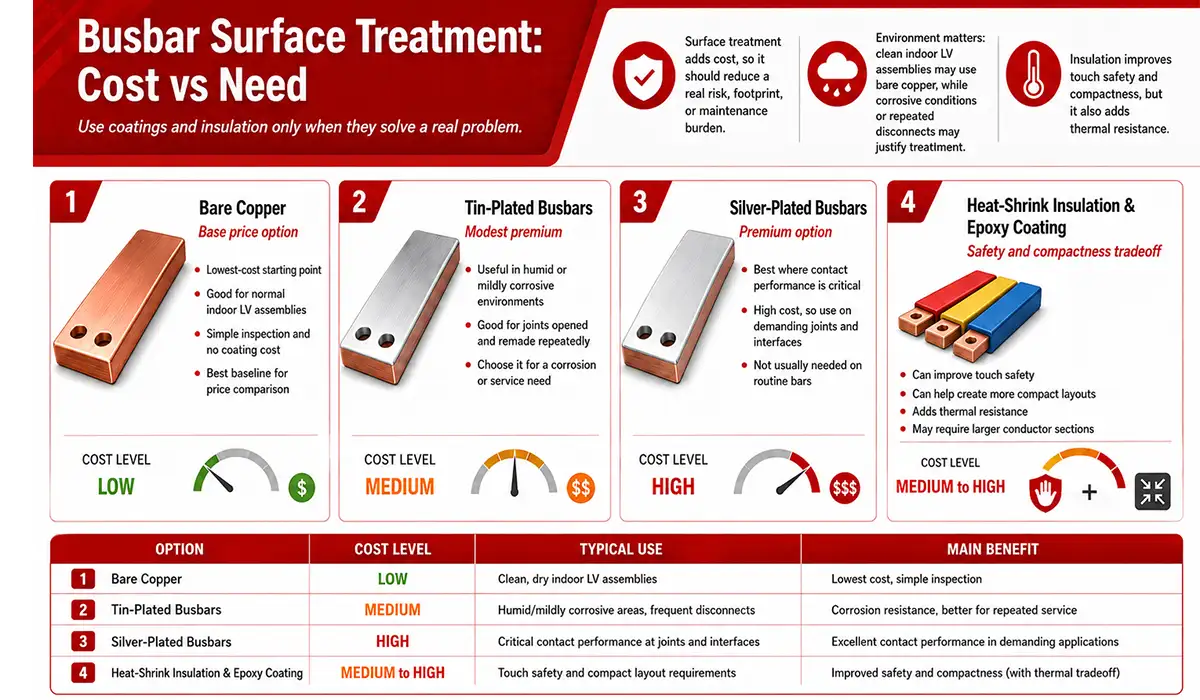
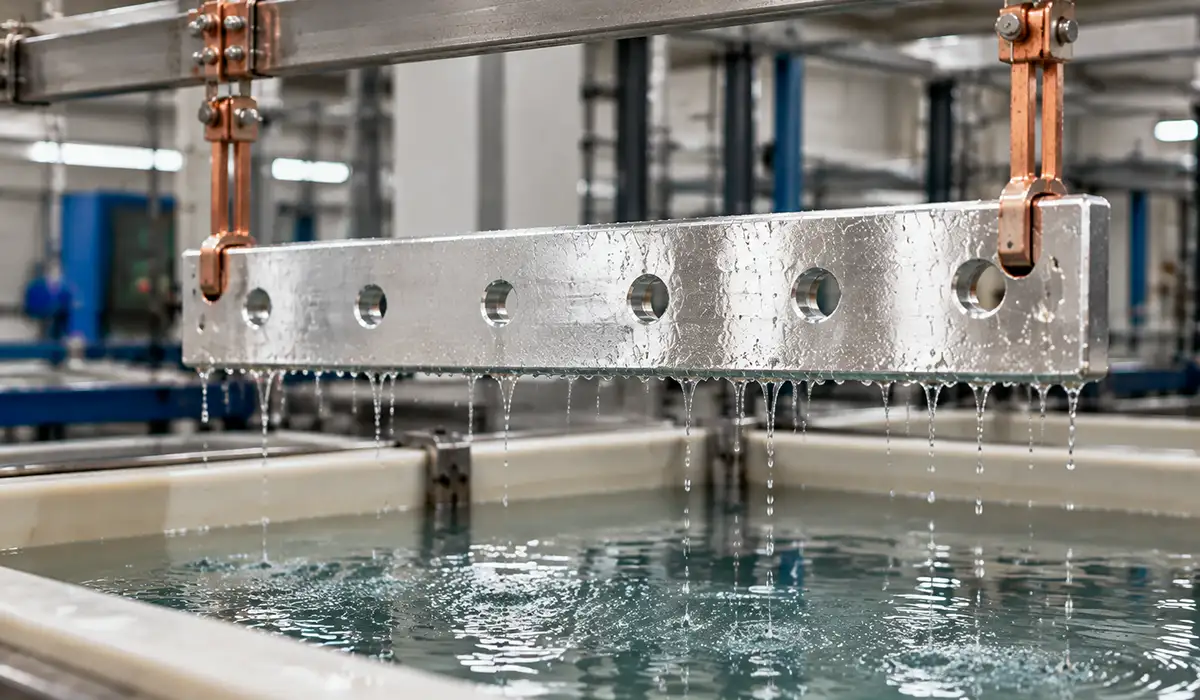
Surface treatment is a real cost element, but it should solve a real problem. Coatings are expensive to apply and may add maintenance, so they should be used only where needed.
That makes environment critical. Indoor, clean, low-humidity switchgear often works well with bare copper, while corrosive atmospheres, repeated disconnects, or exposed interfaces may justify coating.
Insulation changes the tradeoff again. It can improve touch safety and compactness, but it also adds thermal resistance and may require larger bars to hold the same working current.
So the real question is not whether finish costs more. It is whether the added finish cuts risk, footprint, or maintenance enough to earn its place.
This article serves as a valuable resource for those seeking detailed information on busbar coatings and corrosion protection.
Bare Copper — The Base Price Option
Bare copper is usually the lowest-cost starting point. In normal indoor LV assemblies with proper barriers and clearances, it avoids coating cost, avoids added thermal insulation, and keeps inspection simple. This is the baseline for judging the busbar price difference between bare and insulated options.
Tin-Plated Busbars
Tin-plated bars add a modest premium and are typically chosen for humid service, mildly corrosive conditions, or interfaces that will be opened and remade. Use them for a corrosion problem or service problem, not just because plated parts look “better.”
Silver-Plated Busbars
Silver plating is the premium option. It is effective where contact performance is critical, but silver is expensive, so it belongs on demanding joints and interfaces, not on routine bars by default.
Heat-Shrink Insulation and Epoxy Coating
Insulated busbars can make compact layouts safer, but insulation is also a thermal insulator. That can raise conductor temperature or force a larger section, so insulated vs bare busbar cost should be judged on space saving, safety, and assembly method together.
Fabrication Costs — What Happens Between Raw Bar and Finished Busbar
The cost of busbar fabrication sits between raw metal and installed assembly. Even when commodity prices are stable, shop time, setup, scrap, quality checks, and operator skill can move the quote sharply.
Straight bars are cheap to process. Complex bars with many holes, offsets, or tight bends are not, especially when the workshop must slow down to protect flatness and edge quality.
Low-volume work is where fabrication labor bites hardest. Setup time is spread over fewer parts, waste matters more, and custom tooling becomes harder to justify.
That is why a busbar fabrication cost breakdown for switchgear panels should always separate metal, machine time, labor, tooling, inspection, and rework risk.
Cutting and Punching
Cutting and punching are cheap in repeat production, but hole count, tolerance, burr control, and custom patterns raise setup and handling cost. That is why cost of busbar fabrication often climbs faster than expected on short runs.
Bending Cost
A single 90° bend is easy. Offset, Z, and U shapes take more time, more operator control, and better tooling. This is where busbar fabrication labor cost and scrap risk start to separate simple jobs from difficult ones. A CNC-controlled busbar machine with programmable angle memory significantly reduces both labor time and scrap risk on complex bend sequences.
Pre-Fabricated vs. In-House Fabrication — Cost Comparison
In-house fabrication suits standard, repeat work. Pre-fabricated supply often wins on low volume, tight tolerances, or geometry that would otherwise tie up your machines. That is the practical answer to busbar fabrication cost breakdown for switchgear panels.
| Cost Element | In-House Fabrication | Pre-Fabricated Supply |
|---|---|---|
| Material cost | Direct metal-linked purchase | Supplier marked up |
| Labor cost | Workshop wages | Included in unit price |
| Tooling / machine cost | Amortized internally | Supplier bears it |
| Lead time | Short for stock bars | Longer order-to-delivery |
| Best fit | High volume, standard bars | Complex, low-volume bars |
| Expedite / rush cost | Reschedule your own shop, no premium | Typically 15–40% premium plus freight |
Lead time is where in-house fabrication earns its keep in ways a unit-price comparison misses. A prefabricated supplier quoting four weeks will quote a rush premium to compress it, and air freight on copper is expensive because copper is heavy. A shop that cuts, punches and bends its own bars can turn a revised drawing around the same day at no premium at all. On projects where panel delivery dates carry penalties, that flexibility is often worth more than the per-bar saving.
Why Fault Duty Can Double Your Busbar Cost
Fault duty can dominate cost. A bar sized for load current may still be too small once Icw, Ipk, support spacing, and assembly verification are considered. IEC 61439 explicitly treats short-circuit withstand as a design busbar and verification issue.
That means higher prospective fault current can force more copper or aluminum, stronger supports, more insulation strength, and sometimes a different assembly platform entirely.
This is why overestimating fault duty is expensive, but underestimating it is dangerous. Good PSCC data is one of the most valuable inputs in the whole cost model.
Put bluntly, short-circuit duty is often the hidden reason one “similar” switchgear quotation comes back much higher than another, and it can reshape the entire economics of a panel design.
| Fault Level (kA sym.) | Icw for 1 s | Min. Cu Cross-Section (mm²) | Approx. Cost Impact vs. 25 kA |
|---|---|---|---|
| 25 | 25 | 177 | Baseline |
| 35 | 35 | 248 | +40% |
| 50 | 50 | 354 | +100% |
| 65 | 65 | 461 | +160% |
Busbar Total Cost of Ownership Over 20–30 Years
This is where busbar prices and cost considerations become a business case instead of a quote review. Upfront cost is CAPEX; losses, inspections, downtime exposure, and rework are OPEX. Both matter.
At high load, resistive loss becomes an operating cost, not just a technical footnote. That is why busbar total cost of ownership should be checked whenever current is high and duty cycle is long.
Copper’s higher conductivity can reduce section size or reduce loss for the same envelope. Aluminum may lower first cost, but joints, inspection practice, and space can shift the long-term result.
So the right question is how to calculate total cost of ownership for busbar systems, not only who has the lowest purchase price today.
I²R Losses and Their Cumulative Cost
I²R losses rise with current squared, so heavily loaded busbars punish undersized designs fast. Annual loss cost comes from current, resistance, operating hours, and tariff. For continuous duty, a modest increase in section can pay back through lower joule loss.
Copper vs. Aluminum — Lifecycle Cost Comparison
For the same cross-section, aluminum runs higher resistance than copper. For the same electrical duty, the design usually compensates with more area. That narrows the gap, but is aluminum busbar cheaper than copper busbar in the long run still depends on section, enclosure space, joint count, and operating hours.
Maintenance Cost Differences
Maintenance is usually ignored in first-pass quotes. Yet joint stability, corrosion control, torque retention, and thermal checks all cost labor. In many LV panels, copper keeps that burden lower, while aluminum demands tighter joint discipline to stay reliable. For those seeking detailed information on copper properties and long-term performance advantages, this article serves as a valuable resource: copper attributes and electrical alloys.
| Illustrative TCO Index for a High-Load LV Feeder | Copper | Aluminum |
|---|---|---|
| Upfront material | 100 | 20 |
| Installed system cost | 100 | 75 |
| 30-year loss cost | 100 | 100–115 |
| Maintenance cost | 100 | 120–140 |
| Total cost of ownership | 100 | 90–115 |
Busbar Trunking Systems vs. Traditional Busbars — A Cost Perspective
Busbar trunking system cost should be judged against the full installed alternative, not against cable price alone. Busways serve as a distribution solution from roughly 25 A to 5000 A and offer installation flexibility and tap-off capability.
For short, modest feeders, cable often stays cheaper. For high current, longer runs, or layouts needing future tap-offs, busway can remove tray, termination, and site-labor cost.
That is the real cost comparison between busbar trunking system and cable tray: not price per meter, but installed architecture, expandability, and losses.
In practical LV design, busway becomes more competitive as current rises and parallel cable management becomes harder, especially around 1600 A and above.
| Representative Comparison | Busbar Trunking | Cable + Tray |
|---|---|---|
| Upfront material per meter | Higher | Lower |
| Site installation labor | Lower | Higher |
| Future tap-off flexibility | Strong | Weak |
| Compact routing | Strong | Medium |
| Best fit | High-current expandable runs | Simpler short runs |
Procurement Strategies to Optimize Busbar Costs
If you want to reduce busbar costs in LV switchgear panels, use a procurement method, not guesswork. The biggest savings usually come from specification discipline and order structure, not aggressive haggling.
- Specify standard stock dimensions whenever layout allows.
- Separate metal index from fabrication premium in quotations.
- Consolidate demand across projects for quantity discounts.
- Avoid overrating fault duty without a real study.
- Use bare copper where the environment truly permits it.
- Outsource complex bars; keep repetitive bars in-house.
- Ask for material certificates and standard compliance proof.
These steps improve cost, quote transparency, and technical comparability at the same time.

Rate this article
Choose a rating from 1 to 5 stars.
No ratings yet