
If you’d rather listen than read, feel free to play the audio file below for the rest of this article.
What Is Cold Corner Forming?
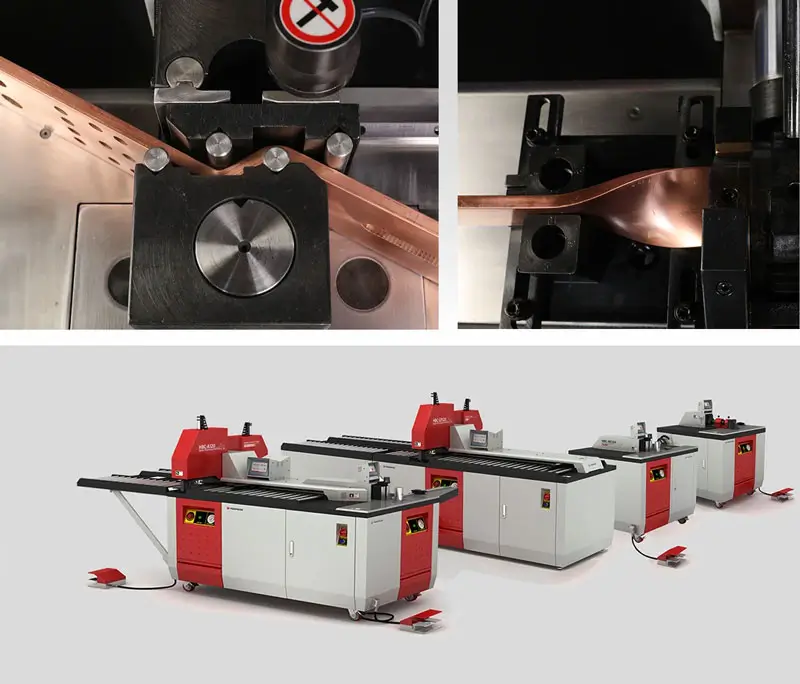
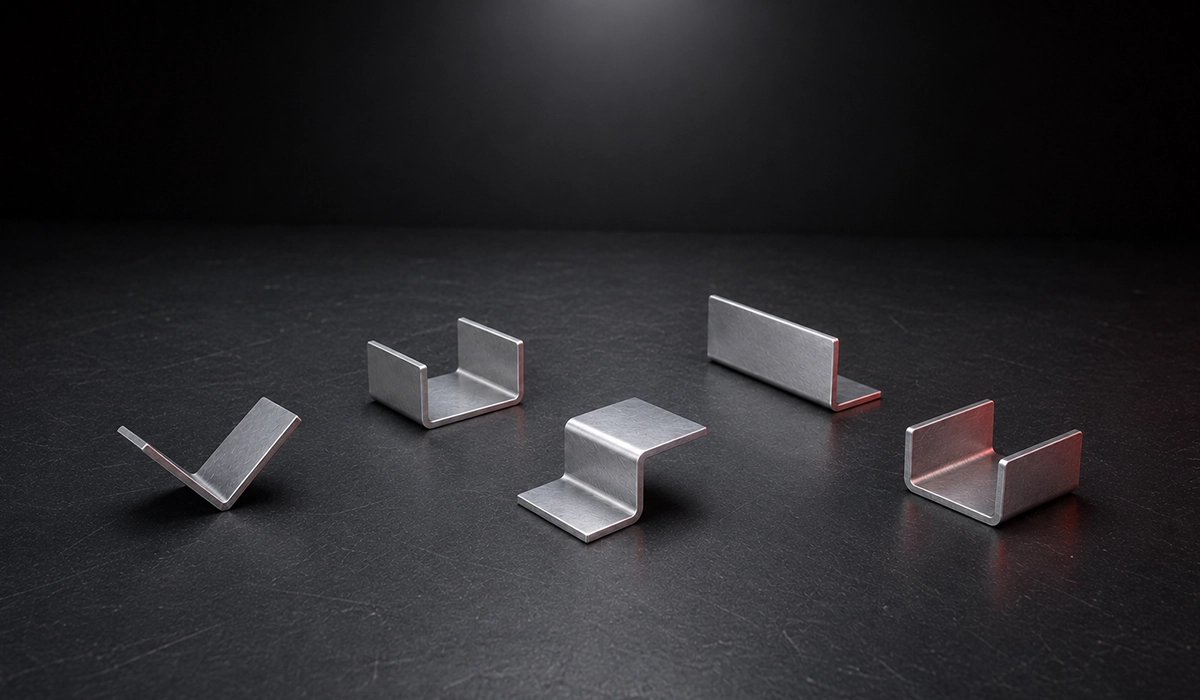
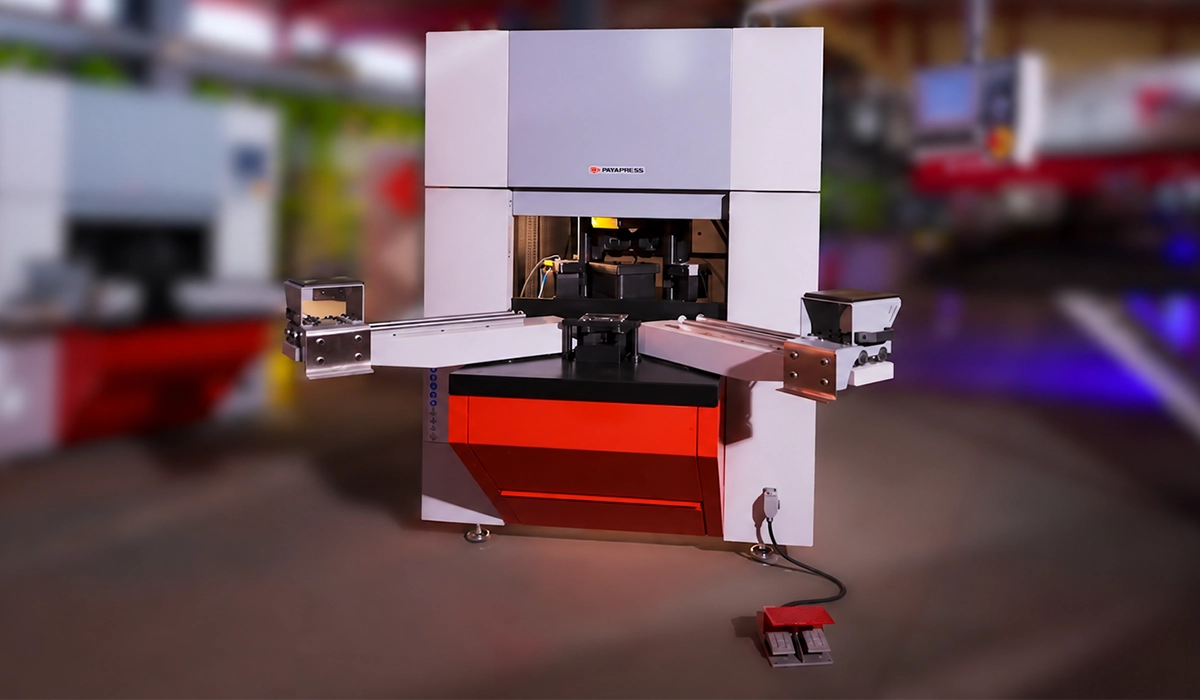
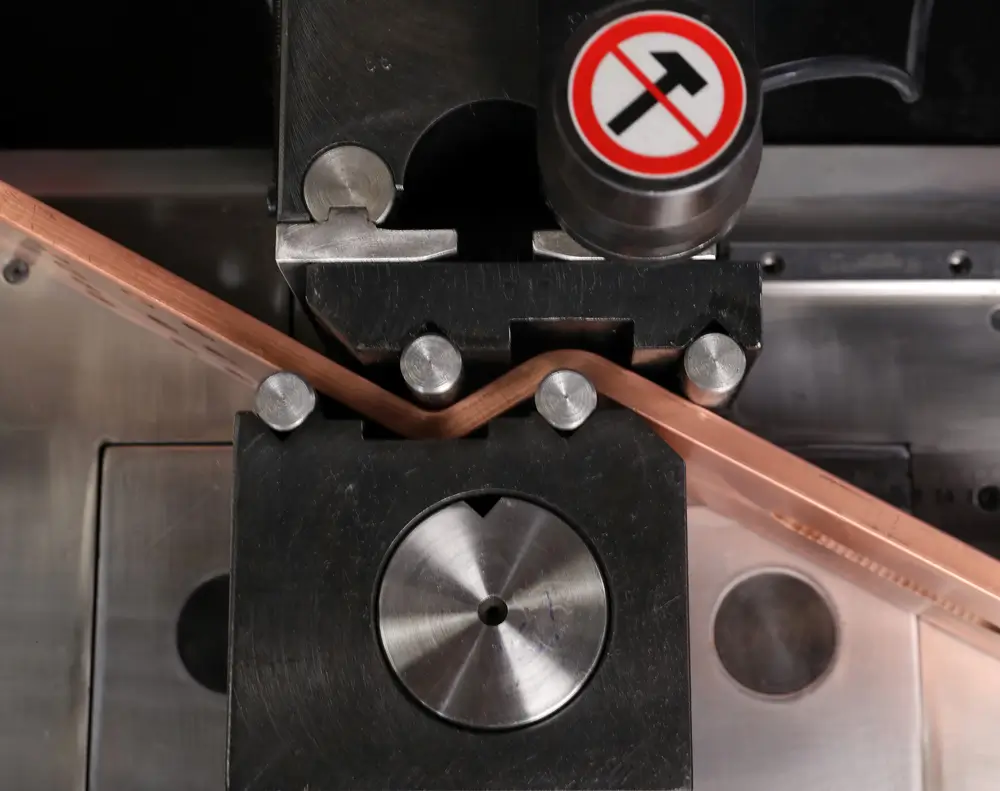
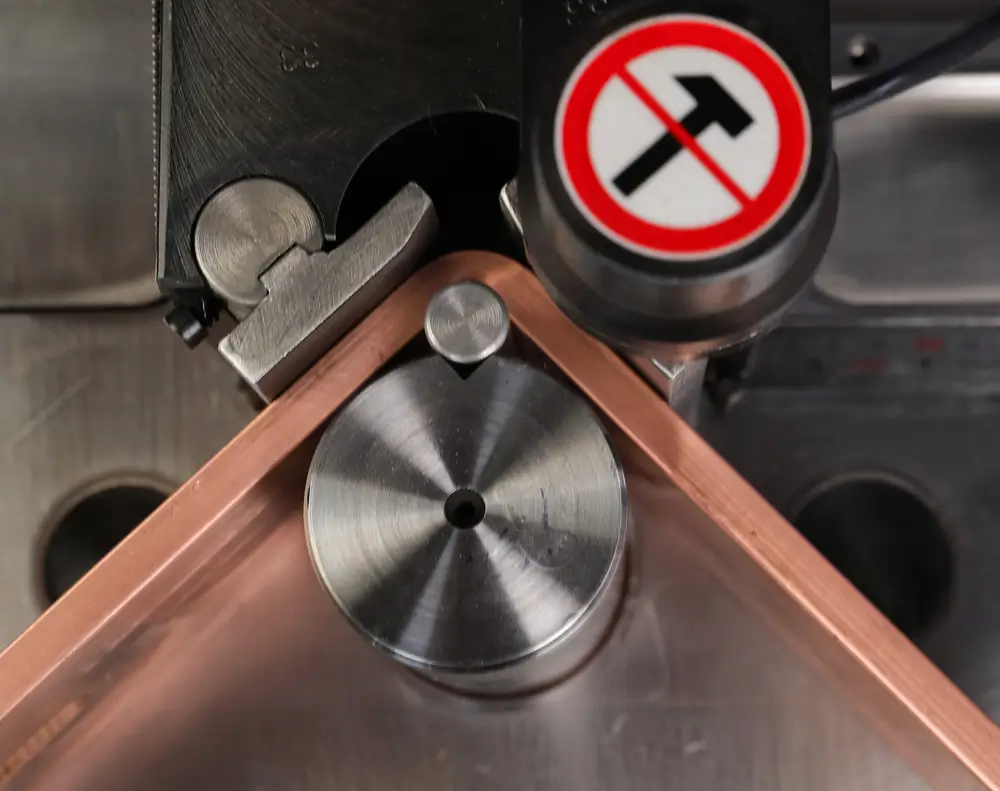
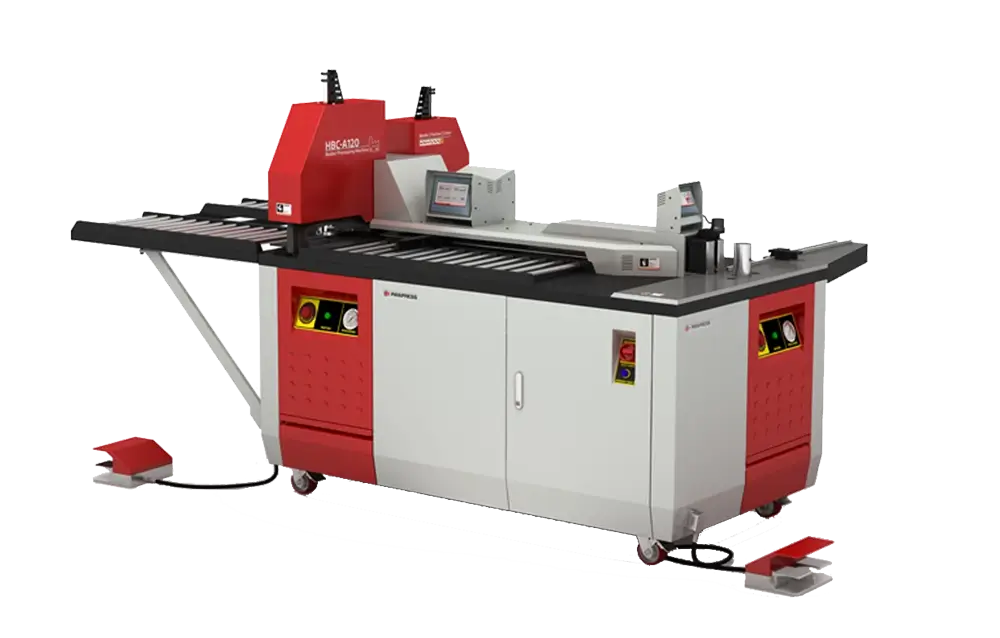
Cold corner forming produces a finished corner in a single operation, without heat, filler, or a secondary finishing step. The blank arrives pre-notched and bent, and the machine rolls or stamps the corner material into a closed radius that joins the two flanges. No weld bead is created, so nothing needs grinding afterwards.
The output is an R-corner: a rounded corner with a consistent radius rather than a sharp welded seam, which is why the process is also called R-corner forming. Because the metal is worked cold and stays below its recrystallisation temperature, the parent material keeps its original grain structure and mechanical properties throughout the corner zone.
Typical working windows run around 0.6–3.0 mm for cold-rolled steel and 0.8–2.0 mm for stainless, with flange height and radius range set by the tooling fitted. Aluminium panels fall inside similar ranges depending on alloy and temper.
Sheet metal corner forming is used where enclosure appearance and sealing matter: electrical cabinets, control panel doors, switchgear housings, hygienic enclosures, and outdoor equipment cases.
How Welded Corners Are Made Today
The conventional route runs through five steps:
- Bend the blank to form the two flanges
- Fit and clamp the corner joint square
- Weld the seam, typically MIG or TIG
- Grind the bead flush with the surrounding surface
- Finish — sand, polish, or prepare for coating
Two cost problems sit inside that sequence. The first is cumulative labor and consumables: every corner consumes welder time, grinding time, welding wire, and shielding gas, and none of it scales down with volume. The second is heat. Welding puts localized heat into a thin panel, and weld distortion pulls the sheet out of flat. On enclosure doors that distortion shows up as gaps at the seal line and as visible waviness after painting, which drives rework that was never in the original cost estimate. Correct fixturing and sheet metal bending practice reduce it, but cannot eliminate it.
Any useful corner forming vs welding comparison rests on cost per part welding vs forming, calculated identically for both and extended across monthly volume to find where the lines cross. Welding is almost entirely variable cost. Forming is mostly fixed, since the machine is paid for whether it runs one corner or ten thousand. That difference in cost structure determines the answer. All figures below are hypothetical estimates.
What a Welded Corner Really Costs
Itemised per corner, all figures hypothetical estimates:
- Welder time, roughly 4 minutes at $35/hr fully loaded — $2.33
- Consumables, welding wire and argon — $0.40
- Grinding and blending, roughly 3 minutes at $30/hr — $1.50
- Rework allowance at an 8% distortion-related failure rate — $0.37
That totals approximately $4.60 per corner. Outsourced welding service rates exist for reference, commonly quoted around $20–50 for simple welds , but the in-house per-corner figure is what belongs in this comparison, since it is the cost a fabricator actually displaces.
The cost of welding sheet metal corners is dominated by the two labor lines, which together account for roughly 83% of the total. Consumables are the smallest component and, revealingly, the one buyers tend to examine first when looking for savings. Reducing wire and gas spend by a fifth moves the per-corner figure by eight cents; removing the grinding step entirely moves it by a dollar fifty.
This source can help you verify the information and continue your independent research.
What a Formed Corner Costs
A formed corner has a very different cost shape. Cycle time runs around 8 seconds per corner, so operator cost at $30/hr comes to roughly $0.07. Tooling wear spread across the tooling’s service life adds approximately $0.05. Variable cost per corner is therefore about $0.12 — under three percent of the welded figure.
The machine itself is the real cost. A corner forming machine at $60,000 depreciated over five years carries roughly $1,000 per month regardless of output (hypothetical estimate). No grinding step follows, no consumables are drawn, and no rework allowance is needed for heat distortion, because no heat is applied.
The absence of a grinding operation is worth noting separately, because it removes not just the labor but the abrasive consumables, the dust extraction load, and the inspection step that follows blending. Competitor case studies circulating in this market quote considerably larger savings figures; treat those as vendor-published and verify independently before relying on them
When a supplier offers explosion proof electrical enclosures, ask for the certificate number under UL 1203, ATEX or IECEx. The IP figure answers a different question.
The Break-Even Volume
Answering whether corner forming is cheaper than welding requires one calculation:
Break-even corners per month = Monthly machine cost ÷ (welded cost per corner − formed variable cost per corner)
Using the figures above: $1,000 ÷ ($4.60 − $0.12) = approximately 223 corners per month.
| Monthly Corners | Welding Cost | Forming Cost (Incl. Machine) | Cheaper |
|---|---|---|---|
| 100 | $460 | $1,012 | Welding |
| 250 | $1,150 | $1,030 | Forming |
| 500 | $2,300 | $1,060 | Forming |
| 1,000 | $4,600 | $1,120 | Forming |
| 2,000 | $9,200 | $1,240 | Forming |
All figures hypothetical estimates. Substitute your own labour rate, cycle time, and machine cost — the structure of the calculation holds regardless of the numbers.
Two things are worth reading from the table. First, the crossover is lower than most fabricators expect, because welded corner cost is dominated by labour that never falls. Second, the gap widens sharply above it: at 2,000 corners monthly the forming route costs roughly an eighth of the welded one, and that difference is recurring rather than one-off. Shops sitting close to the break-even point should model expected volume growth rather than current output, since the machine will be in service for years.
You can get the complete file here and use it as a practical working reference.

Beyond Cost: Quality, Strength, and Finish
Cost per corner is not the whole comparison. Three quality factors matter independently.
Consistency. A formed corner is produced by tooling, so corner one and corner five thousand are dimensionally identical. Welded corners vary with operator skill, fit-up accuracy, and fatigue across a shift. For enclosures where doors must interchange across a production batch, that variability is a real assembly cost.
Distortion and sealing. No heat input means no thermal stress, so panels stay flat. Flat panels seal properly against gaskets and take paint without the localised waviness that grinding a weld bead leaves behind. For IP-rated enclosures, sealing performance is a compliance question rather than an aesthetic one.
Strength. A continuous formed corner keeps parent-metal strength through the corner zone, with no heat-affected zone and no filler metal of differing composition. That matters for cyclic loading, where a heat-affected zone is a predictable initiation site, and for corrosion resistance, where dissimilar filler chemistry can create a galvanic couple. In stainless work the point is sharper still, since welding can sensitise the material near the joint unless procedure and filler are controlled carefully.
None of this makes forming universally stronger. Heavy structural joints carrying significant load may still require a welded connection designed to a structural code, and the forming route does not change that. The advantage is specific to thin-gauge enclosure work, which is where the process belongs.
When Welding Is Still the Right Choice
Four situations favour welding, and a fabricator should recognise them before buying equipment.
Thickness beyond the forming range. Above roughly 3 mm in steel, the material sits outside typical corner forming windows and welding remains the practical route
Structural frames. Load-bearing assemblies, machine bases, and frames carrying significant stress need welded joints designed to a structural code, not formed corners.
Very low volumes. Below the break-even point, a cold former cannot amortise. A shop producing fifty corners a month has no cost case for the investment, however attractive the per-corner figure looks in isolation. Job shops with unpredictable order patterns face the same problem, since the fixed monthly cost continues through quiet periods when no corners are produced at all.
Complex geometries. Non-standard angles, internal corners, and shapes the tooling cannot reach are welding work. Corner forming handles the common enclosure geometries well and does not attempt everything.
For a clearer comparison, you can review the information provided on this website.
Choosing a Corner Former Machine
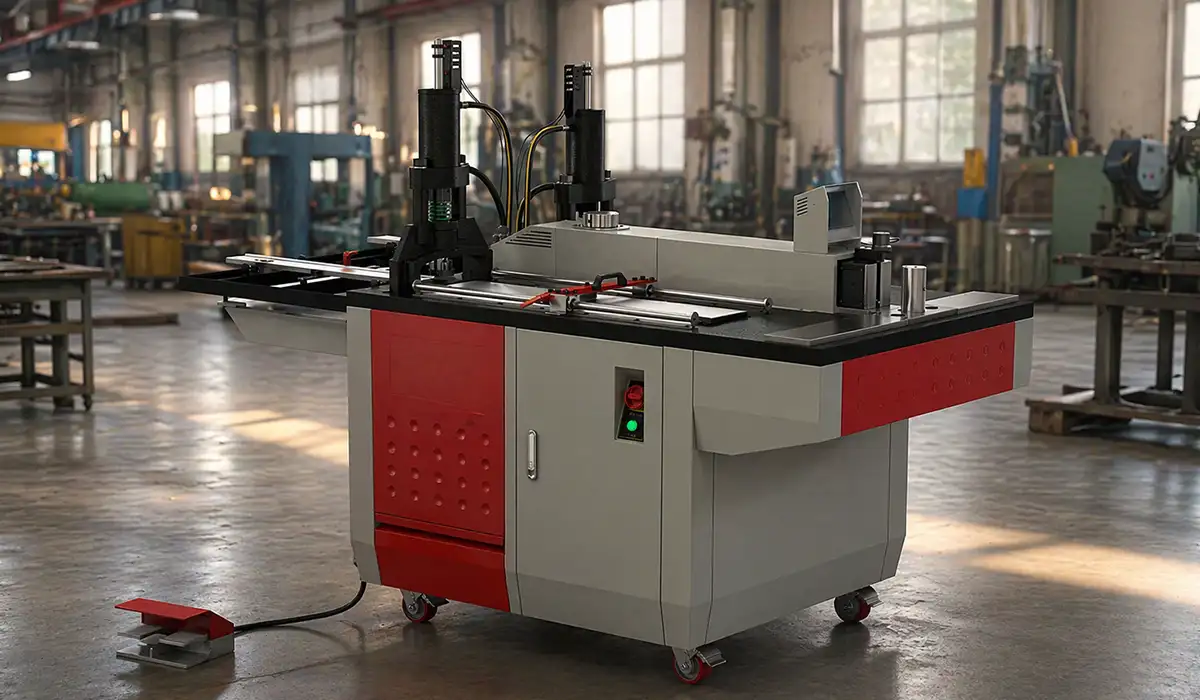
If the volume justifies it, evaluate a corner former against seven criteria.
You can find more background information and related technical notes through this reference link.
Material and thickness range — confirm the window in both steel and stainless, and whether aluminium is rated. Flange height — the maximum flange the machine accepts constrains enclosure design. Radius range — the R-corner radii available, and whether they match existing product drawings. Changeover time — how long a tooling change takes, which governs viability on mixed production. Safety — light curtains, guarding, and two-hand controls should be standard, not options. Tooling life — expected corners per tooling set and replacement cost. Service and spares — regional availability and lead times.
Ask for a demonstration on your own material and gauge before committing, and request a corner forming machine for stainless steel trial specifically if stainless is in the production mix, since it work-hardens differently from mild steel and can spring back more at the same radius. Bring the actual blanks rather than sample coupons, because notch geometry and bend accuracy upstream affect how cleanly the corner closes.
Conclusion about Sheet Metal Welding vs Cold Corner Forming
Above the break-even volume, cold corner forming costs less — substantially less, and the advantage compounds with volume. Below it, welding remains the cheaper choice, and no amount of per-corner arithmetic changes that. On the figures used here that crossover sits near 223 corners per month, but the number moves with labour rate, machine price, and rework rate.
Run the calculation with real production numbers before deciding. Request a cost comparison based on your own volumes, materials, and labour rates.