




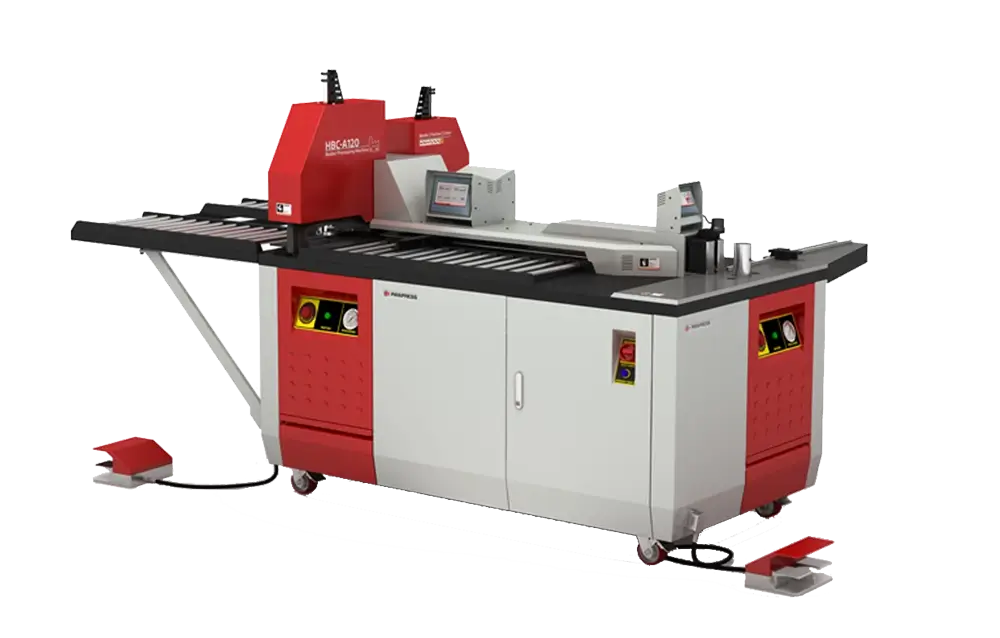
Prefer listening? You can play the audio version of the rest of this article below.
How Metal Punching and Notching Machines Work
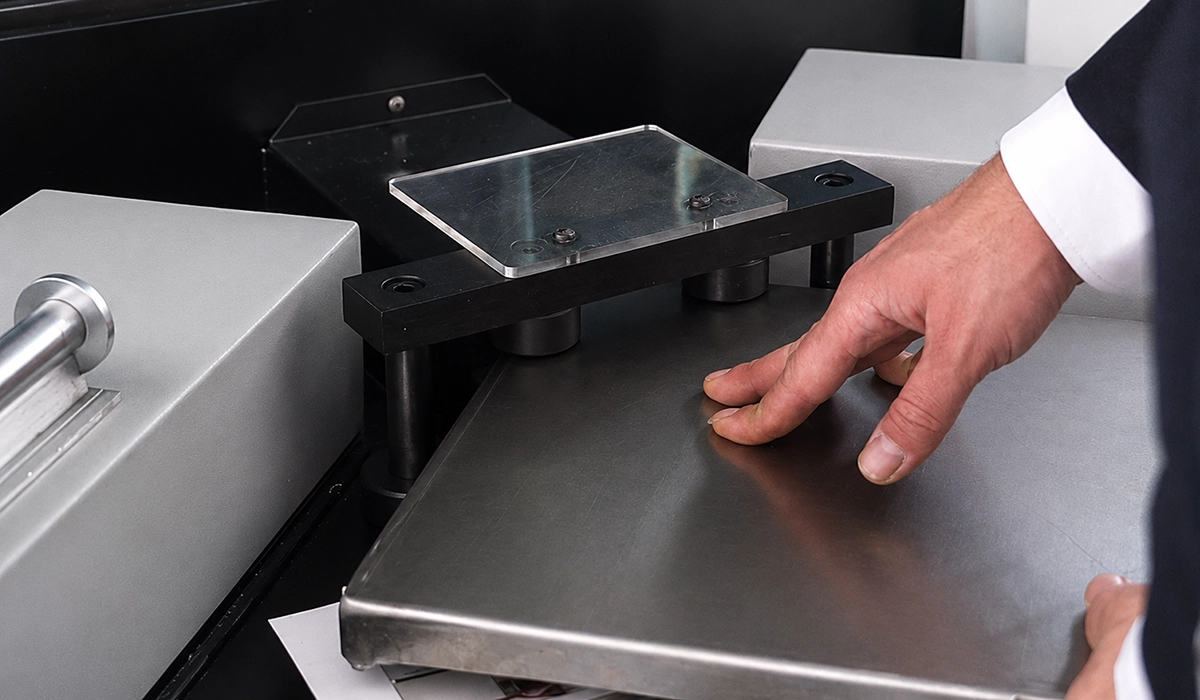
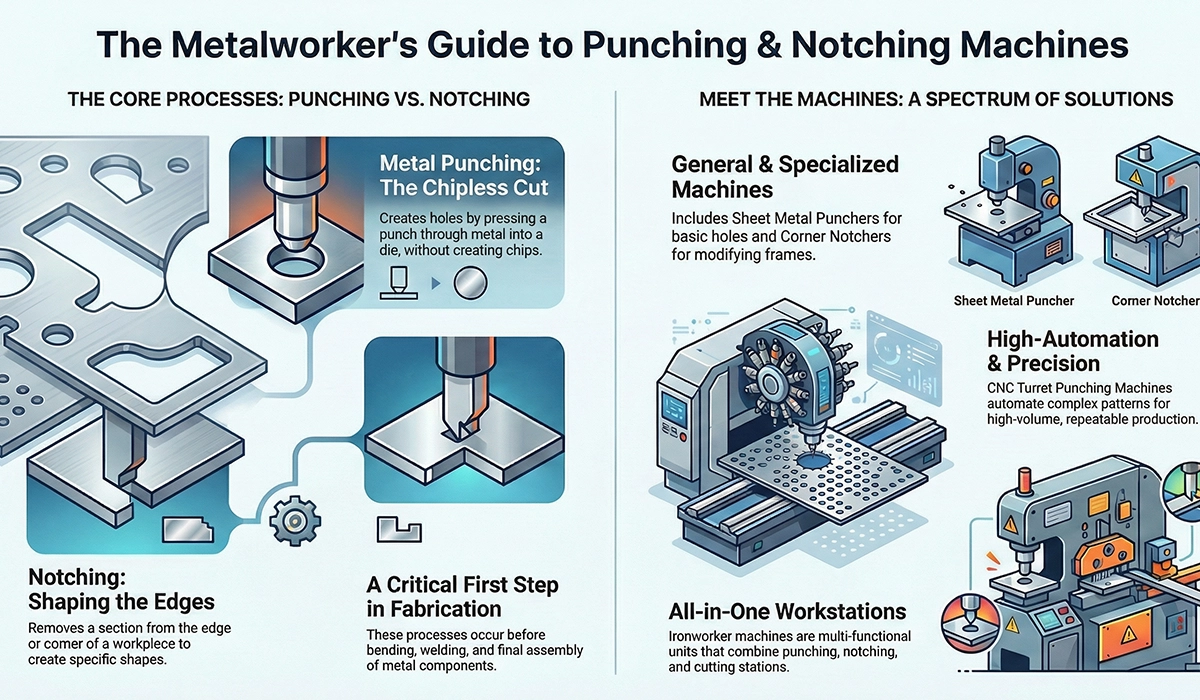
Metal punching and notching machines work by applying controlled force through a tool set. In punching, the upper tool, called the punch, pushes through the material and into the lower die. This shears the material and creates a hole, slot, or shaped cutout. In notching, the same cutting principle is used to remove material from an outside edge or corner.
Punching is different from drilling. Drilling removes material as chips. Punching shears the material in a single stroke, making it faster for repeated hole patterns and standardized shapes. Sheet metal punching sources describe the process as a punch-and-die operation where the tools come together and create a shearing action in the shape of the punch.
If you are looking for more information about Punching Machine Tooling, and busbar processing machine it is recommended not to miss reading this page.
What Is Metal Punching in Sheet Metalworking?
Metal punching is a sheet metal cutting process that uses a punch and die to create holes, slots, louvers, perforations, knockouts, and custom cutouts. The process is widely used when the same hole pattern must be repeated quickly and accurately in sheet metal.
Common punching operations include:
| Punching Operation | Purpose |
|---|---|
| Round hole punching | Bolt holes, fastener holes, ventilation holes |
| Slot punching | Adjustable mounting points and cable entries |
| Square/rectangular punching | Switchgear cutouts, locks, hinges, access openings |
| Perforating | Ventilation panels and screens |
| Blanking | Cutting a finished shape from sheet metal |
| Piercing | Creating holes or openings in sheet or plate |
| Forming punch operations | Louvers, embosses, extrusions, countersinks |
Sheet metal shearing references classify punching, piercing, and blanking as shearing operations that use punch-and-die force to cut material. (For a full side-by-side comparison of these operations, see Sheet Metal forming Operations further down this guide.)
What Is a Notching Machine?
A notching machine removes material from the edge or corner of sheet metal, plate, bar, angle, or profile material. The goal is to create a clean notch that allows the part to be bent, joined, fitted, welded, or assembled more accurately.
Notching is commonly used for:
- electrical enclosures;
- switchgear cabinets;
- door frames;
- box corners;
- HVAC ductwork;
- angle profiles;
- steel frames;
- busbar clearance cuts;
- cabinet sidewalls and panels.
Notching sources define sheet metal notching as a process that creates precise cuts along sheet edges or corners, often to support bending, folding, or joining.
Sheet Metal Notching Process: Where Notching Fits in Fabrication
The notching operation in sheet metal usually happens before bending, welding, fastening, or final assembly. By removing material from the edge or corner, the operator creates the clearance needed for folds, joints, tabs, cabinet corners, or interlocking features.
The Sheet Metal Notching Process, Step by Step
Whether the job runs on a manual notcher or a CNC line, the sheet metal notching process follows the same basic workflow:
- Mark or program the notch location.
- Position the sheet against stops, guides, or CNC coordinates.
- Clamp or hold down the material.
- Cut the notch using blades, punch tooling, or a notching punch.
- Inspect the edge for burrs, distortion, and dimensional accuracy.
- Move the part to bending, welding, or assembly.
For a comprehensive understanding of Predictive Maintenance for Metalworking Machines, we highly recommend reviewing this article.
Metal Notching Machine vs Punching Machine: What Is the Difference?
A metal notching machine mainly removes material from an edge or corner. A punching machine mainly creates holes or internal cutouts. Some machines can perform both operations, especially ironworkers, CNC turret punching machines, and integrated punching-notching systems.
| Feature | Metal Notching Machine | Punching Machine |
|---|---|---|
| Main function | Edge and corner removal | Holes, slots, cutouts |
| Common tool | Blade, punch, or notch tool | Punch and die |
| Typical location | Edge or corner of material | Internal or edge positions |
| Best for | Corners, joints, bend preparation | Repeated holes and cutouts |
| Common industries | Enclosures, frames, HVAC, switchgear | Switchgear, busbars, panels, perforated sheet |
Types of Punching Machine for Sheet Metal, Busbars, and Profiles
The main types of punching machine are selected based on material type, hole shape, production volume, automation level, and part size.
| Punching Machine Type | Best Application |
|---|---|
| Manual punching machine | Low-volume holes and repair work |
| Hydraulic punching machine | Higher force punching in plates, bars, and busbars |
| Sheet metal punching machine | Repeated holes and cutouts in sheet metal |
| Strip metal pre-punching machine | Continuous hole patterns on strip or coil, fed inline before forming |
| Turret punching machine | Multiple hole shapes and repeated sheet patterns |
| CNC turret punching machine | Automated sheet punching and CAD/CAM production |
| Ironworker punching machine | Punching, shearing, notching, and cutting profiles |
| Portable punching machine | On-site work and fixed structural parts |
| Special punching machine | Dedicated mass-production or custom part operations |
CNC turret punching is especially useful when the shop needs repeated hole patterns, varied shapes, and automated positioning. TRUMPF’s punching references describe punching as a process capable of producing different-sized sheet metal parts and scrap, with multiple methods for removing or sorting finished parts.
Sheet Metal Punching Machine for Holes, Slots, and Cutouts
A sheet metal punching machine is used to create holes, slots, rectangular cutouts, ventilation openings, hinge holes, lock openings, and cable-entry points in sheet metal. It is especially useful for switchgear doors, elevator panels, electrical enclosures, HVAC panels, and industrial cabinets.
Maximum material thickness is a machine-specific specification — it depends on the punching force, tonnage, and tooling of the individual model rather than a single universal number, so always check the capacity rating of the specific machine you’re comparing.
Typical tool sets available for sheet metal punching machines include round, square, rectangle, obround, louver, ventilation, and fully custom punch shapes, so the same machine can usually cover several hole types with a tool change rather than a new machine.
Punching accuracy depends on punch/die alignment, die clearance, material thickness, and tool condition — not on the machine alone. A well-aligned, properly maintained tool set will consistently outperform a higher-tonnage machine that is poorly set up.
If you found this article useful, reading more on topic Punching Machine Maintenance is recommended for more specialized information.
Hydraulic Punching Machines for Plates, Flat Bars, and Profiles
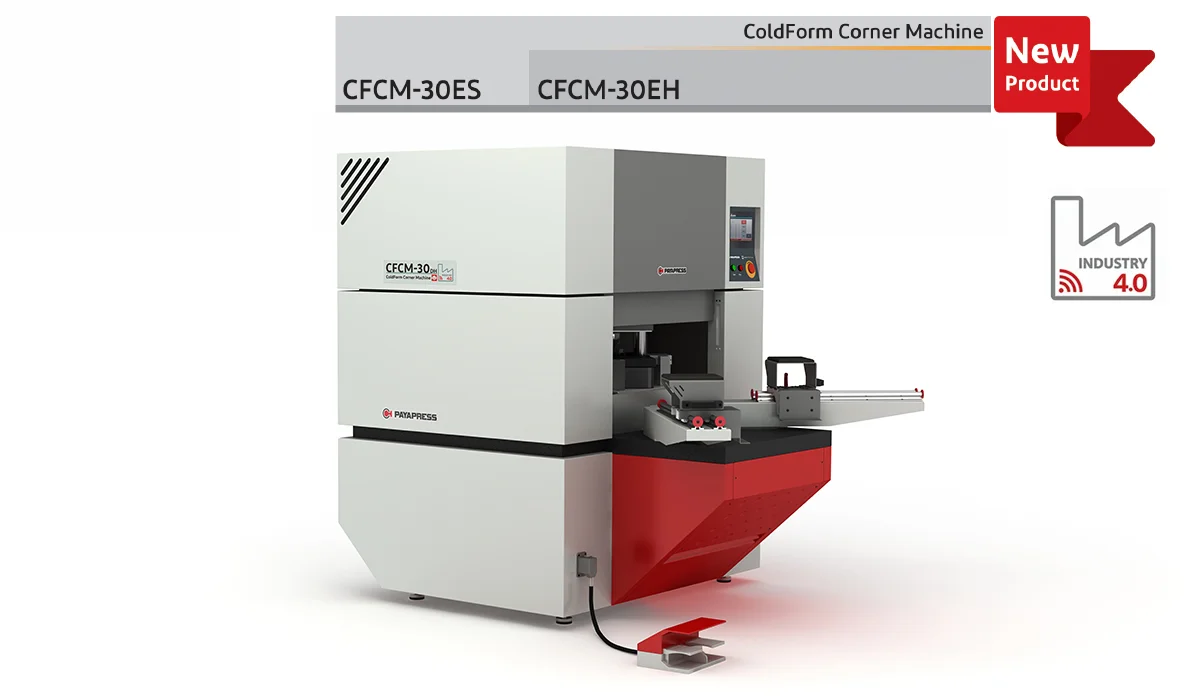
A hydraulic punching machine uses hydraulic force to punch holes or shaped cutouts in metal. It is a strong option for flat bars, plates, busbars, and small profiles because it can deliver higher force than manual machines while remaining simpler than a CNC turret punch.
Best uses:
- flat bars;
- small steel profiles;
- switchgear parts;
- electrical panel components;
- brackets and plates.
Key selection criteria:
| Specification | Why It Matters |
|---|---|
| Punching force | Determines maximum material thickness and hole size |
| Throat depth | Controls how far from the edge a hole can be punched |
| Tooling range | Defines hole shapes and slot options |
| Stroke speed | Affects production output |
| Tool change time | Affects setup efficiency |
| Frame rigidity | Reduces deflection and improves quality |
Strip Metal Pre-Punching Machine for Continuous Strip Feeding
A strip metal pre-punching machine punches holes, slots, or index patterns into a continuous metal strip or coil as it feeds through the line — before the strip is cut, formed, or bent into finished parts. Instead of punching one blank at a time, the strip moves through the tool station in a continuous or step-feed motion, so identical hole patterns repeat down the entire length of the coil.
This approach is common wherever the same pattern needs to repeat thousands of times: busbar production, terminal and connector strips, DIN rail components, cable tray strip, and other roll-formed or progressive-die parts.
Best uses:
- continuous busbar or strip pre-punching before bending or forming;
- index holes used to register the strip for downstream operations;
- high-volume, repeated hole patterns on coil-fed material;
- integration ahead of roll-forming or progressive punching lines.
Compared with punching individual blanks, a strip pre-punching setup reduces handling time and improves pattern consistency, which matters most when a shop is running long production batches rather than one-off parts.
Turret Punching Machine for Multiple Hole Shapes
A turret punching machine uses a rotating turret loaded with multiple punch-and-die tools. This allows the operator to switch between hole sizes, slots, rectangles, louvers, and special shapes without changing the tool manually after every operation.
Use a turret punch when:
- the part requires several hole shapes;
- the job uses repeated patterns;
- manual tool changes slow production;
- high sheet throughput is required;
- the shop produces panels, covers, guards, switchgear parts, or perforated sheet.
Further exploration of Automatic Punching and Shearing Lines can be found in the following recommended reading.
CNC Turret Punching Machine for Automatic Sheet Punching
A CNC turret punching machine combines a turret punch with computer-controlled positioning. It is designed for automated sheet punching, repeated hole patterns, CAD/CAM integration, and high repeatability.
Best applications:
- switchgear panels;
- perforated sheets;
- ventilation patterns;
- machine guards;
- electrical enclosure doors;
- control cabinet sidewalls;
- repeated cutouts and slot patterns.
Key advantages:
- reduced manual layout;
- repeatable hole positioning;
- faster production of complex patterns;
- lower operator dependency;
- better batch consistency;
- easier CAD/CAM workflow.
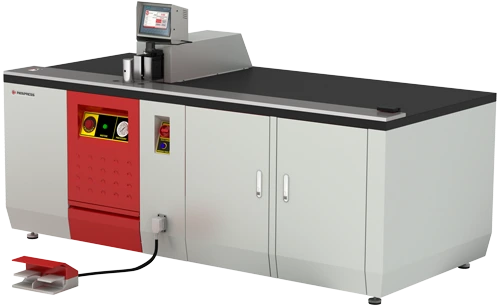
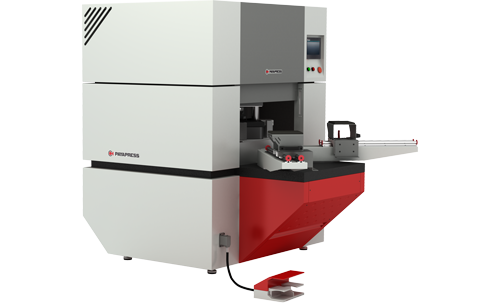
Ironworker Punching Machines with Notching and Cutting Stations
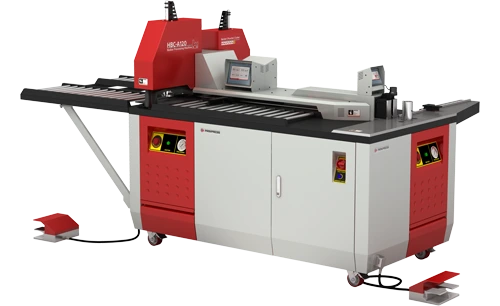
An ironworker punching machine combines multiple metalworking stations in one machine. Depending on the model, it may include punching, angle cutting, flat bar shearing, round bar cutting, square bar cutting, notching, and sometimes bending.
Use an ironworker when the shop needs one compact machine for:
- flat bars;
- angles;
- channels;
- plates;
- small structural profiles;
- fabrication repair work;
- mixed low-to-medium volume production.
The main benefit is versatility. The limitation is that ironworkers may not match the automation, sheet-handling speed, or pattern flexibility of a CNC turret punch.

Portable and Special Punching Machines for On-Site and Dedicated Work
Portable punching machines are used when the workpiece is too large, fixed, or inconvenient to move to a stationary machine. They are useful for construction sites, structural steel, installation work, repair tasks, and field modifications.
Special punching machines are built for repeated, dedicated operations. These may include:
- numbering and marking;
- busbar punching;
- profile punching;
- beam and column punching;
- automotive component punching;
- custom hole patterns in mass production.
Types of Notching Machines for Sheet Metal and Manufacturing
The main types of notching machines include manual notchers, hydraulic notchers, fixed-angle corner notchers, variable-angle notchers, CNC notchers, punch notchers, ironworker notching stations, tube notchers, and specialized notching systems for busbars or profiles. Whichever model you choose, the right notching machine for sheet metal comes down to material thickness, notch geometry, and how repeatable the cut needs to be.
| Notching Machine Type | Best Use |
|---|---|
| Manual notching machine | Low-volume sheet metal corner cuts |
| Hydraulic notching machine | Stronger, repeatable notching in production |
| Fixed-angle corner notcher | Standard 90° sheet metal corner notches |
| Variable-angle notcher | Adjustable angle cuts for varied parts |
| CNC notching machine | Programmed, repeatable, high-accuracy notching |
| Punch notcher | Punch-and-die notches and shaped cutouts |
| Ironworker notching station | Steel plates, angles, channels, flat bars |
| Tube notcher | Pipe and tube joints |
| Busbar/profile notching machine | Electrical and profile-specific cutouts |
Notching machine sources identify punch notchers as machines that use punch-and-die sets to create holes or notches and are used in sheet metal fabrication for features such as notches and louvers.
Metal Notching Machine for Manufacturing: When Accuracy and Repeatability Matter
A metal notching machine for manufacturing should be selected when the shop needs repeatable corner cuts, edge cutouts, and profile preparation before bending or assembly. In production environments, the main goal is not only cutting the notch but maintaining consistent size, angle, edge quality, and cycle time.
Manufacturing use cases include:
- cabinet corners;
- electrical enclosure doors;
- switchgear side panels;
- elevator panels;
- HVAC sheet parts;
- welded frames;
- profile joints;
- busbar clearance cuts.
Professional Notching Machines for Manufacturing: Features to Compare
Professional notching machines for manufacturing should be compared by capacity, angle range, repeatability, tooling, hold-down quality, stroke rate, safety, and service support.
Key features to compare:
| Feature | Why It Matters |
|---|---|
| Maximum sheet thickness | Confirms capacity for steel, stainless, aluminum, or copper |
| Angle range | Allows fixed or variable-angle notch geometry |
| Blade/tool quality | Affects cut quality and tool life |
| Hold-down system | Prevents sheet movement during cutting |
| Back stops and guides | Improve repeatability |
| Frame rigidity | Reduces vibration and improves accuracy |
| Hydraulic system | Provides smoother force for heavier material |
| CNC control | Improves repeatability and setup speed |
| Safety guarding | Protects operators at the cutting zone |
Where to Buy Professional Notching Machines for Manufacturing
When you’re ready to buy a professional sheet metal notching machine for manufacturing, evaluate the supplier as carefully as the machine itself. Look for a manufacturer that can confirm real specifications for your material and thickness range, supplies genuine tooling and spare parts, and offers installation support and after-sales service rather than a one-time sale.
A short checklist before you buy:
- Ask for the exact capacity rating (thickness and material) for your application — not a general figure.
- Confirm tooling and spare-blade availability, and typical lead time for replacements.
- Check whether installation, training, and commissioning are included.
- Ask about warranty terms and average response time for service support.
- Compare total cost of ownership (see the Cost Structure section below), not just the purchase price.
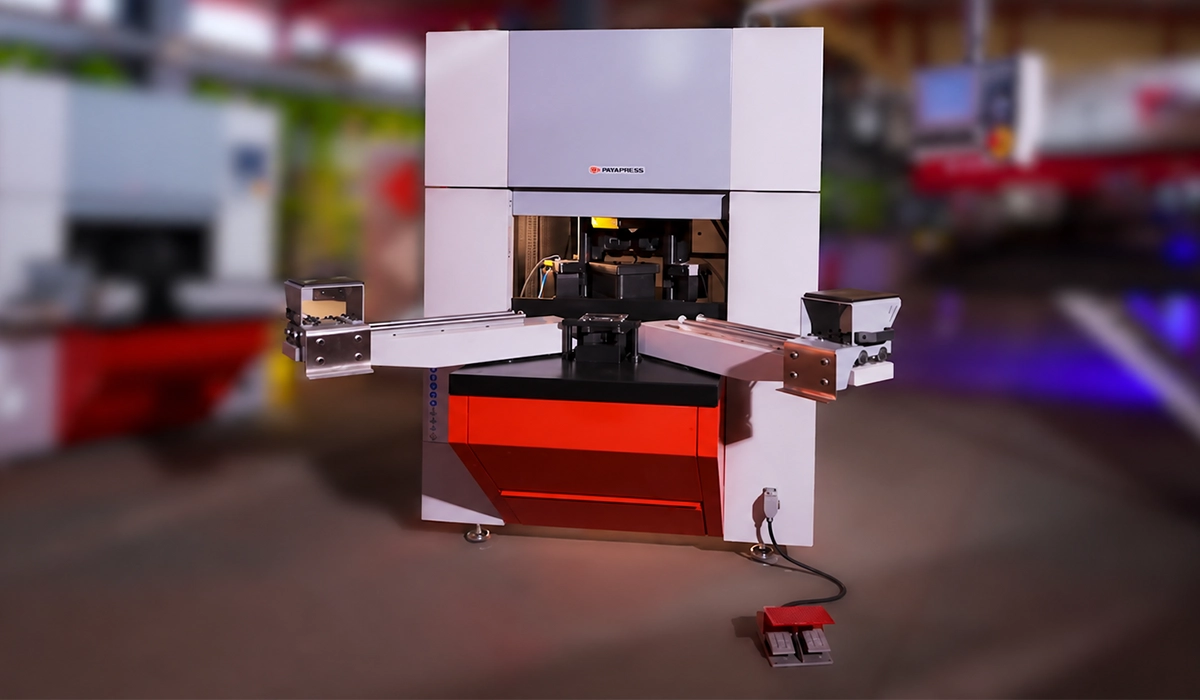
PAYAPRESS supplies punching, notching, and busbar-processing equipment for switchgear and electrical-panel manufacturers — you can contact our team for a specification and quote tailored to your production volume.
Hydraulic Sheet Notching Machine with Adjustable Angle
A hydraulic sheet notching machine with adjustable angle is used when the same shop needs different notch geometries without relying on one fixed 90° setup. Adjustable-angle machines are useful for custom enclosures, frame parts, HVAC components, cabinet work, and low-to-medium volume fabrication.
Benefits:
- adjustable corner angles;
- better flexibility for custom parts;
- cleaner notches than manual cutting;
- reduced grinding and rework;
- stronger repeatability than hand layout.
The usable angle range is a machine-specific specification, so confirm the exact adjustable range with the manufacturer for the model you’re evaluating rather than assuming it matches another supplier’s machine.
Corner Notching Machines for Sheet Metal Boxes, Panels, and Frames
Corner notching machines remove corner material from sheet metal so the part can be bent or assembled cleanly. They are especially useful in sheet metal boxes, trays, cabinets, electrical enclosures, panels, frames, and covers.
Common corner notch shapes include:
- Square notch — a straight rectangular cut used for simple 90° corner folds;
- V-notch — an angled cut used to close a corner seam with minimal gap after bending;
- U-notch — a rounded cut used where a smoother, stress-relieved corner is required;
- Rectangular corner notch — a deeper cut used for tabs, overlaps, or interlocking joints.
Choosing the right notch shape up front reduces grinding, rework, and welding after bending — the shape should match the bend radius and the joint type used later in assembly.
Notching & Punching Tools: Punches, Dies, Blades, and Clearance
Notching & punching tools determine hole quality, edge finish, burr size, machine force, and tool life. The main tools are punches, dies, blades, holders, strippers, guides, and hold-downs.
| Tool | Function |
|---|---|
| Punch | Cuts the hole, slot, or notch shape |
| Die | Supports material and receives the punch |
| Notching blade | Cuts corners or edge notches |
| Stripper | Removes material from the punch after the stroke |
| Hold-down | Keeps sheet or bar stable during cutting |
| Gauge/stop | Positions the workpiece accurately |
| Lubrication | Reduces heat, friction, and tool wear |
Die clearance is critical. The die opening is slightly larger than the punch, and this clearance varies with material thickness to support proper shearing and reduce punching force.
What Is a Notching Punch?
A notching punch is a punch tool used to remove material from an edge, corner, or profile. It can create V-shaped, U-shaped, rectangular, round, or custom notches depending on the punch and die design.
Use a notching punch when:
- the notch must repeat accurately;
- the edge cut must match a specific geometry;
- manual grinding would be too slow;
- the part needs clean preparation before bending;
- the shop processes similar panels, bars, or profiles repeatedly.
Notching Units in Ironworkers and Integrated Lines
A notching machine for steel is another powerful tool integrated into ironworkers. It allows for cutting corners or slots in plates and angles, a process critical for making joints and fittings. Without notching, steel construction would require additional welding and grinding, which increases both time and costs.
Special Station for Notching in Ironworkers:
In ironworkers, a special station for notching is integrated, allowing precise slots or corners to be cut into steel plates. This station ensures that the notches are done with high accuracy and efficiency, eliminating the need for additional steps like welding or grinding.
Notches on Angles, Channels, Flat Bars:
The notches can be made on angles, channels, and flat bars, which is essential for creating joints and fittings in steel constructions. This process saves both time and costs by eliminating the need for additional welding and grinding.
Specialized Notching for Busbars and Profiles
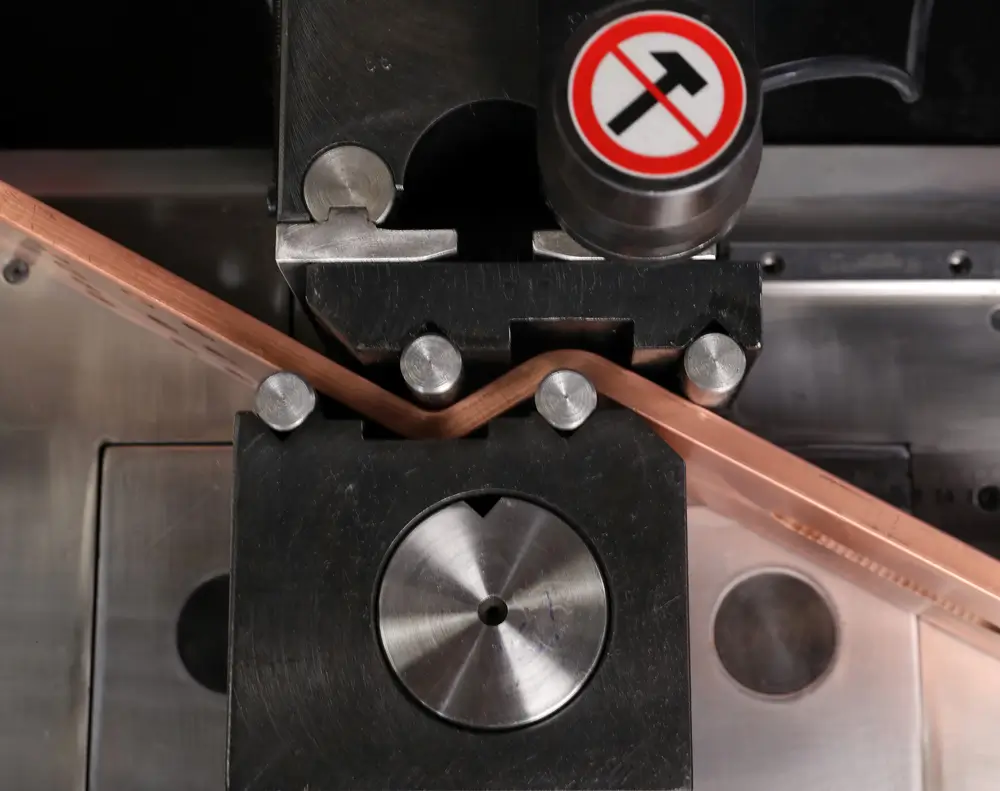
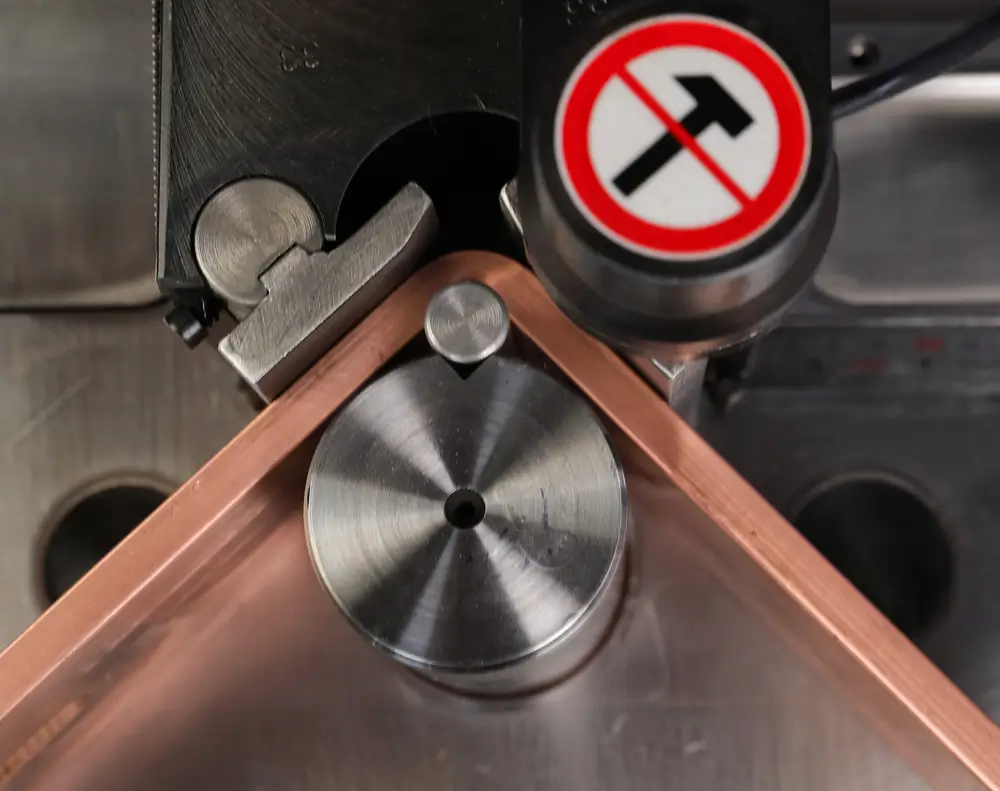
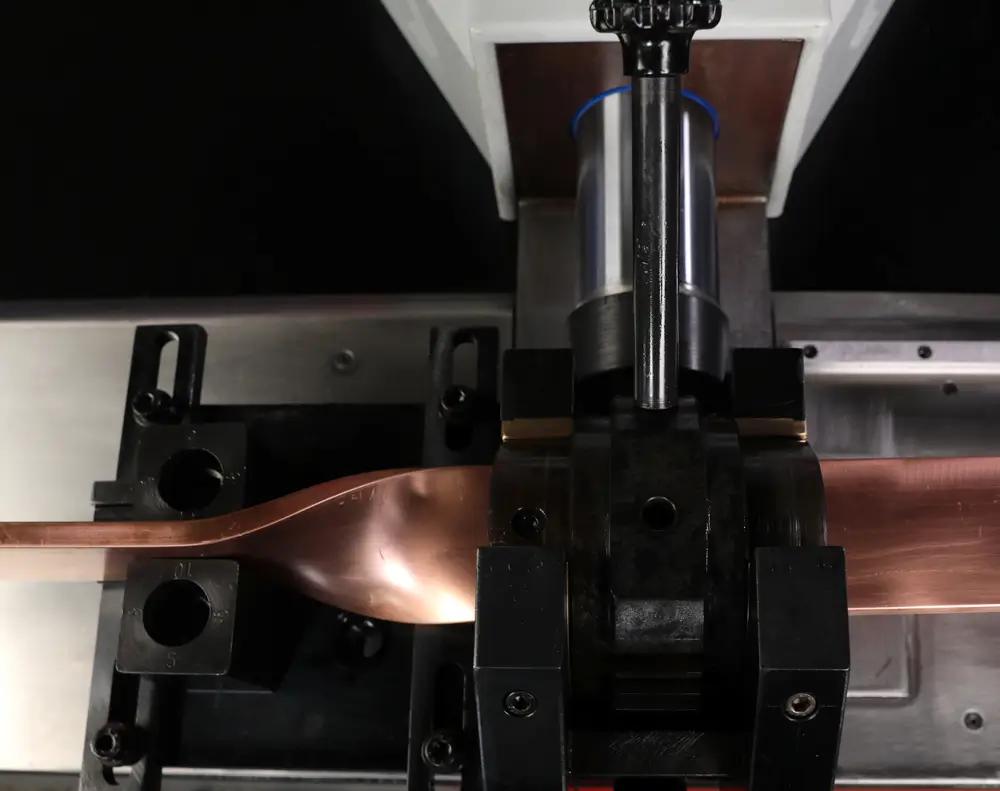
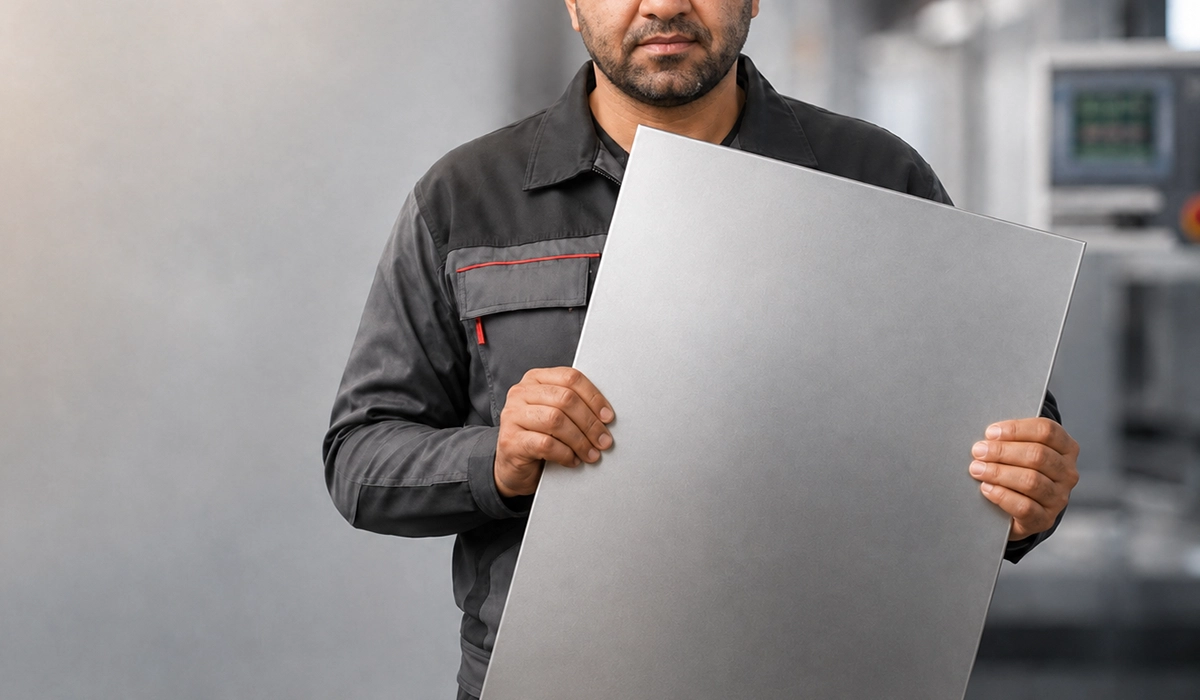
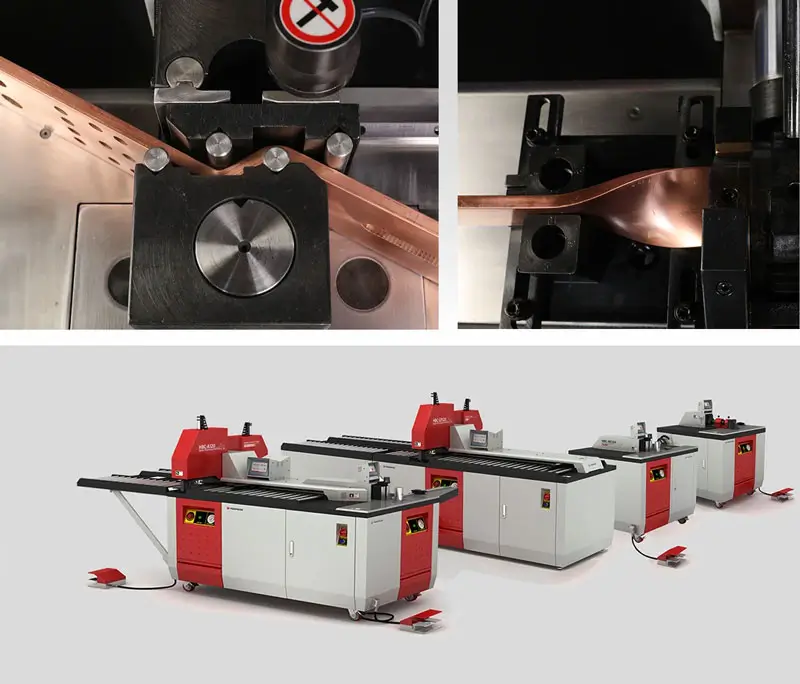
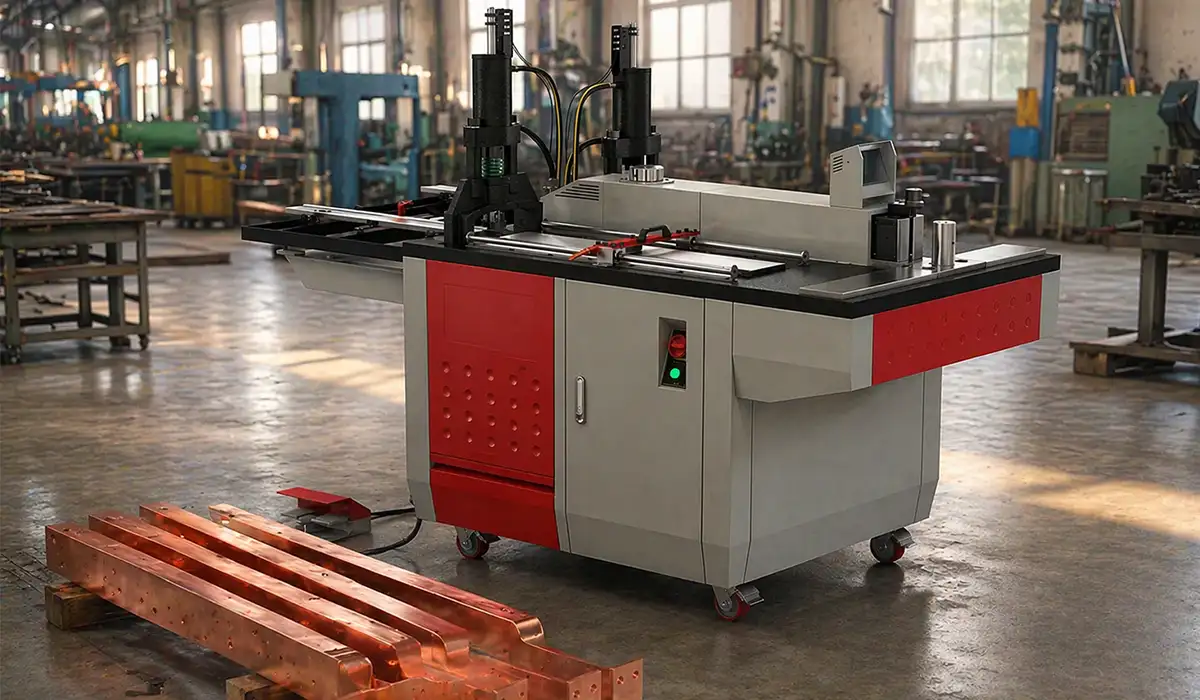
Notching copper and aluminum busbars is a specialized processing step that is especially important in the production of switchgear and electrical distributions. Metal punching and notching machines make it possible to create specific notches or cutouts in busbars, improving their bendability, clearance, and ease of assembly. These adjustments are particularly important when dealing with complex geometries, connection points, or modifications to cabinet layouts. Through such processing, more precise fits can be achieved, reducing manufacturing and assembly times and enhancing production efficiency.
Sheet Metal Cutting Operations: Shearing, Blanking, Punching, and Notching
Punching and notching are two of several related sheet metal cutting operations. Sheet metal cutting operations, shearing, blanking, punching, and notching all use a similar shearing action between two tool edges, but each removes or shapes material differently.
| Operation | What It Does | Typical Use |
|---|---|---|
| Shearing | Cuts sheet metal in a straight line along its full length or width | Cutting stock sheet down to size before further processing |
| Blanking | Cuts a finished part shape out of the sheet; the cut piece is the usable part | Producing flat blanks for further forming or bending |
| Punching | Removes material from inside the sheet to create a hole or cutout; the sheet is the usable part | Bolt holes, slots, ventilation, switchgear cutouts |
| Notching | Removes material from an edge or corner rather than the interior | Corner preparation before bending, welding, or assembly |
Understanding these differences matters when choosing equipment: a shop that only shears stock to size has different needs than one that punches switchgear cutouts or notches enclosure corners, even though all four operations share the same underlying shearing principle.
Applications of Metal Punching and Notching Machines in Manufacturing
Metal punching and notching machines are used wherever metal parts require repeated holes, slots, notches, and cutouts before bending or assembly.
Main applications:
| Industry | Typical Punching / Notching Work |
|---|---|
| Switchgear | Busbar holes, panel doors, cable entries, locks, hinges |
| Electrical enclosures | Sidewalls, ventilation holes, mounting slots |
| Elevator manufacturing | Panels, brackets, service doors |
| HVAC | Duct corners, ventilation patterns, sheet panels |
| Steel fabrication | Angles, plates, flat bars, channels |
| Automotive | Brackets, panels, reinforcements |
| Construction | On-site holes, profile notches, structural modifications |
| Busbar production | Copper/aluminum holes, slots, clearance notches |
Industrial Switchgear: Punching and Notching for Busbars, Doors, and Panels
In industrial switchgear production, punching and notching machines are used to prepare copper busbars, aluminum busbars, steel panels, cabinet doors, sidewalls, mounting plates, and cable-entry areas. The machine must maintain hole accuracy, repeatability, and clean edge quality because small dimensional errors can create assembly delays.
Common switchgear operations:
- busbar punching;
- slotted holes for adjustment;
- cabinet door lock openings;
- hinge cutouts;
- cable-entry holes;
- ventilation patterns;
- panel corner notches;
- clearance cuts before bending.
Operation, Safety, and Maintenance for Punching and Notching Machines
Proper setup, guarding, and maintenance directly affect part quality and operator safety. The punch and die must be aligned correctly, the clearance must match the material, and the workpiece must be held securely before the stroke begins.
Quality checks:
- punch and die alignment;
- die clearance;
- tool sharpness;
- lubrication;
- burr height;
- hole position;
- notch angle;
- edge distortion;
- material flatness.
Safety checks:
- point-of-operation guarding;
- two-hand controls where applicable;
- safe foot-pedal placement;
- emergency stop;
- hold-down function;
- PPE;
- lockout/tagout during maintenance;
- operator training.
OSHA’s mechanical power press standard states that point-of-operation devices must protect the operator and that hand-feeding tools are not a substitute for required guards or protective devices.
If this article has been helpful to you, we recommend reading the article on topic Corner Forming Machine Applications for more detailed and accurate information.
Setup and Punching Quality: Clearance, Burrs, and Tool Wear
Punching quality depends on correct setup. The most important factors are punch sharpness, die clearance, stripper performance, lubrication, material support, and machine rigidity.
Common defects and fixes:
| Defect | Likely Cause | Fix |
|---|---|---|
| Excessive burr | Worn punch, wrong clearance | Sharpen tool, correct die clearance |
| Slug pulling | Poor stripping or lubrication | Improve stripper and lubrication |
| Hole distortion | Material movement or poor support | Use better hold-down and stops |
| Cracking around hole | Material too hard or poor clearance | Adjust tooling and check material |
| Poor repeatability | Loose gauges or stops | Recalibrate positioning system |
| Tool chipping | Overload or wrong material/tooling | Check capacity and tool grade |
Punching-tool guides note that burrs are common in punching and may require secondary deburring unless controlled through tooling or process design.
Safety Practices
Safety during the operation of metal punching and notching machines is paramount. Safety guards prevent workers from coming into contact with hazardous machine parts during operation. The two-hand operation and foot pedal safety features ensure that the machine operator remains at a safe distance. An emergency stop system can immediately halt the machine in case of an issue, preventing accidents. Regular training is required to ensure all operators are familiar with safety protocols and know how to operate the machines safely. Personal protective equipment (PPE) such as gloves, goggles, and safety shoes should always be worn.
Routine Maintenance for Metal Punching Machines
Routine maintenance of metal punching machines includes various aspects. Lubricating moving parts prevents friction and minimizes wear. Regular checks of hydraulic oil levels and ensuring all seals are intact are essential. Inspections should also check for cracks in the machine frame and other signs of damage. Worn punches and dies must be replaced promptly to maintain consistent punching quality. A good maintenance routine extends the machine’s lifespan and reduces unexpected failures.
Cost Structure of Metal Punching and Notching Machines
The cost of a punching or notching machine includes more than the purchase price. Buyers should calculate machine cost, tooling, die sets, installation, power requirements, hydraulic maintenance, operator training, spare parts, tool sharpening, downtime, and safety upgrades.
Cost factors:
| Cost Area | What to Include |
|---|---|
| Machine purchase | Manual, hydraulic, CNC, turret, ironworker, special machines |
| Tooling | Punches, dies, blades, custom shapes |
| Installation | Electrical, floor space, foundation, commissioning |
| Operation | Labor, energy, setup time |
| Maintenance | Lubrication, hydraulic oil, seals, tool sharpening |
| Safety | Guards, two-hand controls, emergency stop systems |
| Downtime | Spare parts, service response, tool replacement |
Calculating Amortization for Metal Punching and Notching Machines
The amortization of a metal punching and notching machine is determined by comparing productivity and costs against manual processes or external services. Metal punching and notching machines increase production speed, reduce errors, and decrease labor, leading to significant savings. While external services may be useful for small batches, owning a machine is more cost-effective for larger production volumes. Amortization occurs faster when the machine is used regularly and in large quantities, making the investment even more profitable.
When to Choose an Automatic Sheet Punching Machine or CNC Turret Punch
Choose an automatic sheet punching machine or CNC turret punch when the shop needs frequent hole patterns, multiple shapes, faster setup, repeatable positioning, and lower operator dependency.
Choose CNC or automatic punching when:
- part volume is high;
- hole patterns repeat;
- CAD/CAM integration is required;
- sheet parts need multiple cutout shapes;
- manual layout causes errors;
- production needs higher speed and repeatability.
Choose hydraulic or single-function punching when:
- the part mix is simpler;
- the same hole size repeats;
- the material is thicker;
- the budget is lower;
- the shop does not need full sheet automation.
How to Choose Metal Punching and Notching Machines
Choose a machine based on material, thickness, hole size, notch geometry, production volume, tool change frequency, accuracy, automation needs, and safety requirements.
Selection checklist:
- Material type: mild steel, stainless steel, aluminum, copper, brass.
- Maximum thickness and width.
- Hole diameter and slot size.
- Notch type: V, U, rectangular, corner, profile, busbar clearance.
- Required punching force.
- Throat depth and workpiece access.
- Tooling range and custom die availability.
- Manual, hydraulic, CNC, turret, or ironworker configuration.
- Production volume and repeatability.
- Burr tolerance and edge-quality requirement.
- Safety guarding and control system.
- Maintenance support and spare parts.
- ROI compared with outsourcing.
Conclusion: Choosing the Right Metal Punching and Notching Machine
Metal punching and notching machines are essential for producing holes, slots, edge cutouts, corners, and shaped features in sheet metal and profile parts. Punching is best for fast, repeatable holes and internal cutouts. Notching is best for edge and corner preparation before bending, welding, fitting, or assembly.
For low-volume work, a manual or hydraulic punching/notching machine may be enough. For mixed fabrication, an ironworker provides strong versatility. For high-volume sheet metal production, a CNC turret punch or automatic sheet punching machine offers better speed, repeatability, and programming control. For switchgear, busbars, profiles, or specialized parts, dedicated machines and custom tooling — including strip pre-punching lines — may deliver the best results.
The best machine should be selected by capacity, material, tool range, production volume, accuracy, safety, maintenance, and ROI — not by machine category alone. If you’re ready to compare options, our team can help you match a punching or notching machine to your exact sheet metal specification — get in touch here.


Rate this article
Choose a rating from 1 to 5 stars.
No ratings yet