




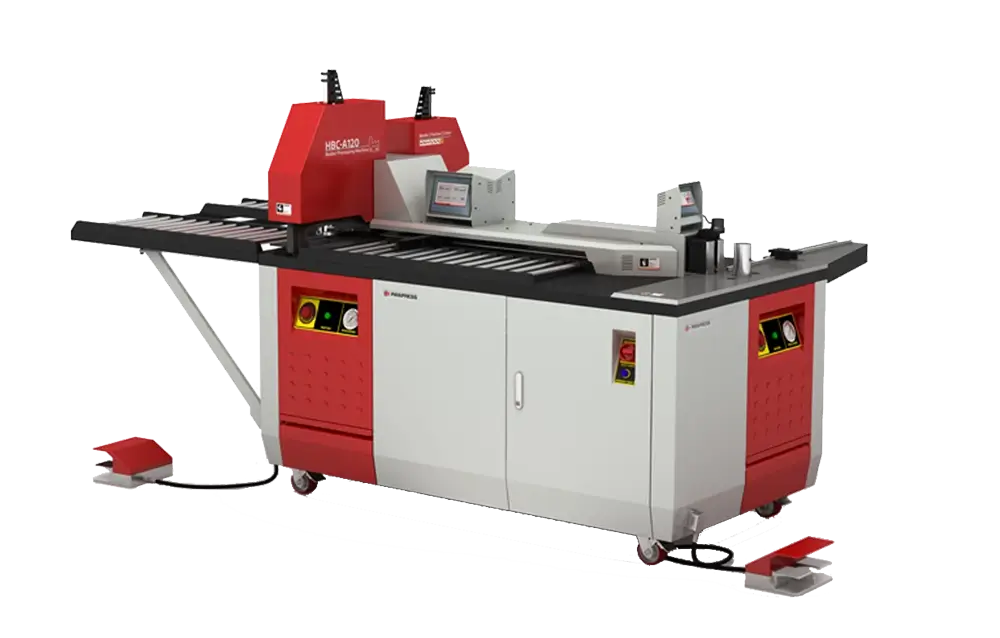
If you are looking for more information about topic about Metal Punching Machines, it is recommended not to miss reading this article.
What Is a Corner Notcher?
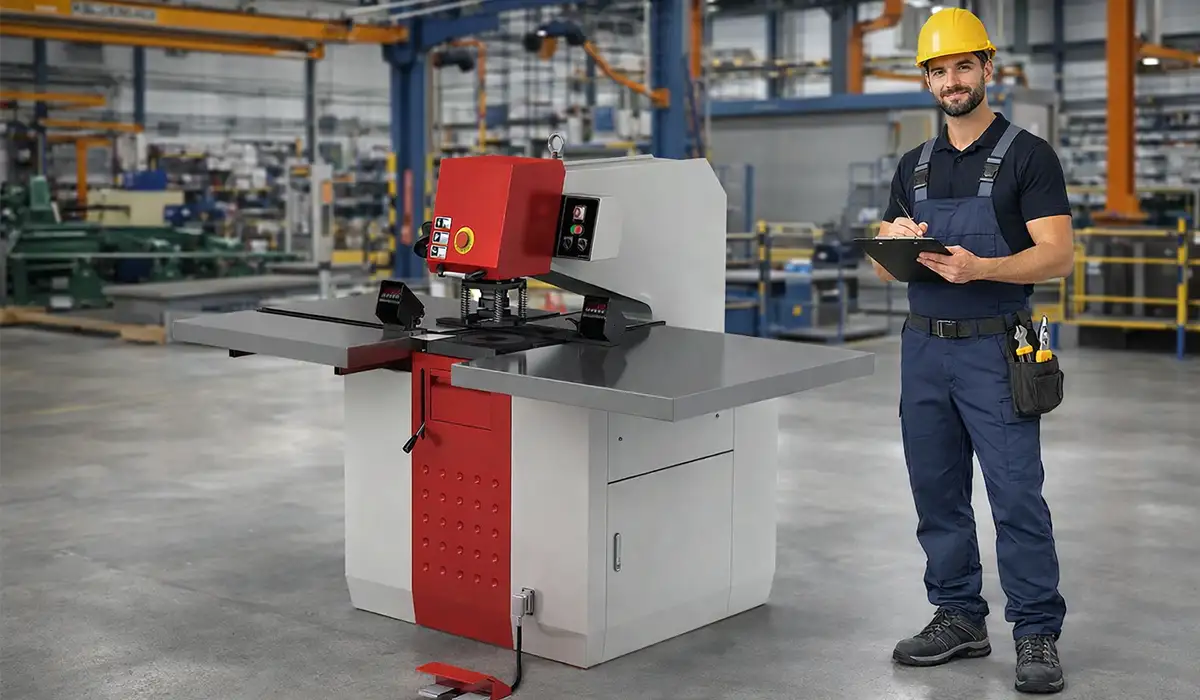
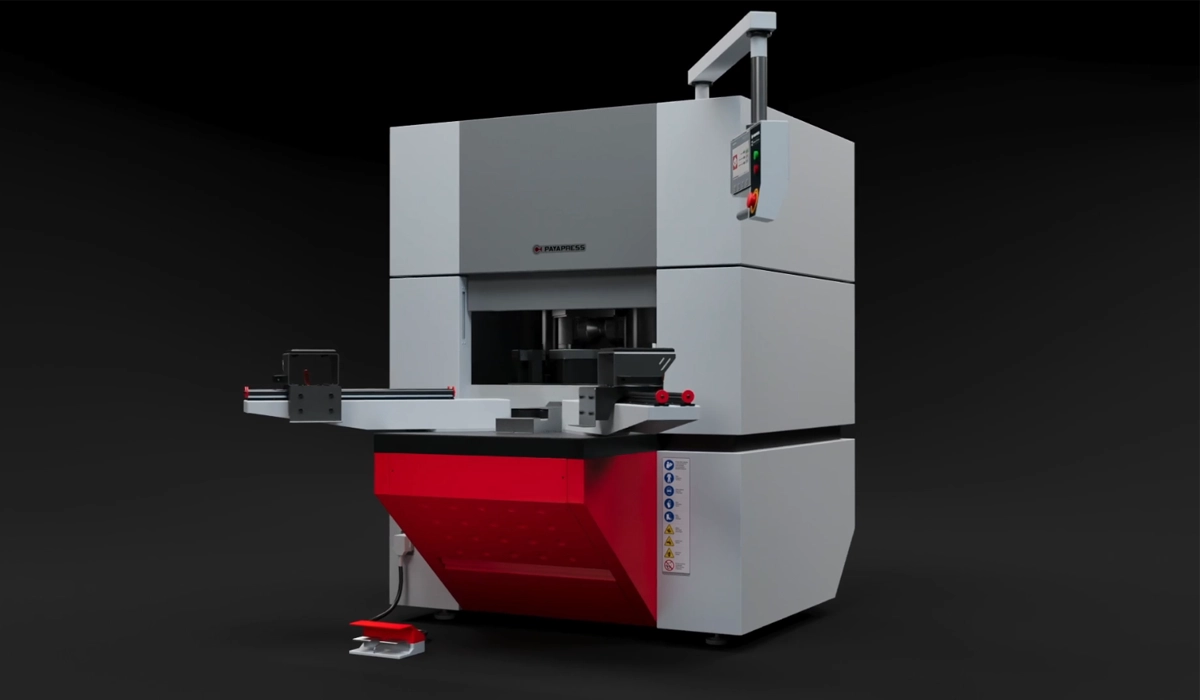
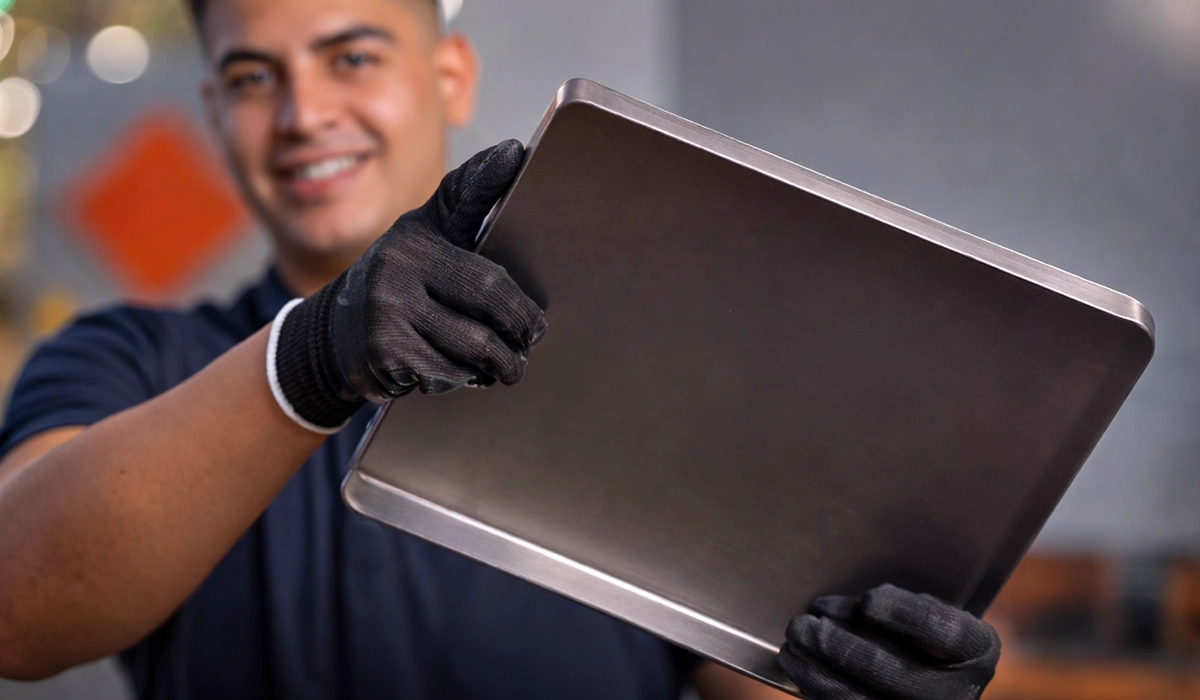
A corner notching machine is a specialized fabrication tool designed primarily to shear the corners off metal sheets, typically at a 90-degree angle. This process is critical before bending operations; without removing the corners, you cannot fold a sheet into a box or pan shape without material overlap. These machines function similarly to a shearing machine but with blades set specifically for corner removal. They are staples in industries producing kitchen equipment, electrical enclosures, and HVAC ductwork — anywhere flat blanks are folded into boxes, pans or cabinets.
In terms of materials, a standard sheet metal notching machine can handle mild steel, stainless steel, aluminum, and copper. The capacity of the machine—often defined by tonnage and cutting force—dictates the maximum thickness it can shear. While a corner cutter machine is often associated with fixed 90-degree cuts, its role is foundational in reducing manual trimming and ensuring that subsequent bending processes result in perfectly aligned edges.
What is an Angle Notching Machine?
While a corner notcher is often fixed, an angle notching machine offers significantly more versatility for complex geometries. These machines are engineered to cut metal sheets at various angles, not just the standard 90 degrees. This capability is vital for creating non-rectangular shapes, triangular cuts, or specific geometric patterns required for architectural metalwork or custom automotive parts.
The primary difference lies in the blade configuration. A dedicated angle notcher lets the operator adjust the cutting angle across a range that is typically 30° to 140°, depending on the model. That range is what distinguishes it from a fixed notching press — it accommodates irregular shapes a fixed setup cannot. For a shop handling diverse client specifications, switching from a 30° notch to a 120° notch without a tool change is what makes the angle notcher the more flexible buy.
Corner Notcher vs Angle Notcher: Which Do You Need?
| Corner notcher (fixed) | Angle notcher (variable) | |
|---|---|---|
| Cutting angle | Fixed at 90° | Adjustable, typically 30°–140° |
| Setup time | None — always ready | Blade angle set per job |
| Rigidity | Higher — no adjustment mechanism | Lower — adjustment introduces play |
| Cycle speed | Faster on repeat work | Slower where the angle changes |
| Best for | Box and pan making, high volume, unchanging notch | Job shops, architectural work, mixed geometry |
| Typical cost | Lower | Higher |
The decision in one line: if your notch is always 90°, buy fixed and get the rigidity and speed. If it isn’t, buy variable — the setup time costs less than owning two machines.
Types of Notching Machines
When evaluating metal fabrication tools, understanding the specific types of notching equipment is crucial. The market is generally divided into fixed angle notching machines and variable angle notching machines, though distinctions also exist between manual, pneumatic, and hydraulic power sources.
Fixed angle notching machines are the workhorses for standard box-making, locking the blades at 90 degrees for rapid, repeatable production. In contrast, variable models allow for back gauge adjustment for notchers, enabling the operator to alter the geometry of the cut. Furthermore, operation styles range from a simple manual notching tool for light gauge work to powerful hydraulic notching machines capable of shearing thick plate steel with immense cutting force and tonnage.
Fixed Angle Notching Machines
Fixed angle notching machines are engineered for rigidity and speed, permanently set to cut at 90 degrees. Because there are no moving parts in the angle adjustment mechanism, these machines offer exceptional durability and consistent precision for standard rectangular notches. They are the ideal corner notcher for high-volume production where the notch shape rarely changes.
Variable Angle Notching Machines
Variable angle notching machines feature adjustable blades that can be set to different degrees, typically ranging from 30 to 140 degrees. This flexibility allows a single angle notching machine to handle diverse jobs, from standard corners to complex geometric patterns. They are essential for job shops where sheet metal processing requirements change daily.
Manual vs CNC Notching Machines
Manual notching machines rely on operator effort or foot pedals and are best suited for thin gauges and low-volume work. They are cost-effective but lack speed. Conversely, CNC notching machines automate the back gauge and blade positioning, delivering unmatched precision and throughput. For complex sheet metal notching, CNC is the industry standard for efficiency.
The dividing line in practice is back gauge repeatability. A manual notcher relies on the operator setting a stop; a CNC unit positions it to within a few tenths of a millimetre and recalls it for the next job. On boxes where four corners must match, that difference shows up in the assembly, not the notch.
Pneumatic vs Hydraulic Notching Machines
Pneumatic notching machines utilize compressed air, offering a quick cycle time ideal for lighter gauge metals like HVAC ducting. Hydraulic notching machines use fluid power to generate the force needed for thicker plate. While hydraulic units are slower, their capacity to handle heavy industrial machinery tasks is superior.
Notching Capacity: Thickness, Tonnage and Blade Length
The page above talks about capacity without giving numbers. These are the three specs that decide whether a machine can do your work:
Sheet thickness. Rated in mild steel. A machine rated for 2 mm mild steel will not do 2 mm stainless — stainless needs roughly 1.5× the force of mild steel, aluminium roughly half. Always check whether the quoted capacity is mild steel, and derate accordingly.
Blade length (notch size). The maximum leg length of the notch, quoted as blade length × blade length. This limits how big a corner you can remove in one stroke.
Tonnage. Follows from thickness and blade length — the force needed to shear the full cut length in one hit.
The relationship to hold onto: shearing force scales with cut length × thickness × material shear strength. Doubling the notch size doubles the force; moving from mild steel to stainless raises it by half again. A machine comfortably notching 2 mm mild steel at full blade length may stall on the same cut in stainless.
Before specifying, confirm three numbers with the supplier: the rated thickness in the material you actually run, the maximum notch leg length, and the angle range if variable. A capacity quoted only as “2 mm” without stating the material tells you nothing.
Choosing the Right Notching Machine for Your Needs
Selecting a notcher comes down to four questions, in order:
- What angle do you cut? Always 90° → fixed. Anything else → variable.
- What material and thickness? Stainless needs roughly 1.5× the force of mild steel at the same gauge. Specify to your worst case, not your average.
- What volume? Low volume and mixed work → manual or basic hydraulic. High volume with repeat geometry → CNC back gauge.
- Notcher or laser? A laser offers infinite flexibility; a mechanical notcher is faster and cheaper per hit for simple, repetitive corner removal. If the notch is the same on every part, the notcher wins on cost per piece.
Notching Machine Maintenance and Troubleshooting
Proper maintenance is vital to extending the life of your corner and angle notching machines. The most common issue is blade degradation; dull blades increase the load on the machine and produce burred edges. Regular tool maintenance for notching machines involves inspecting the gap between the upper and lower blades to ensure a clean shear. Misalignment here is a frequent cause of poor cut quality and machine jamming.
Additionally, hydraulic systems require checks on fluid levels and hoses to prevent leaks, while pneumatic systems need clean, dry air to avoid corrosion. Troubleshooting common notching machine issues often starts with checking the back gauge adjustment and ensuring the worktable is debris-free. Neglecting these small tasks can lead to costly downtime and expensive repairs on your notching dies and tooling.
Key Maintenance Tips:
- Sharpening: Regularly check and sharpen the notching blades to maintain cutting precision.
- Lubrication: Lubricate moving parts and guide ways daily to prevent wear.
- Alignment: Inspect back gauges and blade clearance to ensure proper alignment.
- Cleaning: Keep the machine clean from metal debris and dust to prevent jamming.
On blade clearance specifically: the gap between upper and lower blades should be set as a percentage of material thickness — typically 5–10% — and checked when material changes. Too tight and the blades chip; too loose and you get a rolled, burred edge instead of a clean shear. Most poor-cut complaints trace back to this one setting rather than to blade sharpness.

Rate this article
Choose a rating from 1 to 5 stars.
No ratings yet