





If you’d rather listen than read, feel free to play the audio file below for the rest of this article.
Cold Forming: A Clear Definition
The cold forming process is the permanent shaping of metal below its recrystallization temperature — the point at which a deformed grain structure would reform into new, strain-free grains. Working below that threshold means the deformation stays locked into the material rather than annealing itself out.
Force comes from a die and press, a press brake, or a set of rollers, depending on the process. Cold metal forming needs no furnace, no soaking time, and leaves no scale to remove afterwards, which removes several operations from the production route before any part is made.
One scope note matters here. The term “cold forming” also covers cold heading of fasteners and massive forming closer to forging, which are different industries with different equipment. This article deals with cold forming sheet metal specifically: flat stock worked into panels, enclosures, profiles, and corners.
Why it matters commercially is straightforward. Working cold gives tighter dimensional accuracy, a better surface finish, and faster cycle times than heated processes, which is what makes it the default for series production in cabinet, enclosure, and panel work.
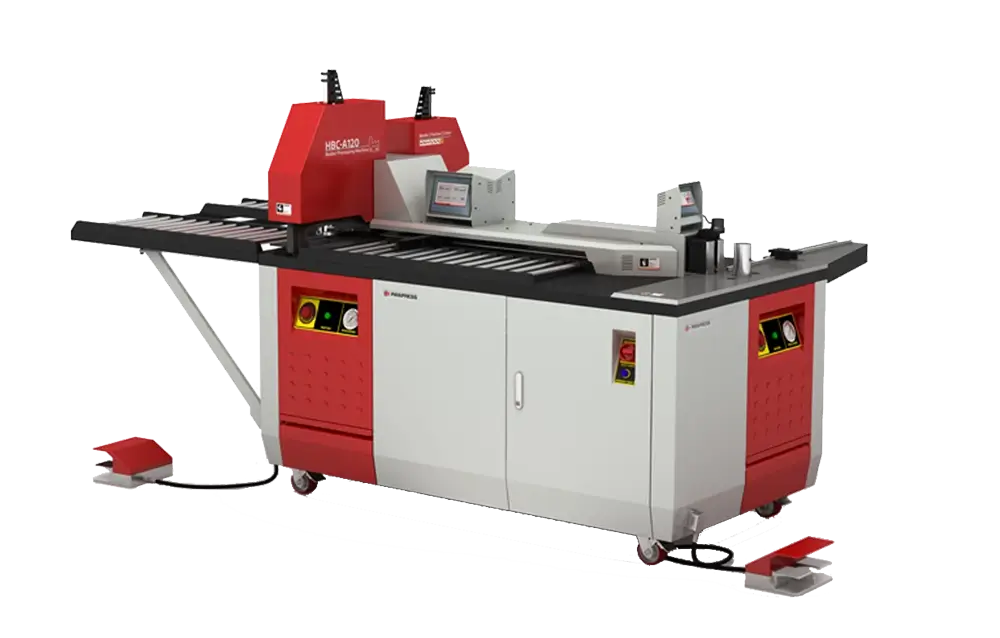
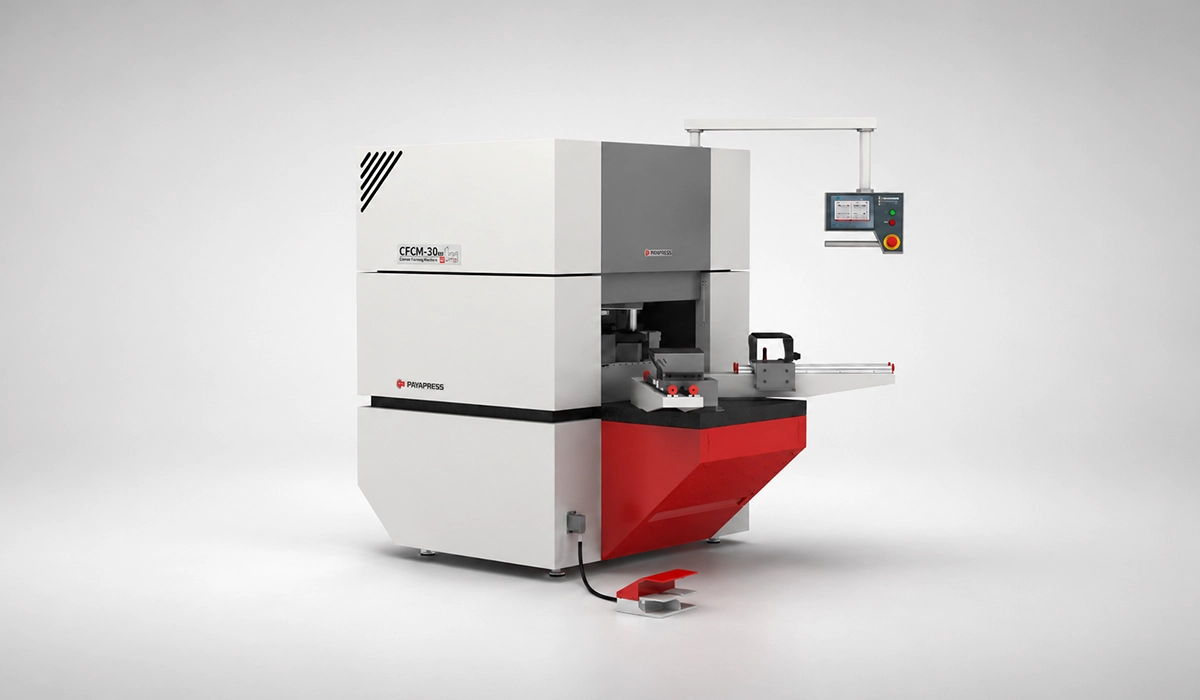
Before reading more about cold forming sheet metal technology, we recommend taking a look at the corner forming machine — one of the products built on this technology. You can also watch the video below to see it in action.
How It Works: Plastic Deformation and Work Hardening
Three things happen when cold working metal at room temperature, and understanding all of them prevents most forming problems on the shop floor.
Plastic deformation. Every metal has a yield strength — the stress level beyond which it stops springing back and starts deforming permanently. Below yield, the metal behaves like a spring. Above it, the grain structure slips and the new shape holds. Cold forming works by pushing the material past that point in a controlled way.
Work hardening. As the metal deforms, dislocations in its crystal structure multiply and tangle, making further deformation harder. Does cold forming make metal stronger? Yes — yield strength and hardness both increase in the formed zone. The caution is that ductility falls at the same time, so a heavily worked area has less capacity to deform again before cracking.
Springback. Because part of the deformation is elastic, the metal pulls back slightly when pressure releases. A 90-degree bend formed to exactly 90 degrees will open to 91 or 92. Machines and tooling compensate by over-bending, and the required allowance varies with material, thickness, and radius. Springback is the single most common cause of parts arriving out of tolerance, and it is predictable rather than random.
If you want to see how this process works on a real machine, our how choose corner machine covers the full setup and operation. It explains how a finished R-corner is formed in one step without welding or grinding.
Main Cold Forming Processes in Sheet Metal
Four sheet metal forming processes account for most cold work in fabrication shops. They differ in how force is applied, what geometry they produce, and the volume at which they make economic sense. Most shops run at least two of them, and the choice for a given part usually comes down to geometry and quantity rather than preference.
For updated product, service, or technical information, review the source website directly.
| Process | What It Does | Typical Products | Best For |
|---|---|---|---|
| Bending / Edging | Straight-Line Bends with Press Brake | Panels, Brackets, Flanges | Almost Every Fab Shop |
| Stamping / Deep Drawing | Die + Press Shapes | Covers, Trays, Housings | High-Volume Series |
| Roll Forming | Continuous Rollers Form Profiles | Channels, Rails, Sections | Long Constant Profiles |
| Cold Corner Forming | One-Step Finished R-Corners | Cabinet Doors, Enclosures | Replacing Weld + Grind |
Bending and Edging
Is bending a cold forming process? Yes, and it is by far the most common one. A press brake drives a punch into a die, forming a straight-line bend along the sheet. Folding machines achieve the same result with a clamping beam and a rotating folding blade.
Bending is where springback is managed most actively: the press brake over-bends by a calculated allowance so the part relaxes to the target angle once pressure releases. Modern controls store that allowance per material grade and thickness, which is why repeatability improves once a job has run before.
This external page provides additional insights that may help with your evaluation.
Stamping and Deep Drawing
Stamping uses a matched die set in a press to cut and form a shape in one or several strokes. Deep drawing pulls flat stock into a die cavity to create a three-dimensional part with significant depth — trays, covers, and housings.
Both deliver excellent repeatability at speed, and both are cold processes despite the forces involved. The barrier is tooling: dies are expensive and part-specific, so the economics only work across high volumes where tooling cost divides down to a small figure per part. Below that threshold, bending a part from several pieces is usually cheaper.
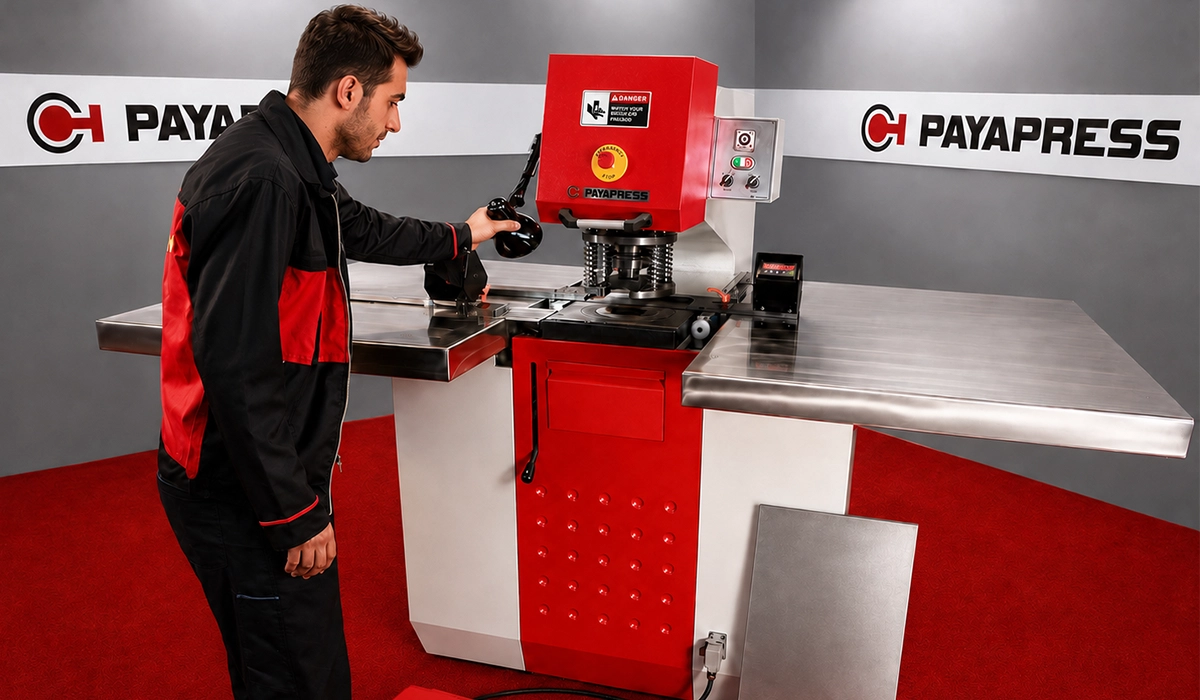
Cold forming is not limited to bending, as cutting and punching are also done at room temperature. Read more about automatic punching and shearing to see how these operations fit into a modern production line.
Roll Forming
Roll forming passes strip through a series of roller stands, each adding a small amount of bend until the finished profile emerges. Because forming is progressive rather than in one hit, forces stay low and the material work-hardens gradually.
It suits long parts with a constant cross-section — channels, rails, framing sections, and trim. Output rates are high and material use is efficient, but the roller set is dedicated to one profile, so changeover to a different section is a significant operation rather than a tooling swap.
Cold Corner Forming
Reference: ISO 12100 — Safety of machinery, general principles — Machinery reference relevant to corner forming equipment selection.
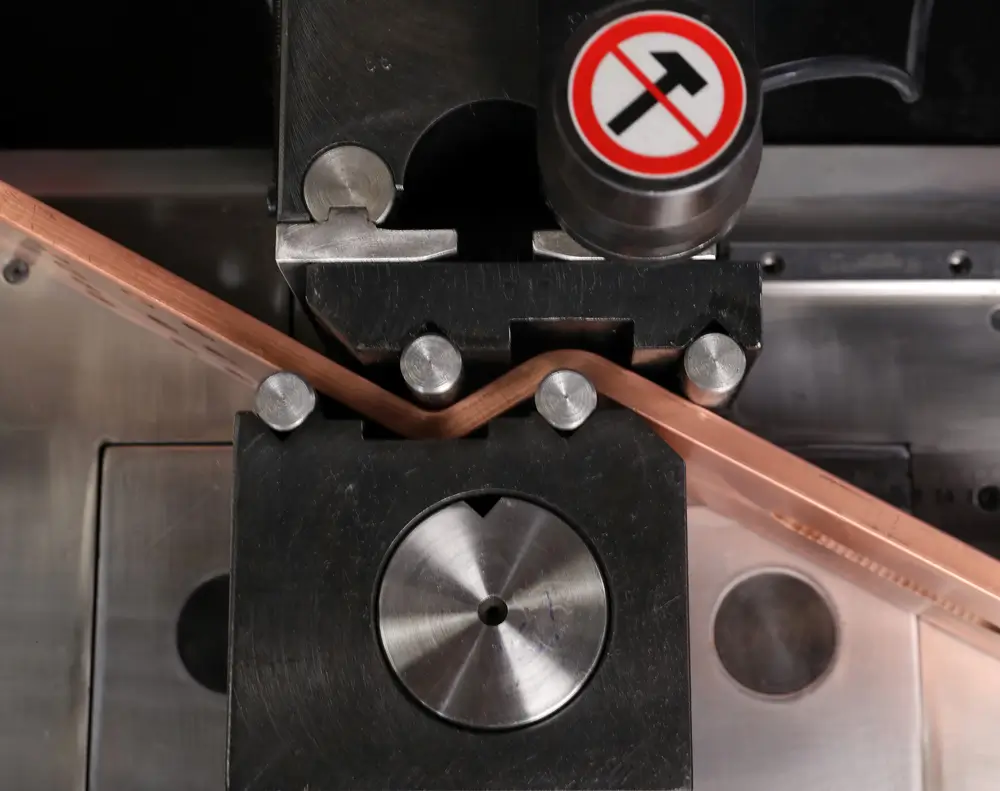
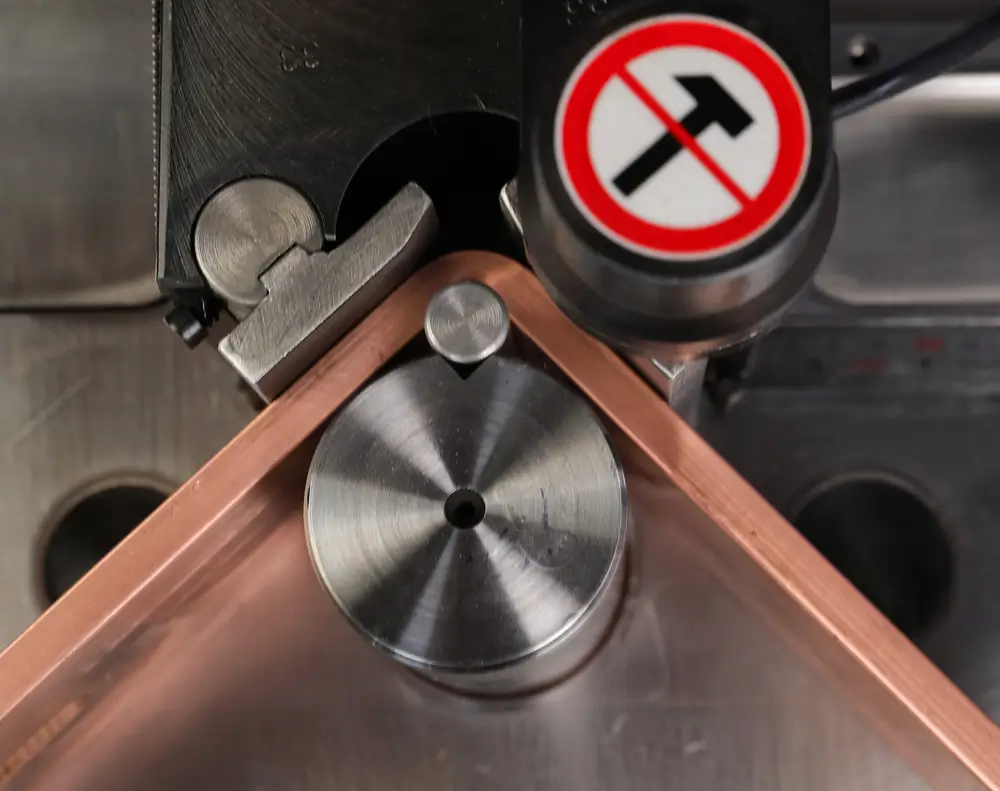
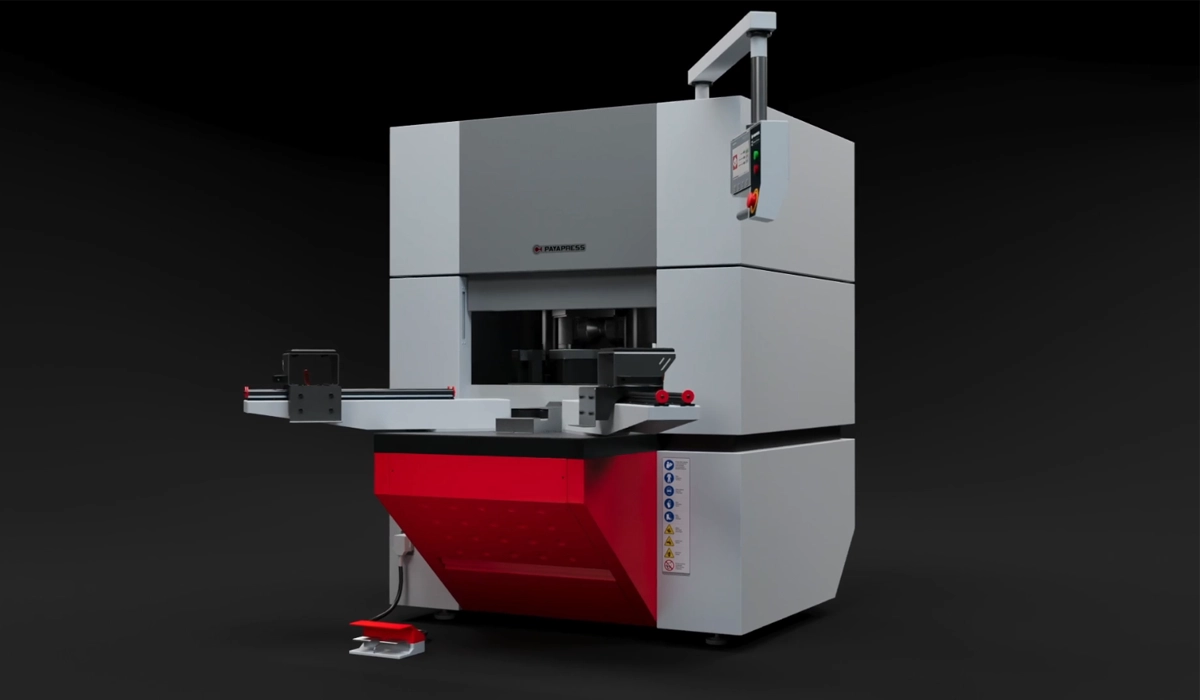
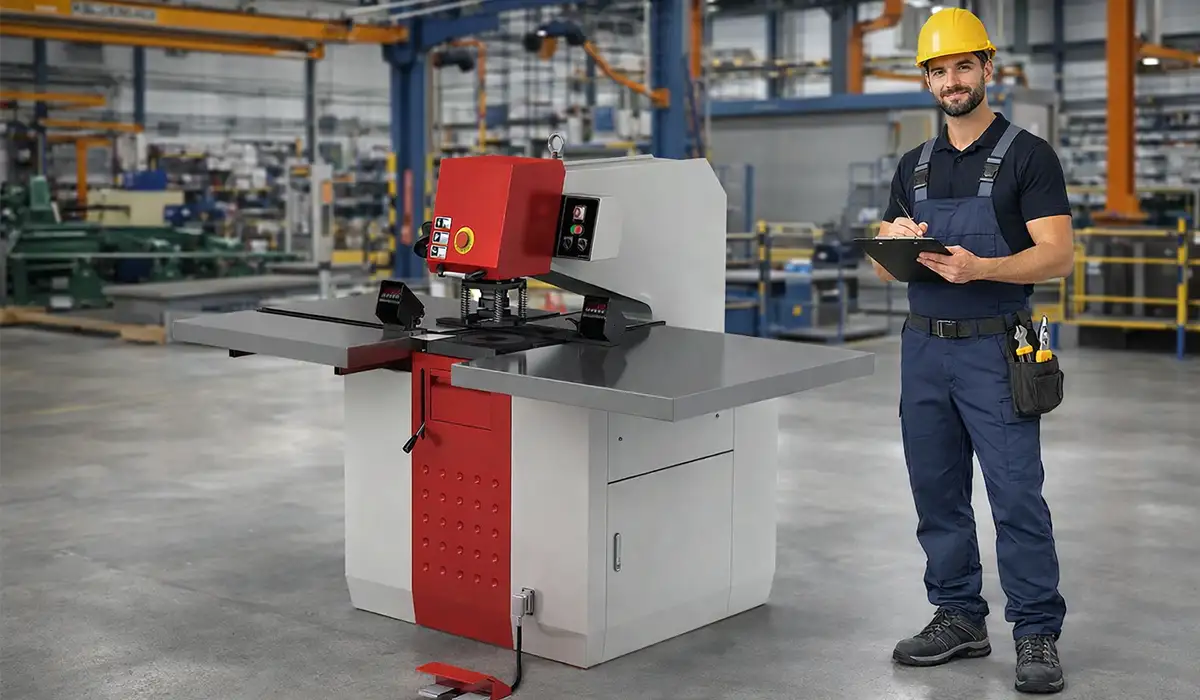
A corner former machine cold-forms a finished R-corner in a single operation, closing the joint between two flanges without heat, filler, or any grinding step afterwards. It replaces the traditional weld-and-grind sequence on cabinet doors, enclosures, and panel housings, and it is the clearest example of cold forming sheet metal displacing a joining process rather than simply shaping stock.
The cost implications are covered in detail in our comparison of welding vs cold corner forming, including the volume at which the machine pays for itself.
For offline reading, you can download the complete document from this link.
Cold Forming vs Hot Forming: The Key Differences
The dividing line is the recrystallization temperature, not an absolute figure. Above it, deformed grains reform continuously during working, so the metal stays soft and does not work-harden. Below it, deformation accumulates in the structure. That single difference drives everything else in the comparison, from dimensional accuracy to energy consumption.
| Factor | Cold Forming | Hot Forming |
|---|---|---|
| Working Temperature | Room Temperature | Above Recrystallization Temp |
| Dimensional Accuracy | High | Lower (Thermal Shrinkage) |
| Surface Finish | Smooth, Often No Finishing | Scale/Oxide, Needs Finishing |
| Material Strength After | Increases (Work Hardening) | Unchanged or Lower |
| Energy Use | Lower | Higher (Heating) |
| Springback | Present — Must Compensate | Minimal |
| Best For | Thin–Medium Sheet, Series Production | Thick Sections, Extreme Deformation |
Two rows in that table deserve attention. Dimensional accuracy favors cold work because there is no thermal contraction to predict as the part cools — what leaves the die is what the part measures. Surface finish follows the same logic: heating steel in air forms scale, which has to be removed before coating, adding an operation that cold work never creates.
Springback is the one row where cold forming carries the penalty. Hot-formed material relaxes as it cools rather than springing back elastically, so no compensation is needed. In cold work it always is.
The cold forming vs hot forming difference becomes decisive at the extremes. Hot forming is required for very high-strength steels that would crack when worked cold, for thick sections where cold forming forces become impractical, and for extreme deformation where the material would exhaust its ductility long before reaching final shape. For typical sheet gauges in enclosure and panel work, none of those conditions applies, which is why cold processes dominate the sector.
Before a sheet is bent or formed, holes and notches are usually prepared first. A punching and notching machine handles this stage quickly and with high repeatability.
Advantages and Limitations of Cold Forming
Every process trades something. Understanding cold forming advantages and disadvantages together is what allows a fabricator to specify it confidently rather than by default.
| Advantages | Limitations |
|---|---|
| High Accuracy and Repeatability | Higher Forming Forces Needed |
| Smooth Surface, Less Finishing | Springback Must Be Managed |
| Stronger Parts (Work Hardening) | Reduced Ductility After Forming |
| Lower Energy Cost, Less Waste | Not Suitable for Brittle Metals |
| Fast for Series Production | Thickness Limits per Machine |
The accuracy and finish advantages compound in production. A part that leaves the machine to tolerance with a clean surface skips two downstream operations, and across a batch that removes labor rather than just reducing it. The strength gain from work hardening is a genuine bonus where the formed zone carries load, though it should be treated as a property change rather than a free upgrade.
The limitations cluster around material behaviour. Forming forces rise steeply with both thickness and material strength, so a machine comfortable with 2 mm mild steel may stall on the same gauge in a high-strength grade. Springback demands setup discipline and verified allowances. Reduced ductility after forming matters if the part sees a second operation in the same area. And brittle materials will not tolerate the strain at all, regardless of machine capacity.
For most enclosure, panel, and cabinet work in standard gauges, the advantages win comfortably. The limits appear when material gets thick, hard, or brittle — and at that point the real question is whether to redesign the part or change the process.
What Metals Can Be Cold Formed?
Any sufficiently ductile, non-brittle metal can be cold worked. In sheet fabrication that means four materials cover almost everything.
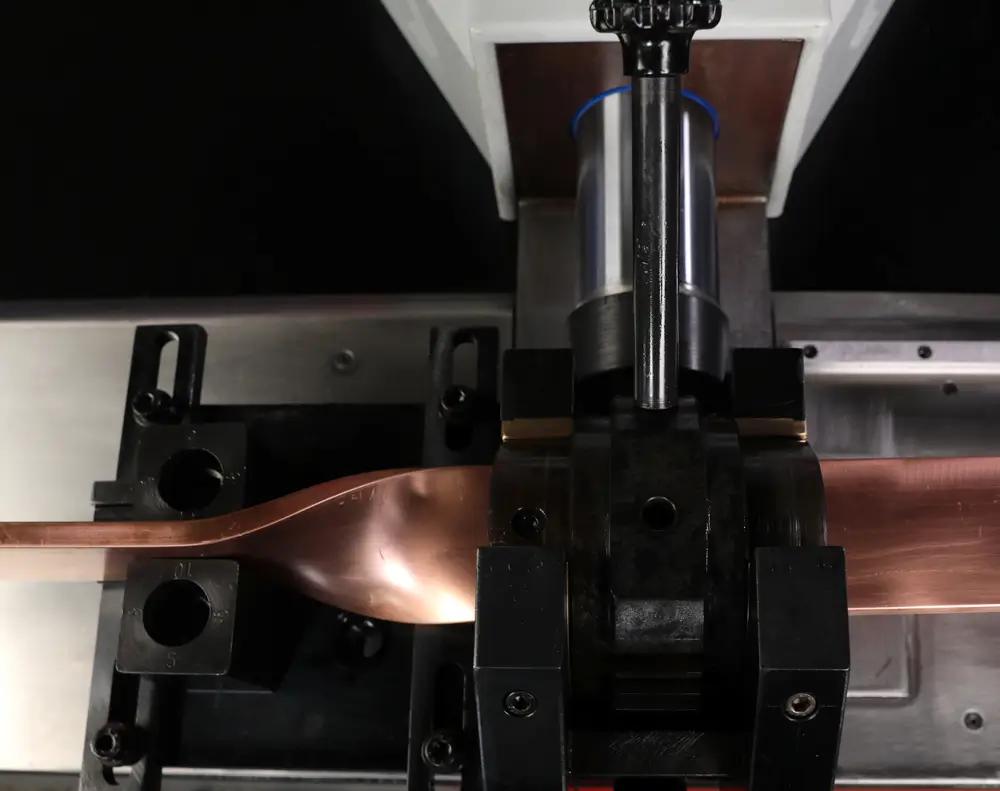
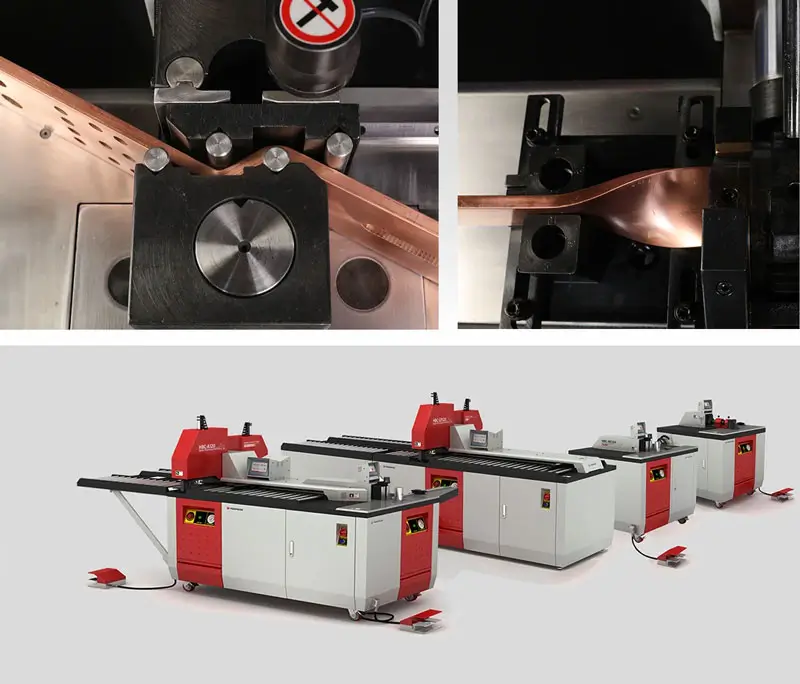
Cold-rolled steel is the workhorse: predictable, economical, and forgiving of moderate over-bending. Stainless steel forms well but work-hardens faster than mild steel, so it springs back more and demands greater force at the same gauge. Aluminium forms easily and at low force, though alloy and temper matter considerably — some tempers crack at radii that others handle without difficulty. Copper is highly ductile and forms readily, which is why busbar work relies on cold processes throughout.
The cautions are consistent. High-strength and advanced high-strength alloys need larger bend radii and more springback allowance, and may exceed machine capacity at thicknesses that mild steel handles comfortably. Confirm the working range against the specific machine and tooling before committing [VERIFY exact thickness limits against machine specifications].
A Fabricator’s Checklist Before Cold Forming
Six checks prevent most first-article failures when cold forming sheet metal on any machine.
Material grade and thickness against machine capacity. Confirm the actual grade, not the nominal one — a higher-strength substitute at the same thickness can exceed the rated force of the sheet metal machine.
Grain direction. Bending parallel to the rolling direction cracks more readily than bending across it. On tight radii this is the difference between a good part and a scrapped one.
Springback allowance. Verify the allowance for this material, thickness, and radius. Values carried over from a similar job are a common source of angle errors.
Tooling condition. Worn punch radii and damaged die shoulders change the formed result before anyone notices in the setup.
Minimum bend radius. Every material and thickness combination has one. Below it, the outer fibre exceeds its ductility and cracks.
Finish requirements. Confirm whether the surface is visible in the finished product, which determines tooling protection and handling.
Machines that apply high forming forces need regular care to stay accurate and safe. Our guide on punching machine maintenance shows the key checks every operator should follow.
Conclusion about Cold Forming
Cold forming is the permanent shaping of metal at room temperature, below its recrystallization point, using mechanical force alone. The trade-off is consistent: excellent accuracy, finish, and speed, paid for with higher forming forces, springback management, and real material limits.
Modern equipment has widened what the process covers: corner formers and CNC benders now produce finished geometry in one operation that once required welding, grinding, and finishing. Reviewing current part geometry and volumes is the place to start.


Rate this article
Choose a rating from 1 to 5 stars.
No ratings yet