


If you’d rather listen than read, feel free to play the audio file below for the rest of this article.
What Is LSC 2B?
LSC2B is a loss of service continuity category in IEC 62271-200. When an eligible compartment opens, all other units and at least one busbar set may remain energised, alongside that unit’s cables.
A functional unit comprises the equipment performing one function, such as an outgoing feeder. For example, its breaker occupies an accessible compartment within that unit. This IEC classification concerns metal-enclosed assemblies above 1 kV and up to 52 kV.
However, this classification does not permit access to exposed live cable terminations or opening a live single-busbar compartment. Its benefit is continuity during defined access, rather than a promise of uninterrupted supply during every maintenance task. It describes a design capability, so the manufacturer’s instructions still control each access operation. Therefore, identify which compartment the maintenance team needs to open.
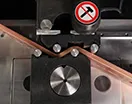
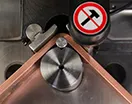
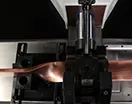
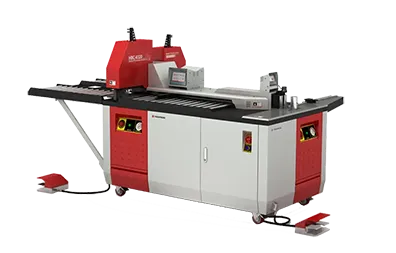
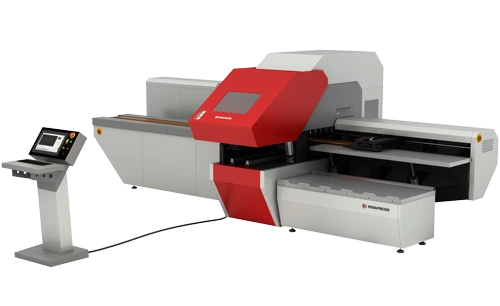
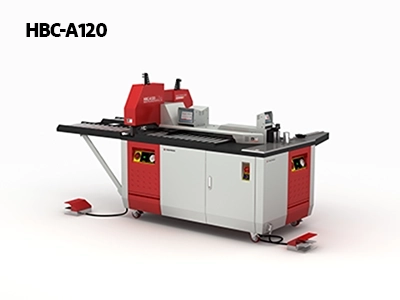
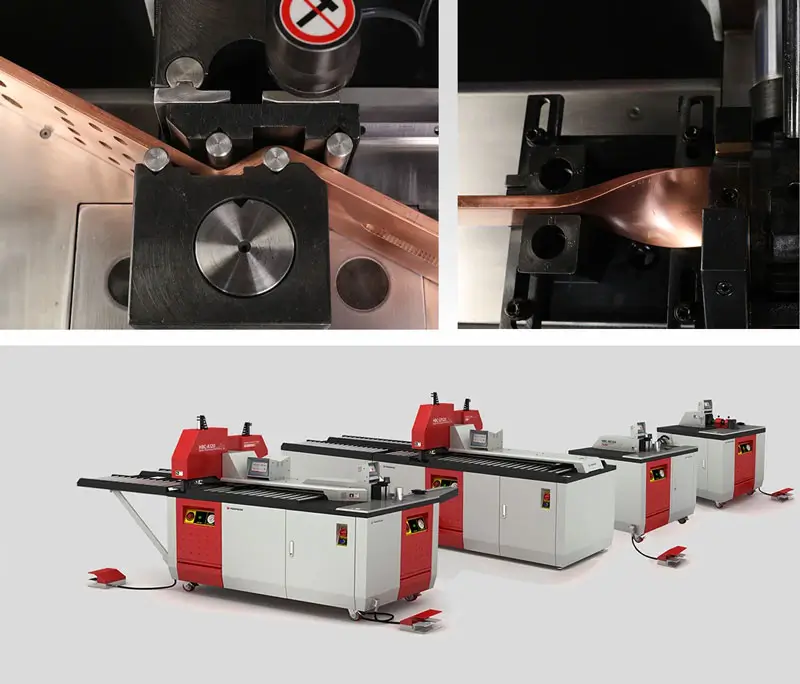
The HBC-A200 machine handles cutting, punching, and bending operations for busbars up to 200 × 20 mm. With three independent hydraulic power units, it supports simultaneous operations for large-scale electrical switchgear production.
How LSC Categories Work: LSC1, LSC2, LSC2A, LSC2B
Read these categories as access capabilities, rather than reliability grades. The table below distinguishes the connection compartment from other accessible spaces. Because maintenance needs differ, specify the required access conditions for each functional unit.
LSC2B is only one of many declarations that govern medium-voltage assemblies and their busbar systems. For a wider view of how IEC and IEEE documents fit together, see our guide to switchgear standards.
| Category | What must be switched off for access? | Typical design implication |
|---|---|---|
| LSC1 | At least one additional unit for an applicable access operation. | Shared compartments can require wider isolation. |
| LSC2 | The connection work area; other units and a busbar set can stay live. | Connection access with busbars energised. |
| LSC2A | The unit’s cables when another eligible compartment opens. | Cable-side isolation for that access. |
| LSC2B | The work area; cables can stay live during that same access. | Separate cable-side disconnection and barriers. |
LSC2 is also a standalone category: it guarantees the connection-access condition without promising every other compartment is accessible with busbars live. Consequently, the A and B suffixes add specific capabilities within that family.
The 2024 definition covers connection-compartment access plus other compartments accessible in normal use: interlock-controlled or procedure-based. Other tool-based compartments fall outside normal-use access; non-accessible compartments provide no planned access.
Therefore, a removable cover alone does not establish service continuity. Check the revised access wording in the 2024 IEC amendment.
LSC2A vs LSC2B: The Cable Question
For example, feeder 3’s breaker needs replacement in an illustrative four-feeder board. Another supply keeps the busbars and feeders 1, 2 and 4 energised; feeder 3’s cables have an independent source.
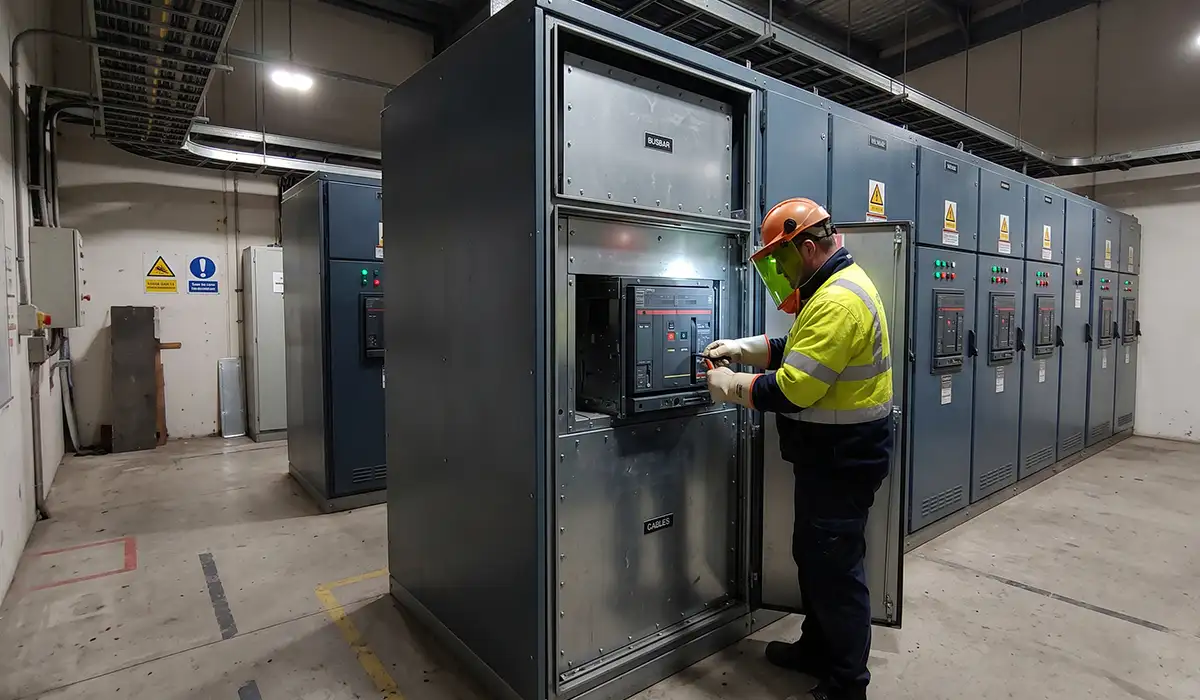
In the LSC2B design, the breaker opens and its withdrawable part moves to the disconnected position under the manufacturer’s procedure. Shutters cover the live fixed contacts, so authorised access to the breaker compartment can follow.
Meanwhile, the separate cable compartment can remain live behind its barriers. In the A category, corresponding access requires dead cables and the specified earthing arrangements, including the earthing switch where fitted. Because the cable side remains energised in the B example, its earthing switch stays open and its compartment remains closed throughout breaker access.
Therefore, B can avoid a cable-side shutdown; compare any additional purchase cost with that benefit. It does not keep a radial load supplied through the removed breaker.
ABB’s UniGear ZS1 illustrates a withdrawable design with documented service-continuity classifications. Check the particular unit and its access conditions in its classification tables.
In an LSC2B unit the feeder cables can stay energised, so their construction and insulation deserve equal attention. Compare the common cable types to understand what sits behind that cable-compartment barrier.
What PM Adds: Partition Class
Partition class PM specifies continuous, earthed metallic partitions and shutters, where fitted, between an opened compartment and live high-voltage parts. The metal screen also shields the working space from their electric field.
In contrast, PI includes insulating material in at least one partition or shutter. The B category can coexist with PI. Therefore, specify the barrier material separately so fabricators know exactly which construction the purchaser requires.
Barrier material and service continuity describe different features. ABB explains their relationship in its switchgear safety guide.
PM partitions protect the working space only when they are bonded to a reliable earth. Our article on earthing systems explains how that earth connection is arranged in practice.
What LSC2B Does Not Tell You
Assess an LSC2B switchgear offer on four separate declarations: LSC, partition class, IAC and IP. Also check the offered configuration, because a general product-family description cannot establish the classification of every unit. Therefore, compare classifications before evaluating commercial terms.
- Internal arc: the code gives no IAC rating; check the separate internal arc declaration for the offered assembly.
- Ingress protection: it gives no enclosure IP degree; assess that rating separately for the intended installation.
- Construction terminology: metal clad switchgear comes from a different classification system; metal enclosed switchgear is a broader description.
The US construction category uses drawout breakers and grounded metal barriers. Its governing document is the IEEE construction standard.
Because the enclosure rating is declared separately, read it as carefully as the LSC code. Our comparison of IP ratings with NEMA and IK codes shows what each figure actually guarantees.
Conclusion
LSC2B permits defined access while other units, busbars and the same unit’s cables remain live; PM specifies earthed metal barriers. Therefore, match both codes to the intended maintenance task and check the exact functional unit before choosing switchgear for the installation.
Access conditions determine continuity. Schneider summarises the category distinctions.
Opening any compartment near live parts also calls for an arc-flash risk assessment before work begins. Our quick reference on arc flash labels explains what that marking must show.


Rate this article
Choose a rating from 1 to 5 stars.
No ratings yet
0 Comments
No comments yet. Be the first to comment.