





For your convenience, if you prefer listening, you can listen to the rest of this article via the audio file below.
Why Use a Dedicated Wiring Duct Cutter Instead of a Saw?
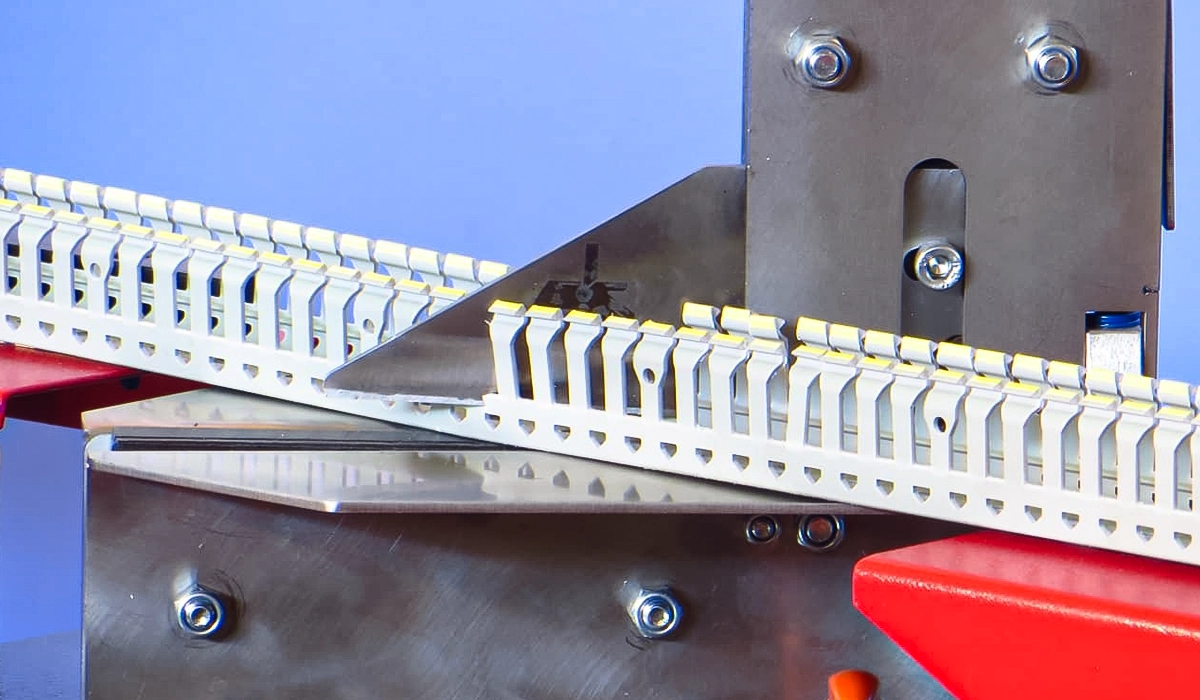
For panel shops still relying on a hacksaw or miter saw, switching to a dedicated wiring duct cutter quickly pays for itself. First, speed matters. A guillotine cutter completes a shear in roughly two seconds, while a hacksaw demands measuring, clamping, sawing, and deburring for every single piece. Across a panel with twenty duct sections, the time savings stack up fast.
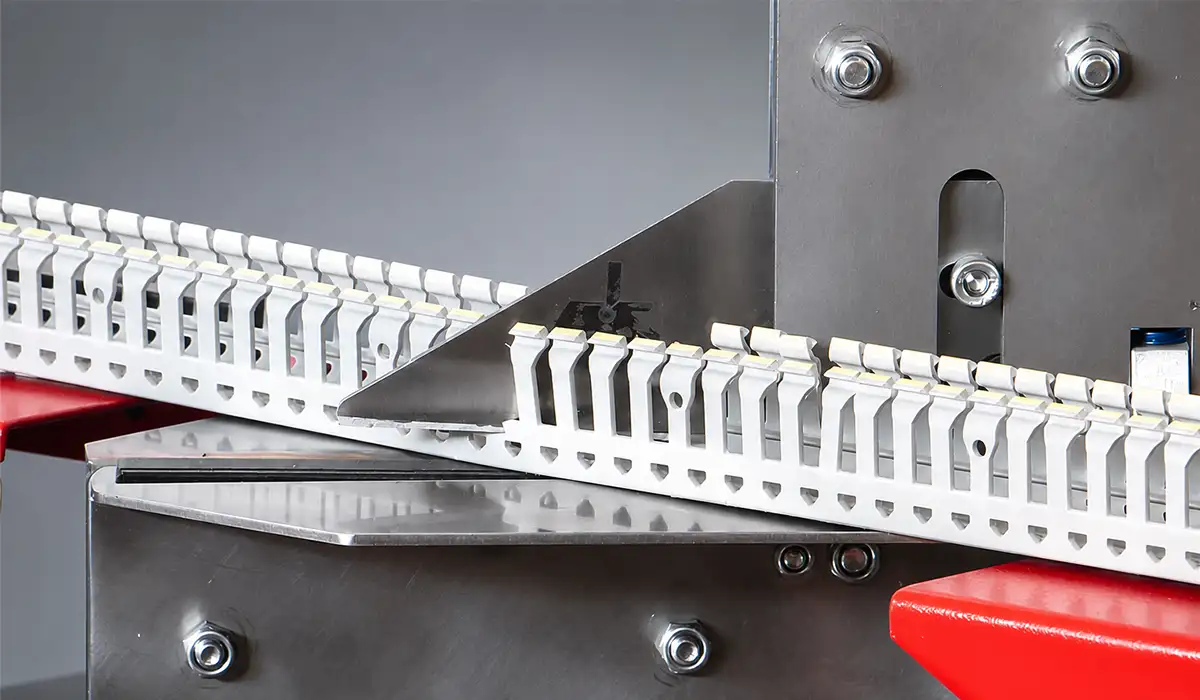
Second, cut quality improves dramatically. Shear-cut edges arrive square and smooth by design, so duct sections butt cleanly at every joint. Saw-cut edges, by contrast, produce ragged profiles that often need finishing before installation. Third, there is no airborne PVC sawdust to contaminate already-assembled enclosures or to settle on terminal blocks. That alone justifies the investment in sensitive control environments.
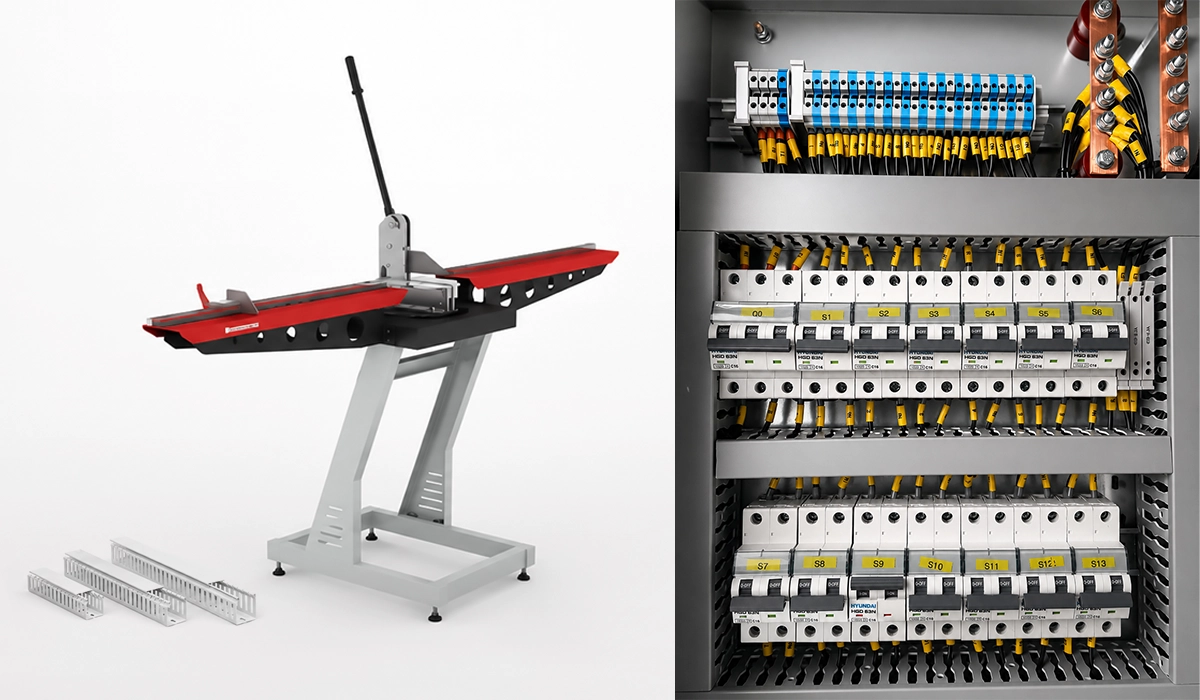
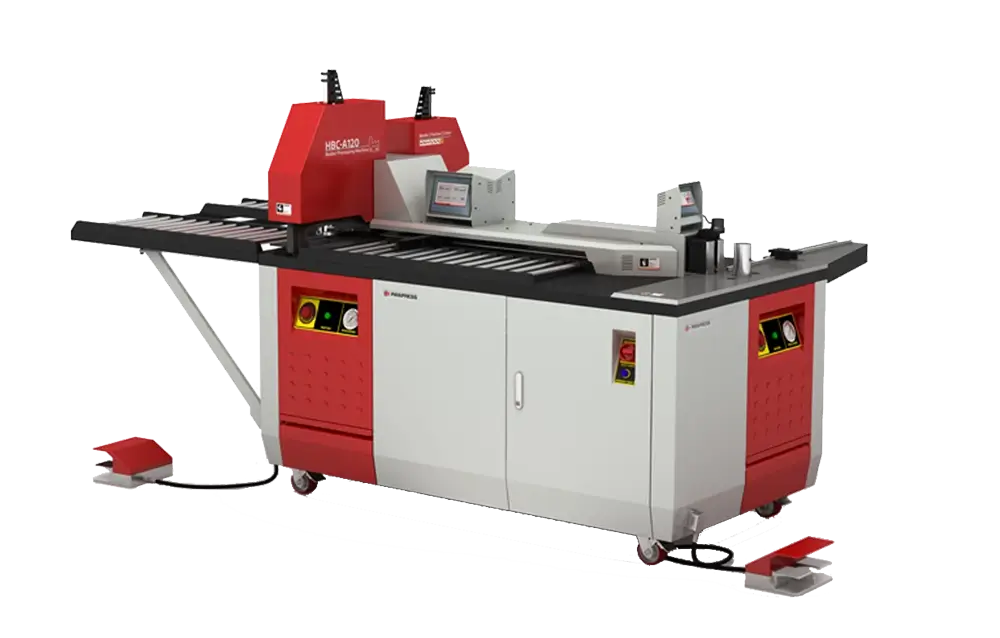
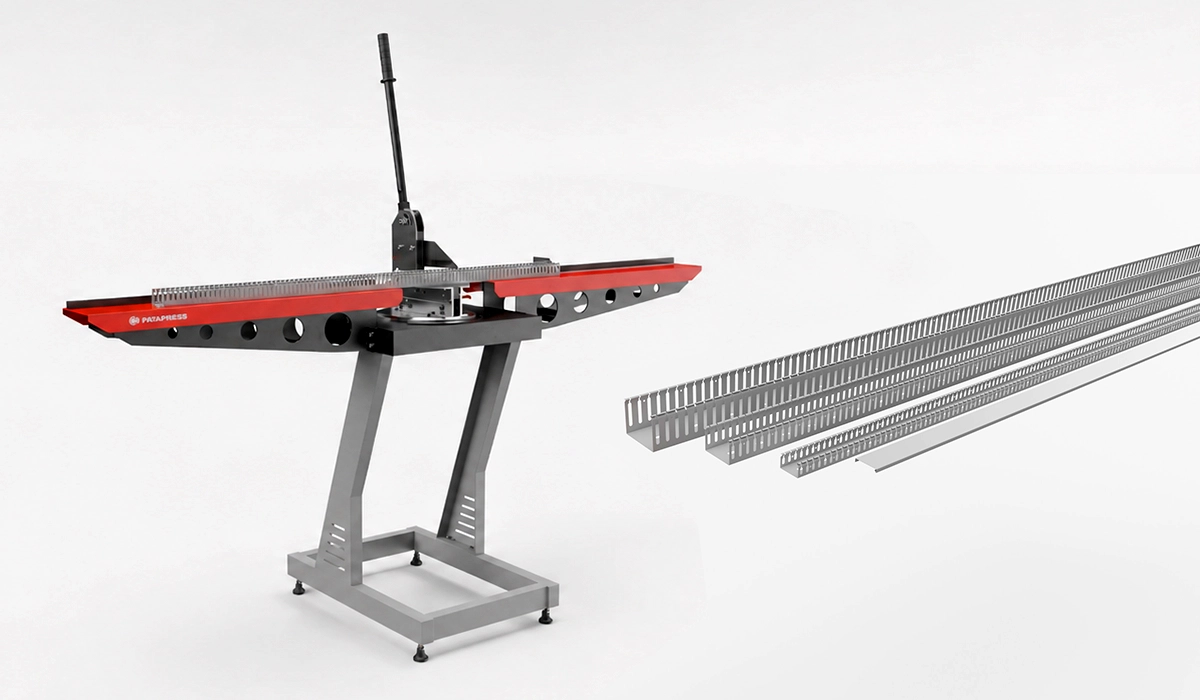
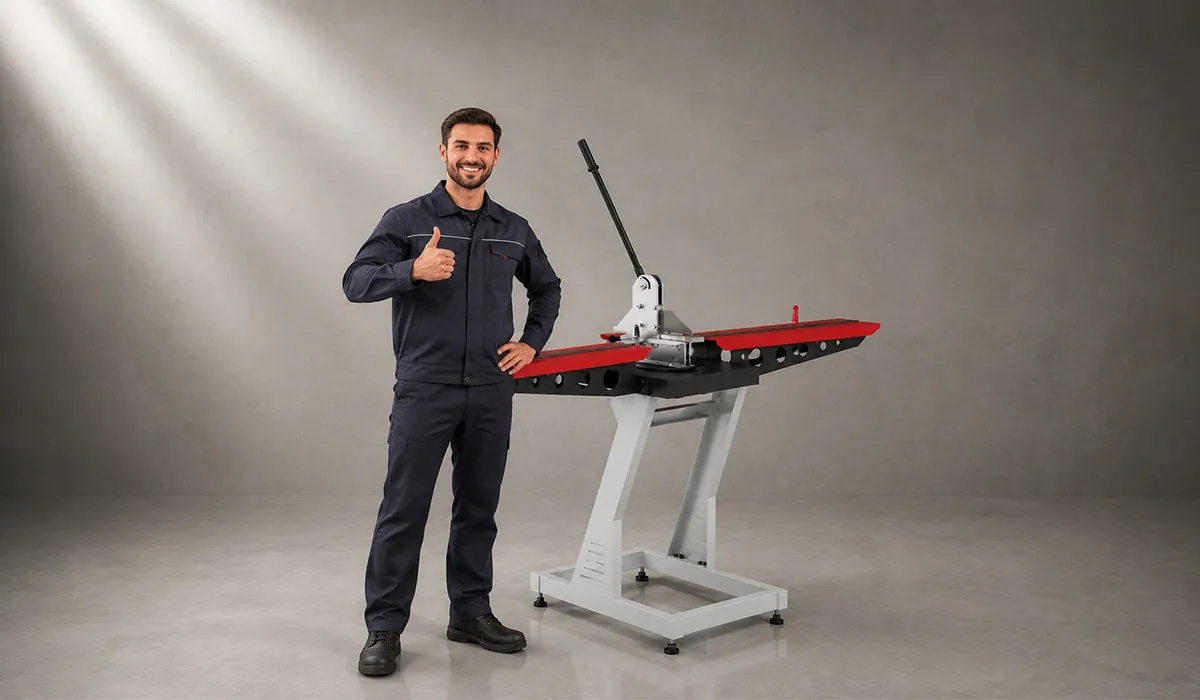
Before taking a closer look at wiring duct cutters and their key advantages, we recommend checking out one of the best duct cutters available on the market.
Furthermore, manual cutters need no electricity, no compressed air, and no blade changes mid-shift. Operators also work more safely without spinning blades, kickback, or flying chips. Consequently, a guillotine duct shear delivers the rare combination of higher quality, faster cycle time, and lower risk in one quiet, compact tool.
This website offers useful supporting information for understanding the subject more clearly on the topic of Productivity guidance showing how bench-mount cutters improve throughput versus general-purpose saws.
Types of Wiring Duct Cutters
The market offers several distinct categories of cable duct cutter, each suited to different production environments. Selecting the wrong category typically leads to wasted effort or premature tool wear. The table below summarizes the main options so engineers can match the tool to the workload.
| Cutter Type | Operation | Duct Size Range | Best For |
|---|---|---|---|
| Handheld Guillotine Cutter | Manual Lever | Up to ~60 mm Wide | Field Work, Small Shops, Light Use |
| Bench-Mounted Guillotine Cutter | Manual Lever, Fixed Base | Up to ~125 mm Wide | Panel Shops, Repetitive Cuts |
| Ratchet-Style Duct Cutter | Progressive Ratchet | Small to Medium Profiles | Reduced Fatigue, Thick Walls |
| Scissor-Style Duct Cutter | Two-Handle Shear | Small Profiles Only | Thin-Wall or Flexible Duct |
| Power / Pneumatic Duct Cutter | Motorized or Air-Driven | Large Profiles | High-Volume Production |
Handheld lever cutters suit technicians who cut occasional lengths on site. Bench-mounted models, however, deliver consistent squareness for shops producing panels daily. Ratchet tools reduce hand strain on thicker walls, while scissor-style snips remain limited to thin profiles. Power cutters fit only the highest-volume operations where speed outweighs the cost of a powered station.
You can review the source here to verify the technical details about the manufacturer overview of cable trunking cutter categories, including handheld, bench, and ratchet models.
Handheld vs. Bench-Mounted: Which Is Right for Your Operation?
Handheld models keep portability and cost low, making them ideal for service technicians and small shops. Bench-mounted cutters, however, win on repeatability and capacity, especially when an integrated stop gauge speeds repetitive cuts to identical lengths.
For any shop building more than a few panels per month, a bench unit is the better default. It delivers cleaner joints, faster throughput, and noticeably less operator fatigue.
For a comprehensive understanding of Improve your workflow for cutting cable management channels, we highly recommend reviewing this article.
Key Benefits of Using a Wiring Duct Cutter
A quality wiring duct cutter rewards panel builders with consistent, measurable gains. Because the blade geometry stays fixed, every shear lands square and burr-free. This consistency matters in professional production, where appearance reflects directly on workmanship and brand reputation.
Throughput also improves sharply. Eliminating the measure-clamp-saw-deburr cycle saves meaningful time per piece, and across a full panel with twenty to thirty duct sections, the cumulative gain is substantial. Shops that adopt a panel wiring duct trimmer regularly report shorter build cycles and fewer rework hours.
Workshop hygiene improves too. Since there are no PVC dust or chips, finished enclosures stay clean and free of contamination risk. That is especially valuable when wiring channels are cut after sensitive components have already been installed.
For a complete breakdown of wiring duct and what it actually means, this article is well worth checking out: What Is Wiring Duct?
Operator wellbeing rises in parallel. A lever-action shear demands far less physical effort than repeated hacksaw strokes, and ratchet models reduce hand strain further during long shifts. Lower fatigue translates directly into steadier cut quality and fewer repetitive-strain complaints.
Finally, total cost of ownership stays low. There are no consumables beyond an occasional replacement blade, no power draw, and no scheduled maintenance. A well-built clean cut cable duct tool pays back its purchase price quickly through labor savings alone.
For updated product, service, or technical information, review the source website directly.
What to Look for Before Buying a Wiring Duct Cutter
The core buying decision rests on five practical criteria. Each subsection below highlights what engineers and procurement managers should verify before placing an order. Treat the section as a buying checklist when comparing two or more brands side by side.
This website provides a helpful external reference for readers who want to go beyond the summary.
Maximum Duct Size Compatibility
Maximum duct width is the most important spec. The best wiring duct cutter for control panels handles every profile in your bill of materials, plus headroom for future designs. Check both width and depth ratings, and confirm support for slotted and solid-wall profiles.
| Panel Type | Typical Duct Width | Minimum Cutter Capacity |
|---|---|---|
| Small Machine Control Panel | 25–40 mm | 40 mm Cutter |
| Medium Industrial Panel | 40–60 mm | 60 mm Cutter |
| Large Power / Control Panel | 60–100 mm | 100 mm Cutter |
| Mixed (Control + Power) | Multiple Sizes | 100–125 mm Cutter |
As a rule, buy one size larger than your current maximum. Future projects will thank you.
Blade Material and Longevity
Blade quality drives long-term performance. Quality tools use hardened, precision-ground steel and publish their HRC hardness when available. Most importantly, confirm the blade is user-replaceable and that spare blades stay in stock at your distributor.
A dull blade compresses rather than shears PVC, which causes cracks and angled edges. Therefore, blade replaceability protects your investment for years.
Visit this page to learn more about the specifications, applications, and related details.
For offline reading, you can download the complete document from this link.
Cut Squareness and Repeatability
Even a clean cut becomes a problem when it lands off-square at joints. Look for a fixed 90-degree guide jaw, an integrated stop gauge, and a telescoping measuring bar with both metric and imperial scales.
A duct cutter blade replacement is straightforward when the frame stays true. Quality units allow recalibration if squareness drifts.
You can find more background information and related technical notes through this reference link.
Ergonomics and Handle Design
In a busy shop, handle comfort directly shapes operator output. Choose cushioned grips on handheld models and short lever travel with strong mechanical advantage on bench units.
Ratchet mechanisms cost more but earn their price on high-volume shifts. For bench tools, check that the lever height suits typical operator posture.
Build Quality and Frame Rigidity
Frame rigidity defines whether the tool stays accurate over thousands of cuts. Cast aluminum or steel frames outperform plastic-bodied alternatives. Watch for excessive play between blade and jaw guide, since clearance drift produces angled edges over time.
Tool weight is often a reasonable proxy for build quality, within sensible limits.
Brand Support and Spare Parts Availability
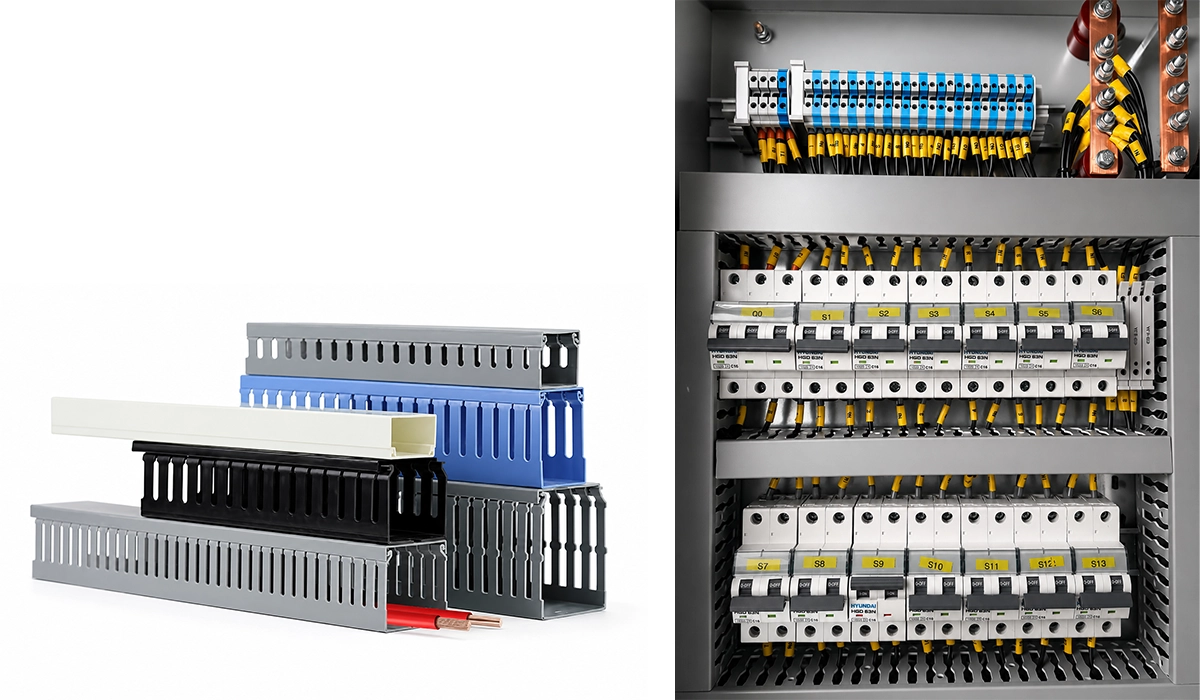
Local distributor support often matters more than any single spec. Confirm that replacement blades are stocked, that the manufacturer offers a documented warranty, and that technical service is reachable. Panduit, Phoenix Contact, Legrand/Wiremold, and Weidmüller all run mature parts programs across most regions.
Wiring Duct Cutter vs. Alternative Cutting Methods: A Direct Comparison
The contrast between dedicated cutters and general-purpose tools becomes obvious when you tabulate the criteria that matter on the shop floor. The comparison below covers a guillotine wiring duct cutter alongside miter saws, hacksaws, and utility knives.
| Criteria | Guillotine Duct Cutter | Miter Saw | Hacksaw | Utility Knife |
|---|---|---|---|---|
| Cut Quality | Excellent | Excellent | Good (with Finishing) | Poor–Fair |
| Speed per Cut | Very Fast | Fast | Slow | Very Slow |
| Dust / Debris | None | High | Moderate | None |
| Finishing Required | None | Minor | Yes | Yes |
| Power Required | No | Yes | No | No |
| Portability | High | Low | High | High |
| Upfront Cost | Medium–High | Medium–High | Very Low | Very Low |
| Long-Term Cost | Low | Low–Medium | Low | Low |
| Best For | Panel Shops, Field Use | High-Volume Shops | Occasional Cuts | Emergency Use Only |
The verdict is clear. A guillotine cutter delivers the best balance of speed, finish, and practicality for any builder who cuts duct routinely. Miter saws remain competitive only in very high-volume production where powered stations are already established, and even then, they demand dust extraction and ongoing blade maintenance. Hacksaws and knives are emergency fallbacks, not professional tools.
Conclusion about Benefits Wiring Duct Cutter
A wiring duct cutter is one of the smallest investments a panel shop can make and one of the most consequential. It tightens build cycles, lifts finish quality, protects operator wellbeing, and pays for itself in labor savings alone. The right choice depends on volume, duct profile range, and the level of brand support available in your region. Prioritize maximum duct capacity, replaceable hardened blades, an integrated stop gauge, and a rigid frame from a manufacturer with proven spare-parts availability. With those boxes ticked, your shop gains a tool that delivers clean, square, professional results for years.

Rate this article
Choose a rating from 1 to 5 stars.
No ratings yet