



If you’d rather listen than read, feel free to play the audio file below for the rest of this article.
What Is an Earthing Switch in Switchgear?
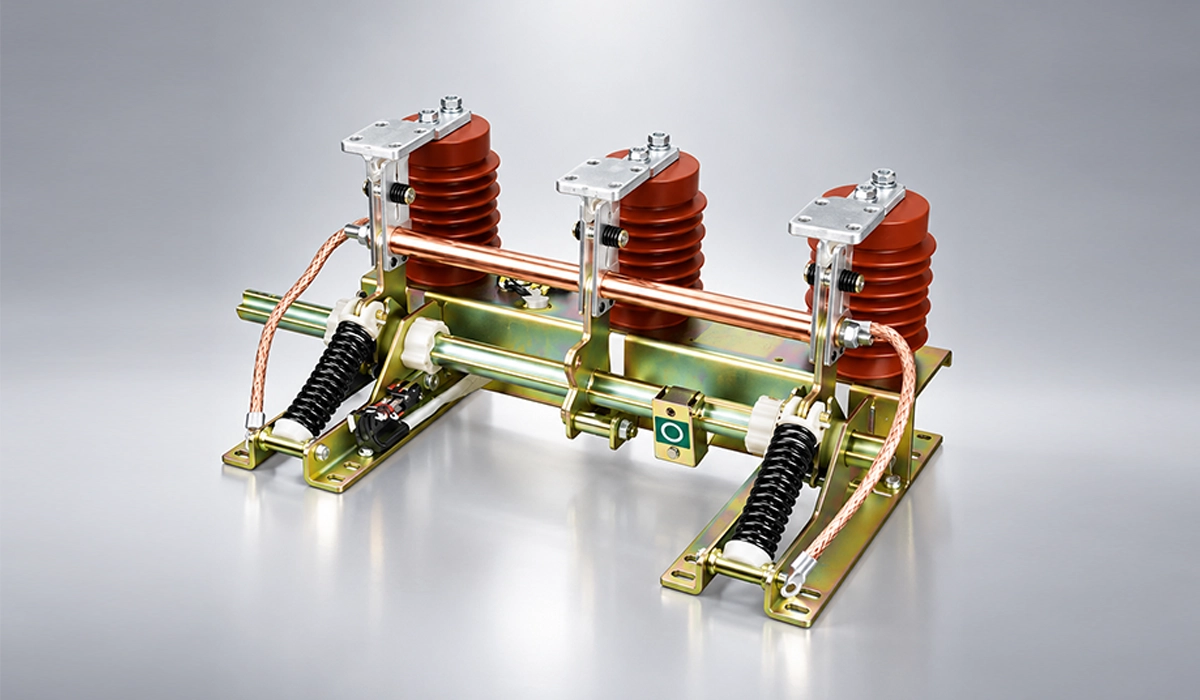
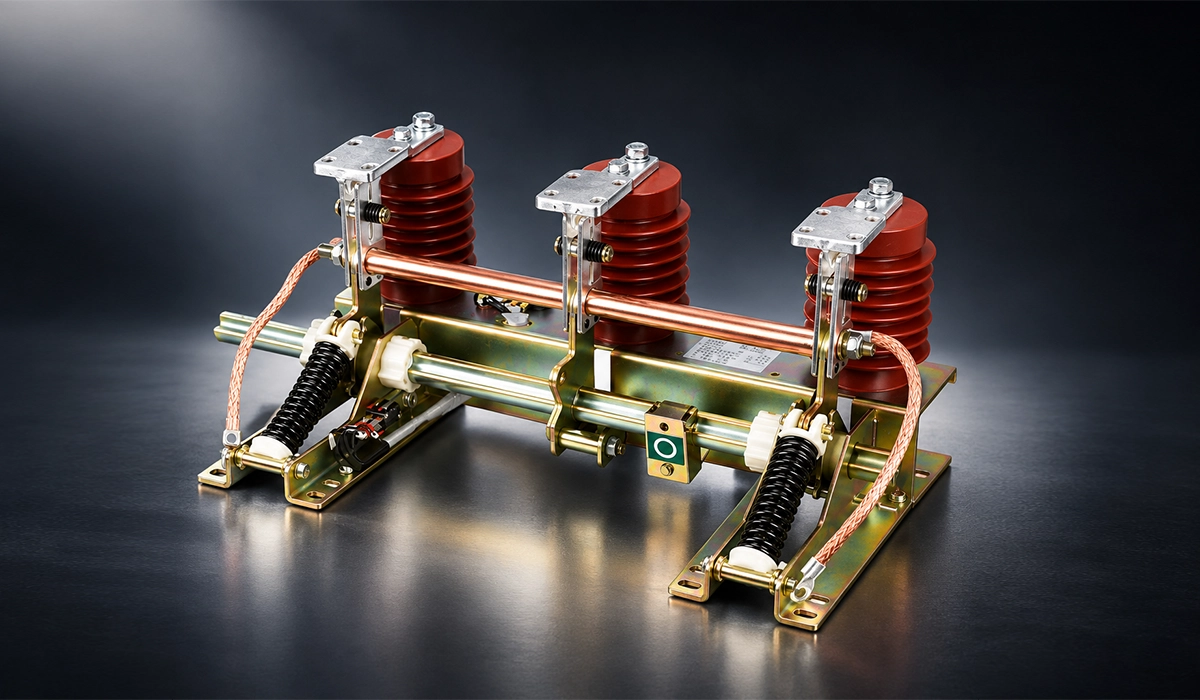
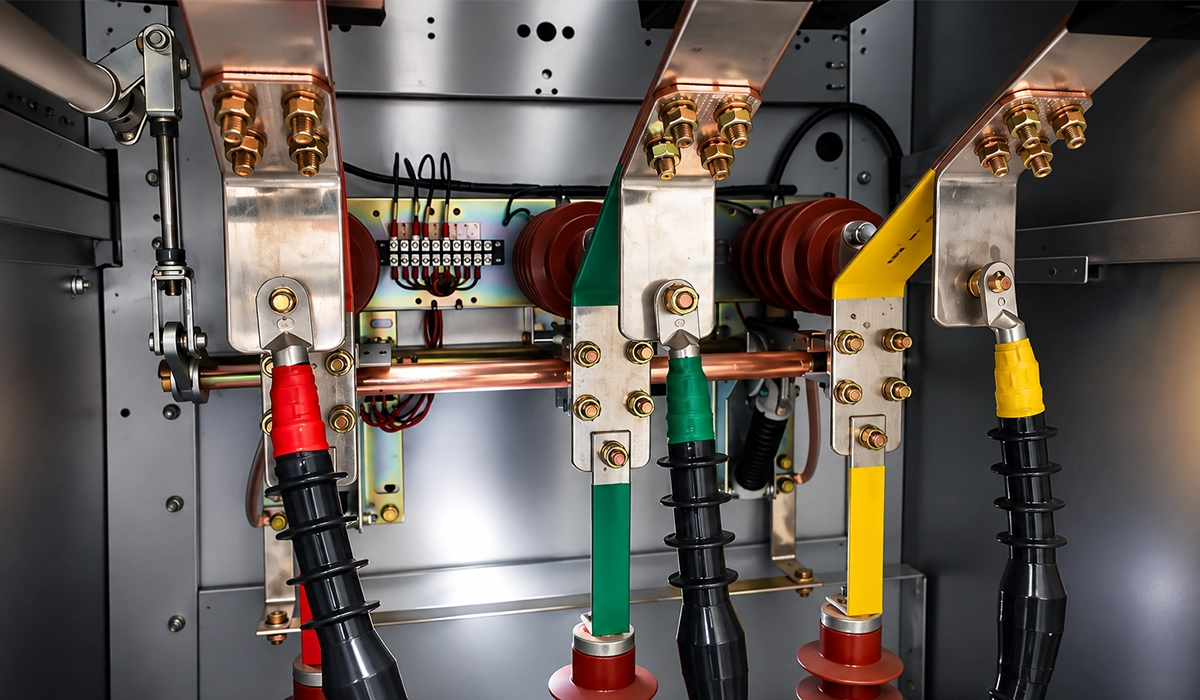
In ABB’s ZS3.2, the answer is an EK6 unit with a manual operating mechanism, fitted in the cable connection compartment beside the current transformers. ABB rates its making capacity at 62.5 kA, with an 80 kA design in preparation; how that figure sits beside the panel’s peak rating has its own article.
Closing is snap-action. The EK6 mechanism closes independently of how fast the drive shaft is turned, so the closing speed does not depend on the operator’s hand.
ZS1 uses the same EK6 type, both for tee-off earthing and for busbar earthing, with either a manual or a motor-operated mechanism. That second option matters later, because it is where ABB’s emergency caution applies.
On projects, the EK6 is easy to treat as a simple on/off device. It is better read as one half of an interlocked pair, with the withdrawable part as the other half.
An earthing switch is only one element of a larger protection scheme that panel builders must get right. For the wider requirements, see our overview of switchgear standards and how they apply to busbar systems.
Earthing Switch Interlocks: When It Can Close
ABB builds two mechanical interlocks into the pairing, one in each direction: the switch waits for the withdrawable part, and the withdrawable part waits for the switch.
- The EK6 can close only when the withdrawable part is in the test/disconnected position or removed from the panel. The interlock is mechanical.
- While the EK6 is closed, the withdrawable part cannot move from the test/disconnected position to the service position. This interlock is mechanical too.
- ABB’s ZS3.2 manual says to close the switch only with the doors closed.
- The same manual says to open the panel’s rear doors only when the switch is closed.
- In ZS1, busbar earthing is possible only when every withdrawable part in that busbar section is in the test/disconnected position. ABB describes this interlock as electromechanical.
- Options add further locks. ZS1 allows a padlock on the drive-shaft access, and its manual mechanism can take a blocking magnet. ZS3.2 refers any additional interlocks to the order documents.
| Withdrawable part | Can the EK6 close? | Can the part go to service with the EK6 closed? |
|---|---|---|
| Service position | No | — |
| Test/disconnected position | Yes | No |
| Removed from the panel | Yes | — |
Service connects the withdrawable part to the main circuit; test/disconnected separates it. The difference has its own article.
ABB’s interlock tests check the second condition directly. With the switch closed, cranking the withdrawable part towards service must be blocked after two turns.
For a clearer and more complete explanation, this page goes into far more depth than we can cover in a short text.
Interlocks like these are part of what a low-voltage assembly must prove in design verification. Our guide to IEC 61439 verification explains what that process involves.
How It Is Operated
The EK6 closes with about half a turn of the operating lever: roughly 180° clockwise, to the stop. What follows explains ABB’s design; it is not a work instruction.
The drive shaft sits behind a slide. Pressing the slide down releases the shaft. The slide is also where the interlock shows itself: ABB’s tests expect it to be blocked once the withdrawable part moves towards service. With the shaft released, the operating lever fits onto its hexagonal end.
Turning clockwise to the stop closes the switch, and turning anti-clockwise to the stop opens it. ABB names the stop as the end point both ways, so a turn that stops short is not a finished operation.
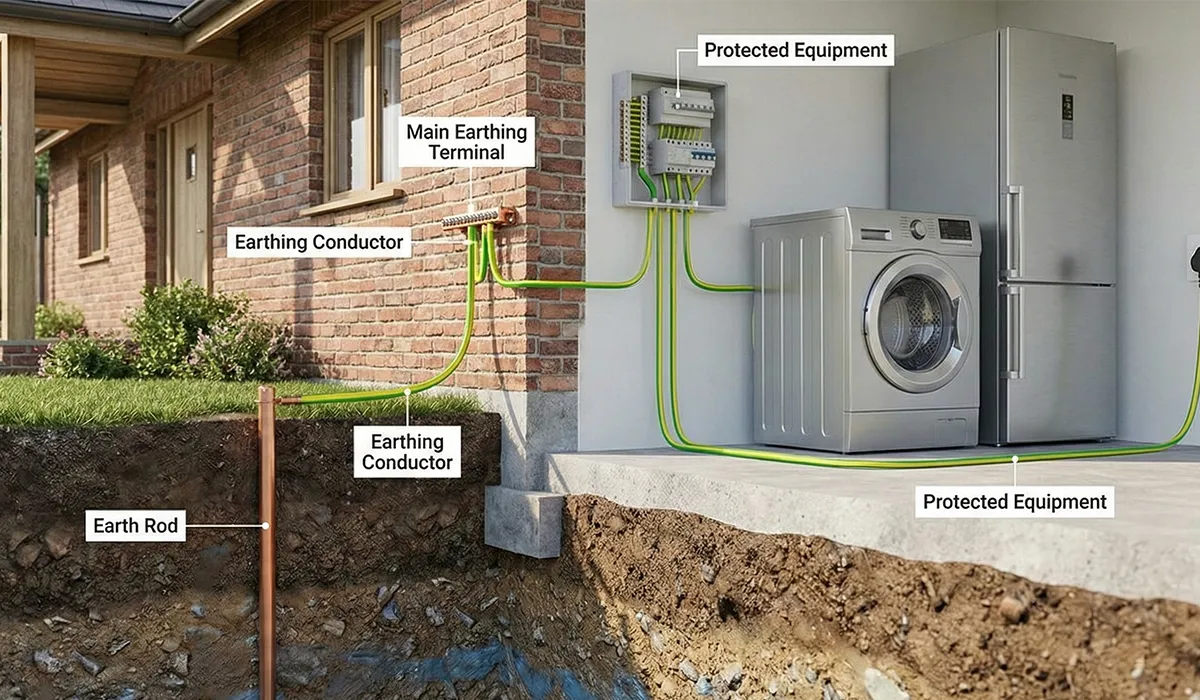
Closing the switch connects the circuit to earth, so the quality of the earth path matters as much as the mechanism. Read our guide to earthing systems to see how that path is designed.
The Emergency-Manual Caution
ABB’s ZS1 manual carries one caution that changes how everything above should be read: when a motor-operated earthing switch is operated by hand, the interlock is not effective.
Emergency manual operation exists for when the motor mechanism fails. The switch can then be worked with the operating lever, much as a manual unit would be.
In that situation the interlock cannot be relied on, so the conditions it normally enforces must be confirmed another way, under the site’s safety rules.
When safety depends on procedure rather than on an interlock, the hazards of a fault become more important. Our reference on arc flash labels shows how those risks are communicated on site.
Conclusion about earthing switch
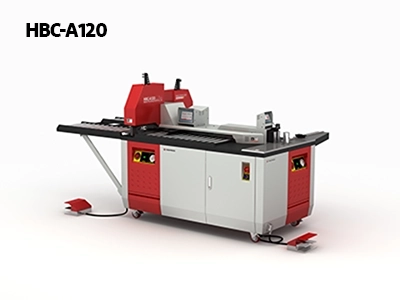
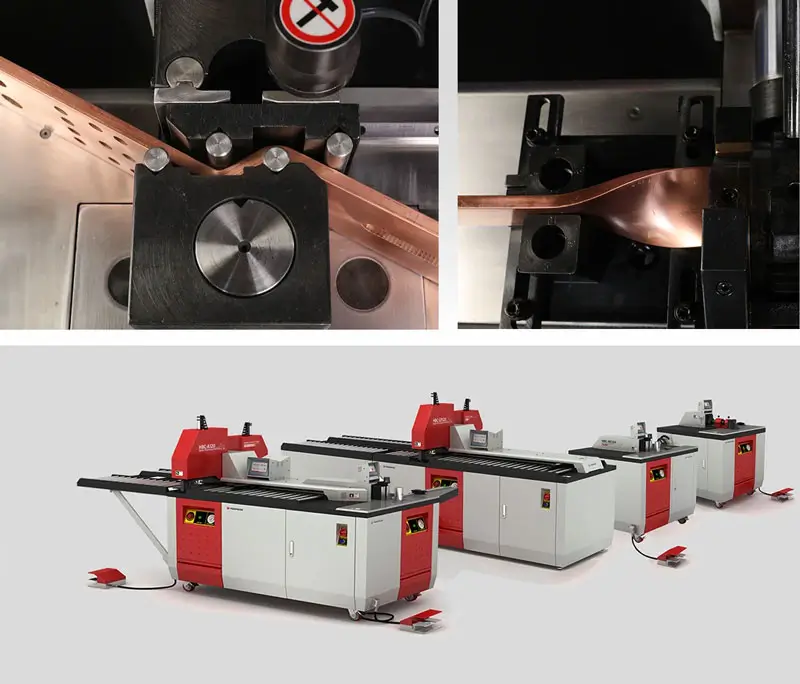
An earthing switch is only as safe as the interlocks and the panel around it, and that panel starts with busbars made to drawing. See our busbar processing machines.
Safe panels begin on the workshop floor, with busbars made to a controlled process. Learn more about busbar manufacturing compliance and what it covers.


Rate this article
Choose a rating from 1 to 5 stars.
No ratings yet