



If you’d rather listen than read, feel free to play the audio file below for the rest of this article.
What Does IAC AFLR Mean?
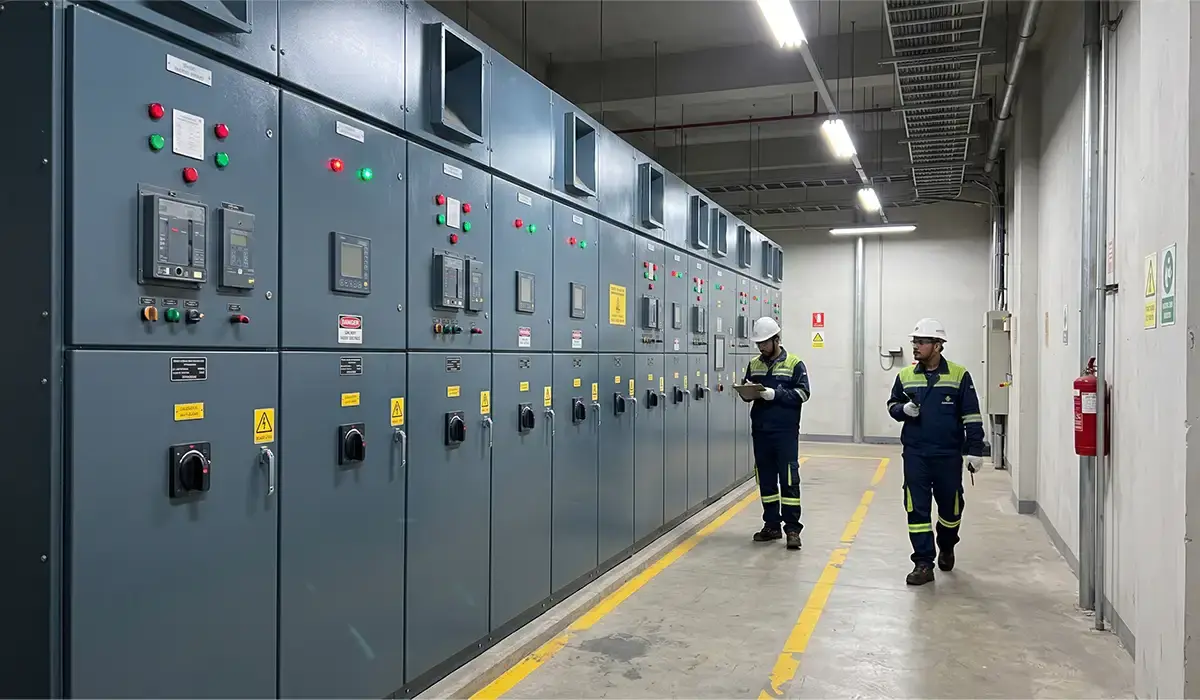
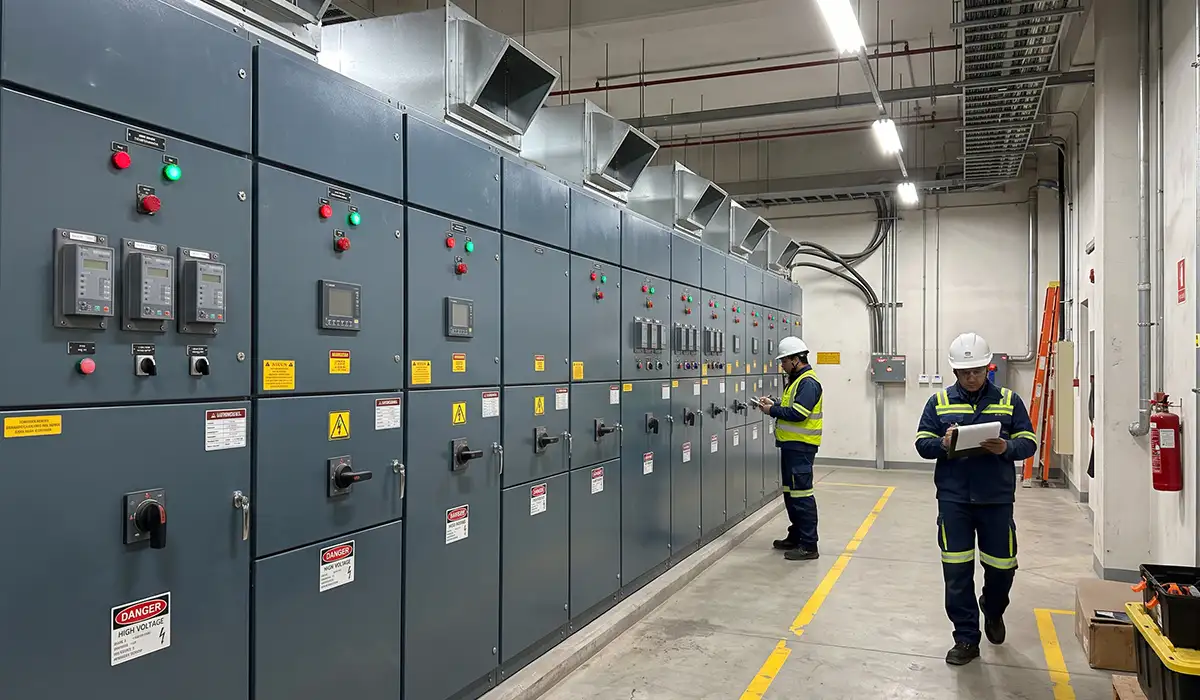
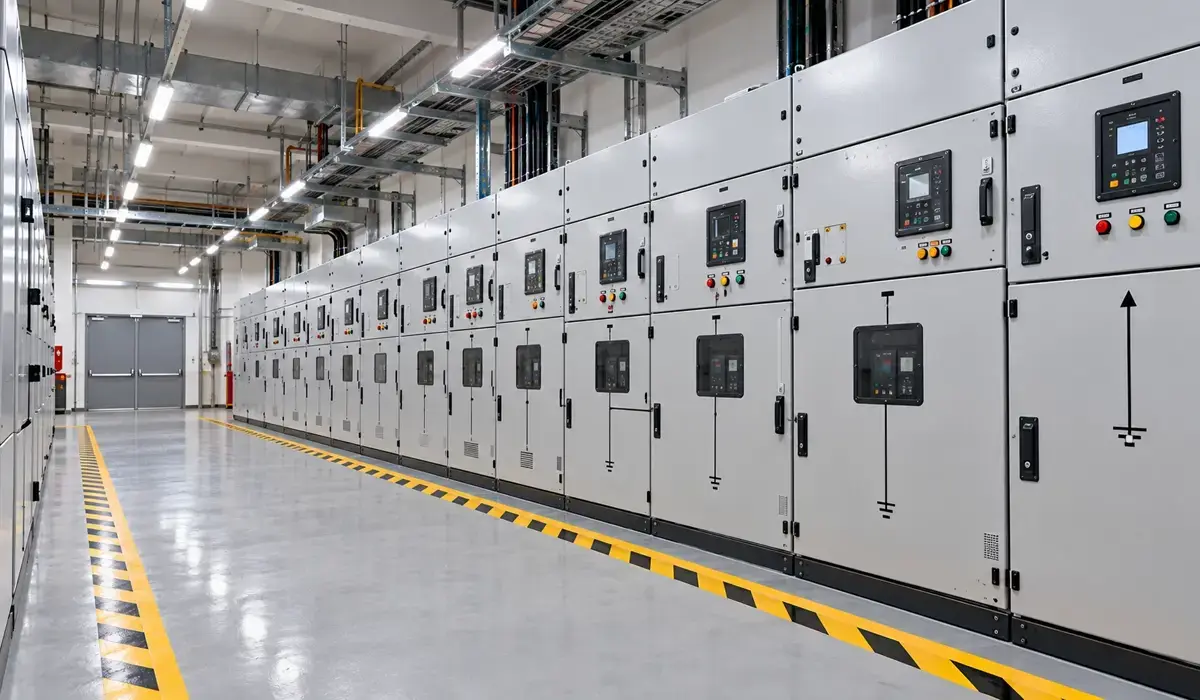
IAC AFLR is an internal arc classification under IEC 62271-200. It means the metal enclosed switchgear passed an arc test with people assumed at the front (F), lateral (L) and rear (R) sides, in an area open to authorized personnel only (A).
The code also states the test current and the arc duration. In other words, the full IAC AFLR meaning always includes a kA value and a time in seconds.
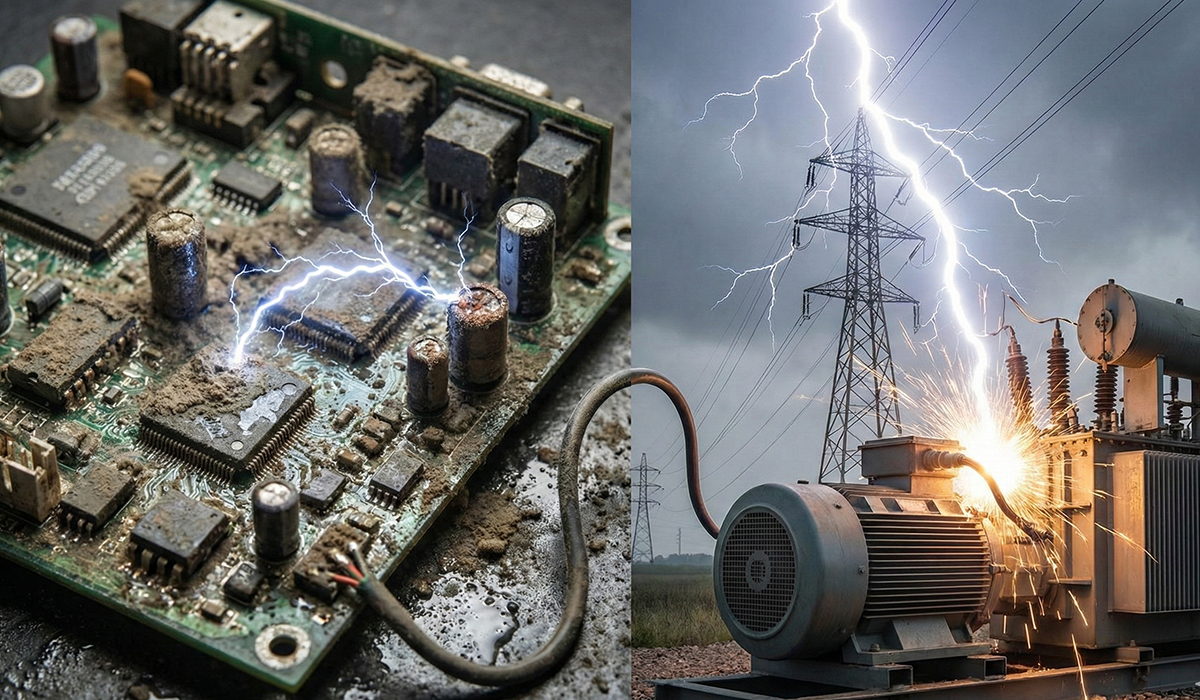
An internal arc is a short circuit that burns through air inside the enclosure. It releases heat, pressure and hot gas within milliseconds.
IAC does not prevent an arc. Instead, it shows that arc effects stay inside the enclosure on the classified sides. It also differs from service continuity ratings such as LSC 2B, which describe what stays live when you open a compartment.
These arc ratings sit inside a wider framework of switchgear standards that also covers busbar systems. Reading them together shows where IEC 62271-200 fits.
Reading the Code Letter by Letter
Every IAC code follows the same order, so you can read it like a sentence:
| IAC | A | F L R | 25 kA | 1 s |
|---|---|---|---|---|
| Classification | Who has access | Tested sides | Arc current | Arc duration |
The same structure covers IAC AFL, IAC BFL and other versions. As a result, the three parts below decode any code under IEC 62271-200.
The current edition of the standard still sets this format for switchgear up to 52 kV. The IEC lists the 2021 scope and the arc-test changes in its IEC catalogue entry.
A: Accessibility Type
The first letter says who can reach the switchgear. Accessibility type A means authorized personnel only, so the arc test assumes trained staff stand nearby.
| Type | Who can reach it | Typical location |
|---|---|---|
| A | Authorized personnel only | Closed switchrooms |
| B | Unrestricted, including the public | Kiosk substations |
| C | Out of reach, above a public area | Pole-mounted units |
For accessibility type B, the test is stricter, because a passer-by may stand close to the enclosure. In contrast, accessibility type C has no classified sides at all. Note that the 2021 edition moved pole-mounted testing to IEC 62271-214, so type C now appears mainly in older datasheets.
F, L, R: The Classified Sides
Next come the sides that passed the test. F is the front side, where the operator works, and the maker must state which side counts as the front. L is the lateral side, meaning the ends of the lineup. R is the rear side.
Only the listed sides are tested. Therefore, a side not listed may not protect a person who stands there during an arc.
For example, a lineup placed against a wall can be AFL, because nobody can stand behind it. A lineup with a rear cable aisle, however, needs the rear side in the code. So front vs rear access is the first question to settle when you read a tender.
Because makers print the code in many forms, a short official explanation helps buyers check it. Schneider Electric restates the accessibility types and a worked example in its accessibility type FAQ.
kA and Seconds: Arc Fault Current and Duration
The kA value is the arc fault current used in the test. It is usually equal to or below the rated short-time withstand current of the panel. The seconds value is the arc fault duration, meaning how long the arc burned.
The standard recommends 1 s, 0.5 s and 0.1 s as durations. So which arc fault duration should you specify? First, find the real time your protection needs to clear an internal fault, including relay and breaker time. Then choose a rating that covers it with some margin.
Arc detection relays sense the flash of light and trip fast. As a result, they can shorten clearing time and may allow a shorter rating. Ask the maker for test reports, not assumed relay times. Also treat all values here as examples, not requirements.
An arc rating is only as reliable as the proof behind it. A clear view of design verification helps you judge whether a datasheet claim is backed by evidence.
How the Internal Arc Test Is Judged
In an internal arc test, the lab installs the panel as it stands in service, with its walls and ceiling simulated. Next, it ignites an arc in each high-voltage compartment. Cotton indicators hang around the classified sides, about 300 mm away for type A and 100 mm for type B.
The internal arc test criteria are plain. Each one must hold for the panel to pass:
- Doors and covers stay closed.
- No parts above 60 g fly off.
- The arc burns no holes in the accessible sides.
- The indicators do not ignite.
- The enclosure stays connected to earth.
Meanwhile, the hot gas must leave through a planned route, usually the pressure relief flap on the roof. For the full test method, see the internal arc classification guide.
Independent labs run these tests and issue the type reports that buyers should ask for. KEMA Labs outlines how it tests assemblies to IEC and IEEE rules in its arc test flyer.
Enclosure strength is also checked through impact and ingress tests. Compare IK ratings and IP codes before you review a full test report.
AFL vs AFLR: Which One to Specify
The choice between IAC AFL vs AFLR depends on the room layout. If anyone can walk or work behind the lineup, for cable access or a rear aisle, ask for AFLR.
By contrast, if the lineup stands against a wall with no rear access, AFL can be enough. Layout and code must match, so check switchgear aisle widths before you fix the rating. IAC covers the enclosure only, while arc flash labels cover work on open equipment.
In the US, arc resistant switchgear follows IEEE C37.20.7 with its own types. The aim matches, but IEC vs IEEE codes are not interchangeable.
The US approach sorts protection by which sides are freely accessible, much like F, L and R. ABB explains Type 1 and Type 2 designs and their acceptance criteria in its arc resistant seminar.
Once the layout and rating are fixed, the warnings on the equipment should match the hazard. Our guide to arc flash labels shows what NFPA 70E and IEEE 1584 expect.
Conclusion: What Is IAC AFLR Classification
IAC AFLR reads simply: A for who, F L R for where, and kA and seconds for how strong and how long. For the full test method, see the internal arc classification page. For room layout, check switchgear aisle widths.
For the wider picture, start with this electrical standards overview. It brings IEC, IEEE and regional rules together in one place.

Rate this article
Choose a rating from 1 to 5 stars.
No ratings yet
0 Comments
No comments yet. Be the first to comment.