Electrical Standards
Industrial countries have defined different electrical standards for designing electrical drawings and selecting building electrical equipment for various
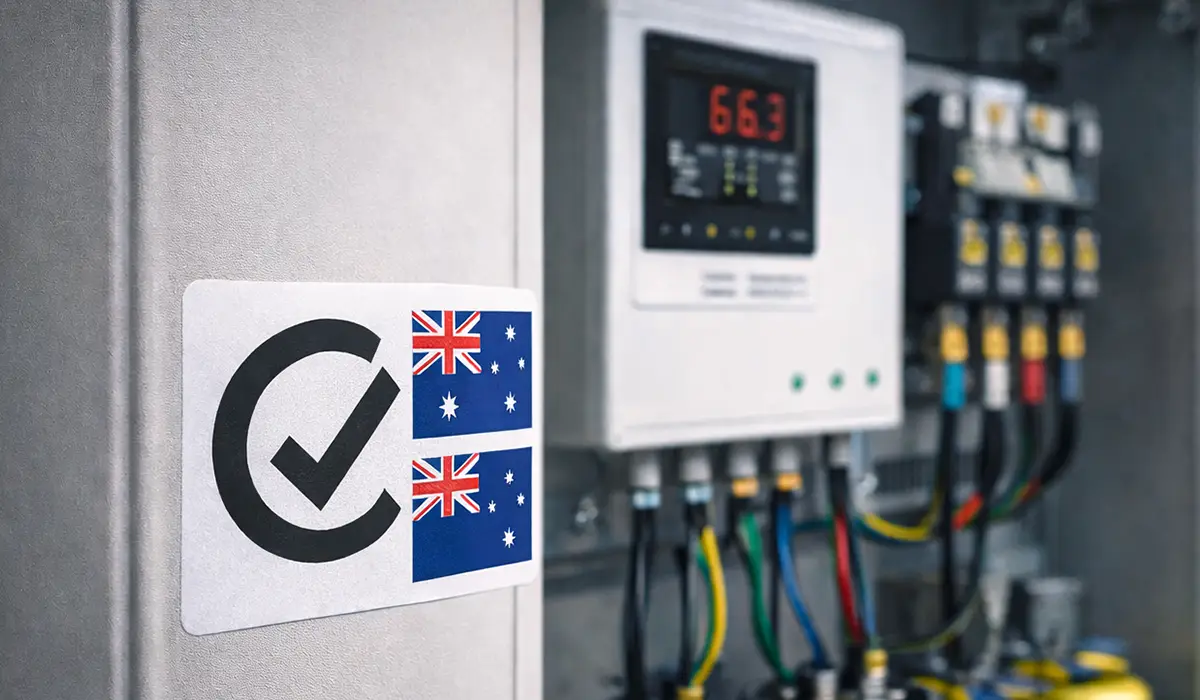
applications. Electrical equipment may carry one or more standard marks, which indicates that the manufacturing method and the tests performed have been approved under regional and international standards.
Some of the most important standards in this field include CSA, GS, UL, NEC, VDE, DIN, ANSI, IEEE, and ISO. The IEC electrical standard (the global electrical standard) is one of the well-known standards approved by all countries worldwide, and together with the DIN electrical standard.
Also, given the global trend toward harmonizing national standards and increasing acceptance of international standards, at present, most countries focus their efforts on active participation in drafting international standards. In what follows, electrical standards and their abbreviated symbols are reviewed.
If the content related to topic Electrical Standards was both interesting and helpful, further study of topic Impact of IEC, UL, and CE Standards on Switchgear could be just as fascinating.
ISO Standard
ISO (International Organization for Standardization) develops standards that help harmonize global practices, including those relevant to electrical engineering. The International Organization for Standardization (ISO-International standard association) is an international federation made up of national standards bodies, and its role is to develop standardization and related activities around the world. In practice, ISO works extensively on establishing general and specific standards to harmonize different global standards, including electrical standards. ISO standards include two types: technical and managerial.
If the content related to topic ISO Standard was both interesting and helpful, further study of topic Industrial Switchboard (UL 891) could be just as fascinating.
International IEC Standard
- Founded in 1906
- Affiliated with ISO
- Publishes international electrical standards for manufacturing, installation, and related fields
- Forms the basis of many national standards and supports conformity evaluation and certification for trade
The IEC (IEC-International Electrotechnical Commission), or the International Electrotechnical Commission, was founded in 1906. It should be noted that this organization is one of the organizations affiliated with the International Standards Organization ISO, and it is responsible for drafting and publishing international IEC standards in the electrical industry, including principles for manufacturing electrical equipment, installation methods, and related areas.
The IEC standard is the foundation of national standards and the basis for evaluation, conformity, and certification of electrical and electronic products, used to facilitate international trade. For this reason, most national standards in different countries are increasingly being drafted based on, or equivalent to, IEC electrical standards.
List of IEC Standards Related to Electrical Installations
the IEC standard is one of the main references for supervision and design of electrical installations. Currently, the safety rules of the IEC60364, IEC61140, IEC60479, and IEC61201 series are the basis of most electrical standards worldwide. The table below lists some IEC standards related to electrical installations.
| Standard Title | Standard Number |
|---|---|
| Standard IEC Voltages | IEC 60038 |
| Direct acting indicating analog electrical measuring instruments and accessories | IEC 60051 series |
| Power transformers – General | IEC 60076-1 |
| Power transformers – Ability to withstand short circuit | IEC 60076-5 |
| Semiconductor converters – General requirements and line commutated converters – Specification of basic requirements | IEC 60146-1-1 |
| Measuring relays and protection equipment – Common requirements | IEC 60255-1 |
| Low-voltage fuses – General requirements | IEC 60269-1 |
| Low-voltage fuses – Supplementary requirements for fuses for use by authorized persons (mainly industrial fuses) – Examples of standardized fuse systems A to K | IEC 60269-2 |
| High-voltage fuses – Current-limiting fuses | IEC 60282-1 |
| Electric cables – Calculation of rated current – Equations for rated current (100% load factor) and calculation of losses – General | IEC 60287-1-1 |
| Low-voltage electrical installations – Fundamental principles, assessment of general characteristics, definitions | IEC 60364-1 |
| Low-voltage electrical installations – Protection for safety – Protection against electric shock | IEC 60364-4-41 |
| Low-voltage electrical installations – Protection for safety – Protection against thermal effects | IEC 60364-4-42 |
| Low-voltage electrical installations – Protection for safety – Protection against overcurrent | IEC 60364-4-43 |
| Low-voltage electrical installations – Protection for safety – Protection against voltage disturbances and electromagnetic disturbances | IEC 60364-4-44 |
| Low-voltage electrical installations – Selection and erection of electrical equipment – General rules | IEC 60364-5-51 |
| Low-voltage electrical installations – Selection and erection of electrical equipment – Wiring systems | IEC 60364-5-52 |
| Low-voltage electrical installations – Selection and erection of electrical equipment – Isolation, switching and control | IEC 60364-5-53 |
| Low-voltage electrical installations – Selection and erection of electrical equipment – Earthing arrangements and protective conductors | IEC 60364-5-54 |
| Low-voltage electrical installations – Selection and erection of electrical equipment – Other equipment | IEC 60364-5-55 |
| Low-voltage electrical installations – Verification/inspection | IEC 60364-6 |
| Low-voltage electrical installations – Requirements for special installations or locations – Locations containing a bath or shower | IEC 60364-7-701 |
| Low-voltage electrical installations – Requirements for special installations or locations – Swimming pools and fountains | IEC 60364-7-702 |
| Low-voltage electrical installations – Requirements for special installations or locations – Rooms and cabins containing sauna heaters | IEC 60364-7-703 |
| Low-voltage electrical installations – Requirements for special installations or locations – Construction and demolition site installations | IEC 60364-7-704 |
| Low-voltage electrical installations – Requirements for special installations or locations – Agricultural and horticultural premises | IEC 60364-7-705 |
| Low-voltage electrical installations – Requirements for special installations or locations – Locations with restricted movement | IEC 60364-7-706 |
| Low-voltage electrical installations – Requirements for special installations or locations – Caravan parks, camping parks and similar locations | IEC 60364-7-708 |
| Low-voltage electrical installations – Requirements for special installations or locations – Marinas and similar locations | IEC 60364-7-709 |
| Low-voltage electrical installations – Requirements for special installations or locations – Medical locations | IEC 60364-7-710 |
| Low-voltage electrical installations – Requirements for special installations or locations – Exhibitions, shows and stands | IEC 60364-7-711 |
| Low-voltage electrical installations – Requirements for special installations or locations – Solar photovoltaic (PV) power supply systems | IEC 60364-7-712 |
| Low-voltage electrical installations – Requirements for special installations or locations – Furniture | IEC 60364-7-713 |
| Low-voltage electrical installations – Requirements for special installations or locations – Outdoor lighting installations | IEC 60364-7-714 |
| Low-voltage electrical installations – Requirements for special installations or locations – Extra-low voltage lighting installations | IEC 60364-7-715 |
| Low-voltage electrical installations – Requirements for special installations or locations – Mobile or transportable units | IEC 60364-7-717 |
| Low-voltage electrical installations – Requirements for special installations or locations – Public facilities and workplaces | IEC 60364-7-718 |
| Low-voltage electrical installations – Requirements for special installations or locations – Electrical installations in caravans and motor caravans | IEC 60364-7-721 |
| Low-voltage electrical installations – Requirements for special installations or locations – Operation or maintenance of gangways | IEC 60364-7-729 |
| Low-voltage electrical installations – Requirements for special installations or locations – Temporary electrical installations for structures, amusement devices, fairground booths, amusement parks and circuses | IEC 60364-7-740 |
| Low-voltage electrical installations – Requirements for special installations or locations – Heating cables and embedded heating systems | IEC 60364-7-753 |
| Low-voltage electrical installations – Energy efficiency | IEC 60364-8-1 |
| Basic and safety principles for human-machine interface, marking and identification – Identification of conductors by colors or numerals and identification of terminals and ends of conductors | IEC 60446 |
| Effects of current on human beings and livestock – General aspects | IEC 60479-1 |
| Effects of current on human beings and livestock – Special aspects | IEC 60479-2 |
| Effects of current on human beings and livestock – Effects of current passing through the body of livestock | IEC 60479-3 |
| Degrees of protection provided by enclosures (IP Code) | IEC 60529 |
| Specification for high-voltage fuse-links for motor circuit applications | IEC 60644 |
| Insulation coordination for equipment within low-voltage systems – All parts | IEC 60664 |
| Dimensions of low-voltage switchgear and controlgear assemblies. Standard mounting on rails for mechanical support of electrical equipment in switchgear/controlgear installations | IEC 60715 |
| Short-circuit temperature limits of electric cables with rated voltage 1 kV (Um=1.2 kV) and 3 kV (Um=3.6 kV) | IEC 60724 |
| General requirements for residual current protective devices | IEC 60755 |
| Application guide for the selection of high-voltage current-limiting fuse-links for transformer circuits | IEC 60787 |
| Low-voltage switchgear and controlgear – General rules | IEC 60947-1 |
| Low-voltage switchgear and controlgear – Circuit-breakers | IEC 60947-2 |
| Low-voltage switchgear and controlgear – Switches, disconnectors, switch-disconnectors and fuse-combination units | IEC 60947-3 |
| Low-voltage switchgear and controlgear – Contactors and motor-starters – Electromechanical contactors and motor-starters | IEC 60947-4-1 |
| Low-voltage switchgear and controlgear – Multiple function equipment – Transfer switching equipment | IEC 60947-6-1 |
| Protection against electric shock – Common aspects for installation and equipment | IEC 61140 |
| Use of conventional touch voltage limits – Application guide | IEC 61201 |
| Low-voltage switchgear and controlgear assemblies – Assembly guide | IEC / TR 61439-0 |
| Low-voltage switchgear and controlgear assemblies – General rules | IEC 61439-1 |
| Low-voltage switchgear and controlgear assemblies – Power switchgear and controlgear assemblies | IEC 61439-2 |
| Low-voltage switchgear and controlgear assemblies – Distribution boards intended to be operated by ordinary persons (DBO) | IEC 61439-3 |
| Low-voltage switchgear and controlgear assemblies – Particular requirements for assemblies for construction sites (ACS) | IEC 61439-4 |
| Low-voltage switchgear and controlgear assemblies – Particular requirements for assemblies for power distribution in public networks | IEC 61439-5 |
| Low-voltage switchgear and controlgear assemblies – Busbar trunking systems | IEC 61439-6 |
| Electrical safety in low-voltage distribution systems up to 1000 V AC and 1500 V DC – Equipment for testing, measuring or monitoring protective measures – General requirements | IEC 61557-1 |
| Low-voltage surge protective devices – Surge protective devices connected to telecommunications and signalling networks – Performance requirements and testing methods | IEC 61643-21 |
| Low-voltage surge protective devices – Surge protective devices connected to telecommunications and signalling networks – Selection and application principles | IEC 61643-22 |
| High-voltage switchgear and controlgear – Synthetic testing | IEC 62271-101 |
| High-voltage switchgear and controlgear – Alternating current disconnectors and earthing switches | IEC 62271-102 |
| High-voltage switchgear and controlgear – Switches for rated voltages above 1 kV up to 52 kV | IEC 62271-103 |
| High-voltage switchgear and controlgear – Alternating current switch-fuse combinations for rated voltages above 1 kV up to 52 kV | IEC 62271-105 |
| High-voltage switchgear and controlgear – AC metal-enclosed switchgear and controlgear for rated voltages above 1 kV and up to 52 kV | IEC 62271-200 |
| High-voltage switchgear and controlgear – Prefabricated HV/LV substations | IEC 62271-202 |
| Protection against lightning – Part 1: General principles | IEC 62305-1 |
| Protection against lightning – Part 2: Risk management | IEC 62305-2 |
| Protection against lightning – Part 3: Physical damage to structures and life hazard | IEC 62305-3 |
| Protection against lightning – Part 4: Electrical and electronic systems within structures | IEC 62305-4 |
CE Standard (Europe)
- CE means “European Conformity”
- Indicates compliance with European regulations related to health, safety, and environmental protection
- Four-digit numbers next to CE can identify the test/certification body
- A similar “CE” abbreviation also exists in China; spacing between the letters can help distinguish them
The CE (CE-Conformité Européenne) standard means “European Conformity.” In practice, this electrical standard indicates that the product complies with European regulations and standards related to consumer protection and environmental protection. The four-digit numbers next to the CE mark indicate the company that conducted the required tests for certification registration. This mark indicates compliance with health, safety, and environmental protection standards in Europe. Permission to use this mark is granted to manufacturers only when they have met all requirements stated in the relevant electrical standards for their product.
It should be noted that there is also a Chinese standard abbreviated as CE, and paying attention to the distance between the letters c and e can help distinguish
the standards, because the spacing between the two letters in the European standard is larger.
If you want to learn more about topic CE marking and gain a deeper understanding of its key aspects, this article is a must-read that covers all the essential points you need to know.
International IEEE Standard
The IEEE (IEEE-The Institute of Electrical and Electronics Engineer) is one of the important institutions in electrical standards across areas such as medical
engineering, information technology, telecommunications, transportation, nano, and others.
Don’t miss this article if you’re looking to expand your knowledge on topic IEEE Ethics for AI System Design, as it offers thorough coverage of the topic and presents information in a clear, accessible manner that will enhance your understanding.
DIN Standard
The German Institute for Standardization (DIN – Deutsches Institut für Normung) plays a significant role in the development of standards related to drafting, construction, manufacturing, measurement, and the testing of industrial products.
These standards, particularly in the field of electrical engineering, have been widely applied in technical drawing and industrial design. DIN standards continue to be used as a reference in cases where no equivalent ISO standard is available.
If you are looking for more information about topic List of DIN standards, it is recommended not to miss reading this article.
ANSI Standard
The ANSI (ANSI-American National Standard Institute) is a non-governmental organization in the United States that supervises how standards are issued for products,
services, processes, and systems. This organization represents the United States in the global standards organization to align US standards with global standards.
Given its activity areas, it can also be used for electrical standards. ANSI works in five fields:
- ANSI biofuel standards section (ANSI-BSP)
- Health IT standards section
- ANSI homeland security standards section
- ANSI nanotechnology standards section
- Identity theft prevention and identity management standards
If you want to learn more about topic American National Standards and gain a deeper understanding of its key aspects, this article is a must-read that covers all the essential points you need to know.
NEC Standard (United States)
The NEC (NEC-National Electrical Code) is a national organization in the United States that works on fire protection related to electrical installation safety. The system of this type of electrical standards is non-metric, and after equipment testing, it is placed as a label on the equipment body.
Don’t miss this article if you’re looking to expand your knowledge on topic about the NEC, as it offers thorough coverage of the topic and presents information in a clear, accessible manner that will enhance your understanding.
VDE Standard
The VDE (VDE-verbrand der elektrotechnik), the Association for Electrical, Electronic, and Information Technologies, is an international organization for electrical equipment and products responsible for testing, verifying compliance with manufacturing and safety standards, and issuing certifications. The VDE organization publishes only electrical standards related to electrical projects. This electrical standard uses the metric system.
If you wish to deepen your understanding of topic X and explore its various dimensions more thoroughly, make sure to read this article which provides well-researched content and practical examples.
The most important VDE regulations in electrical engineering safety relate to dangerous current and voltage and the five basic safety rules, which are shown in the
table below.
VDE Standard Groups
| Group | Standard Series | Topic | Description |
|---|---|---|---|
| 1 | DIN-VDE 00xx and 01xx | General principles / Power systems | Meta-standards, power engineering |
| 2 | DIN-VDE 02xx | Energy conductors | Cables and electrical lines |
| 3 | DIN-VDE 03xx | Insulating materials | Electronics, insulators, and superconductors |
| 4 | DIN-VDE 04xx | Measurement, control, regulation | Monitoring systems (fire detectors, radiation protection, etc.) |
| 5 | DIN-VDE 05xx | Machines, converters | Batteries and storage devices, electrical machines |
| 6 | DIN-VDE 06xx | Insulating materials, switching | Electrical installations |
| 7 | DIN-VDE 07xx | Devices and practical tools | Safety of household appliances, lighting and lamps, medical equipment |
| 8 | DIN-VDE 0800 | Information technology |
Conclusion
Electrical standards exist to make equipment safer, installations more consistent, and approvals more credible across regions. Understanding the role of IEC, ISO,
CE, IEEE, DIN, ANSI, NEC, and VDE helps engineers and buyers select equipment correctly and design installations that align with accepted requirements.
FAQ
What does an electrical standard mark on equipment mean?
It indicates the manufacturing method and the tests performed have been approved under relevant regional or international standards.
Why is IEC considered a global electrical standard?
IEC standards are widely accepted worldwide and increasingly form the basis of national standards, evaluation, conformity, and certification for electrical products.
What is the role of VDE in electrical standards?
VDE tests and verifies compliance for electrical equipment and publishes electrical standards related to electrical projects, using the metric system.