




What Is a Rittal Electrical Panel?
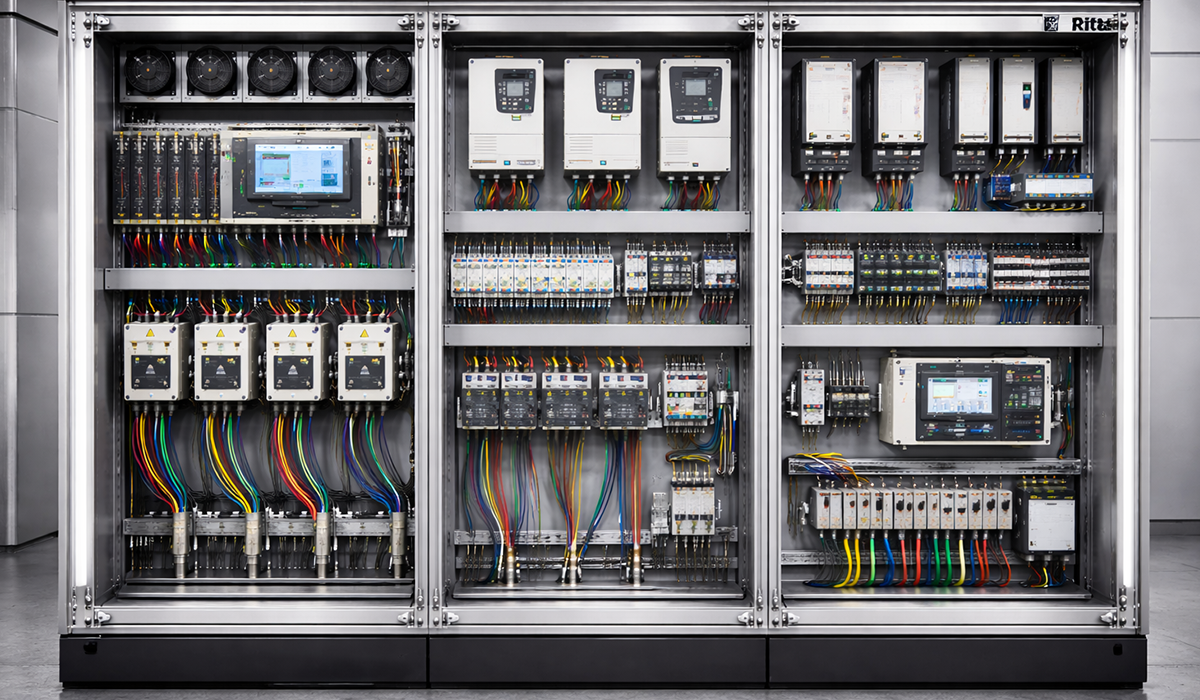
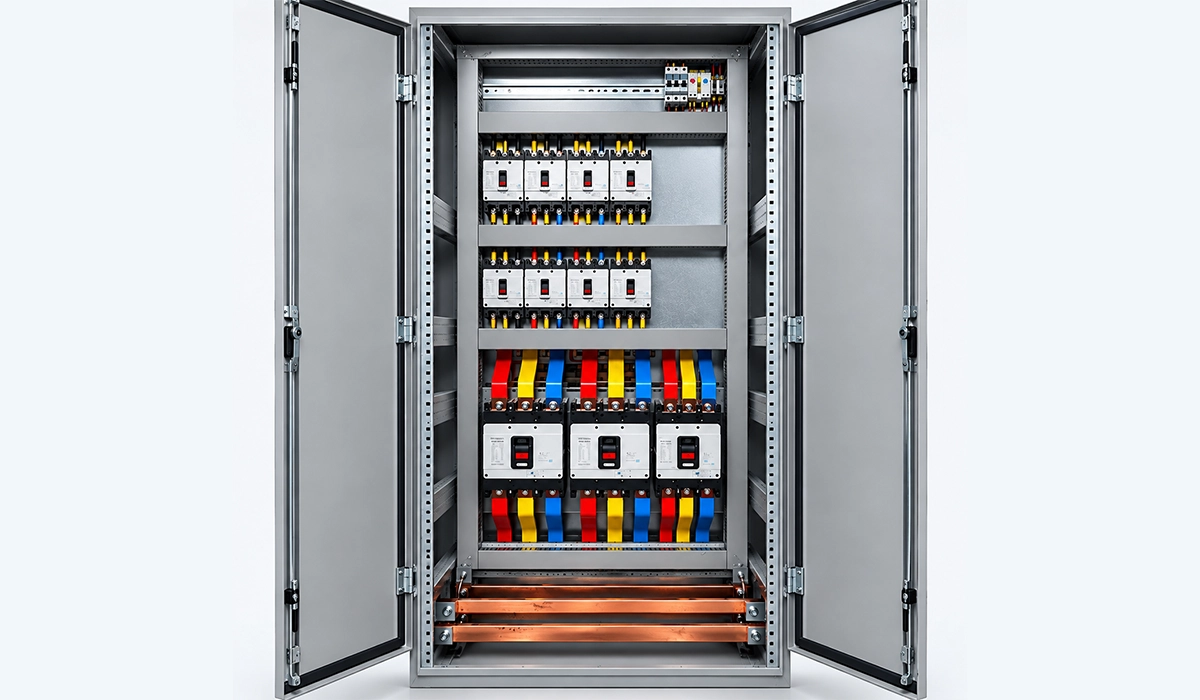
A Rittal electrical panel is a modular enclosure system that houses and protects switchgear, controls, and power-distribution components while shielding operators from live parts. The defining trait is the frame: a symmetrical profile with a 25 mm hole pattern that lets you mount components by height, width, and depth, so a single platform covers everything from a wall-mounted control box to a multi-bay switchboard lineup. The TS 8 baying system delivers up to 30% more usable mounting space than a comparable unibody NEMA-style enclosure of the same external dimensions, which is the practical reason panel builders standardize on it. You’ll find Rittal panels in factories, process plants, utilities, data and edge-IT rooms, and machine-builder OEM packages — anywhere repeatable assembly and certified protection ratings matter.
For the wider category — panelboards, switchboards and load centres — see what an electrical panel is.
Rittal Panel Types: AX, KX, VX25, TS 8 and VX SE
The range splits by footprint and by how much the installation needs to grow. Three families cover almost everything:
| Family | Products | Use when |
|---|---|---|
| Wall-mounted | AX compact, KX small (PK polycarbonate, GA aluminium) | One self-contained box for a machine or local control point |
| Free-standing and baying | VX25, TS 8, VX SE | The panel sits on the floor, or must bay into a lineup |
| Operator consoles | Command panels, FT operating panels | HMIs, displays and control keyboards |
Wall-Mounted Rittal Panels: AX and KX
For control applications with moderate space needs, Rittal uses the AX compact enclosures and KX small enclosures (with PK polycarbonate and GA aluminium variants). The AX/KX wall-mount line is built for speed and protection: around 30% less assembly time, IP 66 / NEMA 4 protection, and carbon-steel or fibreglass options. Choose AX when you need a self-contained, gasketed box for a single machine or local control point.
Floor-Standing and Baying Systems: VX25, TS 8, and VX SE
When the panel sits on the floor or must bay together into a lineup, the choice is between three platforms. The VX25 is Rittal’s current-generation large baying system with a fully symmetrical frame; it stays compatible with TS 8 accessories, so shops migrating from TS 8 keep their engineering and tooling. The legacy TS 8 is still widely specified and its mounting panel carries loads up to roughly 1,500 lb. Between a wall box and a full lineup sits the VX SE free-standing system, with widths up to 1,800 mm, depths from 300 mm, replacing small baying combinations of up to three enclosures. Decision rule: AX when one box fits, VX SE when one box is too small but a full lineup is overkill, VX25/TS 8 when you need to bay.
Full specifications are in Rittal’s enclosure buying guide for panel builders.
Operator Consoles and Command Panels
What the original article called a “piano-type” panel is Rittal’s operator console / command-panel family — sloped or upright enclosures designed to carry HMIs, displays, and control keyboards for monitoring tasks. This is also where the common accessory searches land: parts like the FT operating panel (e.g., 2745000) mount displays and controls onto AE/AX enclosures rather than cutting the door.
Legacy Systems: PS4000, ES5000 and TS 8
Older Rittal installations still in service commonly use the PS4000 baying system and the ES5000 enclosure system, both superseded by TS 8 in the 1990s and again by VX25 in 2018. The practical difference between them: PS4000 allowed multiple bays to be joined and extended, while ES5000 used integrated side and rear walls — cheaper, and a higher achievable IP rating thanks to the one-piece body, at the cost of expandability.
If you’re maintaining or extending a PS4000 or ES5000 lineup, note that VX25 retains compatibility with TS 8 accessories but not with the earlier generations. Extension usually means a new bay on the current platform rather than matching the original.
How a Rittal Switchboard Is Built: Frame, Busbars, and Feeders
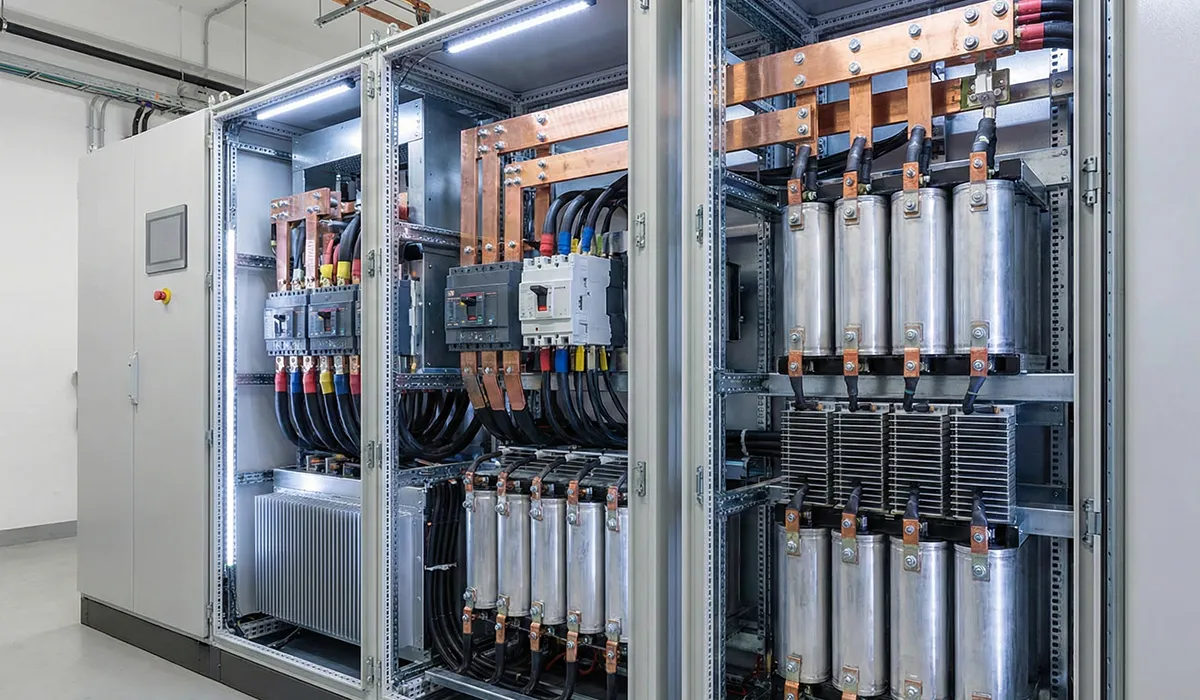
Rittal switchboards keep power distribution at the back of the enclosure: incoming feeders land on the main switch, the main switch ties into the vertical/horizontal busbars, and outgoing consumer ways tap off those busbars. As a field rule of thumb, runs up to roughly 250 A are wired with cable, and anything higher moves to busbar to control heat rise and voltage drop. For higher-current lineups, Rittal’s RiLineX busbar platform supports rated currents up to 1,600 A with contact-hazard protection and UL-listed components, cutting assembly time by up to 75%, while Ri4Power scales type-tested low-voltage switchgear to 6,300 A with internal form separation. The most common sizing mistake here is undersizing the neutral and ignoring busbar thermal derating inside a sealed IP 55+ panel — both cause nuisance heating long before the breakers ever trip.
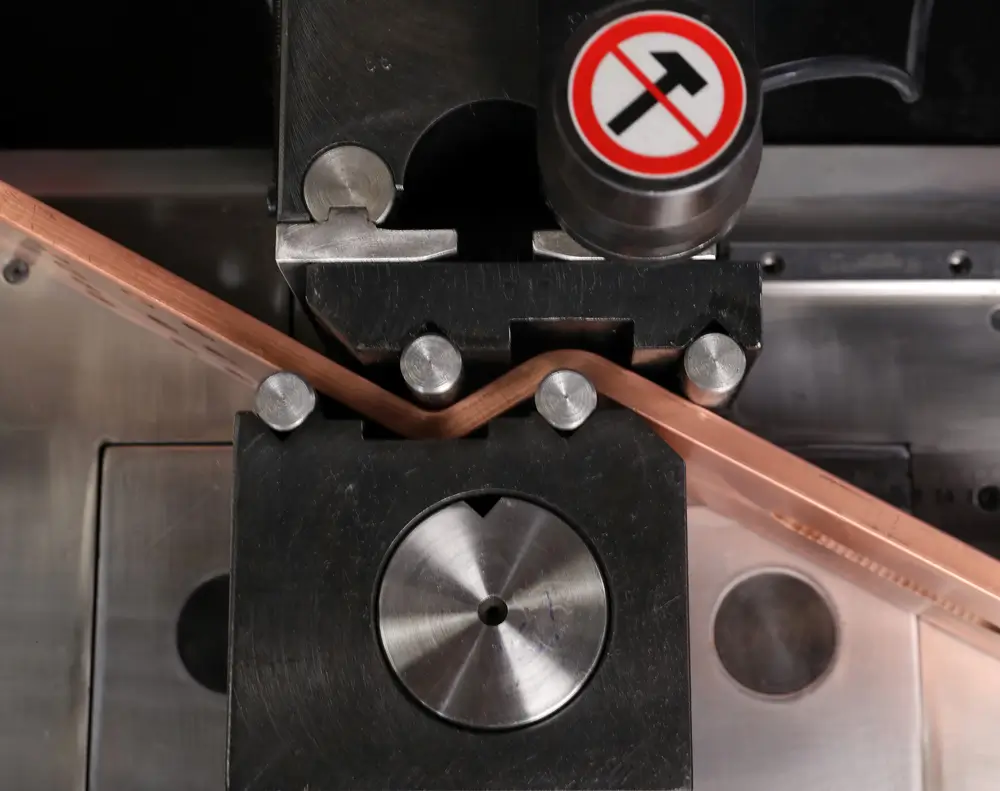
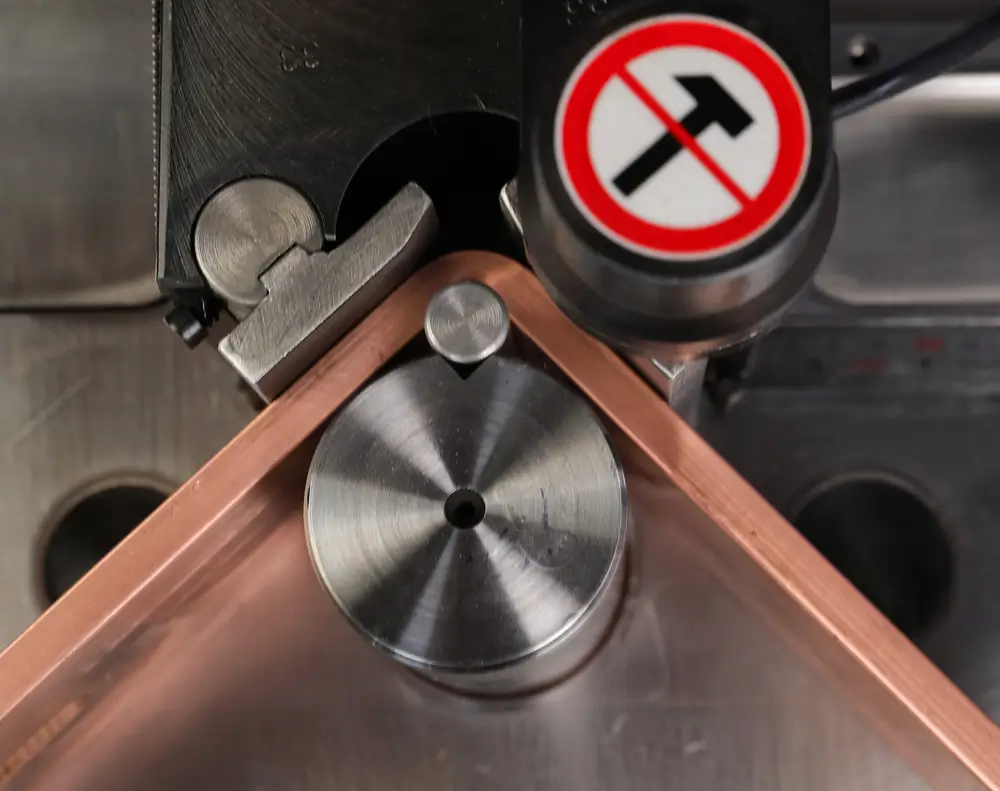
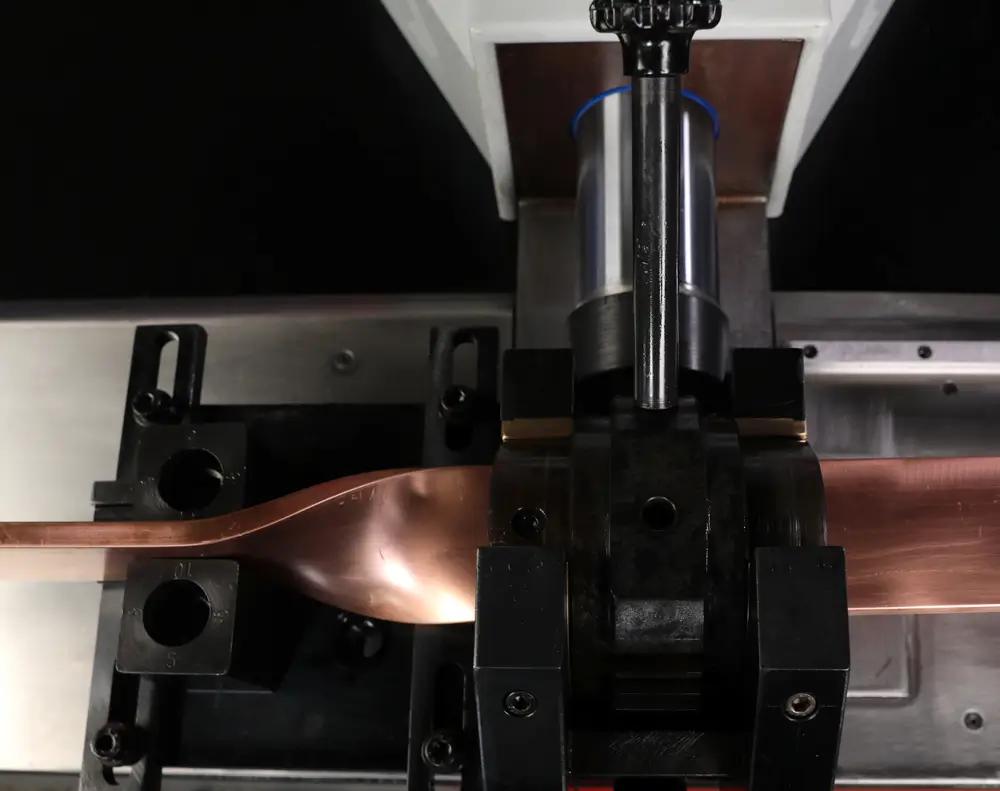
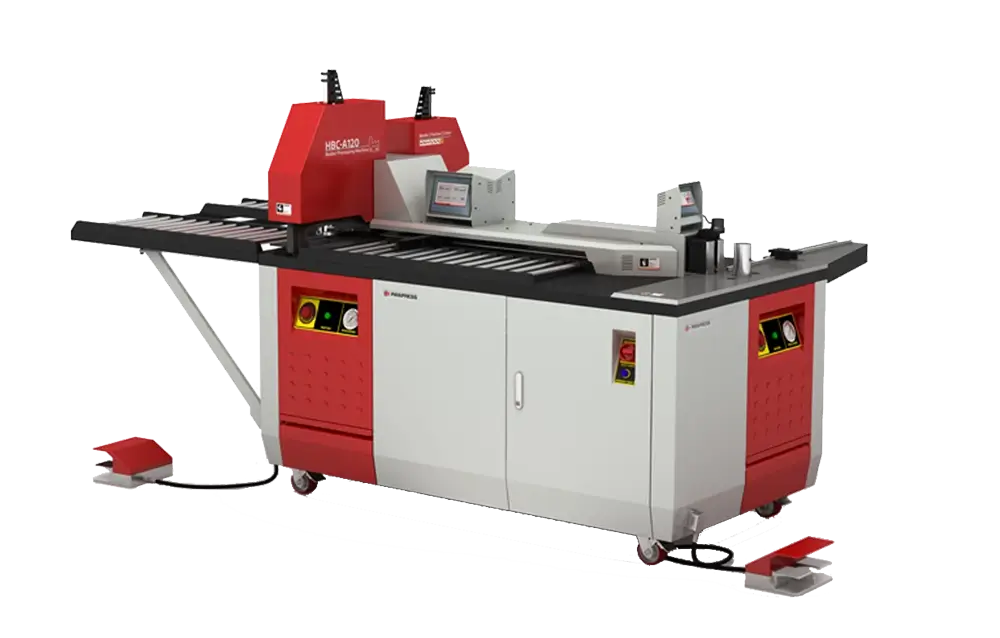
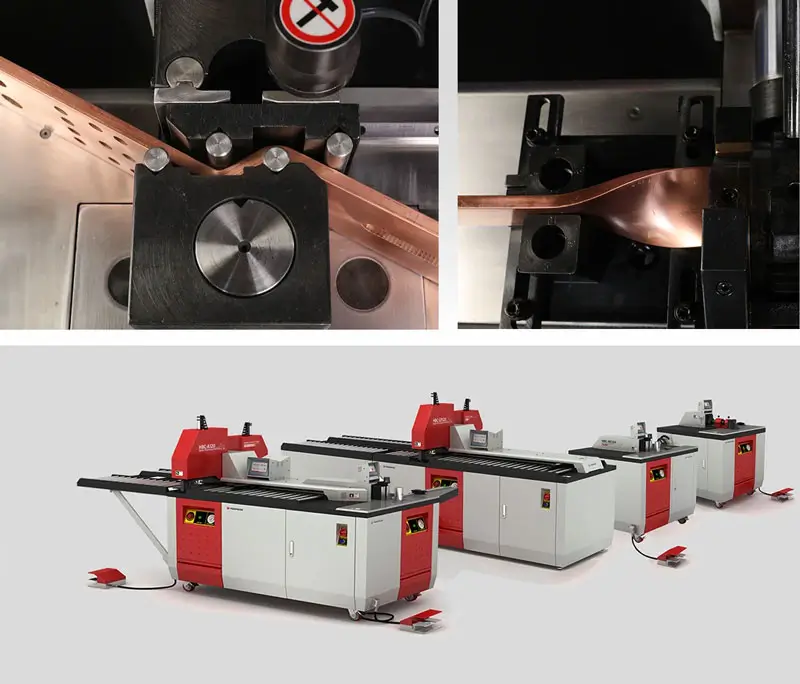
Panel shops standardising on RiLine or Ri4Power generally bring busbar fabrication in-house rather than buying pre-cut — the hole patterns and bend geometry are repetitive enough that CNC busbar processing pays back quickly at volume.
Key Advantages of Rittal Electrical Panels
Rittal’s edge comes from one design decision repeated everywhere: a symmetrical frame on a 25 mm pitch. That single choice delivers fast, repeatable assembly, mounting in three directions, and an accessory ecosystem that fits across platforms. In practice that means protection up to IP 66 / NEMA 4, doors with 3-point locking for short-circuit dynamic strength, and the ability to scale from one wall box to a 6,300 A switchboard without changing systems. The trade-off is honest: this engineering carries a higher price than contractor-grade enclosures, which is exactly why the next section matters.
Rittal vs nVent Hoffman: Which Enclosure to Specify
Both brands sit at the top of the industrial enclosure market, so the choice is about fit, not quality. Rittal, founded in 1961 in Herborn, Germany, is built around a modular, system-led ecosystem — frame, climate control, busbar, and software all engineered to work together. nVent HOFFMAN is the safe, engineering-approved choice when the priority is broad NEMA-driven product depth, widely adopted standard configurations, and predictable distribution lead times in North America
| Factor | Rittal | nVent HOFFMAN |
|---|---|---|
| Strength | Modular system ecosystem, automation & busbar integration | Broad NEMA-driven standard range, distribution depth |
| Best for | Repeatable panel-shop assembly, scalable lineups, edge-IT | Standard configs, fast off-the-shelf availability |
| Market position | Global top-3 | Global top-3, North America strong |
| Price | Higher (German engineering) | Mid-range standard, varies by line |
| Lower-cost alternative | — | SCE/Saginaw, founded by ex-Hoffman staff, matches Hoffman quality at lower cost |
Choose Rittal when you bay multiple enclosures, integrate busbar/climate as a system, or run a panel shop that benefits from one repeatable platform. Choose nVent Hoffman when you need standard NEMA configurations off the shelf with reliable North American lead times. Look at SCE/Saginaw if Hoffman-level quality is needed on a tighter budget.
How to Choose the Right Rittal Panel: Protection, Thermal, and Lead Time
Beyond brand, four constraints decide the spec, and three of them are where projects go wrong. Match the IP/NEMA rating to the real environment, not the catalogue minimum — washdown and outdoor jobs need NEMA 4X/IP 66, and under-rating here is the most common and most expensive mistake. Size for thermal reality: components inside a sealed panel run hotter than their datasheet ambient, so plan climate control early. Confirm SCCR and form separation for switchboards before ordering. And treat lead time as a design input — the right enclosure that arrives three weeks late still stalls the schedule.
Conclusion
Rittal electrical panels win on system thinking: one symmetrical-frame platform scales from an AX wall box to a 6,300 A Ri4Power switchboard, with up to 30% more mounting space and shared accessories across the range. Against nVent Hoffman, the decision comes down to ecosystem and scalability (Rittal) versus standard-config availability and North American lead times (Hoffman). Before you order, lock down four numbers — installation space, IP/NEMA rating, peak amperage, and required delivery date — then match the platform to them.


Rate this article
Choose a rating from 1 to 5 stars.
No ratings yet