




If you’d rather listen than read, feel free to play the audio file below for the rest of this article.
Why Electrical Enclosure Ventilation Matters
Electrical panel cooling exists to keep components inside their rated envelope. Most PLCs and VFDs are rated for a maximum ambient of 40–50 °C and begin derating above it, and the lowest-rated component sets the internal limit rather than the average. Thermal management is one part of the wider fundamentals covered in our guide to electrical panels and switchgear basics.
That matters because the consequences are rarely a clean failure. Thermal throttling produces intermittent faults and performance lag before anything actually breaks, which is the hardest category of problem to diagnose.
Downtime is the visible cost of poor electrical cabinet ventilation. Reduced component lifespan is the larger one, because it arrives as a replacement cycle nobody budgeted for.
Every component sitting inside that thermal envelope has its own tolerance for heat, which is worth understanding before sizing any cooling system. Our guide to industrial panel components covers what’s actually inside.
Common Causes of Heat Build-Up in Electrical Panels
Preventing overheating in electrical cabinets means addressing four causes, and the first dominates.
Power electronics. Drives, power supplies and transformers typically lose 3–5% of throughput as heat. A 30 kW drive at 80% load dumps roughly 1,000 W into the cabinet.
Dense layouts. Compact cabinets restrict the air paths convection depends on. Heat buildup is often a spacing problem before it is a cooling problem.
Poor airflow. Intake at the bottom, exhaust at the top, outlet above the highest-mounted drive. Reverse or block that and forced air achieves little.
Ambient conditions. Solar gain and high plant ambients both reduce the temperature difference everything else relies on.
For a clearer and more complete explanation, this page goes into far more depth than we can cover in a short text.
Dense layouts and restricted airflow paths are ultimately a panel design decision made long before any cooling gets specified. Our overview of what an electrical panel is covers that starting point.
Types of Electrical Enclosure Ventilation Systems
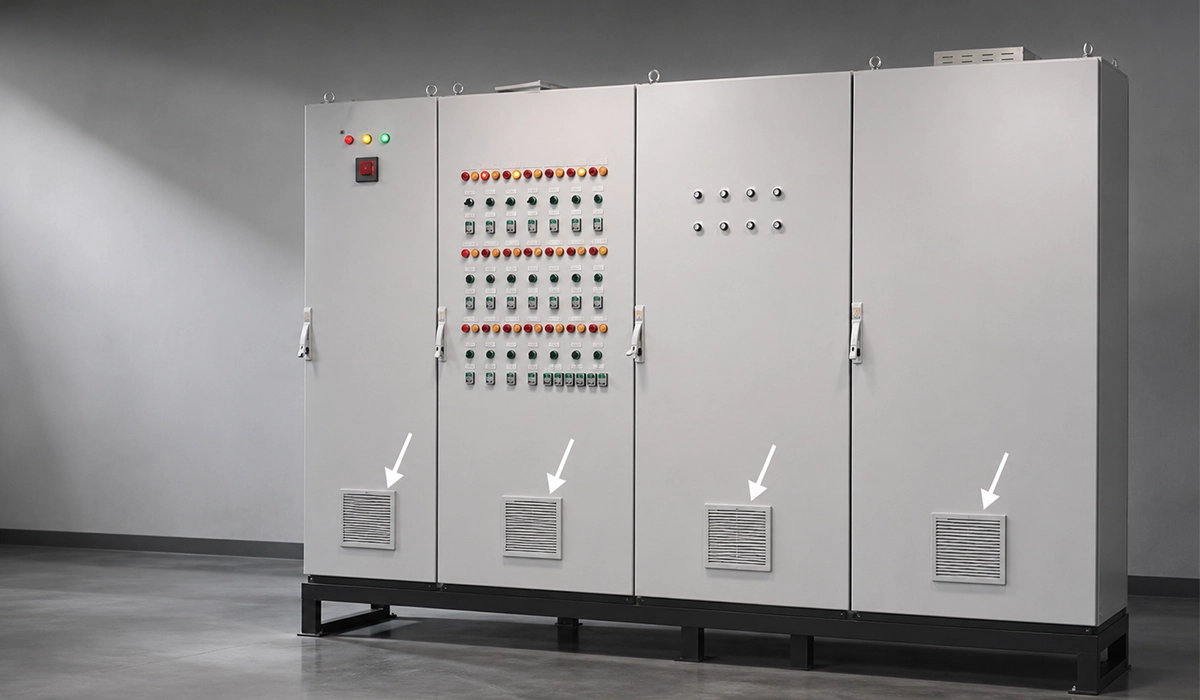
Panel ventilation systems fall into four approaches, and the IP rating usually decides between them before thermal capacity does. Control panel ventilation is as much a rating question as a thermal one.
| Method | Cools below ambient? | IP compatibility | Best for |
|---|---|---|---|
| Passive vents | No | Low — openings compromise the rating | Small loads, clean indoor areas |
| Filter fans | No | Typically IP54 maximum | Indoor cabinets, moderate dust |
| Air-to-air heat exchanger | No | Sealed, IP66 compatible | Sealed cabinets, ambient below target |
| Enclosure air conditioner | Yes | Sealed, IP66 compatible | Hot ambients, internal below ambient |
Filter fan ventilation for electrical cabinets draws filtered ambient air in and pushes warm air out, creating positive pressure inside. It is the cheapest option and the most commonly specified.
Heat exchangers and air conditioners are closed-loop: they treat the internal air while keeping ambient air outside. Air-to-air heat exchanger effectiveness typically runs 30–50%, which reduces net capacity against a raw airflow calculation.
Rather than doing the work manually, you can use this online tool to check your own results quickly.
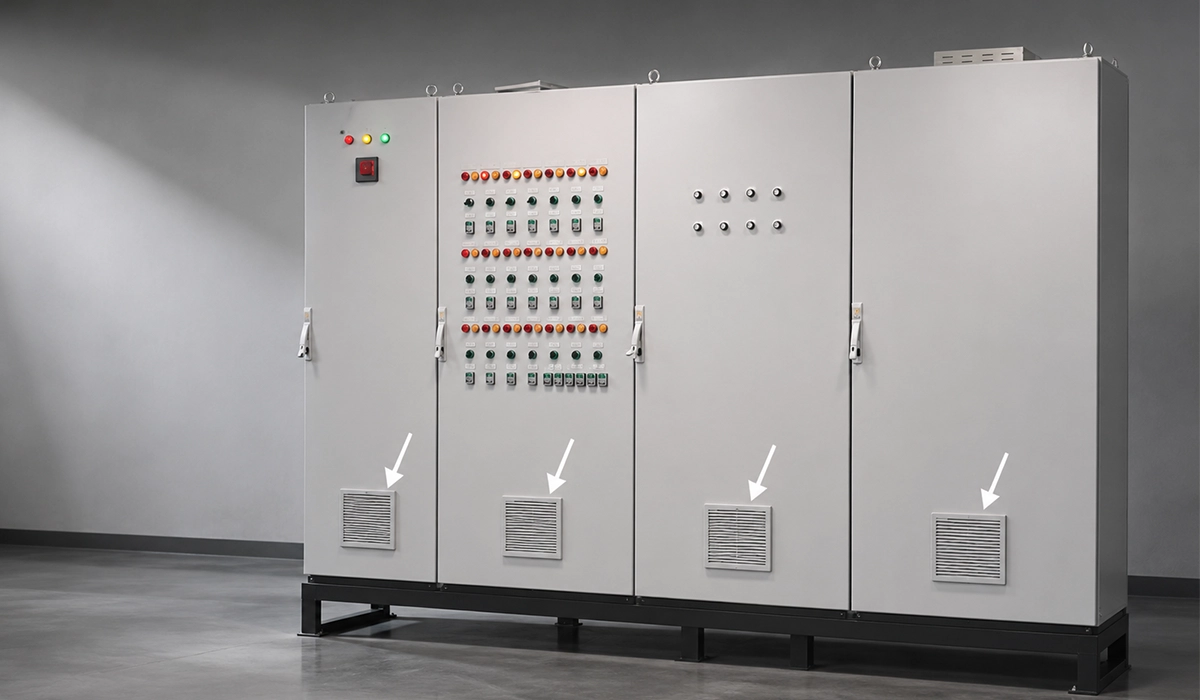
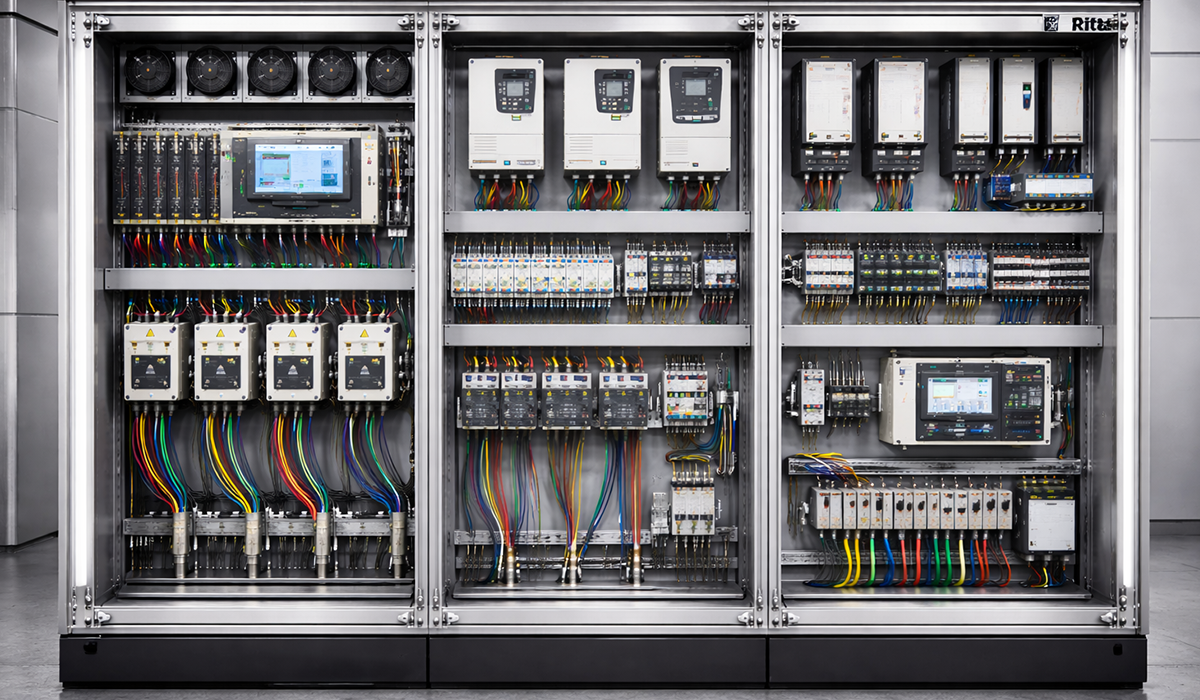
Major enclosure manufacturers build cooling accessories directly around these same four ventilation categories. Our overview of Rittal electrical panels shows how that plays out.
Heat Dissipation Methods for Industrial Panels
Anyone working out how to cool a control panel enclosure should start with natural convection through the walls:
P = k × S × ΔT
k is roughly 5.5 W/m²K for sheet metal, S is corrected surface area per IEC 60890, and ΔT is the internal-to-ambient difference. If that covers the load, no fan is needed.
Otherwise, size forced air from the heat load:
V = 3.1 × P / ΔT for airflow in m³/h, or CFM = P × 3.412 / (1.08 × ΔT°F) in imperial units.
Two further industrial panel heat dissipation methods matter. Thermal separation puts high-loss components in their own compartment or on an external heatsink. Vent placement routes air past the heat sources — a roomy cabinet still runs hot if airflow never reaches the drive heatsink.
VFDs are one of the biggest heat contributors named above, and the harmonics they generate bring their own separate design concern. Our guide to the harmonic filter covers that related issue.
Choosing the Right Ventilation Solution
Thermal management in control cabinets comes down to four inputs, in this order.
Heat load in watts. Add published losses for every energised component at expected load. Manufacturer data beats a rule of thumb.
IP or NEMA rating. The hard constraint. NEMA 12 / IP54 can take filter fans; NEMA 4X / IP66 cannot, and needs a sealed system.
Ambient temperature. If ambient sits below the internal target, fans or a heat exchanger work. If not, only an air conditioner goes below ambient.
Dust and moisture. Switch away from filter fans once dust or humidity is persistent. Heavy filter media raises system impedance sharply, pushing an axial fan into stall.
The most up-to-date information is always published on the official website, so it is worth checking there as well.
This same rating-first decision process applies just as much to selecting the switchgear the cabinet is meant to protect. Our guide to choosing the right switchgear covers that parallel decision.
Best Practices for Industrial Control Panel Cooling
Five practices. The first two are where most designs go wrong.
Size on installed airflow. A filter fan rated 15 cfm unimpeded may deliver about 10.6 cfm with the filter fitted. Design with that number.
Treat filter replacement as a design parameter. Clogging causes more in-service cooling failures than undersized fans. Put the interval in the documentation.
Target a realistic ΔT. Aim for 5–10 °C above ambient. Zero difference needs airflow rates that are not achievable.
Check hot spots. A 5 kW VFD can run 20–30 °C above cabinet average at its heat sink. A bulk-air calculation will not show it.
Audit under real load. Reach equilibrium, log ambient and internal together, and record the load.
Getting these cooling practices right is ultimately in service of the bigger goal of keeping switchgear performing reliably over time. Our guide to optimizing switchgear performance covers that outcome.
Industries That Require Reliable Enclosure Cooling
The method changes with the environment more than with the load.
Manufacturing. Dust and moderate ambients. Filter fans on NEMA 12 / IP54 cabinets cover most of it.
Oil and gas. High ambients, hazardous area classification and often outdoor exposure. Sealed cooling is standard.
Water treatment. Humidity and corrosive atmospheres. Closed-loop systems protect against condensation as much as heat.
Renewable energy. Solar gain on outdoor inverter and combiner cabinets adds load the internal calculation misses entirely.
Food processing. Washdown means IP66 and stainless, which rules out filter fans regardless of the thermal numbers.
These same environmental pressures show up across industrial switchboard installations well beyond just the cooling method. Our guide to industrial electrical switchboards covers that wider context.
Where Ventilation Openings Actually Come From
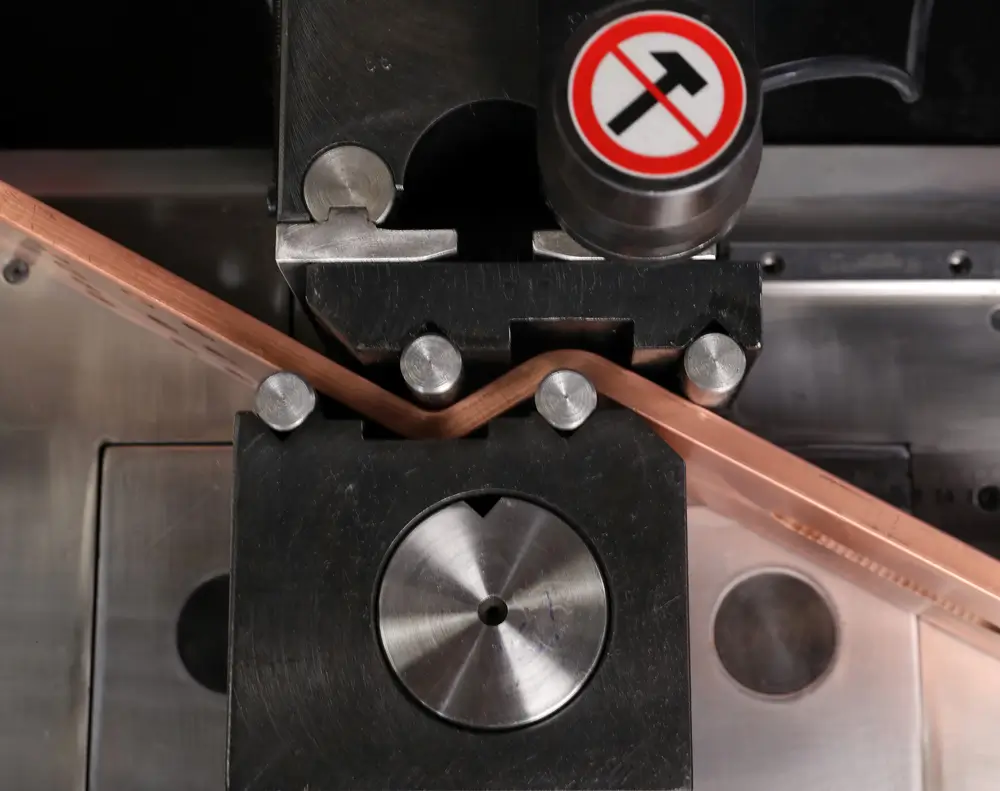
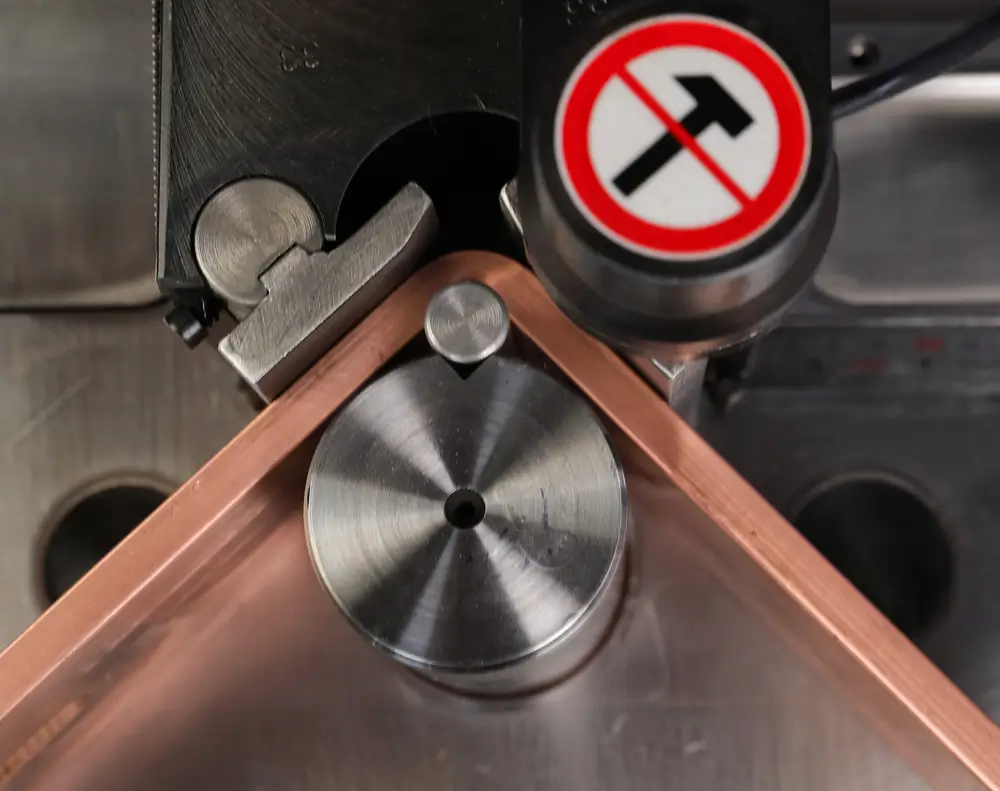
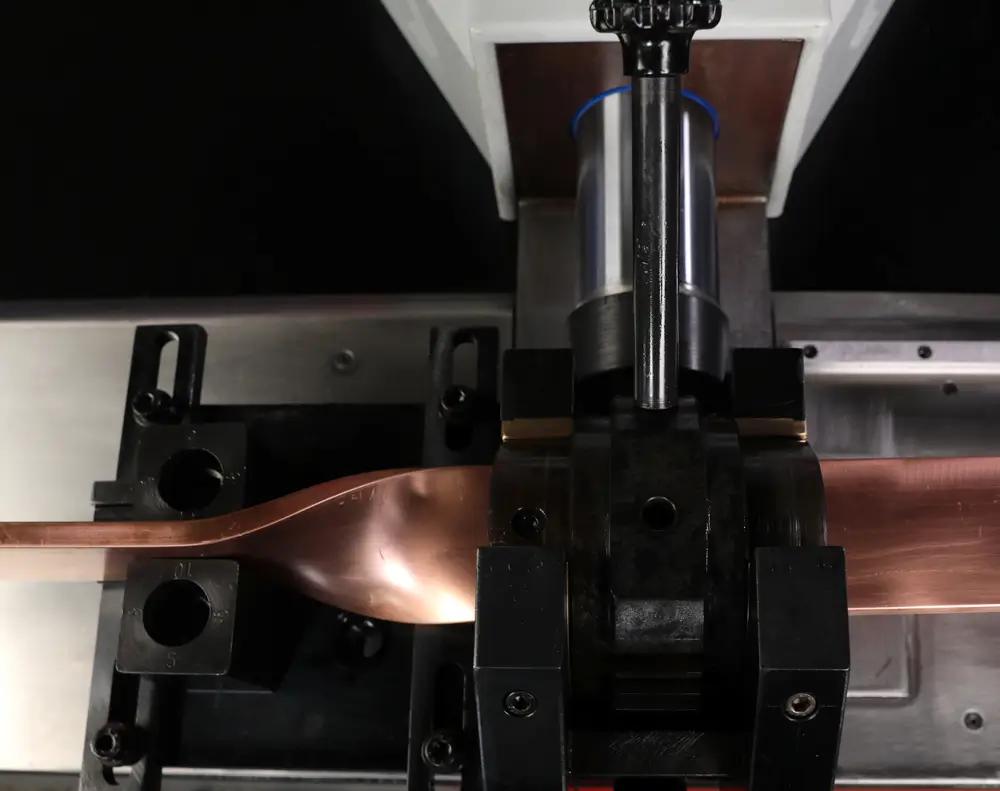
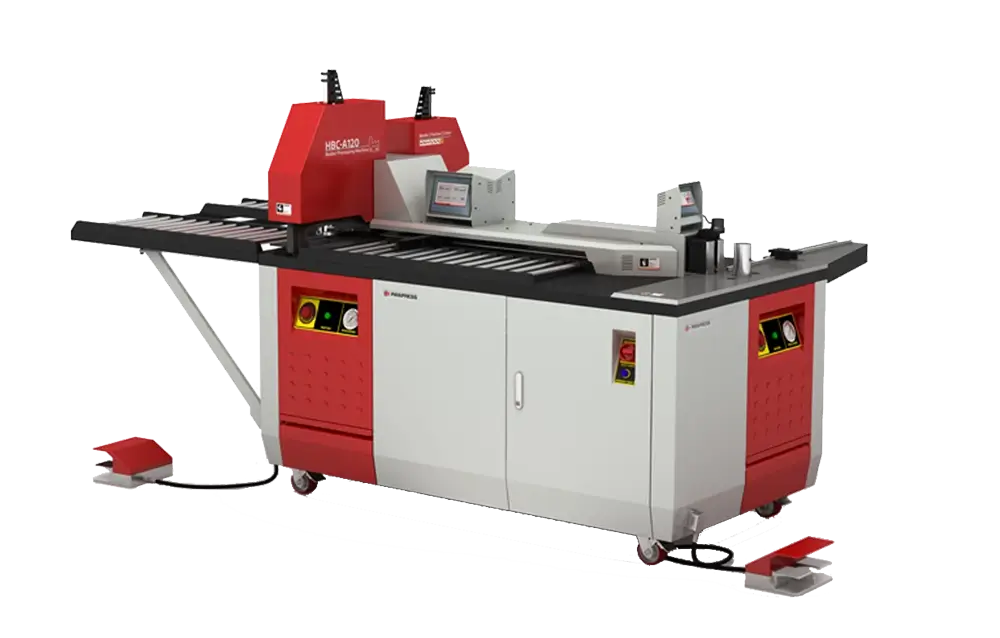
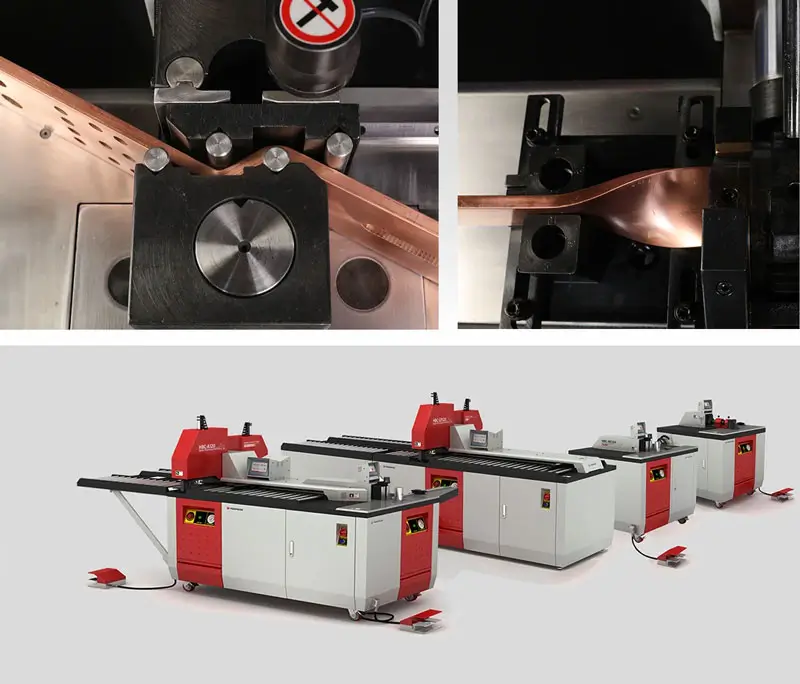
Every vent, louvre and fan cut-out above is a punched feature in a steel panel.
Embossed louvres formed cold produce no burning, no discolouration and no surface deformation. The coating stays intact, and a powder-coated panel can be modified without damaging the finish around the new aperture.
That second point matters because thermal design changes late. Adding ventilation to an already-coated panel is the difference between a change order and a scrap panel.
Send a panel drawing and a monthly volume for a machine recommendation.
Getting these punched features right the first time is really a manufacturing precision question more than a design one. Our article on panel manufacturing covers that side of it.
Conclusion about Electrical Enclosure Ventilation
Work it in order. Total the heat load from published component data. Check what natural convection already removes. Confirm the IP rating, because it eliminates options before thermal capacity does. Then size the airflow and design the path.
Get that sequence wrong and the usual result is a correctly sized fan bolted to an enclosure that should never have had a hole cut in it.
Zooming out, ventilation is just one piece of specifying a panel correctly from the ground up. Our holistic review of steel panels covers the rest of that picture.


Rate this article
Choose a rating from 1 to 5 stars.
No ratings yet