


If you’d rather listen than read, feel free to play the audio file below for the rest of this article.
NEMA 4 vs 4X: The Short Answer
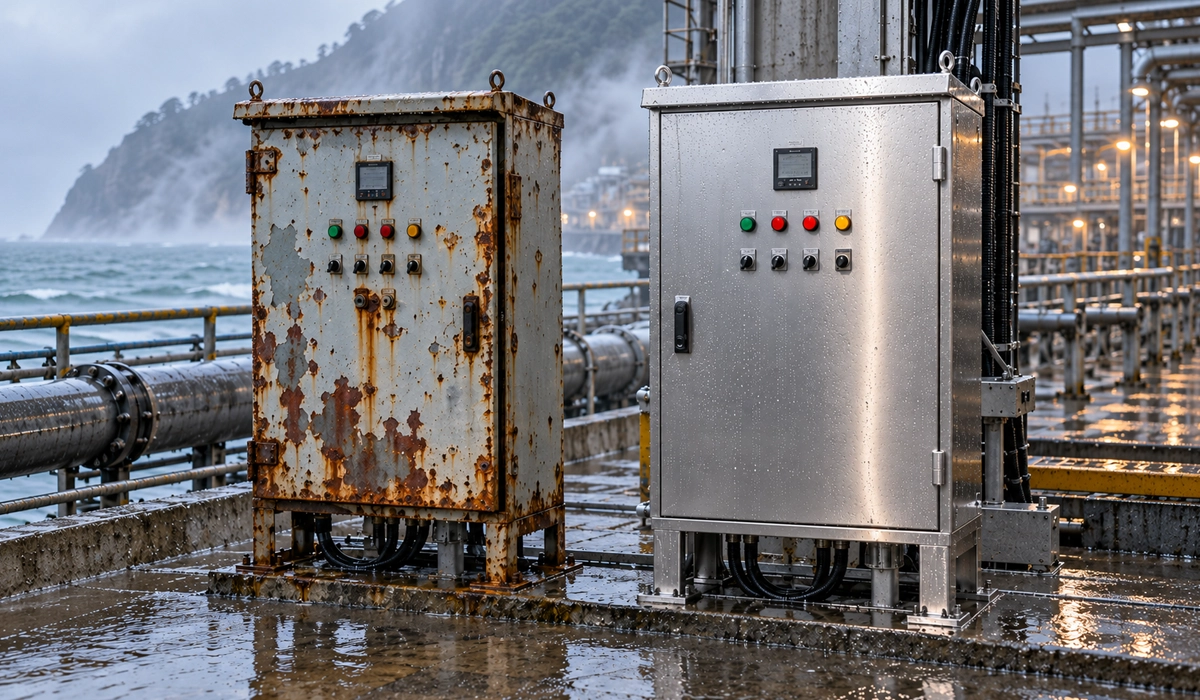
In the NEMA 4 vs 4X comparison, both types give the same protection against dust, rain, splashing and hose-directed water, and both survive external ice. The only difference is corrosion: Type 4X adds tested corrosion resistance on top of Type 4, proven in a salt spray chamber.
| Protection | NEMA 4 | NEMA 4X |
|---|---|---|
| Windblown dust | Yes | Yes |
| Rain, sleet, snow | Yes | Yes |
| Hose-directed water | Yes | Yes |
| External ice | Yes | Yes |
| 600-hour salt spray | Yes | Yes |
| Extra 200-hour salt spray | No | Yes |
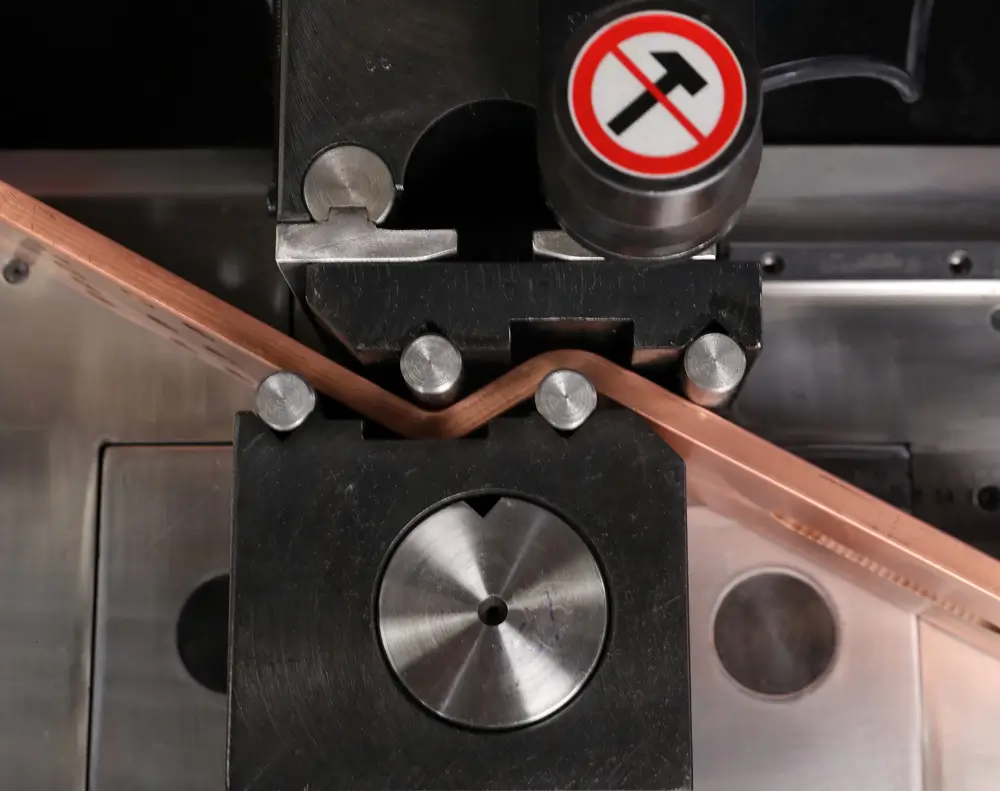
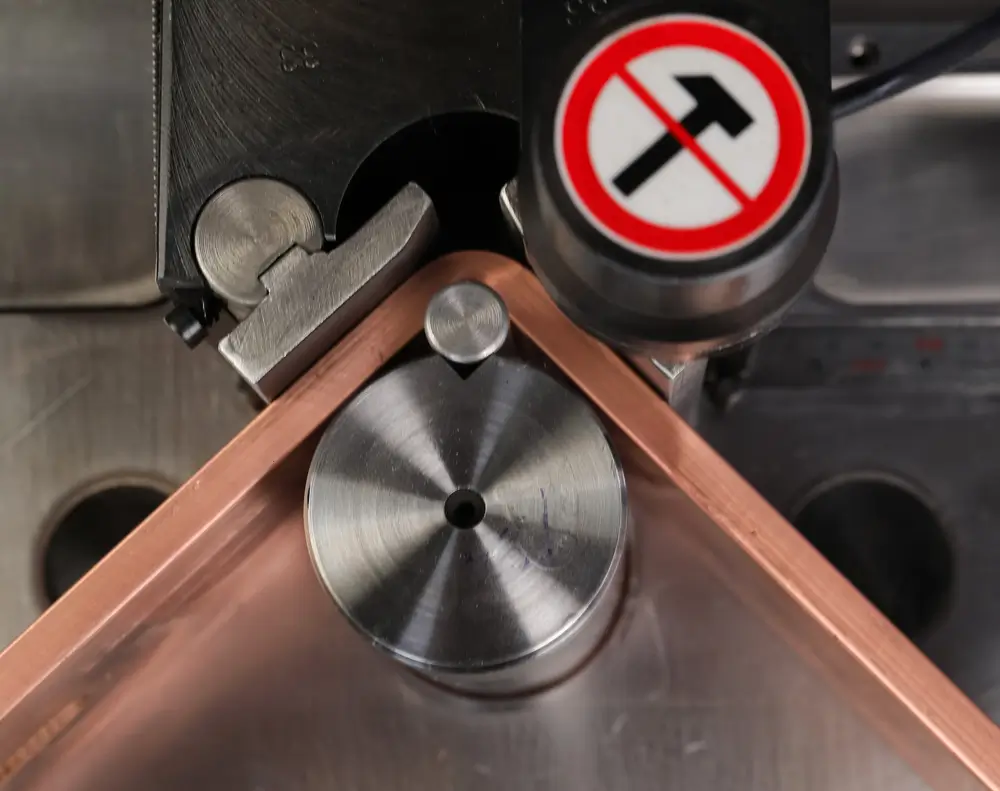
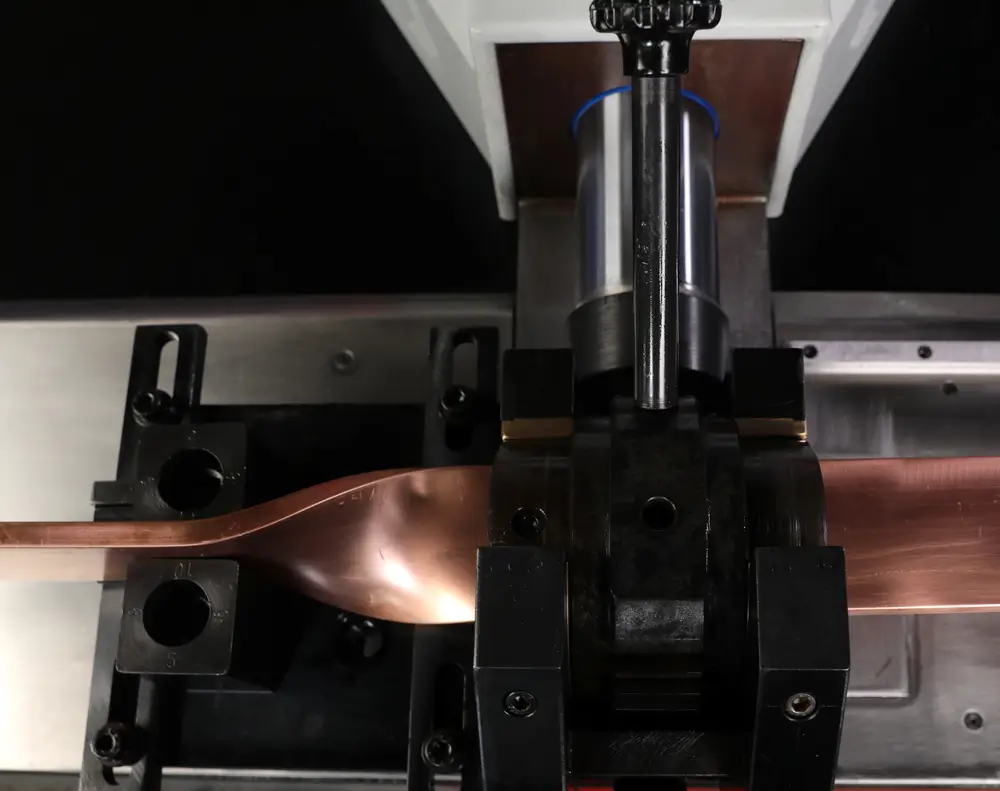
Designed for larger busbar sections, the HBC-BE200 machine delivers controlled bending performance for demanding electrical applications. Its robust construction and precise angle control make it suitable for heavy-duty switchgear fabrication.
What NEMA 4 and 4X Have in Common
What is a NEMA 4 enclosure? It is a box for indoor or outdoor use that protects equipment against windblown dust, rain, sleet, snow, splashing and hose-directed water. In addition, ice that forms on the outside must not damage it. Specifiers often describe this sealing as dust-tight and watertight.
So, what is NEMA 4 rating protection in practice? Crews trust it when they hose down pump stations, conveyors and outdoor skids. Is NEMA 4 outdoor rated? Yes, without extra add-ons, as long as the fittings match the rating.
Type 4X shares every one of these features, so the NEMA 4 vs 4X choice never changes the sealing. Instead, it changes how long the box resists rust.
Type definitions differ by just a few words, so it pays to read them side by side. NEMA’s guide defines Type 4 and Type 4X next to each other in its enclosure type definitions.
Enclosure ratings are only one layer of the rules that shape electrical equipment. For the wider set of codes behind panels and busbar systems, see our guide to switchgear standards.
The One Difference: Corrosion Testing
What is the difference between NEMA 4 and NEMA 4X in test terms? It comes down to two stages of the salt spray test, which exposes samples to salty fog in a chamber.
First, every outdoor enclosure type, including Type 4, faces 600 hours of salt spray beside a G90 galvanized steel sample. Then Type 4X, along with 3X, 3RX, 3SX and 6P, faces another 200 hours, compared with an AISI 304 stainless steel sample.
In plain terms, the NEMA 4X rating means the enclosure must corrode no worse than 304 stainless steel in the same chamber. Type 4 only has to match galvanized steel. That gap, G90 galvanized vs 304 stainless, is the whole corrosion protection story behind the X.
UL 50E uses the same type definitions, so a listed 4X enclosure has passed this stage at an independent lab. Therefore, check the listing mark.
Forums argue about what “additional corrosion protection” means, but NEMA answers it. The enclosure FAQ gives the salt spray hours and reference metals for outdoor and X types in its salt spray FAQ.
Salt spray testing shows how standards turn vague claims into clear pass criteria. To see how the main standards bodies and their documents fit together, read our electrical standards guide.
Materials: Why 4X Usually Means Stainless, FRP or Polycarbonate
A typical NEMA 4 enclosure uses painted carbon steel. The paint and gaskets pass the Type 4 tests, but once the coating chips or scratches, bare steel starts to rust, often at the hinges and door edges first.
By contrast, NEMA 4X boxes usually use 304 or 316 stainless steel, fiberglass (FRP) or polycarbonate. Painted carbon steel vs stainless is the most common choice buyers face, and stainless resists rust even where scratches expose the surface.
Does NEMA 4X have to be stainless steel? No. The test decides, not the material, so FRP, polycarbonate and some coated aluminum boxes can also earn the rating. For a full material comparison, read our NEMA 4X enclosure guide.
Within stainless, the grade matters as much as the type rating, especially near salt. The International Molybdenum Association explains when 316 outperforms 304 near salt water or de-icing salts in its stainless grade FAQ.
The enclosure material also decides how much dirt and moisture reach the parts inside. Designers rate that internal environment for insulation design using pollution degree classes.

Service Life and Cost Over Time
The NEMA 4 vs 4X cost gap looks large at purchase. A stainless 4X box can cost roughly two to three times a painted steel Type 4 box of the same size (hypothetical estimate). However, purchase price vs total cost of ownership tells a different story where corrosion is present.
A rusted enclosure means replacement, rewiring and downtime. Worse, moisture that gets past a corroded seam attacks terminals, breakers and busbar joints inside, so the damage spreads to the equipment.
| Environment | Painted NEMA 4 | NEMA 4X | Better value |
|---|---|---|---|
| Indoor dry plant | Long service life | Long service life | NEMA 4 |
| Outdoor inland | Good with upkeep | Long service life | Usually NEMA 4 |
| Coastal or washdown | Coating fails early | Long service life | NEMA 4X |
In short, the coastal environment and chemical washdown are where 4X pays back.
Corrosion costs far more across industry than most purchase budgets suggest. Inspectioneering reports NACE’s estimate of the global cost of corrosion and the savings from prevention in its corrosion cost report.
Busbar joints and terminals last longer when they are built and checked to strict quality rules from day one. Our article on busbar manufacturing compliance explains what that looks like on the shop floor.
When to Choose NEMA 4 vs NEMA 4X
Knowing when to use NEMA 4X comes down to one question: will anything on site attack painted steel? If the answer is no, Type 4 does the job. Seen the other way round, NEMA 4X vs NEMA 4 means paying more now to avoid paying again later.
The NEC’s enclosure selection table lists corrosion as its own condition, separate from hose-down. Electrical Contractor magazine explains how to read that table in its NEC table walkthrough.
The right enclosure also depends on what kind of panel sits inside it. For a quick tour of the panels used on U.S. sites, see our overview of electrical panel types.
Choose NEMA 4 When…
A painted NEMA 4 enclosure is the sensible, lower-cost pick when the threat is water and dust, not chemistry:
- The site is outdoors but inland, away from salt air and de-icing salt.
- No acids, chlorine or caustic cleaners reach the enclosure.
- Crews hose it down with plain water and mild soap only.
- The budget is tight and the expected service life is short.
- An indoor dusty plant needs a dust-tight box that survives hose cleaning.
In these conditions, Type 4 gives the full ingress protection of 4X at a lower price. Even so, touch up any chipped paint quickly to slow rust.
Choose NEMA 4X When…
Type 4X is worth the extra cost wherever salt or chemicals reach the enclosure:
- Food and beverage washdown uses chlorinated or caustic cleaners.
- The box sits in a coastal environment, on a pier or on a marine vessel.
- Wastewater, pool or water treatment chemicals are present.
- Chemical or pulp and paper plants release corrosive vapors.
- Roadside cabinets face de-icing salt every winter.
In the NEMA 4 vs 4X for washdown debate, the cleaning chemicals decide, not the water pressure. Inland vs coastal works the same way: salt in the air tips the choice toward 4X, even far from the shoreline.
Listed enclosures of both types follow UL 50E, which places Type 4 and Type 4X among the indoor or outdoor types. The ANSI store page lists both types and the standard’s scope in its UL 50E summary.
Common Mix-Ups (IP65, Explosion-Proof, NEMA 12)
Is NEMA 4X equivalent to IP65? Not exactly. IP codes cover only solids and water, while NEMA types also cover ice, corrosion and construction. Our IP65 vs NEMA 4X guide explains the comparison in detail.
Is NEMA 4X water tight? Against hose-directed water, yes, but only while every gasket stays intact and compressed. Hose-directed water vs submersion is a different matter: submersion needs Type 6 or 6P.
Finally, neither Type 4 nor 4X is explosion-proof; that job belongs to Types 7 and 9. Also, NEMA 12 is an indoor-only type, so see our IP55 vs NEMA 12 comparison for that choice.
IP codes and NEMA types come from different standards, so the two never map one to one. The IEC catalogue page sets out the scope of the IP Code classification for electrical enclosures in its IEC 60529 listing.
Hazardous locations follow their own marking schemes outside the NEMA type system. Our comparison of ATEX vs IECEx explains the zones and labels used for explosive atmospheres.
Conclusion: NEMA 4 vs 4X
The NEMA 4 vs 4X rule is simple: both types seal out dust and hose-directed water, so choose by corrosion. Use Type 4 where only water and dust matter, and Type 4X where salt, chemicals or caustic washdown will attack painted steel. Then fit glands, hardware and HMIs that carry the same rating. For every other enclosure type, see our NEMA ratings chart.
The right enclosure rating is only one step toward a compliant control panel for export. If your panels ship to Europe, our guide to CE marking covers the remaining requirements.



Rate this article
Choose a rating from 1 to 5 stars.
No ratings yet