


Prefer listening? You can play the audio version of the rest of this article below.
What Is Overcurrent Protection?
Overcurrent protection is the coordinated use of protective devices and settings to disconnect or limit excessive current before conductors, insulation, or equipment are damaged.
The word “overcurrent” covers four distinct events, and treating them as one thing is the most common source of bad settings:
- Overload — current above the design value, sustained. Damage is thermal and gradual.
- Short circuit — a low-impedance fault. Current is very high, damage is immediate, and clearing must be fast.
- Earth fault — current returning through the protective conductor or earth path. Magnitude depends on the earthing system.
- Inrush — a temporary peak at energisation. Not a fault at all, but it will trip protection that cannot tell the difference.
The last one matters most in practice. Most “faulty breaker” complaints turn out to be inrush meeting the wrong trip curve.
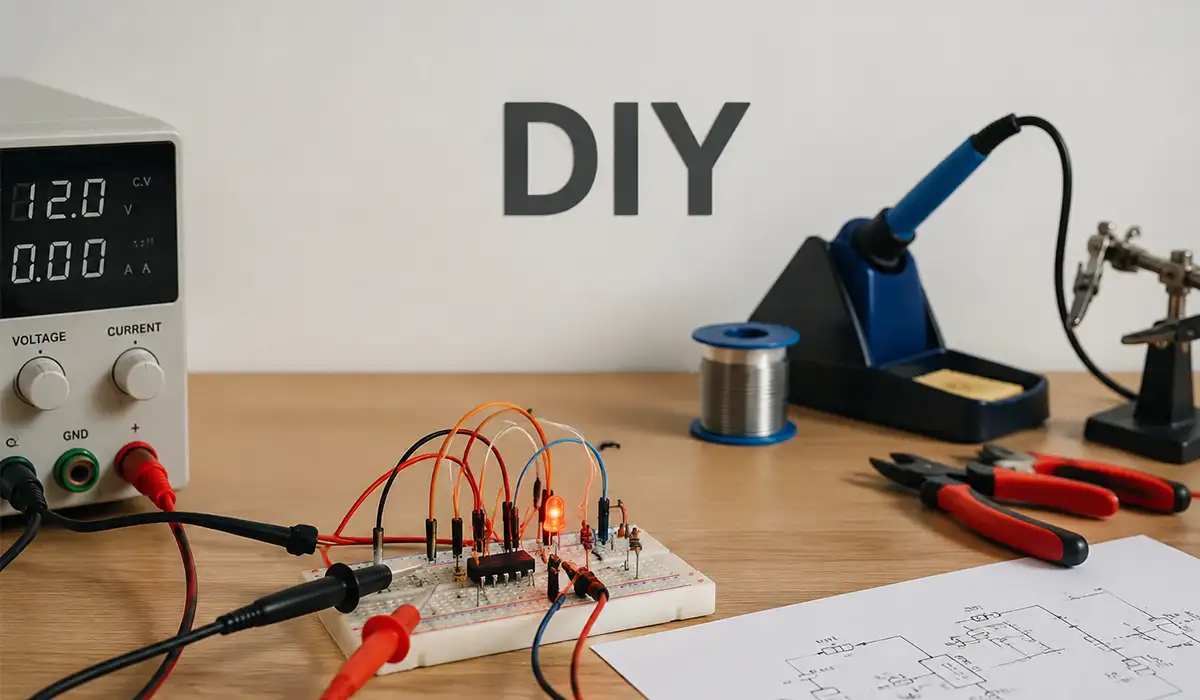
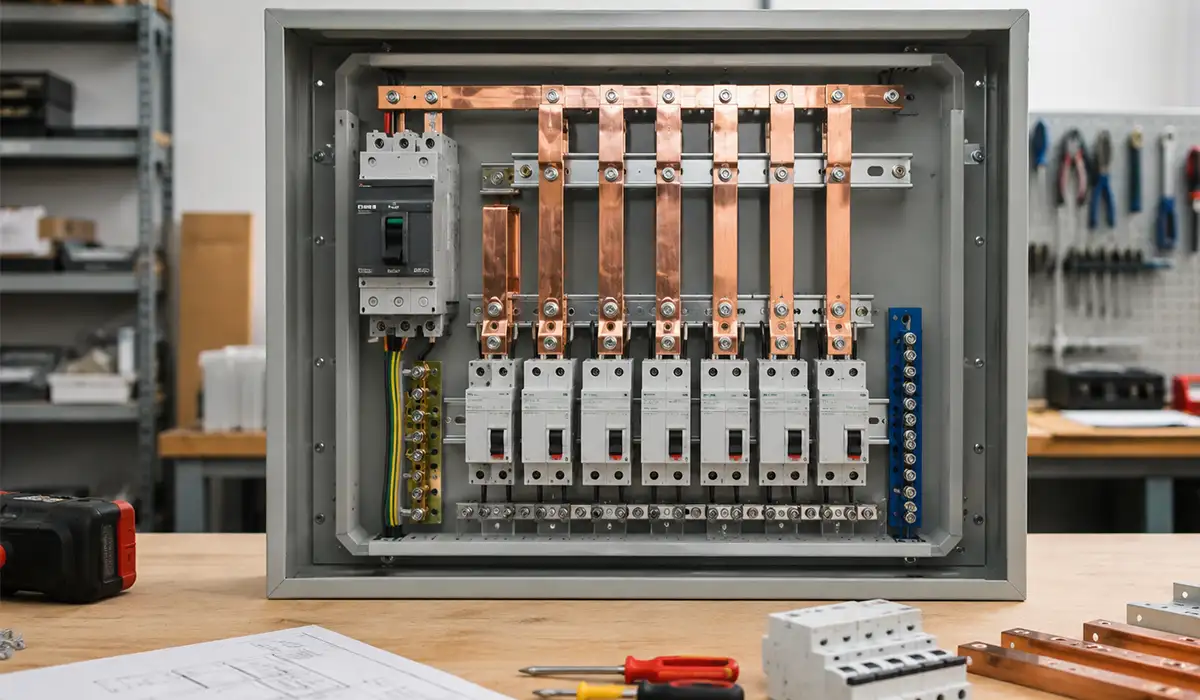
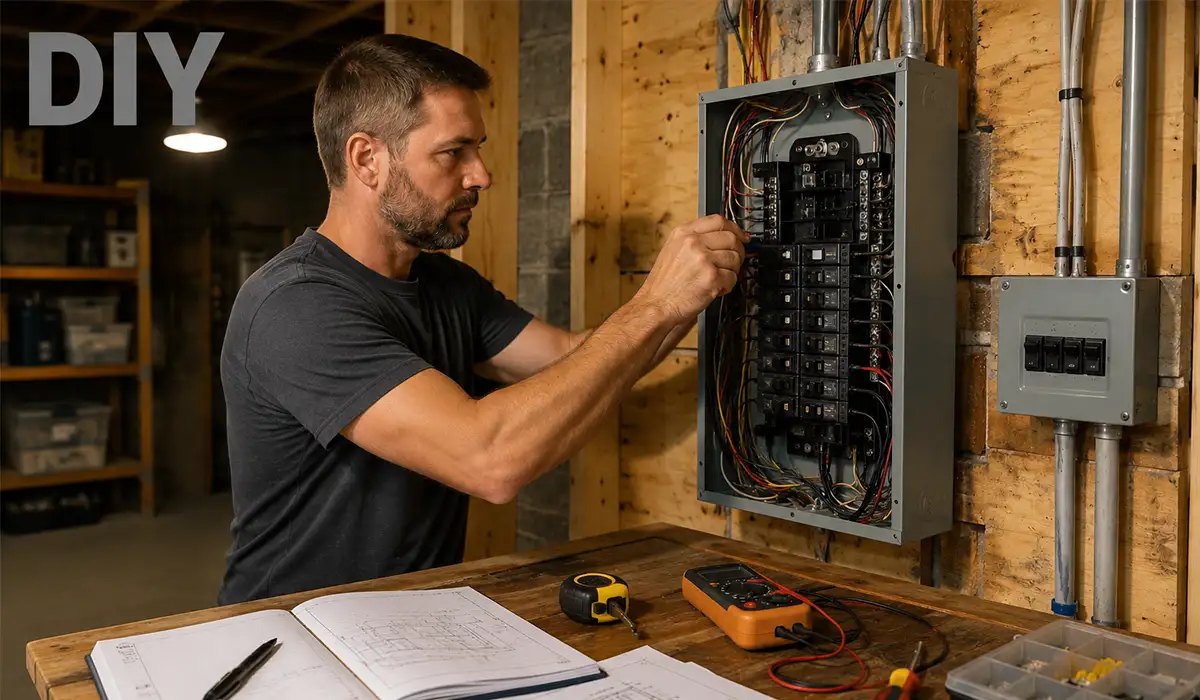
This panel started as a neater power distribution box for a workshop — cleaner wiring, better labeling, dedicated feeds for a VFD, lighting, and bench outlets. But once the loads were listed out — motor drive, SMPS supplies, a compressor starter, test instruments, and occasional heating loads — it stopped being a wiring job. It became a protection problem.
Three goals were written down before anything was bought:
- Prevent damage (cables, devices, and installation mistakes)
- Reduce nuisance trips
- Make faults easier to diagnose
That changed the approach from “which breaker fits” to thinking in layers:
- What kind of overcurrent can happen?
- What kind of surges can enter the panel?
- What harmonics will the VFD inject?
- Will the conductor geometry increase heating?
The same layered thinking applies to any assembly, which is why it is worth understanding how electrical panels and switchgear are structured before selecting a single device.
The Loads This Panel Had to Protect
The final panel used a mix of mainstream components chosen for availability and documentation:
- MCBs and MCCBs from mainstream European suppliers
- A contactor for a switching branch
- A mid-range VFD for a motor load
- Spring-clamp and screw terminals
- A true-RMS handheld meter, and later a borrowed power quality analyser for troubleshooting
- An insulation resistance tester during final checks
This was not a factory panel. But the problems were very real — and very similar to industrial ones. The device mix is close to what you would find in any small distribution assembly, and the selection logic is the same one used for industrial electrical panel components.
My First Mistake: Designing from Current Only
Protection was initially sized mostly from nameplate current and cable ampacity. That was too shallow.
What should have been considered from day one:
- Inrush behavior
- Continuous load derating
- Harmonic distortion
- Coordination between upstream and downstream protection
- Surge environment (especially in a building with long cable runs)
That mistake led directly to the first nuisance trips.
Overcurrent Protection Devices and the Standards That Govern Them
Each device class has its own product standard, and the standard tells you what the ratings on the nameplate actually mean.
| Device | Function | Standard |
|---|---|---|
| MCB (miniature circuit breaker) | Overload and short-circuit protection, household and similar | IEC 60898-1 |
| MCCB / industrial circuit breaker | Overload and short-circuit protection, industrial duty | IEC 60947-2 |
| Fuse (LV) | Short-circuit and overload protection, non-resettable | IEC 60269 series |
| Motor protection circuit breaker | Motor overload with adjustable thermal setting | IEC 60947-4-1 |
| Switch-disconnector | Load switching and isolation — not overcurrent protection | IEC 60947-3 |
| Overcurrent relay | Programmable protection in larger systems | IEC 60255 series |
The MCB/MCCB split matters more than it looks. IEC 60898-1 applies to AC air-break circuit-breakers up to 440 V between phases, 125 A rated current and 25 000 A rated short-circuit capacity, and those devices are designed for use by uninstructed people and for not being maintained. IEC 60947-2 devices are industrial: they carry Icu and Ics ratings rather than Icn, and instantaneous settings are usually adjustable.
Note what is not on that list. A switch-disconnector makes and breaks load current and provides isolation, but it does not protect against overcurrent. A surge protective device handles transient overvoltage, not overcurrent. Those are separate jobs, and confusing them is how panels end up under-protected.
What the Setting Value of Overcurrent Protection Means
The “setting value” is not simply “the current where it trips.” That is only partly true.
In real systems, the setting value can refer to different thresholds and timing behaviors:
- Pickup current (the current level that starts the trip action)
- Time delay (how long the current must persist)
- Instantaneous trip threshold (for severe faults)
- Thermal / long-time settings (to reflect heating behavior)
In this project, one branch fed a motor drive and another fed auxiliary loads. One protective device was set too tightly out of a fear of overheating. The result was startup nuisance trips.
What fixed it was not “making the breaker bigger blindly.” It was:
- confirming cable sizing,
- checking actual measured current,
- understanding startup and inrush behavior,
- and adjusting the protection setting (or the curve type) appropriately.
That was the big lesson: a bad setting can make a good device look defective.
The Coordination Rule: Ib ≤ In ≤ Iz
This is the rule that turns “which breaker fits” into an engineering decision. IEC 60364-4-43 requires a device protecting a cable against overload to satisfy two conditions (Clause 433.1 in the 2008 edition; the current 2023 edition renumbered but the requirement is unchanged):
Condition 1: Ib ≤ In ≤ Iz
Condition 2: I2 ≤ 1.45 × Iz
| Symbol | Meaning |
|---|---|
| Ib | Design current of the circuit |
| In | Rated current, or the current setting, of the protective device |
| Iz | Continuous current-carrying capacity of the conductor |
| I2 | Current ensuring effective operation of the device |
Read plainly: the device must be large enough to carry the load without tripping, and small enough that it operates before the cable is damaged. The cable sets the ceiling, not the load.
Condition 2 behaves differently for breakers and fuses. For circuit breakers, I2 is the operating current in conventional time, taken as 1.45 In — so condition 2 is satisfied automatically once In ≤ Iz. For fuses to IEC 60269, the fusing current in conventional time is 1.6 In, which means condition 2 has to be checked separately and can force a smaller fuse than the cable rating alone would suggest.
One detail that catches people out: for adjustable protective devices, In is the current setting selected, not the frame size. An 800 A frame set to 400 A is a 400 A device for coordination purposes.
This is the formal version of the same priority used throughout this build: protect the cable first, then the equipment, while maintaining usability.
Which Overcurrent Type Is Least Damaging?
A quick test worth writing on a sticky note while troubleshooting:
Question: Which is the least potentially damaging type of overcurrent, if cleared and managed properly?
A) Short circuit
B) Overload
C) Arcing fault
D) Ground fault
Answer: B) Overload (generally speaking)
Why?
- Overloads are usually lower magnitude than short circuits
- They tend to cause thermal stress over time, not immediate explosive damage
- Protective devices often handle them through thermal and time-delay mechanisms
That said, overloads are still serious. A “slightly warm” terminal feeding a continuous load was ignored once in this project. A week later, insulation discoloration proved that slow damage is still damage.
Trip Curves B, C and D: Choosing the Right Characteristic
A trip curve letter describes the instantaneous magnetic band — the multiple of rated current at which the breaker opens in milliseconds instead of minutes. It does not change the thermal behavior, which is broadly common across B, C and D.
These bands are set out in IEC 60898-1. IEC 60947-2 instantaneous settings are more manufacturer-defined, with Icu and Ics ratings rather than Icn.
| Curve | Magnetic Trip Band | Typical Application |
|---|---|---|
| B | 3–5 × In | Resistive loads, lighting, general socket circuits |
| C | 5–10 × In | Mixed and moderately inductive loads, small motors |
| D | 10–20 × In (some families 10–14 ×) | Transformers, motors and drives with heavy inrush |
The same rated current gives three very different startup behaviors. A 16 A B-curve device trips magnetically somewhere between 48 A and 80 A. A 16 A C-curve device trips between 80 A and 160 A. A 16 A D-curve device trips between 160 A and 320 A.
On the thermal side the anchors are common across curves: 1.13 × In is the conventional non-tripping current, and 1.45 × In is the conventional tripping current, which must operate within the conventional time. Calibration usually assumes 30 °C ambient, which matters because a hot panel shifts the whole thermal band.
This is why fitting a bigger breaker is almost never the right fix for a startup trip. Raising In raises the thermal threshold too, which weakens cable protection and can break condition 1 of the coordination rule. Moving from B to C keeps In the same and only widens the inrush tolerance. That was exactly the fix for the nuisance trip described below.
Real Overcurrent Events in the Panel and How They Were Fixed
| Overcurrent Type | What It Looked Like in the Panel | Typical Risk Speed | The Fix |
|---|---|---|---|
| Overload | Motor branch running hot during long cuts | Medium (thermal buildup) | Measured actual current, adjusted protection curve, improved ventilation |
| Inrush peak (non-fault) | Nuisance trip at startup | Fast trip, but not a true fault | Changed device curve and coordination |
| Suspected short (wiring error during testing) | Immediate trip after energizing branch | Very fast, high damage potential | Isolated branch, continuity check, corrected wiring |
| Loose terminal heating (current concentration) | Heat and smell before trip | Medium to fast | Re-terminated, torque checked, replaced damaged lug |
The last row is worth dwelling on, because a loose joint mimics a fault without being one. Series arcing at a degraded termination produces heat and damage that standard overcurrent devices are not designed to detect, which is where arc fault breakers cover a gap that MCBs cannot.
A Practical Overcurrent Selection Sequence
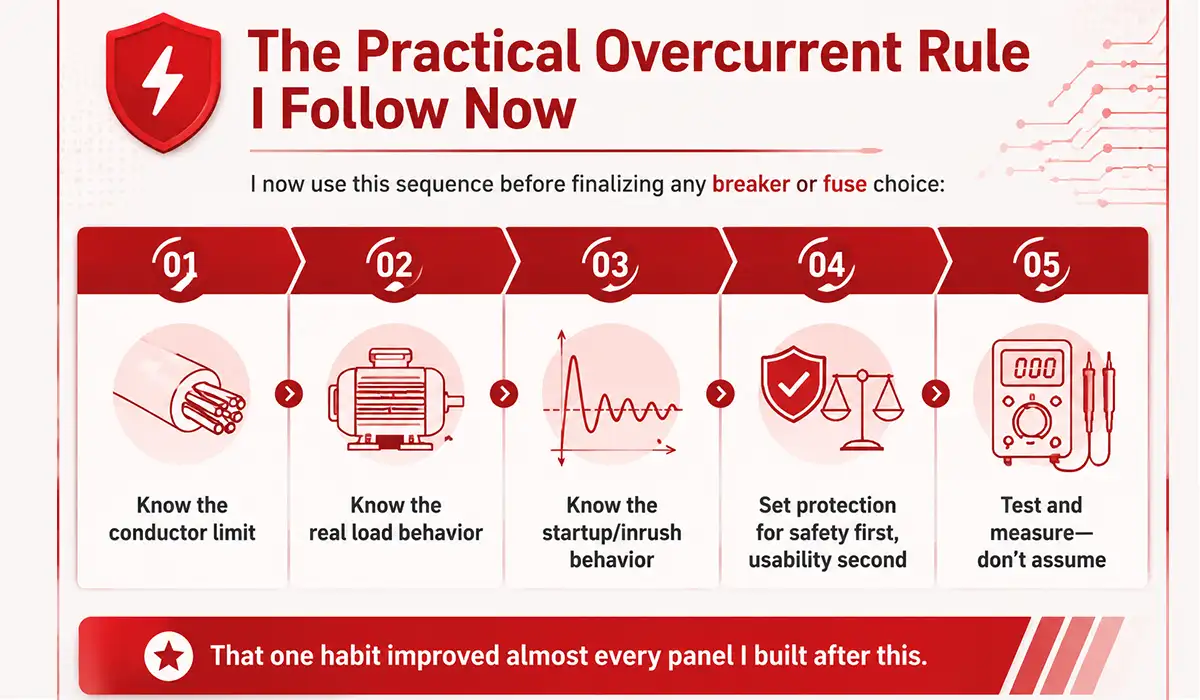
This sequence now runs before finalizing any breaker or fuse choice:
- Know the conductor limit — establish Iz first, including derating for grouping and ambient
- Know the real load behavior — measure Ib, do not assume it from nameplates
- Know the startup and inrush behavior — this decides the curve, not the rating
- Check the coordination conditions — Ib ≤ In ≤ Iz, and I2 ≤ 1.45 × Iz
- Set protection for safety first, usability second
- Test and measure — do not assume
That one habit improved almost every panel built after this one.
Surge Protection and Insulation Coordination
The second big learning moment came when a thunderstorm — not even a direct strike near the building — caused strange behavior in a measuring device and a power supply module.
Nothing failed dramatically, but the system started acting “haunted”:
- one display froze once,
- a small PSU had intermittent resets,
- and a VFD alarm history showed unexplained events.
That pushed the project into surge protection and insulation coordination, previously filed away as “industrial-only topics.”
They are not.
What Is an SPD (Surge Protective Device)?
An SPD is a device designed to limit transient overvoltages by diverting surge current and clamping voltage to a safer level. In low-voltage panel practice the correct term is SPD, governed by IEC 61643-11. “Surge arrester” belongs to medium and high voltage work under the IEC 60099 series, and using it in an LV context invites confusion.
The earlier mindset here was: “I already have breakers, so I’m protected.”
Wrong.
Breakers and fuses protect mainly against overcurrent, not fast transient overvoltages. A surge event can stress electronics without ever causing an overcurrent trip.
A properly selected SPD went into the panel’s upstream section, with attention to:
- short connection leads,
- good bonding,
- a proper earthing path,
- and placement relative to sensitive devices.
That alone reduced the odd behavior after utility disturbances.
Overvoltage Category vs Measurement Category
These are two related but separate classifications, and mixing them up is common.
Overvoltage category (OVC I–IV) comes from IEC 60664-1, Insulation coordination for equipment within low-voltage supply systems. It describes the transient environment installed equipment must withstand, and it drives clearance, creepage and impulse withstand requirements. OVC III covers hard-wired equipment inside a switch cabinet or distribution panel — relays, circuit breakers, fixed-installation power supplies — while OVC IV applies to equipment connected directly to the incoming supply.
Measurement category (CAT I–IV) comes from IEC 61010-1, for test and measurement equipment. It indicates an instrument’s ability to withstand voltage spikes without posing a shock hazard to the operator. The CAT mark on a multimeter tells you where the meter may be used — not what the installation is rated for.
They are not interchangeable. IEC 61010-1 specifies a 6 mm clearance for 300 V AC reinforced insulation against 8 mm in IEC 60664-1, and its impulse test requirements are harsher in places.
The working rule is straightforward:
- Specify panel devices by OVC.
- Select test gear by CAT, matched to the location where you will be probing.
A CAT III meter used at a service entrance — a CAT IV location — is a real safety exposure, not a paperwork detail. Note also that a higher category at a lower voltage gives more protection than a lower category at a higher voltage: CAT IV 600 V beats CAT II 1000 V, because of more robust internal design, greater creepage and clearance distances, and higher energy-withstand capability.
The mistake made in this project was exactly that — using a measurement accessory in a location that belonged to a higher transient environment than first assumed.
What Creepage Distance Means in a Dusty Panel
It is easy to focus mostly on clearance (the air gap). But creepage distance is different.
Creepage distance is the shortest path along the surface of an insulating material between two conductive parts. It is defined in IEC 60664-1 and is driven by working voltage, material group and pollution degree.
Why it mattered in this workshop:
- fine dust,
- humidity swings,
- occasional oil mist,
- and long-term contamination on surfaces
A surface path can become more conductive over time, especially in dirty environments. In one early build, conductors were routed too close over an insulating support block on the basis that it “looked okay.” That is not a design method.
The things that now get attention:
- insulator material quality and comparative tracking index,
- contamination risk and pollution degree,
- terminal spacing,
- barriers and shrouds,
- and layout that avoids tracking-prone paths.
Insulation Coordination in Practice
Insulation coordination means matching the insulation strength of the system and its devices to the voltage stresses it will actually see — especially transient ones.
In practical panel language:
- Don’t put sensitive electronics in the same electrical neighborhood without thinking about surges.
- Don’t assume spacing that looks visually generous is technically correct.
- Don’t mount an SPD and then wire it with long looping leads that reduce its effectiveness.
The panel layout was redone once purely to improve:
- SPD lead length,
- separation of power and control wiring,
- and terminal spacing around higher-stress points.
It was worth the extra day.
Harmonics and Overcurrent Protection: The Connection Most People Miss
The panel worked. Then a VFD-driven motor and some electronic loads went onto the same distribution branch.
Symptoms appeared slowly:
- occasional nuisance trips
- extra heating in one conductor path
- buzzing in one device enclosure
- odd readings on a cheap meter
- more noise in control signals than expected
The breaker got the blame first. Then the cable. Then the VFD.
The actual issue was more subtle: harmonics.
What Harmonic Filters Do
A harmonic filter is a device or network designed to reduce harmonic distortion by attenuating or redirecting harmonic-frequency currents and voltages.
In practical terms, harmonic filters help:
- reduce THD (Total Harmonic Distortion)
- reduce extra heating in transformers, cables and conductors
- improve power quality
- reduce nuisance tripping and interference
- protect sensitive equipment from distortion-related stress
The main types you will meet:
- Passive harmonic filters (L, C, sometimes R combinations, tuned or detuned)
- Active harmonic filters (power electronics that inject counter-harmonic currents)
- Line reactors and DC chokes (not full filters, but often very helpful with VFDs)
This project started with a modest step — improving input conditioning and layout — then tested a filtering approach appropriate for the drive load. Selection depends on the harmonic spectrum, the system impedance and the emission limits that apply, which is covered in more depth in this guide to harmonic filters.
Harmonic Basics Without the Textbook Pain
Harmonics are not “random electrical noise.” They are frequency components at integer multiples of the fundamental frequency. Nonlinear loads — many drives and SMPS units — draw current in a non-sinusoidal way, and that distorts the current waveform.
That distorted current can cause:
- heating beyond what RMS current alone suggests
- nuisance operation in protection devices
- voltage distortion across system impedance
- EMC headaches
Emission limits are not arbitrary either. IEC 61000-3-2 and IEC 61000-3-12 set harmonic current limits for equipment, and IEEE 519 is the common reference for system-level limits at the point of common coupling.
How Harmonic Filters Work in Practice
The practical idea is simple:
- Passive methods create impedance behavior that reduces certain harmonic currents.
- Active filters sense distortion and inject compensating currents.
What improved after better input conditioning, separation and layout:
- lower apparent electrical roughness
- fewer nuisance events
- cooler operation at some conductor and terminal points
- more stable behavior on measurement devices
None of it was magic. It was finally acknowledging that the system was nonlinear.
Why Harmonics Change Overcurrent Behaviour
Harmonics are not only a power quality problem. They change what “overcurrent” means in the circuit.
Triplen harmonics — the 3rd, 9th, 15th — do not cancel in the neutral of a three-phase four-wire system. They add. A neutral carrying heavy third-harmonic current can run hotter than the phases while the phase currents look balanced and comfortably within rating.
The standards bodies treat this as mainstream, not exotic: the 2008 edition of IEC 60364-4-43 added requirements for overload detection in the neutral conductor specifically for harmonic currents.
Two consequences for anyone setting protection:
- True-RMS measurement is not optional. An averaging meter under-reads distorted current. A circuit that reads 70% of rating may be sitting at 100%.
- Thermal protection responds to heating, not to assumptions. Distorted current heats a conductor more than its RMS value alone suggests, so a device that looks correctly set can still run at the edge of its thermal band.
This is the point where the nuisance trips in this project finally made sense. The breaker was not wrong. The current it was being asked to carry was not the current on the nameplate. A device can be correctly rated and still behave poorly in a distorted system if heat rises unexpectedly, if waveform shape affects sensing behavior, or if shared impedance spreads distortion into sensitive branches.
That is why protection and power quality are no longer treated as separate topics here.
Before and After: Power Quality Snapshot
A simplified version of the trend recorded during testing. Illustrative power quality trend, relative values.
| Metric | Before Improvements | After Improvements | Result |
|---|---|---|---|
| Current THD | High | Moderate / Lower | Reduced harmonic distortion |
| Nuisance Trips | Frequent | Rare | Fewer unwanted breaker trips |
| Conductor Hotspot Complaints | Noticeable | Reduced | Lower thermal-risk complaints |
This was one of those moments where measurement beat opinion. A full day was spent arguing that the breaker was wrong. The waveform data told a different story.
Skin Effect and Conductor Heating
Skin effect is easy to dismiss as a high-frequency topic that matters to RF engineers, not panel builders. Then harmonics, switching edges, and conductor heating patterns start appearing that do not match simple DC intuition.
That is when skin effect stops being a textbook word and becomes a design consideration.
What Is the Skin Effect?
Skin effect is the tendency of alternating current to concentrate nearer the outer surface of a conductor as frequency increases.
At normal power frequency (50/60 Hz) the effect in small conductors is modest. But as frequency rises — including harmonic components — current distribution becomes less uniform, which increases effective AC resistance.
That means:
- more heat,
- less efficient use of the conductor cross-section,
- and more reason to think about conductor geometry.
Which Circuits Need Large Surface Area?
The useful question is: what kind of circuits should use conductors with a large surface area relative to cross-sectional area?
Once skin effect makes sense, the answer is intuitive:
- High-frequency circuits
- Circuits carrying significant harmonic content
- Applications where AC resistance matters
- Busbar and power electronic layouts where current crowding and heating are a concern
This does not mean “use huge flat metal everywhere.” It means conductor geometry matters as much as cross-section.
What Changed in the Panel Layout
This project did not get redesigned into a laminated busbar system. But the choices improved:
- shorter conductor paths
- improved conductor routing and spacing
- avoiding unnecessary loops
- better termination quality, since surface contact matters
- in one section, a conductor arrangement with more exposed surface than a single bulky path
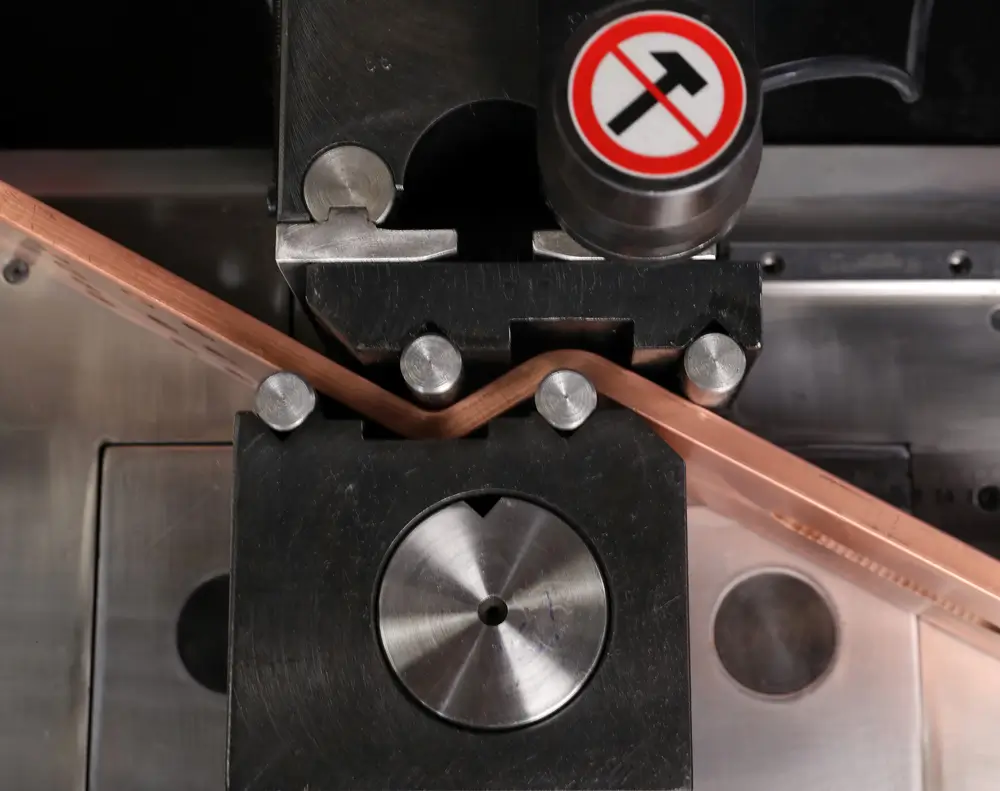
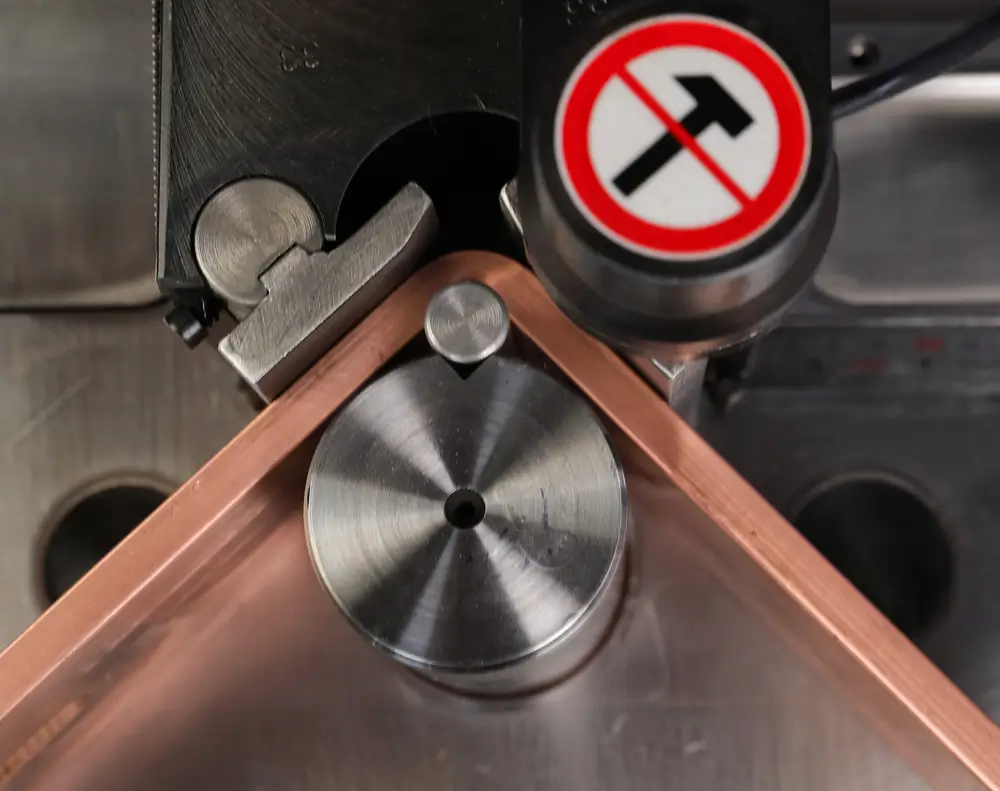
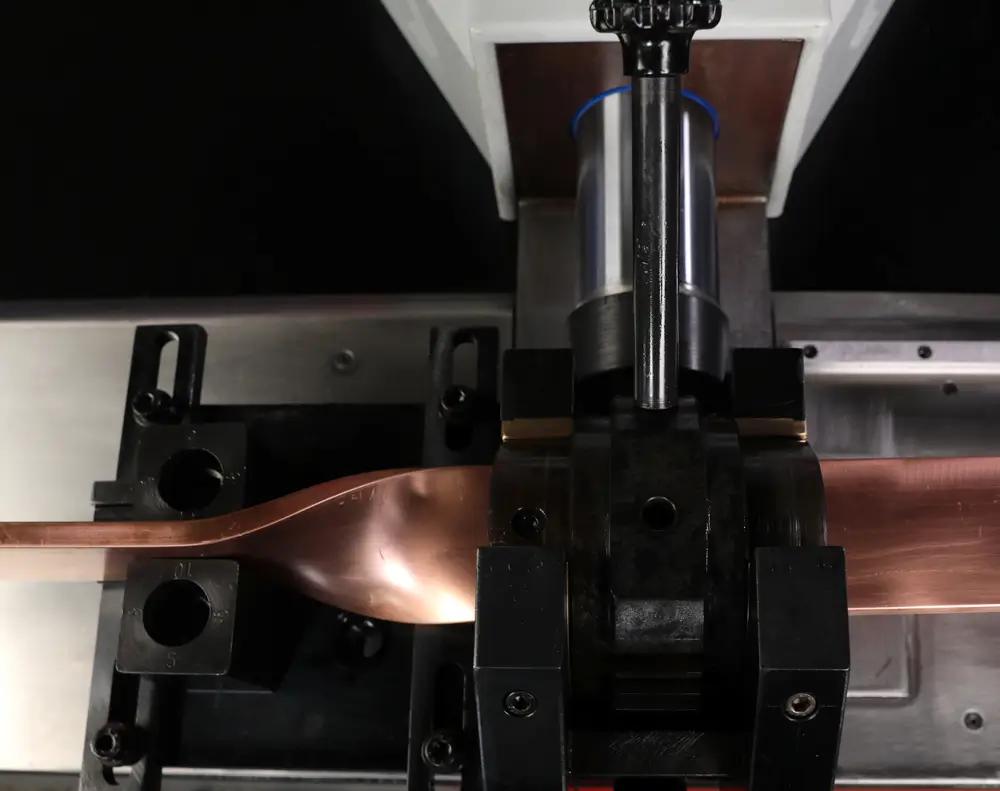
The biggest surprise was that several “heating problems” were not about current magnitude at all — they were about layout, contacts, and waveform content. The same principles govern busbar systems in power switchboards, where geometry and joint quality decide the thermal outcome long before ampacity tables do.
A Practical Conductor Rule
If a circuit includes drives, switching power electronics, or significant harmonics, ask:
- Is the conductor choice sized only for ampacity?
- Has AC behavior and heating been considered?
- Are the terminations and contact surfaces excellent?
Those three questions have prevented several repeat mistakes.
Commissioning: Verifying Overcurrent Protection Before Handover
By the second rewire, improvising stopped and a formal commissioning checklist took over. That was one of the smartest decisions in the project.
Commissioning Sequence
- Mechanical inspection
- enclosure integrity
- gland entries
- strain relief
- spacing and routing
- Torque check
- terminals, lugs, breaker connections
- this alone fixed one heating issue in a previous build
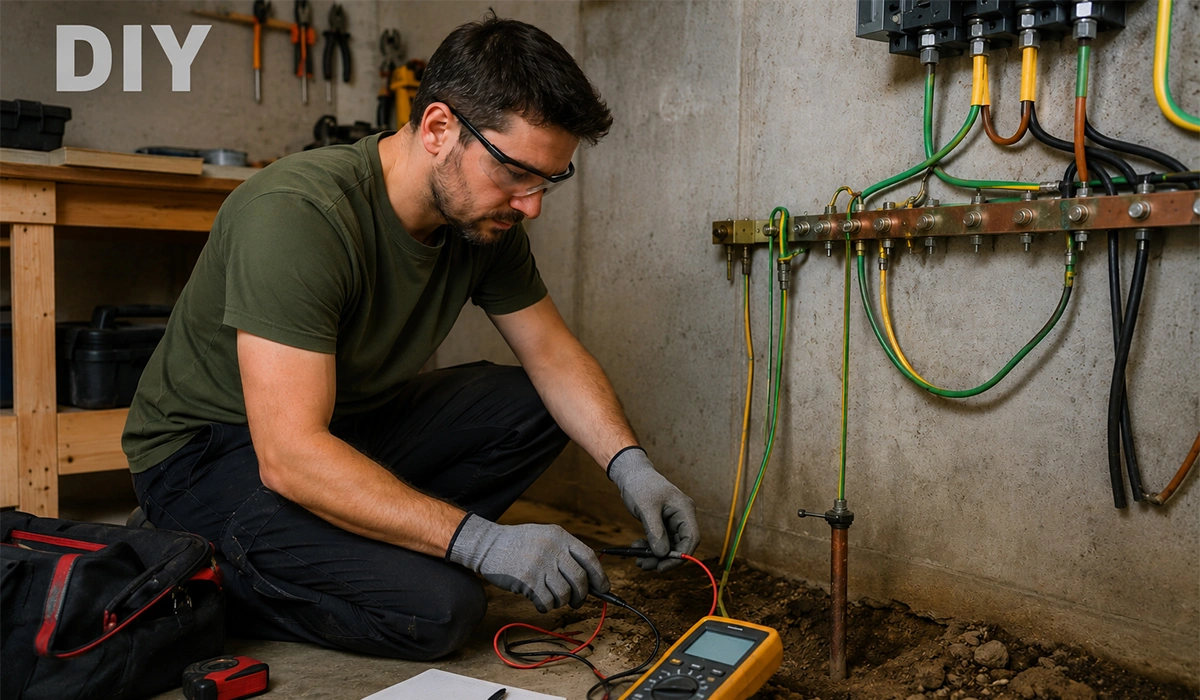
- Insulation and continuity checks
- verify no accidental shorts
- confirm protective earth continuity
- Protection settings review
- confirm breaker and relay settings match cable and load intent
- re-check Ib ≤ In ≤ Iz against the as-built cable, not the design drawing
- verify no temporary test settings were left behind
- Energize in stages
- main section first
- then auxiliary loads
- then the VFD branch
- then combined operation
- Measure under real load
- current, using a true-RMS instrument
- voltage drop
- temperature at terminals and conductors
- behavior during startup and stop cycles
- Observe for one week
- not just five minutes
- many faults appear only after heat, dust, and repeated cycles
For a factory-built assembly, this informal sequence is replaced by the routine verification requirements of IEC 61439 — the same logic, but documented and auditable. That progression is covered in this account of IEC 61439 verification and LV panel standards.
Commissioning Checklist
| Check Item | Why It Matters | What Was Found in This Project |
|---|---|---|
| Terminal torque | Loose joints create heat and false symptoms | One terminal needed re-torque |
| Protection settings | Prevents nuisance trips and under- or over-protection | One branch setting was too tight |
| SPD installation lead length | Long leads reduce surge clamping effectiveness | Routing shortened on the second layout |
| Separation of power and control wiring | Reduces noise and interference | Improved signal stability |
| Load measurement under operation | Nameplate assumptions are often wrong | Actual current differed from expected |
| Post-run thermal inspection | Finds issues before failure | Detected a hotspot early |
Lessons Worth Passing On
- Don’t trust nameplates blindly. Measure — with a true-RMS instrument.
- Overcurrent settings are not just numbers. They are decisions about thermal stress and fault behavior.
- The cable sets the ceiling, not the load.
- Breakers do not replace surge protection.
- Harmonics can make a correctly rated panel behave incorrectly.
- Skin effect stops being theory the moment harmonics and switching loads are present.
- Layout is part of protection.
- Commissioning is not optional.
Conclusion
Overcurrent protection is where a panel either works quietly for years or becomes a permanent troubleshooting job. A panel can look clean, use premium components, and still perform badly if the device, the setting and the conductor were never coordinated with each other.
The breakthrough in this project came from stopping treating overcurrent, surges, insulation coordination, harmonics and skin effect as separate textbook chapters. In real installations they interact. The wrong overcurrent setting can hide a harmonic issue. Poor layout can weaken surge protection. Conductor geometry and termination quality can worsen heating even when the measured current looks acceptable.
Three things carry most of the weight: know Iz before you choose In, choose the trip curve from the inrush behavior rather than the rating, and measure with an instrument that can handle a distorted waveform.
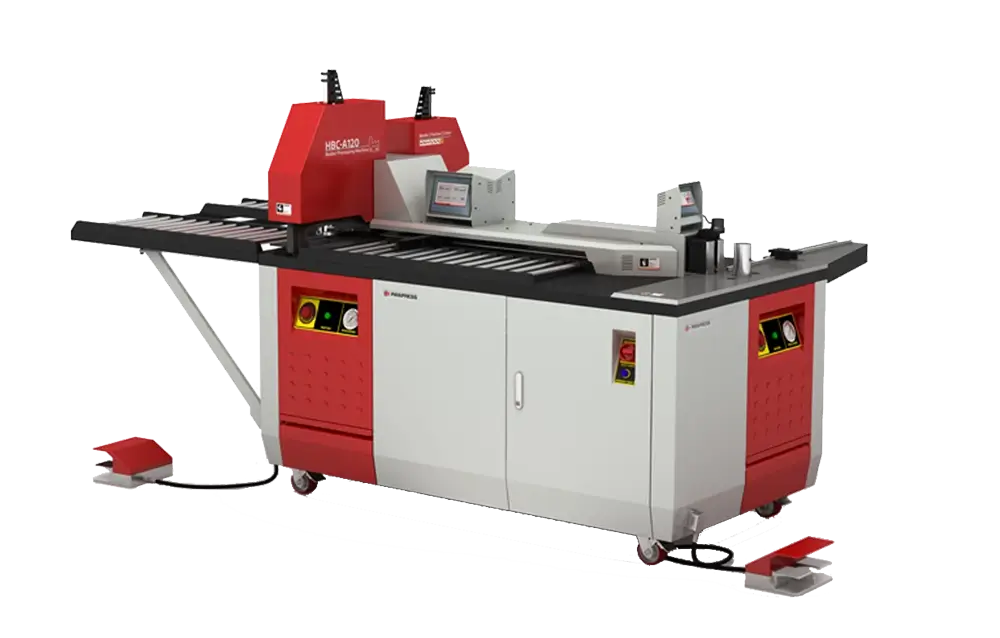
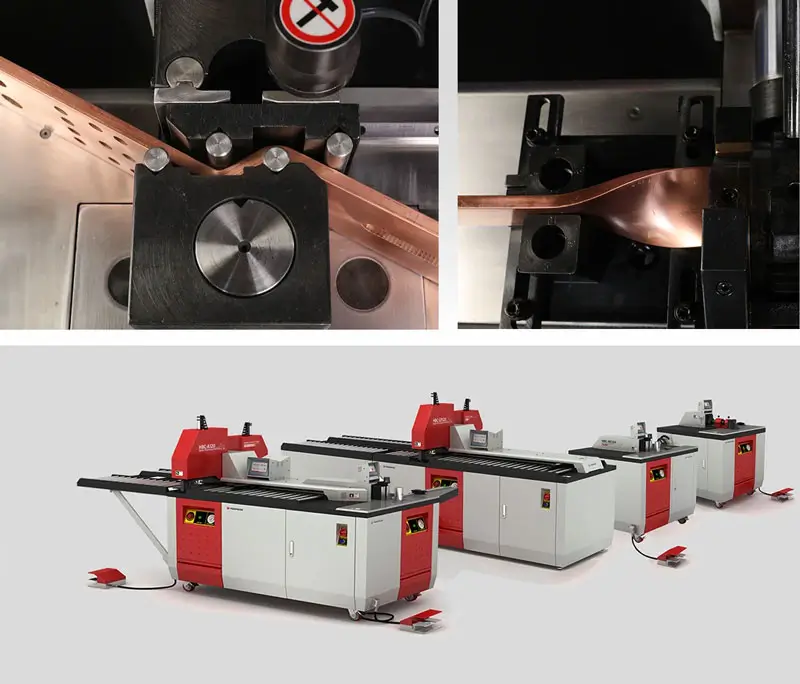
At panel-building scale, the same principles decide whether an assembly passes verification. Busbar geometry, joint quality and clearances determine the thermal outcome as much as the protective devices do. Explore PAYAPRESS CNC busbar fabrication machines for busbar processing that supports IEC 61439 verification.
FAQ about Protection Engineering

Rate this article
Choose a rating from 1 to 5 stars.
No ratings yet