The PSE (Product Safety Electrical) Law in Japan is a vital regulation ensuring electrical safety and electromagnetic interference (EMI) compliance for products sold within the country. Since its enforcement, as of December 2018, over 457 products have been designed and certified to meet the stringent standards of the PSE Law, which serves as a safeguard for consumer health and safety.
The law categorizes electrical and electronic products into two primary groups:
Category A (Specified Electrical Appliances and Materials): These products, deemed higher-risk, require third-party certification from accredited organizations to verify their compliance with the PSE Law. This category involves extensive procedures, including product testing, factory audits, and a detailed evaluation of safety risks.
Category B (Non-Specified Electrical Appliances and Materials): These products, considered lower-risk, must follow Japan Industrial Standards (JIS) or International Electrotechnical Commission (IEC) standards and do not require third-party certification.
Importers are legally responsible for ensuring that all products, whether Category A or B, meet these safety standards before entering the Japanese market. Products that comply with these standards must bear the PSE logo, signifying that they are safe for use in Japan.
Failure to comply with these regulations results in import restrictions and market withdrawal. This rigorous certification process helps prevent electrical accidents, enhance consumer protection, and ensures that Japan’s safety standards align with international best practices, providing a secure environment for the use of electrical products.
If you are interested in learning more about the standards within the electrical industry, particularly international standards in the field, don’t forget to check out the details on IEC 61439. This standard offers in-depth guidance on the design, assembly, and testing of low-voltage switchgear and controlgear assemblies, which are integral to ensuring safety and functionality in electrical systems worldwide.
If you’d rather listen than read, feel free to play the audio file below for the rest of this article
Do control panels need PSE?
The PSE mark indicates that your electrical product complies with Japanese safety standards. Without this certification, selling electrical appliances or materials in Japan is prohibited.
DENAN scope explained
In Japan, many home electrical appliances and components are regulated under the “Electrical Appliance and Material Safety Law” (DENAN Law), administered by METI.
Specified vs non-specified
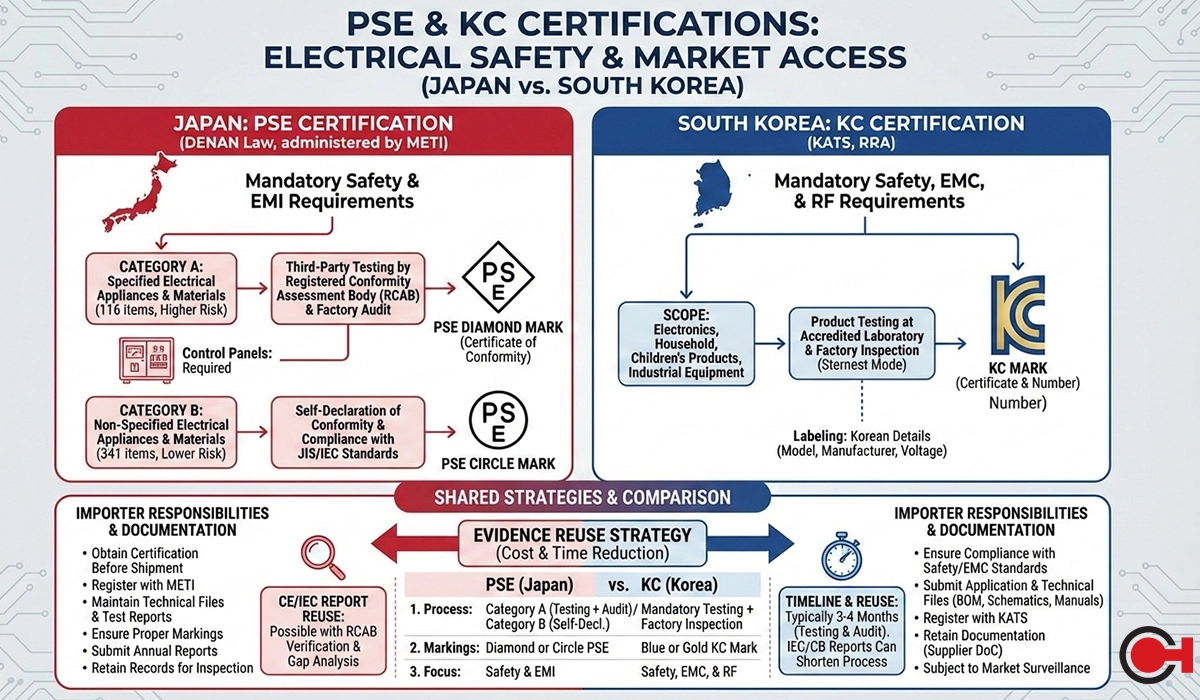
Products are classified into two categories: Non-Specified Electrical Appliances (341 items), where manufacturers ensure compliance with safety requirements and use the PSE circle mark, and Specified Electrical Appliances (116 items), which require mandatory third-party testing by a Registered Conformity Assessment Body (RCAB) for a Certificate of Conformity, allowing the PSE diamond mark. Testing is conducted in accordance with J-IEC or traditional Japanese standards. Voluntary S-Mark certification is available for most products. More information.
Self-declaration vs RCAB
The PSE self-declaration procedure in Japan enables manufacturers to certify their products as compliant with safety standards without requiring third-party testing. However, when a product falls under the Specified Electrical Appliances category, third-party testing by a Registered Conformity Assessment Body (RCAB) is required. The RCAB performs safety tests, issues a Certificate of Conformity, and conducts factory inspections to ensure ongoing compliance before PSE certification can be granted.
PSE marks & labeling rules
Successfully PSE-certified products must display the appropriate PSE logo: the diamond-shaped logo for Category A and the round logo for Category B. Logo size and color must ensure clear visibility and legibility.
Diamond vs circle mark
The diamond PSE mark indicates Category A products with higher safety risks. These specified electrical appliances and materials must undergo mandatory safety inspections by registered bodies before being sold.
The round PSE mark applies to Category B products classified as non-specified electrical appliances and materials. These items present lower safety risks and follow a self-declaration process.
Traceability & retention
Importers of electrical appliances into Japan must obtain PSE certification before shipment and register with METI. They are responsible for maintaining certification records, ensuring proper PSE markings, and submitting annual reports as required by law. These records must be retained for inspection.
Can CE reports support PSE?
For PSE certification in Japan, foreign test reports, such as CE or IEC, may be accepted if they meet Japan’s safety standards. However, foreign reports must be verified by a Registered Conformity Assessment Body (RCAB) in Japan. The DoC and additional testing may still be required, depending on the product category.
If you are looking for more information about topic CE certification, it is recommended not to miss reading this article.
Gap analysis approach
To assess PSE compliance, compare existing CE documentation against Japan’s PSE requirements. Identify gaps in testing, certification, and documentation, and then address them through additional testing or modifications to achieve full PSE certification.
KC certification for panels (South Korea)
South Korea requires KC certification for electrical products. Testing for compliance ensures legal market access and buyer acceptance.
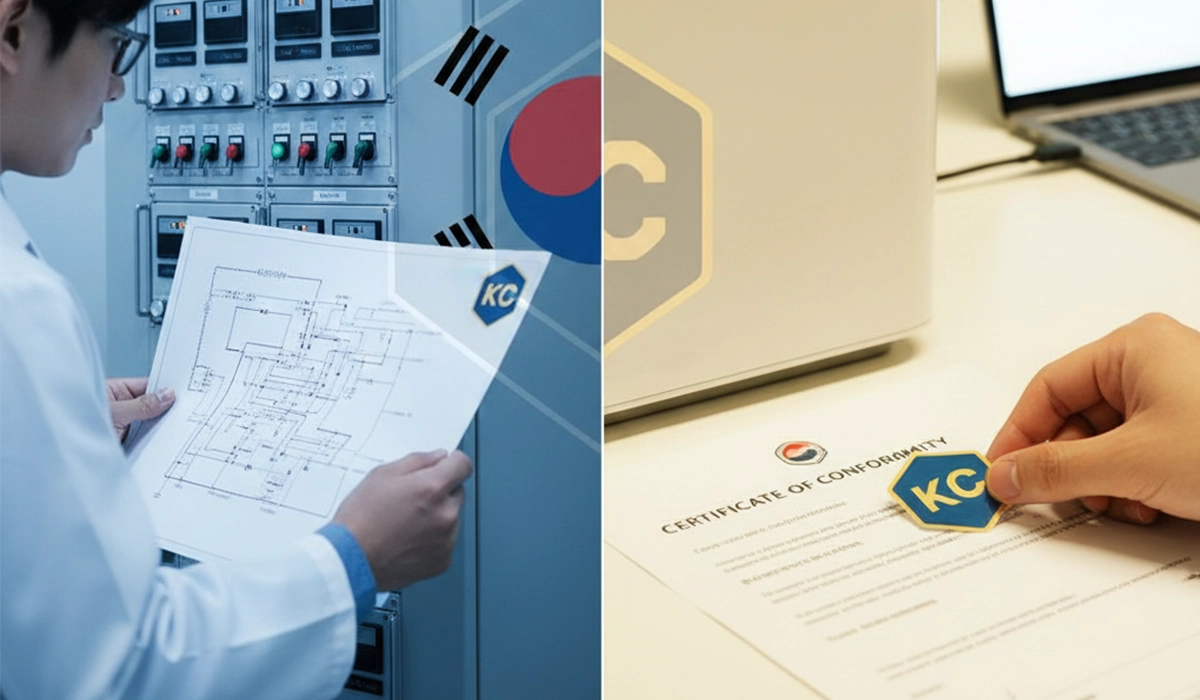
The KC certification process involves submitting the required documents, followed by product testing at an accredited laboratory and a factory inspection. If the product meets the KC requirements, the certification is granted. The process includes document preparation, registration, factory inspection, testing, and issuance of the KC Mark Certificate. Check out for more details:
DoC vs certification
KC DoC is a declaration confirming product compliance with standards, while KC certification involves testing and factory inspection. The difference lies in the level of scrutiny, varying by product class.
Labeling size & content
Once certified for the South Korean market, products must display the KC Mark in blue or gold, along with the certificate number. The label should include Korean product details, such as model, manufacturer, and voltage.
Validity & changes
KC certification typically takes 3-4 months, including 1-2 months for product testing and evaluation. CB certification can shorten the process by eliminating the need for retests. Factory audits add extra time for preparation.
Since buses play a crucial role in the production of electrical panels, obtaining more information about KC certification for panels can be very important and essential.
EMC & safety standards (KR/JP)
Korea’s KC EMC requirements include standards like KN 61000-6-2 and KN 61000-6-4 for immunity and emissions. They align with the IEC 61000 series to ensure consistent global testing for electromechanical products.
KC EMC standards, including KC 62368-1 and CISPR 11, define limits for emissions and immunity. These rules harmonize testing procedures, ensuring safety and compliance for consumer electronics in South Korea.
Industrial EMC routes
For KC EMC, IEC 61000 test reports are acceptable, provided they meet the relevant criteria. CISPR 11 applies to industrial equipment, ensuring proper limits for electromagnetic emissions and immunity during testing.
Safety standard selection
KC 62368-1 is relevant for industrial equipment, focusing on safety for control systems and machinery. It sets specific requirements for electrical and electronic safety, addressing potential risks in industrial environments.
Radio modules & wireless
When registering radio modules with RRA Korea, it’s essential to ensure the modules meet the KC RF and EMC requirements. The RRA approval covers the radio module but doesn’t extend to the host equipment, meaning the machinery must undergo separate testing.
For machinery using certified radio modules, it’s crucial to verify that the integration complies with all safety, RF, and EMC standards. While foreign reports may be accepted, local testing in South Korea by an accredited lab is still required for final approval.
Importer responsibilities (JP & KR)
Importers in Japan and Korea must ensure compliance with safety standards, retain documentation like supplier declarations of conformity, and register with METI (Japan) or KATS (Korea) for certification decisions.
Documentation checklists (JP/KR)
KC certification in South Korea ensures products meet safety, RF, and EMC standards, requiring technical files and testing. In Japan, PSE compliance adheres to international standards, with self-declaration required for Category B products and third-party certification for Category A. Both countries emphasize the importance of proper documentation and ongoing compliance through market surveillance and regular inspections.
| Item Category | Required Documentation | Notes |
|---|---|---|
| Administrative | Application Form | Must be submitted to a CAB (KTR, KTC, or KTL). |
| Technical | Product Specification & BOM | Detailed Bill of Materials (BOM) for critical safety components. |
| Schematics | Circuit Diagrams | Block diagrams and complete electrical schematics. |
| User Info | Korean Language Manual | Mandatory. Must include safety warnings in Korean. |
| Components | Critical Component List | Components, such as power supplies, must have their own KC or CB certificates. |
| Factory | Quality Mgmt. Documents | Required for “Safety Certification” (Type 1), which includes audits. |
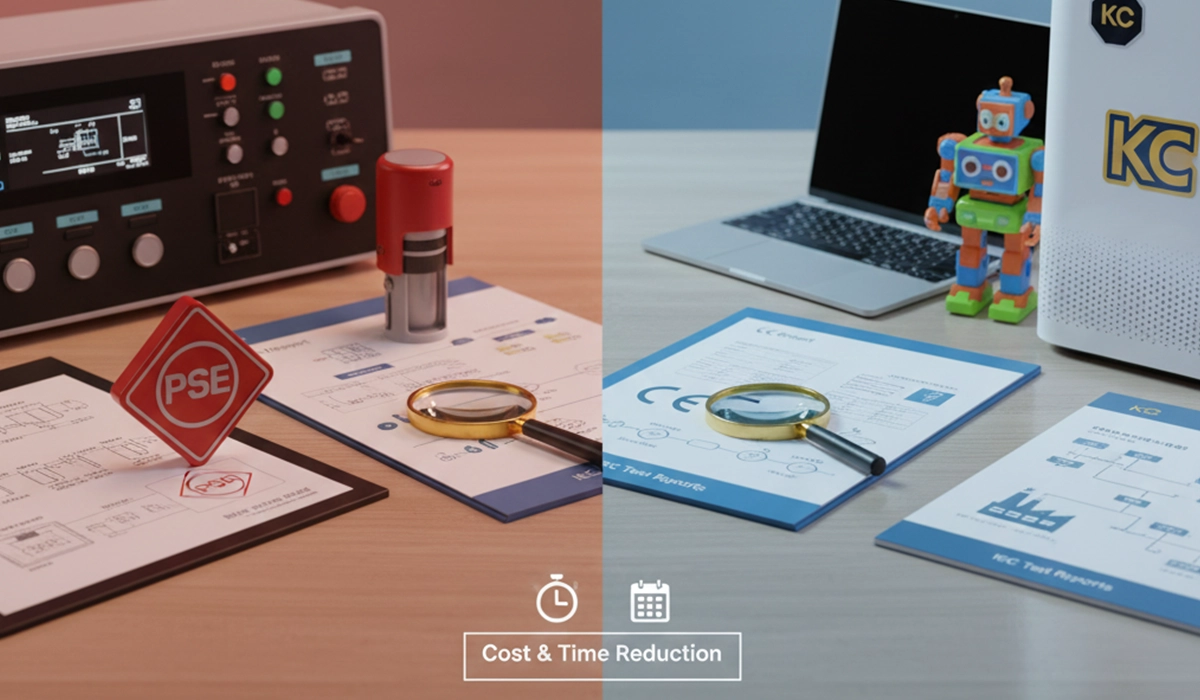
The evidence reuse strategy aims to reduce costs and time by cross-utilizing test reports, such as using IEC 61000 EMC reports for KC and CE reports for PSE certification.
PSE vs KC: quick comparison
PSE certification in Japan requires third-party testing for Category A products, while KC certification in South Korea mandates testing and factory inspection. Both ensure compliance with safety and EMC standards, but KC involves more rigorous local testing and documentation.