



If you’d rather listen than read, feel free to play the audio file below for the rest of this article.
Key Features of Emergency Electrical Panels
Emergency electrical panels typically rely on an ATS (Automatic Transfer Switch) setup, meaning they’re governed by a central control unit, which we’ll get into shortly.
If you found the information on ATS panels useful so far, you might also enjoy reading more about switchgear basics.
How Emergency Electrical Panels Are Designed and Built
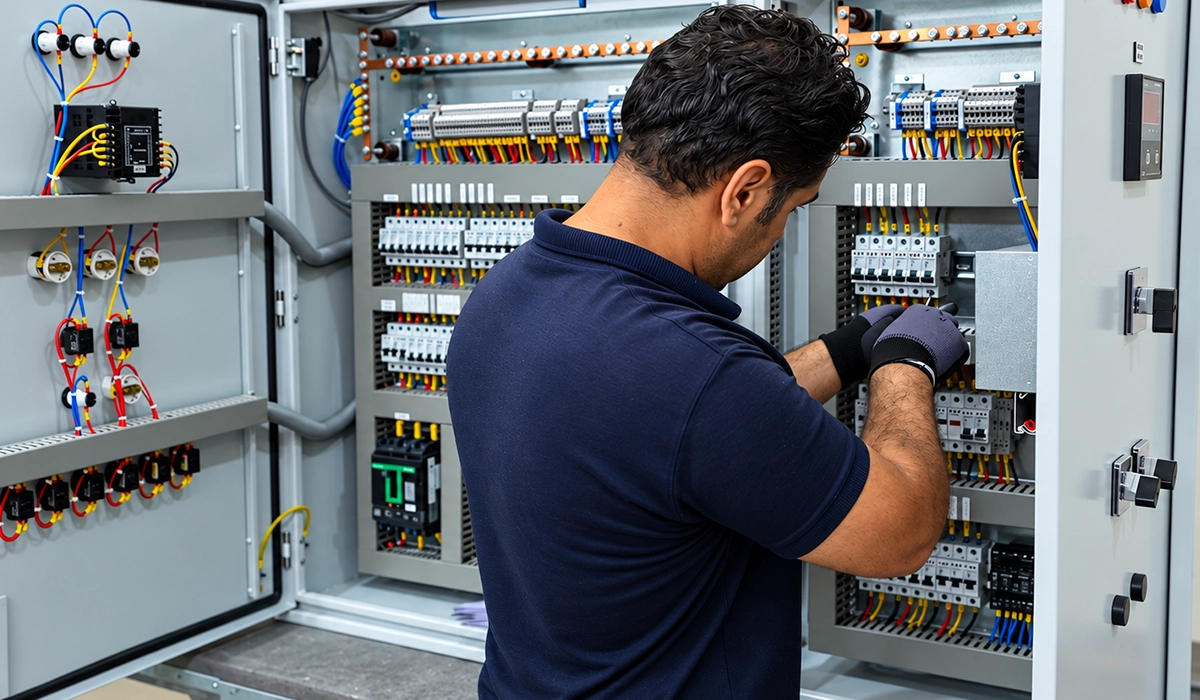
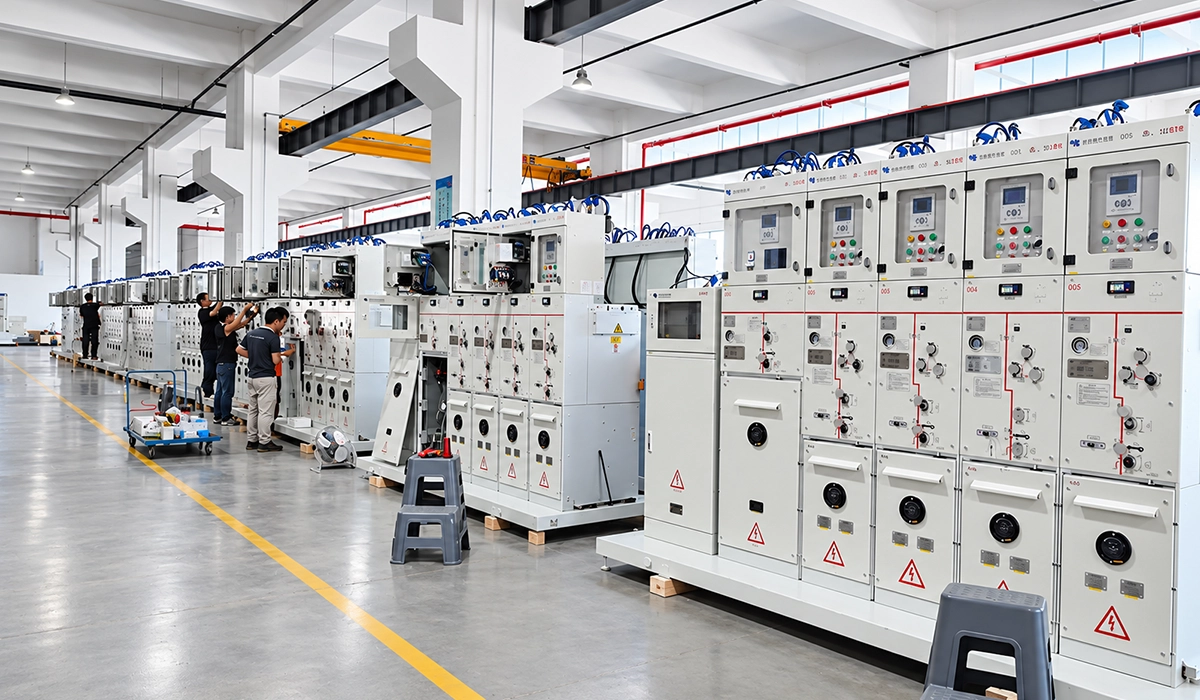
These panels are built in a vertical enclosure with a front-facing door, available in single-cell or dual-cell configurations. Cable entries are usually located at the bottom, though this can be adjusted to fit specific client requirements. The enclosure itself is made from 2mm-thick sheet metal, finished with either oven-baked paint or electrostatic coating, with the gauge and control setup chosen based on the generator’s power rating.
Every joint, connection point, and busbar inside the panel is engineered with electrical shock risks in mind, and the busbars themselves are built to handle the mechanical stress that comes with a short-circuit event.
The metal enclosure is fully assembled, drilled, and punched before any paint is applied, so the finished panel holds up well against moisture exposure.
For more on this topic, check out our deep dive into steel electric panels.
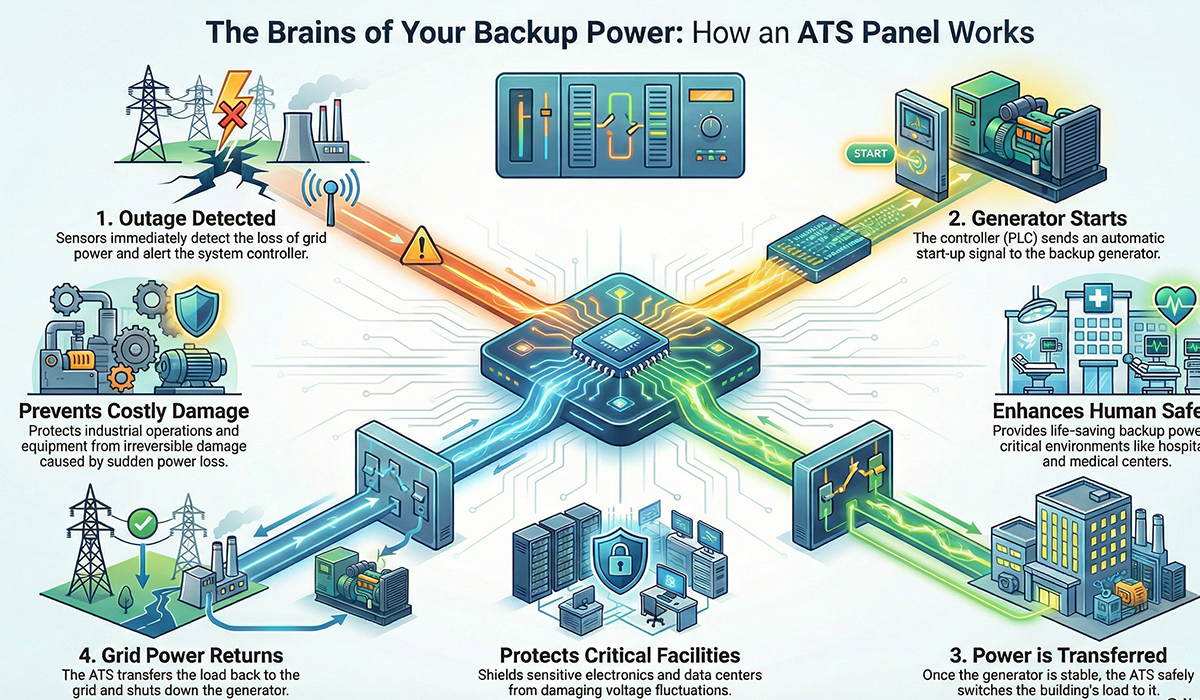
What Exactly Is an ATS Panel Switch?
An automatic transfer switch (ATS) panel is a system that pairs with a diesel generator to automatically swap power sources between the main grid and the backup generator whenever an outage occurs. Depending on which power source is active, the generator will either fire up or shut down on its own.
To get a fuller picture of how backup power systems work, take a look at our article on generator basics.
Why Bother With an ATS Panel Switch?
Here’s the thing: wherever a generator is installed alongside a grid connection, having some kind of transfer switch — manual or automatic — isn’t optional, it’s legally required. A transfer switch exists to stop two things from happening:
- The generator backfeeding into the main grid, which can knock out power across the wider network.
- The generator reconnecting after a failure, which puts anyone working on the system at serious risk.
Functionally, manual and automatic switches do the same job. The difference is speed and convenience — an ATS panel handles the switch-over on its own, cutting downtime and saving the hassle of manual intervention.
If you’d like to go deeper, our guide on circuit breaker selection is worth a read.
How ATS Switching Works in Changeover Panels
- ATS panels with grid detection
- ATS panels without grid detection
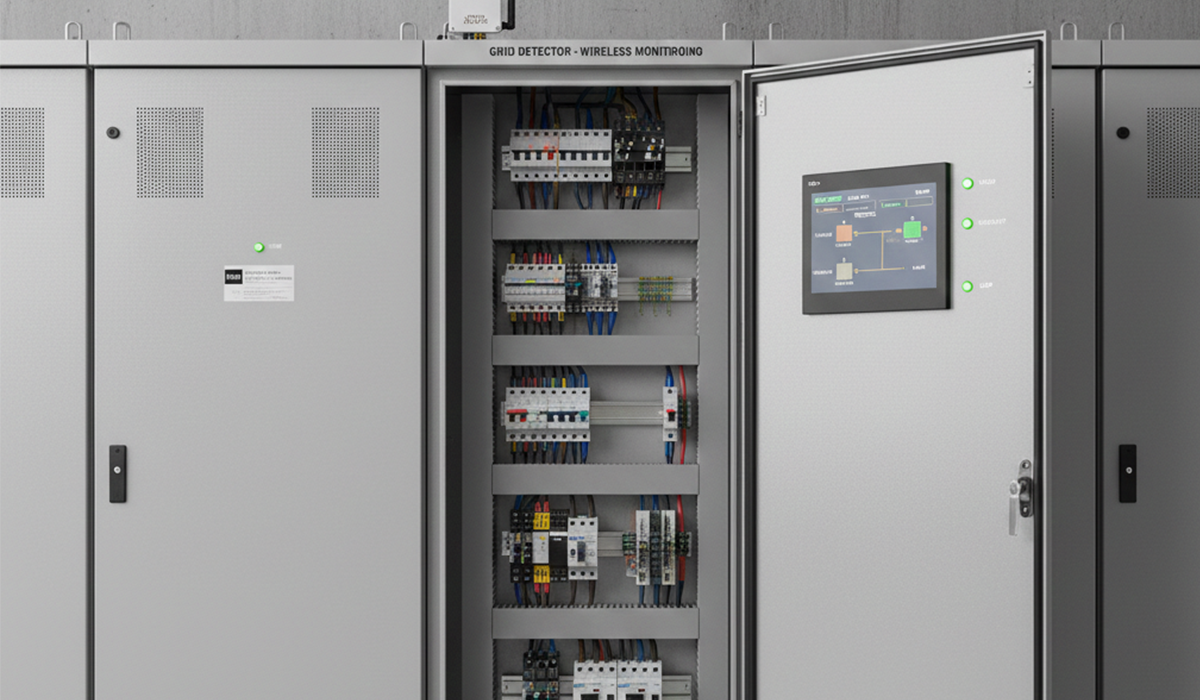
ATS Panels With Grid Detection
In this setup, the automatic transfer switch itself monitors the incoming power supply, usually through a fault-detection relay that flags the source of any failure.
Once a grid outage is detected, the panel disconnects from the main supply and sends a start signal to the generator. As soon as the generator is up and running, it reports back with a “ready” signal, and the ATS switches the load over to it.
For a closer look at how these systems are monitored and managed, see our article on industrial control systems.
ATS Panels Without Grid Detection
In this configuration, the ATS itself doesn’t monitor the grid — that job is handled elsewhere, either by the generator or by a separate detection unit.
When the generator senses the grid has gone down, it signals the ATS to disconnect and prepares to take over. Once the generator is running and stable, it sends a confirmation signal, and the ATS completes the switch-over.
If grid-monitoring setups caught your interest, you’ll probably enjoy our piece on switchgear secrets too.
Scenarios You Might Run Into With Changeover Panels
- Scenario 1: When the national grid is available, the generator’s output is cut, and after a short delay, the operator manually reconnects the grid supply.
- Scenario 2: When the grid goes down, after a brief delay the operator manually activates the generator and connects it to the load.
- Scenario 3: As soon as the grid becomes available again, the emergency generator output is cut immediately, and the grid connection is restored shortly after.
Since busbars are such a critical part of any electrical panel’s construction, our article on busbar systems is well worth checking out.
What Is an ATS Electrical Panel?
An ATS electrical panel — also called a changeover panel — is a device that automatically shifts the power source from the main grid to a backup source (the generator) whenever an outage hits.
It keeps connected equipment running on a steady, uninterrupted power supply and helps avoid outage-related downtime.
If you found this overview of changeover panels helpful, you may also want to read about electrical panel basics.
Why Do We Need an ATS Electrical Panel?
- Preventing workplace damage: In many industrial settings, a power outage can cause damage that’s impossible to undo. An ATS panel sidesteps this by switching power sources before that damage occurs.
- Protecting sensitive equipment: Electronics and computing hardware are vulnerable to sudden voltage swings. By keeping the power transfer smooth and continuous, ATS panels shield this equipment from harm.
- Improving safety: In settings like hospitals, a power failure can be a matter of life and death. ATS panels deliver reliable emergency backup power exactly when it’s needed most.
If you found this section on backup power protection useful, you might also like our piece on high voltage vs. low voltage systems.
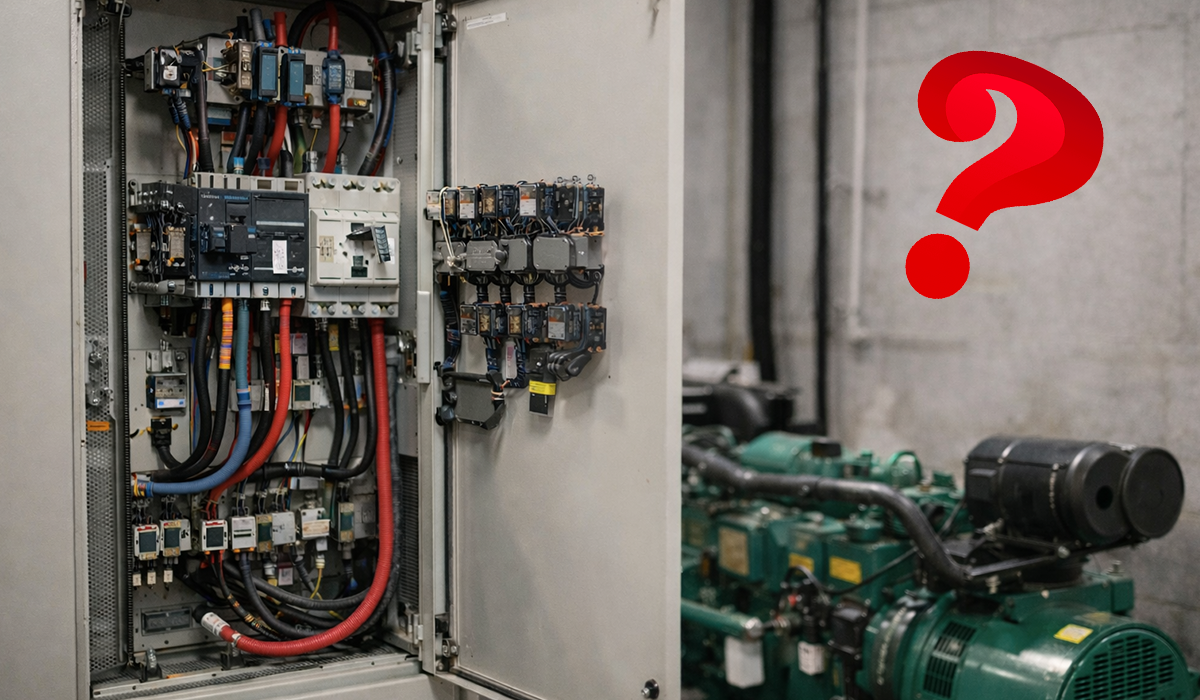
Main Components of an ATS Control Panel
- Main switch: Connects the grid power supply to the busbar.
- Bypass switch: Connects the backup generator supply to the busbar.
- Programmable Logic Controller (PLC): Acts as the brain of the panel, managing all the switching logic and processes.
- Sensors: Monitor the status of both the grid connection and the generator.
- Relays and contactors: Open and close the main and bypass switches as needed.
If you enjoyed reading about busbars and switching components, you might also like our article on switchgear components.
How an ATS Control Panel Operates
- Normal state: The grid is connected to the busbar and the generator stays on standby.
- Grid outage: Sensors pick up the loss of grid power and relay that information to the PLC.
- Generator startup: The PLC sends a start command to the generator.
- Load transfer: Once the generator reaches stable RPM and output, the PLC switches the load over to it.
- Grid restoration: When grid power returns, the PLC shifts the load back to the grid and shuts the generator down.
If you found this breakdown of PLC-driven load transfer interesting, you might also enjoy learning about different types of industrial control systems.
Types of ATS Electrical Panels
- Fully automatic ATS panel: Runs entirely on its own, with no operator input required.
- Semi-automatic ATS panel: Combines automated functions with some manual steps.
- Manual ATS panel: Requires an operator to carry out every step of the switch-over.
If this comparison of automatic versus manual control caught your attention, you might also want to explore our article on panel design.
Common Applications of ATS Electrical Panels
- Industrial: Factories, oil and gas facilities, hospitals, and data centers.
- Commercial: Hotels, shopping centers, and large office or retail complexes.
- Residential: Villas and high-end apartment buildings.
If you found the industrial applications section useful, you’ll likely enjoy reading about Rittal electrical panels as well.
Tips for Choosing the Right ATS Electrical Panel
- Load capacity: Make sure the panel’s rated capacity matches your actual load requirements.
- Transfer speed: The switch-over between sources needs to happen fast enough to avoid disruption.
- Reliability: The panel has to perform consistently when an emergency actually hits.
- Safety compliance: The panel must meet relevant national and international safety standards.
If you found the safety standards section helpful, you might also want to read about switchboard testing methods.
One Thing to Keep in Mind
Whenever a grid outage occurs, there needs to be a system in place that can start the diesel generator and, once voltage and frequency in the circuit have stabilized, complete the switch-over. This can be handled through contactor-based, automatic, dual, or changeover switch setups.
It’s also worth remembering that emergency lighting and most other backup systems depend on a dedicated emergency power source or generator. This kind of backup power is typically supplied by generators and is most commonly found in industrial settings.
An ATS electrical panel is, in short, an essential tool for keeping power supply reliable and uninterrupted across all kinds of settings — and with the right knowledge, you can choose the panel that best fits your needs and helps you avoid unnecessary electrical damage.
If you found this section on generator-based backup power useful, you might also be interested in our guide to generator sizing.
Wrapping Up: ATS and Emergency Electrical Panels
ATS and emergency electrical panels play a vital role in maintaining continuous power, protecting equipment, and improving safety during outages. If you’re trying to find the right panel for your application, start by working out your load capacity, generator specs, and the type of control you need, then choose a solution that matches your reliability and safety requirements. From there, reach out to your panel builder or engineering team to spec and build an ATS panel tailored to your site, helping you avoid avoidable electrical damage down the line.
FAQ: ATS and Emergency Electrical Panels

Rate this article
Choose a rating from 1 to 5 stars.
No ratings yet