



If you’d rather listen than read, feel free to play the audio file below for the rest of this article.
What Counts as Cold Forming
Cold forming means shaping metal below its recrystallisation temperature, usually at room temperature. The metal never softens; it moves while still hard.
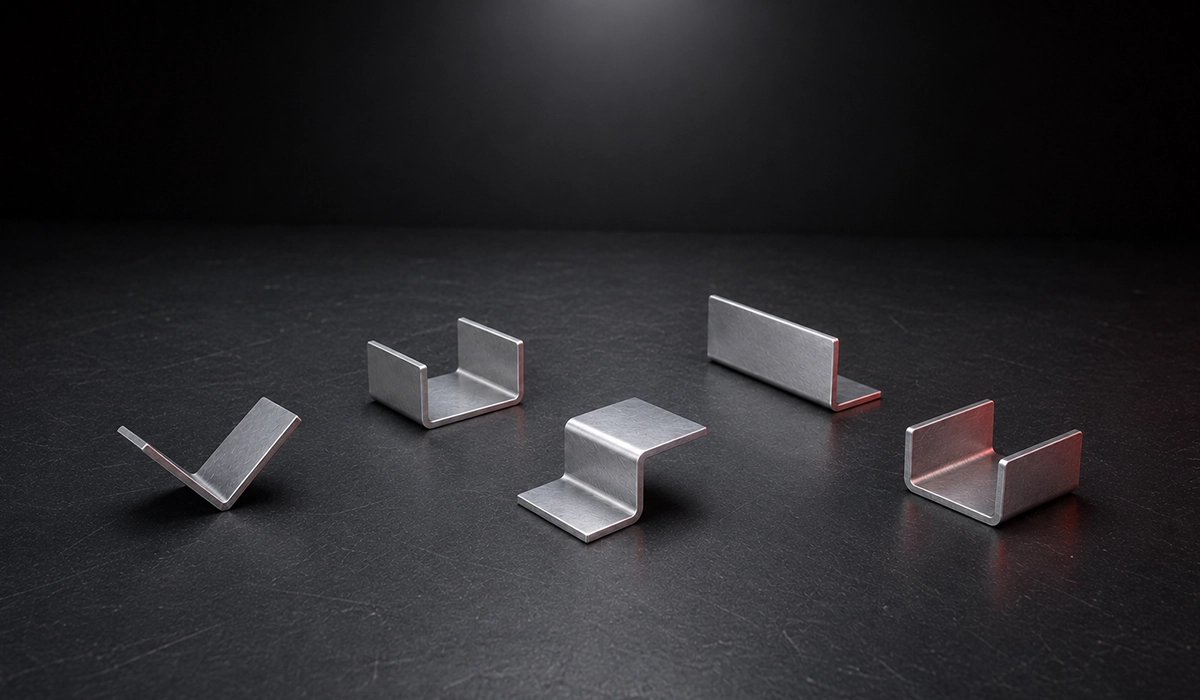
Sheet metal cold formability, as used here, covers the sheet processes: bending, roll forming, corner forming, hemming and the drawing of sheet. It does not cover cold heading or cold forging of fasteners. Those are bulk processes with their own tooling and their own literature. If you came here for cold headed bolts, this is the wrong page.
One physical consequence sets up everything below. Cold working metal work-hardens it. As it deforms, the metal gets stronger and less ductile, so each further deformation is harder than the last. That explains why tempers matter, why stainless resists correction bends, and why a radius that works once may fail on a second pass.
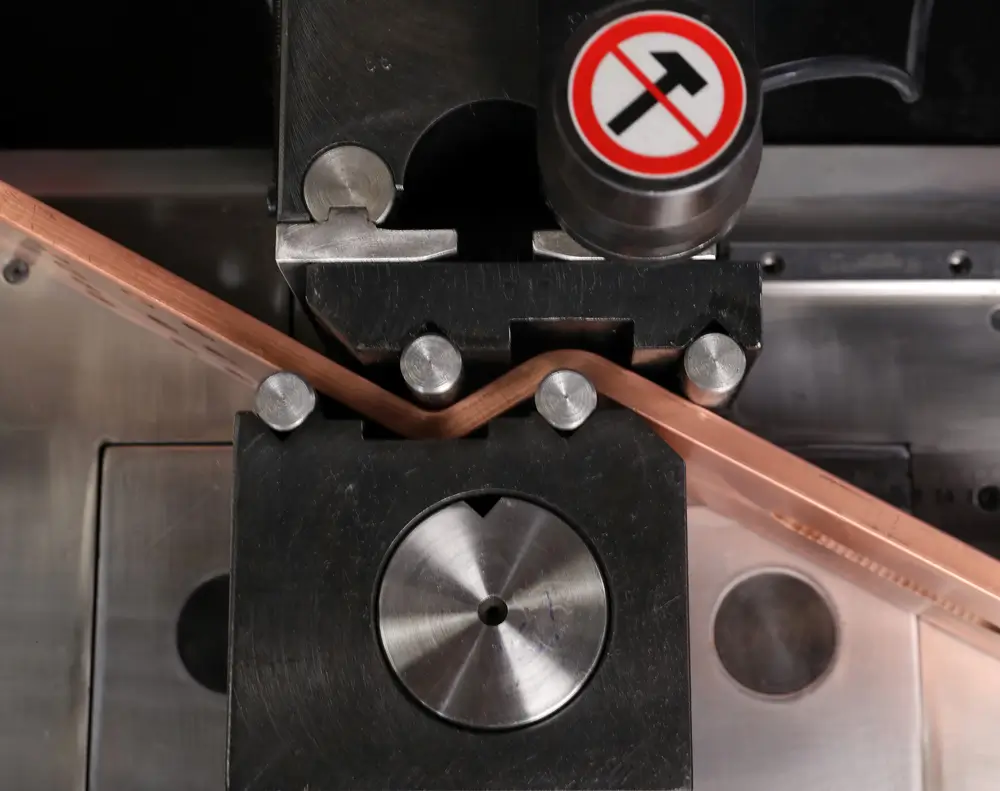
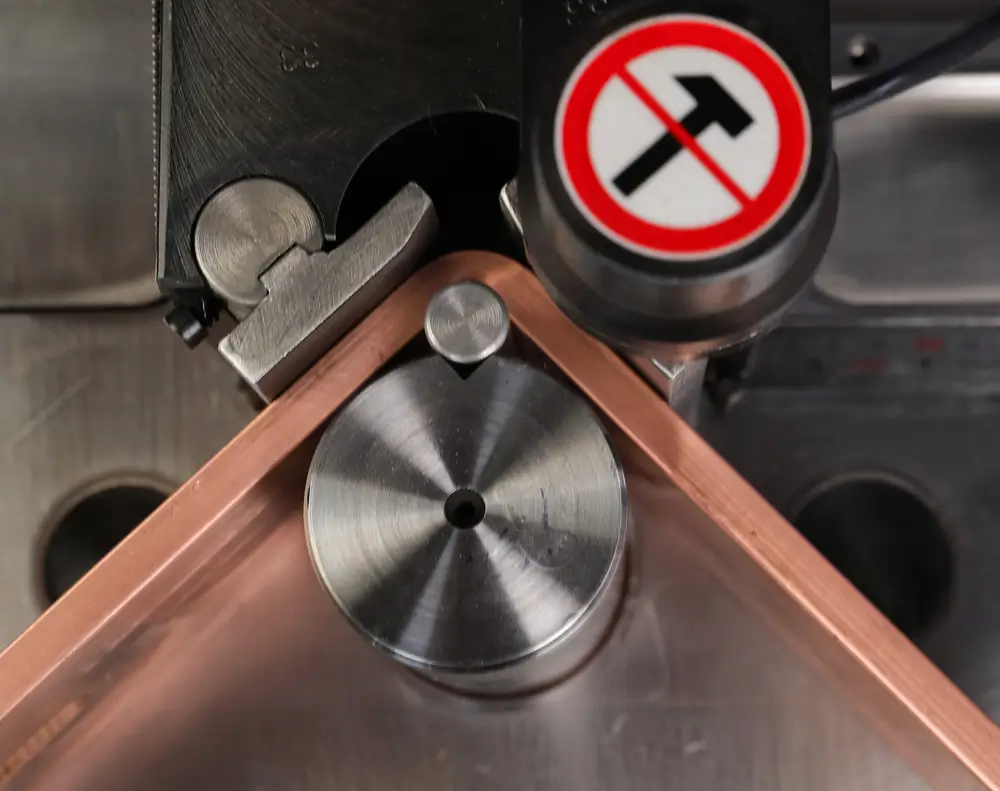
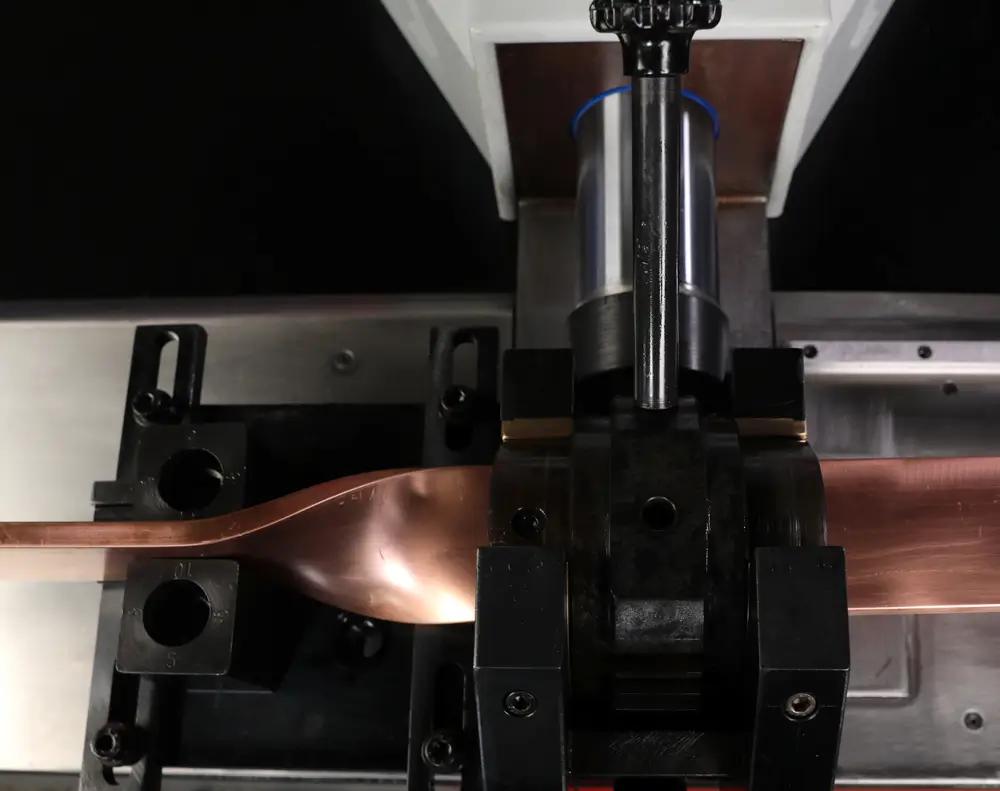
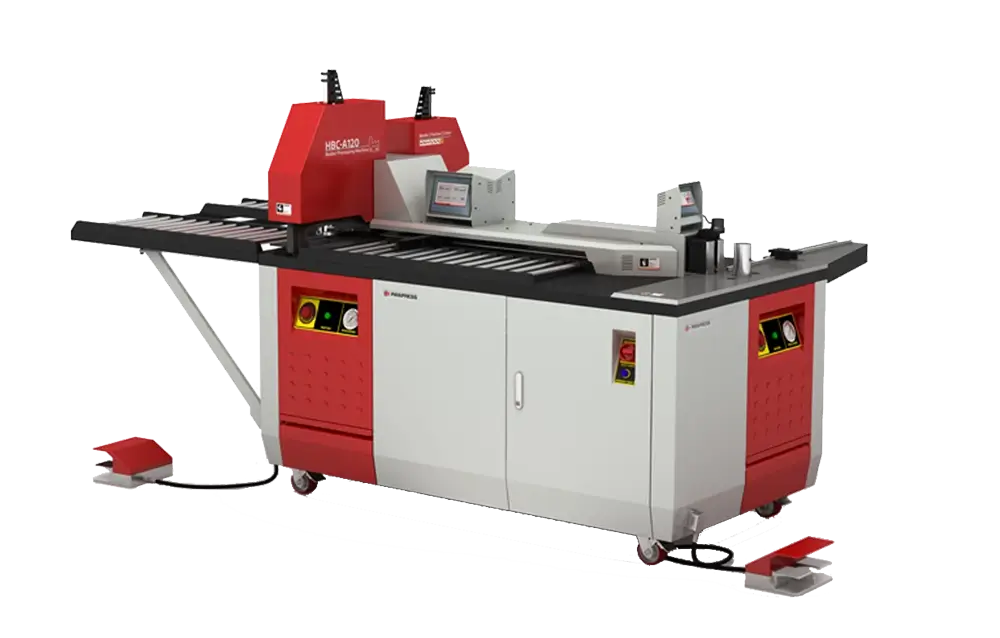
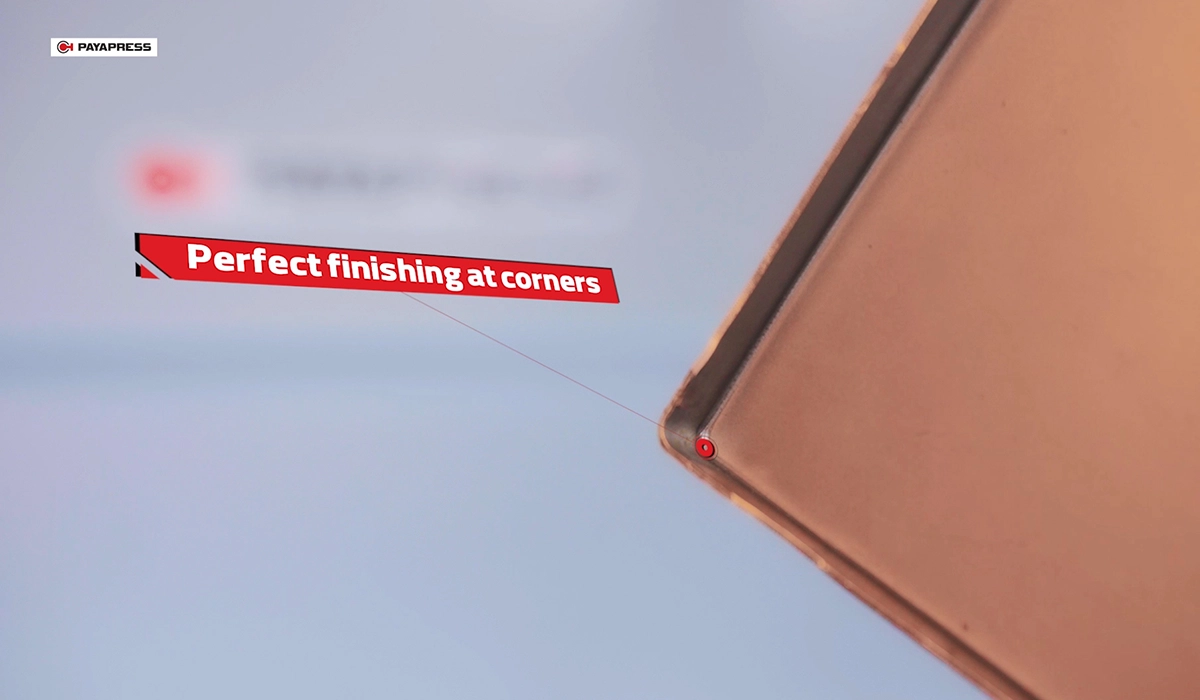
Copper busbar and sheet metal both rely on this. Our corner forming machine shows what cold forming looks like in production.
What Actually Decides Formability
Four properties decide sheet metal cold formability, and none of them is hardness in the everyday sense.
Elongation
Elongation at break is the single best predictor. The outer surface of a bend has to stretch. If the material cannot stretch that far, it splits.
Most cold formability sheet metal comparisons start here, and rightly so. Published elongation for 5052-H32 runs around 12–25%, against roughly 8–10% for 6061-T6. That difference, not strength, is why one bends far tighter than the other.
Read this as a sheet metal bend radius chart for narrowing options, not as a specification. Published sources genuinely disagree on several rows above, 6061-T6 and 304 most of all. Treat every figure as a starting point and let the material supplier’s datasheet govern. Use it for sheet metal material selection bending decisions and minimum bend radius by material comparisons, then confirm before release.
Work Hardening
Some metals harden fast as they deform. The force climbs, and the ductility left in reserve falls.
Stainless is the classic case. The bend zone hardens as the punch drives it, so the crease ends up harder than the flat either side. Push it again to correct an angle and the sheet bows instead of folding. You get one clean pull, which is why stainless is programmed to hit the angle first time.
Sheet metal cold formability, as used here, covers the sheet processes: bending, roll forming, corner forming, hemming and the drawing of sheet. It does not cover cold heading or cold forging of fasteners. Those are bulk processes with their own tooling and their own literature. If you came here for cold headed bolts, this is the wrong page.
Grain Direction
Rolling stretches the grain structure along the sheet, so the material is not the same in both directions.
The bend radius with grain vs across grain difference is not small. Bending across the grain allows the tightest radius. Bending along it promotes cracking, and published guidance suggests increasing the minimum radius by roughly 50–100% for those bends. It matters most in aluminium and in hard tempers.
If you prefer a short introduction before the details, this overview explains the basics in a few minutes.
Temper and Condition
The same alloy in two tempers is two different materials to a press brake.Annealed copper bends almost flat. Half-hard copper does not. 6061 in the T6 condition behaves nothing like 6061 annealed. Published guidance puts half-hard tempers at roughly double the soft-temper radius. For hard stock that must take a tight radius, local annealing before forming is an option, with heat treatment afterwards to restore properties.
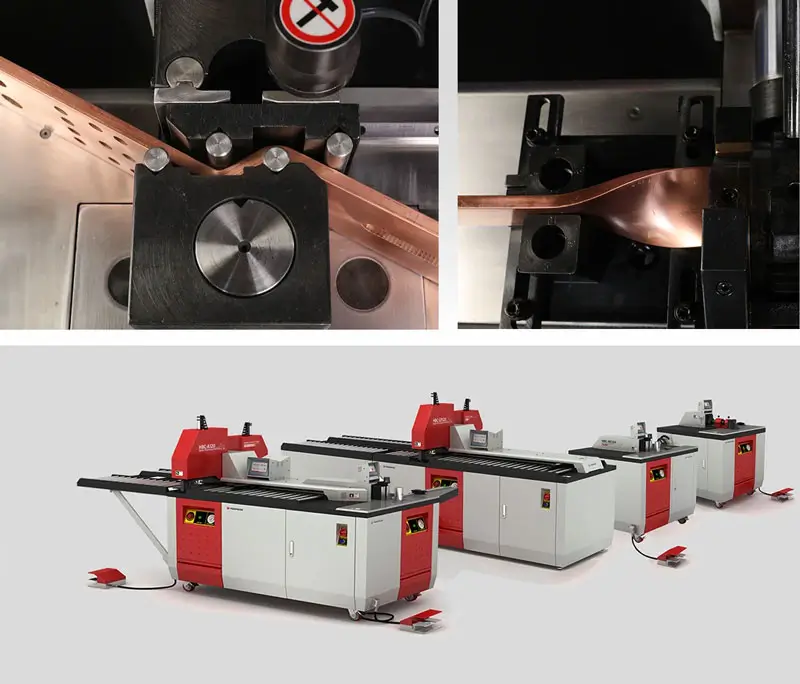
Busbar forming is cold forming, which is where PAYAPRESS sees this every day. The practical warning is temper: annealed and half-hard copper behave very differently at the same radius. Specify the condition on the order rather than assuming it.
Material by Material
Ordered roughly from easiest to hardest. Which metals can be cold worked is mostly a question of degree, not of yes or no.
Copper
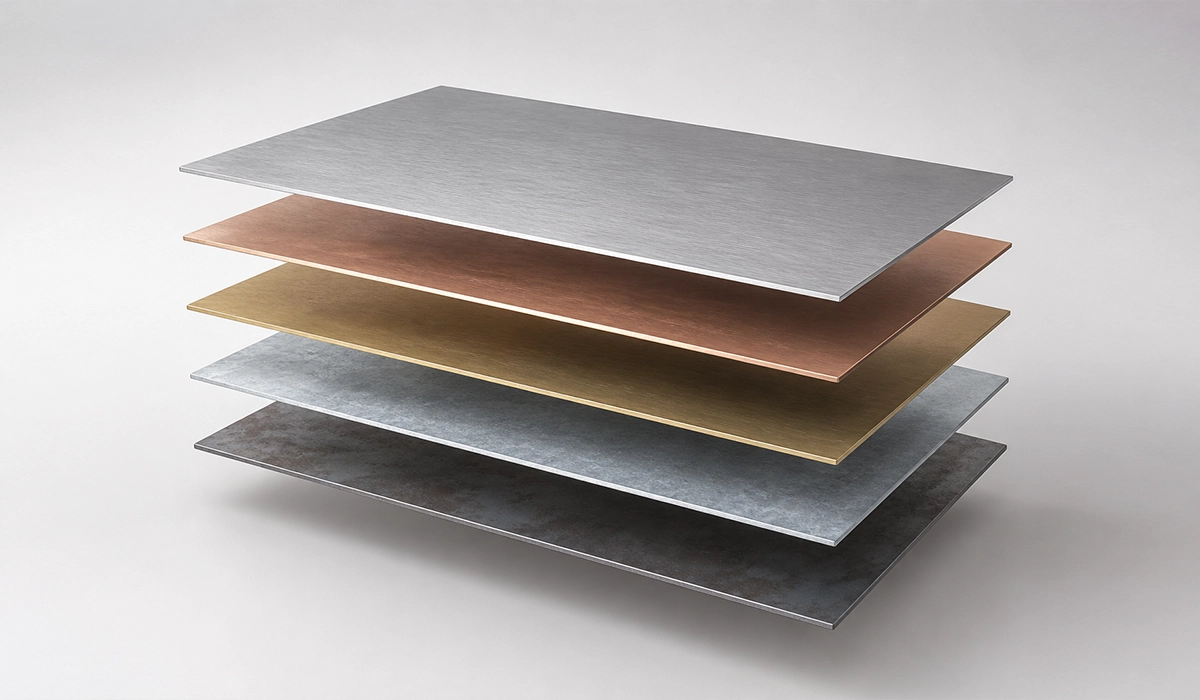
Copper leads this list, and most bend charts give it one line. Annealed C110 is the most cold-formable common sheet metal. Published copper bend radius minimums sit around 0T–1T, so it can often be folded flat on itself.
Busbar forming is cold forming, which is where PAYAPRESS sees this every day. The practical warning is temper: annealed and half-hard copper behave very differently at the same radius. Specify the condition on the order rather than assuming it.
Brass
Soft tempers of C260 are almost as formable as copper, with published minimums around 0T–1T. Springback is minimal, so programming is straightforward.
Harder tempers lose that quickly. Brass also marks easily, so tooling surface condition matters on any part where the outside face will be seen. Annealed C260 hems reliably too, which matters on trim panels.
Mild and Cold-Rolled Steel
The workhorse, and the material most enclosure work quietly assumes. Published minimums for common grades run around 0.5T–1T across the grain.
What makes it the default is not the number. It is predictability. Cold-rolled steel tolerates tooling variation, springs back only slightly, and costs less than the alternatives. It also holds that behaviour across suppliers and lots, which most alloys do not. Higher-strength steels are a different proposition and belong further down this page.
Galvanized Steel
The steel underneath forms like any other mild steel. The coating is the complication.
Zinc is more brittle than the steel it sits on, so on a tight bend the outer face can micro-crack or, with heavy coatings, flake. Thinner electrogalvanized and galvanneal coatings tolerate tighter radii than heavy hot-dip. Tooling also picks up zinc and transfers marks. Remember that every cut and formed edge exposes bare steel, which matters outdoors.
Stainless Steel 304 and 316
Sources disagree here more than anywhere except 6061. Published stainless steel bend radius minimums for annealed 304 run from about 1T to 2T, with 316 usually quoted higher.
Three consequences follow. Tonnage runs roughly 1.5× that of mild steel. Springback is large, commonly quoted between 2° and 5°, so overbend is mandatory. Work hardening makes correction bends risky. Ask why does stainless steel crack when bent and the answer is usually a second pass, not the first. Hard tempers need several times the annealed radius.
For anyone who wants to go deeper, this further reading provides a much wider view.
Aluminium 3003 and 5052
These are the bend-friendly alloys. Published minimums sit around 0.5T for 3003-H14 and about 1T for 5052-H32 across the grain.
The best aluminium alloy for bending in most enclosure and chassis work is 5052-H32, and the reason is simply that it survives many bends without argument. The formability of aluminium alloys also shows up at the machine: aluminium needs roughly half the tonnage of mild steel for the same section.
To see how others have approached the same situation, take a look at this practical example.
Aluminium 6061-T6
This is the most common formability problem on the shop floor.
The minimum bend radius for 6061-T6 aluminium is quoted at 2T in some references, 2–3× in others, and 3T–6T elsewhere. Pick one and you will be contradicted. So why does 5052 bend better than 6061? Elongation. The T6 condition trades ductility for strength.
Three ways out: specify 5052, open the radius, or buy T4, form it, then heat treat to T6.
Materials That Resist Cold Forming
Can titanium sheet be cold formed? Some grades, within limits. Ti-6Al-4V is not one of them. Published work reports very limited room-temperature formability, sudden fracture without a visible neck, and severe springback, which is why aerospace work uses hot forming or a more formable titanium grade.
Magnesium alloys such as AZ31 resist cold forming for a structural reason: the hexagonal close-packed lattice offers too few slip systems at room temperature, so warm forming is normal. Very high-strength steels need much larger radii or hot forming.
Minimum Bend Radius at a Glance
One table, nine materials, and a warning attached to every number in it. Values are for 90° bends in annealed or standard commercial tempers, expressed as a multiple of material thickness (T).
| Material | Typical Temper | Min. Radius Across Grain | Min. Radius Along Grain | Notes |
|---|---|---|---|---|
| Cold-rolled Steel | As-rolled | 0.5T–1T | ~1T–1.5T | Predictable and tolerant of tooling variation |
| Galvanized Steel | As-coated | 1T–1.5T | ~1.5T–2T | The coating typically cracks before the steel does |
| Stainless Steel 304 | Annealed | 1T–2T | ~2T–3T | Published values vary; expect 2°–5° of springback |
| Stainless Steel 316 | Annealed | 1.5T–2T | ~2T–3T | Typically requires a slightly larger bend radius than 304 |
| Aluminium 3003 | H14 | ~0.5T | ~1T | Very forgiving during forming |
| Aluminium 5052 | H32 | ~1T | ~1.5T–2T | One of the best all-round alloys for bending |
| Aluminium 6061 | T6 | 2T–6T | Higher again | Shows the greatest variation in published bend-radius recommendations |
| Copper C110 | Annealed | 0T–1T | ~1T | One of the most formable common sheet metals |
| Brass C260 | Soft | 0T–1T | ~1T | Surface marks easily; protect visible faces during forming |
Read this as a sheet metal bend radius chart for narrowing options, not as a specification. Published sources genuinely disagree on several rows above, 6061-T6 and 304 most of all. Treat every figure as a starting point and let the material supplier’s datasheet govern. Use it for sheet metal material selection bending decisions and minimum bend radius by material comparisons, then confirm before release.
Before a sheet is bent or formed, holes and notches are usually prepared first. A punching and notching machine handles this stage quickly and with high repeatability.
What Changes the Answer on the Shop Floor
The chart assumes conditions that may not match your machine, your tooling or your material lot.
Thickness and V-Die Opening
In air bending, the die opening largely sets the radius you actually get. The punch tip does not stamp its own shape into the material.
A wider V gives a larger inside radius and needs less tonnage. Going below roughly 6× material thickness on the opening drives tonnage up sharply and risks damaging the tool. Common starting rules run 6×–8× for mild steel, wider for stainless. Same material, different setup, different answer.
Tooling Condition and Surface
Worn or rough tooling starts cracks and marks visible faces. On stainless and brass, polished or coated tooling is normal, and protective film is standard on cosmetic panels.
Blank condition matters just as much. Some materials crack from a scratch or a burred edge rather than from the radius itself, so a chart value assumes a clean blank you may not have.
Springback
Every material relaxes when the force comes off, and stronger materials relax more. Copper and brass barely move. Mild steel is close behind. Stainless is the outlier.
Shops compensate by overbending, which works until the lot changes. Springback varies between lots of the same grade, because a grade permits a range of properties. That makes it a repeatability problem, not just a setup problem.
Machines running high forming forces need consistent upkeep to stay accurate and safe. Our guide on punching machine maintenance and safety covers the key checks every operator should follow.
Test Before You Commit
Everything above narrows the choice. One procedure settles sheet metal cold formability for your job.
Cut a coupon of known flat length from the production material, thickness and grain orientation. Bend it to 90° on the production punch, die and ram setting. Measure both flange legs. Subtract for the real bend deduction, back-calculate the K-factor, and use that for the flat pattern.
Why it matters: a theoretical K-factor gets close on one bend. Across four or five bends the error accumulates in one direction, and a part that looked right in CAD arrives out of tolerance. Any scrap figure is a (hypothetical estimate) until you measure it.
The same coupon answers the other question. If the radius will crack, it cracks on an offcut, not on a production batch.
Conclusion about Sheet Metals Can Be Cold Formed
Nearly all common sheet metals can be cold formed, so the question is never whether. It is how tight, in which direction, and in what temper.
The chart narrows the choice. The test bend settles it. Sheet metal cold formability is a property of material, temper and tooling together, and cold formed sheet metal proves it only on the machine that will make the part.


Rate this article
Choose a rating from 1 to 5 stars.
No ratings yet