




If you’d rather listen than read, feel free to play the audio file below for the rest of this article.
What Counts as a Used Busbar Machine?
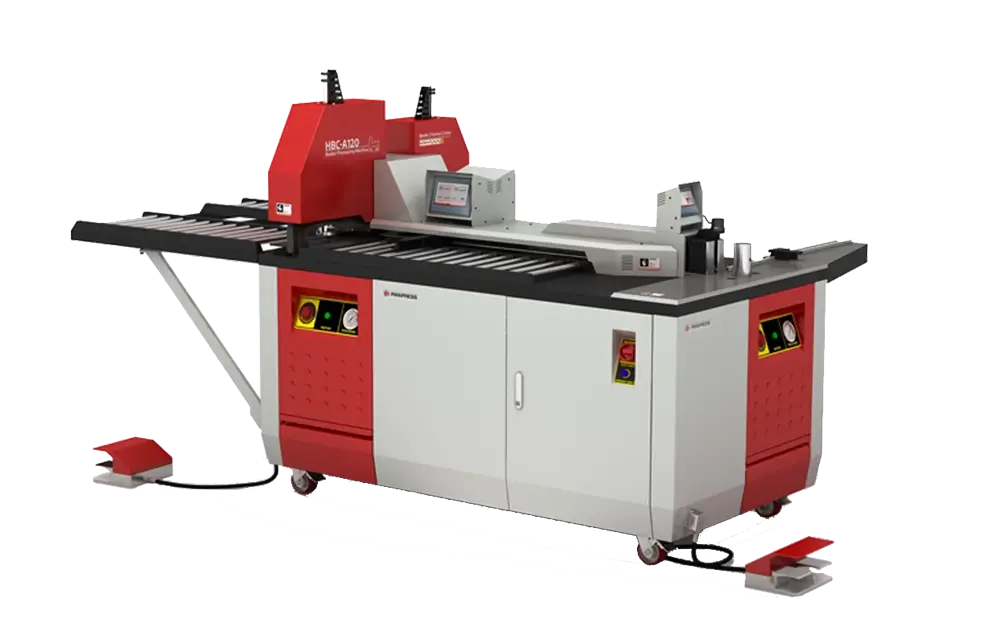
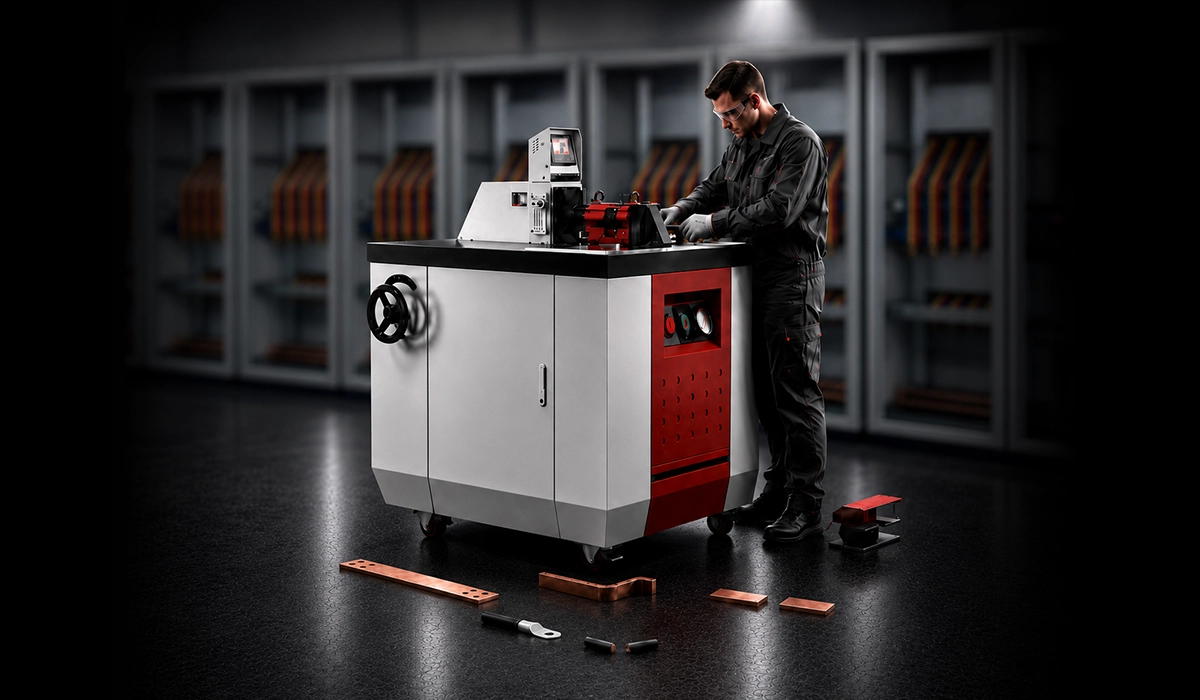
A busbar machine cuts, punches and bends copper and aluminum busbar for switchgear and panels. A used one is any machine that has already run in another shop.
Most used busbar machine for sale listings come from three sources:
- Dealer stock and auctions: often sold as-is, with little history.
- Panel-shop closures or upgrades: often supplied with records and tooling.
- Ex-demo or ex-exhibition units: low hours, but check how they were stored.
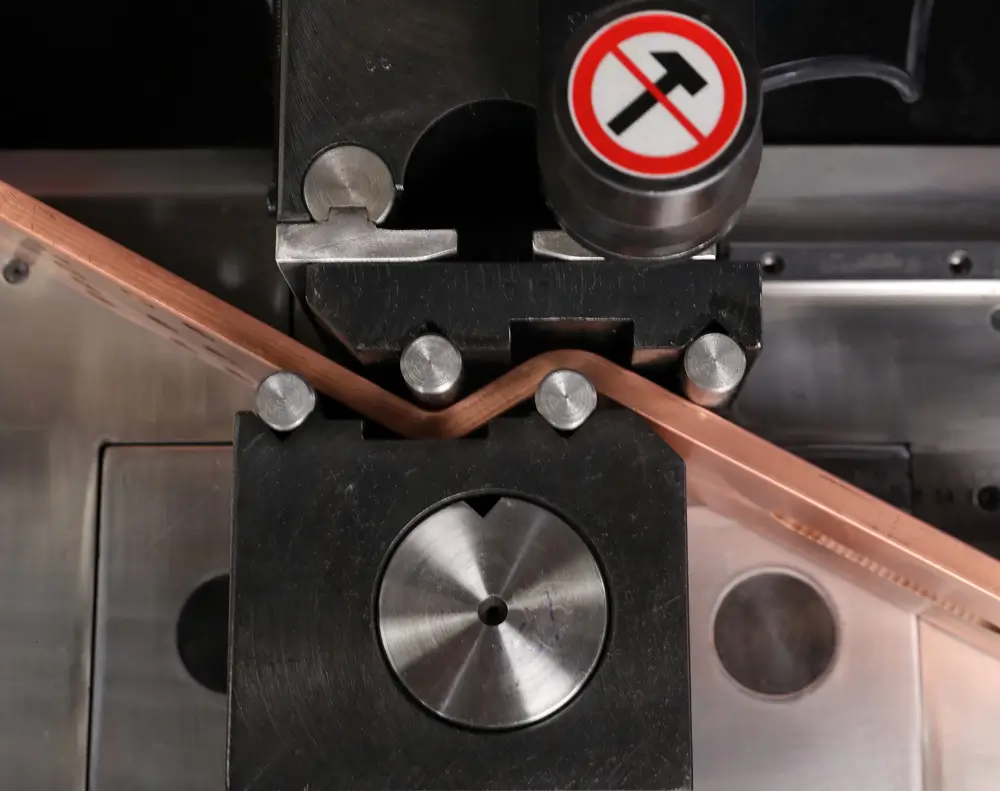
Our CNC busbar machine page shows how a current control handles programmable angles and springback compensation on a new unit.
Before You Travel: Three Paperwork Checks
The first three checks cost a phone call and an email. As a result, they rule out most bad machines before anyone books a flight. Before the visit, ask the seller for photos of the nameplate, a copy of the service log and a short video of each station working under load. Then use this used busbar machine checklist as your call script.
For a larger purchase, an independent appraiser can confirm whether the asking price matches the real condition. The American Society of Appraisers describes how its machinery specialists value equipment for sales and acquisitions in its MTS appraiser overview.
1. Model, Serial Number and Year of Manufacture
Start with a clear photo of the nameplate. It should show the maker, model, serial number, year of manufacture, voltage, frequency and operating pressure. Next, send the serial number to the maker and ask it to confirm the original build: capacity, options and control version. This step matters because resale machines often drift from their original spec. For example, a machine sold as one model may carry a smaller power pack or an older control than the listing suggests. If the nameplate is missing or painted over, treat every other claim with care. For larger purchases, an independent machinery appraisal adds a second, neutral opinion on condition and value.
2. Maintenance Records and Hours
Next, ask for the maintenance records: oil and filter changes, seal kits, die and blade replacements, and any repairs to the power pack. Hours alone can mislead. A machine run on one shift for ten years may be in better shape than a two-year-old unit run on three shifts with no oil change. In other words, the records tell you how the hours were spent. The frame itself rarely wears out. Instead, the hydraulics, tooling and control set the working life, and each can be replaced at a cost. Missing records do not rule a machine out, but they shift the burden of proof to the floor checks. Our busbar machine maintenance guide lists the full service schedule.
3. Manufacturer Support and Spare Parts
Then ask the seller and the maker three questions. Is the maker still trading? Does it still supply dies, molds, seals and blades for this model? And is the control, meaning the PLC, HMI and servo drives, still in production or at least supported? An unsupported control can quickly turn a cheap machine into a retrofit project. Similarly, ask whether the operator manual, hydraulic diagram and electrical drawings come with the machine. Without them, every repair starts with tracing wires and guessing at valve functions. Finally, check how fast spare parts reach the US and who can service the machine locally. A low price means little if one worn seal kit keeps the machine idle for weeks.
On the Shop Floor: Mechanical and Hydraulic Checks
Inspect the machine cold first, then warm. Ask the seller not to run it before you arrive, so you can see a cold start, cold leaks and the oil before the pump stirs it up. Bring a flashlight, a clean oil-sample bottle, a dial indicator with a magnetic base, a protractor and your own busbar offcuts (see check 8).
Oil cleanliness is the fastest single sign of how a hydraulic system was treated. The ISO catalogue page summarizes the standard that codes solid-particle contamination in hydraulic fluid in its ISO 4406 summary.
4. Frame, Table and Stations
Look for cracks or weld repairs around the punch and cutter frames, because these are the highest-stress points on the machine. Then check the table and part rollers for dents and wear that would mark soft copper. On 3-in-1 machines, confirm that the stations line up with each other, that all guards are present and that cabinet doors close properly. A repaired frame is not always a dealbreaker; however, ask who repaired it and why. Finally, ask how the machine was moved and stored. Forklift damage to the base and water inside the electrical cabinet are both common after auctions, and neither shows up in a listing photo.
5. Hydraulic Power Pack: Leaks, Noise and Pressure
Walk the hydraulic circuit from the pump to the valve block, hoses, fittings and cylinder rods. A dry rod is the standard. By contrast, an oil film on the rod or drips under the valve block mean seals or fittings are already passing oil, and every hydraulic cylinder leak gets worse under load. Next, listen at start-up and during work. A whine or rattle can point to cavitation, a worn pump or air in the oil.
Then read the pressure gauge during a full punching stroke and compare it with the nameplate operating pressure. Many busbar machines run at around 200 bar, or roughly 2,900 psi (example value; check your model). Also confirm that each double-acting cylinder returns under power and that the punch strips cleanly from the bar. Finally, if the machine has more than one power pack, test each one separately.
6. Hydraulic Oil Condition
Take an oil sample from the tank and hold it against the light. Dark, milky or gritty oil is a warning: milky oil points to water, while dark oil suggests overheating or overdue changes. For a serious purchase, send the sample for a hydraulic oil analysis. The lab reports particle contamination as an ISO 4406 cleanliness code, three numbers for particles at 4, 6 and 14 µm, along with water content and wear metals.
Next, compare the oil grade on the tank label with the maker’s specification. Many busbar machines specify ISO VG 68 hydraulic oil (example value; check your model). Wrong or mixed oil, therefore, signals careless upkeep. However, do not judge the lab result against a target code unless the maker’s manual gives one.
7. Cylinder Drift and Holding Pressure
Next, test for hydraulic cylinder drift. Hold the punch or bending cylinder in a fixed position with the power on and no stroke, then watch for creep over one minute. Any movement points to internal seal bypass or a leaking valve. If possible, measure it with the dial indicator against the maker’s limit. However, run this test only when the machine is warm. Oil that cools overnight shrinks slightly, and on a long cylinder that contraction can look like drift. As a result, a cold machine left extended can fail a test it would pass after ten minutes of running. A double-acting cylinder that creeps when warm, by contrast, needs new seals.
Under Load: Test Parts From All Three Stations
The best proof is a finished part. Treat the visit, therefore, like a small factory acceptance test. Bring your own copper, plus aluminum if you use it, in the thickest and widest sizes you run, along with a drawing of a typical part. Then ask the seller to punch, cut and bend three identical parts. Measure them at your shop, not theirs.
Hole quality depends mostly on tooling clearance, so the punched holes reveal tooling condition quickly. The Fabricator explains how clearance shapes burr, edge quality and punch wear in its die clearance factors.
8. Punching Station: Holes, Burr and Die Alignment
Check each hole that the used busbar punching machine produced: it should be round, with a clean wall and no tearing. Burr height on the exit side tells you about punch and die clearance and tool wear. For example, a heavy, uneven burr points to worn or misaligned tooling. Compare both faces of each hole as well, since a clean entry with a ragged exit also signals excess clearance.
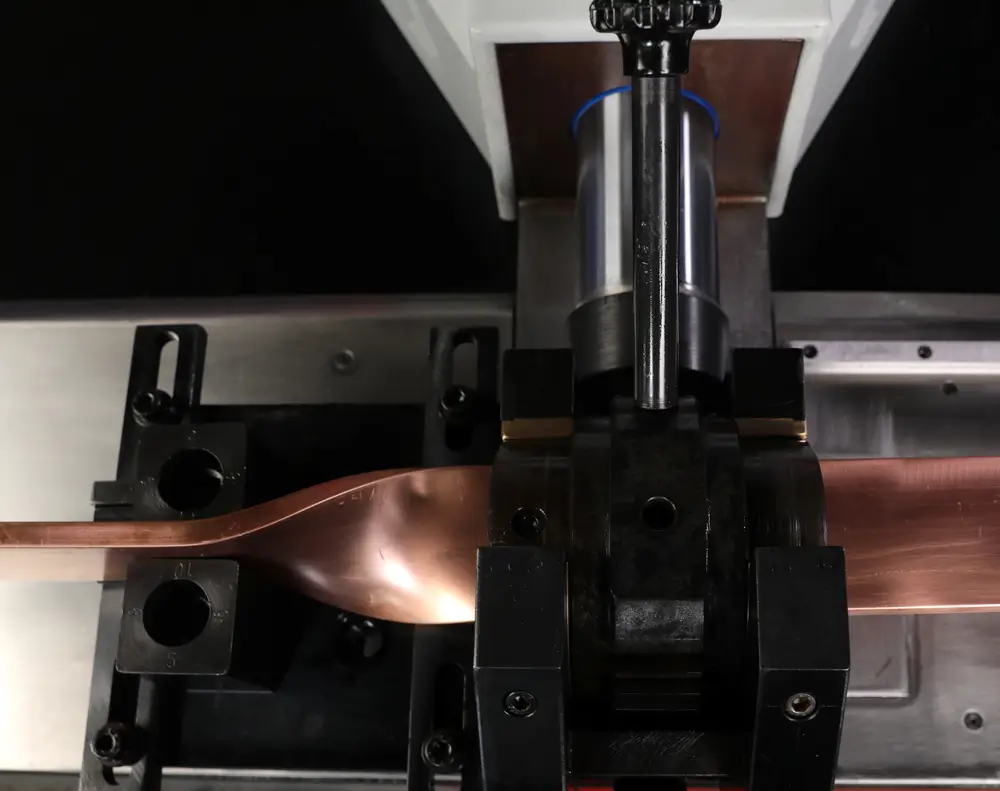
Next, measure hole-to-end and hole-to-hole distances on all three parts. If they differ, the programmable length stopper or the center finder is off. If a laser center finder is fitted, also confirm that its beam hits the punch center. Finally, count the dies that come with the machine and check them against your hole sizes, because missing tooling is a real cost. Our copper busbar punching guide covers clearance and tonnage in more detail.
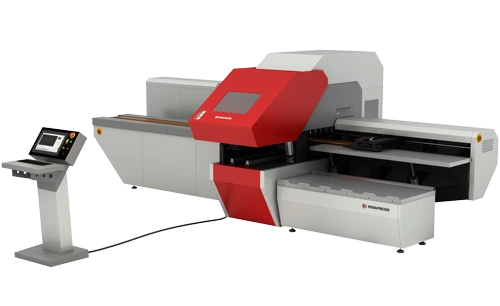
9. Cutting Station: Square Cuts and Blade Wear
Whether you buy a 3-in-1 unit or a separate used busbar cutting machine, check each cut end with a square. It should be square across the full width, with no heavy roll-over or burr. A rounded or stepped cut, by contrast, means a worn or chipped blade or a loose blade gap. Look closely at the blade edges and ask when they were last ground or replaced. Then check that cut length repeats on all three parts. Also note whether the machine cuts with or without scrap, and how long the scrap piece is. On long production runs, that scrap length adds up to a real material cost.
10. Bending Station: Angle Repeatability and Springback
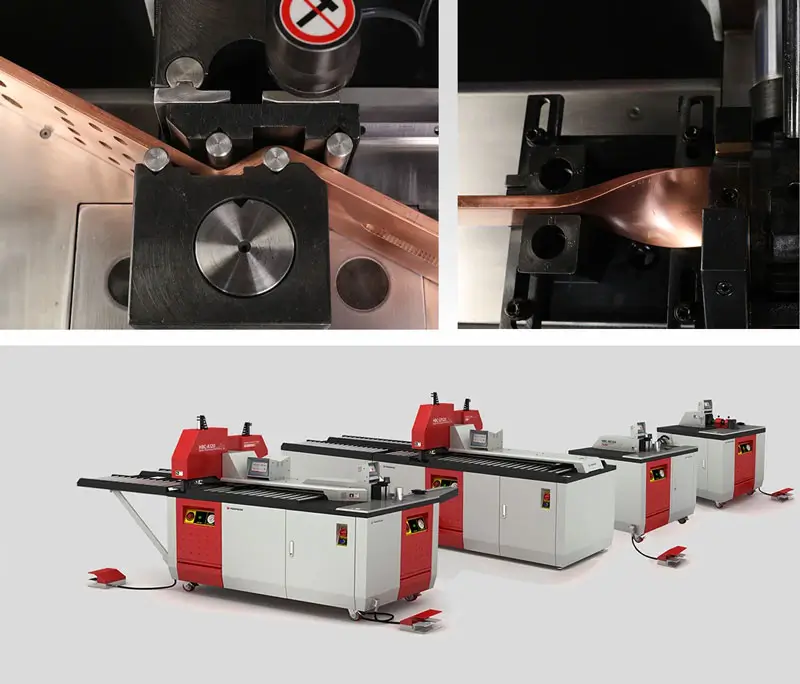
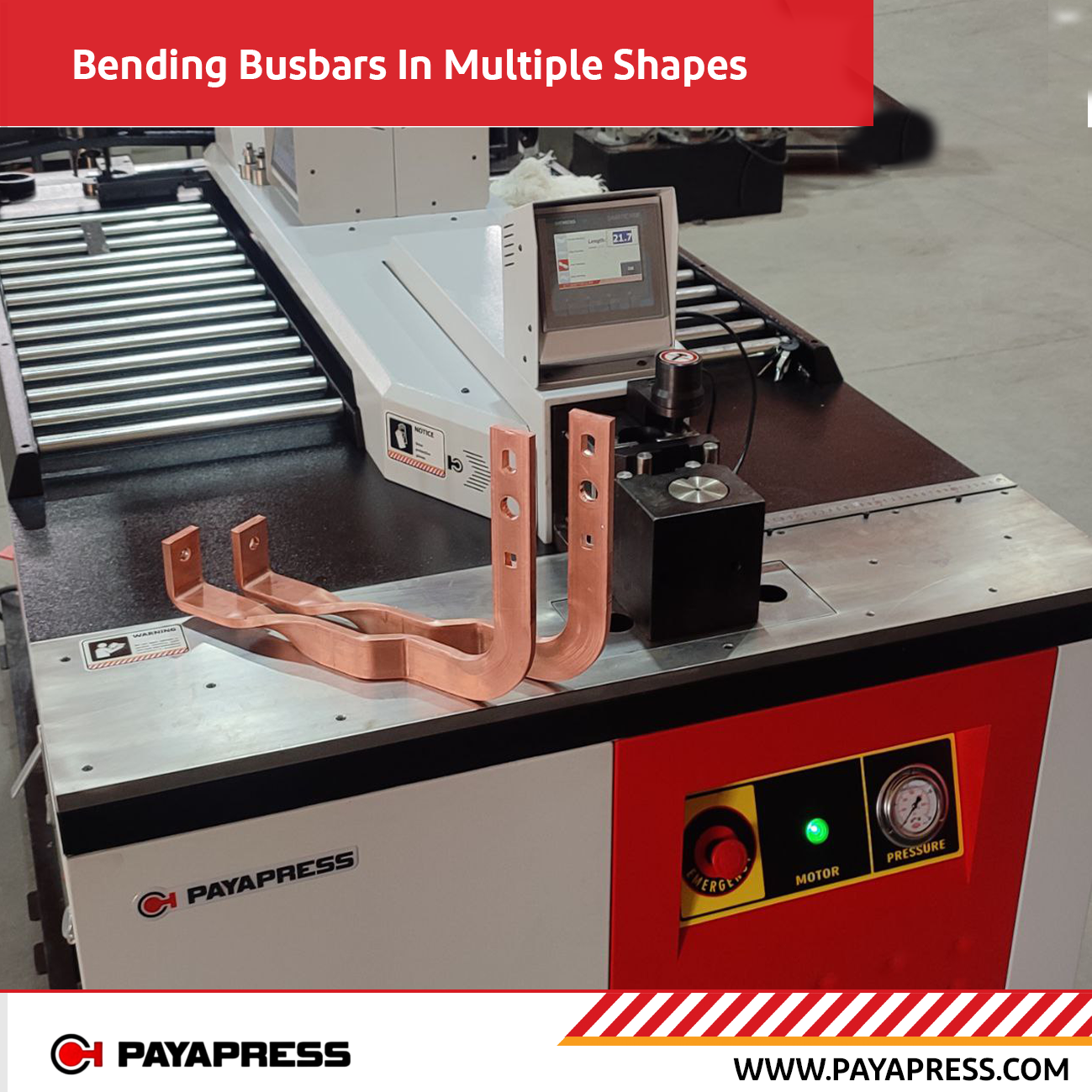
On a used busbar bending machine, bend three 90° parts in your thickest bar and measure them with a protractor or angle gauge. The angles should match each other within the tolerance your drawings need.
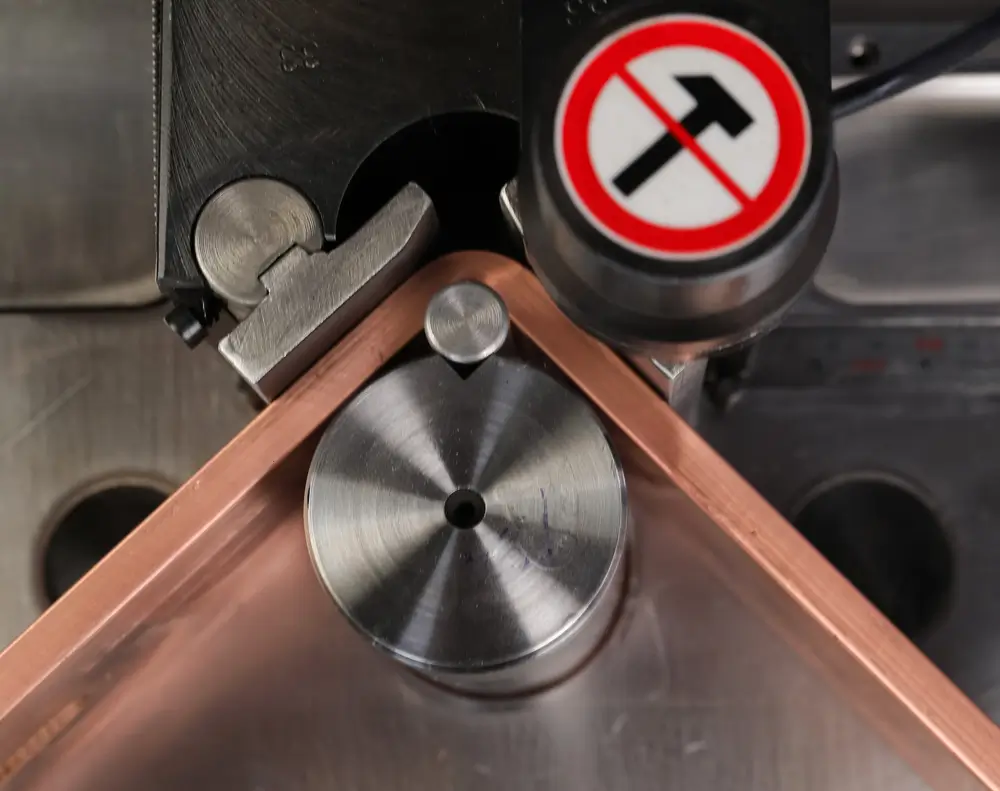
Next, check that the angle indicator reads what the protractor reads. If the machine offers springback compensation, test it on copper of the temper you actually use. Then inspect the molds for scoring that would mark the bar, and check edge or twist molds if your parts need those bends. Finally, look for cracks on the outside of each bend. Cracks point to a mold radius or material problem, so repeat the test with known-good bar. Our busbar bending machine.
Controls, Power and Safety
The last two checks decide whether the machine can run in your shop at all. First, can you trust its control and keep it running? Second, can you connect and operate it safely on your supply? These questions matter most on a used CNC busbar machine, while a manual unit has fewer electronics to fail.
Guarding rules apply as soon as the machine runs in your shop, whatever the previous owner accepted.
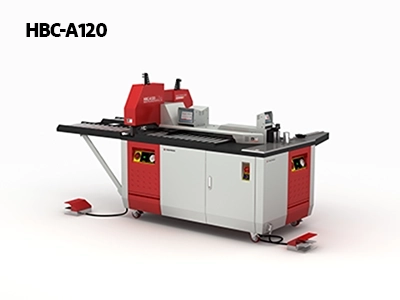
11. CNC, Encoders and Length Stoppers
Most of what to know before buying a used CNC machine applies here too. First, check that the control boots without alarms, and ask for the alarm history. Then confirm that programs, parameters and software licenses transfer with the machine. Next, check ball screw backlash on each axis with a dial indicator: jog forward, reverse and read the lost motion. Compare the reading with the maker’s value.
The rotary encoder or linear scale should also return repeatable positions, and your three test parts already show whether it does. On manual machines with a programmable length stopper, test several positions instead. Finally, if the control is obsolete, price a CNC retrofit before you agree on a price. Our CNC busbar punching and cutting machine page shows what a current control offers.
12. Electrical Supply, 50/60 Hz and Safety Guarding
Read voltage and frequency on the nameplate. Many imported busbar machines run on 380 V, 3-phase, 50 Hz, while US shops usually supply 480 V or 208/240 V at 60 Hz. On 60 Hz, a 50 Hz motor runs about 20% faster. As a result, the hydraulic pump delivers more flow and draws more power, and the control transformer may not match. Common fixes include a drive, a frequency converter (often sold as a 50Hz to 60Hz converter) or a maker-approved conversion. In every case, get sign-off from the maker or a licensed electrician rather than improvising.
Next, test safety: guards, emergency stops, two-hand or foot controls and interlocks must all work. In the US, NFPA 79 covers the machine’s electrical equipment, while OSHA covers machine guarding (29 CFR 1910.212) and lockout/tagout (29 CFR 1910.147).
The Real Cost of a Used Busbar Machine
How much does a used busbar machine cost? The purchase price is only the first line; count everything needed to make good parts.
| Cost item | Why it appears on used machines | Who quotes it |
|---|---|---|
| Machinery rigging and freight | Heavy frames need riggers and trucks | Rigger, carrier |
| Electrical conversion | 50 Hz or different voltage | Electrician |
| Oil, filters and seals | Unknown service history | Maker, hydraulic shop |
| Missing dies and molds | Tooling stays with the seller | Maker |
| Installation and training | No commissioning or handover | Maker, dealer |
| Downtime risk | No warranty | Your own plan |
Then compare the total with a new machine that includes warranty and training. Our busbar bending machine price guide gives current new-machine ranges.
Electrical conversion is the cost line buyers most often miss on imported machines. A drive supplier’s FAQ explains why 50 Hz equipment speeds up on 60 Hz power and how a drive restores rated speed in its frequency conversion FAQ.
Used, Refurbished or New: How to Decide
The right choice depends on volume, tolerances and in-house skills.
| Option | Best for | Main risk |
|---|---|---|
| Used as-is | Lowest price; low-volume or backup machine | Hidden faults |
| Refurbished busbar machine or dealer machine rebuild | New seals and oil, sometimes a new control | Unclear scope; ask what was replaced and the warranty |
| New | Warranty, training, current control and tooling for your bar sizes | Higher upfront cost |
In short, used suits simple manual work, a second machine or a tight budget. It does not suit high volume, tight tolerances or a shop without hydraulics skills. For the new route, A rebuild can mean anything from a simple repair to a full teardown, so the scope defines the value. Fabricating & Metalworking describes service levels from repair to full remanufacture in its rebuild levels explained.
Buying a Used Busbar Machine: Final Verdict
A used busbar machine can be a sound buy, but only if the price matches what the machine can actually do. The 12 checks turn that judgment into evidence: paperwork first, oil and hydraulics second, your own test parts last. If the machine fails, walk away or renegotiate. Hidden faults, an unsupported control or a missing voltage conversion all carry a real cost, so add them to rigging, tooling and downtime and compare the total with a new machine that includes warranty and training.



Rate this article
Choose a rating from 1 to 5 stars.
No ratings yet