
For your convenience, if you prefer listening, you can listen to the rest of this article via the audio file below.
Busbar Bending Machine Price: What Buyers Should Know Before Requesting a Quote
The busbar bending machine price depends on several technical and commercial factors, including bending capacity, busbar size, machine structure, hydraulic power, tooling configuration, control system, and whether the machine only bends or also supports punching and cutting. For this reason, comparing prices without checking the machine’s real specifications can lead to inaccurate budgeting and poor purchasing decisions.
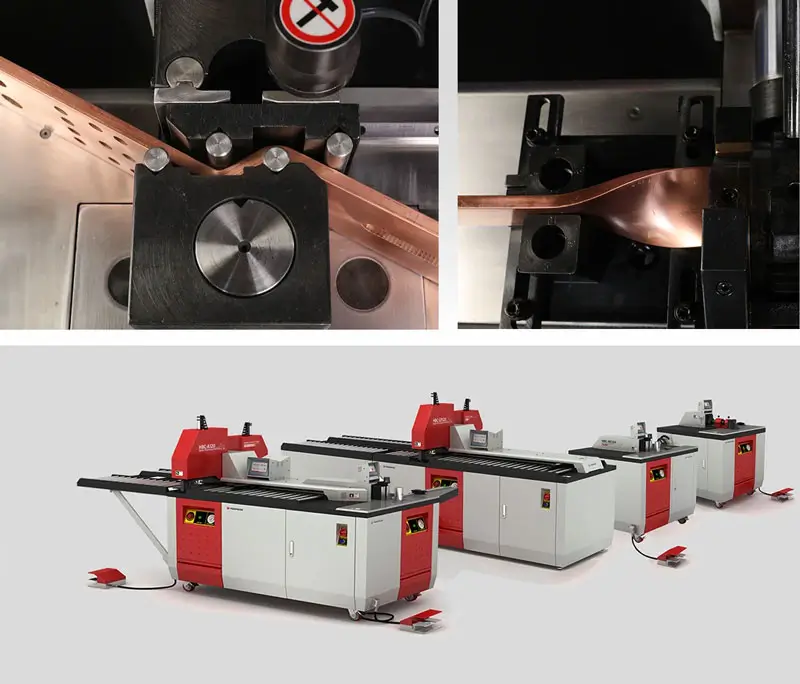
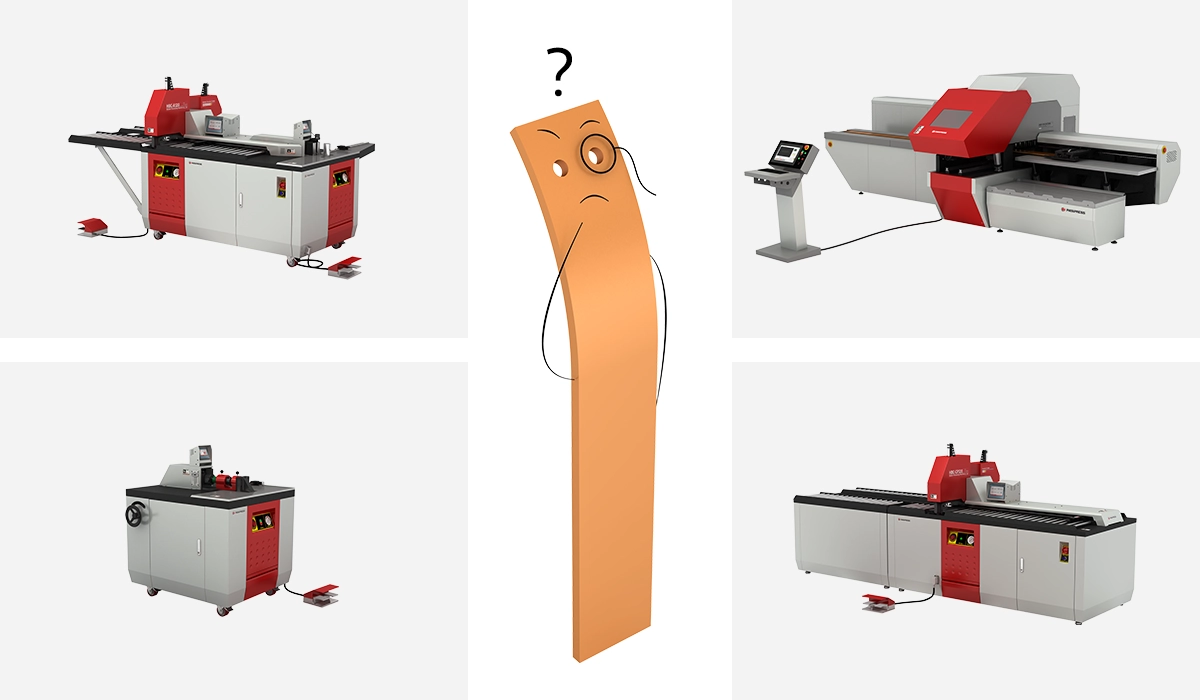
Manual and portable hydraulic tools are usually more affordable, but they are mainly suitable for light-duty or occasional busbar work. Mid-range hydraulic workshop machines offer stronger performance and may include 3-in-1 functions such as bending, punching, and cutting. CNC busbar machines, on the other hand, are generally higher in price because they provide greater accuracy, repeatability, automation, and productivity for professional busbar fabrication.
When evaluating the busbar bending machine price, buyers should also consider long-term value, not only the initial cost. A machine with better precision, stronger tooling, reliable hydraulic components, and user-friendly controls can reduce material waste, improve production speed, and deliver more consistent bending results over time. This makes the right machine selection an investment in efficiency, quality, and production reliability.
Want a clearer view of pricing before making a decision?📎 Download our Busbar Bending Machine Price Guide document to compare machine types, understand key cost factors, and choose the right solution for your production needs.
What Is the Price Range for Bending Machines Used in Busbar Production?
The answer to what is the price range for bending machines depends on the machine category, production volume, busbar size, and level of automation. In busbar fabrication, pricing usually starts from simpler bending solutions and increases as the machine becomes stronger, more accurate, and more capable of handling repeated industrial work. A basic bending setup may be enough for occasional jobs, while manufacturers working with copper or aluminum busbars often need a more durable and precise system.
In this market, the real busbar cost is not limited to the machine purchase price. Buyers should also consider tooling, operator time, setup speed, bending accuracy, maintenance needs, and the value of reducing errors during production. This is why two machines with similar bending capacity can have different prices: one may only perform basic bending, while another may offer better controls, stronger hydraulic components, or integration with cutting and punching operations.
For a comprehensive understanding of How to Bending Copper busbar, we highly recommend reviewing this article.
Hydraulic Busbar Bending Machine Price Range for Workshop Use
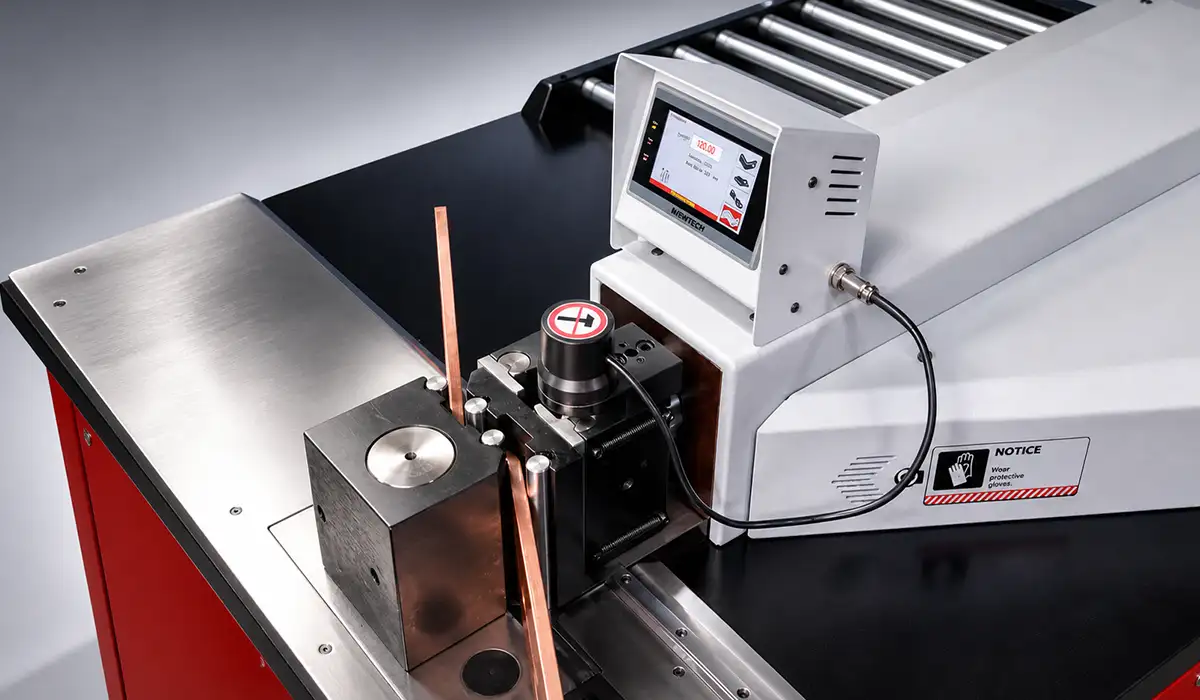
A hydraulic busbar bending machine is usually selected by workshops that need stronger and more consistent bending than manual tools can provide. These machines are often suitable for electrical panel builders, switchgear manufacturers, and maintenance teams that work with copper or aluminum busbars on a regular basis. Their price range is mainly affected by bending force, maximum busbar width and thickness, angle control, hydraulic system quality, and tooling options.
Compared with advanced CNC systems, hydraulic models are usually more accessible in terms of initial investment. However, they can still deliver solid value when the production process does not require full automation. For many buyers, this category offers a practical balance between cost, capability, and reliability, especially when the goal is accurate busbar bending without paying for unnecessary CNC features.
Further exploration of custom busbar bending can be found in the following recommended reading.
CNC Busbar Machine and CNC Busbar Processing Machine Cost Factors
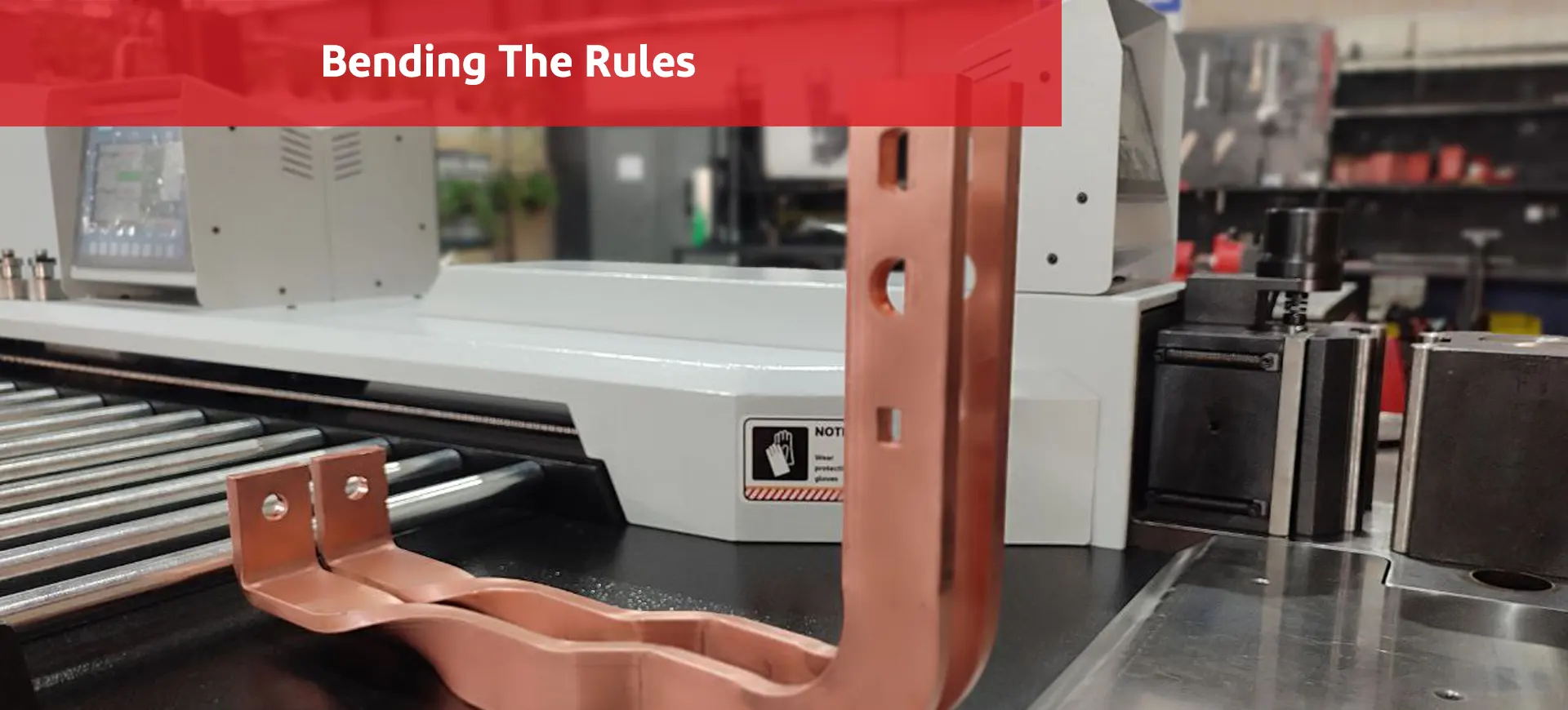
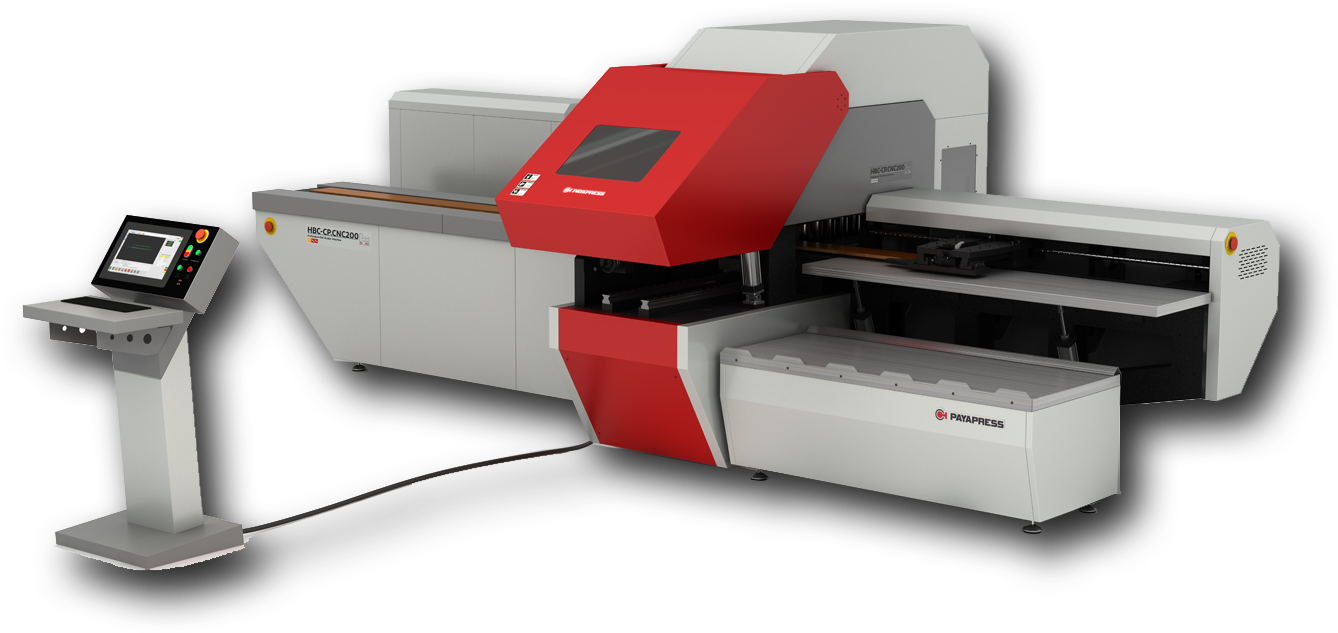
A CNC busbar machine or CNC busbar processing machine is positioned in a higher price category because it is designed for precision, repeatability, and faster production flow. These machines may include programmed bending sequences, digital control, automatic positioning, multi-function processing, and advanced software support. For manufacturers producing busbars in larger quantities, this level of automation can reduce manual adjustment and improve consistency across repeated jobs.
A complete busbar processing machine can also combine bending, punching, and cutting, which changes the total investment calculation. Instead of buying separate machines for each operation, buyers may choose one integrated system to improve workflow and save floor space. In this case, the higher purchase price can be justified by better productivity, lower handling time, and more controlled production quality over the long term.
Further exploration of Busbar Bending Machines in Electrical Panels can be found in the following recommended reading.
Busbar Bending Machine Cost Breakdown: Manual, Hydraulic and CNC Options
Busbar bending machine price can vary significantly depending on machine type, bending capacity, hydraulic power, punching and cutting functions, CNC automation, tooling options, material compatibility, and production requirements. Since taxes, shipping costs, import duties, and local market conditions differ from country to country, the following overview should be considered an indicative budget guide rather than a fixed price list. However, these general categories can help buyers understand where each type of busbar bending machine stands in terms of investment, performance, accuracy, and long-term production value.
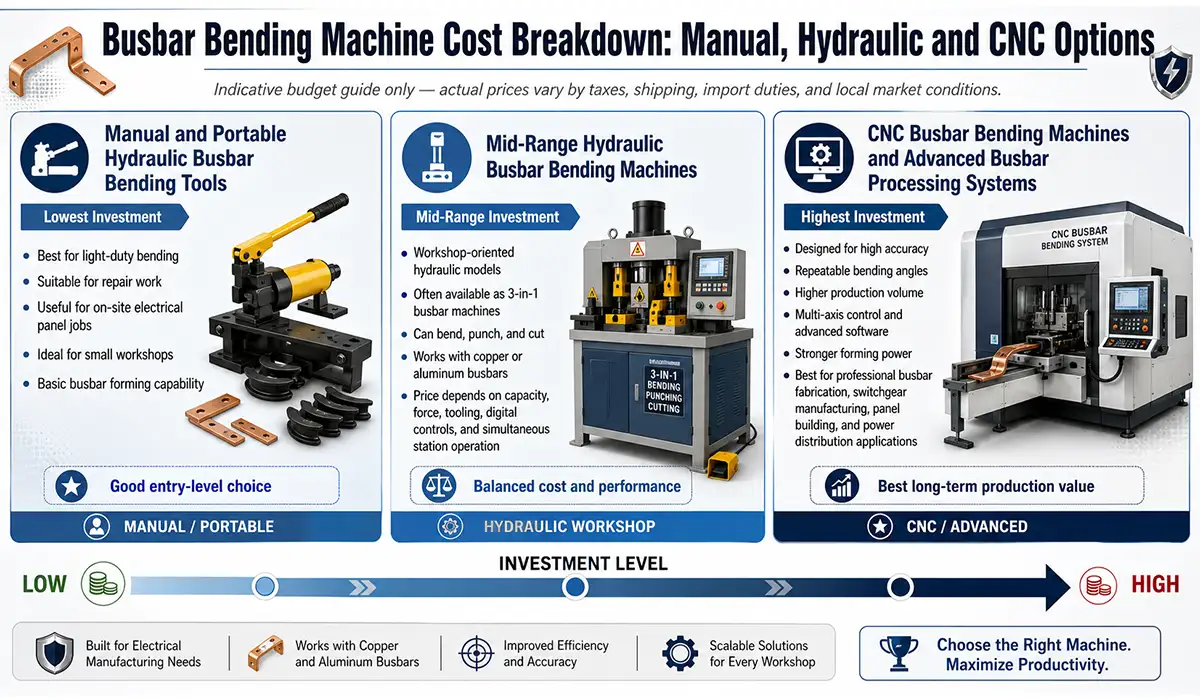
- Manual and portable hydraulic busbar bending tools:
These are usually the most economical options in the busbar bending machine price range. They are suitable for light-duty bending, repair work, on-site electrical panel jobs, and small workshops that need basic busbar forming capability without investing in a full workshop machine. - Mid-range hydraulic busbar bending machines:
Hydraulic workshop models are typically positioned in the mid-range category. Many of these machines are designed as 3-in-1 busbar machines capable of bending, punching, and cutting copper or aluminum busbars. Their price may vary depending on bending capacity, punching force, cutting quality, digital control system, tooling set, and whether the machine supports simultaneous operation at multiple stations.Many mid-range models are built as part of a complete busbar processing machine lineup, where cutting, punching, and bending share a unified hydraulic system. Many mid-range models are built as part of a complete busbar fabrication machine lineup, where cutting, punching, and bending share a unified hydraulic system.
- CNC busbar bending machines and advanced busbar processing systems:
CNC busbar bending machines are generally the highest-investment solutions. They are designed for manufacturers that require high accuracy, repeatable bending angles, higher production volume, multi-axis control, advanced software, and stronger forming power. These machines are best suited for professional busbar fabrication, switchgear manufacturing, panel building, and industrial power distribution applications.
For a comprehensive understanding of Bending Press vs Press Brake, we highly recommend reviewing this article.
Hydraulic vs CNC — How to Choose
Hydraulic machines are simple, strong, and affordable. If you run steady parts and your team has skill, a quality hydraulic 3‑in‑1 is often enough.
CNC machines add servo control and encoders for angle accuracy and repeatability. They shine when you change jobs often, need tight tolerance, or want offline programming and traceability. Many panel shops recover the higher CapEx with lower scrap, faster changeover, and fewer reworks.
What Really Changes the Price
• Capacity: max width × thickness and tonnage for copper and aluminum.
• Tooling & dies: quick‑change sets and special molds (L, Z, U, edge/twist) add cost but save time.
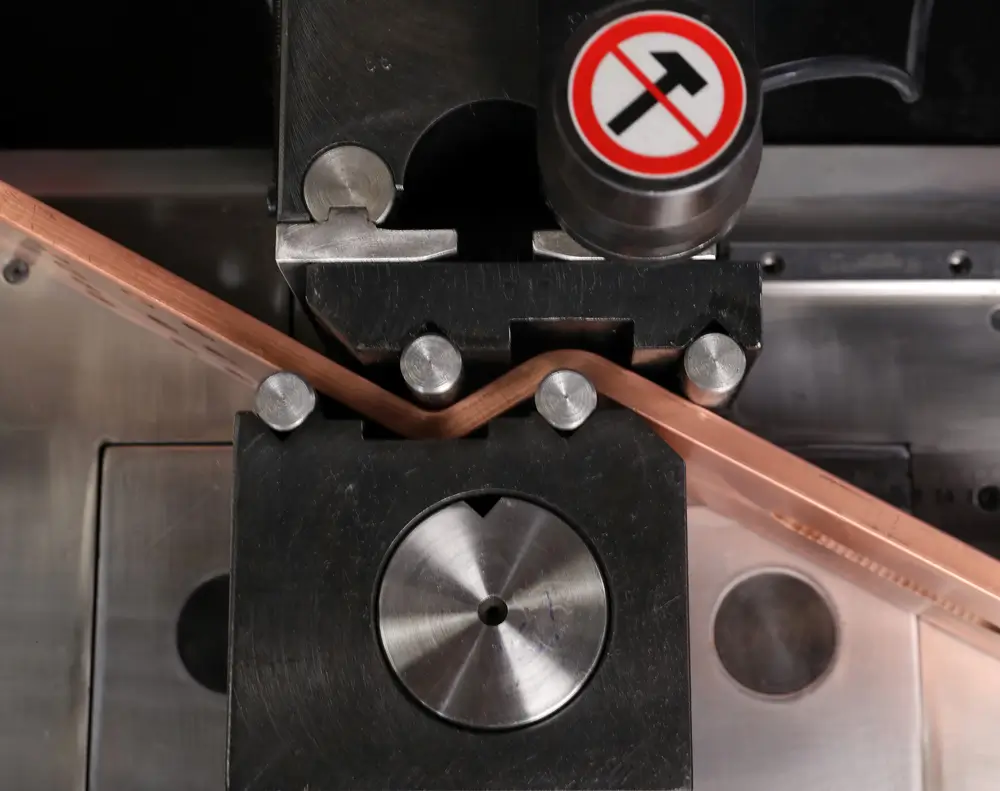
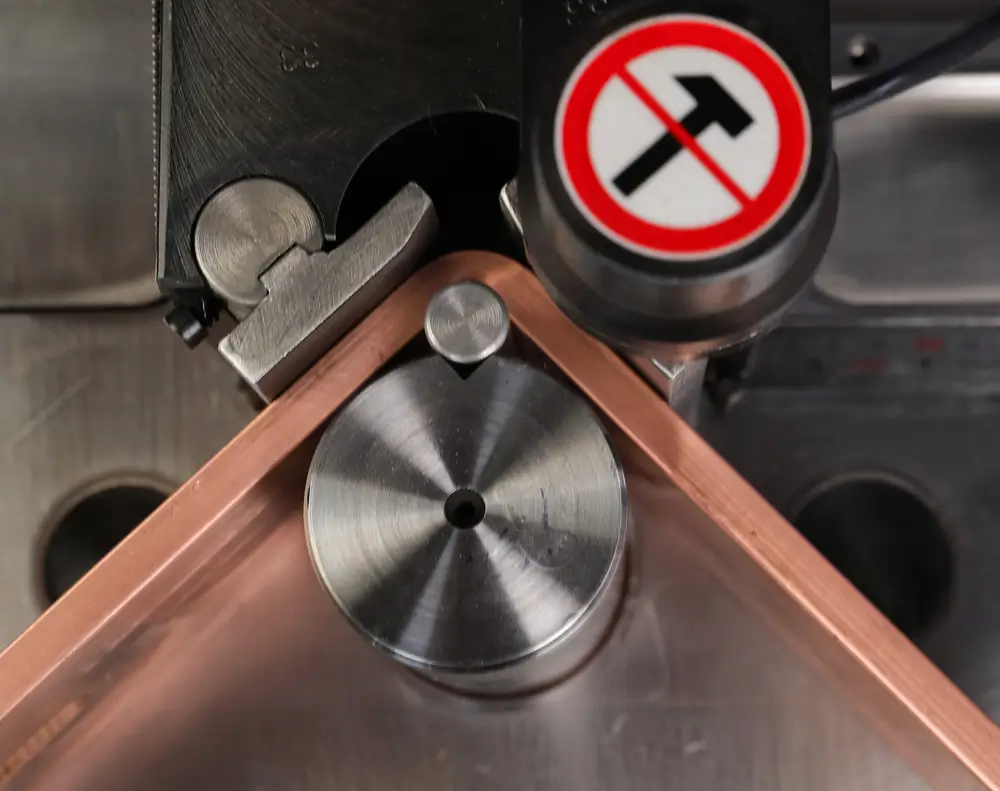
• Accuracy & QA: encoder‑based angle control or a digital ruler gives consistent bends and mark‑free surfaces.
• Control & software: basic PLC/HMI vs CNC with CAD/CAM import and offline programming.
• Automation & safety: servo feeding/backgauge, guards/light curtains, interlocks.
• Build and power:rigid frame, motor size, quality components (easier service and longer life).
• Logistics and terms:Incoterms (EXW/FOB/CIF), duties/taxes, shipping, installation and training.
• Service: warranty, spare parts lead time, clear response SLAs.
• Compliance: CE/ISO/UL paperwork if your auditor or customer needs it.
• Lead time & currency: delivery schedule and FX risk in your country.
This article serves as a valuable resource for those seeking detailed information on Bending Machine Selection Guide.
Budget & TCO — Quick Math
Do not stop at the sticker price (CapEx). Think total cost of ownership (TCO): energy,tooling wear, maintenance, training, and downtime.
A simple view: Payback=CapEx / (labor savings + scrap/rework savings + changeover savings).
If a CNC saves 20–30 labor hours per month and cuts rework, the extra cost can return in months instead of years.
When evaluating the true cost of a busbar bending machine, it helps to apply a life-cycle costing approach that looks beyond purchase price. This includes tooling wear, maintenance, training, and energy use. A trusted reference is the U.S. National Institute of Standards and Technology’s Life-Cycle Costing Manual (NIST Handbook 135), which provides standardized methods for comparing capital equipment over its full service life.
Buyer Checklist (RFQ)
- Materials & capacity: max width × thickness for Cu/Al; required tonnage.
- Accuracy: angle tolerance (for example ±0.5°) and mark‑free bending needs.
- Tooling: required dies (L/Z/U/edge/twist), spare punches/blades.
- Software: CAD/CAM import, offline programming, part library, reports.
- Safety & compliance: guards/light curtains; CE/UL/ISO docs.
- Service & warranty: response time, spare parts availability, training plan.
- Commercials: Incoterms, payment terms, currency, target lead time.
PAYAPRESS Resolution for Transparent Busbar Bending Machine Price and Long-Term Value
At PAYAPRESS, our resolution is to make the busbar bending machine price more understandable, practical, and connected to real production needs rather than presenting it as a simple number. A busbar bending machine can vary greatly in cost because each buyer may require a different level of capacity, accuracy, automation, and processing capability. For example, a hydraulic busbar bending machine may be the right choice for workshops that need reliable bending performance with controlled investment, while a CNC busbar bending machine or CNC busbar processing machine is more suitable for manufacturers that need repeatable accuracy, faster production, programmed operation, and stronger integration between bending, punching, and cutting. This is why the question “what is the price range for bending machines?” should always be answered by looking at the complete application: busbar size, copper or aluminum material, production volume, required tolerance, tooling package, and whether the buyer needs a standalone busbar machine or a complete busbar processing machine. Our goal is to help customers evaluate the real busbar cost, not only the initial machine price, by considering productivity, durability, precision, operator efficiency, and long-term return on investment.
Conclusion
As a PAYAPRESS technical expert, I believe the best way to understand busbar bending machine price is to look beyond the price tag and focus on the machine’s real value in production. My recommendation is to compare each busbar machine based on capacity, automation level, processing functions, accuracy, and long-term reliability before making a purchase decision. Whether you are considering a hydraulic model, a CNC busbar machine, or a full CNC busbar machine, the right choice should match your actual workload, your expected production quality, and your future growth.
FAQ
1. What affects the busbar bending machine price?
The busbar bending machine price is mainly affected by bending capacity, hydraulic power, CNC automation, tooling options, material compatibility, control system, and whether the machine only bends or also performs punching and cutting. Machines designed for larger busbars, higher accuracy, and heavier production usually cost more.
2. What is the price range for bending machines used in busbar fabrication?
The price range depends on the type of machine. Manual or portable hydraulic tools are usually the most affordable, hydraulic workshop machines are positioned in the mid-range, and CNC busbar bending machines or full CNC busbar processing machines are usually the highest-investment options because they offer automation, repeatability, and higher production efficiency.
3. Is a hydraulic busbar bending machine enough for workshop production?
A hydraulic busbar bending machine can be enough for many workshops, especially when the production volume is moderate and full CNC automation is not required. It offers stronger bending force and better repeatability than manual tools, making it suitable for panel builders, electrical workshops, and switchgear-related busbar work.
4. When should I choose a CNC busbar machine instead of a hydraulic model?
A CNC busbar machine is the better choice when your production requires high accuracy, repeated bending angles, faster workflow, programmed operation, and reduced manual adjustment. It is especially useful for manufacturers producing busbars regularly or working with complex bending requirements.
5. How can I reduce the total busbar cost in production?
To reduce total busbar cost, buyers should focus on machine accuracy, setup speed, tooling quality, operator efficiency, and production consistency. A reliable busbar processing machine may have a higher initial price, but it can reduce material waste, rework, labor time, and long-term operating costs.