wholistic review of the steel electric panels
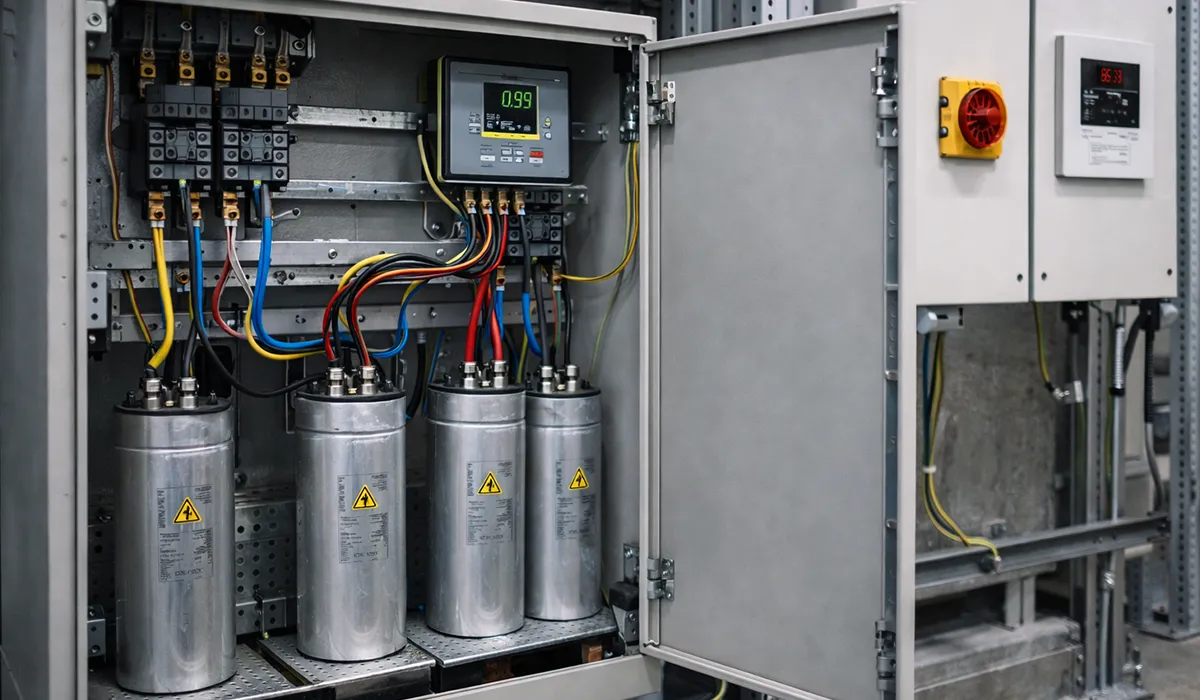
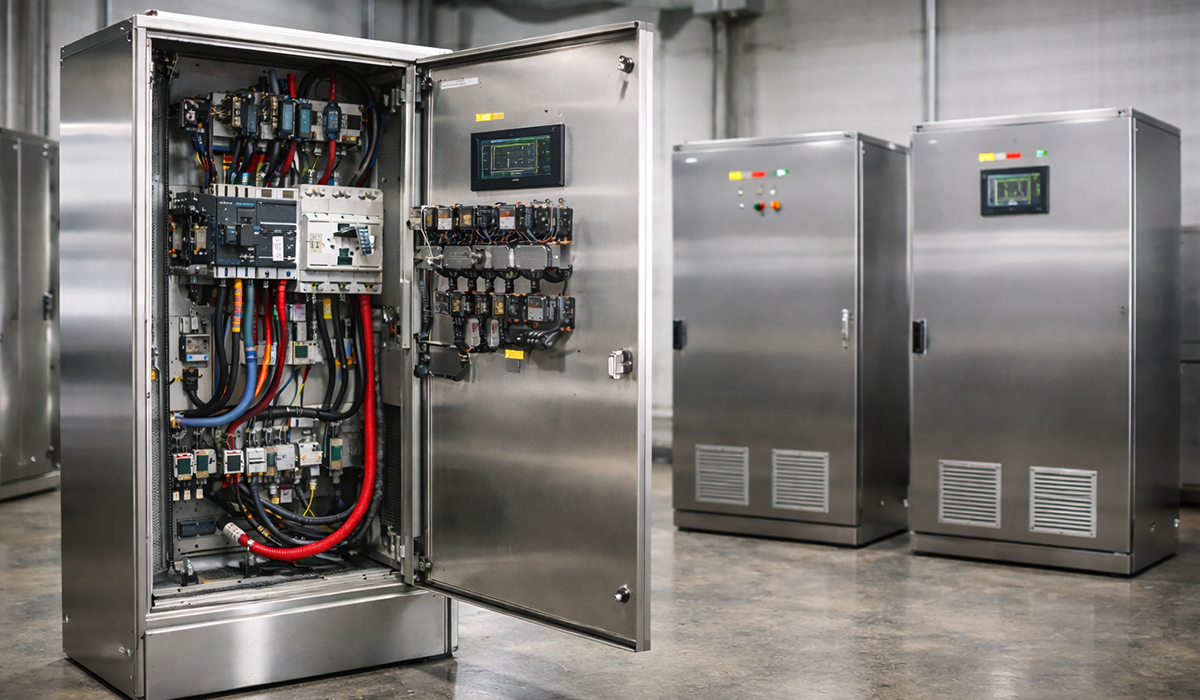
In a simple definition, electrical panel is a container which includes: various keys, switches, monitor tools, control parts and safety equipment whose purpose of invention was preventing electrical shocks inducing users.
Electrical panels are manufactured in various shapes and with different materials. In this article, we are going to review steel electrical panels. Please stay with us.
For your convenience, if you prefer listening, you can listen to the rest of this article via the audio file below.
Steel electrical panel overview
As it is obvious from its name steel electrical panel is a metal chamber where circuits and electrical instruments are protected within its body.
The body of the electrical panel is made by stainless steel which has different grades and alloy.
One of the most common grades used in electrical panel industry as well as fireboxes, cables, trunks, junction boxes are 304 and 316.
Types of steel electrical panels
304 steel electrical panel
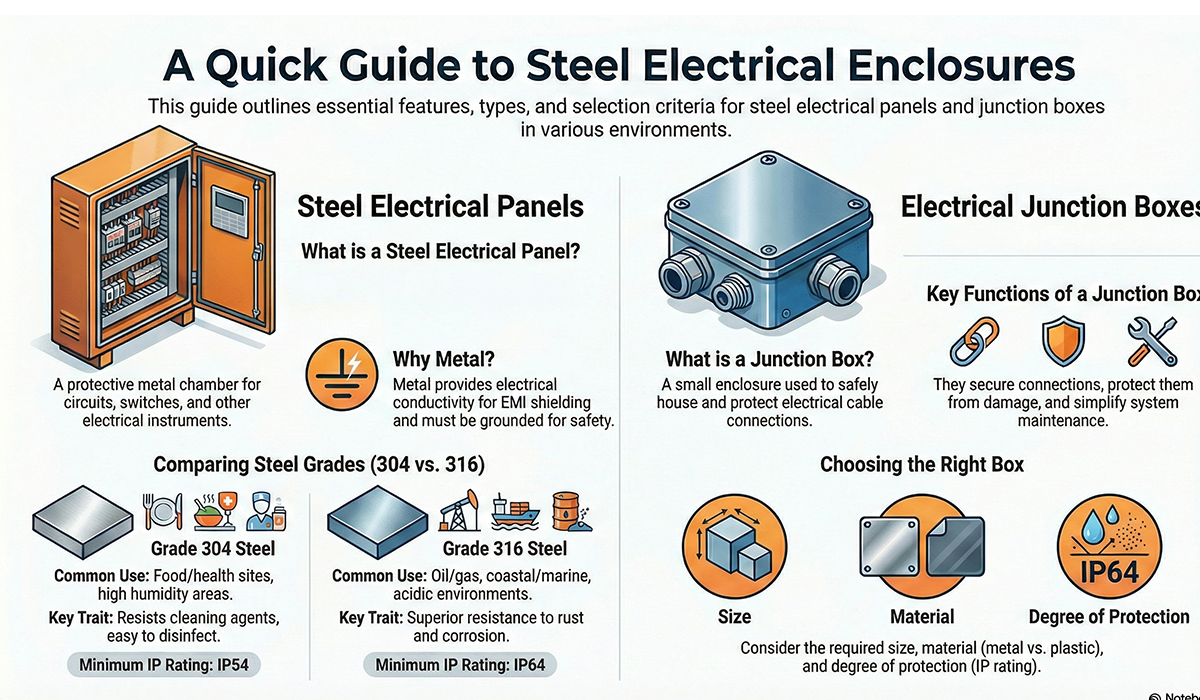
The entire body of this electrical panel is made of 304 steel sheets. This electrical panel is most commonly used in projects, health sites, food, and spaces with relatively high humidity, because steel is resistant to cleaning agents without changing color, and disinfection is easier and faster in this metal.
316 stainless steel electrical panel
316 stainless steel electrical panels are used in oil and gas, petrochemical projects, and areas that, in addition to high humidity and corrosiveness, are also frequently used in acidic and alkaline environments.
This type of electrical panel is more industrial in nature, and the carbon in this grade is relatively higher and relatively stiffer and more resistant than other grades.
The most important positive points of this sign are that it does not rust at all and does not show any corrosive effects. For this reason, it is widely used in coastal and seaside cities as well as on ships, barges, docks, and seaports.
What is a junction box?
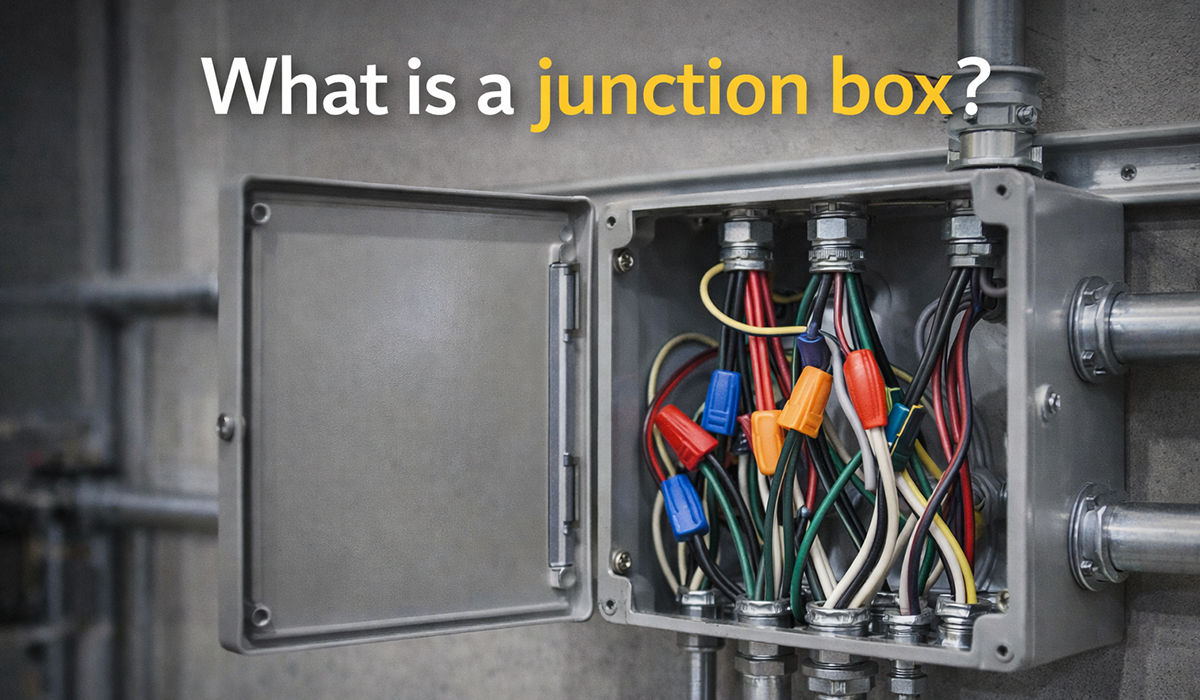
A junction box is a small enclosure or box used in electrical systems to hold and connect electrical cables.
These boxes are produced in various types in terms of material, size, and number of inputs and outputs, and are used in various places, including buildings, industries, and facilities.
Why do we need a junction box?
- Securely connect cables: The junction box allows you to connect different cables together safely and neatly.
- Connection Protection: These boxes protect electrical connections from physical damage, moisture, dust, and other environmental factors.
- Facilitate repairs and maintenance: Using a junction box makes it easier to find and repair potential problems in electrical systems.
- Power distribution: The junction box acts as a power distribution point in electrical systems.
Types of junction boxes
Junction boxes are divided into different types based on material, size, connection type, and application. Some of the common types are:
- Metal junction box: Usually made of stainless steel or aluminum and suitable for use in industrial and outdoor environments.
- Plastic junction box: Made of heat and impact resistant plastics and suitable for use in indoor environments.
- Explosion-proof junction box: Designed for use in hazardous environments with flammable gases.
- Modular junction box: It has interchangeable compartments that can be used to install various types of electrical equipment.
Junction box applications
- Lighting systems: for connecting lamps, lights, and other lighting equipment
- Access control systems: for connecting electric locks, sensors and other access control equipment
- Security systems: For connecting CCTV cameras, burglar alarms, and other security equipment
- Industrial automation systems: for connecting motors, sensors, and other industrial equipment
- Computer networks: For connecting network cables

Important points when choosing a junction box
- Size and Capacity: The junction box should be large enough to accommodate all the cables and connections needed.
- Material: The material of the junction box must be appropriate for the environment in which it is used.
- Connection type: The connection type of the junction box must be compatible with the type of cables being used.
- Degree of protection: The degree of protection of the junction box must be appropriate to the level of protection required.
IP standard of steel electrical panel
Having a high IP rating is very important for electrical panels. Therefore, the IP rating of electrical panels can be increased by two methods: 1- the construction model of the panel body and 2- injecting polyurethane foam onto the panel door.
In steel panels with grade 304, the minimum IP standard should be empirically 54. In steel panels with grade 316, the minimum IP standard is empirically considered to be 64.
Conclusion
Steel electrical panels, especially stainless grades like 304 and 316, are selected to match the environment, hygiene needs, corrosion risk, and protection level required by the project. Junction boxes support safe, organized cable connections, and IP rating decisions directly affect long-term reliability in dusty or wet locations.
If you want to choose the right steel enclosure or junction box for your site, define your environment (humidity, chemicals, outdoor exposure), required IP level, and installation method, then consult a qualified panel builder to specify the best-fit solution.