





If you’d rather listen than read, feel free to play the audio file below for the rest of this article.
What a CNC Machine Does (and When You Need One)
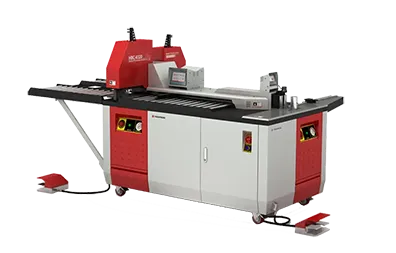
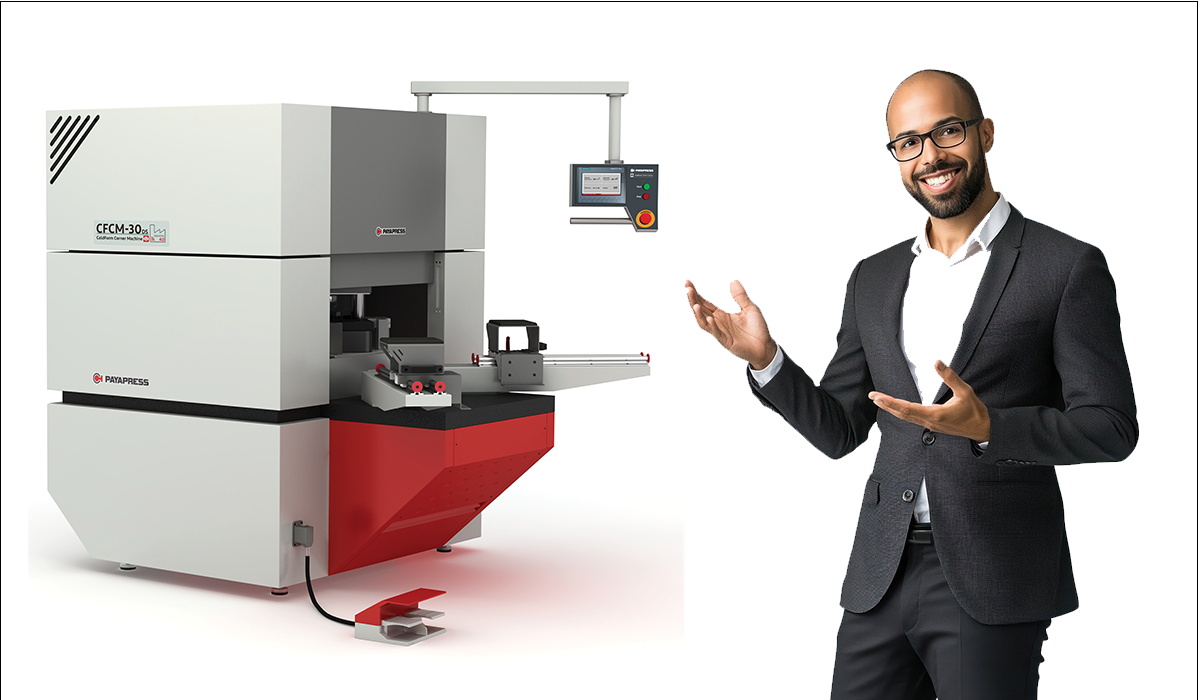
A CNC machine cuts, punches and bends copper and aluminum busbar from a stored program. In other words, the control (CNC, computer numerical control) positions the bar, picks the tool and repeats each part without hand measuring.
A busbar machine with CNC control pays off in three common cases:
- Repeat jobs: the same panel layouts come back every month, so a saved program replaces setup time.
- Many hole patterns: one bar needs several hole and slot sizes, and the machine changes tools in the program.
- Tight tolerances: hole-to-hole and hole-to-bend distances must match drawings so that bars fit without rework.
In contrast, a manual or hydraulic busbar processing machine still makes sense for low volume and one-off repair work. For context, busbars carry and distribute current inside switchboards, panels and switchgear.
If you are new to this equipment, start with our quick guide to busbar fabrication machines. It shows the main machine types before you compare models.
Types of CNC Machines
Most machines on the market fall into three families. Each one fits a different shop profile, so the right choice depends on your volume and part mix.
| Type | Operations | Best for |
|---|---|---|
| CNC punching and cutting | Punch, slot, shear, mark | Panel shops with many hole patterns |
| CNC bending | Flat, edge and twist bends | Switchgear shops with complex 3D bars |
| 3-in-1 unit | Cut, punch, bend at separate stations | Field work and small batches |
For example, a busbar punching bending cutting machine on one frame saves floor space, while separate CNC cells raise throughput.
CNC Punching and Cutting Machines
A CNC punching machine holds several punches and dies in a tool carrier with multiple tool stations. A servo motor drives a gripper along a ball screw, so the bar moves to each hole position under program control. Then the shear blade cuts the finished part to length, often with little scrap. As a result, one operator can load bars and unload parts while the machine handles positioning.
CNC Bending Machines
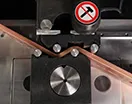
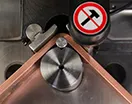
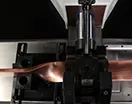
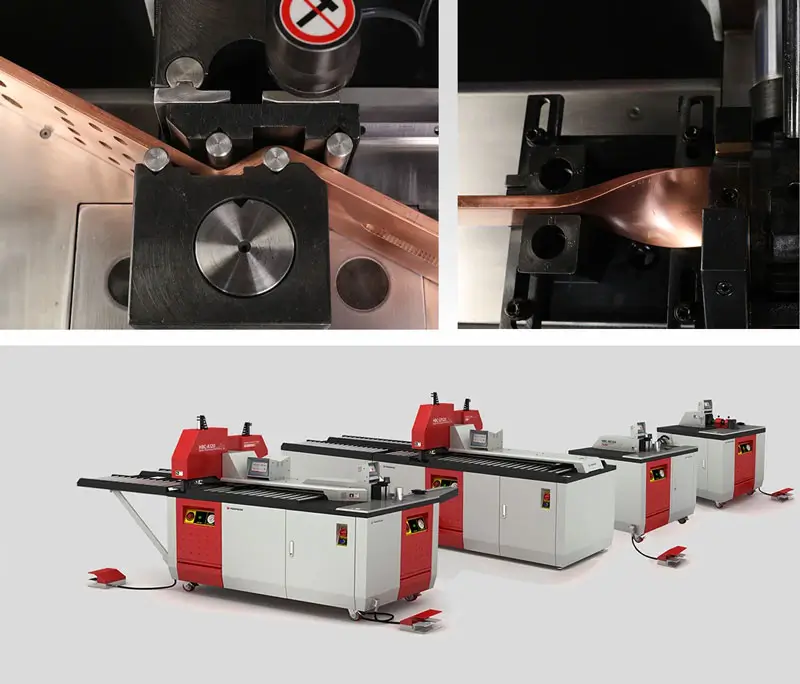
A CNC bending machine makes three kinds of bends. Flat bends turn the bar across its thickness, edge (vertical) bends turn it across its width, and twist bends rotate it about its own axis. Copper also springs back after each bend, so good machines measure the angle and add springback compensation. That feedback is what keeps bending angle accuracy within tolerance from the first part to the last.
However, bending is usually the bottleneck in a shop, because each bend needs its own positioning, clamping and check. For that reason, many buyers size the bending station first and the punching line second.
Busbar systems inside low-voltage assemblies must meet design and verification rules, so bar quality matters beyond the shop floor. The IEC webstore summarizes the general rules for these assemblies in its IEC 61439-1 summary.
3-in-1 Busbar Machines vs Full CNC Processing Centers
A 3 in 1 busbar machine combines cutting, punching and bending stations on one compact frame. The operator usually sets stops and angles by hand or through a simple digital readout. Therefore it suits field work, site repairs and small mixed batches where portability matters more than speed. A full CNC center, in contrast, runs programmed sequences from a drawing and moves the bar without manual measuring. As a result, it delivers higher throughput and better repeatability on long series of identical parts.
Neither busbar fabrication machine is better in every case; each one fits a different workload. In fact, many shops run both: the CNC copper busbar machine handles daily production, while the 3-in-1 unit covers urgent one-offs, prototypes and service work at customer sites.
Combined units deserve a closer look before you decide. Read about 3-in-1 busbar machines and where they fit best.
Size the Machine to Your Busbar, Not the Brochure
Spec sheets list maximum values, but your own parts decide what you need. So, before you read any brochure, collect a real job sheet.
From it, note your largest bar, largest hole and longest part. Then estimate the same numbers for the next three to five years, since growing shops often move to heavier switchgear. Those figures set capacity, force and bar length.
Shear strength changes with copper temper, so punching estimates should start from published alloy data. The copper association lists typical shear values by temper in its C11000 property data.
Busbar Width × Thickness Capacity
Cutting, punching and bending capacities often differ on the same machine. For example, a machine may cut a 15 mm bar but bend only 12 mm on edge. Also, suppliers usually quote capacity for copper, so check aluminum busbar values separately; softer aluminum may allow wider bars but can tear at tight bends. Even a busbar cutting punching and bending machine with one frame can list three different limits. Alloy and temper change the load too; see our C11000 vs C10100 vs C10200 guide.
| Bar size | Cut | Punch | Bend (flat / edge) |
|---|---|---|---|
| 1/4 × 2 in | check | check | check |
| 3/8 × 4 in | check | check | check |
| 10 × 100 mm | check | check | check |
| 12 × 120 mm | check | check | check |
Positioning method matters as much as the numbers. A servo motor with a ball screw places the bar electronically. By contrast, hydraulic stops rely on manual settings and can drift as the oil warms. Meanwhile, the hydraulic power pack still drives the punch on both designs.
Accuracy claims mean little without a test method behind them, so ask how the supplier measured positioning on the quoted axis. ISO defines a common procedure for testing numerically controlled axes in its positioning accuracy standard.
Material choice also changes the load on the machine. For a clear comparison, read our guide to copper vs aluminum busbar systems.
Software and Programming: The Spec Most Buyers Skip
Buyers often compare tonnage for hours and then accept whatever software comes with the machine. However, the software decides how fast a new part gets from drawing to bar.
First, ask about CNC machine offline programming. With offline programming, an engineer builds the job in the office while the machine keeps running. Next, check CAD/CAM import: the software should read DXF files or your CAD output directly, so nobody retypes hole positions.
Then look at bend-sequence simulation. A good program shows each bend in 3D and flags collisions with the frame or tools before you waste copper. Also check for a part library, because saved programs make repeat panels almost instant.
Finally, ask how long it takes to train a new operator on the HMI (the touch-screen operator panel). Above all, request a live programming demo of one of your own parts, from drawing to finished bar, during the sales visit.
Offline programming moves setup and tryout work away from the machine, as sheet metal shops have learned with press brakes. A trade magazine article explains these gains for bending cells in its offline programming article.
Evaluating Manufacturers and Support
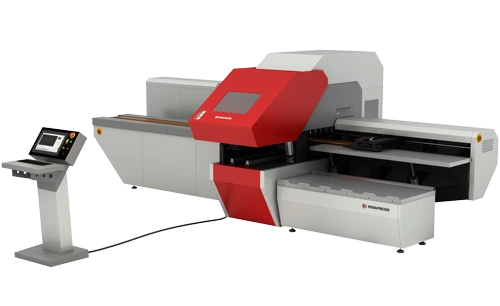
Most busbar machine manufacturers can show a good brochure. What really separates them is support, spare parts and proof on your own material.
That matters most for a CNC machine for switchgear manufacturing, where one stopped station can delay a whole order. So judge each supplier on service response, spare-parts stock and test results on your bars, not on brochure claims.
For US installations, ask whether the machine’s electrical system follows the industrial machinery standard. A testing body’s overview explains the scope and field evaluation of NFPA 79 requirements.
Questions to Ask Before You Sign
Use these eight questions as your CNC machine buyer checklist for supplier calls, and ask every supplier the same set:
- Is a service engineer based in your region, and what is the response time?
- What is the spare-parts lead time? (Example: 2–5 days, hypothetical estimate.)
- What does tooling cost per station, and how long do punches last?
- What does the warranty cover: hydraulics, servo drives, control?
- How many training days are included, on site or at the factory?
- Does the machine support remote diagnostics over a secure connection?
- Can you give references from switchgear shops with similar parts?
- Are manuals and HMI screens available in English?
Factory Acceptance Test on Your Own Copper
A factory acceptance test for busbar machine purchases proves the specs on your parts, not on a demo bar. Follow these steps:
- Send three real drawings, including your most complex bar.
- Ship your own bar stock, in the temper you actually buy.
- Measure hole-to-hole distance with a caliper against the drawing.
- Measure hole-to-bend distance and the bend angle with a protractor.
- Check burr height at the shear cut and around the holes.
- Time the full part, from bar loading to finished piece.
Then write the pass/fail criteria into the purchase order, for example the allowed positioning accuracy, bend-angle tolerance and target cycle time. That way, both sides agree on the result before the machine ships. If a part fails, the supplier adjusts and you repeat the test.
Total Cost of Ownership
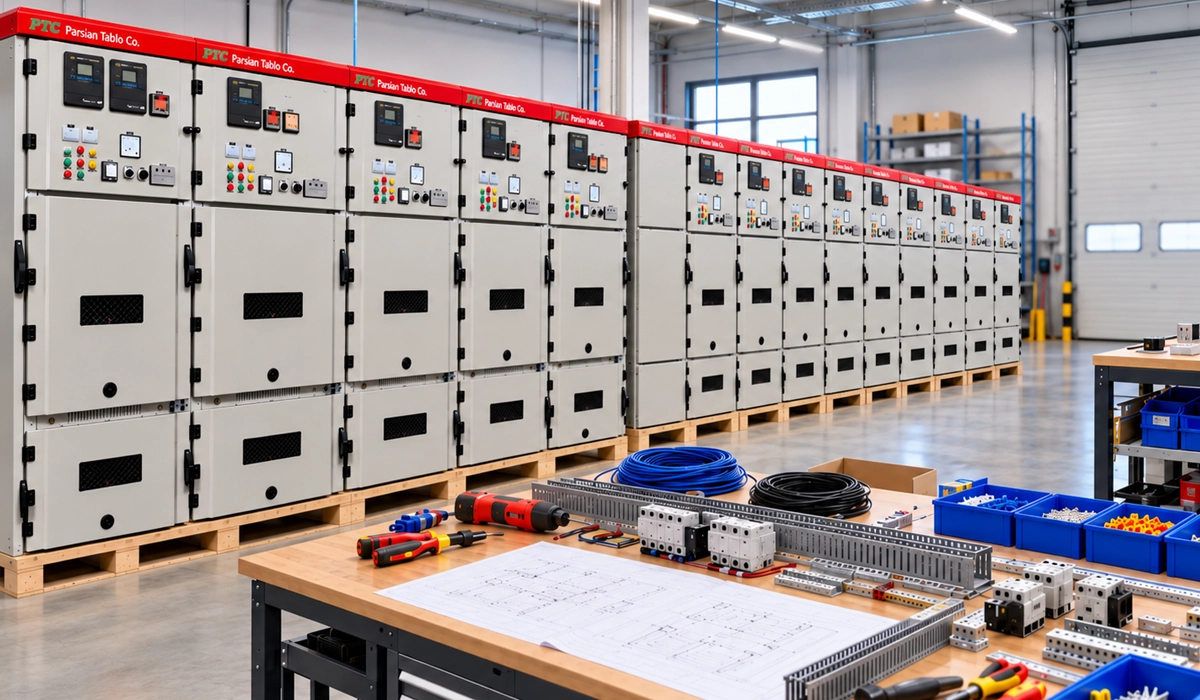
List price is only the first line. Break the total into purchase, tooling, installation, training, maintenance, downtime and scrap.
In the debate of CNC machine vs hydraulic busbar machine, the up-front cost favors hydraulic. However, CNC often costs less per part on repeat work, because saved programs cut setup time and scrap. A hydraulic machine, on the other hand, wins on low volume, where setup is rare and labor is cheap.
So, should you choose a CNC or hydraulic machine? Estimate your parts per year, then compare cost per part instead of price per machine. Downtime is the hidden line: one idle day can cost more than a set of punches.
Ownership costs reach far beyond the invoice, including tool regrinding, rework and operator time. An editor’s column on fabrication equipment walks through these hidden items in cost of ownership.
CNC Machine Buyer’s Checklist
Print this table and fill it in for every quote. Write your requirement first, from your own job sheet, before you talk to any supplier. Then compare the supplier answers side by side.
| Item | Your requirement | Supplier answer |
|---|---|---|
| Max bar (W × T) | ||
| Max hole / slot | ||
| Punching force | ||
| Tool stations | ||
| Bend types | ||
| Accuracy | ||
| Software | ||
| FAT | ||
| Service | ||
| Spares |
Any gap in the supplier column is a question to answer before you sign. Likewise, any vague answer such as “depends on the job” needs a number in writing.
A buyer should also confirm that the supplier has assessed the machine’s risks under the general safety standard. ISO describes that hazard identification and risk reduction method in its machinery risk assessment.
Still weighing budget against quality? Our guide on economic vs premium busbar machines can help you decide.
Conclusion: How to Choose a CNC Machine
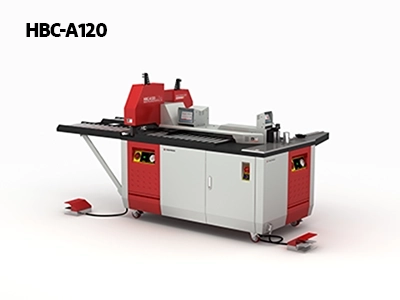
Choosing a CNC machine comes down to three steps. First, size it to your own bars, holes and part lengths, today and five years ahead. Second, compare capacity, punching force, accuracy, cycle time and software on the same terms. Third, prove those specs with a factory acceptance test on your own copper. If you are still planning a new line, our guide on how to start a panel shop puts the machine in context. Want to see the method on your parts? Send us a drawing and your bar stock for a free test run.
A good machine needs regular care to stay accurate. For the full routine, read our machine maintenance guide.



Rate this article
Choose a rating from 1 to 5 stars.
No ratings yet
0 Comments
No comments yet. Be the first to comment.