


Prefer listening? You can play the audio version of the rest of this article below.
What Unplanned Breakdown Actually Costs a Fabrication Shop
A hydraulic busbar punching machine failed three days into a 500-unit switchgear order. The cause was a worn hydraulic seal. Its pressure gauge had been drifting for roughly three weeks, showing small fluctuations at the top of each stroke, but nobody recorded the readings. Without a record there was no trend, and without a trend there was no warning.
The direct cost was easy to add up. Fourteen hours of downtime, an emergency technician callout at out-of-hours rates, and a seal kit shipped overnight on expedited freight. The indirect cost was larger and harder to invoice. The delivery date slipped, the contract carried a late penalty, and two other jobs moved back to recover the schedule.
Replacing the same seal on a planned Tuesday morning takes about two hours with a stocked part. Shops that track both figures typically find the unplanned event costs four to eight times the planned equivalent. The seal itself is the cheapest line on either invoice.
That gap is the whole argument. The fault was not invisible, it was unmeasured. Equipment failure prediction does not need perfect foresight. It needs someone to notice that a pressure reading has moved and to act while the machine still runs. Predictive maintenance for metalworking machines is the system that catches that signal early, and it is the practical answer to how to reduce unplanned downtime in metalworking production.
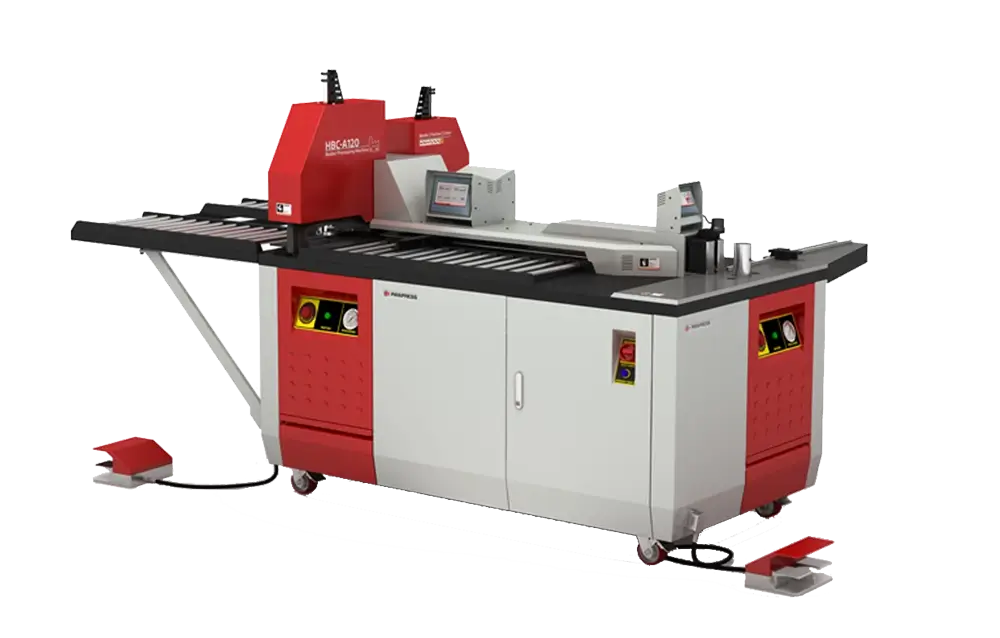
Before we talk about maintaining metalworking machines, let’s look at one machine that rarely asks for maintenance at all: the corner forming machine.
| Cost Category | Breakdown Maintenance | Predictive Maintenance |
|---|---|---|
| Repair Cost | Emergency Rate (1.5–3× Normal) | Planned Rate (Standard Cost) |
| Downtime Duration | 8–24 Hours Unplanned | 1–4 Hours Scheduled |
| Production Impact | Full Line Stoppage | Scheduled Window, Minimal Loss |
| Parts Procurement | Expedited, Premium Price | Planned, Standard Lead Time |
| Secondary Damage Risk | High (Cascade Failure) | Low (Fault Caught Early) |
The Hidden Multiplier — Secondary Damage
A bearing rarely fails on its own. On a punch press, a degrading motor bearing raises vibration across the frame long before it seizes. That vibration transfers into the spindle housing, the tooling, and the guide columns, and each of those components then wears at an accelerated rate. What began as a bearing replacement becomes a rebuild. Shops that measure the difference commonly report repair costs three to five times higher once secondary damage is included. Catching the vibration signature at its early stage removes that multiplier completely, and the repair reverts to a routine bearing change.
Cold forming sheet metal avoids the heat input. The corner keeps its original mill surface and passive film, so there is less to restore afterwards.
Downtime and OEE — The Production Manager’s View
Overall Equipment Effectiveness is Availability × Performance × Quality. Most production managers track output but not machine health, so falling availability shows up only in the monthly figures. Micro-stoppages do the damage. A ten-minute clearance here and a twenty-minute adjustment there never trigger a maintenance report, yet they accumulate steadily across a shift. Recovering ten OEE points on one machine running 2,000 productive hours a year returns roughly 200 hours of capacity. Condition data feeds the availability term directly, which makes the improvement both visible on the board and defensible in a budget review.
For readers who want more technical depth, this reference page is a useful starting point.
What Predictive Maintenance Actually Means in a Metalworking Context
Most shops that believe they run predictive maintenance are running preventive maintenance. They service machines on fixed intervals — every 500 hours, every six months — regardless of what the machine is actually doing. The schedule comes from the manual, not from the equipment.
That distinction has a cost on both sides. Time-based servicing either arrives too early, replacing components with useful life remaining, or too late, missing a fault that emerged between intervals. Neither outcome reflects machine condition, because condition was never measured. The preventive vs predictive maintenance question is not about effort or discipline. It is about what triggers the work.
Every cut edge is an entry point. Laser cutting leaves residue and an oxidized edge. A punching and notching machine transfers whatever the tooling carries into the material. Burrs hold moisture and cleaning chemicals against the metal.
Predictive maintenance for metalworking machines is condition-based. Work is triggered by a measured deviation from a known healthy state, not by a date. ISO 17359 sets out the governing procedure for industrial machine monitoring. It covers how to target monitoring at root cause failure modes and how to set alarm criteria against them.
Three models exist in practice, and a well-run shop uses all three deliberately. Run-to-failure suits components that are cheap and quick to swap. Preventive suits machines with predictable, well-documented wear. Predictive suits the machines that stop production when they stop. Applying the wrong model is expensive in both directions.
Access the full file here to review all technical notes, examples, and recommendations.
| Maintenance Model | Trigger | Best For | Risk |
|---|---|---|---|
| Run-to-Failure | Machine Breaks Down | Non-Critical, Cheap-to-Replace | Unplanned Downtime, Secondary Damage |
| Preventive (Time-Based) | Fixed Schedule (Hours/Months) | Machines with Predictable Wear | Over-Maintenance or Missed Faults |
| Predictive (Condition-Based) | Measured Condition Signal | Critical Production Machines | Requires Sensor Investment |
Where Predictive Maintenance Fits in a Fabrication Shop
Not every machine justifies the investment. Monitoring everything spreads a limited sensor budget across assets that do not need it, and the programme delivers nothing measurable. The filter is criticality, not machine value. Ask one question of each asset: if this machine stops this morning, does production stop with it? Punch presses, bending machines, and CNC centres on the critical path usually answer yes. A second pedestal drill or a spare bandsaw with a working alternative answers no. Start monitoring at the top of that list and work down as the programme proves itself.
Corner geometry is covered separately in our guide to corner and angle notching machines.
PdM vs PM — A Cost Comparison Framing
Shop managers reasonably see sensors as a cost line with no immediate output. The useful comparison is not sensor cost against zero, but predictive maintenance cost vs breakdown maintenance cost over the same period. One avoided breakdown on a critical machine usually exceeds the monitoring spend for that machine outright. Count the downtime, the emergency labour, the expedited parts, and the disrupted schedule together. On that arithmetic, shops typically recover the investment within six to eighteen months. Treat it as a capital decision with a calculable payback period, and it stops being a matter of opinion.
The Main Condition Monitoring Techniques for Metalworking Machines
Shops that commit to a programme often stall at the same point: they know they need monitoring but cannot tell which technique applies to which failure mode. The choice matters more than the spend. Thermal imaging will not detect a bearing fault that vibration analysis catches weeks earlier, because heat only appears once friction has already increased. Buy the wrong technique for the failure mode and the sensor reports healthy right up to the breakdown.
Every cut edge is an entry point. Laser cutting leaves residue and an oxidized edge. Punching transfers whatever the punch and die tooling carries into the material. Burrs hold moisture and cleaning chemicals against the metal.
Four techniques cover the large majority of machine condition monitoring in a metalworking environment. Each detects a different physical symptom, suits different machine types, and catches the fault at a different stage of its progression. Metalworking machine maintenance teams rarely need all four running at once, but they do need to know which one answers the failure mode in front of them.
| Technique | What It Detects | Best Machine Application | Failure Stage Detected |
|---|---|---|---|
| Vibration Analysis | Bearing Wear, Imbalance, Misalignment | Punch Presses, Motors, Spindles | Early to Mid-Stage |
| Thermal Imaging (IR) | Heat Buildup, Electrical Faults, Friction | Hydraulics, Motors, Electrical Panels | Mid to Late Stage |
| Oil/Lubricant Analysis | Contamination, Wear Particles, Viscosity | Hydraulic Systems, Gearboxes | Early (Chemical Signals) |
| Acoustic Emission | Micro-Cracks, Tool Wear, Seal Leakage | CNC Machines, Hydraulic Presses | Very Early Stage |
The right combination depends on the machine, not on the budget. A hydraulic press needs oil analysis for the fluid circuit and vibration for the drive, because those two failure paths are independent of each other. Pairing techniques that catch different stages gives the maintenance team enough warning to order parts and schedule the work, which is the entire point of the exercise. Most predictive maintenance manufacturing programmes start with a single technique on a single machine, then add coverage as the trend data proves its worth.
For offline reading, you can download the complete document from this link.
Vibration Analysis — The Most Widely Used Technique
Every rotating component produces a vibration signature, and that signature changes measurably as wear develops. A bearing fault typically progresses from a detectable early-stage change to catastrophic seizure in two to eight weeks, which is a workable planning window if someone is watching. Practice is simple: measure the same point on the punch press motor each month, record the reading, and compare it against the machine’s healthy baseline. ISO 13374 covers how that data should be processed and presented so the trend stays readable over time. Vibration analysis for hydraulic press maintenance follows the same routine on the pump and drive motor.
You can explore this trusted source for more complete and updated information.
Thermal Imaging in Fabrication Shops
A hydraulic power unit runs warm in normal service, so operators stop noticing when it runs hot. That is the problem. Overheated hydraulic fluid loses viscosity, which accelerates seal wear and eventually shows up as pressure loss at the cylinder. By then the damage is done. A monthly infrared scan of the power unit, hoses, and manifold identifies heat anomalies well before the fluid or the seals degrade. Understanding how thermal imaging is used in machine maintenance no longer requires specialist equipment either, since usable IR cameras now sit within reach of small shop budgets.
How to Implement Predictive Maintenance in a Fabrication Shop
The common failure pattern is buying sensors first. A shop owner commits, orders monitoring kit, and fits it to whichever machines seem important that week. Sensors end up on the wrong assets or mounted in the wrong positions. Data accumulates in a folder nobody opens. Six months later downtime has not moved, the team has lost confidence, and the programme quietly stops.
The sequence matters more than the hardware. Start by ranking machines on production criticality, so the budget lands where a stoppage actually hurts. Then run a failure mode analysis on those machines to establish what failure looks like for each. Only then select a monitoring technique per failure mode, because the failure mode determines the technique rather than the reverse.
With techniques chosen, measure each machine while it is healthy and record that signature as the baseline. Set alert thresholds as an agreed deviation from that baseline, documented and shared. Finally, define the response plan: who is notified, how fast they inspect, and which parts are stocked. A programme without a response plan produces data instead of decisions. Any workable fabrication machine maintenance strategy answers all six questions before the first sensor is fitted.
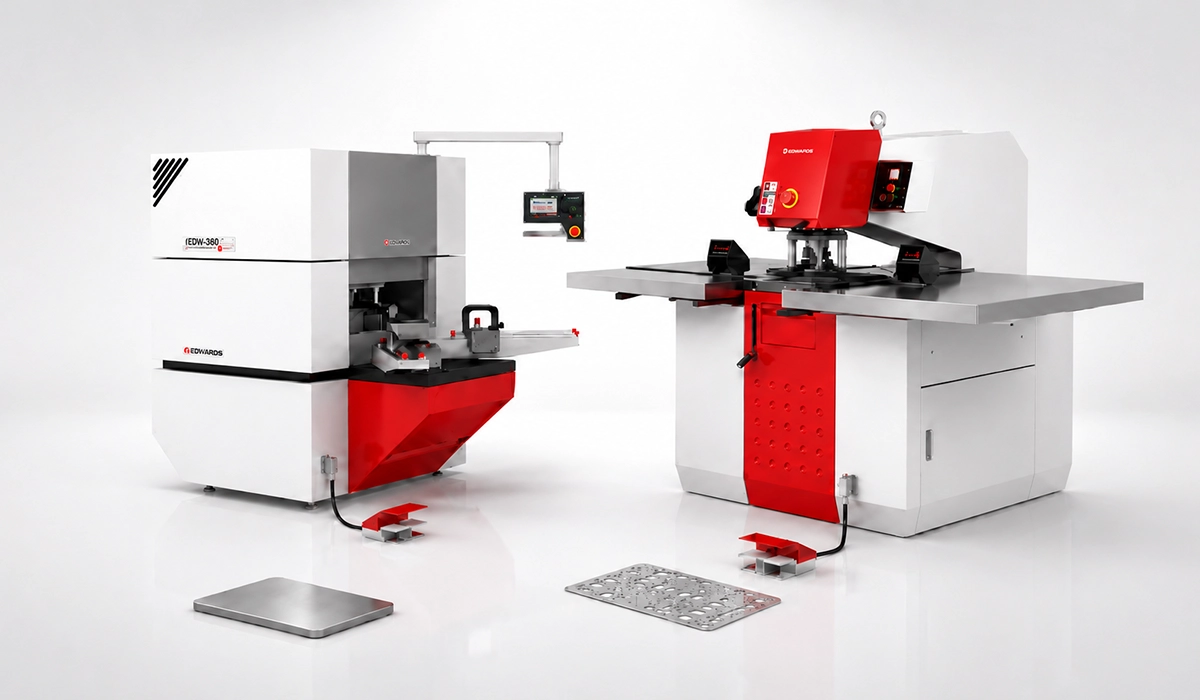
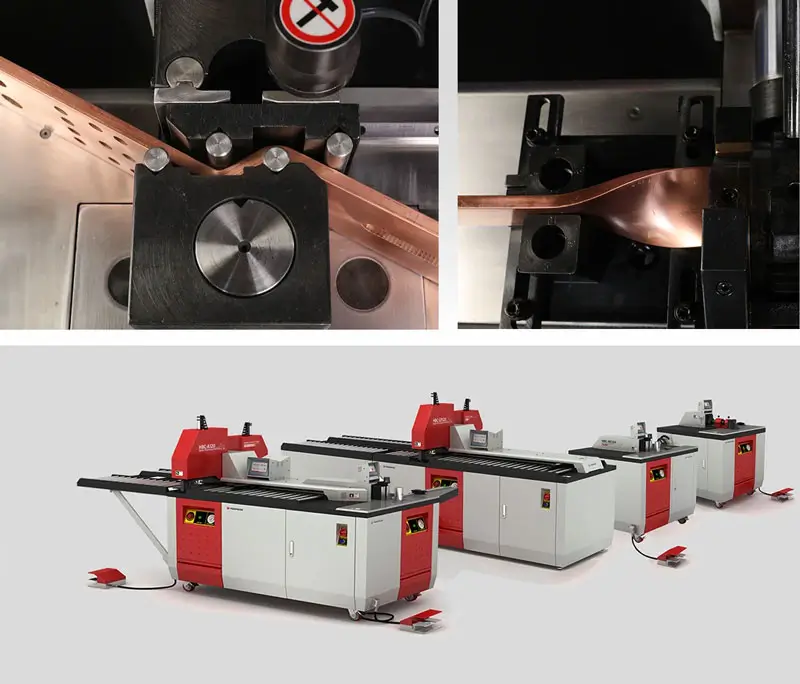
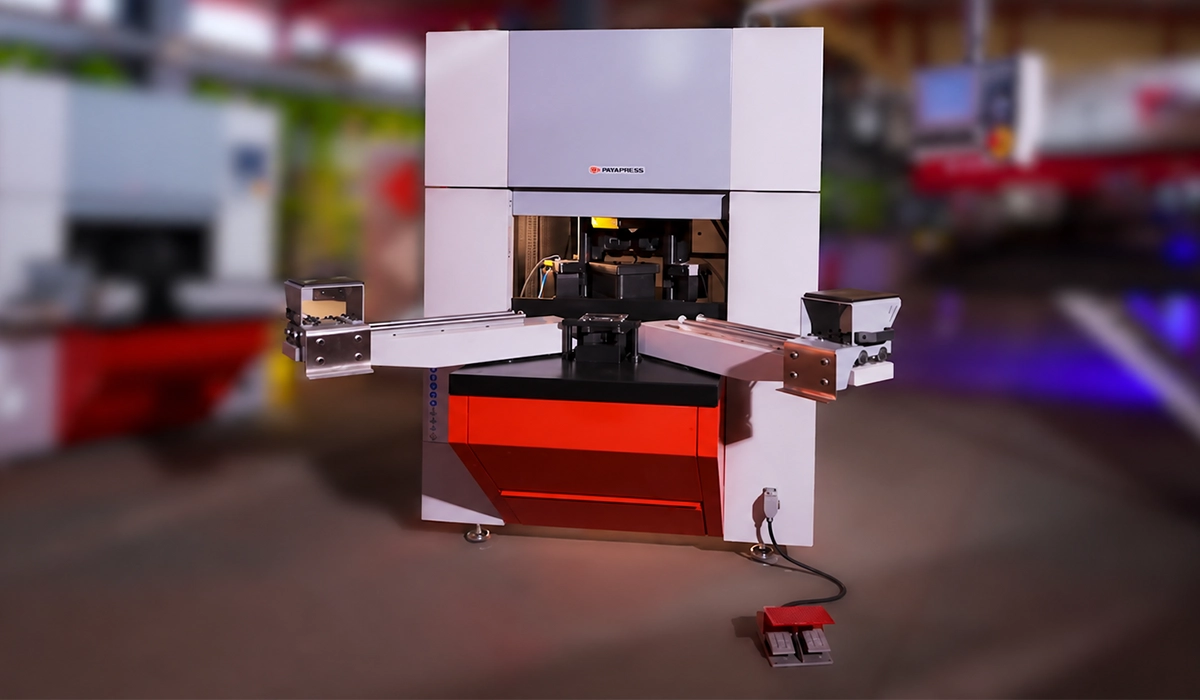
At PAYAPRESS, critical fabrication machines including busbar punching and bending equipment are maintained under a condition-monitoring program — ensuring that production commitments for IEC 61439-compliant switchgear components are not disrupted by unplanned machine failure.
| Step | What You Do | Output | Common Mistake |
|---|---|---|---|
| Criticality Ranking | Rank Machines by Production Impact if They Stop | Prioritised Machine List | Treating Every Machine as Equal |
| Failure Mode Analysis | Map Credible Failure Modes per Critical Machine | Failure Mode Register | Buying Sensors Before This Step |
| Technique Selection | Match a Monitoring Method to Each Failure Mode | Monitoring Plan per Machine | One Technique Applied to Everything |
| Baseline Measurement | Record the Signature of a Healthy Machine | Reference Dataset | Baselining a Machine Already Faulty |
| Alert Thresholds | Set Documented Deviation Limits from Baseline | Agreed Trigger Values | Arbitrary Limits, Then False Alarms |
| Response Plan | Define Who Acts, How Fast, with Which Parts | Written Response Procedure | Data Collected but Never Acted On |
FMEA as the Starting Point
Failure Mode and Effects Analysis is a structured review that lists how a machine can fail, what each failure causes, and how likely it is. Skip it and monitoring becomes generic, with thresholds set on instinct rather than evidence. The result is either constant false alarms that the team learns to ignore, or limits so loose that the fault passes underneath them. A punch press illustrates the point. Hydraulic seal wear, guide column wear, die holder fatigue, and motor bearing degradation are four distinct failure modes, and each one calls for a different measurement and a different threshold.
Setting Baselines and Alert Thresholds
A sensor with an arbitrary threshold is worse than no sensor, because it trains the team to distrust the system. Set it too sensitive and alarms fire constantly until everyone ignores them. Set it too loose and the fault runs to failure unreported. The method is straightforward. Take the baseline on a machine known to be healthy, then agree a deviation percentage that triggers inspection, commonly 20–30% for vibration RMS. On a punch press motor with a baseline of 2.4 mm/s, an alert at 3.1 mm/s puts an inspector on the machine while it is still running normally.
Predictive Maintenance for Specific Metalworking Machines
General guidance breaks down at the machine level. A hydraulic punch press fails through its fluid circuit and its guides. A CNC bending machine fails through servo and back-gauge wear. Those are different physical symptoms, so they need different instruments and different intervals. Applying one monitoring approach across the whole shop misses the machine-specific modes that actually cause stoppages, while spending effort on components at low risk. CNC machine predictive maintenance in particular depends on catching servo and positioning drift early, since dimensional quality degrades before the machine stops. That drift shows up in scrap rates well before it shows up in downtime.
| Machine Type | Primary Failure Modes | Recommended Technique | Inspection Interval |
|---|---|---|---|
| Hydraulic Punch Press | Seal Wear, Pressure Loss, Guide Wear | Oil Analysis + Vibration | Monthly |
| CNC Bending Machine | Servo Motor Wear, Back-Gauge Wear | Vibration + Thermal | Monthly |
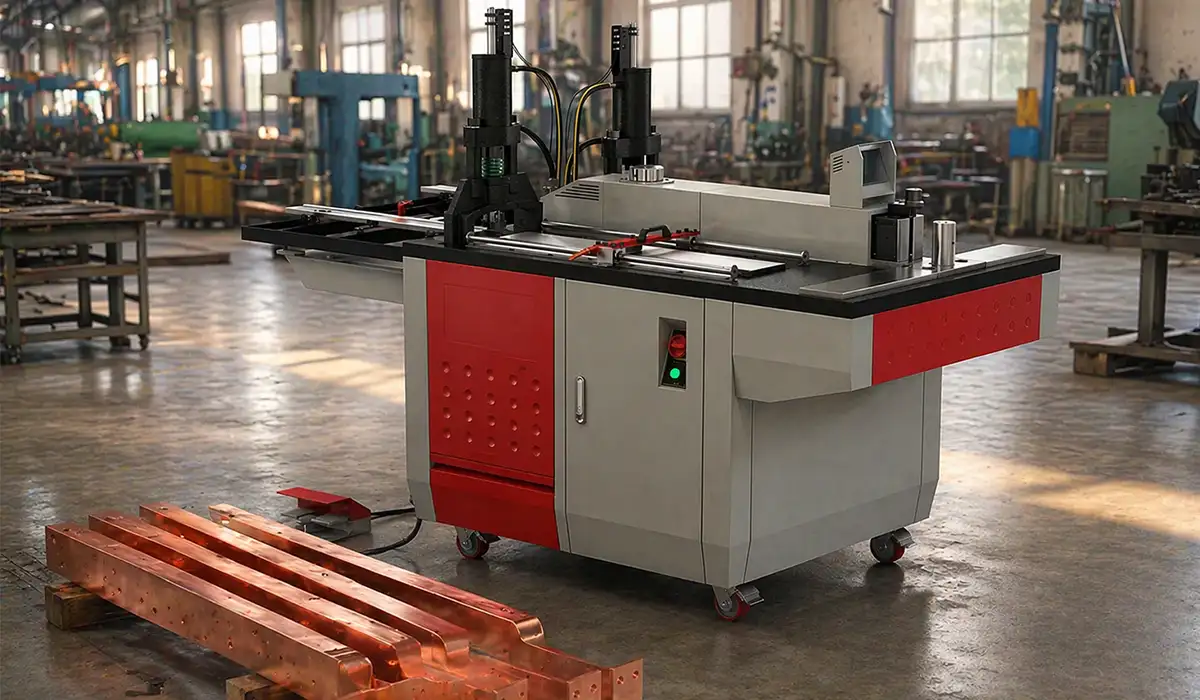
| Busbar Punching Machine | Die Holder Fatigue, Hydraulic Seal, Pump | Oil Analysis + Thermal | Monthly / per 10k Cycles |
| Band Saw / Cutting Machine | Blade Tension, Bearing Wear, Motor Heat | Vibration + Thermal | Bi-Monthly |
| Air Compressor | Valve Wear, Bearing Fault, Overheating | Vibration + Thermal + Acoustic | Monthly |
Treat these intervals as a starting position rather than a fixed rule. Machine age and fault history should both pull the interval in. A press in its second decade, or one that has produced two faults in eighteen months, earns a shorter cycle than the table suggests. A machine with a clean record over several years can move the other way. Reviewing intervals annually against recorded faults keeps the effort proportional to the risk and protects metalworking equipment reliability where it matters most. A maintenance strategy for fabrication shops that never revisits its own intervals drifts out of step with the equipment it is meant to protect.
Conclusion about Predictive Maintenance for Metalworking
Most fabrication shops run reactive maintenance until one breakdown makes the case for them. That is an expensive way to learn it. The cost of a single unplanned failure on a critical machine usually exceeds a full year of condition monitoring on the same asset. The change in thinking is smaller than the technology suggests. Predictive maintenance for metalworking machines is a maintenance discipline before it is a sensor purchase. It begins with ranking machines by what their failure would cost, not by what monitoring them would cost. Shops that get the sequence right find the hardware decisions largely make themselves. PAYAPRESS integrates condition-based maintenance into its fabrication workflow — supporting consistent dimensional quality and on-time delivery for busbar and switchgear component orders.



Rate this article
Choose a rating from 1 to 5 stars.
No ratings yet