



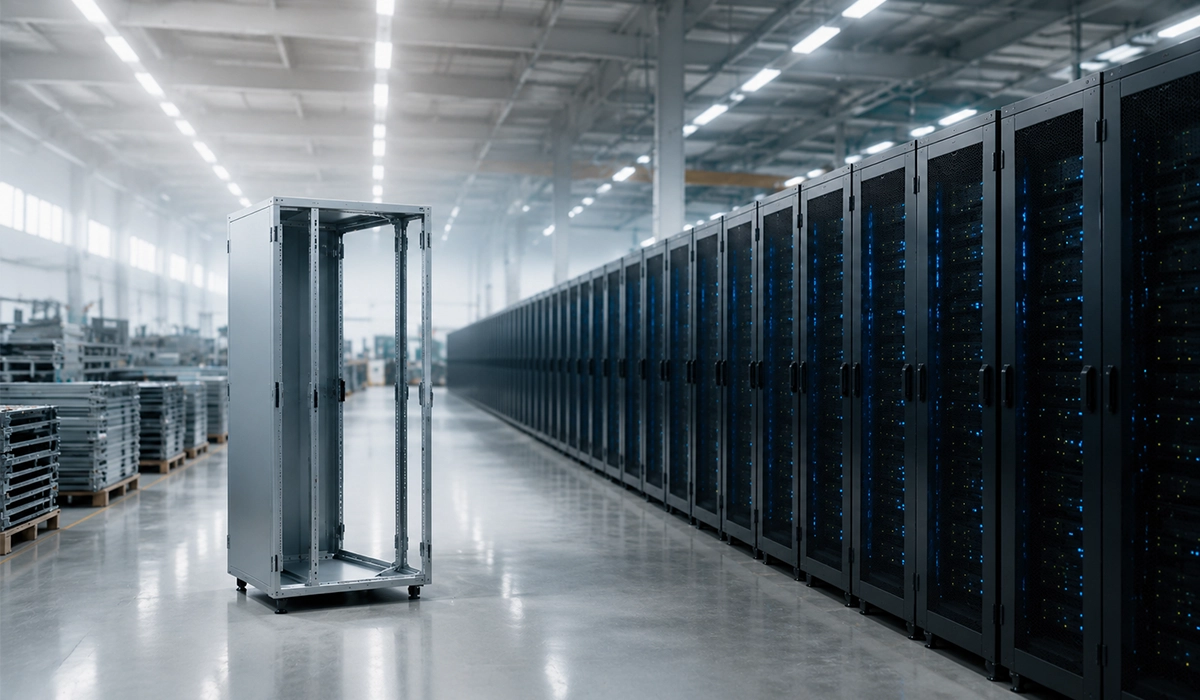

What makes an AI cabinet different from a 2015 server rack
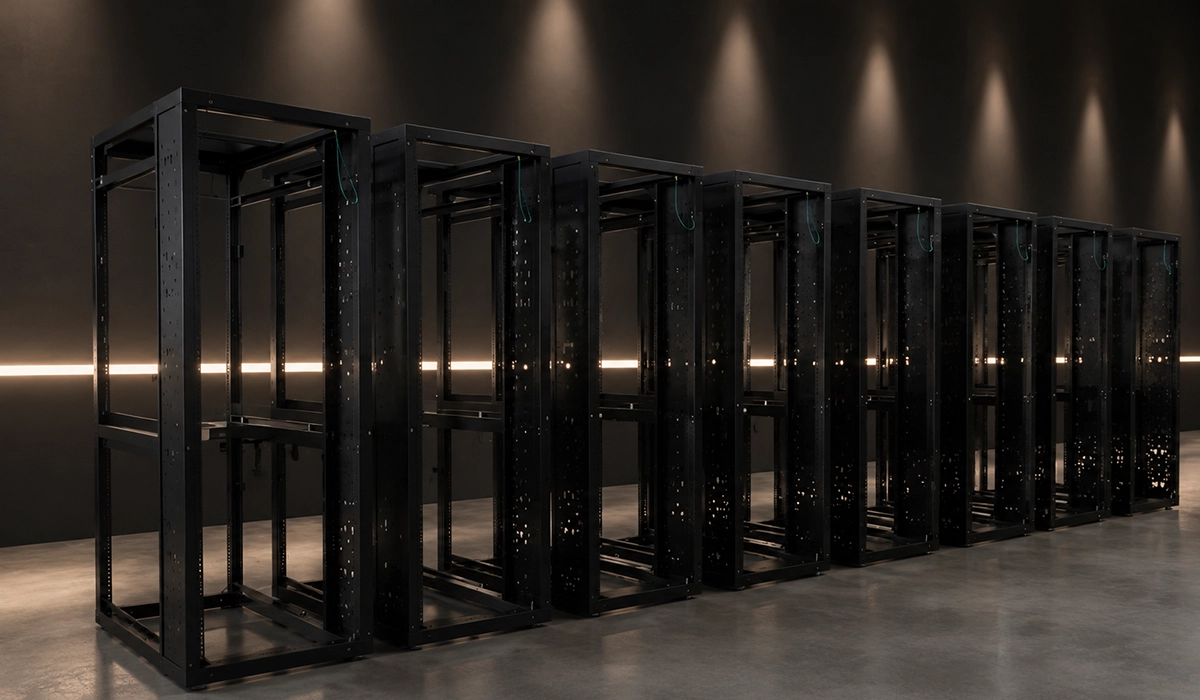
The 19-inch footprint has barely moved in a decade. Almost everything else inside the enclosure has, and four changes account for most of it.
Understanding these shifts starts with knowing how modern panels are actually shaped and modified. The what is cold forming process explains why manufacturers are moving away from heat-based methods for these exact reasons.
Density and airflow
More kilowatts per rack means more air through the same panel area. Perforation pattern, open-area percentage and hole geometry stop being cosmetic and become engineering decisions with a number attached. Suppliers in this market now compete on how many perforation patterns they can offer, which tells you where the pressure is. Open area and structural strength pull against each other on the same panel.
Readers who want to understand the reasoning behind this will find this detailed article very useful.
Getting perforation patterns right at volume depends on the tooling behind the machine, not just the press itself. Choosing the correct punching machine tooling is what keeps open-area accuracy consistent across thousands of panels.
Liquid cooling changes the frame
Direct-to-chip liquid cooling is now standard at the high end, and it arrives as sheet metal work. Manifold cutouts. Drip management. Leak-detection cable routing. Sealed pass-throughs that have to hold their seal after transport. None of these existed on a 2015 cabinet drawing, and all of them are features somebody has to punch, form and tolerance.
For anyone who wants to review this later without an internet connection, the offline version is available to download.
Manifold cutouts and sealed pass-throughs are sheet metal operations before they are cooling features. Doing this reliably at volume is largely a matter of punching and shearing precision rather than manual fabrication.
Busbars instead of cables
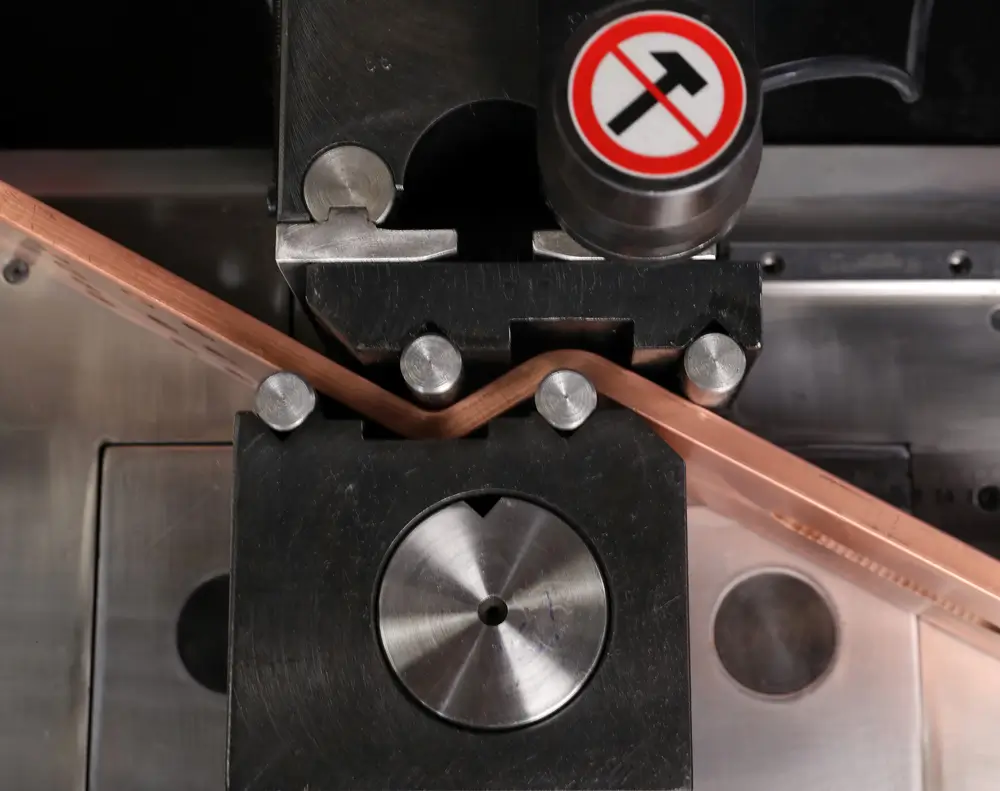
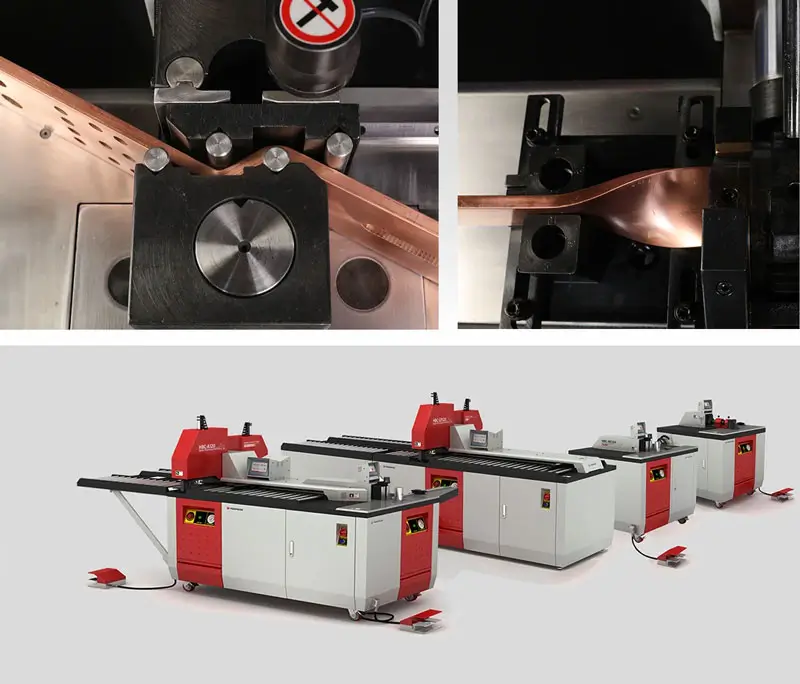
A data center busbar replaces cabling because operators can tap off or reconfigure power without pulling a new hundred-metre run. AC-to-DC conversion is moving to the cabinet as well, through rack-level power shelves. For the fabricator that means more copper work and more precise tap-off apertures. The busbar systems for data centers article covers the power side properly.
Copper processing at this volume puts real strain on shop-floor equipment over a long production run. Keeping output consistent depends on how well the metalworking machines behind the process are maintained.
Weight and structure
Racks now ship fully pre-populated, and they have to survive the lorry at weights above 10,000 lbs. Frame stiffness, corner strength and joint quality move from desirable to contractual. A corner that opens in transit is not a cosmetic problem at that weight — it is a rejected delivery, and often a damaged payload with it.
Corner integrity is where transport-loaded weight actually gets tested. Machines built for corner and angle notching are what let a frame hold that stiffness without a welded joint.
Four fabrication jobs behind every cabinet
Strip away the specification and server rack fabrication comes down to four operations repeated at volume. Data center server rack manufacturing is these four jobs, multiplied.
Each of these four jobs is really a machine decision, not just a process decision. A closer look at the corner forming machine guide shows how one piece of equipment covers most of the second job on its own.
1. Punching the airflow
Ventilation openings and louvers are the highest-repetition operation on the whole cabinet.
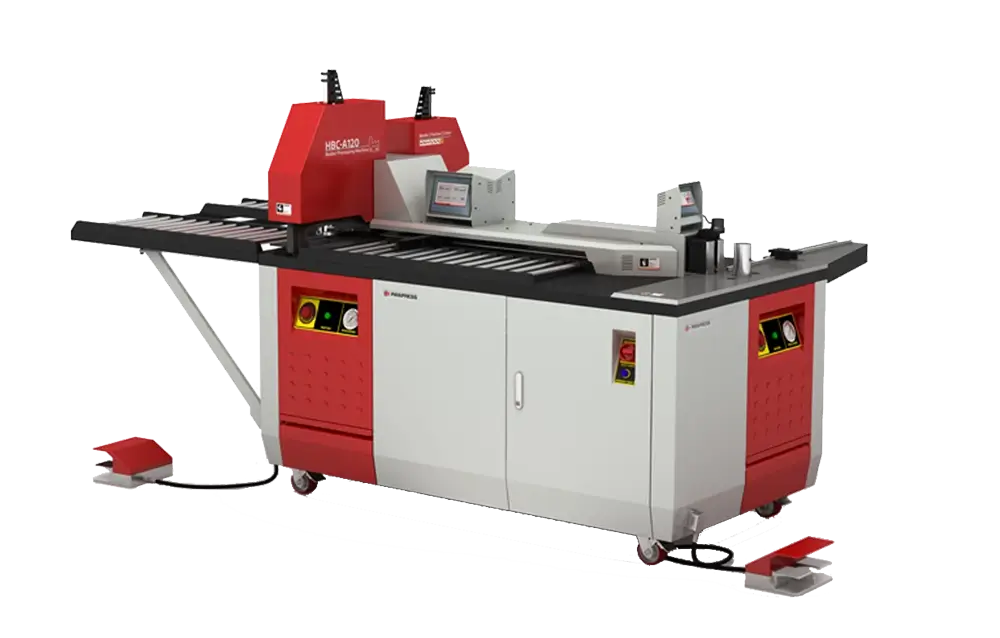
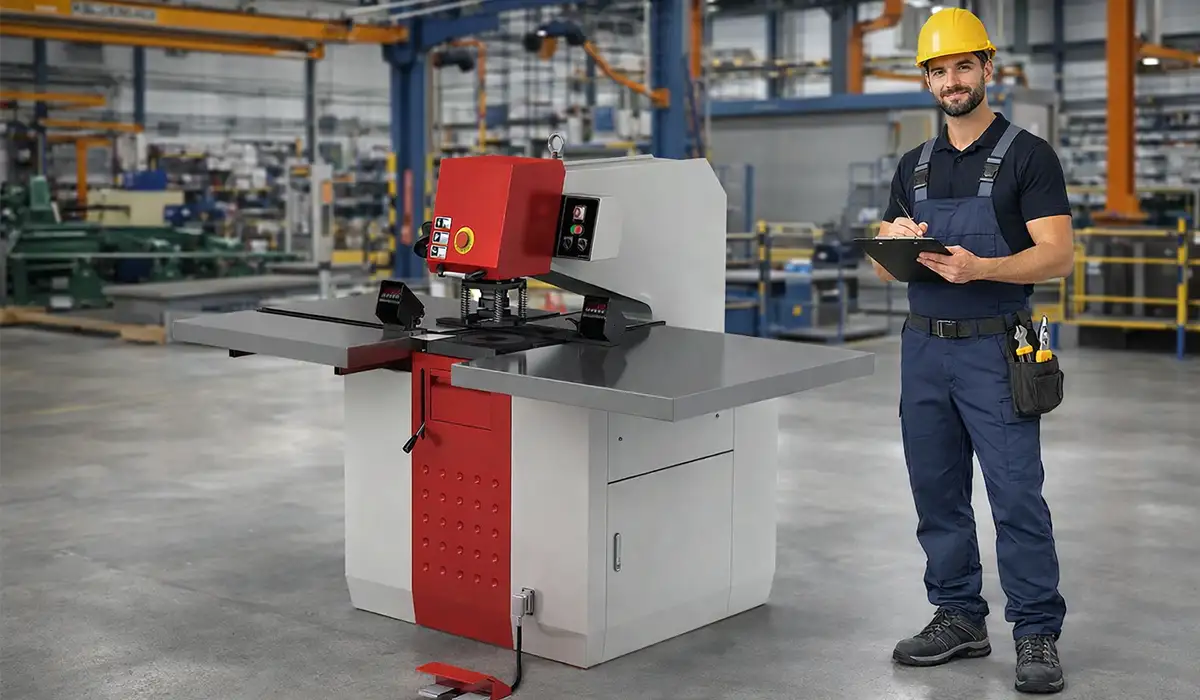
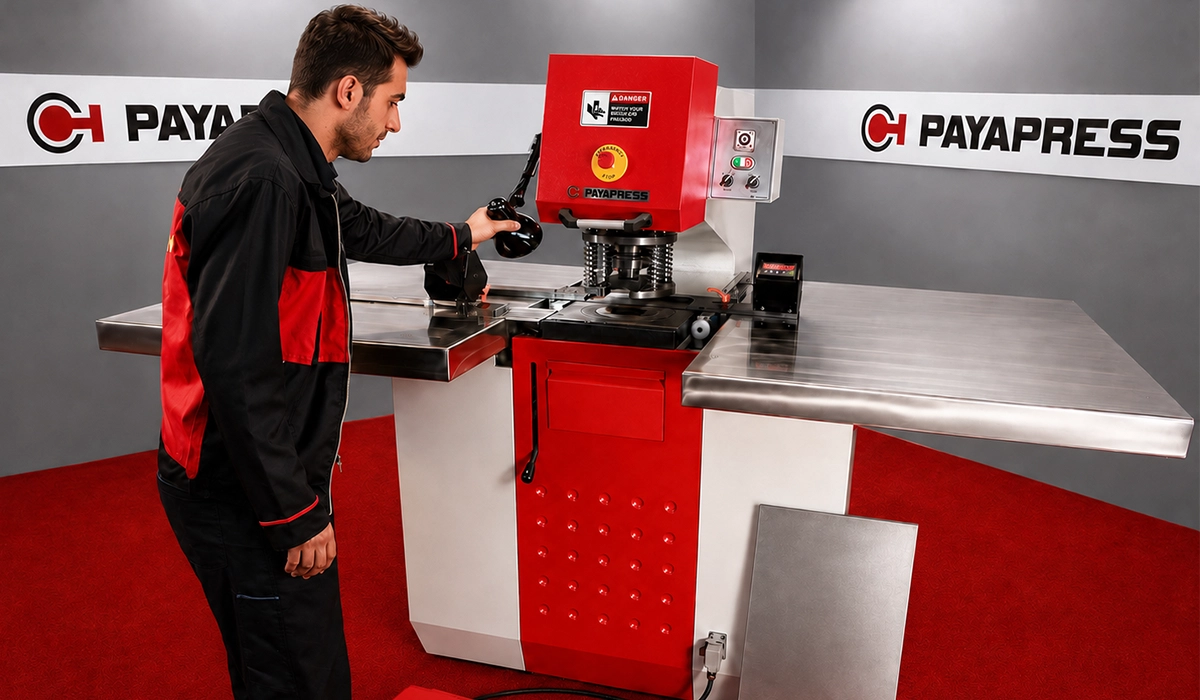
Forming embossed louvers without heat is the practical advantage: no burning, no discolouration, no surface deformation across the panel. Powder-coated panels can also be modified without damaging the coating around the new opening, which matters for late design changes and retrofit work. A sheet metal punching machine in the HPM-63S range handles steel up to 2 mm, with round, square, rectangular and louvre dies.
This is the highest-repetition job on the cabinet, so die flexibility matters as much as speed. A punching and notching machine built for late design changes avoids the coating damage described above.
2. Forming the corners
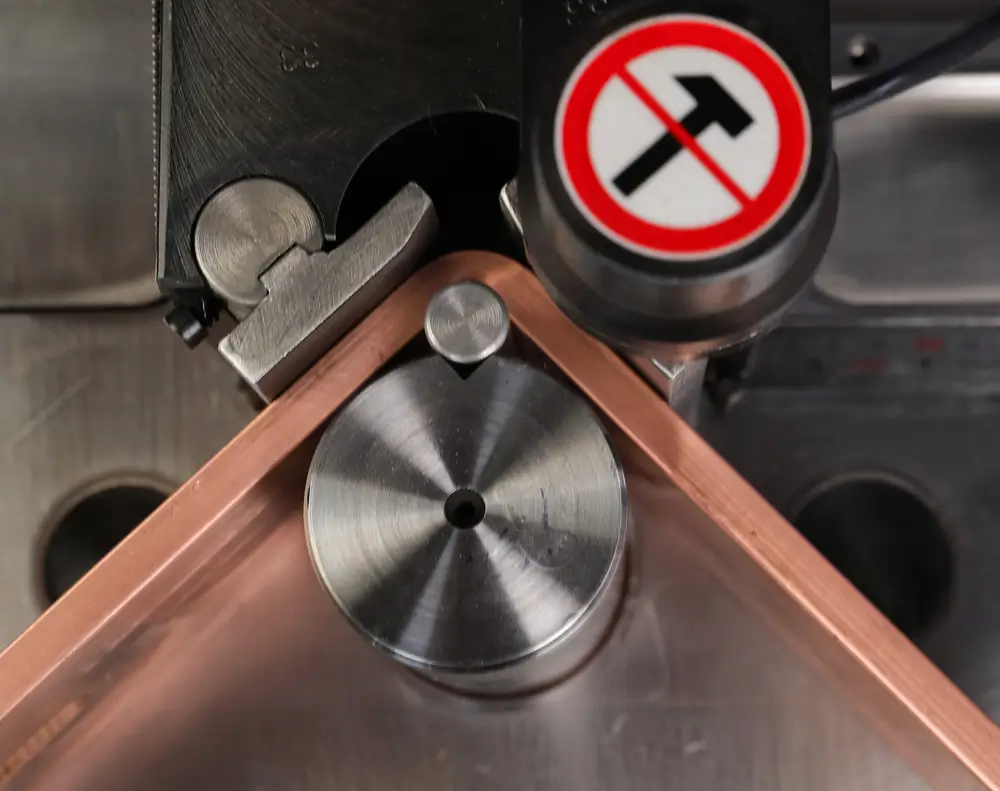
A welded cabinet corner needs welding, grinding, polishing and coating repair. A cold-formed corner needs none of them.
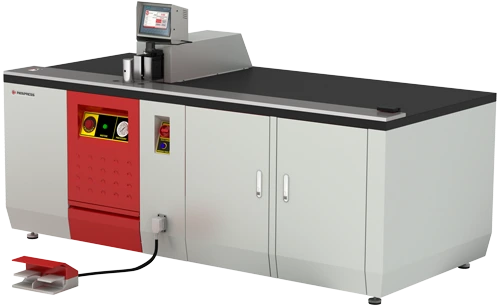
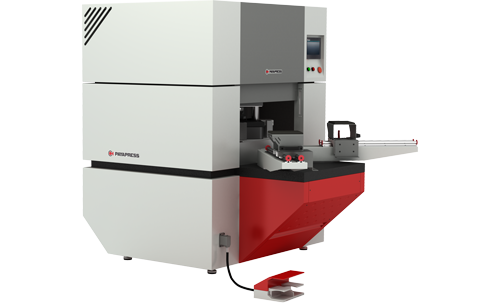
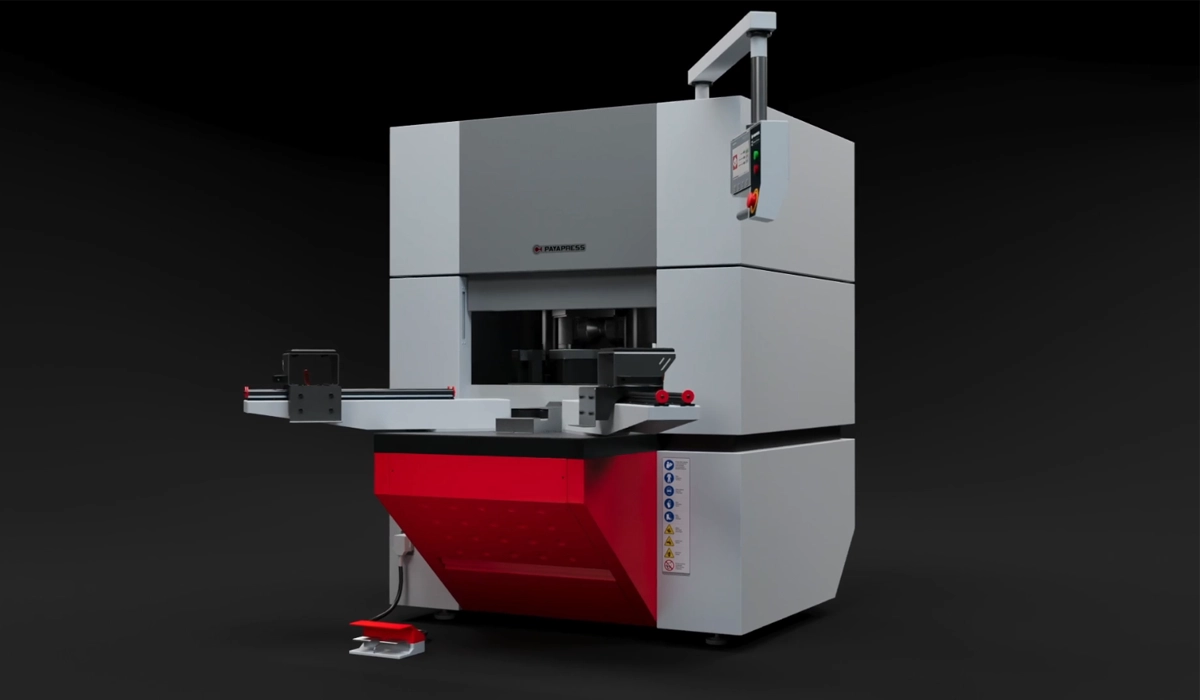
That is four operations removed per corner. Multiply by four corners per panel, then by a run in the thousands. It is the single largest labour saving available anywhere in the build. Consistency is the second prize. Identical corner geometry from a corner forming machine makes an IP rating repeatable across a whole batch, not just true of the sample you sent.
Cabinet doors carry the same corner-quality requirement as the frame itself. The coldform corner machine approach applies the same logic to doors as it does to the main enclosure.
3. Processing the busbars
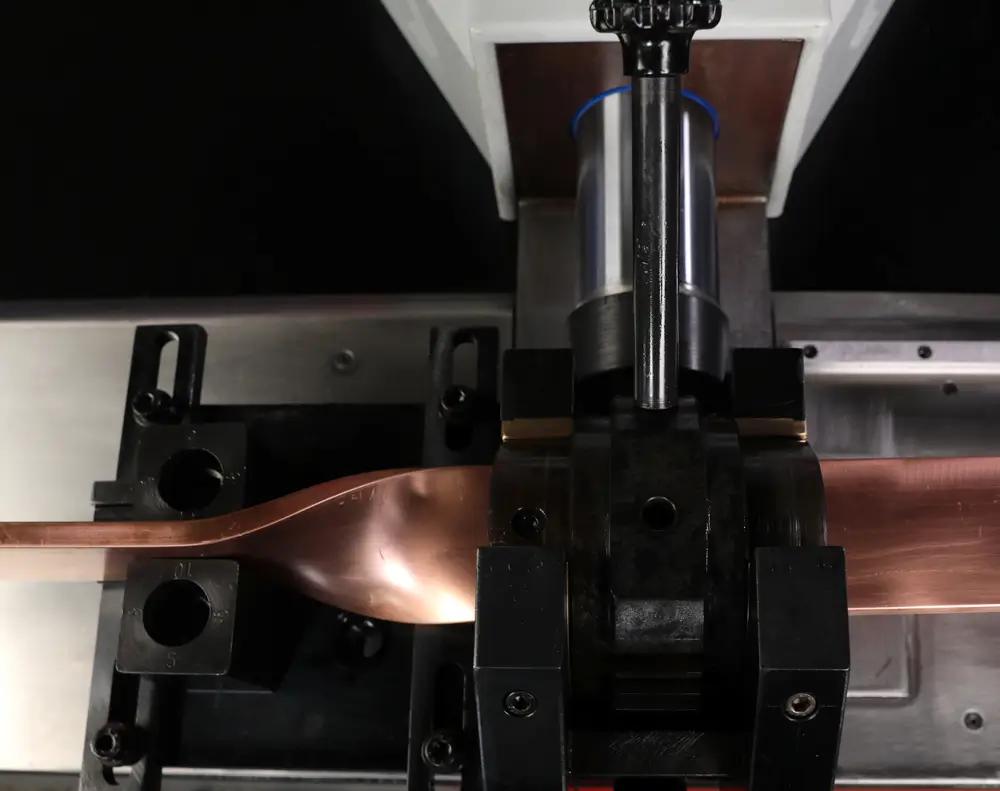
The copper volumes are the part that surprises people. NVIDIA states that running 54 VDC into a single 1 MW rack requires up to 200 kg of copper busbar. Across one 1 GW data center, rack busbars alone could total around 200,000 kg of copper.
All of that copper is cut, punched and bent to drawing before it reaches a rack. That is conventional busbar work at unconventional volume, and the linked busbar article covers the specifics.
Copper at this volume is not a side cost; it is close to the size of a second fabrication line. Understanding the wider picture, including the corner forming machines that share the shop floor with busbar processing, helps when pricing the full contract.
4. Doing it identically, ten thousand times
The engineering challenge is not making one cabinet. It is making unit 1 and unit 4,000 measure the same.
Batch variation enters through operator-dependent operations. Manual welding, hand grinding and hand finishing all depend on who is holding the tool, how experienced they are, and how far into the shift. Machine-set operations do not vary that way, and repeatability across a batch is exactly what a hyperscale customer’s incoming inspection is testing for.
Repeatability is ultimately a question of which supplier’s equipment you are running, not just which process you chose. Comparing corner former manufacturers on this basis is a better filter than comparing quoted prices alone.
Where fabricators lose money on rack orders
Five losses, all avoidable, none of them visible on the quote that won the job.
Finishing labour that was never quoted. Welded corners look cheap on the estimate and expensive on the floor, because the grinding and polishing hours land after the price is agreed.
Rework on coated panels. Heat near a coated surface means touch-up work, and no customer pays for touch-up.
Changeover time. Mixed cabinet sizes in one order destroy throughput when every size change needs manual re-setting. Four variants means four setups, every time the schedule rotates.
Scrap on late design changes. Cooling and power layouts move during a data center project, and they move late. Panels that cannot be modified after coating become scrap rather than revisions, and the cost lands on the fabricator rather than the customer who changed the drawing.
Inconsistent seal geometry. One out-of-tolerance corner can fail an IP test for an entire delivery, and server rack manufacturing companies working at hyperscale volumes carry that risk on every batch.
Each of those traces back to a specific operation above: corner method, punching flexibility, setup approach, and dimensional repeatability. None of them is a pricing problem. They are all process problems that arrive disguised as pricing problems.
Most of these five losses trace back to a setup or changeover step that was never accounted for. Faster punching and shearing setup is usually where the mixed-size-order problem gets solved first.
Before you take a data center rack contract
Seven questions. If more than two are unanswered, the order is not yet quotable, and no amount of server rack manufacturing capacity fixes an unquotable order.
| Check | Why it matters |
|---|---|
| Rack standard and dimensions confirmed | 19-inch mounting per IEC 60297 or EIA-310 is assumed, not guaranteed. Confirm it in writing. |
| Enclosure standard named | IEC 62208 covers empty enclosures; IEC 60529 covers the IP rating. Know which one the customer tests against. |
| Sheet thickness and material, all panels | Doors get specified and side panels get assumed. Both carry load. |
| Perforation open-area requirement in writing | With the airflow figure it was derived from, not just a pattern name. |
| Liquid cooling features in or out of scope | And explicitly, who owns leak-path design. |
| Transport-loaded weight the frame must survive | Pre-populated racks exceed 10,000 lbs. Design to the lorry, not the data hall. |
| Change-order process agreed | Data center designs move late. Agree how that is handled before it happens. |
Several of these seven checks map directly back to how the enclosure itself gets formed. The corner forming guide is a useful reference when confirming enclosure and dimension requirements with a customer.
Conclusion about Server Rack Manufacturing
The AI buildout is a sheet metal story before it is a silicon story. Density changed the perforation, cooling changed the frame, and power distribution added copper to a job that used to be steel only. None of that changes what makes a rack contract profitable. It is still repeatability across thousands of units, and it is still decided by which operations depend on an operator’s hand and which do not.
Keeping that repeatability over a multi-year contract depends on the equipment staying in tolerance, not just on the initial machine purchase. A predictive maintenance plan for the shop floor is what keeps unit 4,000 as accurate as unit 1.
FAQs about Server Rack Manufacturing

Rate this article
Choose a rating from 1 to 5 stars.
No ratings yet