



If you’d rather listen than read, feel free to play the audio file below for the rest of this article.
The bottleneck already moved once
Sightline Climate’s read on the data center supply chain is blunt. Against a 16 GW announced pipeline for 2026, only about 5 GW is actually under construction. The firm expects 30–50% of projects planned for the year to be delayed or cancelled. This bottleneck traces back to core sheet metal capacity, which our overview of metal bending machines explains from the fabrication side.
Bloomberg reporting frames it the same way, naming transformers, switchgear and batteries as the constraint rather than capital or chip supply. The money is not the problem. Alphabet, Amazon, Meta and Microsoft are still expected to spend more than $650 billion in 2026.
The numbers behind those data center construction delays are on manufacturer order books. Terrapin Construction Group’s June 2026 figures come from active slot reservations:
| Equipment | Lead time |
|---|---|
| Medium-voltage switchgear, 15 kV class | 52–80 weeks |
| Pad-mount distribution transformers | 40–65 weeks |
| Substation transformers, 5–50 MVA | 75–110 weeks |
| Generator step-up transformers, above 50 MVA | 100–150+ weeks |
Wood Mackenzie’s Q2 2025 survey put standard power transformers at 128 weeks and generator step-up transformers at 143–144 weeks. Its 2026 read on substation transformers runs past 160 weeks. Reuters has reported transformer waits of three to four years, against roughly one year in 2020 and 2021.
That is the transformer shortage in one table. These electrical equipment lead times describe a queue rather than a price, and a queue is not something a bigger budget moves you up.
If this topic is completely new to you, this beginner-friendly guide is a good place to start.
Every one of those lead-time numbers eventually comes down to how fast a shop can turn flat sheet into a finished enclosure. Our overview of the sheet metal fabrication process breaks that down step by step.
Every item on that list is a metal box
Here is the pivot, and it is not a rhetorical one. Read that equipment list again and ask what those things physically are.
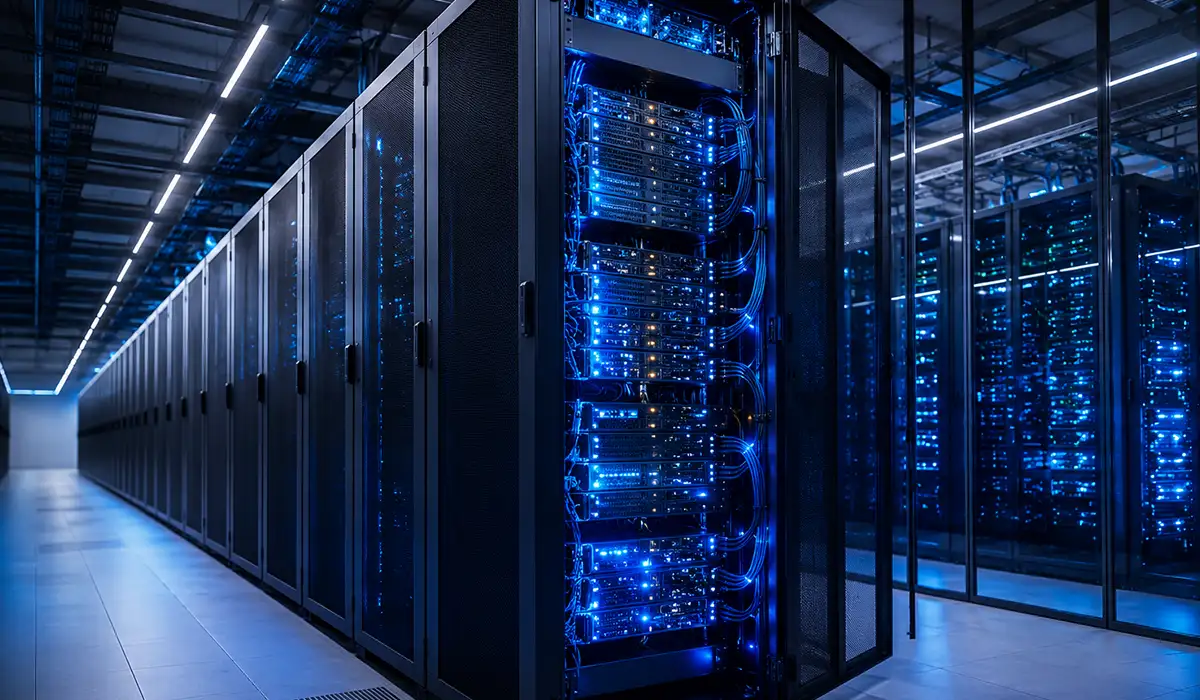
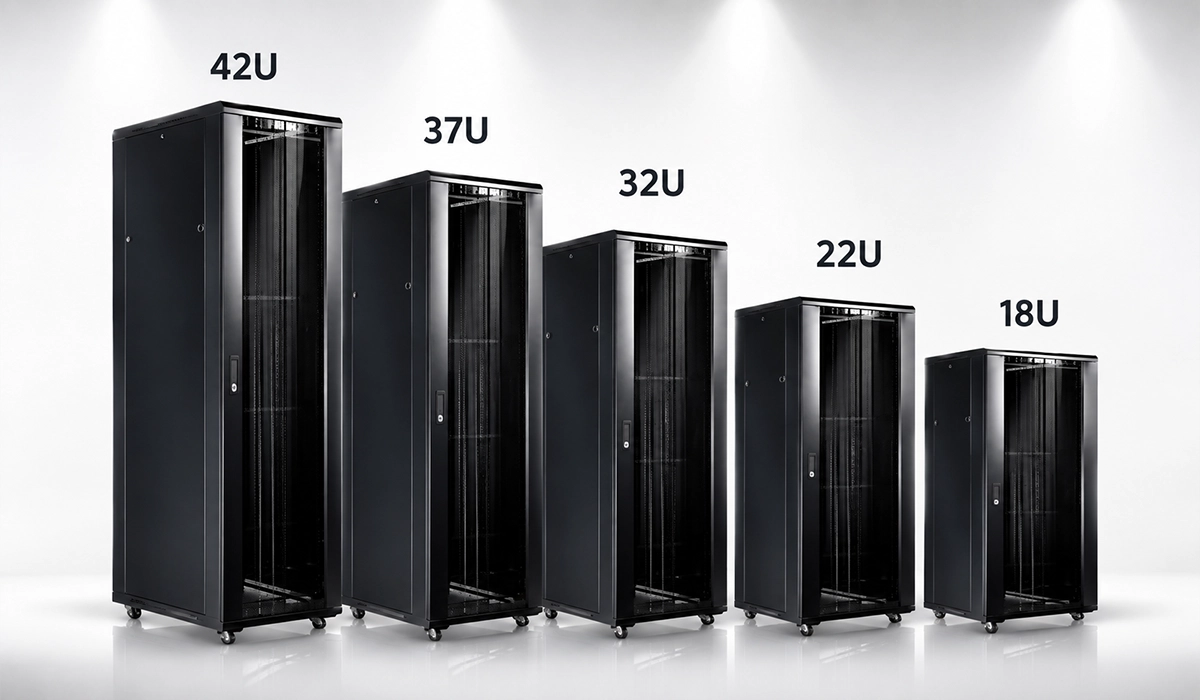
A switchgear cubicle is a folded steel enclosure with copper bar inside it. A UPS cabinet is a folded steel enclosure. A remote power panel is a folded steel enclosure. A busway run is copper in a sheet metal housing. A server cabinet is a folded steel enclosure with perforated doors.
For a clearer and more complete explanation, this page goes into far more depth than we can cover in a short text.
The high-technology content sits inside those boxes. The thing that takes the time is very often the box itself, the copper inside it, and the finishing that has to survive an IP test.
The copper volume is not trivial either. NVIDIA notes that running 54 VDC into a single 1 MW rack can require up to 200 kg of copper busbar. Across one 1 GW data center, rack busbars alone could total around 200,000 kg. Industry analysis presented at Data Centre World London 2026 puts roughly 70% of new projects on busbar systems for data centers rather than end-to-end cabling.
So the electrical equipment shortage is, underneath, a shortage of sheet metal fabrication capacity. That is the data center supply chain problem nobody is naming.
The constraint behind the constraint
The fabrication base cannot simply absorb this demand. The US welder shortage is demographic rather than commercial, which is why money does not fix it.
The American Welding Society estimates the US welding workforce at around 771,000 professionals. More than 157,000 are nearing retirement, and AWS projects 320,500 new welders needed by 2029 just to cover attrition.
A separate AWS projection reported in August 2026 puts the gap at more than 300,000 welding professionals by 2029. An older AWS figure — a shortage of roughly 400,000 by 2024 — still circulates widely, but it has been superseded. Trade school directors interviewed in August described enrolment falling, not rising.
The age curve explains why this will not self-correct. AWS data shows 21% of the US welding workforce is over 55, while only 9.4% is under 25.
Downstream, the sheet metal fabrication industry reports the same squeeze. Sixty percent of shops report shortages in advanced skill sets. Average hourly earnings in fabricated metal manufacturing reached $27.94 in January 2026. Lead times at mid-size fabricators have moved from one to two weeks before 2022 to three to six weeks now.
The shortage is not only welders, either. Shops are short of CNC machinists too, which closes off the obvious workaround of automating around the welding bay.
You cannot solve a five-year transformer queue by hiring welders who do not exist.
For anyone who wants to go deeper, this further reading provides a much wider view.
Cold forming is one of the few processes that sidesteps this labor gap directly, since it needs no certified welder at all. Our explainer on which sheet metals can be cold-formed covers what qualifies.
Why welding is the choke point inside the shop
Follow a single enclosure corner through a traditional shop and the hours become visible. This is where the labour shortage actually bites, and it is oddly specific.
Cut. Bend. Weld the seam. Grind the weld flat. Polish the surface. Repair the coating the heat destroyed. Six operations, and four of them are skill-dependent and hand-paced.
That is worse than it sounds at volume. A cabinet has many corners and an order has many cabinets. Every one of those corners is finished by a person whose skill varies by experience and by hour of the shift.
The second-order costs follow. Batch variation. Failed IP seal tests. Rework on powder-coated panels. And quotes that were priced on material when the real cost was finishing labour, which is a mistake that only shows up after the order is won.
Consistency here is contractual, not cosmetic. Welded construction brings welder qualification under ISO 9606-1 and welding quality requirements under ISO 3834 with it. The enclosure itself is tested against IEC 62208 for empty enclosures and IEC 60529 for its IP rating. A corner forming machine changes which of those apply.
And the mechanical bar keeps rising. Racks are now specified to survive transport fully populated at weights above 10,000 lbs, which makes corner strength a delivery condition rather than a finish detail.
What actually removes the bottleneck
The principle first: when the scarce input is skilled hands, the fix is not hiring. It is removing the operations that require them.
That divergence is already measurable. Automated shops are broadly maintaining or improving lead times despite the labour shortage, while manual shops are seeing three to six weeks on complex orders.
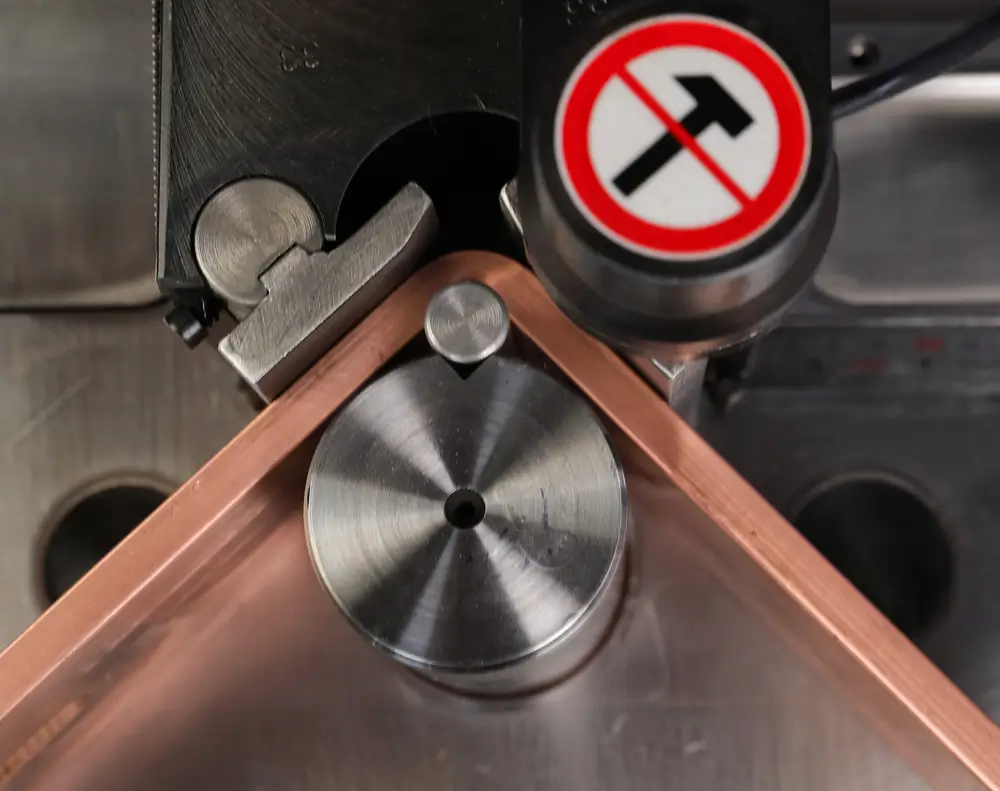
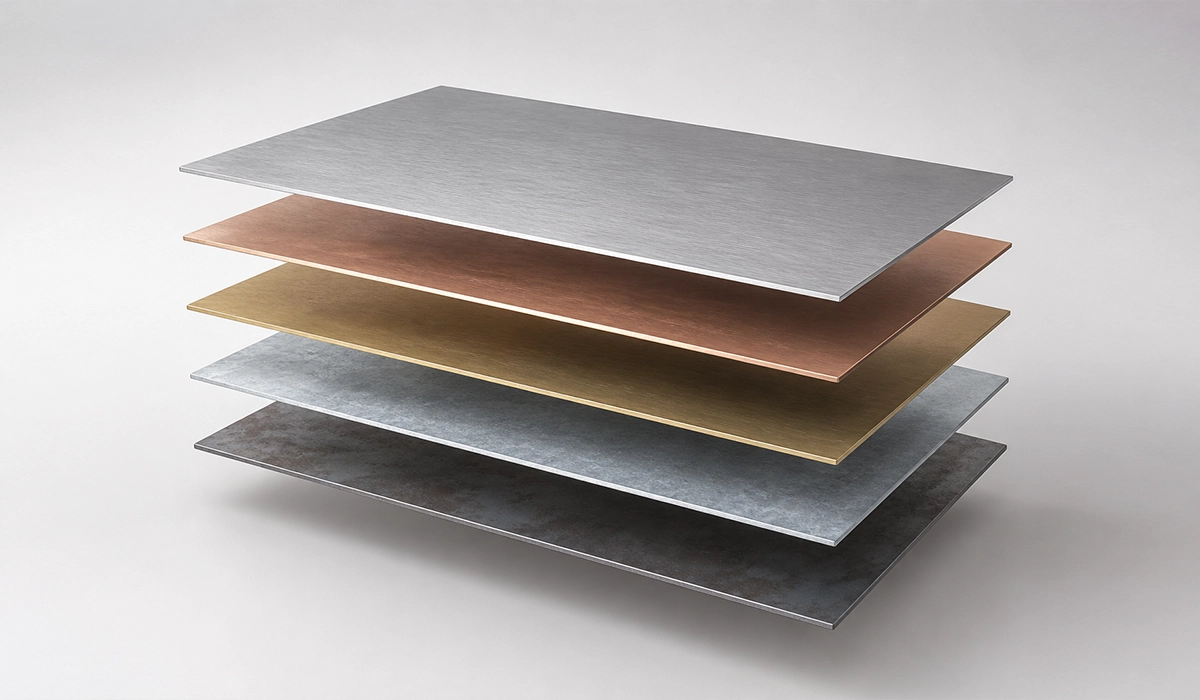
Cold corner forming instead of welded corners. A corner formed under pressure rather than heat deletes welding, grinding, polishing and coating repair. Four skill-dependent operations become one machine-set operation, and corner number one measures the same as corner number four thousand. PAYAPRESS builds the CFCM-30EH with manual adjustment and the CFCM-30ES with a digital angle indicator and elastic return compensation, covering 0.5–2 mm sheet in mild steel, stainless, aluminium and copper.
Punching instead of manual notching and cutting. Ventilation openings and embossed louvers formed without heat mean no burning, no discolouration and no deformation. Powder-coated panels can also be modified without damaging the surrounding coating, which matters because data center cooling layouts change late. The HPM-63S handles steel up to 2 mm.
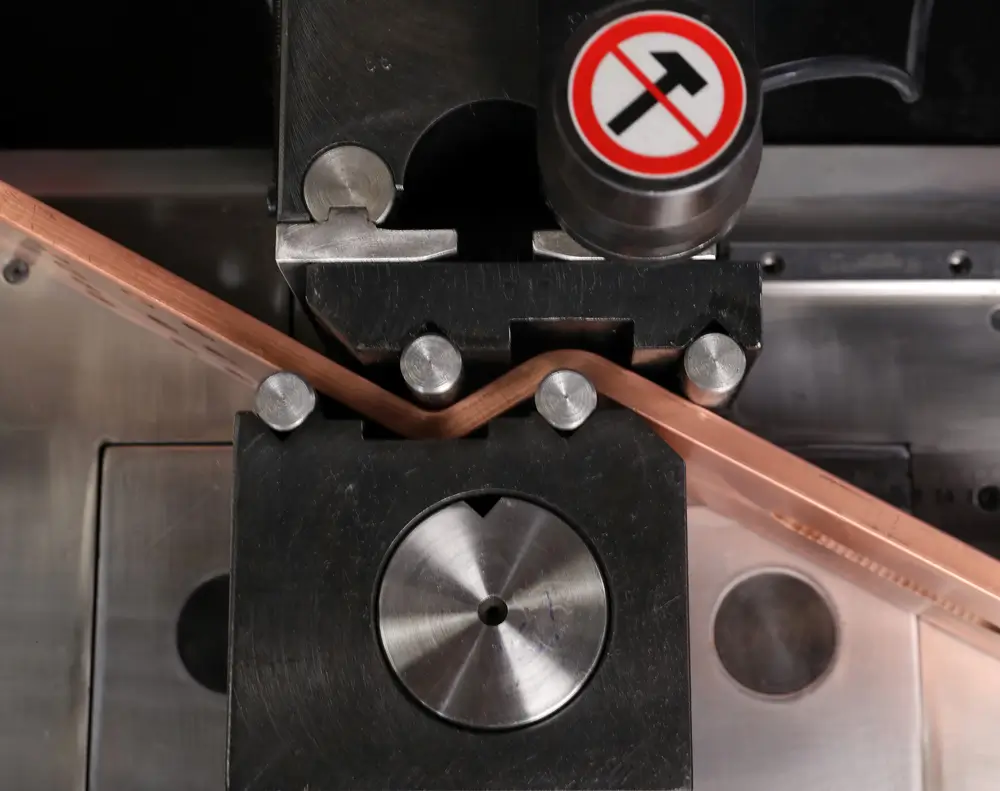
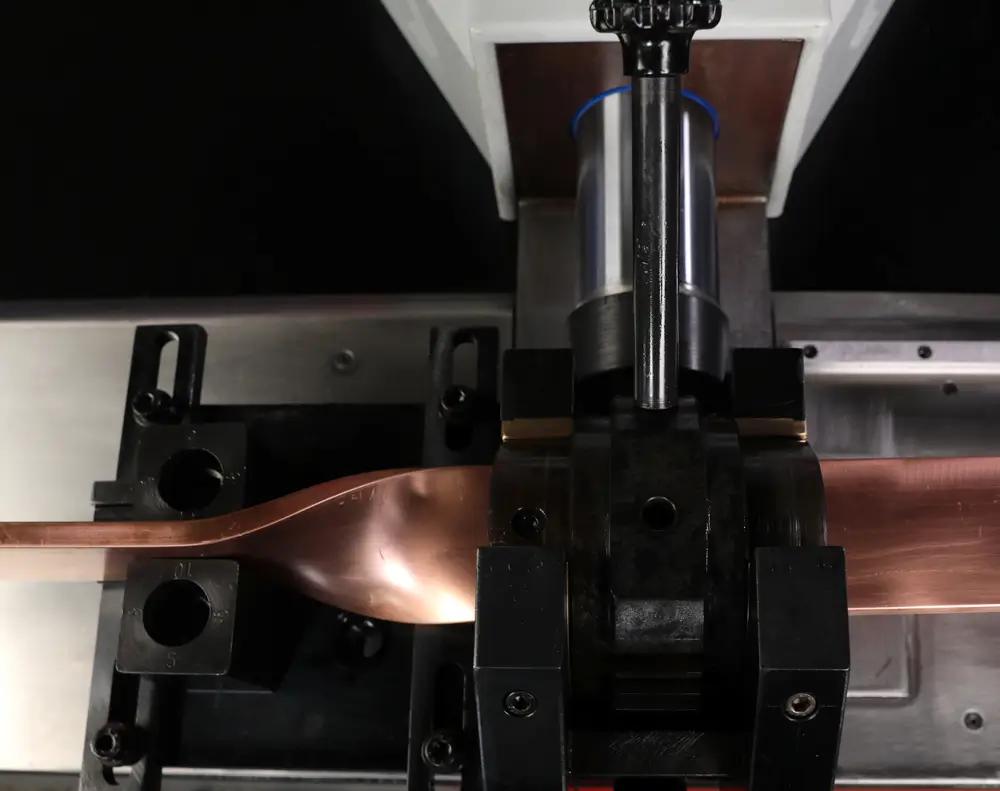
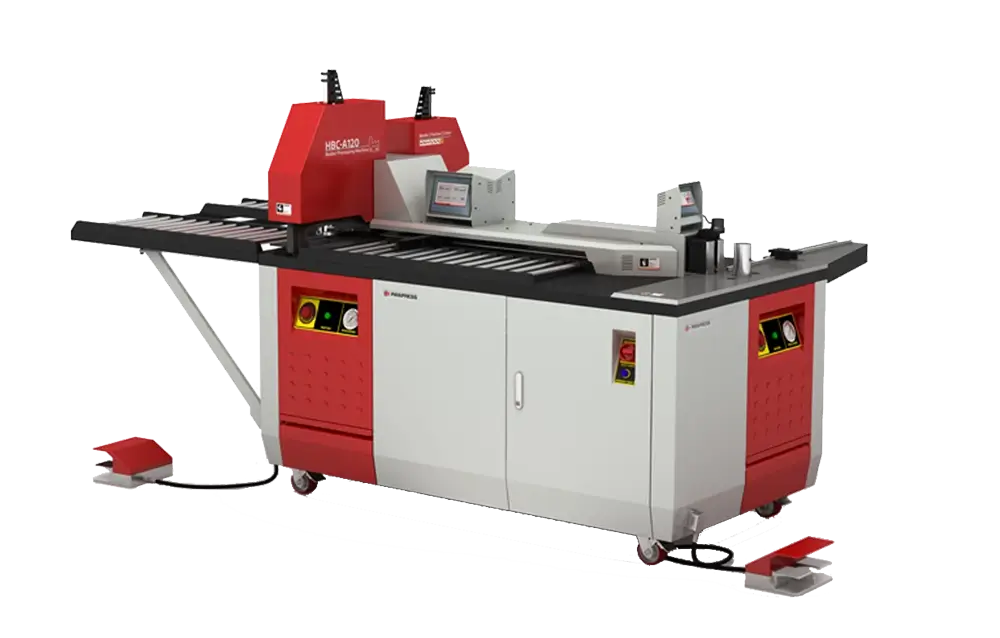
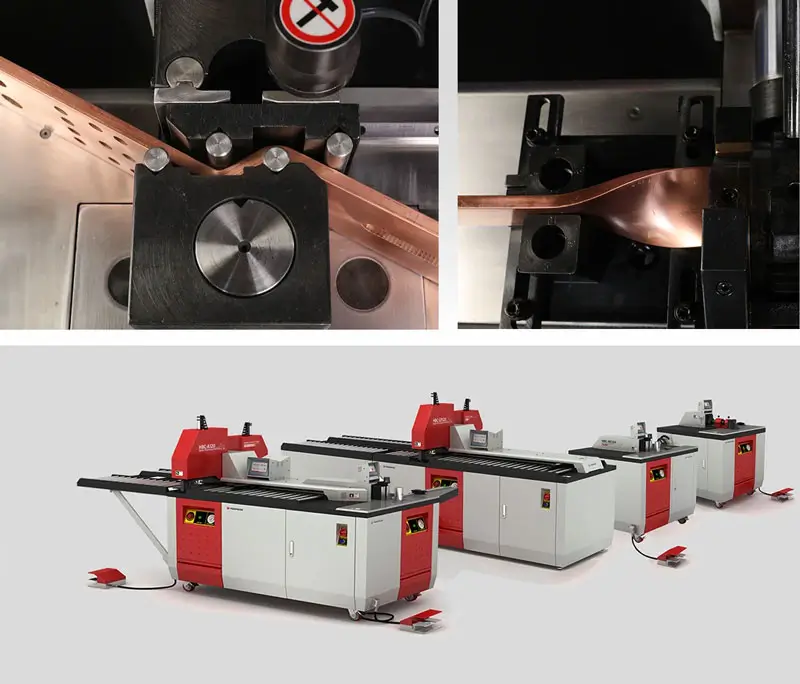
CNC busbar processing instead of manual copper work. Copper is cut, punched and bent to drawing on one busbar processing machine. The program comes from the electrical drawings rather than a hand-marked bar.
None of this shortens a transformer queue. It shortens everything downstream of it, and downstream is where most of the enclosure work actually sits in the data center supply chain.
If you want a broader picture of how this fits into the wider context, this useful reference is a good next step.
What to watch next
Three signals worth tracking, so this stays useful after the news cycle moves on to the next shortage.
Watch whether switchgear lead times keep improving on paper while data-center-specification gear stays slow. The reported average sits near 44 weeks. But standard switchboards run near 52 weeks, power circuit breaker switchboards past 84 weeks, and medium-voltage gear for data center specs approaches two to three years.
Watch for the same distortion in transformer reporting. Any headline average mixes small pole-top distribution units with the padmount and substation classes a hyperscale campus actually needs, and those sit in the 75–110 week band and beyond.
And watch cabinet-level architecture keep moving, as AC-to-DC conversion shifts into the cabinet and direct-to-chip liquid cooling becomes standard. Every one of those shifts is a new set of sheet metal features that somebody has to punch, form and hold to tolerance.
Cabinet architecture shifts like this are exactly why rack fabrication itself is under so much pressure right now. Our guide to server rack manufacturing covers what that involves.
Conclusion about Sheet Metal in AI center
The AI story is told in gigawatts and GPU generations. For the next few years it will be delivered at the speed of press brakes, punching machines and copper lines.
That is not a smaller story. It is the same story, told from the floor of the shop that actually makes the box. It is also the part of the chain with the most room left to move.
If you build enclosures or switchgear, send a cabinet drawing, sheet thickness and monthly volume, and we will come back with a machine recommendation for the operations that repeat.
Getting that enclosure right starts well before the machine floor, with decisions about material, ventilation and IP rating. Our guide to sheet metal enclosure design covers that groundwork.


Rate this article
Choose a rating from 1 to 5 stars.
No ratings yet