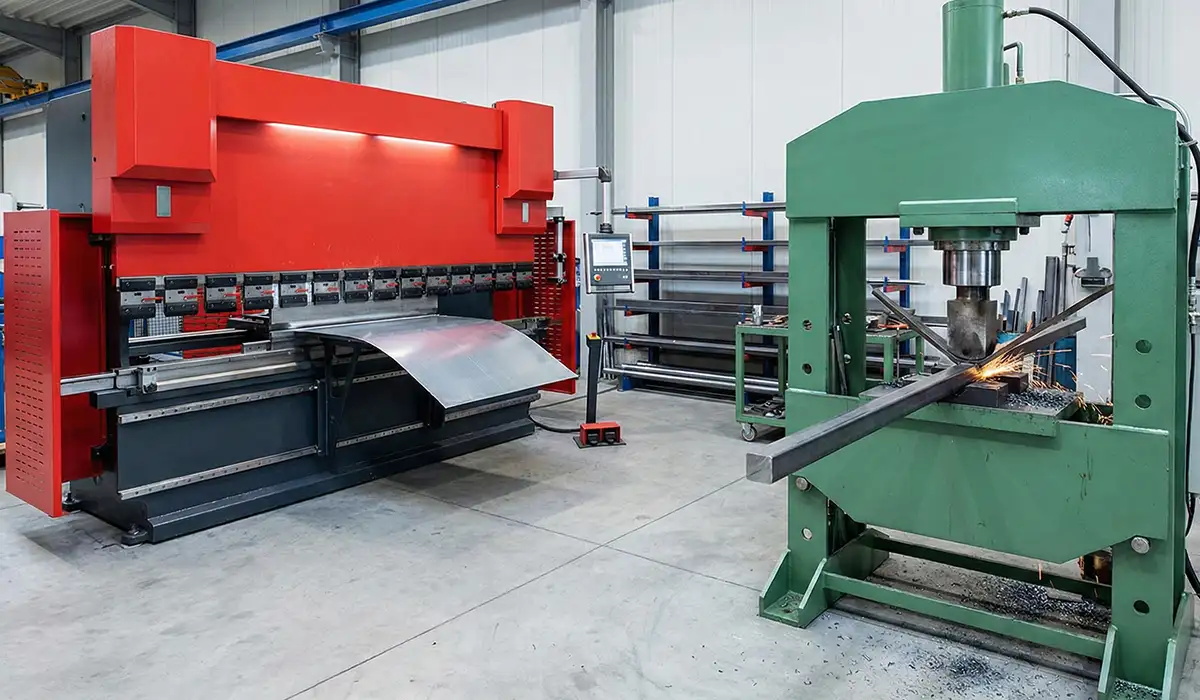
In the metal fabrication industry, precision and efficiency are paramount. Choosing the right metal bending equipment can mean the difference between a profitable production run and costly material waste. While the terms are often used interchangeably by novices, a bending press and a press brake are distinct machines with different capabilities, tonnage ranges, and ideal applications. This guide breaks down the technical differences to help you select the right machine for your workshop.
What is a Press Brake?
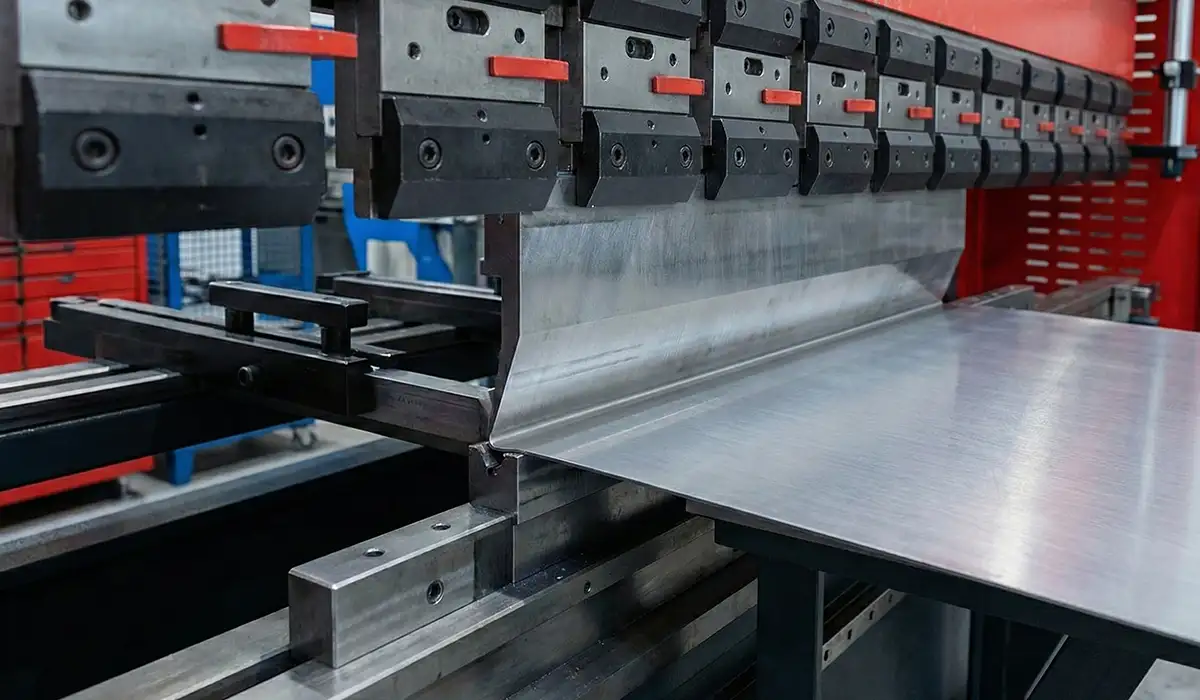
A press brake machine is a specialized fabrication tool designed primarily for bending sheet metal and plate material with high precision. It operates by clamping the workpiece between a matching punch (top tool) and die (bottom tool). The machine applies force—typically hydraulic, electric, or mechanical—to the punch, forcing the metal into the die to create a precise angle or shape.
Press brakes are the industry standard for forming precise bends in sheet metal for industries ranging from automotive to aerospace. Modern CNC press brakes offer incredible repeatability, allowing operators to program complex multi-bend sequences with micron-level accuracy. Unlike general-purpose presses, a press brake is defined by its long, narrow working area, making it ideal for bending long channels, boxes, and panels.
If you are looking for more information about press brake fundamentals, it is recommended not to miss reading this article about How to Bending Copper bar .
What is a Bending Press?
The term “bending press” is often used broadly, but in a technical context, it typically refers to a vertical hydraulic press outfitted with bending tooling, or sometimes specifically to heavy-duty industrial forming presses. Unlike the long, narrow bed of a press brake, a bending press often features a smaller, concentrated bed or a “bull-dozer” style horizontal configuration.
A bending press is frequently the tool of choice when handling extremely heavy plate or structural steel (like I-beams) where high localized force is required, but the precision or long-bed capability of a press brake isn’t necessary. It is less about creating intricate sheet metal geometries and more about applying massive brute force to deform thick materials or straighten structural components.
For a comprehensive understanding of hydraulic bending machines, we highly recommend reviewing article of Custom Busbar Bending Solution .
Press Brake vs Bending Press: Key Differences
The distinction between these two machines comes down to design intent: the press brake is built for linear precision on sheet metal, while the bending press is built for concentrated force on heavy stock.
A press brake uses a back gauge system to align the metal, ensuring that every bend occurs at the exact calculated distance from the edge. It excels at “air bending,” where the punch pushes the metal into the die without bottoming out, allowing for various angles with a single tool set. In contrast, a bending press (or a workshop hydraulic press) often relies on “bottom bending” or custom dies for specific shapes, lacking the sophisticated multi-axis back gauging found on modern brakes.
Further exploration of bending technologies can be found in the following recommended reading: precision bending guide.
Bending Force & Tonnage Comparison
Tonnage—the amount of force a machine can apply—is a critical factor. While press brakes range from 40 tons to 3,000+ tons distributed across a long bed, a bending press often delivers its full tonnage to a central point. For bending thick brackets or straightening heavy bars, the concentrated force of a bending press is superior. However, for bending a 10-foot sheet of 16-gauge steel, the distributed tonnage of a press brake is required to prevent deflection.
| Feature | Press Brake | Bending Press |
|---|---|---|
| Tonnage Range | 40 – 3,000+ tons (distributed) | Full tonnage at central point |
| Best Material Thickness | 20 gauge – 1/4 inch sheet metal | Thick plate (>1 inch), structural steel |
| Bending Method | Air bending, hemming, coining | Bottom bending, custom dies |
| Back Gauge System | Multi-axis CNC back gauge | Limited / manual positioning |
| Precision | Micron-level accuracy | ±0.5° or less critical |
| Working Bed Shape | Long, narrow bed (up to 40 ft+) | Small, concentrated or horizontal |
| Typical Applications | Sheet metal panels, chassis, ductwork | I-beams, heavy brackets, straightening |
| Springback Compensation | Automatic (CNC) | Manual / not standard |
Press Brake Bending Process
The press brake bending process is a sequence of precision steps. First, the operator (or CNC program) calculates the bend allowance—the amount the metal will stretch. The back gauge is set to position the metal accurately. The operator inserts the sheet metal, holding it against the back gauge fingers.
As the ram descends, the punch engages the metal. In an air bending setup, the ram creates the bend angle by controlling the depth of penetration into the die. The deeper the punch goes, the sharper the angle. Sophisticated machines automatically compensate for “springback”—the metal’s tendency to relax slightly after bending—to ensure the final part is exactly within tolerance.
Since busbar bending plays a crucial role in the production of electrical panels, obtaining more information about busbar bending machines can be very important and essential.
Applications of Press Brakes
Press brakes are the backbone of sheet metal fabrication. They are essential wherever metal needs to be formed into structural shapes, enclosures, or aesthetic panels. Because they can handle long sheets (up to 40 feet or more on tandem machines), they are the only practical solution for creating roofing flashing, light poles, and siding.
Beyond construction, they are vital for manufacturing chassis for electronics, brackets for machinery, and even commercial kitchen equipment. The versatility of the tooling allows a single machine to transition from making tiny electrical contacts to bending heavy armor plate in the same shift.
If the information related to metal forming applications was interesting and informative to you, researching flow measurement methods can be very engaging.
Common Industries Using Press Brakes
Automotive and Aerospace are the two heavyweights relying on press brakes. In automotive, they form chassis components, pillars, and frame rails. In aerospace, the precision of a press brake is non-negotiable for bending lightweight aluminum and titanium alloys for aircraft skins and structural ribs. Additionally, the HVAC industry relies heavily on them for bending ductwork and housing units.
If the content related to press brake industry uses was both interesting and helpful, further study of industrial control systems could be just as fascinating.
Technical Comparison: Bending Press vs Press Brake
When diving into the specs, the press brake features stand out for their versatility in geometry. A press brake can perform complex sequences like “hemming” (flattening an edge) or “coining” (stamping for precision) using segmented tooling.
A bending press, by contrast, is often limited by its throat depth and open height. It cannot easily bend a 4-sided box because the finished sides would collide with the machine frame. However, the bending press wins on structural rigidity for single, heavy bends where the “C-frame” deflection of a press brake might be an issue.
This article serves as a valuable resource for those seeking detailed information on copper busbar bending.
Misconceptions and Terminology: Press Brake vs Brake Press
You will often hear the term “brake press” used on shop floors, but the technically correct term is “press brake.” This confusion stems from a mix of linguistic history and homophones.
The word “brake” in this context comes from the Middle English word breken (to break or bend) and the Old French brac (lever or handle), referring to the leverage used to crush or bend material (similar to a flax brake). It has nothing to do with “braking” or stopping a car. The term “brake press” is a modern reversal, likely because the machine acts like a press. However, industry standards and manufacturers universally use press brake.
If the details you gathered about press brake terminology were interesting and insightful, you may find diving deeper into industrial control systems equally captivating.
When to Choose a Bending Press vs Press Brake
Choosing between these machines depends on your material and your product. If your shop processes sheet metal (20 gauge to 1/4 inch) and requires multiple bends per part with high accuracy, a press brake machine is the mandatory choice. It is the only machine capable of efficient, repeatable production of complex profiles.
However, if you are bending heavy plate, thick bars, or performing straightening operations where surface finish and angular precision (±0.5°) are less critical than raw power, a bending press (or heavy hydraulic press) is more cost-effective and robust.
If you enjoyed learning about choosing the right bending equipment, investigating custom busbar solutions might also offer a similarly engaging and informative experience.
FAQs
What is the Difference Between a Bending Press and a Press Brake?
A press brake is designed for precise, linear bends on sheet metal using a wide bed and back gauge. A bending press typically refers to a general-purpose hydraulic press used for high-force bending of thick plate or structural shapes without the same level of geometric complexity or precision.
Why is Press Brake the Correct Industry Term?
The term derives from historical tools used to crush or “brake” flax fibers and the concept of leverage. “Press brake” indicates a press that applies the braking (bending) action. “Brake press” is a colloquial misnomer often used in informal settings.
When Should I Use a Bending Press Instead of a Press Brake?
Use a bending press when working with extremely thick materials (plate > 1 inch), structural steel profiles (I-beams), or when the workpiece is too bulky to fit the throat depth of a press brake. It is also ideal for simple, high-tonnage straightening tasks.