Choosing the right metal bending machine is not just about buying equipment—it’s about shaping the future productivity of your workshop. Whether you are expanding an existing production line or building a new fabrication facility from scratch, selecting the correct bending solution can make a major difference in efficiency, product quality, and operating costs.
In real-world manufacturing environments such as electrical panel production, HVAC fabrication, and metal enclosure manufacturing, the wrong bending machine can lead to delays, inaccurate parts, and costly rework. On the other hand, the right machine improves workflow speed, reduces operator fatigue, and ensures consistent output across thousands of components.
If you are looking for more information about precision bending performance, it is recommended not to miss reading this article: The Role of Busbar Bending Machines in Electrical Panels
What Is a Metal Bending Machine?
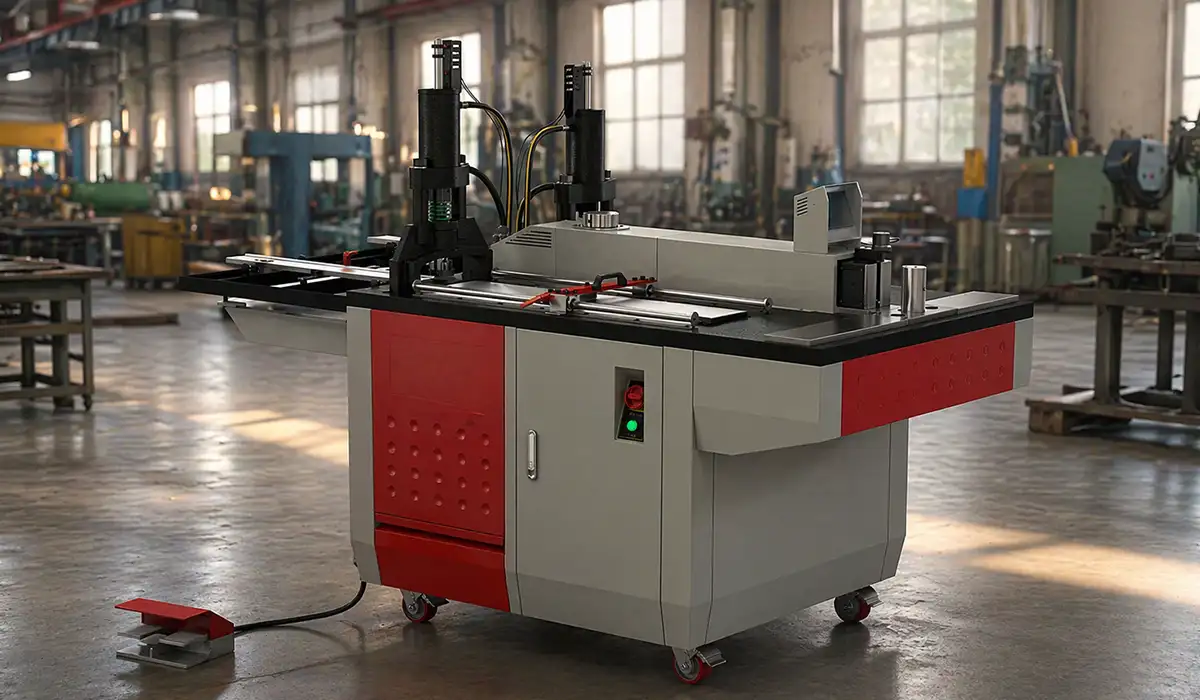
A metal bending machine, sometimes called a sheet metal bender or metal forming machine, is one of the core tools used in modern manufacturing. Its primary job is to reshape flat metal into angles, curves, or complex geometries without cutting or removing material.
The bending process works by applying controlled force—usually measured in tonnage—until the metal permanently changes shape. This happens when the material’s internal resistance is overcome, allowing the workpiece to conform to the shape of the tooling.
Most bending operations rely on two essential components:
- Punch: The upper tool that presses downward
- Die: The lower tool that supports and shapes the metal
When the punch presses the sheet into the die, the material bends along a defined radius. This simple principle forms the backbone of industries ranging from small workshops to large-scale production plants.
For example, in electrical switchgear manufacturing, metal enclosures must be bent with extremely tight tolerances. Even a small error in angle can cause misalignment during assembly. That is why modern workshops rely heavily on controlled bending technologies supported by automation.
To better understand how industrial forming processes operate, reviewing the concept of metal forming can help clarify how force, tooling, and material behavior interact during bending operations.
Types of Metal Bending Machines: Which One Is Right for You?
Not all bending machines are created equal. Different production goals require different machine types, each designed to balance speed, precision, and cost. Understanding these differences helps prevent expensive purchasing mistakes and ensures your equipment matches your production needs.
In today’s fabrication market, the most common bending machines include:
- Hydraulic Press Brake Machines
- Mechanical Bending Machines
- Pneumatic Bending Machines
- Manual Bending Machines
- CNC Bending Machines
Each of these machine types serves a specific purpose. For instance, hydraulic systems are widely preferred in modern workshops due to their flexibility and precise force control. Meanwhile, mechanical machines are often selected for repetitive, high-speed operations.
If the information related to machine types was interesting and informative to you, researching industrial automation systems can be very engaging. Further exploration can be found in the following recommended reading: Types of Industrial Control Systems.
Key Factors to Consider When Selecting a Metal Bending Machine
Choosing the right machine requires more than comparing prices or brands. The most successful workshops evaluate machines based on measurable production needs and long-term operational goals.
One of the first technical specifications to review is the bed length. This determines the maximum sheet size that can be processed. If your business regularly handles long sheet metal panels, insufficient bed length will limit production capacity immediately.
Another important factor is throat depth. This measurement defines how far into the machine the metal can extend, directly affecting the complexity of parts that can be produced.
Modern fabrication shops also rely heavily on programmable positioning systems known as back gauges. These systems allow precise positioning of metal sheets before bending, reducing operator errors and increasing repeatability across large production batches.
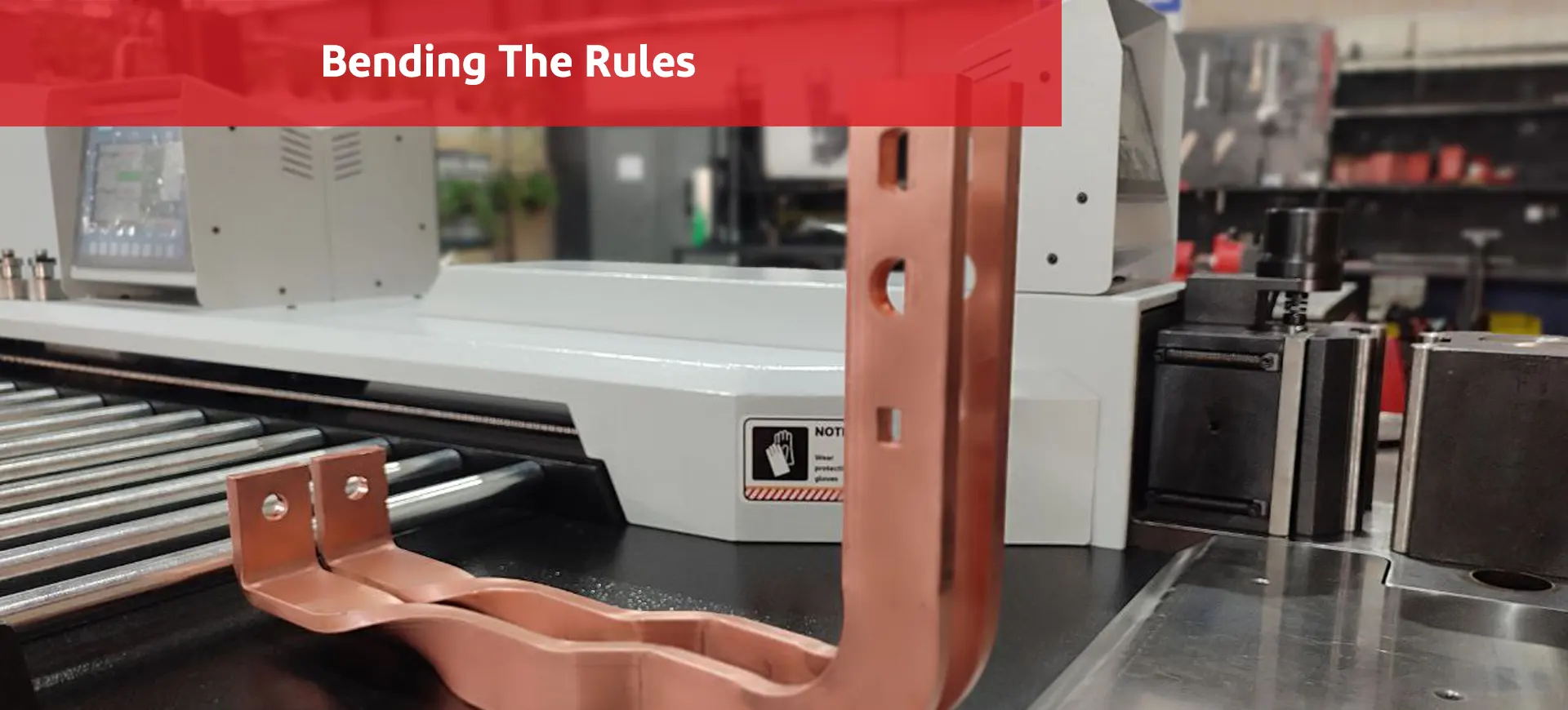
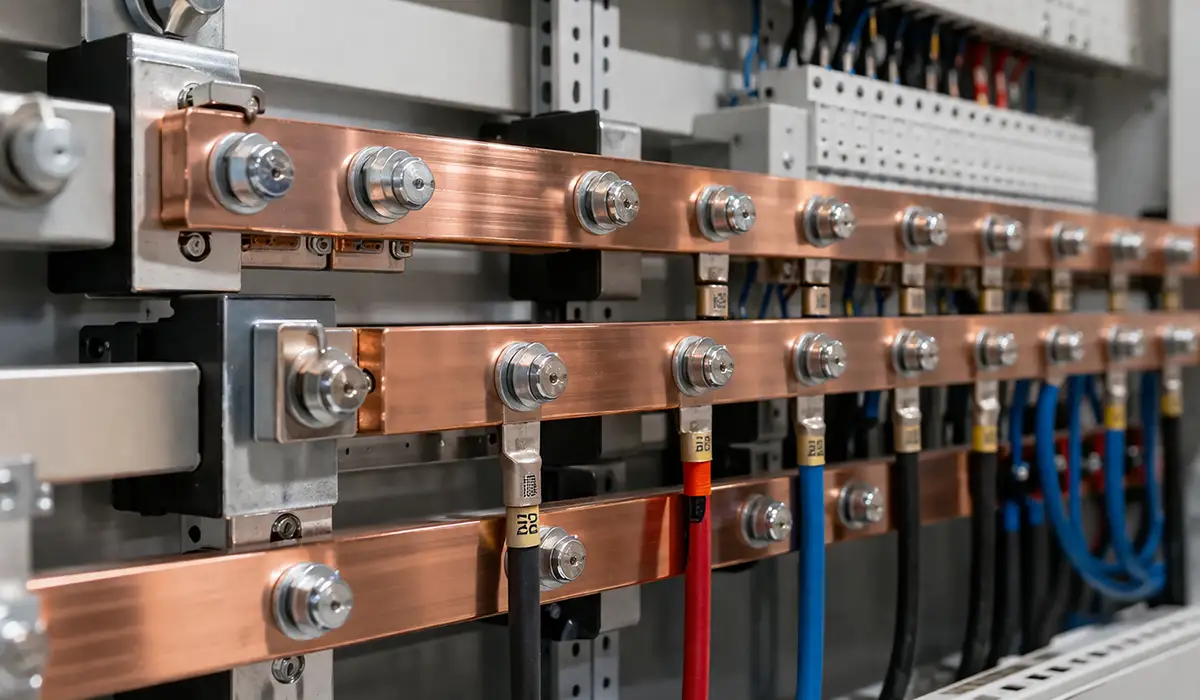
For companies producing copper busbars and electrical panel components, achieving repeatable bending accuracy is especially critical. Since buses play a crucial role in the production of electrical panels, obtaining more information about bending control can be very important and essential.
For a comprehensive understanding of copper busbar bending techniques, we highly recommend reviewing this article: Bending Copper Busbar.
Hydraulic vs Mechanical Bending Machines: Which One Is Better?
One of the most common questions buyers ask is whether a hydraulic bending machine is a better choice than a mechanical model. The answer depends largely on the type of work your workshop handles every day.
Mechanical machines are known for speed. They usually operate with a flywheel system and can deliver consistent cycles in high-volume environments. This makes them useful for repetitive applications where the bend profile remains simple and production speed matters more than flexibility.
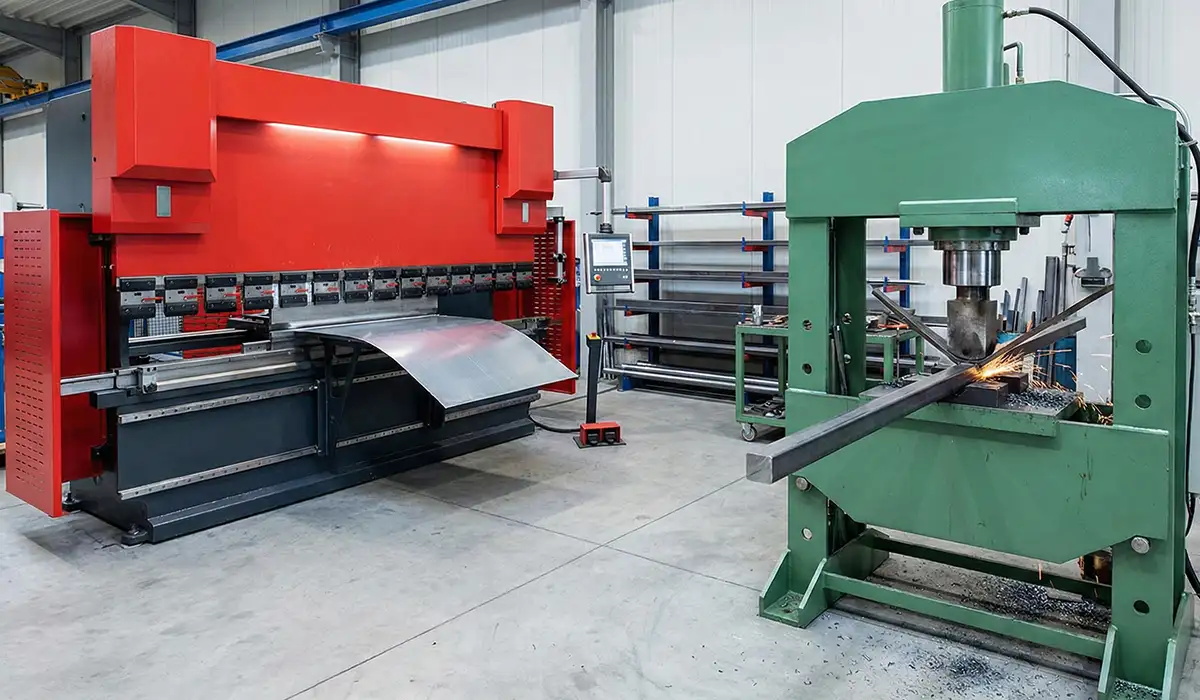
Hydraulic bending machines, however, offer a very different advantage. They give the operator greater control over ram movement, bending force, and stroke depth. That extra control becomes especially valuable when working with different material thicknesses, tighter tolerances, or more demanding bend geometries.
In practical terms, a hydraulic machine is often the safer and more versatile option for modern fabrication shops. If your production includes custom components, electrical panel parts, busbars, or enclosure profiles, the flexibility of a hydraulic press brake can save a significant amount of setup time and reduce the risk of costly bending errors.
For readers interested in understanding the broader role of hydraulic technology in industrial systems, this concept is closely related to hydraulic machinery
Manual vs CNC Bending Machines: What’s the Difference?
The difference between a manual bending machine and a CNC bending machine goes far beyond automation. It affects product consistency, labor requirements, setup speed, and the ability to scale production over time.
Manual machines are usually chosen for basic bending tasks, repair work, small workshops, or one-off production. They are more affordable upfront and can be practical for businesses that do not yet need high-volume output. However, they rely heavily on operator experience, which means results may vary from one job to another.
CNC bending machines are designed for precision and repeatability. With computer-controlled positioning, operators can program bending sequences, back gauge locations, and ram depth with a high level of accuracy. This makes CNC technology ideal for parts that require multiple bends, strict tolerances, or repeated production with minimal deviation.
A simple real-world example is an electrical panel manufacturer producing the same enclosure side panel hundreds of times per month. On a manual machine, the process takes more time and leaves more room for variation. On a CNC machine, the same job can be repeated with predictable quality, lower labor pressure, and less material waste.
For many businesses, the shift from manual to CNC is not just a technical upgrade—it is a profitability decision. More consistent bends mean fewer rejected parts, faster assembly, and a stronger return on investment over time.
Quick Comparison: Manual vs. CNC
| Comparison Factor | Manual Bending Machine | CNC Bending Machine |
|---|---|---|
| Precision Level | Low to Moderate | High |
| Automation | No | Yes |
| Ease of Operation | Requires more manual skill | Easier with software support |
| Initial Investment | Lower | Higher |
| Production Volume | Low / Prototype Work | High Production |
| Repeatability | Operator-dependent | Consistent and programmable |
Choosing the Right Metal Bending Machine for Your Workshop
The best machine for one workshop may be completely unsuitable for another. That is why choosing a bending machine should always start with a realistic review of your daily production needs rather than a general comparison of brands or price ranges.
A small workshop producing custom brackets, light enclosures, or repair parts may benefit from a compact and easy-to-use machine with a smaller footprint. In that environment, flexibility and affordable ownership often matter more than full automation.
By contrast, a factory handling larger production volumes—especially in industries such as switchgear, industrial cabinets, HVAC ducting, or busbar fabrication—usually needs stronger bending force, higher repeatability, and faster changeovers. In these cases, investing in CNC controls and better tooling systems often pays off quickly.
Another point that many buyers underestimate is facility readiness. Before ordering a machine, it is important to confirm that your workshop has the right electrical infrastructure, floor space, and operator support to run it efficiently. A large machine with impressive specifications can still become a poor investment if your team cannot use it properly or if the installation environment is not prepared.
If the content related to workshop planning was both useful and intriguing to you, diving into flow-related industrial systems will likely be equally fascinating. For further exploration of the subject, we recommend reading: Flow Measurement Methods
In real production settings, choosing the right bending equipment can directly improve profitability. For example, a panel builder using a properly matched bending machine can reduce scrap, shorten assembly time, and improve the fit of finished components. That means fewer reworks, faster delivery to customers, and better use of skilled labor—all from a smarter equipment decision.
Calculating Tonnage for Metal Bending Machines
One of the most critical steps in selecting a metal bending machine is determining the required bending tonnage. Without sufficient force, the machine will not create accurate bends, and overloading equipment can lead to permanent mechanical damage.
The amount of force required depends mainly on four factors:
- Material Type (steel, stainless steel, aluminum, copper)
- Material Thickness
- Bend Length
- V-Die Opening Width
In most practical applications, thicker materials require significantly more force. For example, bending a 3 mm mild steel sheet requires much less tonnage than bending a 10 mm stainless steel plate of the same length.
A widely used rule of thumb is that bending force increases exponentially as thickness increases. This is why manufacturers must carefully verify their tonnage requirements before purchasing equipment.
Understanding the relationship between force and material behavior is closely connected to the concept of tensile strength, which plays a major role in determining bending resistance.
In real production environments such as electrical cabinet manufacturing, correct tonnage calculation prevents under-bending and reduces the need for manual corrections. That alone can save valuable production time and reduce scrap material costs.
Material Compatibility and Thickness Considerations
Not every metal behaves the same during bending. Each material reacts differently to applied force, and understanding those differences helps avoid cracking, deformation errors, and unexpected springback.
For instance:
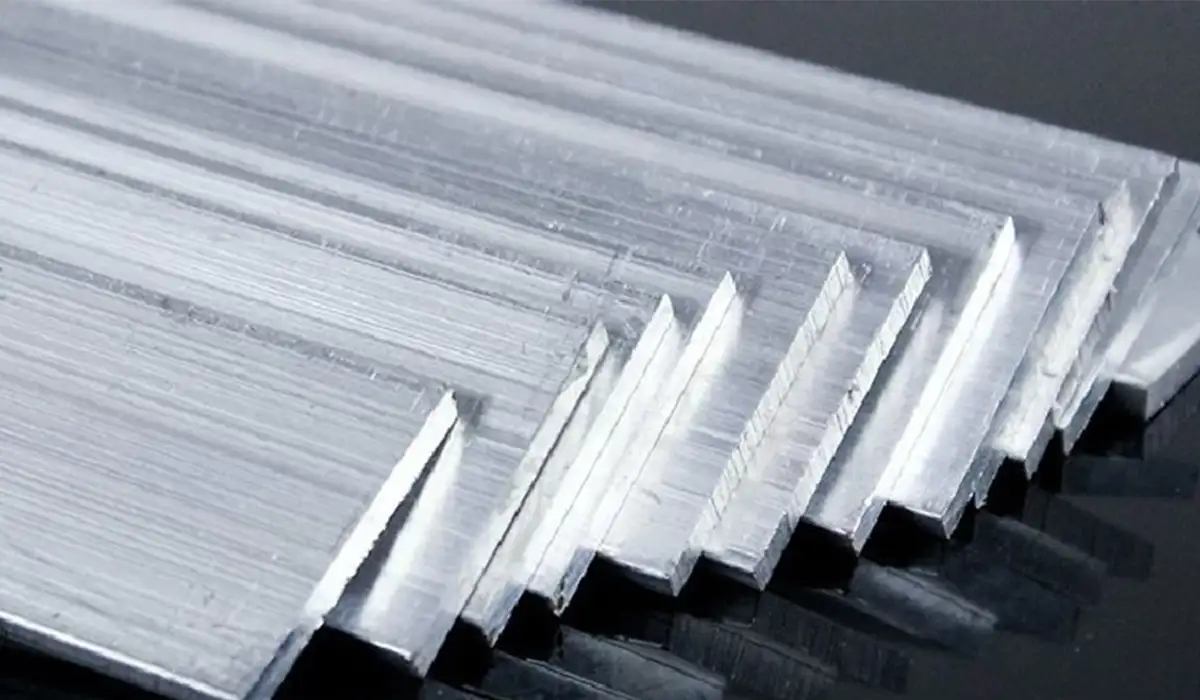
- Aluminum bends easily but can crack if bent too sharply.
- Mild Steel offers balanced strength and flexibility.
- Stainless Steel requires higher tonnage due to increased strength.
- Copper bends smoothly but demands precision to avoid surface marks.
Material thickness also plays a major role. Even small changes in thickness can require significant increases in bending force. Ignoring these differences can result in damaged tooling or poor-quality finished parts.
Conclusion: Making the Right Investment for Long-Term Productivity
Selecting the right metal bending machine is more than a technical decision—it is a strategic investment that influences productivity, product quality, and operational efficiency for years to come.
Businesses that take the time to evaluate machine types, tonnage capacity, material compatibility, and automation features are far more likely to avoid costly mistakes. A well-matched machine reduces waste, improves repeatability, and supports long-term production growth.
In real manufacturing environments, the difference between a poorly selected machine and a properly matched one often shows up in everyday operations. Faster setup times, fewer rejected parts, and improved workflow reliability all translate into measurable financial benefits.
Ultimately, the goal should always be balance—choosing equipment that supports your current production while leaving enough capacity to grow as demand increases.
Frequently Asked Questions about Metal Bending Machines
How Do I Maintain a Metal Bending Machine?
Routine maintenance is one of the most effective ways to extend the life of your equipment. Operators should regularly check hydraulic oil levels, inspect hoses and seals for leaks, and keep tooling clean from debris or scale buildup.
Lubrication is equally important. Ram guides, moving components, and back gauge systems should be serviced according to the manufacturer’s maintenance schedule. Neglecting these steps often results in unexpected downtime and expensive repairs.
What Is a Metal Bending Machine and How Does It Work?
A metal bending machine works by pressing a metal sheet between a punch and die to create a controlled bend. The machine applies force until the material permanently changes shape.
This process allows manufacturers to create structural components, enclosures, and brackets with consistent dimensions across multiple production cycles.
What Is the Difference Between Hydraulic and Mechanical Machines?
Mechanical machines rely on rotational energy stored in flywheels, allowing fast production speeds but limited flexibility. Hydraulic machines use fluid pressure to move the ram, offering improved control, smoother motion, and better safety performance.
How Do CNC Bending Machines Improve Accuracy?
CNC machines use computer-controlled systems to position materials and control bending depth precisely. This reduces operator dependency and allows identical parts to be produced repeatedly without significant variation.
How Do I Calculate Tonnage for a Bending Machine?
Tonnage is calculated based on material thickness, bend length, tensile strength, and die opening width. Many manufacturers rely on tonnage charts to simplify this process and avoid errors during machine selection.