




If you’d rather listen than read, feel free to play the audio file below for the rest of this article.
What Bus Bar Insulation Sleeves Do in Switchgear
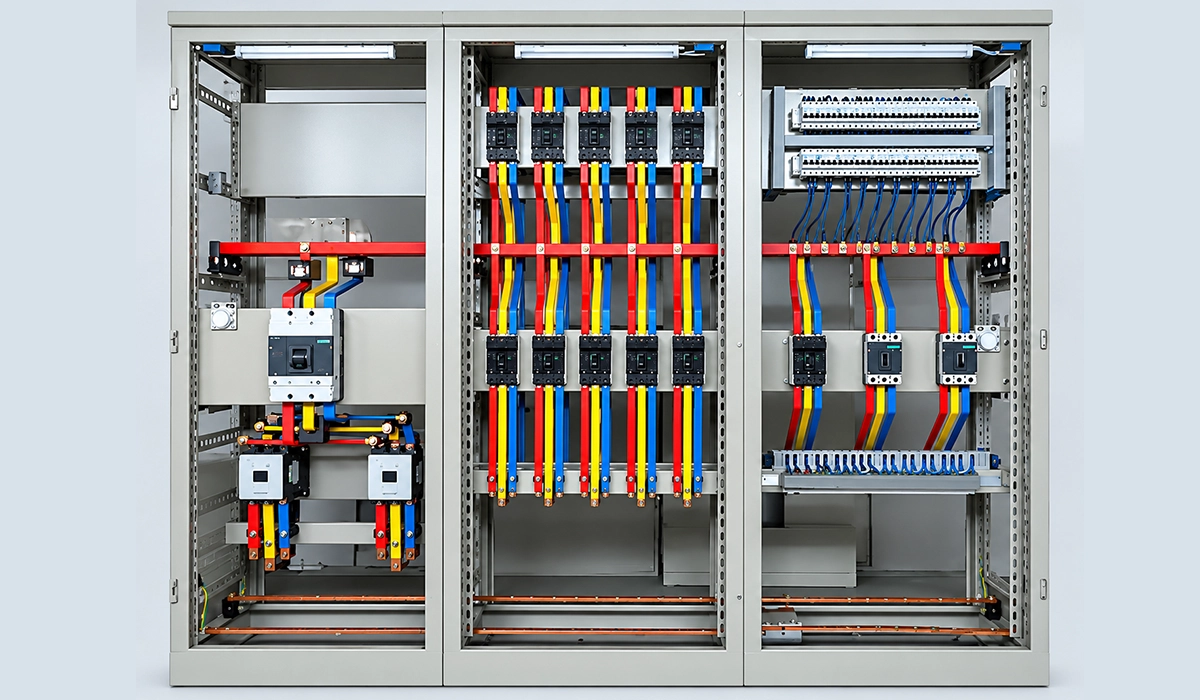
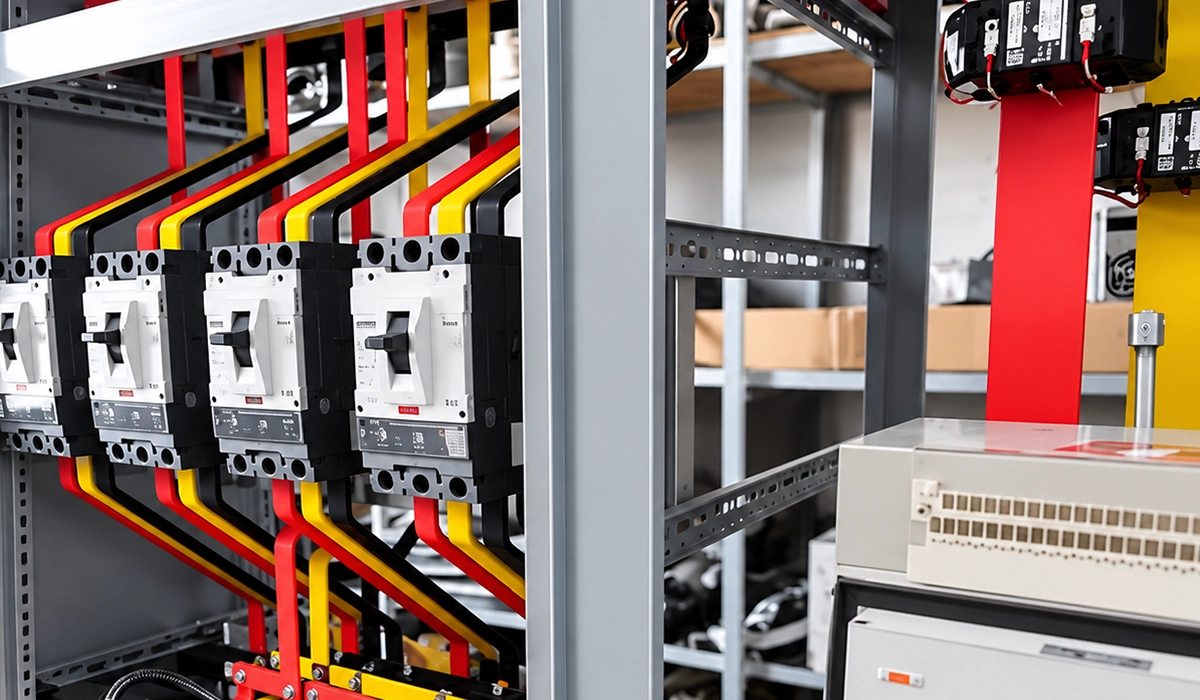
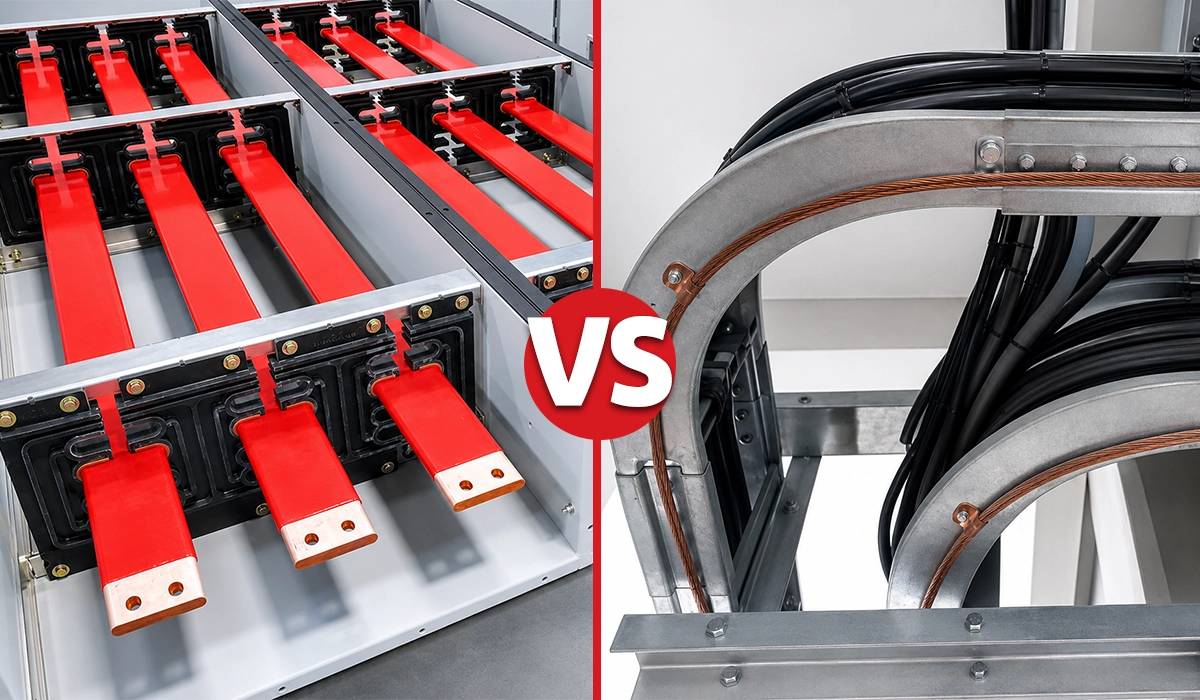
ABB’s ZS1 manual states the design aim plainly: a busbar arrangement with no arc fault points of origin. It gets there by sleeving the conductors and covering every bolted joint. This kind of insulation detail sits within the broader design principles covered in our guide to busbars for power distribution.
In ABB’s air-insulated medium-voltage switchgear, shrink-on sleeve covers both the main busbars and the tee-off conductors. Busbar insulation sleeves handle the runs, and insulating covers handle the joints. Treat that as ABB’s aim for its own arrangement, not a property you can assume anywhere.
Whether the bars arrive insulated at all depends on rated voltage. ABB’s technical guide supplies insulating covering on main busbars and branches as standard at 17.5 kV and 24 kV, and on request at 12 kV. Plating is a separate option: bars can be silver-plated or tinned on request.
So busbar heat shrink is not a universal fitting. It is a specified one, and the specification says where it goes.
Whether insulation is required at all often comes down to which voltage class and standard actually govern the installation. Our guide to busbar standards covers that requirement.
Cut Point One: Above the Contact Spring Bores
ABB’s manual gives one instruction here: cut the busbar heat shrink sleeve out above the bores in the bar, because each bore takes a bushing contact spring.
The reason is contact. The spring bridges the busbar and the metal tube inside the bushing, and it can only do that against bare copper. A sleeve left over the contact spring bore insulates exactly the surface the spring needs, so the bar fails a check nobody runs until it is already in the panel. The spring itself, and the six-step check ABB runs on it, belong to a separate job.
Keep the cut disciplined. Open a window over the bore and no more, leaving the sleeve intact all around it. Every extra millimetre you remove is bare copper in a busbar compartment ABB intended to be covered.
Getting this cut-out right is part of the larger job of fitting a busbar correctly inside its panel. Our guide to busbars in electrical panels covers that broader context.
Cut Point Two: Off the Bolted Contact Faces
No busbar insulation tubing survives between two mating faces, because ABB requires both silver-plated and unplated connection surfaces to be cleaned and greased before bolting.
Read that rule backwards and the sleeve question answers itself. A cleaned and greased face is a bare face. Whatever the fabricator put on the bar, the joint area arrives at the bolts as metal.
ABB publishes no cut-back dimension for this, so nobody should invent one. The overlap the drawing specifies sets the bare length, and the joint cover closes it afterwards. Preparing those faces is its own procedure.
| Where on the bar | Sleeve | Why |
|---|---|---|
| Conductor runs between joints | Stays | Insulates the live conductor |
| Contact spring bores | Window cut out | Spring must meet bare copper |
| Bolted contact faces | Kept clear | Faces are cleaned and greased |
Three positions on one bar, each decided before it leaves the shop.
Preparing a clean, bare contact face is really just one part of building a sound termination in the first place. Our guide to terminal bus bars covers that connection point.
Handling the Sleeve Without Damaging It
ABB asks for one thing before installation: clean the insulation on busbar sections with a dry, soft cloth, then check it for insulation damage. That inspection is the only one busbar heat shrink gets on site.
Greasy or sticky dirt needs more than a cloth. ABB points to the cleaning agents in its maintenance instructions, and their use belongs with the contact-surface procedure.
The rest is handling discipline. Make every cut where the drawing puts it and no wider. Treat a nick, a split or a scorch mark anywhere else as an insulation defect, and report it rather than shrink another piece over the top. Bars ship from ABB unassembled, with material and fasteners packed separately, so transit damage is worth finding before anything enters a panel.
Sleeve and Cover: Two Halves of One Insulation System
Sleeve and joint cover divide one job between them: the sleeve insulates the runs, and the cover closes the joint where the sleeve had to stop.
ABB treats bolt connections in the busbar system as normally covered by insulating covers. That is why the sleeve can stop at the joint without leaving live metal exposed in service. The cover is a separate part with its own fitting sequence.
Specify them together. A bar ordered sleeved but installed without its covers is not the arrangement ABB describes, and the gap sits exactly where the bolts are.
Specifying sleeve and cover together is really just one decision inside the wider busbar arrangement being designed. Our guide to busbar arrangements covers that bigger picture.
Conclusion about Busbar Heat Shrink
Busbar heat shrink only does its job when the cut-outs land where the drawing puts them. Get the bores and the contact faces right in the shop.
Getting insulation right is one part of specifying the whole busbar system correctly for an LV panel. Our LV panel busbar selection guide covers the rest of that decision.


Rate this article
Choose a rating from 1 to 5 stars.
No ratings yet